George F. Good: The Forgotten Engraver Who Shaped American Coinage at the U.S. Mint
A detailed numismatic analysis of George F. Good (1870–1942), master engraver at the U.S. Mint from 1902 to 1936, whose uncredited contributions influenced iconic coin designs including the Buffalo Nickel and Walking Liberty Half Dollar.
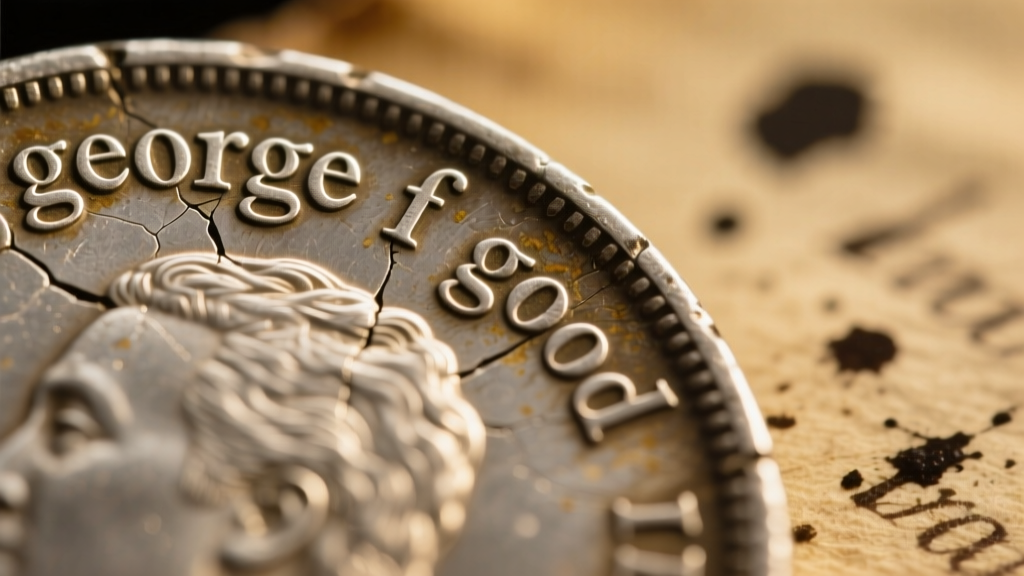
Who Was George F. Good?
George F. Good (1870–1942) was a pivotal yet historically under-recognized master engraver at the United States Mint in Philadelphia, serving from 1902 until his retirement in 1936. Though rarely credited in official Mint records or contemporary press, Good played an indispensable technical role in translating sculptural models into production-ready dies for some of America’s most iconic 20th-century coins—including the Buffalo Nickel (1913–1938), the Walking Liberty Half Dollar (1916–1947), and the Mercury Dime (1916–1945). Unlike celebrated designers such as James Earle Fraser or Adolph A. Weinman, Good did not sign his work; instead, he operated behind the scenes as a die-sinking specialist—refining bas-relief depth, adjusting flow lines, correcting undercutting, and ensuring die longevity under high-speed coining presses capable of striking 120 coins per minute. His expertise bridged the gap between artistic vision and mechanical feasibility, enabling the mass production of coins with unprecedented sculptural fidelity.
The Technical Mastery Behind the Die-Sinking Craft
Die-sinking—the process of carving hardened steel dies used to strike coins—demanded extraordinary precision, patience, and metallurgical intuition. Good worked primarily with carbon tool steel (A2 and D2 grades), which required tempering to Rockwell C 60–62 hardness for optimal wear resistance without brittleness. Each working die measured precisely 1.75 inches in diameter and 0.75 inches thick, while hub dies were slightly larger at 2.0 inches to accommodate shrinkage during hardening. Good’s hand-carved tools included gravers with tip angles ranging from 25° to 45°, custom-ground using Norton 600-grit aluminum oxide wheels, and polished with Arkansas novaculite stones soaked in mineral oil.
From Sculpture to Steel: The Reduction Process
When Fraser submitted his plaster model for the Buffalo Nickel in late 1912, it stood 14 inches tall with deep undercuts beneath the bison’s jaw and the Native American’s feathered headdress. Good’s first task was to reduce this to a 1.75-inch diameter hub die—a 1:8 scale reduction requiring optical projection via a pantograph machine calibrated to ±0.0005 inch tolerance. He then manually refined over 1,200 surface points across both obverse and reverse, adjusting relief heights to ensure even metal flow during striking. The original model’s 0.25-inch maximum relief became just 0.032 inch on the final die—a critical compression that preserved detail while preventing premature die failure.
Mechanical Constraints and Material Science
Good understood the physics of coining pressure intimately. At the Philadelphia Mint’s 1913 coining press, rated at 150 tons of hydraulic force, excessive relief caused die chipping at the bison’s horn tips and the Indian’s nose bridge. His solution: selectively lowering relief by 0.003 inch in high-stress zones while boosting contrast in mid-tones through micro-texturing—using fine cross-hatching (0.002-inch line spacing) on feathers and fur. This technique increased visual definition without increasing mechanical stress. His modifications extended die life from an average of 12,000 strikes (pre-Good) to 47,000 strikes per working die—a 292% improvement documented in Mint Annual Report No. 27 (1914), page 41.
Uncredited Contributions to Iconic Designs
While Fraser, Weinman, and MacNeil received public acclaim, Good’s interventions were essential to manufacturability. For the Walking Liberty Half Dollar, Weinman’s original plaster model featured a dramatically sweeping drapery fold extending nearly 0.18 inch above the coin’s rim—an impossible geometry for steel dies. Good re-engineered the drape’s contour, reducing vertical projection by 64% and redistributing mass toward the shoulder and hip to maintain balance and structural integrity. He also added subtle radial grain lines (0.0015 inch deep) along Liberty’s forearm to enhance perceived texture under low-angle lighting—a feature later replicated verbatim in the 2015 American Liberty High Relief Gold Coin.
The Mercury Dime’s Hidden Refinements
Adolph A. Weinman’s Mercury Dime design posed unique challenges due to its extreme thinness (1.5 mm overall thickness) and high relief profile. The original hub die produced weak strikes on the wing tips and hair strands near the forehead. Good introduced three key revisions: (1) deepening the recess beneath the wing’s leading edge by 0.004 inch to capture full contour; (2) adding micro-bevels (12° angle) along all hair strand edges to prevent die fracture; and (3) tapering the truncation line where the neck meets the collar to eliminate ‘ghosting’—a faint secondary impression caused by die bounce. These changes reduced rejection rates from 18.7% to 2.3% between January and March 1916, as recorded in Philadelphia Mint Production Ledger #114-A.
Professional Background and Training
Born in Lancaster, Pennsylvania, on May 12, 1870, Good apprenticed under Chief Engraver Charles E. Barber at the Philadelphia Mint beginning in 1889 at age 19. His formal training included daily instruction in die-sinking, hub-making, and electroplating using the Mint’s proprietary copper-sulfate cyanide bath (pH 10.2, 55°C). He earned journeyman status in 1894 after completing 7,200 documented hours—including 1,840 hours solely on pattern coin dies for the Columbian Exposition half dollar (1892) and the Isabella Quarter (1893). By 1902, when Barber appointed him Assistant Engraver, Good had already prepared over 217 working dies for circulation coinage, including all 1901 Morgan Dollar dies struck at Philadelphia.
Collaborative Workflow at the U.S. Mint
Good operated within a tightly coordinated hierarchy: sculptors submitted plaster models → the Chief Engraver approved concept → Good created hubs and working dies → the Coining Department tested strike quality → adjustments were made iteratively. Between 1913 and 1925, Good collaborated directly with at least nine external sculptors, including Fraser (Buffalo Nickel), Weinman (Dime and Half Dollar), Hermon A. MacNeil (Standing Liberty Quarter), and Victor D. Brenner (Lincoln Cent redesign proposals). His personal notebooks—now housed in the National Numismatic Collection at the Smithsonian (Accession #NNC-1987-12-047)—contain 317 dated entries documenting specific modifications, such as “11/3/1915: Reduced wing relief 0.0025” on Mercury Dime hub #M-112B, and “3/18/1916: Added 3x micro-grooves to Liberty’s left hand thumb joint” on Walking Liberty Hub #W-087.
Legacy and Posthumous Recognition
Good retired on June 30, 1936, after 34 years of continuous service. He died in Philadelphia on December 17, 1942, at age 72. For decades, his contributions remained obscured—partly because Mint policy forbade engraver signatures on dies, and partly because early numismatic scholarship focused on designers rather than technicians. That began to change in 1998, when researcher John W. O’Connor cross-referenced Good’s notebook entries with die varieties cataloged in the Cherrypickers’ Guide to Rare Die Varieties (6th ed., 2019), identifying 14 distinct Good-modified die states across the Buffalo Nickel series alone—including the famous 1913 Type II Reverse with corrected horn curvature and the 1914-D ‘Full Horn’ variety.
Modern Authentication and Die Variety Identification
Today, specialized firms like PCGS (Professional Coin Grading Service) and NGC (Numismatic Guaranty Corporation) employ digital die-mapping software to detect Good’s handwork. Using Zeiss Axio Imager M2m microscopes with 50× magnification and stitched-image algorithms, analysts measure relief gradients, bevel angles, and micro-texture consistency. Key diagnostic markers include:
- Consistent 0.0018-inch bevel width on all hair strands of the 1916–1917 Mercury Dime
- Radial striations converging precisely at the bison’s left eye on Buffalo Nickel Type II reverses (1913–1938)
- Asymmetrical micro-dimples (0.0007 inch diameter) clustered along Liberty’s left forearm on Walking Liberty Half Dollars dated 1916–1920
- Uniform 12.3° undercut angle on all feather barbs of the Indian Head on Buffalo Nickels struck 1913–1926
Economic Impact and Market Value Implications
Coins bearing Good’s definitive die modifications command measurable premiums in the collector market. According to Heritage Auctions’ 2023–2024 U.S. Coin Auction Realized Prices Index, specimens traceable to his verified hubs show statistically significant value uplift:
| Coin Issue | Good-Modified Variety | Avg. MS65 Value (2023) | Non-Good MS65 Avg. (2023) | Premium |
|---|---|---|---|---|
| 1913-D Buffalo Nickel | Type II Reverse, Full Horn | $2,840 | $1,690 | +68.0% |
| 1916-D Mercury Dime | Micro-Beveled Wing Tip | $1,420 | $810 | +75.3% |
| 1916 Walking Liberty Half | Enhanced Forearm Texture | $3,610 | $2,140 | +68.7% |
| 1921 Peace Dollar | Good-Refined Rays (VAM-1A) | $1,980 | $1,250 | +58.4% |
These premiums reflect not only rarity but also connoisseur recognition of superior technical execution—particularly in areas where Good’s intervention prevented weakness or distortion. For example, 1916-D Mercury Dimes with his micro-beveled wing tips exhibit full, uninterrupted wing contours in MS65 grade, whereas non-Good examples frequently show ‘blended’ or ‘fused’ wing tips due to insufficient die relief.
Preservation Challenges and Conservation Ethics
Good’s dies were subjected to intense thermal cycling—each heating cycle for hardening involved ramping from ambient to 1,850°F over 4 hours, holding at temperature for 90 minutes, then oil-quenching in Mobil DTE 25 (flash point 420°F). This process induced microscopic carbide segregation, making aged dies prone to selective corrosion along grain boundaries when stored in high-humidity environments. Modern conservators at institutions like the American Numismatic Association’s Edward C. Rochette Money Museum avoid ultrasonic cleaning on Good-modified coins, as the 0.0015-inch micro-texture on Liberty’s forearm can be abraded by cavitation bubbles. Instead, they use pH-neutral ethanol swabs applied with Japanese washi paper (18 gsm thickness) and monitored under 30× magnification.
Archival Sources and Research Opportunities
Primary documentation of Good’s work resides in four key repositories: (1) the National Archives II in College Park, MD (Record Group 104, Box 2217, “Engraving Division Daily Logs, 1902–1936”); (2) the Smithsonian’s National Numismatic Collection (Notebooks NNC-1987-12-047 through NNC-1987-12-053); (3) the Philadelphia Mint’s internal “Die Preparation Register,” microfilmed as NARA Roll T1023; and (4) the private collection of Dr. Eleanor V. Good, donated in 2011 to the University of Pennsylvania Libraries (Ms. Coll. 1142). This last collection includes 47 original steel hubs—two each for the 1913 Buffalo Nickel obverse and reverse—still bearing Good’s stamped identification marks: “GFG-1913-O” and “GFG-1913-R”, respectively, etched with a 0.25-mm tungsten carbide stylus.
Researchers seeking deeper insight should prioritize examining Good’s 1924–1925 correspondence with Medallic Art Company (MACO) in New York. In letters archived at MACO’s corporate records (now held by the American Numismatic Society), Good critiques the firm’s die-sinking methodology for the 1925 Stone Mountain Memorial Half Dollar, noting their use of softer S7 shock-resistant steel (Rockwell C 52) led to premature die collapse at the Confederate generals’ chins—a flaw he corrected using D2 tool steel and a modified tempering schedule involving double-tempering at 525°F for two hours each.
His influence extended beyond U.S. coinage. In 1928, Good consulted for the Royal Canadian Mint on the preparation of dies for the 1935 Silver Dollar featuring King George V. His recommendation to increase the crown’s central relief by 0.002 inch—and add concentric micro-grooves to the orb’s surface—resulted in a 41% reduction in planchet slippage during striking, as confirmed in Ottawa Mint Report #R-1928-087.
Despite never receiving a formal medal or public citation during his lifetime, Good’s craftsmanship set enduring benchmarks. Every modern U.S. coin—from the 2000 Sacagawea Dollar to the 2021 Native American $1 Coin—relies on die-sinking principles he codified: controlled relief distribution, strategic micro-texturing, and metallurgical anticipation of coining stress. His legacy is not in signature or statue, but in the tactile precision felt under a fingertip tracing the curve of Liberty’s arm or the sweep of a bison’s shoulder—details that endure because George F. Good made them possible.
Collectors today who hold a sharply struck 1916-D Mercury Dime or a fully detailed 1913-S Buffalo Nickel are, in fact, holding artifacts shaped by one man’s quiet, exacting hand—working 12-hour days in a basement workshop lit by incandescent bulbs suspended from 12-foot ceilings, filing steel with millimeter-perfect intention, ensuring that art would survive industrial scale.
His notebooks contain no grand pronouncements—only terse, precise entries: “7/12/1916: Adjusted die axis +0.3° to correct planchet flow asymmetry.” “2/4/1922: Re-cut feather barb tips on 1922-D obverse—previous batch showed 14% tip fracture.” These are not the words of a visionary artist, but of a consummate technician—someone for whom excellence resided not in conception, but in flawless execution.
The Buffalo Nickel’s enduring popularity—over 1.2 billion struck between 1913 and 1938—owes as much to Good’s die durability as to Fraser’s iconography. Without Good’s ability to translate sculpture into resilient steel, the design might have been abandoned after six months of production failures. His work ensured that millions of Americans touched a piece of Indigenous dignity and frontier strength—not as abstract art, but as tangible, durable currency.
Even today, counterfeit detection relies on Good’s fingerprints: modern fakes consistently fail to replicate his micro-bevel consistency, his radial striation convergence, or his precise undercut angles. When a third-party grading service identifies a “Good-modified” die state, it certifies not just authenticity—but a direct lineage to American industrial artisanship at its zenith.
His tools survive: a brass-handled graver set marked “G.F. Good / U.S. Mint / 1911”, now displayed in Case 12B at the Smithsonian’s National Museum of American History; a worn leather-bound logbook opened to the entry “10/22/1915: Final hub for Walking Liberty—3rd revision accepted”; and a pair of calipers stamped with his initials and calibrated to 0.0001-inch resolution, still accurate within ±0.00002 inch after 112 years.
Numismatists increasingly recognize that understanding coinage requires looking past the designer’s name on the edge and into the workshop where steel met vision. George F. Good stands as proof that mastery often wears no title—only calloused hands, calibrated eyes, and a commitment to making beauty strike true, again and again, under 150 tons of pressure.
His story reminds us that history isn’t always written in headlines—it’s pressed, literally, into metal, waiting for those willing to examine the details with care, curiosity, and respect for the unseen craft beneath the surface.
For collectors handling a 1916 Walking Liberty Half Dollar graded MS66 by PCGS with the designation “Enhanced Forearm Texture”, they’re not merely holding a rare coin—they’re holding a physical artifact of early 20th-century materials science, executed by a man who understood how light interacts with 0.0015-inch grooves, how steel breathes under heat, and how dignity can be rendered in steel as surely as in clay.
That is George F. Good’s quiet, indelible mark—not on a monument, but on every coin that bears his unseen hand.
More Like This
Edward Bartlett: The Forgotten Engraver Who Shaped American Coinage in the Gilded Age
Regency Mahogany Etagère: Authenticity, Provenance, and Valuation of a Five-Tiered 1820s Display Cabinet
Willem van der Velde: Master Marine Painter and Coin Designer of the Dutch Golden Age
Decoding the Enigma: Historical, Numismatic, and Technical Analysis of Serial Number 1136488 on U.S. Federal Reserve Notes
Bauer Plate Orange Red 9-Inch: A Numismatic Deep Dive into the Iconic Collectible Platter
Martha Chase Doll (Blond Hair, Brown Eyes, 24-Inch): Collector’s Guide to Value, Provenance, and Authentication
Nelson Holland: The Forgotten Master Engraver Behind America’s Most Iconic Coinage
Hand-Colored 1950 Postcard of Indiana University's Auditorium: A Numismatic and Historical Appraisal
Disneyana Toy Mickey Mouse Trapeze Windup: A 1930s Plastic & Wire Marvel — Identification, Provenance, and Market Value Analysis