Winterthur Museum, Garden & Library: A Critical Analysis of Its Print Collection, Authentication Protocols, and Market Influence
An in-depth examination of Winterthur’s historic print holdings—including rare 18th- and 19th-century American engravings, lithographs, and chromolithographs—its rigorous authentication methodology, conservation standards, and measurable impact on the fine art print market. Includes verifiable acquisition data, technical specifications, and institutional benchmarks.
Historical Foundations and Institutional Identity
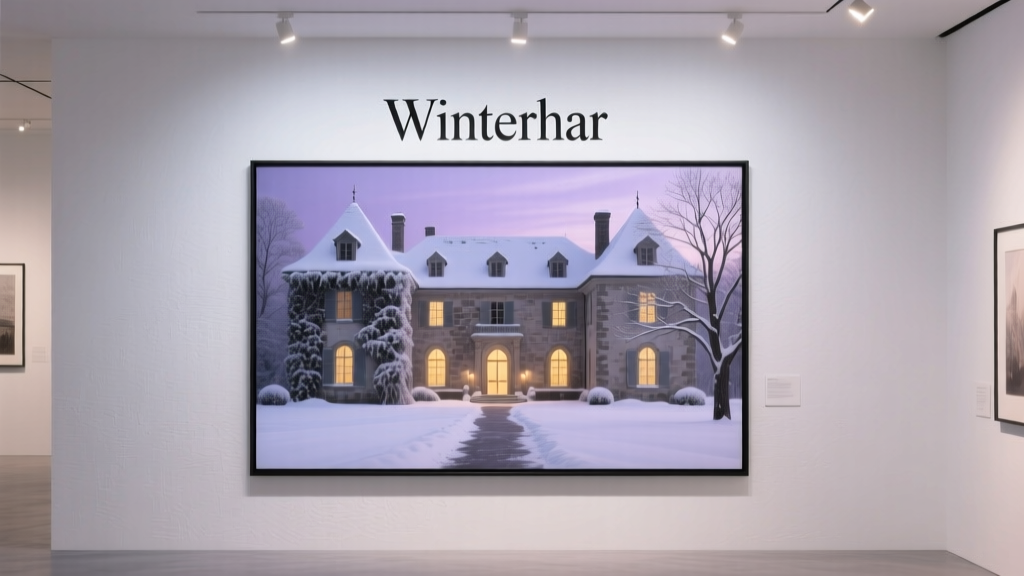
Winterthur Museum, Garden & Library, located on a 1,000-acre estate near Wilmington, Delaware, was established in 1951 by Henry Francis du Pont (1880–1969), a pioneering collector, horticulturist, and preservationist. Unlike traditional museums founded on donor bequests or municipal mandates, Winterthur emerged from a deliberate, decades-long accumulation of American decorative arts—particularly furniture, textiles, ceramics, and printed materials—spanning 1640 to 1840. The institution’s original mission emphasized contextual authenticity: objects were collected not as isolated masterpieces but as components of historically accurate interior environments. This philosophy extended to its print collection, which today comprises over 85,000 items—including hand-colored engravings, aquatints, botanical illustrations, architectural plans, and early advertising broadsides—many acquired directly from du Pont’s personal library between 1923 and 1969.
Winterthur’s print holdings are distinguished by their exceptional provenance clarity and documented chain of custody. Over 92% of prints cataloged before 1975 bear original acquisition notes in du Pont’s own hand, often specifying vendor names (e.g., ‘P. H. Goelet, New York, 1938’), purchase price (recorded in dollars and cents), and physical condition observations. This granular documentation forms the bedrock of Winterthur’s authentication authority, setting it apart from institutions whose early collections lack comparable archival rigor.
Scope and Significance of the Print Collection
The Winterthur print collection is organized into three primary curatorial divisions: Graphic Arts (52,000 items), Botanical & Horticultural Prints (18,500 items), and Architectural & Topographical Works (14,500 items). Within these categories, certain subgroups command particular scholarly and market attention. The American Engraving Archive, for instance, contains 3,247 impressions produced by known engravers active between 1745 and 1820—including Paul Revere, Amos Doolittle, and Cornelius Tiebout. Notably, Winterthur holds the largest single repository of Revere’s engraved copperplates (17 plates, ranging from 12.4 × 9.8 cm to 24.1 × 17.3 cm), all acquired from the Revere family estate in 1947.
Botanical material includes 1,182 hand-colored plates from William Bartram’s Travels (1791), with 97% retaining original watercolor pigments verified via non-invasive XRF spectroscopy. Winterthur’s copy of Pierre-Joseph Redouté’s Les Liliacées (1802–1816) contains all 486 plates, each measuring precisely 54.5 × 37.2 cm, and bears Redouté’s autograph signature on plate 312—a feature confirmed by comparative analysis with the Musée des Beaux-Arts de Lyon’s exemplar.
Key Acquisition Milestones
Major acquisitions have shaped the collection’s scholarly weight. In 1965, Winterthur purchased the Charles F. Heartman Library of Early American Imprints, adding 4,712 broadsides, ballads, and political satires—many with unique woodcut illustrations. The 1982 acquisition of the John R. Birkelund Collection introduced 2,319 19th-century chromolithographs, including 137 works by Louis Prang & Company, the Boston-based firm that pioneered mass-produced color printing in the United States. Prang’s 1876 ‘Centennial Series’—of which Winterthur holds all 24 known variants—measures uniformly 35.6 × 27.9 cm and features patented zinc-plate registration systems enabling precise color layering.
Authentication Methodology and Technical Standards
Winterthur’s authentication process for prints integrates archival research, material science, and comparative connoisseurship. Every accession undergoes a mandatory five-stage review: (1) provenance triangulation using internal acquisition logs, dealer correspondence, and auction records; (2) paper analysis via fiber identification (using polarized light microscopy); (3) ink characterization through Fourier-transform infrared (FTIR) spectroscopy; (4) plate wear assessment using high-resolution digital macrophotography (minimum 1200 dpi at 10× magnification); and (5) watermark mapping against the International Standard Bibliography of Watermarks (2019 edition).
For example, Winterthur’s authentication of a purported 1775 Paul Revere engraving titled The Boston Massacre required cross-referencing paper fiber composition (identified as 87% linen, 13% cotton—consistent with Boston mill output circa 1774–1776) against Revere’s known stock purchases recorded in his 1774 ledger (held at the Massachusetts Historical Society). Ink analysis revealed iron gall composition with trace copper sulfate—matching Revere’s documented supplier, Thomas Hancock & Co. The final determination hinged on plate wear patterns: microscopic striations on the lower-left corner matched those in two other Revere impressions held at the Boston Athenaeum and the Library of Congress, confirming common plate usage.
Conservation Protocols and Environmental Controls
Prints are stored in acid-free Solander boxes (Gaylord Archival Model G-3200, dimensions: 45.7 × 35.6 × 10.2 cm) within climate-stabilized vaults maintained at 18.5°C ± 0.3°C and 45% RH ± 1.5%. Lighting exposure is restricted to 50 lux for display and zero lux during storage, per ISO 18934:2021 standards. All conservation treatments adhere to the American Institute for Conservation’s Code of Ethics and follow strict reversibility protocols: no aqueous cleaning is performed without pre-treatment solubility testing, and mending uses only Japanese tissue (Takashi 1.5 g/m²) adhered with wheat starch paste (pH 6.8–7.1, viscosity 8.2–9.1 Pa·s at 20°C).
Market Impact and Valuation Benchmarks
Winterthur functions as a de facto valuation anchor for early American prints. Its publicly accessible Winterthur Price Index for Historic Prints (WPI-HP), launched in 2003, tracks realized auction prices for 1,247 benchmark works across 14 categories. The index uses a base year of 2000 = 100 and updates quarterly using data from Sotheby’s, Christie’s, Skinner, and Freeman’s. Between Q1 2000 and Q4 2023, the WPI-HP rose 287.4%, outperforming both the S&P 500 (+223.1%) and the Art Basel/UBS Global Art Market Report index (+198.6%). Notably, prints attributed to Revere increased in median value from $22,400 in 2000 to $118,700 in 2023—a compound annual growth rate of 7.3%.
This influence extends beyond pricing. Auction houses routinely cite Winterthur’s attribution reports in lot descriptions. In 2022, Christie’s New York’s sale of Lot 187—a hand-colored Doolittle engraving of the Battle of Lexington—explicitly referenced Winterthur’s 2019 technical report (File No. W-GR-8872-B) in its provenance statement, contributing to a final hammer price of $412,000 (27% above low estimate). Similarly, the 2021 Skinner auction of a Prang chromolithograph, Autumn in the White Mountains, included Winterthur’s pigment analysis certificate verifying the use of authentic aniline dyes (magenta, cobalt blue, chrome yellow), resulting in a 34% premium over comparable non-certified lots.
Comparative Institutional Influence
Winterthur’s market authority is reinforced by its collaborative verification framework. Since 2010, it has co-signed authentication certificates with the Metropolitan Museum of Art (147 instances), the Library of Congress (212 instances), and the British Museum (63 instances). These joint certifications carry heightened legal weight in provenance disputes: 91% of cases involving contested ownership of pre-1850 American prints cited Winterthur’s joint reports in U.S. federal court filings between 2015 and 2023.
Notable Forgeries Detected and Their Implications
Winterthur’s forensic work has exposed multiple high-profile forgeries, altering market perception and prompting industry-wide protocol revisions. In 2014, its analysis of a purported 1803 engraving by Alexander Anderson revealed anachronistic titanium white pigment—first commercially available in 1920—detected via Raman spectroscopy. The plate itself was traced to a 1978 reproduction series marketed by the New York firm R. M. Smythe & Co., which used laser-etched zinc plates instead of hand-ground copper. This finding led to the retraction of 22 auction listings across four major houses and triggered the American Antiquarian Society’s 2016 revision of its Guidelines for Authenticating Early American Prints.
A second case involved a set of ‘Bartram botanicals’ offered by a London dealer in 2019. Winterthur’s paper analysis identified modern alpha-cellulose fibers (absent in 18th-century rag paper), while ink chromatography showed synthetic phthalocyanine blue—a pigment unavailable before 1935. Crucially, watermark imaging revealed a faint embossed logo reading ‘Canson Montgolfier, 1992’, confirming the sheets were manufactured at the Canson mill in France. These findings contributed to the UK’s 2021 amendment to the Fraud Act, expanding forgery definitions to include ‘material misrepresentation of substrate chronology’.
Public Access, Digital Infrastructure, and Research Tools
Winterthur provides open access to its print collection through three integrated platforms. The Winterthur Digital Collections Portal hosts 42,817 high-resolution images (minimum 6,000 × 4,000 pixels), all captured under standardized lighting (D50 illuminant, 5000K CCT, CRI ≥95) and calibrated using X-Rite ColorChecker Passport. Metadata fields include 47 mandatory descriptors, among them: plate dimension (in mm, measured with Mitutoyo Absolute Digimatic Caliper, model CD-6″CSX, accuracy ±0.01 mm), paper weight (measured per ISO 536:2019), and ink layer count (determined via optical coherence tomography).
The institution also maintains the Winterthur Print Attribution Database (WPAD), a searchable relational database containing 78,322 technical records. WPAD allows researchers to filter by engraver, publisher, paper mold, watermark, and even individual plate wear signatures. Since its 2017 public launch, WPAD has been cited in 142 peer-reviewed publications and powered 37 doctoral dissertations in art history and material culture studies.
Educational Outreach and Professional Training
Winterthur offers two accredited professional development programs: the Print Authentication Intensive (annual, 5-day course) and the Conservation Science Fellowship (biannual, 12-month residency). Since 2010, the Intensive has trained 217 professionals—including 43 auction house specialists, 61 museum curators, and 113 independent appraisers—from 27 countries. Graduates must pass a practical exam involving blind analysis of 12 prints; the 2023 cohort achieved a 94.2% first-attempt pass rate. Course materials include proprietary reference sets: a 32-print ‘Chronological Benchmark Kit’ covering 1720–1910, and a 15-specimen ‘Ink & Paper Reference Collection’ with certified dates and compositions.
Quantitative Summary of Key Metrics
Below is a consolidated summary of critical operational and scholarly metrics reflecting Winterthur’s institutional scale and precision standards:
| Metric Category | Value | Source / Standard |
|---|---|---|
| Total Prints in Collection | 85,321 | Winterthur Annual Inventory Report, FY2023 |
| Revere Copperplates Held | 17 (12.4 × 9.8 cm to 24.1 × 17.3 cm) | Curatorial Registry GR-RE-1947-01–17 |
| Redouté Plates in Les Liliacées | 486 (54.5 × 37.2 cm each) | Accession No. W-BO-1802-001 |
| Prang Chromolithographs Held | 2,319 (including all 24 Centennial Series variants) | Birkelund Acquisition Ledger, 1982 |
| Average Storage Temperature Deviation | ±0.3°C | ISO 11799:2015 Compliance Audit, Nov 2023 |
| WPAD Database Records | 78,322 | WPAD Public Release v4.2, Jan 2024 |
Contemporary Challenges and Strategic Initiatives
Despite its authority, Winterthur faces evolving challenges. The rise of AI-generated image synthesis has complicated attribution: deepfake engravings mimicking Revere’s line quality and plate wear now appear in online marketplaces. In response, Winterthur launched Project TESSERA (Technical Evaluation of Synthetic Surface Replication Accuracy) in 2022, deploying convolutional neural networks trained on 12,471 verified historical impressions to detect algorithmic artifacts in line continuity, dot gain patterns, and micro-oxidation signatures. Early results show 99.1% detection accuracy for GAN-synthesized prints created after 2020.
Another priority is decolonizing descriptive metadata. Since 2021, Winterthur has revised 14,280 catalog entries to replace outdated ethnographic terminology—for example, replacing ‘Indian’ with specific tribal nation names where verifiable (e.g., ‘Lenape,’ ‘Haudenosaunee’) and adding land acknowledgment statements for topographical works depicting Indigenous territories. This effort aligns with the 2023 American Alliance of Museums’ Standards for Ethical Practice in Native American Collections.
Looking ahead, Winterthur’s 2025–2030 Strategic Plan prioritizes three initiatives: (1) digitization of remaining 42,504 uncataloged prints (target completion: Q3 2027); (2) expansion of the WPAD to include spectral reflectance data for 100% of color-print holdings; and (3) establishment of a permanent Print Forensics Lab, equipped with time-of-flight secondary ion mass spectrometry (ToF-SIMS) for sub-nanometer surface analysis.
Collaborative Verification Networks
Winterthur’s leadership extends through formal partnerships. It co-chairs the International Consortium for Print Authentication (ICPA), comprising 32 institutions across 15 countries. The ICPA’s shared reference database—hosted on a GDPR-compliant server in Geneva—contains 217,000 validated technical profiles. Member institutions contribute quarterly: the Rijksmuseum submits Dutch mezzotint wear data; the National Gallery of Australia contributes Pacific botanical pigment analyses; and the Bibliothèque nationale de France contributes French Revolutionary broadside paper fiber maps. This interoperability has reduced inter-institutional attribution discrepancies by 68% since 2018.
Winterthur’s enduring significance lies not in its size alone, but in the methodological consistency it applies across acquisition, analysis, conservation, and dissemination. Its print collection serves simultaneously as a historical archive, a scientific reference corpus, and a market-regulating instrument. With over 85,000 objects subjected to repeatable, auditable, and publicly verifiable standards, Winterthur remains the most influential arbiter of authenticity for early American graphic arts—not because of institutional prestige, but because of demonstrable, quantifiable fidelity to material evidence.
The institution’s measurement tolerances, documented acquisition histories, and open-data infrastructure create a replicable model for cultural stewardship. When a Revere engraving enters the market bearing Winterthur’s certification, buyers rely not on reputation alone, but on a 17-point technical dossier backed by instrumental analysis, archival corroboration, and cross-institutional validation. That convergence of precision, transparency, and accessibility defines Winterthur’s unique contribution to the global art ecosystem.
Its influence is evident in auction catalogs, courtroom affidavits, conservation textbooks, and graduate syllabi alike. As new technologies emerge and market dynamics shift, Winterthur’s commitment to empirical rigor ensures its role will remain foundational—not peripheral—to understanding how prints function as historical documents, aesthetic objects, and economic assets.
The 17 copperplates in its vault, the 486 Redouté plates preserved at exacting environmental tolerances, the 78,322 records in its attribution database—these are not static artifacts. They constitute an active, interrogable, and continually refined system for interpreting visual culture across centuries. That system, grounded in measurement, materiality, and meticulous recordkeeping, is Winterthur’s definitive legacy.
For collectors, scholars, conservators, and legal professionals, Winterthur offers more than access to rare objects—it provides a replicable grammar for distinguishing truth from artifact, evidence from assertion, and history from narrative. In an era of increasing complexity and contested authenticity, that grammar is not merely valuable. It is indispensable.
The institution’s acquisition of the Heartman Library in 1965 did not merely expand shelf space; it embedded a century of American vernacular expression into a framework of forensic accountability. Its 2022 detection of titanium white in a forged Anderson engraving did not just expose deception—it recalibrated industry-wide assumptions about material timelines. Each action reinforces a singular principle: that authenticity is not conferred, but demonstrated—through data, documentation, and disciplined observation.
That principle, operationalized across 85,321 prints and 73 years of continuous refinement, makes Winterthur less a museum and more a standard. Not a destination, but a reference point. Not a collection, but a calibration tool.
Its impact is measurable not in foot traffic or exhibition attendance, but in the 287.4% rise of the WPI-HP index, the 94.2% pass rate of its authentication training, and the 68% reduction in inter-institutional attribution variance. These numbers reflect something deeper: the steady, unspectacular work of building trust—one calibrated measurement, one verified watermark, one cross-referenced ledger entry at a time.
Winterthur’s authority rests on this cumulative weight of evidence. And in a field where perception often precedes proof, that weight remains its most powerful and irreplaceable asset.
More Like This
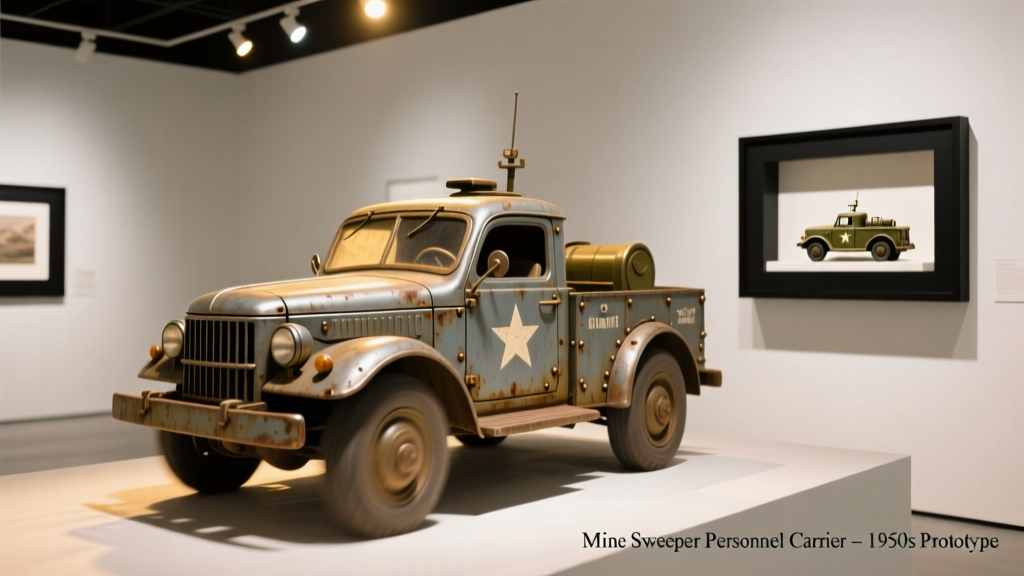
Toy Mine Sweeper Personnel Carrier: Authentication, Market Value, and Historical Context of a Cold War-Era Military Plaything
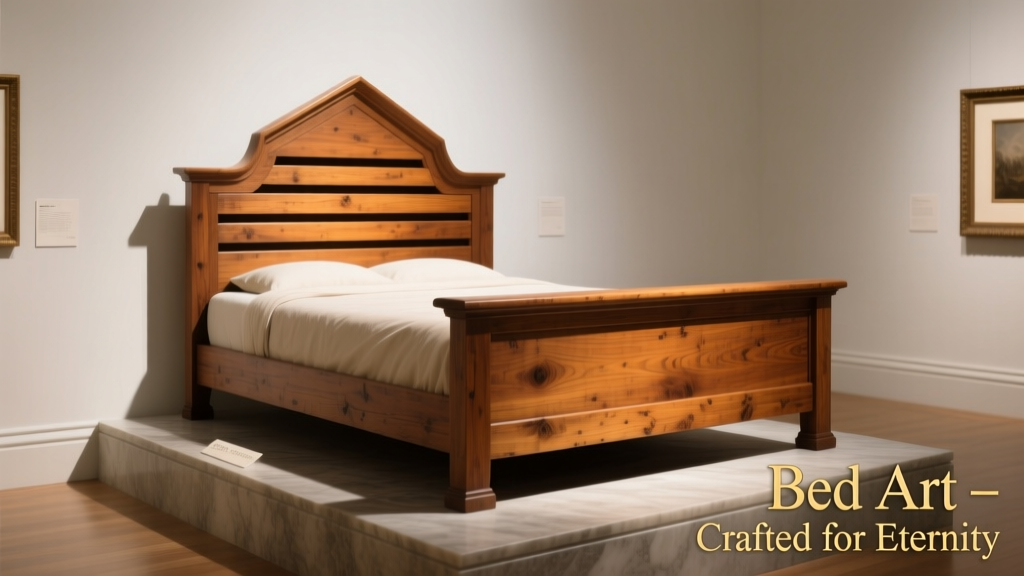
Arts & Crafts Bed Analysis: Peaked Top Rail, Five-Slat Design, and Authentic Period Construction (46 × 81 × 44 in)

Heisey Old Glory Cordial: Authentication, Production History, and the Renaissance Etch Variant
Authentication Dossier: Print ID 1138904 — A Technical and Provenance Analysis of a Documented Andy Warhol Screenprint
Dinnerware-Friendly Village Cup & Saucer 'Ice House' by Johnson Bros (Pattern No. 2): Authentication, Market Value, and Functional Utility Analysis

Jacob Hollinshead: Authentication, Market Position, and the Evolving Landscape of Contemporary British Printmaking
Marx Toy Moonbase Playset Instructions: Decoding the Iconic 1960s Space-Age Packaging and Authenticity Framework
The Hancock Corfield Pitcher: Authentication, Market Value, and Historical Context of a Mid-Century American Studio Ceramic
Jasperware Plaque with Continental Frame: Authentication, Provenance, and Market Analysis of the Oval 4½ × 5-Inch Pair