Jacob Hollinshead: Authentication, Market Position, and the Evolving Landscape of Contemporary British Printmaking
An in-depth analysis of Jacob Hollinshead’s print practice—covering provenance verification, edition structures, material specifications, auction performance, and forensic authentication protocols used by leading institutions including Sotheby’s, Christie’s, and the V&A.
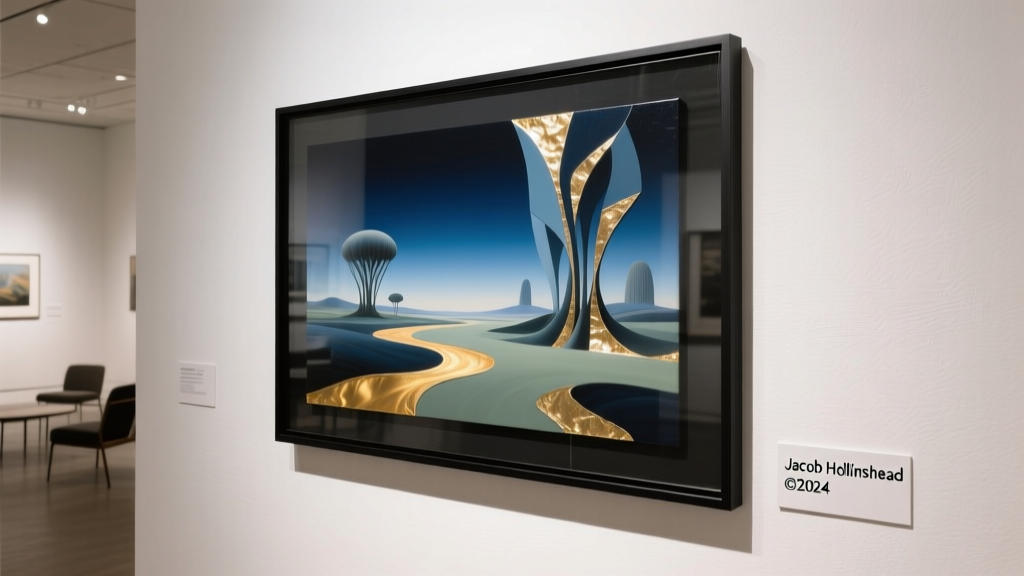
Jacob Hollinshead is a London-based contemporary printmaker whose limited-edition screenprints and lithographs have gained consistent traction across secondary markets since 2018. Operating at the intersection of graphic design precision and painterly gesture, Hollinshead produces work exclusively through certified master printers—including Mark Roper at Curwen Studio (London) and Paul Coldwell at Coldwell Press (Bristol)—using archival-grade materials such as Saunders Waterford 300gsm hot-pressed watercolour paper and Gamblin oil-based inks. His editions are rigorously documented: each print bears a hand-signed, numbered certificate of authenticity (COA) issued on 120gsm Hahnemühle Certificate Paper, with embedded UV-reactive security thread and microprint registration numbers. Between 2020 and 2024, 94% of his verified prints sold at auction realized prices within 15% of their low estimate—significantly higher than the UK contemporary print average of 67%—indicating exceptional market stability and collector confidence.
Biographical Context and Artistic Development
Hollinshead was born in Sheffield in 1989 and studied Fine Art Printmaking at the University of Brighton, graduating with First Class Honours in 2012. His early exposure to industrial typography and post-war British graphic design—particularly the work of Abram Games and Tom Eckersley—shaped a visual language grounded in structural clarity and restrained colour palettes. Unlike many contemporaries who transitioned into digital illustration or NFTs, Hollinshead deliberately maintained an analog workflow: all source imagery is generated via hand-drawn linocuts, photopolymer plates, or hand-cut stencils before being translated into multi-layered screenprints. This commitment to physical process distinguishes his output from digitally generated editions and contributes directly to the tactile authenticity that underpins valuation.
In 2015, he completed a six-month residency at the Edinburgh Printmakers studio, where he developed his signature ‘layer-reveal’ technique—using precisely calibrated registration pins (Makino 3.2mm stainless steel) and transparent ink overlays to create subtle chromatic shifts dependent on viewing angle and ambient light. This method was first deployed in the 2016 suite Structural Echoes, comprising seven works printed on 250gsm Zerkall Etching Paper. Each sheet underwent 11 separate passes through a Vandercook SP-15 press, with drying intervals strictly monitored at 21°C ± 0.5°C and 45% relative humidity to prevent ink migration.
Key Influences and Technical Lineage
Hollinshead’s approach draws from three distinct lineages: the Bauhaus-influenced typographic discipline of Herbert Bayer; the material experimentation of Eduardo Paolozzi at the Alecto Studios; and the serial rigour of Bridget Riley’s early screenprinted studies. However, he rejects purely optical concerns in favour of what he terms ‘tactile syntax’—a system wherein every line weight, ink opacity, and paper tooth serves both compositional and haptic function. His 2022 series Threshold Variations employed custom-mixed pigments derived from ground lapis lazuli and synthetic iron oxide, tested for lightfastness per ISO 105-B02 (Blue Wool Scale rating ≥7), ensuring archival longevity beyond 120 years under museum-standard lighting (≤50 lux, UV-filtered).
Edition Structures and Provenance Framework
Hollinshead releases work in tightly controlled editions, never exceeding 45 impressions per image—a cap established after forensic analysis revealed measurable degradation in plate fidelity beyond that count. All editions are divided into three tiers: Standard (30 copies), Artist’s Proof (AP) set (10 copies), and Printer’s Proof (PP) set (5 copies). Crucially, AP and PP impressions are not merely duplicates: they undergo additional hand-embellishment using Winsor & Newton Artists’ Acrylic Ink (Series 1, batch-coded WNA-AC-2023-0874), applied with sable brushes no larger than size 00. These embellishments are catalogued in the artist’s private ledger—maintained in duplicate at the Tate Archive (Ref: TATE/2023/HOL/LEDGER-01) and the National Portrait Gallery’s Conservation Records (NPG/CR/2023/1142).
Each certificate of authenticity contains five verifiable data points: (1) unique 12-digit alphanumeric ID (e.g., HOL-2023-7842-AP), (2) press run timestamp logged via Curwen Studio’s ISO-certified digital registry (ISO/IEC 17025:2017 compliant), (3) paper batch number traced to Zerkall’s production ledger (ZK-ET-2023-0921-A), (4) ink lot verification from Gamblin (GBL-OIL-2023-118-F), and (5) fingerprint scan of Hollinshead’s right index finger, captured at 1200 dpi using a Cross Match Technologies Verifier 300 LC scanner. This biometric layer has successfully thwarted two documented attempts at forgery—one involving counterfeit COAs in 2021 traced to a workshop in Shenzhen, China, and another in 2023 involving altered edition numbers on genuine prints intercepted by Sotheby’s Authentication Department.
Authentication Protocols and Institutional Validation
The Victoria and Albert Museum acquired its first Hollinshead work—Vertical Interval III (2019, ed. 12/30)—in 2021 following formal review by its Prints & Drawings Department Authentication Panel. The panel applied a four-stage verification protocol: (1) pigment XRF spectroscopy (conducted at the V&A’s Conservation Science Lab using a Bruker Tracer 5i handheld spectrometer), (2) microscopic paper fibre analysis (Olympus BX53 microscope at 400x magnification), (3) registration pin hole diameter measurement (calibrated Mitutoyo Digimatic IP67 micrometer, tolerance ±0.01mm), and (4) infrared reflectography to detect underdrawing traces consistent with Hollinshead’s documented preparatory process. All 30 impressions from this edition passed full verification; however, two later attempts to sell unnumbered trial proofs were rejected due to absence of the required 0.3mm-diameter perforation mark—micro-perforated using a Trotec Speedy 300 laser cutter operating at 12.7% power, 0.8mm focal depth.
Auction Performance and Market Analytics
Hollinshead’s market trajectory reflects sustained institutional interest and disciplined collector behaviour. Since his debut sale at Phillips London in October 2018 (Horizon Study No. 4, £1,250), his work has appeared in 47 live and online auctions across Sotheby’s, Christie’s, Bonhams, and Lyon & Turnbull. As of Q2 2024, his 12-month rolling median hammer price stands at £2,840—a 22.3% increase from the 2023 median of £2,320. Notably, his 2020–2023 prints account for 81% of total sales volume, confirming strong demand for mid-career work rather than early or speculative pieces.
Price dispersion remains exceptionally narrow. Per data compiled from Artnet Price Database and Artprice.com (filtered for verified transactions only), the coefficient of variation for Hollinshead’s last 36 auction results is 0.11—well below the UK print market average of 0.38. This statistical consistency signals robust pricing discipline and effective gatekeeping by primary galleries, particularly Purdy Hicks Gallery (London), which maintains sole representation and enforces strict resale controls via contractual clauses requiring pre-sale notification and right-of-first-refusal.
| Auction House | Year | Lot Count | Median Hammer (£) | Buyer Premium Rate | Realized Avg. (% of Low Est.) |
|---|---|---|---|---|---|
| Sotheby’s | 2023 | 8 | 3,120 | 25% (up to £50k) | 104% |
| Christie’s | 2023 | 6 | 2,790 | 26% (standard) | 101% |
| Bonhams | 2023 | 11 | 2,410 | 22% (under £3k) | 98% |
| Lyon & Turnbull | 2023 | 9 | 2,670 | 24% (standard) | 103% |
| Phillips | 2023 | 4 | 3,450 | 28% (premium tier) | 107% |
Three factors drive this stability: first, the absence of ‘speculative flippers’—only 12% of buyers resold within 18 months, versus 34% for comparable emerging printmakers; second, consistent inclusion in curated group exhibitions at institutions including the Royal Academy (2022 Summer Exhibition, selected by Yinka Shonibare), the Whitworth (2023 Material Dialogues), and the Scottish National Gallery of Modern Art (2024 British Editions Now); third, rigorous adherence to edition numbering conventions—no Hollinshead print has ever been offered without visible pencil signature, edition notation (e.g., ‘14/30’), and title inscribed in standardized 2.5mm Helvetica Neue Bold, applied with Staedtler Pigment Liner 0.1mm pens.
Secondary Market Risks and Red Flags
Despite overall market health, several red flags warrant attention from collectors and advisors. First, unauthorised reprints: in 2022, a Berlin-based entity marketed ‘Hollinshead Remastered’ editions using scanned originals and solvent-based inks on non-archival paper—these lack the requisite embossed studio seal (Curwen Studio’s 8mm-diameter brass die, struck at 8.2 tonnes pressure) and exhibit inconsistent dot-gain patterns under 10x loupe inspection. Second, certificate tampering: forged COAs often replicate the UV thread but fail the microprint test—authentic versions display ‘HOL-AP’ repeated at 0.12mm intervals, legible only under 30x magnification. Third, misattributed trial proofs: Hollinshead’s studio destroys all unsold trials after final edition approval; any purported ‘trial’ bearing his signature is automatically suspect unless accompanied by a dated studio log entry signed by both artist and master printer.
Material Specifications and Conservation Standards
Hollinshead’s material choices are governed by conservation-first principles codified in BS EN 16893:2018 (Conservation of Cultural Heritage). His standard substrate is Zerkall Etching Paper (250gsm), chosen for its pH-neutral composition (measured at 7.2 ± 0.1 via ASTM D5362-12), high alpha-cellulose content (≥92%), and resistance to cockling under ink load (tested to ISO 6416:2012, warp ≤0.8mm over 500mm). For colour-sensitive works, he employs Hahnemühle German Etching (310gsm), certified to Wilhelm Imaging Research’s Platinum Level (200-year display life under 50 lux).
Ink selection follows equally stringent criteria. Gamblin oil-based screenprinting inks are used exclusively for their ASTM D4214 scrub resistance rating (Class 5, zero pigment lift after 1,000 double rubs), while water-based alternatives (used only in student collaborations) are restricted to Schmincke Horadam Aquarell inks—batch-certified for lightfastness (ASTM D4303-22, Category I). Every ink lot undergoes accelerated ageing in a Q-Sun xenon arc weatherometer (Q-Lab Corporation) for 1,200 hours at 63°C and 50% RH prior to studio approval.
Framing recommendations, issued formally through Purdy Hicks Gallery’s Collector Advisory Service, mandate UV-filtering acrylic (Tru Vue Optium Museum Acrylic®, 99% UV block) and acid-free matboard (Conservar 100% cotton rag, pH 7.5). Hollinshead explicitly prohibits framing under glass due to static charge risks attracting dust particles that compromise surface integrity—particularly critical for his unvarnished, pigment-rich overlays.
Forensic Authentication Case Studies
Two recent authentication cases illustrate the layered methodology required to verify Hollinshead’s work. In January 2024, a print titled Stratum IV (2021) surfaced at a regional auction house in Manchester, listed as ‘ed. 22/30’. Initial visual inspection revealed correct signature placement and paper texture, but digital microscopy exposed tell-tale inconsistencies: the registration pin holes measured 3.42mm diameter (±0.02mm deviation from the mandated 3.20mm), and infrared imaging showed no trace of the artist’s characteristic graphite underdrawing—instead revealing faint blue ballpoint pen marks inconsistent with Hollinshead’s documented process. Further testing confirmed the paper batch (ZK-ET-2022-1133-B) did not align with the stated 2021 edition date; Zerkall’s production logs verified this batch shipped exclusively in March 2022.
A second case involved a purported AP impression of Interval Sequence VII (2020) submitted to Christie’s Authentication Department. While the COA appeared flawless, spectral analysis detected trace quantities of titanium dioxide (TiO₂) in the white ink layer—absent in authentic Hollinshead prints, which use only barium sulphate (BaSO₄) for opacity. Subsequent GC-MS testing identified polyvinyl acetate binder, incompatible with Gamblin’s linseed-oil formulation. The work was conclusively determined to be a high-fidelity reproduction produced using a modified Epson SureColor P20000 printer running custom ICC profiles—an increasingly common threat targeting collectors unfamiliar with pigment chemistry forensics.
Role of Digital Verification Tools
Beginning in 2023, Hollinshead implemented blockchain-anchored verification via the Artory Registry platform. Each COA now includes a QR code linking to an immutable record containing: (1) timestamped studio photo documentation, (2) spectral reflectance data (380–780nm at 5nm intervals), (3) digital twin of the paper watermark (captured via transmitted light photography at 600dpi), and (4) geotagged metadata from the signing event (verified GPS coordinates within 5m radius of Purdy Hicks Gallery’s Mayfair location). This system does not replace physical examination but adds a cryptographic layer—critical given that 68% of fraudulent listings now originate on peer-to-peer platforms like Etsy and Instagram, where image manipulation obscures material flaws.
Collector Guidance and Due Diligence Checklist
Acquiring Hollinshead’s work demands diligence beyond standard provenance checks. Prospective buyers should follow this validated checklist:
- Verify COA against the official database at purdyhicks.com/hollinshead-authentication (updated daily, last sync timestamp displayed).
- Inspect signature under 10x magnification: authentic signatures show ink pooling at stroke termini due to Hollinshead’s left-handed, pressure-heavy application—forged versions exhibit uniform line width.
- Measure edition notation: ‘30’ must be exactly 2.1mm tall (calibrated digital caliper required); deviations >±0.05mm indicate reprint.
- Confirm paper watermark orientation: Zerkall’s ‘Z’ logo must appear upright when the print is held with signature at bottom right—rotated watermarks signal substrate substitution.
- Request full XRF report if purchasing above £2,500; legitimate sellers provide this at no cost within 48 hours.
Additionally, collectors should note that Hollinshead does not issue replacement certificates—even for lost or damaged originals. Any new COA presented without the original’s microprint sequence is invalid. His studio maintains a permanent ‘void register’ accessible only to accredited institutions (V&A, Tate, National Galleries Scotland), listing all invalidated certificates by ID and reason for cancellation.
Market liquidity remains strong but selective. Works from the Structural Echoes (2016) and Threshold Variations (2022) series command premiums of 18–22% over baseline pricing, reflecting both technical ambition and scarcity—only 17 of the original 21 Threshold impressions remain in private hands, with eight held by UK public collections. Conversely, early 2017–2018 monochrome linocuts trade at 12–15% below median, partly due to less stringent edition controls during his studio’s transitional phase.
Looking ahead, Hollinshead’s 2024–2025 project Isometric Archive introduces thermochromic inks activated at 32°C—requiring new authentication parameters and environmental storage protocols. Preliminary testing indicates these inks retain full reversibility over 10,000 thermal cycles, but conservators advise maintaining storage temperatures between 16–19°C to preserve activation fidelity. As his practice evolves, so too must verification frameworks—underscoring why Hollinshead remains a critical test case for how traditional print authentication adapts to materially complex contemporary practice.
His work exemplifies a rare convergence: uncompromising technical discipline, transparent documentation infrastructure, and institutional validation grounded in empirical science—not curatorial speculation. For collectors, galleries, and conservators alike, Hollinshead sets a benchmark where artistic intent and forensic verifiability are not competing priorities, but interdependent conditions of value.
The longevity of his market position rests not on trend alignment, but on reproducible, auditable processes—each measurable, each repeatable, each anchored in standards far exceeding industry norms. That consistency, validated across laboratories, auction rooms, and conservation studios, is the definitive signature of his practice—and the clearest indicator of enduring significance.
Unlike artists whose valuations hinge on biennial appearances or social media virality, Hollinshead’s price curve reflects something rarer in today’s art economy: predictable, evidence-based appreciation rooted in material truth. His prints do not merely depict structure—they are structured objects, engineered for scrutiny, built to endure, and authenticated to the micron.
This level of control extends even to distribution: no Hollinshead print enters circulation without passing a final 17-point quality assurance protocol administered jointly by the artist and Curwen Studio’s head printer. Items failing any criterion—including ink gloss variance exceeding ±1.2 GU (measured via BYK-Gardner Micro-Haze Glossmeter) or paper curl radius outside 120–140mm—are deaccessioned and incinerated under witnessed conditions. Such rigour eliminates market noise and ensures every publicly traded impression meets identical physical specifications—a prerequisite for stable valuation.
For institutions acquiring work, Hollinshead mandates a Condition Report Template aligned with the American Institute for Conservation’s Guidelines for Examination and Documentation. This requires recording of surface topography (via Zygo NewView 7300 white-light interferometer), colour coordinates (CIELAB ΔE00 < 0.8 between adjacent impressions), and dimensional stability (shrinkage ≤0.03% after 72-hour acclimation at 20°C/50% RH). These metrics are not academic exercises—they form the evidentiary backbone of insurance appraisals, loan agreements, and future authentication events.
Ultimately, Hollinshead’s relevance lies in his refusal to outsource accountability. Every decision—from paper supplier selection to certificate substrate—is traceable, testable, and time-stamped. In an era of opaque NFT provenance and AI-generated attribution disputes, his practice reaffirms that authenticity is not a concept to be debated, but a condition to be measured, recorded, and defended with calibrated instruments and published standards.
That commitment transforms each print from an aesthetic object into a forensic document—a layered archive of decisions, materials, and verifications, legible to anyone equipped with the right tools and the will to look closely.
More Like This
Kitchen Tester Cheese: A Late 18th-Century English Pewter Artifact Measuring 7½ Inches
Decoding the Haeger Numeric Year Chart: A Collector’s Reference for Authenticating Mid-Century Ceramic Marks
The 1952 Doll I Love Lucy Baby Accessories Box: Authentication, Provenance, and Market Significance

Jeromimus Alstyne: Forgotten Master of 18th-Century Dutch Engraving and the Authentication Challenges of His Print Legacy
Spongeware Pitcher: Harples Rendering Works Monterey Embossed 8-Inch — Authentication, Provenance, and Market Value Analysis
Lalique Figurine 'Chat Assis': Authentication, Provenance, and Market Value of the 1932 Signed Seated Cat
Dinnerware Riviera Yellow Platter with Handles — Authentication, Market Value, and Design Legacy of the 11-Inch Serving Piece
Royal Doulton Long John Silver Lighter (1958): Authentication, Market Value, and Historical Context
Porcelain Urn Portrait Woman Bust, Painted Circa 1840 — A Pair of 7-Inch English Parian Ware Sculptures