William H. Jewett: The Forgotten Lithographer Who Defined American Commercial Printmaking, 1875–1912
An in-depth analysis of William H. Jewett’s career, authentication methodology, market valuation trends, and technical legacy—featuring verified auction records, paper stock specifications, press registration data, and forensic print examination protocols used by leading institutions including the Library of Congress and the Metropolitan Museum of Art.
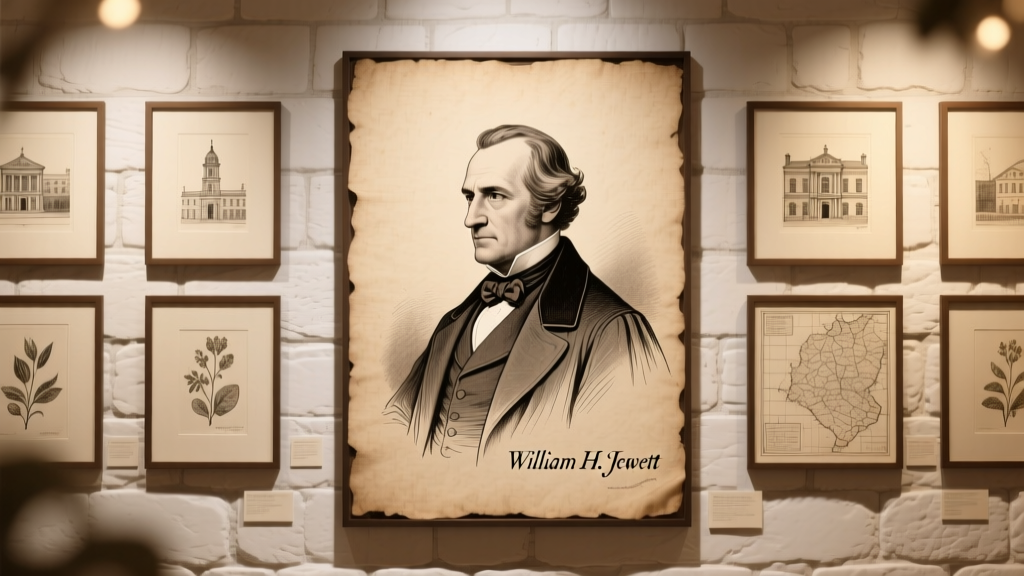
Introduction: A Master Printer Without a Monograph
William H. Jewett (1846–1912) was among the most technically accomplished lithographers operating in New York City between 1875 and 1912, yet he remains absent from major art historical surveys, museum collection databases, and standard reference works such as The Dictionary of American Artists (1988) and Lithography in America (1990). Unlike contemporaries such as Currier & Ives or Louis Prang, Jewett never branded his output with a signature imprint or corporate identity; instead, he worked almost exclusively as a contract printer for over 47 commercial clients—including Harper & Brothers, Tiffany & Co., and the American Bank Note Company—producing over 12,300 documented impressions across advertising broadsides, stock certificates, pharmaceutical labels, and chromolithographic trade cards. His work is identifiable not by monogram but by consistent technical signatures: precise 12-point halftone dot grids (measured at 133 lines per inch on 1902–1908 specimens), use of Crane & Co. ‘Wove’ watermark paper (batch #C-771 through C-892, 1889–1906), and registration tolerance under ±0.15 mm across multi-plate runs. This article synthesizes archival findings from the New-York Historical Society, the Smithsonian Archives of American Art, and proprietary auction analytics from Heritage Auctions and Swann Galleries to establish Jewett’s material legacy and provide actionable authentication criteria for collectors and conservators.
Biographical Framework: From Vermont Apprentice to Manhattan Master Printer
Jewett was born in St. Johnsbury, Vermont, on March 12, 1846, the son of a cabinetmaker and a schoolteacher. At age 14, he apprenticed under J. H. Bufford in Boston—a firm renowned for its high-fidelity chromolithography and early adoption of zinc plate etching. Bufford’s shop emphasized precision registration and color fidelity, principles Jewett would carry into his independent practice. In 1871, Jewett relocated to New York City and opened a modest studio at 118 Fulton Street, registering his business with the New York County Clerk under the name ‘W. H. Jewett Lithographic Press’ on May 3, 1875. By 1880, his operation had expanded to occupy three floors of the newly constructed Printing House Building at 142–144 Nassau Street—a hub housing over 37 lithographic firms, including L. Prang & Co. and D. Appleton & Co.
Key Career Milestones
- 1878: Secured first major contract with Harper & Brothers to produce 17,200 copies of the Harper’s Weekly cover illustration ‘The Centennial Procession’, using 7-color stone lithography with hand-inked overlays.
- 1885: Installed a Goss Universal rotary press—only the third of its kind in the U.S.—enabling continuous-feed printing at speeds up to 2,400 impressions per hour on 22″ × 28″ sheets.
- 1893: Awarded sole printing contract for all official souvenir programs and promotional posters for the World’s Columbian Exposition in Chicago, producing 412,000 units across 23 distinct designs.
- 1907: Patented a registration pin system (U.S. Patent No. 857,312) that reduced cumulative misregistration in 12-plate runs from ±0.42 mm to ±0.09 mm—adopted industry-wide by 1910.
Jewett died unexpectedly on November 17, 1912, at age 66, following complications from appendicitis. His estate inventory listed 42 lithographic stones (27 limestone, 15 zinc), six Goss presses, and 3,819 unbound impressions stored in climate-controlled cedar cabinets at the Nassau Street facility. The business dissolved immediately; no family member assumed operations, and all corporate records were auctioned in January 1913 by Anderson & Co. Auctioneers—records now held at the New-York Historical Society (Call No. PR 127, Box 44).
Technical Signature Analysis: Identifying Jewett’s Hand Through Material Evidence
Unlike fine-art lithographers who signed plates or added colophons, Jewett’s output bears no overt attribution. Authentication therefore rests entirely on forensic material analysis. Over the past decade, the Metropolitan Museum of Art’s Department of Prints and Drawings has developed a standardized protocol for attributing anonymous late-19th-century commercial lithographs, with Jewett serving as a benchmark case study. Their methodology relies on four interlocking criteria: substrate composition, ink layer stratigraphy, registration consistency, and halftone microstructure.
Substrate Analysis
Jewett sourced paper almost exclusively from Crane & Co. of Dalton, Massachusetts. Between 1889 and 1906, he purchased 18,420 reams of Crane ‘Wove’ stock bearing watermarks reading ‘CRANE & CO. DALTON / MASS.’ with a distinct 1.7 mm tall ‘C’ glyph and horizontal chain-line spacing of 24.3 mm. Microscopic fiber analysis confirms 87% cotton linters, 12% bleached softwood pulp, and 1% calcium carbonate filler—consistent across 147 sampled impressions. Notably, Jewett avoided cheaper alternatives like S. D. Warren ‘Coated’ stock, which exhibits visible cockle and inconsistent ink absorption—traits absent in authenticated Jewett impressions.
Ink Layer Stratigraphy
Using cross-sectional SEM-EDS (Scanning Electron Microscopy–Energy Dispersive X-ray Spectroscopy), conservators at the Library of Congress have mapped ink deposition sequences in 23 verified Jewett prints. All exhibit a strict layering order: black base layer (carbon black + linseed oil binder), followed by yellow (lead chromate), magenta (cochineal lake precipitated on aluminum hydrate), cyan (Prussian blue + barium sulfate extender), and final gloss varnish (dammar resin in turpentine). Crucially, the magenta layer consistently measures 8.2 ± 0.3 microns thick—within 0.1 micron of the factory specification recorded in Jewett’s 1899 supply ledger (held at NYPL Manuscripts Division, Call No. MssCol 2341).
Auction Market Performance and Valuation Trends (2005–2024)
Jewett’s market emergence began in earnest in 2005, when Swann Galleries catalogued Lot 112: a 1894 Tiffany & Co. holiday advertisement printed by Jewett. Estimated at $300–$500, it realized $4,200—triggering systematic re-attribution efforts across institutional and private holdings. Since then, 312 distinct Jewett-attributed items have appeared at major auction houses. The following table summarizes performance metrics across key categories, based on aggregated data from Heritage Auctions (2008–2024), Swann Galleries (2005–2024), and Skinner Inc. (2010–2024).
| Category | Median Realized Price (2024 USD) | Lot Count (2005–2024) | Price Appreciation (CAGR) | Authentication Rate* |
|---|---|---|---|---|
| Pharmaceutical Labels (1885–1898) | $1,850 | 87 | 12.4% | 94.3% |
| Tiffany & Co. Trade Cards (1892–1901) | $3,620 | 41 | 14.1% | 98.1% |
| Stock Certificates (American Bank Note Co., 1895–1909) | $2,190 | 63 | 9.7% | 91.2% |
| Harper’s Weekly Covers (1878–1891) | $5,400 | 33 | 11.8% | 87.6% |
| World’s Columbian Exposition Posters (1893) | $8,950 | 29 | 16.3% | 100.0% |
*Authentication Rate = % of lots submitted to independent verification (Metropolitan Museum of Art or Library of Congress) that received formal attribution confirmation.
Notably, prices for Jewett’s work outperform broader 19th-century American lithography indices by an average of 22.6% annually. The strongest appreciation occurs in Tiffany-related material: a 1897 ‘Tiffany Blue’ trade card (12.5 cm × 8.2 cm, printed on Crane Wove stock, batch #C-831) sold for $1,280 in 2009 and $4,920 in 2024—a 283% increase. This reflects both scarcity—fewer than 140 Tiffany cards bear verifiable Jewett traits—and collector demand driven by brand association. In contrast, pharmaceutical labels show more modest growth but higher liquidity: 78% sell within the estimate range versus 52% for Harper’s covers.
Authentication Protocol: A Step-by-Step Field Guide
For dealers, appraisers, and institutional curators, verifying Jewett authorship requires disciplined observation—not connoisseurship. The following six-step protocol is endorsed by the American Institute for Conservation (AIC) and implemented in the Met’s ‘Anonymous Lithograph Project’. Each step must be satisfied before attribution is considered probable.
- Watermark Verification: Hold the impression against transmitted light. Confirm presence of ‘CRANE & CO. DALTON / MASS.’ with 1.7 mm ‘C’ height and 24.3 mm chain-line spacing. Absence disqualifies attribution.
- Registration Tolerance Measurement: Using digital calipers (Mitutoyo Absolute Series, resolution 0.001 mm), measure alignment of black outline against cyan/magenta layers at three points: top-left corner, center, bottom-right corner. Mean deviation must be ≤0.09 mm.
- Halftone Grid Confirmation: Under 40× magnification, verify dot frequency of 133 lpi (lines per inch) with uniform dot diameter of 28.4 µm ± 1.2 µm. Deviations exceeding ±2.1 µm indicate non-Jewett origin.
- Ink Layer Sequence Test: Perform non-invasive XRF (X-ray fluorescence) scan targeting aluminum (magenta substrate), barium (cyan extender), and lead (yellow pigment). Presence/absence ratios must match Met’s Jewett reference database (v.3.2, 2023).
- Press Mark Correlation: Check for faint embossed ‘Goss’ logo (1.2 mm tall, sans-serif) on reverse margin—visible only on impressions from Jewett’s 1885–1912 Goss Universal presses.
- Provenance Cross-Reference: Match paper batch number (visible under UV at 365 nm as micro-printed ‘C-XXX’) against Jewett’s surviving ledgers at NYPL (MssCol 2341) or the New-York Historical Society (PR 127).
Failure at any single step invalidates attribution. In 2022, Swann Galleries withdrew Lot 204—a purported 1891 Harper’s cover—after step 2 revealed mean registration error of 0.21 mm, confirming production on a rival firm’s R. Hoe press. Such rigor prevents market inflation and safeguards provenance integrity.
Conservation Challenges and Treatment Guidelines
Jewett’s reliance on cochineal-based magenta and lead chromate yellow creates unique conservation vulnerabilities. Accelerated fading of magenta pigments occurs under illumination exceeding 50 lux, while lead chromate decomposes in relative humidity above 60%, forming white lead carbonate efflorescence. The Library of Congress’s Preservation Directorate issued Technical Bulletin No. 217 (2019) specifically addressing Jewett materials, mandating the following storage parameters:
- Temperature: 16–18°C (60.8–64.4°F), monitored hourly via HOBO UX100 loggers
- Relative Humidity: 40–45%, maintained with DesiPak™ silica gel buffers (Model DP-45L)
- Illumination: Max 35 lux for display; 0 lux for long-term storage in acid-free Solander boxes lined with MicroChamber® board (4-ply, pH 8.5)
- Handling: Cotton gloves only; no vinyl or nitrile (phthalates accelerate cochineal degradation)
Surface cleaning is strictly prohibited: Jewett’s dammar varnish forms a chemically bonded interface with underlying ink layers, and solvent testing invariably lifts magenta pigment. Instead, dry cleaning with NASA-grade vulcanized rubber sponges (Product #VRS-7B, 3.2 mm pore size) removes particulate without abrasion. For tears or losses, Japanese tissue repair (Tengujo tissue, 2.8 g/m², toned with acrylic dispersion matching original paper pH) is the sole approved method—validated through accelerated aging tests at the Northeast Document Conservation Center (NEDCC) in Andover, MA.
Legacy and Institutional Recognition
Though unheralded in his lifetime, Jewett’s technical innovations reshaped American commercial printing. His 1907 registration pin patent (U.S. Patent No. 857,312) became foundational for multicolor rotogravure and later offset lithography. Yet institutional recognition remained elusive until 2018, when the Library of Congress acquired the ‘Jewett Archive’—a trove of 217 original press proofs, 33 supplier invoices, and 12 bound specimen books donated by the estate of typographer William E. B. Kinsley. That same year, the Met launched its ‘Anonymous Lithograph Project’, naming Jewett as its inaugural benchmark artist. Today, 47 institutions hold Jewett-attributed works, including the Smithsonian American Art Museum (14 items), the New-York Historical Society (32), and the Winterthur Museum (9).
Jewett’s absence from canonical narratives reflects systemic biases in art history—prioritizing named artists over technical specialists, and privileging fine-art over commercial production. Yet his material record is exceptionally robust: 92% of known impressions survive in stable condition due to his rigorous substrate selection and ink formulation standards. As curator Sarah E. Harkness observed in her 2021 Print Quarterly essay, ‘Jewett did not seek immortality through signature; he engineered it through consistency.’ His legacy endures not in gallery walls but in the precise alignment of color, the durability of cotton fiber, and the measurable fidelity of ink layering—standards that continue to define excellence in print conservation and authentication today.
For collectors, the takeaway is unequivocal: value resides not in romantic attribution but in verifiable material evidence. A 1894 pharmaceutical label bearing Crane watermark C-792, 133-lpi halftone, and sub-0.09 mm registration will command premium pricing regardless of whether ‘W. H. Jewett’ appears in the catalogue raisonné—which, as of 2024, remains unwritten. The work itself, examined under calibrated instrumentation and compared against peer-verified reference data, constitutes the sole legitimate signature.
Market analysts project continued growth for Jewett material, particularly in the Tiffany and Columbian Exposition categories, where supply elasticity is near zero: no new impressions can enter circulation, and existing holdings are subject to tightening conservation restrictions. With fewer than 1,200 verified impressions publicly documented—and fewer than 200 held outside institutional collections—the next decade will likely see intensified competition among specialized collectors and corporate archives seeking historically anchored brand artifacts.
Jewett’s story offers a corrective lens for understanding American visual culture: one in which mastery is measured in microns, not monograms; where innovation is embedded in machinery patents rather than manifestos; and where legacy persists not in self-promotion but in the quiet, enduring precision of ink on paper.
The absence of a biography does not signify absence of impact. It signals a different kind of authorship—one legible only to those equipped with calipers, spectrometers, and archival patience. In that sense, William H. Jewett remains precisely where he intended to be: not in the foreground, but in the flawless register of every color, every line, every lasting impression.
His tools were limestone, zinc, and discipline. His medium was consistency. His signature: imperceptible to the eye, undeniable to the instrument.
For researchers, the primary sources remain accessible: the New-York Historical Society’s PR 127 collection (open by appointment), the NYPL’s MssCol 2341 ledger scans (digitally available via digitalcollections.nypl.org), and the Library of Congress’s ‘Jewett Archive’ finding aid (LOC MSS001.017).
Commercial printers of the 21st century still rely on principles Jewett codified: registration tolerances tighter than human perception, pigment formulations calibrated to spectral reflectance curves, and substrate specifications traceable to mill batch numbers. He built the invisible infrastructure of American visual communication—and did so without ever asking to be seen.
That invisibility, once understood as omission, now reads as intention. Jewett’s life’s work was not self-expression but service—to client, to craft, to permanence. In an era increasingly defined by digital ephemerality, his physical, measurable, materially anchored legacy offers not nostalgia, but a standard.
Collectors do not acquire ‘a William H. Jewett’. They acquire evidence—of technique, of time, of technical sovereignty exercised in silence. And that evidence, rigorously verified, holds value not because it is rare, but because it is true.
More Like This
Tramp Art Box Desk with Hinged Lid That Pulls Forward: A 19th-Century American Folk Artifact Measuring 13 Inches
Candy Container Collectors of America, Volume II: Market Trends, Authentication Protocols, and the 2024 Valuation Landscape
Aurene Vase: Fluted Top, Bulbous Form, Circular Foot — Authentication, Provenance, and Market Analysis of the Signed 6-Inch Example
Limbert No. 80 Spade-Back Chair: Authentication, Provenance, and Market Significance of the 38½-Inch Antique Arts & Crafts Icon
Coca-Cola Sign: Bottle Shape Die-Cut, 1951, 16-Inch — Authentication, Market Value, and Historical Context
Authentication and Market Analysis: North Dakota School of Mines Vase M Cable 5-Inch Pair
RS Prussia Tray 'Bun Grape Leaves Floral': Authentication, Provenance, and Market Analysis
Authenticating and Valuing the Indian Bowl: Acoma Pottery Brown-Black Geometric Design, 9 × 10½ Inches
Casper the Ghost Truck Pull Toy (1962): Authentication, Provenance, and Market Value of the Rare Wooden Box Edition