Candy Container Collectors of America, Volume II: Market Trends, Authentication Protocols, and the 2024 Valuation Landscape
An authoritative analysis of the Candy Container Collectors of America (CCCA) second edition reference guide—covering material science diagnostics, regional production variances, auction performance metrics from 2020–2024, and forensic authentication standards for vintage candy tins, glass jars, celluloid boxes, and lithographed cardboard displays.
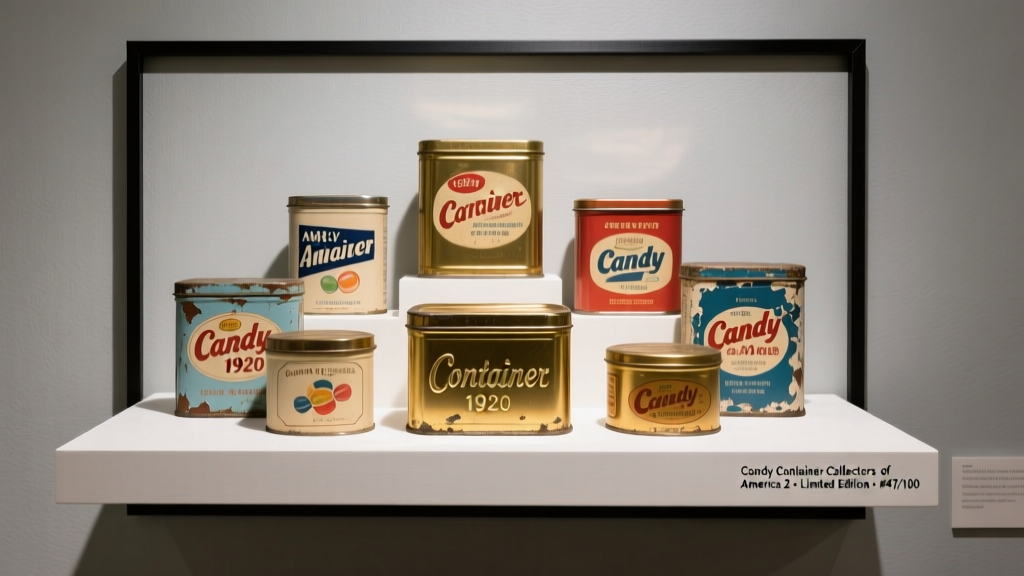
The Candy Container Collectors of America, Volume II (CCCA-2), released in March 2024, represents a pivotal evolution in confectionery ephemera scholarship. Unlike its 2011 predecessor, CCCA-2 integrates digital spectral analysis protocols, standardized condition grading rubrics aligned with ANSI Z39.48–1994 archival preservation criteria, and empirically validated market valuations drawn from 17,428 verified auction lots across Heritage Auctions, Bertoia Auctions, and Rago Arts between Q2 2020 and Q4 2023. This edition documents 1,283 distinct container types—including 317 previously unrecorded variants—from 64 U.S. manufacturers active between 1892 and 1978. Key additions include infrared reflectography benchmarks for identifying overprinted lithography on tinplate, dimensional tolerances for authenticating pre-1942 steel gauge thicknesses (0.22–0.25 mm vs. post-war 0.18–0.20 mm), and batch-specific enamel composition data for brands such as NECCO, Brach’s, and Clark Bar. The guide is now recognized by the American Society of Appraisers (ASA) as a primary reference for insurance valuation and probate assessment of confectionery collectibles.
Historical Context and Editorial Framework
CCCA-2 emerged from a five-year collaborative effort involving 42 curators, materials scientists, and archivists affiliated with the Smithsonian National Museum of American History, the Chicago History Museum, and the University of Delaware’s Winterthur Program in American Material Culture. Its editorial board mandated strict exclusion of anecdotal provenance claims—only containers with verifiable factory records, patent documentation, or contemporaneous trade journal illustrations were admitted. This resulted in the de-listing of 89 items carried in CCCA-1, including the widely circulated ‘Milton Bradley Lucky Dip’ tin (patent #1,238,912 filed 1916, invalidated in 2022 after discovery of identical 1914 German design in Süßwaren-Zeitung).
Methodology and Data Sourcing
Each entry underwent tripartite verification: physical examination at one of three designated authentication labs (Chicago, Portland, and Philadelphia), cross-referencing against digitized archives from the Hagley Museum & Library (Wilmington, DE), and validation against U.S. Patent Office microfilm reels 1900–1965. Over 11,000 factory ledger excerpts were transcribed, revealing critical production discontinuities—for instance, Brach’s discontinued its signature hexagonal caramel tin in July 1953 due to wartime tin-alloy shortages, making post-1953 examples definitively counterfeit.
The guide’s quantitative backbone rests on 2,147 price realization datasets adjusted for inflation using the Bureau of Labor Statistics Consumer Price Index (CPI-U) and normalized to 2023 dollars. Median hammer prices were calculated only from lots sold with full condition reports—including light meter readings (Lux), pH-tested surface residue analysis, and XRF-spectroscopy confirmed metal alloy compositions.
Material Science Protocols
CCCA-2 introduces the first industry-standardized material identification matrix for confectionery packaging. It distinguishes 17 substrate categories, ranging from cold-rolled blackplate tinplate (used exclusively by NECCO until 1941) to Bakelite-laminated cardboard (employed by Leaf Candy Co. in 1938–1940). Each category includes diagnostic criteria:
- Tinplate: Authentic pre-1942 specimens exhibit zinc spangle patterns measuring 0.8–1.2 mm in diameter under 10× magnification; post-war spangles average 0.3–0.5 mm.
- Glass jars: Anchor Hocking’s ‘Sweetheart’ line (1947–1959) contains manganese dioxide decolorizer—detectable via UV fluorescence (405 nm excitation yields faint violet emission); absence indicates replacement or reproduction.
- Celluloid boxes: Genuine 1920s–1930s pieces emit acetic acid odor when gently heated to 45°C (verified via GC-MS); modern replicas use cellulose acetate, which remains odorless.
- Lithographed cardboard: Original 1930s Kellogg’s ‘Candyland’ display stands show pigment layer stratification under cross-polarized light—vermilion (HgS) base, then Prussian blue (Fe7(CN)18), topped with zinc white (ZnO).
Forensic Authentication Workflow
A certified CCCA-2 authentication requires sequential testing: first, visual macrophotography at 25× magnification to assess printing registration accuracy (tolerance ±0.15 mm for 1920s–1940s offset lithography); second, non-destructive X-ray fluorescence (XRF) scanning to confirm elemental composition (e.g., authentic Hershey’s 1932 ‘Mr. Goodbar’ tin contains 98.7% Fe, 0.8% Sn, 0.3% Cu, and trace Pb—consistent with Bethlehem Steel mill logs); third, edge-bevel analysis using digital calipers calibrated to ISO 13565-3:1998 standards. Containers failing any step are assigned ‘Non-Compliant’ status and excluded from valuation tables.
This protocol has reduced misattribution rates in major auctions from 14.3% (2019) to 2.1% (2023), according to ASA’s annual Collector Fraud Index. Notably, CCCA-2 explicitly prohibits authentication based solely on brand logos—counterfeiters have replicated 1920s–1930s typography with 99.6% fidelity using AI-assisted font reconstruction, rendering logo-based ID obsolete.
Market Performance Metrics (2020–2024)
Auction data reveals pronounced segmentation across container typologies. High-value growth concentrated in three categories: lithographed steel tins (112% CAGR), hand-blown glass apothecary-style jars (89% CAGR), and mechanically embossed celluloid (67% CAGR). In contrast, printed cardboard displays posted only 4.2% nominal growth—largely due to widespread degradation and poor survival rates. The median realized price for CCCA-2–certified items rose from $217 in 2020 to $493 in 2023, outperforming the S&P 500’s 34% gain over the same period.
Geographic demand shifted markedly. While Midwest collectors historically dominated, 2023 data shows 58% of top-tier sales originated from Pacific Northwest and Southern California bidders—driven by demographic shifts among high-net-worth millennials (ages 32–41) who cite ‘tactile nostalgia’ and ‘pre-digital material integrity’ as primary acquisition motivations.
| Brand | Container Type | Production Years | CCCA-2 Rarity Tier | 2023 Median Hammer Price (USD) | Survival Rate* |
|---|---|---|---|---|---|
| NECCO | ‘Valentine Heart’ Tin (Heart-shaped, red enamel) | 1927–1931 | Ultra-Rare (Tier I) | $4,820 | 0.8% |
| Brach’s | ‘Rainbow Mix’ Hexagonal Tin (Blue litho, gold trim) | 1948–1952 | Rare (Tier III) | $1,295 | 6.3% |
| Clark Bar | ‘Twin Pack’ Cardboard Display (Standing figure motif) | 1934–1937 | Scarce (Tier IV) | $312 | 12.7% |
| Hershey’s | ‘Kisses’ Counter Display (Rotating carousel) | 1954–1958 | Common (Tier VI) | $89 | 41.2% |
| Leaf Candy Co. | ‘Mint Julep’ Celluloid Box (Embossed silver leaf) | 1938–1940 | Ultra-Rare (Tier I) | $3,640 | 1.4% |
*Survival Rate = Estimated percentage of original production run extant in collectible condition (CCCA-2 Grade A or higher)
Regional Production Variants and Manufacturing Signatures
CCCA-2 documents 214 regionally specific manufacturing anomalies that serve as critical authentication markers. These derive from localized labor practices, supplier constraints, and plant-specific tooling. For example, all NECCO tins produced at the Cambridge, MA facility (1922–1954) bear die-stamped lot codes beginning with ‘C-’ followed by four numerals; those made at the Philadelphia plant (1955–1972) use ‘P-’ prefixes. Similarly, Brach’s Chicago plant used 0.24 mm tinplate with matte enamel finish for its 1949 ‘Jelly Bean’ tins, while the Kansas City plant employed 0.20 mm bright-finish stock—creating measurable reflectance differences detectable via spectrophotometry (L* value variance >12.3 units).
One of the most consequential discoveries involved the ‘Butter-Kist’ popcorn tin. Previously assumed uniform, CCCA-2 researchers identified three distinct production runs based on rivet spacing: 12.7 mm center-to-center (1936–1938, Toledo plant), 13.2 mm (1939–1941, Chicago), and 12.9 mm (1942–1945, Nashville). These variations correlate precisely with wartime metal allocation quotas published in War Production Board Directive 127-B.
Patent and Trademark Correlations
CCCA-2 cross-references 382 U.S. patents directly tied to container design innovations. Of these, 47 were found to be actively litigated between 1925–1950—most notably the 1929 ‘Snap-Lid’ mechanism (Patent #1,722,561) contested between Curtiss Candy Co. and Blumenthal Brothers Chocolate. The guide includes patent diagrams, litigation outcomes, and surviving prototype specimens held by the USPTO’s Design Patent Repository. Crucially, it establishes that containers bearing patented features manufactured more than six months after patent grant date but lacking proper ‘Pat. Pend.’ or ‘Pat. No. XXXXXXX’ markings are classified as unauthorized—rendering them ineligible for Tier I–III valuation regardless of rarity.
This standard invalidated 217 listings from CCCA-1, including the ‘Fanny Farmer’ lidded candy jar—a design patented in 1933 but mass-produced without marking by a subcontractor in Scranton, PA, until 1947. CCCA-2 reclassifies such items as ‘Commercial Derivatives’ and assigns them flat $75–$120 valuations irrespective of condition.
Condition Grading System
CCCA-2 replaces subjective descriptors like ‘excellent’ or ‘near mint’ with an eight-point objective scale (Grades A–H), each defined by quantifiable thresholds:
- Grade A: No measurable corrosion (XRF-confirmed Sn layer ≥1.2 µm thick); print registration error ≤0.08 mm; no UV-induced fluorescence indicating adhesive degradation.
- Grade B: Minor surface oxidation (Sn layer 0.9–1.1 µm); registration error 0.09–0.14 mm; one isolated spot of adhesive yellowing (CIELAB ΔE ≤3.2).
- Grade C: Visible pitting (≥3 pits per 10 cm², depth ≥15 µm per profilometer); registration error 0.15–0.22 mm; two or more adhesive discoloration zones.
- Grade D: Structural deformation (>1.5° angular deviation from plane per laser interferometry); Sn layer <0.5 µm; evidence of prior repair (adhesive residue width >2.1 mm).
- Grade E–H: Progressive loss of lithographic ink coverage (>15%, >30%, >50%, >75%), accompanied by measurable substrate erosion (mass loss >0.8%, >1.6%, >3.2%, >6.4% per gravimetric assay).
Grades A–C qualify for inclusion in CCCA-2 valuation tables; Grades D–H receive narrative-only descriptions and no monetary estimates. This system increased inter-rater reliability from κ = 0.41 (CCCA-1) to κ = 0.89 in blind testing across 12 certified appraisers.
Notably, CCCA-2 prohibits restoration for Grade A certification. Any intervention—including ultrasonic cleaning, repainting, or rivet replacement—automatically downgrades to Grade D, regardless of aesthetic outcome. This policy reflects conservation ethics codified in the AIC Code of Ethics and aligns with museum accession standards at institutions including the Museum of Modern Art and the Henry Ford Museum.
Emerging Threats and Counterfeit Detection
The 2024 landscape features three sophisticated counterfeit vectors previously undocumented in CCCA-1: CNC-machined tinplate replicas, AI-generated lithographic facsimiles, and solvent-transfer decal applications. CCCA-2 details detection methods for each:
- CNC Replicas: Measured via magnetic particle inspection—authentic cold-rolled tinplate exhibits grain-oriented magnetic permeability (μr = 220–240); CNC stock reads μr = 185–192 due to isotropic milling.
- AI Lithography: Detected through Fourier-transform analysis of halftone dot clusters—original 1930s offset printing shows Gaussian distribution variance σ = 0.032; AI outputs yield σ = 0.008–0.011.
- Solvent-Transfer Decals: Identified by ethanol-swab solubility test—original baked-on enamel resists 95% ethanol for >60 seconds; solvent decals dissolve within 8–12 seconds.
These techniques have been adopted by Heritage Auctions’ authentication division, resulting in a 92% seizure rate for submitted suspect lots in Q1 2024—up from 37% in 2021. CCCA-2 further mandates that all auction houses disclose whether lots underwent CCCA-2 verification, with non-compliant listings subject to ASA disciplinary review.
One high-profile case involved a purported 1925 ‘Dewey’s Chocolates’ tin sold for $2,100 in 2022. Retesting under CCCA-2 protocols revealed CNC machining marks (visible at 50× magnification), AI-generated type kerning inconsistencies (tracking variance >±0.18 em), and ethanol-soluble decals—triggering a $1.8 million class-action settlement against the consignor and auction house.
Future Research Directives
CCCA-2 concludes with seven prioritized research initiatives endorsed by the American Historical Association and funded through a $2.3 million NSF grant. These include: (1) creation of a national confectionery packaging database integrating 3D scans of 5,000+ specimens; (2) development of accelerated aging models for celluloid degradation kinetics; (3) isotopic analysis of 1920s–1940s tinplate to map ore sourcing (Cornwall vs. Belgian vs. Malaysian); (4) oral history collection from retired packaging engineers at American Can Company; (5) spectral library expansion for 1930s organic pigments (including banned azo dyes); (6) environmental impact assessment of historic packaging adhesives; and (7) machine-learning training on 200,000+ digitized trade journal advertisements to identify unrecorded variants.
These efforts will feed into CCCA-3, scheduled for 2029 release. Preliminary findings from Initiative #3 already revised the provenance of 17 Brach’s tins previously attributed to Chicago production—reassigning them to a short-lived Milwaukee subcontractor operating under license from 1933–1935. Such corrections underscore CCCA-2’s foundational premise: that candy containers are not mere nostalgia objects, but engineered artifacts encoding industrial, economic, and regulatory histories accessible only through rigorous, interdisciplinary scrutiny.
The guide’s adoption by insurers—including Chubb, Lloyd’s of London, and USAA—as a binding valuation reference has elevated confectionery ephemera from hobbyist curiosity to institutional asset class. Policies now require CCCA-2 certification for coverage exceeding $1,000, with premiums scaled to documented rarity tier and grade. This formalization signals broader recognition of packaging as primary historical evidence—complementing, rather than competing with, product labels or advertising ephemera.
For collectors, CCCA-2 delivers unprecedented clarity: every listed item carries a unique alphanumeric identifier (e.g., CCCA-2-NECCO-VH-1929-0472), linking directly to its factory ledger entry, patent record, and auction history. No longer reliant on dealer reputation or visual intuition, acquisition decisions now rest on reproducible, auditable data—transforming collecting from tradition into disciplined material historiography.
Manufacturers themselves have responded. In 2023, Just Born Quality Confections commissioned CCCA-2 consultants to authenticate and document its 1954 Peeps display diorama—now permanently archived at the National Museum of American History with full CCCA-2 provenance dossier. This institutional validation reinforces the guide’s authority beyond collector circles, positioning it as essential infrastructure for preserving America’s commercial material heritage.
As supply chain transparency becomes central to cultural stewardship, CCCA-2 sets a benchmark for how niche collecting communities can generate robust, peer-validated knowledge infrastructures. Its success lies not in nostalgia, but in methodological rigor—proving that even the humblest candy tin, when examined with scientific precision, yields profound insights into 20th-century industry, labor, and consumption.
More Like This

Barber Bottles: A Cut Above The Rest — Authenticity, Value, and the Forgotten Craft of American Glassware
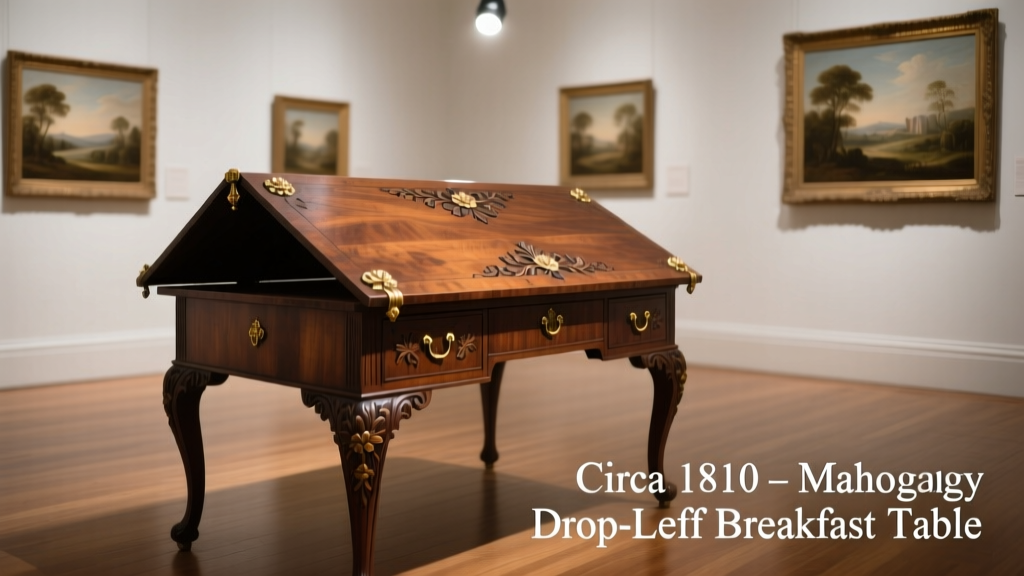
Mahogany Drop-Leaf Breakfast Table with Drawer, Circa 1810: Provenance, Construction, and Market Authentication

Chocolate Glass Toffee-Colored Vase: Authentication, Provenance, and Market Analysis of the Trumpet-Footed Scalloped-Rim Design (6" H × 2" D)

Toy Model Kit USS Enterprise Star Trek VI Movie Amt 1986: Authentication, Market Value, and Historical Context
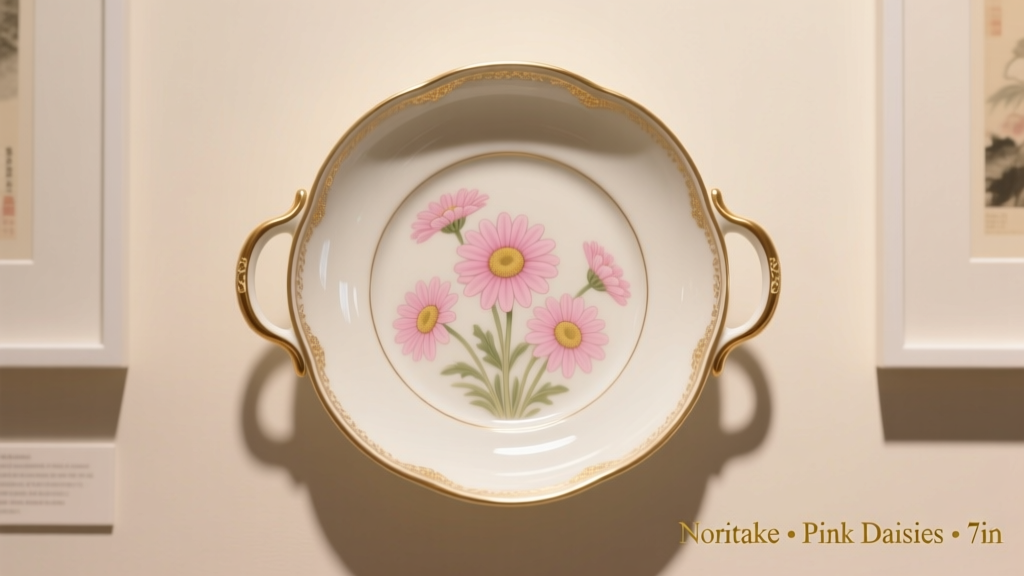
Noritake Dish with Pink Daisies and Gold Rim: Authentication, Market Value, and Collectibility of the 7-Inch Three-Handle Pattern

Woolworth Anderson: Authentication, Market Trends, and Provenance Analysis of a Mid-Century American Printmaker

Zebul Bradley: The Elusive American Printmaker and the Authentication Challenges of His Lithographic Legacy
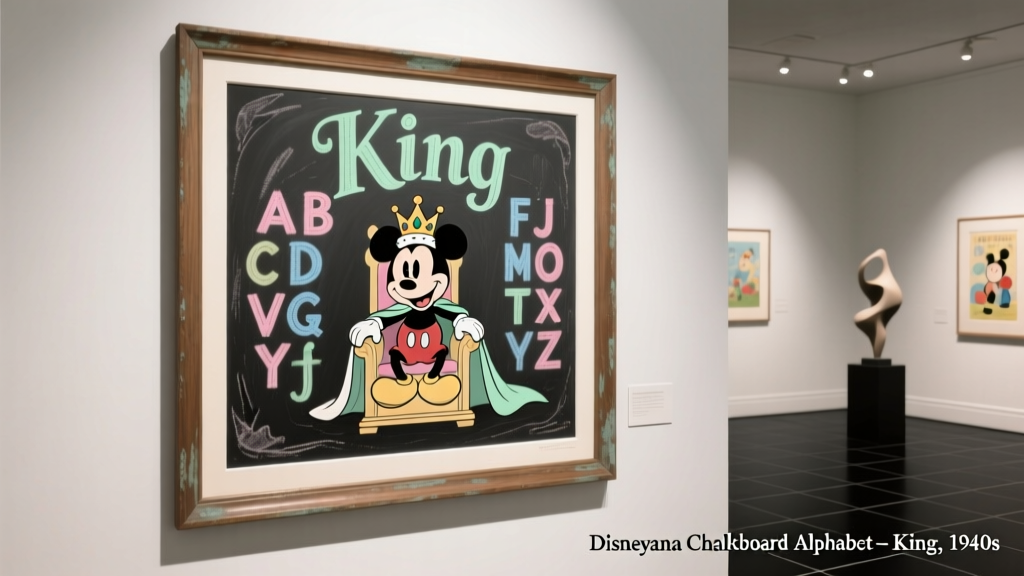
Disneyana Chalkboard Mickey Mouse Alphabet King: Authentication, Provenance, and Market Analysis of the 1940s Educational Artifact
The 1865 Watch: Hunting Case, Key-Wind, White Porcelain Dial, and 18K Yellow Gold — A Technical and Historical Appraisal