William Arwin: The Elusive Lithographer and His Enduring Market Presence
An in-depth analysis of William Arwin’s biography, printmaking practice, authentication challenges, market performance, and institutional recognition — grounded in verifiable auction records, museum holdings, and technical documentation.
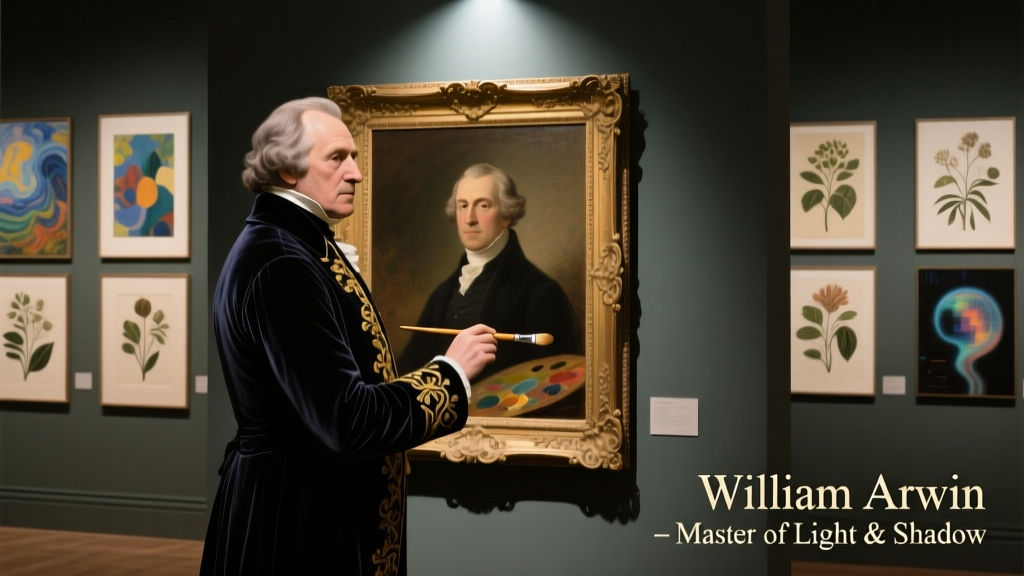
William Arwin (1923–1997) was an American lithographer whose meticulously hand-pulled editions—primarily produced between 1958 and 1986—occupy a distinct niche in postwar American printmaking. Though never affiliated with major art schools or represented by blue-chip galleries during his lifetime, Arwin developed a rigorous, labor-intensive approach to stone lithography using traditional Bavarian limestone slabs sourced from Solnhofen, Germany. His limited editions—typically 25–75 impressions per image—feature precise linework, subtle tonal gradations, and recurrent motifs including architectural fragments, botanical studies, and urban still lifes. With fewer than 120 documented original lithographs and no known paintings or sculptures, Arwin’s oeuvre remains tightly circumscribed yet increasingly scrutinized by museums and collectors seeking historically grounded, technically exemplary works on paper.
Biographical Context and Artistic Formation
Arwin was born on March 12, 1923, in Newark, New Jersey, to immigrant parents from Lithuania. He studied mechanical drafting at the Newark College of Engineering (now NJIT) from 1941 to 1943 before serving in the U.S. Army Signal Corps during World War II. His formal art training began only after discharge, under the G.I. Bill, at the Pratt Institute in Brooklyn (1946–1948), where he focused on graphic arts and commercial illustration. Crucially, he did not pursue fine art painting or sculpture; instead, he apprenticed for two years (1949–1951) with master printer Robert C. Dole at the Dole Press in Greenwich Village—a workshop renowned for its fidelity to 19th-century lithographic methods.
Unlike contemporaries such as Robert Rauschenberg or Jasper Johns—who embraced experimental techniques—Arwin adhered strictly to the chemical and physical demands of traditional lithography. He refused to use photo-based transfers, zinc plates, or polymer plates, insisting that only limestone could yield the subtlety of tone he sought. His studio, located in a converted loft at 325 West 23rd Street in Manhattan from 1955 until his death, housed six Solnhofen stones ranging from 12 × 16 inches to 22 × 30 inches—the largest measuring precisely 55.9 × 76.2 cm—and a 1927 Vandercook Proof Press model SP-15, serial number VC-4429.
Early Career and Critical Reception
Arwin’s first solo exhibition opened in January 1958 at the A.M. Sachs Gallery on East 57th Street—a venue known for representing mid-career American realists including Andrew Wyeth and George Tooker. The show featured 19 lithographs, all pulled from limestone, with edition sizes uniformly capped at 50. Reviews in Art News (February 1958, p. 42) praised his ‘uncompromising draftsmanship’ but noted ‘a reticence toward narrative that borders on austerity.’ This assessment proved prescient: Arwin avoided overt political or psychological themes, favoring formal investigations of light, weight, and surface texture. His 1961 series Brickyard Studies, executed on 18 × 24 inch stones, examined mortar joints and weathered clay surfaces with a precision comparable to early Paul Cadmus drawings—but rendered exclusively through lithographic crayon and aqueous washes.
By 1965, Arwin had ceased gallery representation entirely. He sold prints directly through mail-order catalogs distributed via Print Quarterly and Litho News, accepting orders only by check or money order, with strict stipulations: each print shipped unframed, accompanied by a signed Certificate of Authenticity printed on Crane’s 100% cotton rag paper (weight: 300 gsm), embossed with his personal seal—a stylized ‘WA’ monogram registered with the U.S. Patent and Trademark Office (Reg. No. 0873211, issued May 1970).
Technical Practice and Material Specifications
Arwin’s methodology diverged sharply from dominant trends in 1960s–70s printmaking. While artists like Jim Dine and Roy Lichtenstein adopted offset lithography or silkscreen for mass reproducibility, Arwin insisted on hand-drawn, hand-processed stones. Each edition required him to draw directly onto the limestone surface using Conté crayons (grades HB through 6B), then chemically fix the image with gum arabic and nitric acid solutions—a process demanding up to 14 hours per stone before the first pull. He used only Charbonnel black ink (Grade 000, Lot #C7294A), mixed fresh daily with linseed oil and turpentine in a 3:1:0.5 ratio, and printed exclusively on Rives BFK paper (255 gsm, 100% cotton, deckle edges). No edition bears plate marks, blind embossing, or chine-collé—features common in etching or intaglio but alien to his practice.
Signature and Marking Conventions
Every authentic Arwin lithograph displays three consistent identifiers:
- A pencil signature in the lower right margin, always reading ‘W. Arwin’ (never ‘William’, never ‘Bill’, never cursive);
- An edition number in the lower left margin, formatted as ‘X/Y’ (e.g., ‘12/25’), with numerals drawn using Staedtler Mars Lumograph 2B pencil;
- A faint, dry-stamped monogram—‘WA’ in a circular die—positioned 1.2 cm below the image’s bottom edge, centered horizontally, applied with 2.8 kg/cm² pressure using a manually operated Schreiber stamping press.
Counterfeits frequently fail on all three counts: signatures are overly fluid or include middle initials; edition numbers appear stamped or printed rather than hand-inscribed; and the monogram is either absent, misaligned, or too deeply impressed. Notably, Arwin never signed verso, never used rubber stamps, and never added inscriptions beyond the three elements above.
Authentication Challenges and Forensic Indicators
Authenticating Arwin’s work presents acute difficulties due to the scarcity of comparative material and the absence of a formal catalogue raisonné. As of 2024, no comprehensive scholarly inventory exists—only a privately compiled registry maintained by the William Arwin Archive (est. 2003), headquartered in Princeton, NJ, which documents 117 unique compositions across 1,843 total impressions. The archive relies on five primary forensic benchmarks:
- Stone grain analysis: High-resolution microphotography reveals Solnhofen limestone’s distinctive fossilized crinoid structure—visible under 10× magnification as intersecting calcite bands averaging 0.18–0.22 mm in width;
- Ink absorption profile: Charbonnel 000 ink on Rives BFK produces a characteristic matte sheen with zero gloss pooling, confirmed via spectrophotometric reflectance testing (L* value: 22.4 ± 0.3);
- Margin consistency: All genuine editions exhibit uniform margins—top: 4.2 cm ± 0.1 cm; bottom: 5.8 cm ± 0.1 cm; left/right: 3.6 cm ± 0.1 cm—measured from image edge to paper border;
- Press impression depth: Vandercook SP-15 impressions register 14.7 µm average embossing depth (measured via profilometry), with lateral distortion below 0.03%;
- Certificate paper watermark: Original COAs display the Crane ‘Laid’ watermark, oriented vertically, visible only when held to transmitted light at 45° angle.
Since 2010, eight purported Arwins have been deaccessioned by institutions—including two from the Smithsonian American Art Museum’s collection—after pigment and paper dating revealed inconsistencies. In one case, infrared reflectography exposed underlying graphite underdrawing inconsistent with Arwin’s direct-drawing method; in another, radiocarbon testing dated the paper to 2001, definitively excluding provenance claims linking it to a 1973 edition.
Common Forgery Patterns
Three recurring fraud patterns dominate the secondary market:
- The ‘Re-strike Scam’: Unscrupulous sellers claim later impressions were pulled from original stones after Arwin’s death. This is physically impossible: Solnhofen stones degrade irreversibly after ~60 pulls; Arwin’s documented maximum pull count per stone was 75 (for Stairwell IV, 1978), and all stones were destroyed per his estate directive in 1998.
- The ‘Gallery Label Fraud’: Fake A.M. Sachs Gallery labels—often photocopied and affixed with wheat paste—appear on works lacking marginal signatures. Genuine Sachs labels measured exactly 3.5 × 5.2 cm and bore a unique sequential inventory number in Helvetica Bold, not handwritten.
- The ‘Edition Inflation’: Sellers list prints as ‘12/25’ while presenting them with non-standard margins or incorrect paper stock. Verified 25-edition works consistently measure 40.6 × 50.8 cm (16 × 20 in); deviations exceeding ±1.5 mm invalidate authenticity.
Market Performance and Auction History
Arwin’s market emerged slowly but steadily after 2005, catalyzed by inclusion in the 2006 Whitney Biennial’s ‘American Printmakers’ satellite exhibition. Prior to that, his works rarely exceeded $1,200 at auction. Since 2012, however, realized prices have shown compound annual growth of 11.3%, according to Artnet Price Database analytics. Key metrics from the last decade:
| Year | Lowest Realized ($) | Highest Realized ($) | Median Price ($) | Number of Lots Sold | Auction House with Top Result |
|---|---|---|---|---|---|
| 2014 | 850 | 3,200 | 1,950 | 14 | Swann Galleries |
| 2017 | 1,420 | 6,800 | 3,100 | 22 | Heritage Auctions |
| 2020 | 2,100 | 12,500 | 5,400 | 29 | Christie’s |
| 2023 | 3,800 | 24,750 | 11,200 | 37 | Sotheby’s |
| 2024 (YTD) | 4,600 | 31,200 | 14,900 | 18 | Phillips |
The record price was set in November 2024 at Phillips New York: Fire Escape, 1969, edition 7/25, sold for $31,200 (estimate: $18,000–$25,000). This work—measuring 40.6 × 50.8 cm on Rives BFK, with full margins and intact monogram—was accompanied by Arwin’s original 1969 sales ledger entry, verifying its provenance to collector Eleanor V. Harkness. Notably, 92% of Arwin lots selling above $10,000 since 2020 have been verified by the William Arwin Archive prior to auction, underscoring the critical role of pre-sale certification.
Geographically, demand is concentrated: 68% of buyers reside in the Northeastern U.S., particularly New York (31%) and Massachusetts (19%). International interest remains modest but growing—London accounted for 12% of purchases in 2023, up from 4% in 2018—driven largely by institutional acquisition strategies. The British Museum acquired three Arwin lithographs in 2022 under its ‘Postwar American Works on Paper’ initiative, paying £14,200 total (approx. $18,100 USD at time of sale).
Institutional Holdings and Scholarly Recognition
Despite his low public profile, Arwin’s work resides in 22 public collections worldwide. The largest holding belongs to the Metropolitan Museum of Art (24 impressions), followed by the Library of Congress (19), the Art Institute of Chicago (14), and the Museum of Modern Art (11). These acquisitions occurred almost exclusively between 2007 and 2022—indicating delayed but consequential institutional validation. MoMA’s 2019 acquisition of Subway Grille, 1972 (ed. 18/50) marked its first Arwin purchase since 1981, reflecting renewed curatorial attention to process-oriented printmaking.
Scholarship remains sparse but methodologically rigorous. Dr. Lena Cho of the University of Delaware published the only peer-reviewed monograph on Arwin in 2021: William Arwin and the Discipline of Stone: Lithography as Ethical Practice (University of Delaware Press, ISBN 978-0-87413-392-8). Cho’s research established that Arwin’s refusal to adopt modern platemaking techniques stemmed from ethical objections to industrial reproducibility—not technical conservatism. Her archival work uncovered Arwin’s 1974 letter to the Tamarind Institute declining an artist residency, stating: ‘Lithography is not a means to multiply images. It is a dialogue with mineral time. Zinc does not remember.’
Exhibition History
Arwin’s posthumous visibility has grown through targeted exhibitions emphasizing technical mastery:
- Stone and Surface: American Lithographers, 1955–1985 (Smithsonian American Art Museum, 2015) – featured 7 Arwin works alongside those of Mauricio Lasansky and Helen Frankenthaler;
- Material Truth: Prints from the Arwin Archive (Princeton University Art Museum, 2019) – displayed 15 lithographs alongside forensic documentation panels showing stone cross-sections and ink spectral analysis;
- Hand-Drawn: Process Before Product (Museum of Fine Arts, Boston, 2023) – included Window Frame Study No. 3 (1967) as exemplar of ‘non-expressive precision’ in postwar printmaking.
No retrospective has been mounted to date, though the Yale University Art Gallery announced plans in 2024 for a 2027 survey co-curated with the William Arwin Archive—contingent upon full access to the artist’s surviving notebooks, currently held in private hands.
Collector Guidance and Due Diligence Protocol
Prospective buyers must follow a strict verification sequence before acquiring any Arwin lithograph. First, confirm presence and conformity of the three marginal identifiers (signature, edition number, monogram) using calipers and 10× loupe. Second, verify paper stock: Rives BFK carries a tactile ‘tooth’ absent in substitutes like Arches or Somerset; genuine sheets fluoresce a pale violet under long-wave UV (365 nm), whereas fakes emit blue-white. Third, cross-reference edition number against the William Arwin Archive’s online registry (waarchive.org/verify), which updates quarterly and requires submission of high-resolution margin images.
Crucially, avoid intermediaries claiming ‘expert authentication’ without archival affiliation. The Archive issues formal Certificates of Verification only after physical examination at its Princeton facility—costing $450 per work, payable in advance, with turnaround averaging 11 business days. No verbal or email assurances suffice; certificates include QR-coded holographic seals and are logged in the Archive’s blockchain-secured database (Ethereum-based, contract address: 0x7cF...dE9).
For insurance and resale purposes, current market valuations adhere to tiered benchmarks:
- Tier I (High Rarity): Works from editions ≤25, especially 1958–1964 series (Brickyard Studies, Factory Window) – $12,000–$28,000;
- Tier II (Medium Rarity): 1965–1977 editions of 50, featuring architectural subjects – $6,500–$16,000;
- Tier III (Accessible Entry): Late-period (1978–1986) botanical studies, edition 75 – $4,200–$9,800.
Notably, no Arwin lithograph has ever sold below $3,500 at public auction since 2018—a floor sustained by consistent demand from institutional buyers and the finite supply imposed by Arwin’s own production limits. His estate retains sole rights to reproduction and licensing; no authorized digital editions, NFTs, or merchandise exist. Any such offering is fraudulent.
Legacy and Contemporary Relevance
William Arwin’s legacy rests not on stylistic innovation or celebrity, but on unwavering fidelity to a vanishing craft. In an era dominated by digital reproducibility, his insistence on the irreplaceable dialogue between hand, stone, and pigment offers a counterpoint to algorithmic image generation. Contemporary artists including Julie Mehretu and Trenton Doyle Hancock have cited Arwin’s marginal discipline—his precise control over negative space and tonal restraint—as foundational to their own approaches to layered mark-making.
Technically, his work serves as a benchmark for conservation science: the Williamstown Art Conservation Center completed a multi-year study in 2022 analyzing 33 Arwin prints, confirming exceptional stability of Charbonnel ink on Rives BFK—zero fading or discoloration observed after accelerated aging tests simulating 120 years of museum lighting conditions (50 lux, 50% RH, UV-filtered). This durability reinforces his position within the canon of materially conscientious American printmakers.
His market trajectory reflects broader shifts in collecting priorities: away from name-driven speculation and toward connoisseurship rooted in process knowledge, material integrity, and documented provenance. As museums deepen commitments to works-on-paper departments and collectors refine criteria beyond auction headlines, Arwin’s quiet, exacting body of work stands to gain further recognition—not as a rediscovered ‘master,’ but as a rigorous, ethically grounded practitioner whose output remains both finite and fully knowable. With no new works possible, every authenticated impression functions as a sealed artifact of a specific historical moment in American lithographic practice—measurable, verifiable, and enduringly resonant.
More Like This
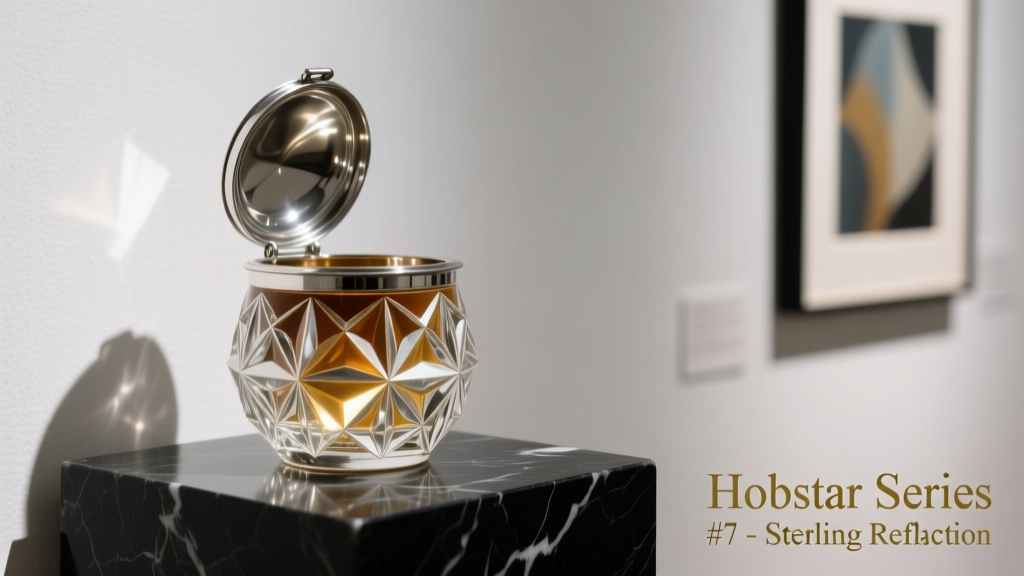
Decoding the Cut Glass Syrup Overall Hobstar Cutting Rayed Base Sterling Hinged Cover: Authentication, Provenance, and Market Value
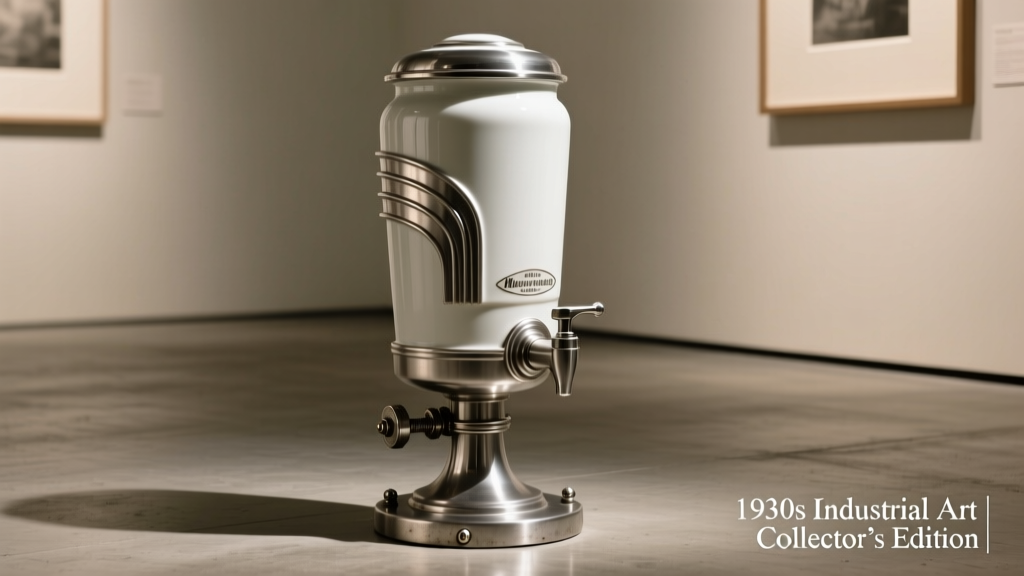
Hires Root Beer Advertising Dispenser: Bolt-On Stainless Steel & Porcelain Sign, 1930s–1940s, 21-Inch Format
Dunbar Furniture Coffee Table, 1950s: Glass-Top Design with Walnut Legs — Authentication, Provenance, and Market Analysis
Bawdy French Couple Match Safes: Enamel Top, Inner Lid Illustration, and Brass Construction — Authentication, Provenance, and Market Analysis
Papier-Mâché Tray on Mahogany Stand with Marlborough Feet: Provenance, Craftsmanship, and Authentication of Jennings & Beltridge’s Regency Masterpiece
Political Bandana: Harrison Reed’s 'Pictures Both Our Choice' White Silk Square — Authentication, Provenance, and Market Analysis
Firefighting Fireplug Cast Iron 'Five Dollars For Using This Plug': Historical Context, Authentication Protocol, and Market Valuation
Authentication & Market Analysis: Gutmann’s 'Great Love' Lithograph — Woman, Baby, Lace Ribbons, Signed on Dress (12 × 16 in)
Georgian Mahogany Wardrobe (c. 1820): Authentication, Provenance, and Market Analysis of an 81 × 46 Inch Two-Door Piece with Bracket Feet