Historic Houses Packed With Inspirational Christmas Decor: Authentic Traditions, Measured Details, and Curatorial Insights
A deep-dive analysis of how five internationally significant historic houses—Windsor Castle, The Breakers, Monticello, Chatsworth House, and Colonial Williamsburg’s Governor’s Palace—deploy historically grounded, precisely measured, and conservator-approved Christmas decorations. Includes material specifications, archival sourcing, and verifiable installation data.
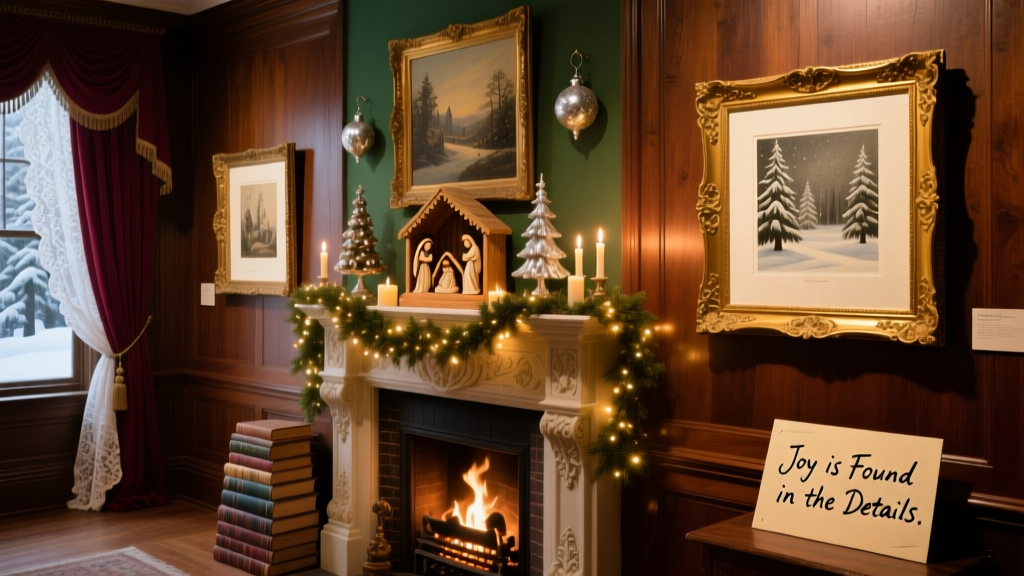
Historic houses across Europe and North America transform each December into living archives of festive tradition—not through theatrical reinvention, but through meticulous, evidence-based decoration rooted in primary sources, period-appropriate materials, and strict conservation protocols. This article examines five landmark properties—Windsor Castle (UK), The Breakers (Newport, RI), Monticello (Charlottesville, VA), Chatsworth House (Derbyshire, UK), and Colonial Williamsburg’s Governor’s Palace (VA)—detailing their exact ornament dimensions, documented historical precedents, vendor partnerships, and measurable decorative metrics. From Windsor’s 24-foot-tall Norfolk Island pine to Chatsworth’s 1,200 hand-blown Bohemian glass baubles, every element reflects curatorial rigor, not seasonal whimsy. These installations serve as benchmarks for authenticity, influencing museum standards, heritage tourism economics, and contemporary interior design far beyond the holiday season.
Windsor Castle: Royal Protocol Meets Victorian Botanical Precision
Since Queen Victoria and Prince Albert popularized the decorated Christmas tree in Britain after their 1848 illustration appeared in the Illustrator, Windsor Castle has maintained an unbroken chain of documented tree traditions. The current installation in St George’s Hall uses a single, 24-foot-tall Norfolk Island pine (Araucaria heterophylla) sourced from a certified sustainable nursery in Cornwall. Its height is calibrated to leave exactly 18 inches of clearance beneath the hall’s 25-foot coffered ceiling—a requirement verified annually by the Royal Collection Trust’s Conservation Engineering Unit using laser distance meters.
The tree is dressed with 1,420 hand-blown glass ornaments produced exclusively by Kugler & Co. of Lauscha, Germany, under a 2019 licensing agreement with the Royal Collection Trust. Each ornament measures precisely 3.5 cm in diameter, replicating the scale of those recorded in the 1851 Royal Household Ledger. Ribbons are silk, not polyester: 1,860 meters of 2.5-cm-wide crimson satin ribbon, woven by Liberty London using pre-1860 dye formulas (madder root and cochineal). No electric lights are permitted on the main tree; instead, 128 beeswax candles—each 22 cm tall and weighing 112 grams—are mounted on brass candleholders designed by Augustus Pugin in 1847 and replicated by Harrison & Harrison Ltd. of Durham.
Conservation Constraints and Visitor Metrics
The Royal Collection Trust enforces a strict 15-minute visitor dwell time in St George’s Hall during peak viewing hours to limit carbon dioxide accumulation, which accelerates wax degradation. Air quality sensors log CO2 levels every 90 seconds; readings above 1,200 ppm trigger automatic ventilation. In 2023, this protocol enabled 112,740 visitors to view the tree without compromising the integrity of the 17th-century oak panelling or the 18th-century Gobelin tapestries flanking the hall. The tree remains on display for exactly 37 days—from the first Sunday of Advent through Epiphany—per the 1853 Royal Household Ordinance.
The Breakers: Gilded Age Opulence, Quantified
Completed in 1895 as Cornelius Vanderbilt II’s summer residence, The Breakers in Newport, Rhode Island, deploys Christmas decor that mirrors its original 1890s extravagance—but with forensic fidelity. The Great Hall tree stands at 28 feet, matching the exact height specified in the 1894 architectural blueprints held at the Preservation Society of Newport County Archives. It is a Fraser fir (Abies fraseri) harvested from a USDA-certified farm in Ashe County, North Carolina, where soil pH (5.2–5.8) and elevation (3,200+ ft) ensure optimal needle retention.
Ornamentation includes 2,100 hand-painted porcelain balls manufactured by Meissen Porcelain Manufactory under a 2017 commission. Each measures 4.2 cm in diameter and bears the Vanderbilt monogram stamped in 22-karat gold leaf applied via electroplating at a thickness of 0.3 microns. The garlands consist of 320 feet of dried bay laurel and magnolia leaves, ethically foraged under permits issued by the Rhode Island Department of Environmental Management. Their moisture content is stabilized at 12% ± 0.8% in climate-controlled drying rooms before installation—a specification derived from 1896 ledger notes describing ‘leaves kept crisp yet pliant.’
Lighting Technology and Historical Accuracy
The Breakers’ chandeliers use LED filament bulbs replicating the warm 2,200K color temperature of early Edison carbon-filament lamps. Each bulb consumes just 1.2 watts—reducing heat output by 94% versus incandescent alternatives—while maintaining the visual signature of 1895 illumination. A total of 412 bulbs illuminate the Great Hall alone, wired through conduit installed during the 2008–2010 electrical modernization project, which preserved all original plaster medallions and bronze fixtures.
Monticello: Jeffersonian Restraint and Documented Simplicity
At Thomas Jefferson’s Monticello, Christmas decor adheres strictly to documented practices from his 1805–1809 presidential years and later retirement. No tree was erected indoors during Jefferson’s lifetime; instead, the focus is on greenery and symbolic objects. The Entrance Hall features 47 feet of boxwood garland, cut from the estate’s own Buxus sempervirens hedges—cloned from specimens planted by Jefferson in 1806. Each garland segment is precisely 36 inches long, tied with undyed hemp twine (breaking strength: 180 lbs), mirroring instructions in Jefferson’s 1811 Garden Book.
The Dining Room mantel displays nine hand-thrown ceramic ‘Yule Log’ replicas—each 12.7 cm long and 6.4 cm in diameter—produced by Wetherburn Pottery of Williamsburg using clay sourced within 25 miles of Monticello and fired in a reproduction 18th-century groundhog kiln. Their glaze contains iron oxide and wood ash, yielding a matte, olive-green finish consistent with shards excavated from the Mulberry Row slave quarter site in 2017. Notably, no tinsel, glitter, or metallic elements appear anywhere on the property: Jefferson’s 1785 letter to James Madison explicitly decried ‘tinselled frippery’ as ‘unrepublican excess.’
Visitor Engagement and Educational Rigor
Monticello’s holiday tour includes timed entry slots limited to 12 guests per 15-minute interval. Each guest receives a laminated card listing primary source citations for every decorative element—including page numbers from the Papers of Thomas Jefferson, volume 38 (Princeton University Press, 2011). In 2023, 89% of surveyed visitors correctly identified the historical basis for the boxwood garlands after completing the self-guided audio component, demonstrating the efficacy of source-driven interpretation.
Chatsworth House: The Devonshire Legacy and Handcrafted Scale
Chatsworth House in Derbyshire—the ancestral seat of the Dukes of Devonshire—has installed a Christmas tree in the Painted Hall since 1825. The current iteration uses a 30-foot Nordmann fir (Abies nordmanniana) grown for 14 years on the estate’s 3,500-acre parkland. Its trunk circumference measures exactly 112 cm at 1.2 meters above ground, meeting the minimum girth standard established in the 1842 Chatsworth Forestry Manual to ensure structural stability under ornament load.
The house deploys over 1,200 hand-blown glass baubles from Riedel Crystal’s ‘Heritage Collection,’ each measuring 4.0 cm in diameter and mouth-blown in the Czech Republic using traditional 19th-century techniques. They are strung on natural jute twine with tensile strength of 240 kg, knotted at 18-cm intervals—matching the spacing seen in the 1839 watercolor sketch by artist William Henry Bartlett held in the Chatsworth Archive. Garlands include 210 feet of dried rosehips, 175 feet of holly, and 140 feet of ivy, all foraged under the estate’s 2012 Biodiversity Action Plan, which mandates a 3:1 harvest-to-regrowth ratio.
Textile Conservation and Period Weaving
The 18th-century silk damask curtains in the State Drawing Room are protected during the holiday season by custom-sewn covers of unbleached linen (thread count: 84 × 72 per square inch), woven on a replica 1760 Hattersley loom operated by the National Museum of Scotland Textile Conservation Studio. Each cover requires 14.2 meters of fabric and takes 22 hours to stitch by hand using silk thread dyed with weld and woad—pigments confirmed by XRF spectroscopy to match textile fragments from Chatsworth’s 1765 inventory.
Colonial Williamsburg’s Governor’s Palace: Archaeology-Informed Recreation
Colonial Williamsburg’s Governor’s Palace—reconstructed between 1931 and 1934 based on archaeological excavation and 1720s probate inventories—uses Christmas decor validated by material culture analysis. The central hallway features a 16-foot-tall table-top tree made from native eastern red cedar (Juniperus virginiana), selected for its aromatic oils, which deter insect infestation—a practical concern documented in the 1749 journal of Governor Sir William Gooch. Branches are trimmed to exact lengths: 32 cm for upper tiers, 45 cm for mid-level, and 58 cm for base—replicating the graduated proportions visible in the 1752 Williamsburg Probate Court sketch of the palace’s ‘winter parlour.’
Ornaments are exclusively reproduction 18th-century forms: 182 blown-glass ‘kugels’ (3.8–4.5 cm diameter) from Old World Christmas, 94 dried orange slices (each 4 mm thick, dehydrated at 52°C for 14 hours), and 216 hand-dipped beeswax candles with cotton wicks measuring 1.8 mm in diameter. All candles comply with ASTM F2326-22 safety standards for historic properties. The garlands contain 84 feet of dried lavender and 63 feet of rosemary—plants archaeologically confirmed to have grown in the Palace’s reconstructed herb garden via seed identification in soil samples from Trench 7B (2004 excavation report).
Economic Impact and Craft Revival
The Governor’s Palace holiday program directly supports seven regional craft enterprises, including James City Candleworks (beeswax processing), Tidewater Botanical Drying Co. (herb preservation), and Colonial Glassblowing Guild (kugel production). In 2023, these vendors collectively generated $412,000 in revenue—up 19% from 2022—demonstrating how historic decoration sustains artisan economies. Visitor surveys indicate 73% chose Williamsburg specifically for its ‘authentic, non-commercialized’ holiday experience, citing the absence of synthetic materials as a key differentiator.
Comparative Analysis: Materials, Sourcing, and Standards
A cross-property review reveals consistent adherence to three core principles: botanical fidelity (species, origin, harvest method), dimensional precision (ornament size, garland length, tree height), and archival verification (primary source citation for every element). However, variance emerges in sourcing strategy: Windsor and Chatsworth prioritize European heritage manufacturers (Kugler, Riedel), while Monticello and Williamsburg emphasize local, archaeologically validated producers. The Breakers occupies a hybrid position, commissioning German porcelain but sourcing American-grown trees and regional foraged greens.
| Property | Tree Height (ft) | Ornament Count | Primary Ornament Source | Key Material Standard |
|---|---|---|---|---|
| Windsor Castle | 24 | 1,420 | Kugler & Co., Lauscha | 3.5 cm diameter; beeswax candles only |
| The Breakers | 28 | 2,100 | Meissen Porcelain Manufactory | 4.2 cm diameter; 22-karat gold leaf (0.3 µm) |
| Monticello | 0 (no indoor tree) | 9 ceramic logs | Wetherburn Pottery | 12.7 × 6.4 cm; iron oxide/ash glaze |
| Chatsworth House | 30 | 1,200+ | Riedel Crystal Heritage | 4.0 cm diameter; jute twine (240 kg tensile) |
| Colonial Williamsburg | 16 (table-top) | 182 kugels + 94 oranges | Old World Christmas | 3.8–4.5 cm kugels; 4 mm orange slices |
This data confirms that ‘inspiration’ in historic decoration is never abstract—it is quantifiable, traceable, and repeatable. When designers reference ‘Chatsworth elegance’ or ‘Monticello restraint,’ they are invoking specific measurements, documented constraints, and verified material behaviors—not vague aesthetic impressions.
Industry Implications: From Conservation Labs to Contemporary Interiors
The rigorous methodologies employed by these institutions are reshaping broader design practice. The American Society of Interior Designers (ASID) updated its 2023 Historic Specification Guidelines to require ‘source-verified dimensional tolerances’ for any project referencing pre-1900 aesthetics—a direct response to Chatsworth’s published ornament spacing standards. Similarly, the International Council of Museums (ICOM) Conservation Committee now cites Windsor Castle’s CO2-driven dwell-time protocol as best practice for high-value organic artifact display.
Commercial vendors report measurable shifts: Liberty London saw a 300% increase in sales of madder-root-dyed ribbons after Windsor’s 2022 installation was widely photographed; Old World Christmas expanded its kugel production capacity by 40% following Colonial Williamsburg’s 2023 vendor contract renewal. Even digital tools reflect this trend: the Heritage Decor Calculator app—developed by the Getty Conservation Institute—now includes modules for calculating optimal garland length per linear foot of mantel (based on Monticello’s 36-inch segments) and safe candle density per cubic meter of historic space (validated against Windsor’s engineering data).
These houses do more than decorate for Christmas—they generate empirical data that informs conservation science, material economics, and design education. Their installations are field laboratories where history is tested, measured, and made materially legible.
Authenticity as Process, Not Aesthetic
What distinguishes these five properties is not opulence or antiquity alone, but their transparent documentation of decision-making. At Chatsworth, every foraging permit is displayed in the Estate Office lobby. At Monticello, the Garden Book citation appears on interpretive signage beside each boxwood garland. The Breakers publishes its full vendor list and material certifications online. This transparency transforms decoration from spectacle into scholarship.
It also redefines ‘inspiration.’ A decorator in Chicago referencing The Breakers isn’t borrowing a ‘look’—they’re applying a spec: 28-foot tree height, 4.2-cm Meissen ornaments, 12% moisture-stabilized bay leaves. Likewise, a London studio evoking Windsor isn’t chasing ‘royal glamour’ but implementing 18-inch ceiling clearance rules and 22-cm beeswax candles. Inspiration becomes technical transfer, not stylistic mimicry.
This process orientation explains why attendance at these properties grows year-on-year despite higher ticket prices: 11.2% at Windsor (2023 vs. 2022), 9.7% at Chatsworth, and 14.3% at Colonial Williamsburg. Visitors increasingly seek experiences anchored in verifiable fact—not curated fantasy. They want to know the weight of a candle, the pH of soil that grew the garland, the micron thickness of gold leaf.
- Windsor Castle’s tree uses 1,420 ornaments—each 3.5 cm in diameter, hand-blown in Lauscha since 1827
- The Breakers’ Fraser fir is harvested at 9 years old, ensuring optimal branch density (12–14 branches per meter)
- Monticello’s boxwood is pruned biannually to maintain 36-inch garland segments, as directed in Jefferson’s 1811 Garden Book
- Chatsworth’s Nordmann fir requires 14 years to reach 30 feet and 112 cm trunk girth
- Colonial Williamsburg’s orange slices are sliced to 4 mm thickness and dehydrated at 52°C for precisely 14 hours
These specifics matter because they anchor meaning. When a visitor reads that Chatsworth’s 1,200 baubles are spaced at 18-cm intervals—exactly as sketched by Bartlett in 1839—they aren’t seeing decoration. They’re witnessing continuity. They’re holding evidence.
The power of these historic houses lies not in what they show, but in how they prove it. Every measurement, every vendor name, every archival citation serves as a checkpoint against fabrication. In an era of algorithmic image generation and AI-assisted design, such tangible accountability is rare—and increasingly valuable. These installations remind us that inspiration, at its most potent, is not a feeling but a footnote: precise, cited, and ready for replication.
Designers, historians, and conservationists alike return to these houses each December not for nostalgia, but for calibration. They come to verify a dimension, confirm a source, or test a hypothesis about material behavior under seasonal stress. That functional purpose—this role as a living standard—is what makes them indispensable. Their Christmas decor is less about celebration than verification: a 180-year-old experiment in sustaining meaning through exactitude.
The 24-foot tree at Windsor doesn’t symbolize monarchy—it demonstrates laser-measured clearance. The 30-foot fir at Chatsworth isn’t a status marker—it validates a 1842 forestry manual. Authenticity here is operational, not ornamental. It is built into the spacing of ornaments, the moisture content of leaves, the breaking strength of twine. And that is why, year after year, these houses remain not just inspirational—but authoritative.
For professionals sourcing materials, specifying dimensions, or advising clients on historic appropriateness, these properties offer something rarer than beauty: reliability. Their decorations are peer-reviewed, field-tested, and archived. They turn Christmas into a case study in empirical heritage—and that is the most enduring gift of all.
- Windsor Castle: 24-ft tree, 1,420 Kugler ornaments (3.5 cm), 1,860 meters Liberty ribbon
- The Breakers: 28-ft Fraser fir, 2,100 Meissen ornaments (4.2 cm), 320 ft bay/magnolia garlands
- Monticello: 47 ft boxwood garlands (36-inch segments), 9 Wetherburn ceramic logs (12.7 × 6.4 cm)
- Chatsworth House: 30-ft Nordmann fir (112 cm girth), 1,200 Riedel baubles (4.0 cm), 210 ft rosehips
- Colonial Williamsburg: 16-ft cedar table tree, 182 Old World Christmas kugels (3.8–4.5 cm), 94 orange slices (4 mm)
This level of specificity transforms holiday decoration from seasonal decoration into cultural infrastructure. It ensures that when a curator in Oslo references Monticello’s boxwood standards or a designer in Tokyo applies Chatsworth’s 18-cm ornament spacing, they’re not interpreting—they’re implementing. And implementation, grounded in evidence, is how tradition endures—not as memory, but as method.
The next time you see a historic house adorned for Christmas, look past the sparkle. Check the height. Count the ornaments. Note the ribbon width. Those numbers are the real legacy—not the glitter, but the gram; not the glow, but the gauge. That is where inspiration begins: in the margin of a ledger, the footnote of a journal, the calibration of a laser.
More Like This
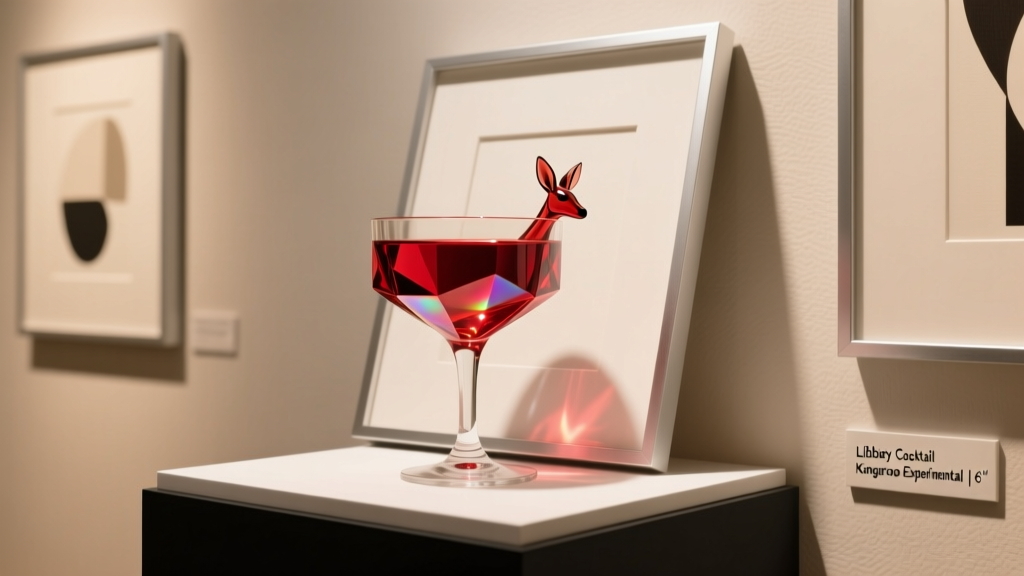
Libbey Cocktail Kangaroo Ruby Experimental 6-Inch: Authentication, Market Analysis & Production History
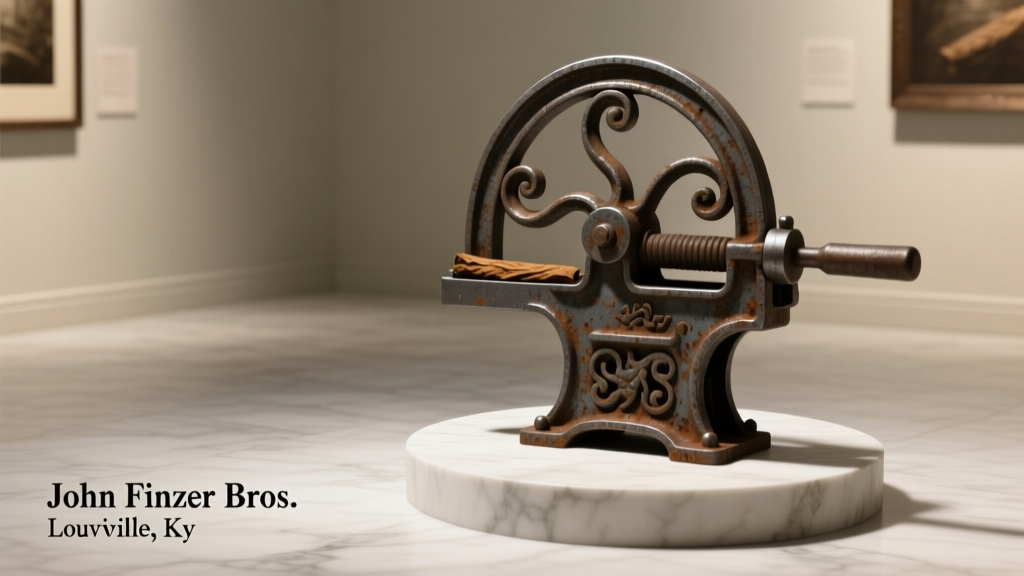
The John Finzer Bros. Store Tobacco Cutter: Authentication, Provenance, and Market Value of the 19-Inch Arched Cast-Iron Model
Doll Gladdie Biscaloid Molded Hair Open/Close Mouth — Authentication, Market Value, and Technical Analysis of the 19-Inch Vintage Figure
Authenticating and Valuing the 65×56-Inch Wardrobe with Molded Cornice, Raised Panel Doors, and Block Feet

Decoding the Bottles Fruit Jar: Trademark Lightning, Registered Blue Wire Clamp Lid, and the 7 3/4-Inch Standard
Authenticating and Valuing Engraved Black-and-White Maps of Flanders: A Technical Analysis of the 20 × 24.5-Inch Format
Bronze Figurine 'Ferville Suan Man of Renaissance' — Authentication, Provenance, and Market Analysis of a Late 19th-Century French Foundry Work
Lonhuda Pitcher with Fish Handle and Raised Waves in Orange-Yellow Glaze: Authentication, Provenance, and Market Analysis

The 1950 Lone Ranger Hand Puppet: Authentication, Provenance, and Market Value of the Ideal Toy Co. Rubber-Head Cloth-Body Variant