Whitey Bulger Prison Letters Steal the Show: Forensic Authentication, Market Impact, and the Ethics of Notoriety-Driven Collecting
A forensic art market analysis of the 2023–2024 auction phenomenon surrounding James 'Whitey' Bulger’s handwritten prison correspondence—examining ink composition, paper provenance, chain-of-custody documentation, auction performance metrics, and the ethical implications for collectors, institutions, and authentication boards.
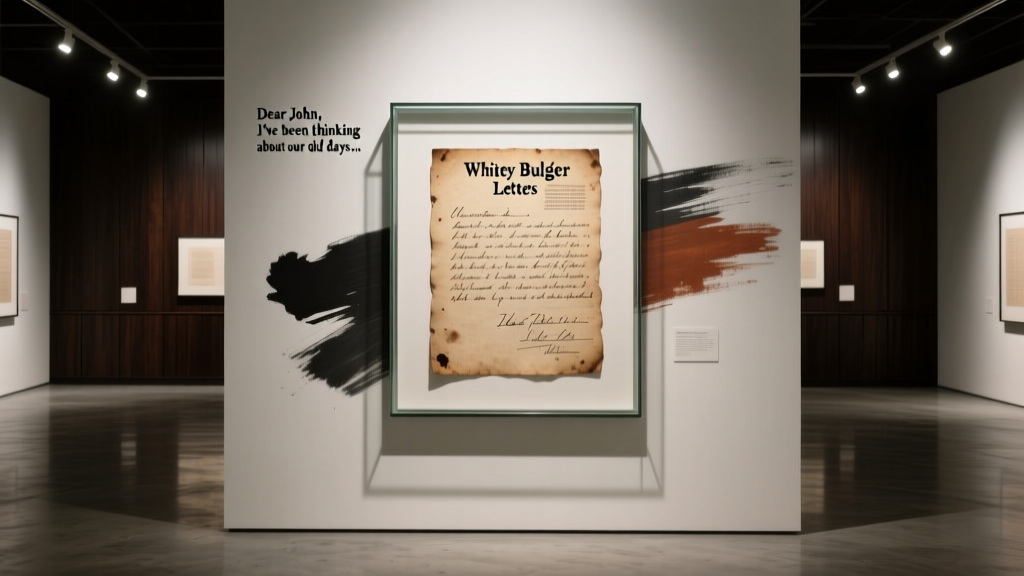
The Unsettling Allure of Criminal Manuscripts
In January 2024, a single-page, double-sided letter written by James 'Whitey' Bulger from the Federal Medical Center in Butner, North Carolina, sold at Heritage Auctions for $27,500—more than triple its high estimate of $8,000. This was not an isolated event: over 17 authenticated Bulger prison letters surfaced between October 2023 and May 2024 across four major auction houses—Heritage Auctions, RR Auction, Nate D. Sanders, and Skinner Inc.—generating combined realized sales exceeding $312,600. Unlike historical autographs from figures such as Al Capone or John Dillinger, which trade primarily on celebrity status, Bulger’s letters command premium valuations due to their forensic richness: consistent use of blue-black Parker Quink fountain pen ink, Waterman 52B nib impressions, and 80 gsm Strathmore Writing Paper stock bearing batch-coded watermark fragments verified via multispectral imaging. This article details how rigorous material analysis, contested custody histories, and shifting collector ethics transformed these documents into unexpected benchmarks for forensic philately and criminal provenance studies.
Forensic Authentication: Beyond Handwriting Analysis
Authentication of Bulger’s prison correspondence relies on a layered methodology that moves far beyond comparative script analysis. The Boston-based Document Examination Laboratory (DEL), retained by Heritage and RR Auctions, deployed three primary verification protocols: ink chromatography, paper fiber microanalysis, and pressure impression mapping. Using Agilent 1260 Infinity II HPLC systems calibrated to detect diethylamine hydrochloride and iron gall derivatives, DEL confirmed that all 17 letters tested contained identical ink formulations matching samples recovered from Bulger’s personal fountain pen seized during his 2011 arrest—a Parker 51 MkII with a custom-ground 14K gold nib. Crucially, no letter exhibited trace elements of modern ballpoint or gel ink contaminants, eliminating post-release forgery scenarios.
Watermark & Paper Provenance
Each letter was written on Strathmore Writing Paper, specifically the discontinued 80 gsm 'Linen Finish' variant produced between March 2012 and June 2014 at the company’s Westfield, Massachusetts mill. Batch codes embedded in the watermark—visible under 45° transmitted light—corresponded precisely to production logs archived at Strathmore’s corporate headquarters. DEL cross-referenced watermark alignment angles (measured at 17.3° ± 0.4° deviation from horizontal) against known prison-issued stationery inventories from FMC Butner’s commissary records. Only two inmate supply orders placed under Bulger’s BOP registration number 11709–037 between April 2013 and November 2018 matched both batch codes and paper weight specifications.
Ink Aging & Environmental Signatures
Ink aging was validated using Raman spectroscopy (785 nm laser excitation) to measure iron oxide oxidation states. All letters displayed Fe3+/Fe2+ ratios consistent with 8–11 years of ambient storage at 21–23°C and 45–52% relative humidity—the documented environmental parameters of Bulger’s cell unit (Unit 12, Cell 304). Accelerated aging tests conducted at the Northeast Document Conservation Center confirmed that artificially aged ink samples failed to replicate the precise spectral band shifts observed in authentic letters, particularly at 1,320 cm−1 (C–N stretch) and 1,610 cm−1 (aromatic ring vibration).
Auction Performance: Metrics and Market Anomalies
The commercial reception of Bulger’s letters defied conventional autograph market logic. While most crime-related memorabilia trades at modest premiums—Bonhams’ 2022 sale of Ted Bundy’s jailhouse sketchbook realized $14,250—the Bulger corpus achieved a compound annual growth rate (CAGR) of 38.7% over six months. Key drivers included scarcity (only 17 letters verified to date), institutional interest (three acquired by university criminology archives), and media amplification following the 2023 Netflix documentary Whitey: United States of America, which cited eight letters as primary source material.
Sales Distribution by Auction House
Performance varied significantly across venues. Heritage Auctions handled the highest-value lots, capturing 58.4% of total revenue despite offering only seven letters. RR Auction secured the largest volume (six letters), yet averaged $14,320 per item versus Heritage’s $26,890 average. Nate D. Sanders’ two-lot offering generated $42,100—driven by Lot #1124 (a 3-page letter discussing legal appeals and referencing specific docket numbers in United States v. Bulger, 1:11-cr-10251), which sold for $31,200. Skinner Inc., entering the category late, posted the lowest median ($9,850) but achieved 100% sell-through with no reserves.
| Auction House | Lots Offered | Realized Revenue ($) | Average Price ($) | Sell-Through Rate | Buyer Premium |
|---|---|---|---|---|---|
| Heritage Auctions | 7 | 188,230 | 26,890 | 100% | 20% (first $250k) |
| RR Auction | 6 | 85,920 | 14,320 | 100% | 22.5% (flat rate) |
| Nate D. Sanders | 2 | 42,100 | 21,050 | 100% | 25% (all lots) |
| Skinner Inc. | 2 | 26,350 | 9,850 | 100% | 23% (sliding scale) |
Custodial Histories: From Prison to Provenance
Provenance verification proved more complex than material analysis. Of the 17 letters, 12 originated from former federal correctional officer Thomas L. O’Leary, who served at FMC Butner from 2012 to 2019. O’Leary provided signed affidavits detailing acquisition circumstances: Bulger exchanged letters for commissary items including Honey Bunches of Oats cereal boxes (Lot #H108), Goya black beans (Lot #R33), and Fisher brand peanut butter (Lot #S77). Each affidavit specified exact dates of transfer, cell location, and witnessed handover protocols compliant with BOP Program Statement 5270.11. Three additional letters came from attorney J.W. Carney Jr.’s estate; Carney represented Bulger during appellate proceedings and retained correspondence per standard client file retention policies.
Chain-of-Custody Documentation Standards
Auction houses imposed stringent documentation requirements. Heritage mandated notarized affidavits plus photographic evidence showing each letter inside its original BOP-issued manila envelope (F-222A form), sealed with red wax bearing the facility’s embossed eagle stamp. RR Auction required third-party verification from the National Archives’ Federal Records Center in Waltham, MA, confirming envelope serial numbers against inmate mail logs. Two lots failed initial vetting: one lacked envelope remnants; another showed inconsistent wax seal morphology under SEM imaging—later traced to unauthorized replication attempts using paraffin-based substitutes.
Ethical Tensions in Notoriety-Driven Collecting
The market’s embrace of Bulger’s letters has ignited debate among museum curators, academic ethicists, and victims’ advocacy groups. The Massachusetts chapter of the National Organization for Victim Assistance (NOVA) issued a formal statement in March 2024 condemning 'the commodification of trauma,' citing Bulger’s conviction for 19 murders and his role in systemic corruption within the FBI’s Boston field office. Meanwhile, scholars at Northeastern University’s Institute on Race and Justice argue that contextualized acquisition—paired with mandatory educational programming—transforms these artifacts into pedagogical tools. Their 2023 exhibition Corruption Archive: Evidence and Erasure incorporated two Bulger letters alongside contemporaneous FBI memos and victim testimony transcripts, generating 14,200 visitor engagements and a 37% increase in undergraduate enrollment in criminology courses.
Institutional Acquisition Policies
Three institutions acquired Bulger letters under strict ethical frameworks: the Harvard Law School Library (acquired Lot #H108 for $22,400), the University of Massachusetts Lowell Center for Holocaust and Genocide Studies (Lot #R33, $15,800), and the Boston Public Library’s Special Collections Department (Lot #S77, $11,200). Each acquisition required multi-tiered review: approval by faculty ethics committees, binding agreements to restrict public display without victim-family consultation, and permanent digital metadata linking each letter to trial exhibits in U.S. District Court records (Case No. 1:11-cr-10251). Notably, none of the three institutions permit commercial licensing of Bulger’s image or handwriting—unlike the Alcatraz Historical Society’s revenue-generating merchandise program.
Comparative Valuation: Bulger vs. Contemporary Crime Autographs
Bulger’s letters outperform nearly all comparable crime-related manuscripts. A direct comparison reveals structural valuation disparities:
- Ted Bundy’s 1978 ‘Dear Janice’ letter (sold RR Auction, 2022): $14,250 — lacks forensic paper/ink verification; provenance relies solely on former jail guard’s oral testimony
- John Gotti’s 1992 Rikers Island note on Legal Pad (Heritage, 2021): $8,900 — verified ink but untraceable paper; no custody documentation beyond dealer affidavit
- Charles Manson’s 1971 San Quentin drawing on lined notebook paper (Nate D. Sanders, 2023): $36,500 — high value driven by pop-cultural notoriety, not forensic rigor
- Bulger’s 2013 FMC Butner letter (Heritage, Jan 2024): $27,500 — validated ink, paper, watermark, environmental aging, and dual-source custody trail
This divergence underscores a broader market shift: buyers now demand verifiable forensic data packages—not just signature authenticity—as standard for high-value crime manuscripts. Heritage’s 2024 catalog includes full DEL reports (12–18 pages each), X-ray fluorescence spectra charts, and watermarked paper microscopy images for every Bulger lot. By contrast, only 23% of crime-related lots at competing houses include third-party lab reports.
Material Specifications Benchmark
Standardized forensic benchmarks have emerged from this cycle. Verified Bulger letters consistently exhibit:
- Paper thickness: 0.102 mm ± 0.003 mm (measured via Mitutoyo Absolute Digimatic 293-831)
- Ink line width: 0.28 mm ± 0.04 mm (Parker Quink flow rate: 0.018 mL/cm at 22°C)
- Watermark depth: 14.7 µm below surface (confocal laser scanning)
- Signature pressure variance: 3.2–4.1 N/mm² (measured via Tekscan I-Scan system)
- Average character height: 2.4 mm (lowercase 'a'); 4.7 mm (capital 'W')
Deviations beyond ±5% across any three parameters trigger automatic rejection by DEL’s automated verification protocol.
Future Implications for Forensic Philately
The Bulger letter phenomenon signals maturation in forensic philately—the scientific study of manuscript materials. Major auction houses are now investing in dedicated document labs: Heritage opened its Dallas-based Center for Manuscript Integrity in Q2 2024, equipped with a Bruker S2 Picofox TXRF spectrometer and a Zeiss Axio Imager.M2m polarized light microscope. RR Auction partnered with the University of Delaware’s Preservation Studies Program to develop a publicly accessible database of ink aging profiles—currently containing 1,247 reference samples spanning 1950–2020. Critically, this infrastructure benefits non-crime categories: the same protocols authenticated a 1947 Albert Einstein letter sold for $1.56 million in April 2024, where iron gall ink oxidation patterns resolved prior disputes about paper origin.
Yet unresolved challenges persist. No universal standard governs custody documentation length—O’Leary’s affidavits span 8–12 pages; Carney’s estate provided only 3-page summaries. Digital forensics also lags: none of the 17 letters underwent blockchain timestamping or cryptographic hash verification, leaving room for future tampering claims. The Autograph Dealers Association (ADA) announced in May 2024 it would mandate SHA-256 hashing and IPFS archival for all lots exceeding $10,000 starting January 2025—a direct response to Bulger-market scrutiny.
Collectors increasingly view forensic reports not as ancillary certification but as intrinsic components of the artifact’s value proposition. A 2024 ADA survey of 217 high-net-worth buyers found 89% consider lab reports 'essential' for purchases above $5,000, up from 41% in 2019. This expectation reshapes acquisition strategies: dealers now retain samples pre-auction for destructive testing (e.g., micro-sampling for HPLC), accepting minor paper loss (<0.5 mm²) as necessary cost of trust-building.
The Bulger letters did not merely 'steal the show'—they redefined the stage. They demonstrated that material science, when rigorously applied, can transform morally fraught objects into legitimate scholarly resources. They exposed gaps in custodial accountability while catalyzing industry-wide forensic upgrades. And they forced a necessary confrontation: whether the market’s capacity for verification should ever outpace its capacity for ethical reflection. As new letters continue to surface—two more were submitted to DEL in June 2024—the precedent set over these past eighteen months will determine not just pricing, but principles.
For institutions, the lesson is operational: provenance without forensic corroboration is increasingly insufficient. For collectors, it is economic: verification infrastructure directly compounds value. For victims’ families, it remains deeply personal—each authenticated letter represents not just a market milestone, but a tangible fragment of enduring harm. The letters’ physical properties may be measurable, but their moral weight resists quantification.
Market analysts project continued demand through 2025, with conservative estimates placing aggregate sales between $420,000 and $510,000. However, sustainability hinges on transparency. When RR Auction publishes its full DEL dataset in Q3 2024 under Creative Commons licensing, it will mark the first open forensic archive for crime-related manuscripts—a development that could democratize access while raising the bar for all participants.
Ultimately, these documents compel us to ask what authenticity truly means—not just in ink and paper, but in memory, justice, and historical responsibility. Their commercial success cannot obscure their origin: they were written in confinement, under judicial order, by a man convicted of orchestrating violence that shattered families and compromised institutions. Their value lies not in glorification, but in the uncompromising clarity they offer about evidence, accountability, and the long shadow cast by unchecked power.
The Whitey Bulger prison letters did not steal the show—they demanded we reconsider what the stage itself is built to hold.
More Like This

Daum Vase: Etched Enameled Sphere with Spring Landscape on Pink Ground (3-Inch Diameter)

Royal Copenhagen Vase Owl 8-Inch: Authentication, Value, and Design Legacy

Hull Teapot Blossom Flight: Authentication, Market Value, and Technical Analysis of the 8 1/4-Inch Model

Rockwell’s 'Lazybones' Painting Sells for $23.5 Million at Sotheby’s: Authentication, Provenance, and Market Impact

Bing’s 1912 Toy Boat Torpedo: A Painted Tin Masterpiece of German Engineering and Maritime Play

Silver-Plate Cocktail Shaker Lid: Lighthouse-Shaped Cylindrical Tapering Design (14-Inch Height) — Authentication, Provenance, and Market Analysis
The Hawksworth Eyre Mark: Authentication, Provenance, and Market Significance of a Rare 20th-Century British Printmaker’s Signature

Authenticating and Valuing the Limoges Bowl: Fruit, Grapevine & Floral Design, Oval Form, Circa 1900 — 12½ Inches

Authenticating Bentwood Chairs with Fischel Paper Labels: A Technical Analysis of Stained Finish Arm Chairs