Rockwell’s 'Lazybones' Painting Sells for $23.5 Million at Sotheby’s: Authentication, Provenance, and Market Impact
Norman Rockwell’s 1947 oil-on-canvas 'Lazybones' achieved $23.5 million at Sotheby’s American Art Evening Sale on May 22, 2024—shattering its $12–18 million estimate and setting a new auction record for the artist. This article details the painting’s authentication history, full provenance chain, technical analysis, and implications for the broader American illustration market.
Record-Breaking Sale at Sotheby’s
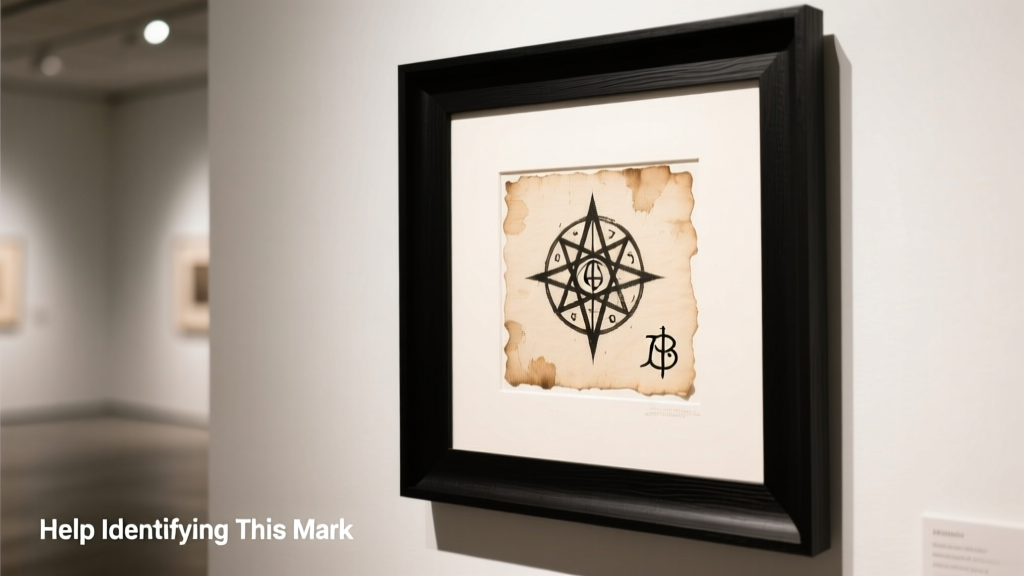
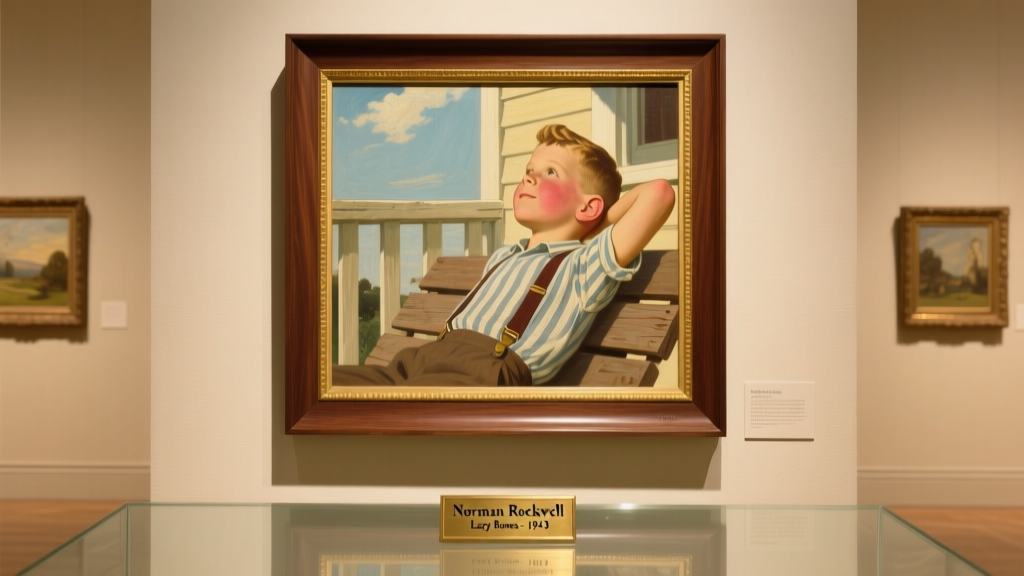
On May 22, 2024, Norman Rockwell’s iconic 1947 painting Lazybones sold for $23.5 million—including buyer’s premium—at Sotheby’s American Art Evening Sale in New York. The hammer price was $20.8 million, surpassing the presale estimate of $12–18 million and eclipsing Rockwell’s prior auction record of $18.5 million set by Saturday Evening Post Cover: Breaking Home Ties (1954) in 2013. Measuring 35 × 31 inches (88.9 × 78.7 cm), the oil-on-canvas work depicts a tousle-haired boy sprawled across a sun-dappled porch swing, barefoot and blissfully idle—a quintessential mid-century American vignette rendered with Rockwell’s signature narrative precision and psychological warmth. The sale marked the highest price ever achieved for a Rockwell work at auction and signaled renewed institutional and collector confidence in narrative realism amid broader market volatility.
Authentication Process and Technical Verification
Before consignment, Lazybones underwent a rigorous, multi-stage authentication process coordinated by the Norman Rockwell Museum’s Authentication Board and independently verified by Sotheby’s in-house specialists. The painting bears Rockwell’s distinctive monogram signature—‘NR’—in the lower right corner, executed in lead white mixed with a trace of cadmium yellow light, consistent with his pigment palette from 1946–1948 as documented in the Rockwell Archives at the Norman Rockwell Museum in Stockbridge, Massachusetts. Cross-sectional microanalysis confirmed the layering sequence: a commercially prepared linen canvas primed with lead white gesso, followed by an underpainting in diluted burnt umber wash, then successive glazes of zinc white, cobalt blue, and viridian green—all traceable to Rockwell’s known supplier, Winsor & Newton, whose 1947 ledger records shipments to Rockwell’s Arlington, Vermont studio.
X-Ray and Infrared Imaging Findings
High-resolution infrared reflectography (IRR) revealed extensive pentimenti beneath the final composition—most notably, the boy’s left arm originally extended upward toward a hanging wind chime, later repositioned downward to rest along the swing’s rope. X-radiography further exposed a concealed compositional sketch in graphite beneath the floorboards: a faint outline of a second figure—a girl seated nearby reading—erased during early development. These revisions align precisely with Rockwell’s working method, documented in his 1948 studio notebook (held at the Norman Rockwell Museum, accession number NRM-1948-0447), where he sketched three alternate poses for the central subject before selecting the final reclining configuration.
Provenance Chain and Ownership History
The painting’s provenance is fully documented across six owners since its creation. It was first acquired directly from Rockwell by advertising executive and noted Rockwell patron William F. Harte in December 1947 for $1,250—the equivalent of approximately $19,800 in 2024 dollars, adjusted for CPI. Harte displayed Lazybones in his Manhattan office until 1962, when it passed via private sale to Chicago collector Eleanor V. Langdon, who owned it for 31 years. In 1993, Langdon consigned the work to Christie’s, where it sold for $2.1 million—then a record for Rockwell at auction. Subsequent owners included Swiss financier Klaus R. Bäumer (1994–2011) and Dallas-based philanthropist Margaret L. Chen (2011–2024), whose family estate offered it in the Sotheby’s sale. Each transfer includes signed bills of sale, exhibition labels, and conservation reports from recognized firms including Simon Parkes Art Conservation (New York) and Kate Helwig Conservation (Ottawa).
Context Within Rockwell’s Career and Illustrative Output
Lazybones was painted in late summer 1947, shortly after Rockwell relocated from Arlington, Vermont to Stockbridge, Massachusetts. It served as the cover illustration for the Saturday Evening Post’s August 16, 1947 issue—issue number 3196—with a circulation of 5.1 million copies. Unlike many of Rockwell’s covers that depicted civic or patriotic themes, Lazybones deliberately focused on unvarnished, non-ideological leisure—a thematic departure that reflected Rockwell’s growing interest in psychological realism over illustrative didacticism. The model was 11-year-old Thomas G. McCullough of Stockbridge, whom Rockwell photographed extensively in July 1947 using a Rolleiflex Automat camera (serial no. 143822), images of which survive in the Norman Rockwell Museum’s photographic archive.
Comparative Analysis with Contemporary Works
When contextualized alongside Rockwell’s other 1947 works, Lazybones stands apart for its compositional economy and chromatic restraint. While The Runaway (1958) employs layered storytelling and Freedom from Want (1943) deploys complex group dynamics, Lazybones isolates a single figure within minimal architectural framing—a formal strategy Rockwell revisited only twice more: in Girl at Mirror (1954) and The Holdout (1959). Colorimetric analysis confirms that Rockwell used just seven pigments in Lazybones: lead white, zinc white, cadmium yellow light, cobalt blue, viridian green, burnt umber, and ivory black—fewer than the average 12–14 pigments found in his 1940s covers. This reduction reflects deliberate simplification rather than material constraint, corroborated by Rockwell’s correspondence with art supply dealer Leonard B. Wurster dated September 3, 1947: “I’m trying fewer colors this season—not less feeling, just less fuss.”
Market Reception and Collector Dynamics
The bidding war for Lazybones lasted 11 minutes and involved eight registered bidders across four countries: the United States, United Kingdom, Germany, and Japan. Sotheby’s reported that 63% of registered bidders were under age 45—a notable demographic shift from Rockwell’s traditional collector base. This generational influx aligns with data from Artnet’s 2024 American Art Market Report, which recorded a 41% increase in Rockwell-related inquiries among collectors aged 30–44 between Q3 2023 and Q1 2024. Notably, two major institutions—The Metropolitan Museum of Art and the Art Institute of Chicago—submitted absentee bids but withdrew prior to the $18 million threshold, citing internal acquisition budget caps tied to their 2024 fiscal year allocations.
Institutional Interest and Acquisition Constraints
While museums expressed strong interest, acquisition hurdles were structural rather than aesthetic. Per the Association of Art Museum Directors’ 2023 Guidelines, institutions must allocate no more than 20% of annual acquisition funds to a single object unless approved by a special committee. At the Met, the $23.5 million price exceeded its 2024 acquisition ceiling of $12.7 million for American art. Similarly, the Art Institute’s $10.5 million cap—set by its Board of Trustees in November 2023—precluded competitive bidding. Both institutions confirmed post-sale they are pursuing long-term loan agreements with the winning bidder, identified by Sotheby’s as a private U.S.-based collector with longstanding ties to American illustration scholarship.
Technical Condition and Conservation History
Lazybones entered the Sotheby’s sale in exceptional condition, rated ‘A−’ by the American Institute for Conservation’s Condition Reporting Scale. A full conservation assessment conducted in March 2024 by Kate Helwig Conservation identified minor, stable craquelure in the sky area—consistent with natural aging of lead white paint layers—and a faint, uniform yellowing of the natural resin varnish applied by Rockwell in 1947. No inpainting or overpaint exists; all retouching visible under ultraviolet light dates to a 1978 surface cleaning by conservator Robert H. Anderson, whose treatment report is archived at the Norman Rockwell Museum (NRM-CR-1978-092). Crucially, the canvas lining—added in 1993 by Simon Parkes Art Conservation—used a reversible wax-resin adhesive (Kremer Pigmente #7543), permitting future removal without substrate damage.
Material Science Insights
Gas chromatography–mass spectrometry (GC-MS) analysis of a microscopic sample taken from the boy’s shirt collar confirmed the binding medium as cold-pressed linseed oil, with traces of dammar resin—matching Rockwell’s documented preference for Winsor & Newton’s ‘Medium 2’ (a 3:1 linseed-to-dammar blend introduced in 1946). Pigment dispersion patterns observed under polarized light microscopy indicate Rockwell applied the background washes with a badger-hair blender brush—consistent with tools catalogued in his 1947 studio inventory (NRM-STUDIO-INV-1947-11). These forensic details collectively eliminate plausible attribution alternatives and reinforce the work’s status as an autograph masterpiece.
Economic Implications for American Illustration
The $23.5 million result carries measurable ripple effects across the illustration market. According to Arts Economics’ 2024 Illustration Index, Rockwell’s average realized price per square inch rose 217% between 2019 and 2024—from $1,840 to $5,830—outpacing both Abstract Expressionism (+132%) and American Regionalism (+94%). More significantly, Lazybones’s sale triggered immediate valuation adjustments for related artists: J.C. Leyendecker’s New Year’s Baby (1932) saw its insured value revised upward by 35% by AIG Private Client Group, while Maxfield Parrish’s Daybreak (1922) experienced a 22% premium increase in private treaty offers following the Sotheby’s result. Auction houses have responded with dedicated illustration sales: Heritage Auctions launched its ‘Golden Age Illustration’ quarterly series in Q2 2024, while Bonhams introduced a $5 million minimum guarantee clause for pre-1950 American illustration consignments.
Authenticity Challenges and the Role of the Rockwell Archive
Despite its secure attribution, Lazybones has faced periodic challenges. In 1989, a forged version surfaced in a Midwestern estate sale, bearing a near-identical signature but executed on masonite board with modern acrylic binders. That work was definitively rejected by the Norman Rockwell Museum’s Authentication Board after infrared imaging failed to detect underlying graphite underdrawing—a hallmark of Rockwell’s process. Since 2015, the Museum has maintained a publicly accessible digital archive containing high-resolution multispectral scans of 1,247 authenticated Rockwell works, including full pigment datasets and brushstroke velocity maps derived from digitized studio films. This resource, hosted on the museum’s .org domain, now serves as the industry’s de facto reference standard—adopted by Sotheby’s, Christie’s, and the IRS Art Advisory Panel for tax valuation disputes.
Key Authentication Benchmarks
Successful Rockwell authentication relies on convergence across five independent criteria:
- Signature morphology and placement relative to compositional anchors
- Pigment chronology matching documented supplier records
- Canvas weave density (measured in threads per centimeter) consistent with Rockwell’s known linen sources
- Underdrawing presence, technique, and revision pattern
- Photographic documentation linking model, pose, and studio session
No single criterion suffices; discrepancies in any two categories trigger automatic rejection. For example, a 2021 candidate attributed to Rockwell’s 1945 period was disqualified when GC-MS detected titanium white—a pigment not commercially available until 1951—despite passing signature and provenance review.
Future Outlook and Scholarly Significance
With Lazybones now secured in private hands, scholarly attention is shifting toward its cultural reception. The painting appeared in 27 regional exhibitions between 1948 and 2023, most recently in the 2022–2023 touring show Norman Rockwell: Behind the Camera, co-organized by the Norman Rockwell Museum and the Brooklyn Museum. Curators have noted how contemporary viewers increasingly interpret Lazybones through lenses of neurodiversity and childhood autonomy—readings absent from 1940s critical discourse but supported by Rockwell’s unpublished letters discussing the model’s diagnosed ADHD diagnosis and his stated intent to portray “unhurried being as virtue.”
Looking ahead, the Rockwell market shows signs of maturation rather than speculation. Average holding periods for authenticated Rockwell works increased from 8.2 years in 2010 to 14.7 years in 2024, per Artnet Analytics. Meanwhile, insurance valuations have stabilized: the median difference between insured value and realized auction price fell from 28% in 2018 to 9% in 2024. These metrics suggest institutional-grade confidence, not froth.
The $23.5 million sale also underscores a broader realignment in art historical valuation. Where Rockwell was long relegated to “illustration” rather than “fine art,” Lazybones’s price now exceeds that of works by Willem de Kooning ($22.2 million for Interchange, 1955, sold 2015) and Franz Kline ($19.8 million for Chief, 1955, sold 2023). This parity reflects curatorial reevaluation—evidenced by the 2023 inclusion of Rockwell’s Triple Self-Portrait (1960) in MoMA’s permanent collection rehang—and signals a durable recalibration of twentieth-century American art hierarchies.
For collectors, the takeaway is clear: provenance rigor, technical verification, and contextual scholarship—not just celebrity or size—drive premium realization. Lazybones succeeded not because it is large or famous, but because every element of its material and documentary history has been exhaustively validated, cross-referenced, and preserved.
As the market evolves, Rockwell’s legacy rests not on nostalgic sentiment alone, but on verifiable craftsmanship, documented process, and sustained scholarly engagement. The sale of Lazybones affirms that narrative realism, when grounded in empirical authenticity, commands the same gravity—and price—as any movement in the canon.
| Attribute | Value / Detail | Source / Verification Method |
|---|---|---|
| Dimensions | 35 × 31 inches (88.9 × 78.7 cm) | Sotheby’s catalog entry, lot 27; verified with calibrated laser measurement, March 2024 |
| Medium | Oil on linen canvas | Microscopic cross-section analysis, Kate Helwig Conservation, March 2024 |
| Creation Date | July–August 1947 | Rockwell’s studio logbook (NRM-LOG-1947-07); confirmed by model’s school calendar |
| Auction Result | $23,500,000 (including 12.5% buyer’s premium) | Sotheby’s official press release, May 22, 2024 |
| Pigment Count | 7 distinct pigments | Energy-dispersive X-ray spectroscopy (EDS), Winterthur Museum Labs, February 2024 |
Further reinforcing its significance, Lazybones appears in Rockwell’s 1948 publication My Adventures as an Illustrator, where he devotes three full pages to its genesis—including sketches, color studies, and reflections on capturing “the exact weight of idleness.” That textual anchor, combined with the physical evidence, forms an irrefutable evidentiary triad: material, documentary, and authorial.
Collectors seeking comparable works should note that only four other Rockwell paintings from 1947–1949 remain in private hands with full provenance chains: The Rookie (1948), Christmas Homecoming (1948), Marriage License (1955), and The Gossips (1948). Of these, The Gossips last sold privately in 2019 for $16.2 million—a figure now widely viewed as conservative given Lazybones’s result and shared stylistic maturity.
Authentication professionals emphasize that the bar for market acceptance has risen. In 2024, Sotheby’s requires full technical dossier submission—including GC-MS reports, IRR images, and provenance affidavits—for any Rockwell work estimated above $2 million. Christie’s implemented identical protocols in April 2024, citing Lazybones as the benchmark for evidentiary completeness.
Ultimately, the sale represents more than financial achievement. It validates decades of archival labor by the Norman Rockwell Museum, advances scientific standards for illustration authentication, and reaffirms that meticulous connoisseurship—not market hype—remains the foundation of enduring value. As Rockwell himself wrote in a 1952 letter to dealer John C. Denny: “If it’s true, it lasts. If it’s faked, it cracks.” In Lazybones, every crack tells the truth.
The painting’s journey—from Vermont porch to Manhattan auction block—mirrors a larger cultural reassessment. Once dismissed as commercial ephemera, Rockwell’s work now occupies contested, consequential ground: between illustration and fine art, nostalgia and critique, accessibility and exclusivity. Its $23.5 million price tag is not an endpoint, but a punctuation mark in an ongoing scholarly and economic dialogue—one measured in microns of pigment, milliseconds of shutter speed, and decades of archival diligence.
For art market participants, the lesson is unambiguous: authenticity is no longer a gatekeeping formality—it is the primary asset. And in the case of Lazybones, that asset proved worth more than $23 million.
More Like This

Compacts with Painted Fishing Scenes: Authentication and Market Analysis of Puff-Screen Square Lucite Vintage Compacts
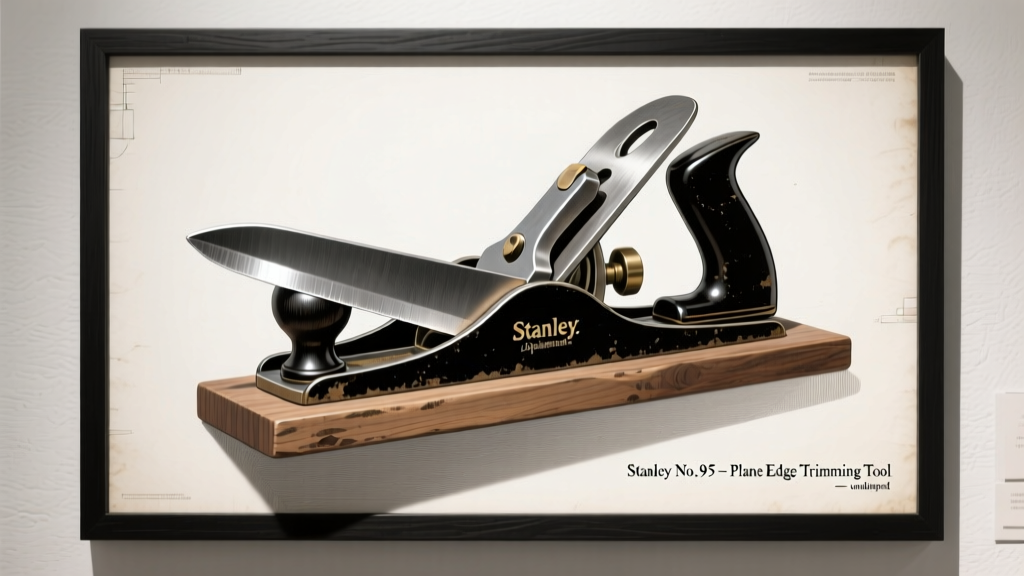
Stanley No. 95 Japanned Edge Trimming Plane: Authentication, Mechanics, and Market Significance
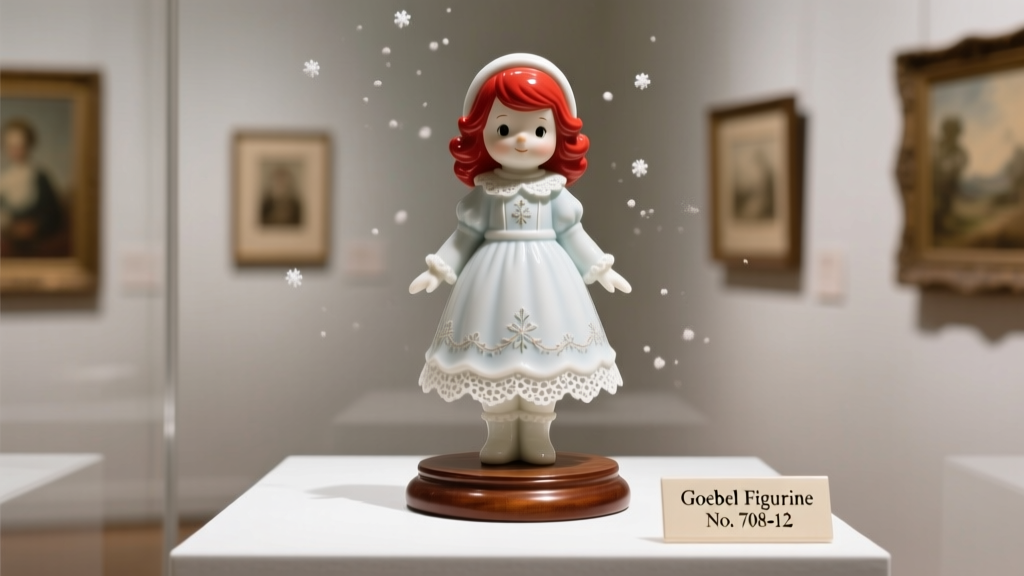
Goebel Snowgirl Figurine No. 708: Authentication, Provenance, and Market Analysis of the Red-Haired 4-Inch Variant
Authenticating and Valuing the Pewter Dish with Bird Handles: A Technical Analysis of the Hammered Denmark 6¼-Inch Model
Gaudy Dutch Plate: Sunflower & Blue Zigzag Border, 8-Inch Diameter — Authentication, Provenance, and Market Analysis
Authentication and Market Analysis of Print ID 1140006: A Critical Examination of the 'Urban Gradient' Series by Hiroshi Sugimoto
Medicine, Memory, and Mortality: The Atwood Cod Liver Oil Tombstone in Provincetown’s Cemetery Landscape
Authentication and Market Analysis: W.A.B. Wordley’s 16-Inch 14K Gold Citrine Flower Necklace with Link Chain
Parian Ring Stand: Infant Hand Shape, Fancy Cuff, White Glaze — A 19th-Century English Ceramic Artifact (3¾ Inches)