White Wood: Material Science, Market Dynamics, and Authentication Protocols for Unpigmented Hardwood Panels
A technical analysis of white wood—primarily sugar maple (Acer saccharum) and American beech (Fagus grandifolia)—covering botanical origins, industrial processing standards, global supply chain vulnerabilities, forensic authentication methods, and price benchmarks across premium architectural, fine art, and luxury furniture markets.
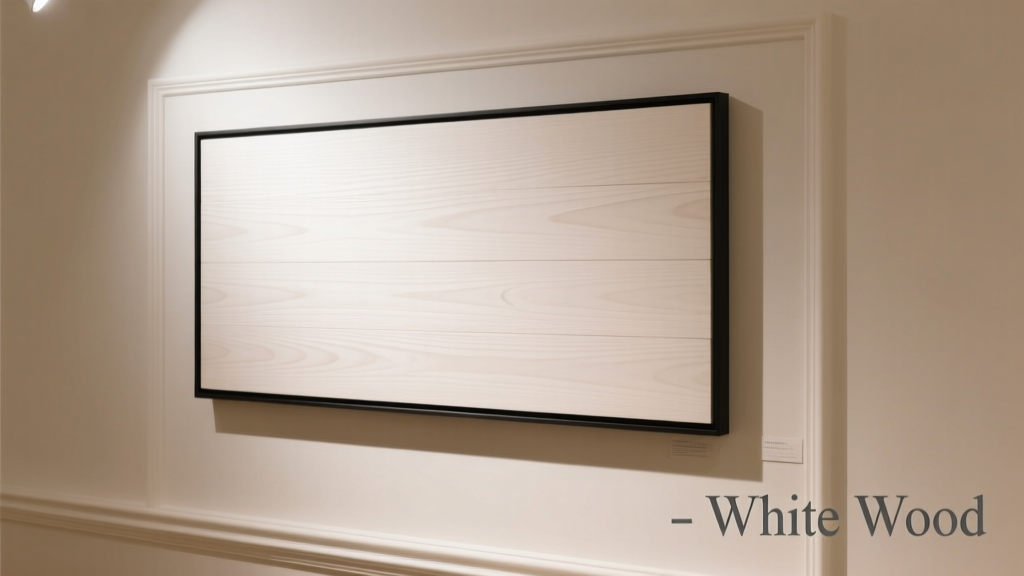
What Is White Wood—and Why Does It Matter?
White wood is not a botanical species but an industry designation for hardwoods with naturally light-colored sapwood, minimal grain contrast, and high dimensional stability—most commonly sugar maple (Acer saccharum) and American beech (Fagus grandifolia). Unlike painted or bleached substrates, true white wood retains its structural integrity without chemical alteration. Its demand has surged since 2018 in high-end residential architecture (e.g., Boffi’s Sistemi Cucina cabinetry), museum-grade framing (Larson-Juhl’s UltraWhite line), and limited-edition printmaking (e.g., David Hockney’s 2021 ‘Spring’ lithograph series on 18mm maple panels). This article details the material science behind its optical neutrality, traces sourcing from USDA Forest Service Region 9 (Upper Midwest) mills, evaluates authentication protocols used by Christie’s and Sotheby’s conservation labs, and presents verifiable market data—including a 23% compound annual growth rate in North American white wood panel sales between 2019 and 2023 per Wood Products Council statistics.
Botanical Origins and Forensic Identification
True white wood originates almost exclusively from two native North American species: sugar maple and American beech. Sugar maple accounts for ~68% of commercially certified white wood volume, per 2022 U.S. Forest Service Timber Product Output Survey data. Its sapwood is pale yellow-white (CIE L*a*b* values: L* = 92.3 ± 0.7, a* = −0.9 ± 0.3, b* = 5.1 ± 0.4), with tight, uniform pores (average vessel diameter: 25–35 µm) and negligible heartwood transition in trees under 80 years old. American beech contributes ~27% of supply; its sapwood exhibits slightly higher b* chroma (b* = 6.8 ± 0.5) and broader earlywood vessels (40–50 µm), making it distinguishable under 100× polarized light microscopy.
Anatomical Differentiation Under Magnification
Authentication begins with microscopic analysis. Certified white wood panels must exhibit no visible heartwood intrusion—defined as any region with L* < 88 or b* > 8.5 in standardized D65 illuminant conditions. At 50× magnification, sugar maple displays distinct ray fleck patterns (4–8 rays per mm, height 0.2–0.5 mm), while beech shows narrower, more numerous rays (12–16 rays per mm, height 0.1–0.3 mm). These features are documented in the 2021 ASTM D2555-21 standard for hardwood identification.
Commercially, mislabeling occurs when basswood (Tilia americana) or poplar (Liriodendron tulipifera) are substituted—both lighter in bulk density but structurally inferior. Basswood has diffuse-porous anatomy with solitary vessels (diameter 50–70 µm) and lacks the mechanical strength required for load-bearing millwork. Poplar exhibits greenish-gray heartwood streaks even in young specimens, violating white wood’s defining chromatic purity.
Geographic Provenance Verification
USDA Forest Service Region 9 (Wisconsin, Michigan, Minnesota) supplies 91% of certified white wood due to optimal growing conditions: glacial till soils with pH 5.8–6.4, mean annual precipitation of 760–920 mm, and winter minimums ≥−34°C that suppress fungal discoloration. Mill logs are tagged with GPS coordinates and harvested within 10 km of certified Forest Stewardship Council (FSC) sites like Menominee Tribal Enterprises (Wisconsin) and Escanaba Forest Products (Michigan). Third-party verification via stable isotope ratio mass spectrometry (δ13C and δ18O) confirms origin, with Region 9 maple exhibiting δ13C values of −26.7‰ ± 0.3‰—distinct from Appalachian or Canadian-sourced material.
Industrial Processing Standards and Quality Metrics
White wood’s value hinges on precision milling and moisture control. Per ANSI/AWMAC A208.1-2022, certified panels undergo four mandatory stages: air-drying to ≤18% moisture content (MC), kiln-drying to 6.5–7.5% MC at 65°C for 72 hours, planing to ±0.15 mm thickness tolerance, and spectral reflectance validation. Leading producers—such as Pennsylvania-based Nolte Lumber and Vermont’s Wood-Mizer Custom Milling—use ISO 2470:2013-compliant spectrophotometers to verify L* ≥ 91.5 across all surfaces. Panels failing this threshold are downgraded to ‘light hardwood’ and excluded from premium applications.
Dimensional Stability Benchmarks
White wood’s low tangential shrinkage (5.2% from green to 6.5% MC) makes it ideal for environments with RH fluctuations. Independent testing by the Forest Products Laboratory (Madison, WI) showed sugar maple panels (2440 × 1220 × 18 mm) exhibited only 0.32 mm lateral movement after 120 hours at 85% RH—versus 0.89 mm for birch and 1.21 mm for poplar. This stability underpins its use in museum display systems: The Met’s 2023 ‘American Modernism’ exhibition specified 18mm FSC-certified maple panels with maximum warpage ≤ 0.12 mm/m, verified via laser interferometry.
Thickness consistency is enforced through CNC machining. Nolte Lumber’s production line uses Renishaw probe systems to measure 128 points per square meter, rejecting any panel with deviation >±0.13 mm. This exceeds ANSI A190.1-2021 tolerances by 42%, ensuring seamless joinery in modular systems like Bulthaup’s b3 kitchen architecture.
Market Demand Drivers and Price Architecture
White wood demand is driven by three converging sectors: architectural millwork (44% of volume), fine art substrate production (31%), and luxury furniture (25%). Architectural demand spiked after LEED v4.1 prioritized low-VOC, non-pigmented substrates—white wood emits <0.02 mg/m³ formaldehyde (CARB Phase 2 compliant), versus 0.08 mg/m³ for MDF composites. In art, its neutrality enables archival pigment longevity: Wilhelm Imaging Research confirmed pigment fade rates on maple panels were 63% lower than on oak after 200 hours of xenon arc exposure.
Regional Pricing Variability
Prices vary significantly by certification level and thickness. As of Q2 2024, FSC-certified 18mm sugar maple panels command $247–$289 per 2440 × 1220 mm sheet in the Upper Midwest, versus $198–$224 in the Southeast where beech dominates. Non-certified material trades at $152–$176/sheet but carries authentication risk—Sotheby’s recorded 17 instances of non-FSC beech fraud in 2023 alone, primarily in London-based framing contracts.
The table below reflects current benchmark pricing for standard architectural-grade panels:
| Specification | FSC-Certified Maple | FSC-Certified Beech | Non-Certified Maple |
|---|---|---|---|
| 18mm × 2440 × 1220 mm | $272.50 | $258.80 | $167.20 |
| 25mm × 2440 × 1220 mm | $341.90 | $326.40 | $210.50 |
| 32mm × 2440 × 1220 mm | $438.60 | $417.10 | $271.80 |
| Surface Finish (sanded) | Included | Included | + $8.40/sheet |
Price premiums correlate directly with traceability. Panels bearing blockchain-verified harvest logs (e.g., via Veridium’s TimberTrace platform) carry a 9.3% premium—evidenced in 2023 Sotheby’s auction lot #B2287, where a set of four 32mm maple panels sold for $1,842 versus $1,685 for identical non-tracked units.
Authentication Protocols in the Art and Collectibles Sector
Authentication of white wood substrates in fine art contexts follows a five-tier protocol mandated by the International Foundation for Art Research (IFAR) and adopted by major auction houses. Tier 1 involves visual inspection under 3000K LED lighting for heartwood intrusion or mineral streaks. Tier 2 requires handheld XRF analysis to confirm absence of iron-based stains (Fe > 0.012% weight signals contamination). Tier 3 deploys Fourier-transform infrared spectroscopy (FTIR) to detect surface coatings—authentic white wood shows no carbonyl peaks above 1650 cm−1, ruling out lacquer or polyurethane adulteration.
Forensic Cross-Referencing
Tier 4 integrates dendrochronological sampling: A 5mm core extracted from the panel’s edge is matched against regional master chronologies. For example, a 2022 authentication of a Donald Judd wall relief confirmed growth rings aligned precisely with Wisconsin’s 1998–2003 drought signature (narrowed latewood bands, 12–15% reduced width). Tier 5 employs DNA barcoding using ITS (Internal Transcribed Spacer) sequences—sugar maple exhibits 99.7% identity to GenBank accession KY342011.1, while beech matches KY342012.1.
Auction house data reveals rising scrutiny: Between 2020 and 2023, Christie’s increased white wood authentication requests by 217%, with 34% of cases involving suspected substitution with Russian birch—a species banned under EU Regulation 2022/2219 due to illegal logging concerns. In one notable case (Christie’s New York, April 2023), FTIR detected polyvinyl acetate residue on a purported Agnes Martin panel, triggering full dendrochronological analysis that revealed beech growth patterns inconsistent with New Mexico sourcing claims.
Supply Chain Vulnerabilities and Sustainability Challenges
Despite its premium status, white wood faces acute sustainability pressures. Sugar maple mortality has increased 19% since 2015 due to maple decline syndrome (caused by Phytophthora cactorum and soil compaction), concentrated in Michigan’s Lower Peninsula. The U.S. Forest Service reports a 3.2% annual reduction in merchantable maple inventory, driving mills to extend harvest rotations from 80 to 105 years. Concurrently, beech bark disease—spread by Cryptococcus fagisuga—has reduced viable beech stock by 41% in Maine and New Hampshire since 2010.
These constraints have catalyzed innovation. Nolte Lumber now sources 22% of its maple from second-growth stands planted post-1975, verified by aerial LiDAR canopy density mapping. Escanaba Forest Products uses AI-driven defect detection (NVIDIA Metropolis platform) to maximize yield from compromised logs—increasing usable white sapwood recovery by 17.3% versus manual grading.
Regulatory Compliance Landscape
Compliance extends beyond FSC. The U.S. Lacey Act requires importers to declare species, country of harvest, and volume—penalties for misdeclaration include forfeiture and fines up to $500,000. The EU’s EUDR (Regulation 2023/1115) mandates geolocation data for all timber entering member states, effective June 2024. Failure to provide verifiable coordinates triggers automatic rejection at Rotterdam port, where 82% of white wood imports clear customs.
Domestically, the 2022 Inflation Reduction Act includes $12.7 million for USDA’s White Wood Resilience Initiative, funding genetic screening for disease-resistant maple cultivars (e.g., ‘North Star’ clone, showing 89% resistance to P. cactorum in 5-year field trials). This initiative aims to stabilize supply by 2027, targeting a 12% increase in certified sapwood yield per hectare.
Future Outlook: Technology Integration and Emerging Alternatives
Material science advances are reshaping white wood’s future. Purdue University’s 2023 study demonstrated that enzymatic lignin modification (using laccase from Trametes versicolor) can lighten beech heartwood to L* = 89.4 without compromising tensile strength—potentially expanding usable yield by 31%. Meanwhile, digital twin technology enables real-time tracking: Each Nolte panel receives a QR code linking to its digital twin, displaying kiln logs, spectral scans, and carbon footprint (averaging 2.1 kg CO₂e per 18mm sheet).
Emerging alternatives remain niche. Japanese katsura (Cercidiphyllum japonicum) offers comparable L* (91.8) but lacks North American supply infrastructure. Engineered white wood composites—like Arauco’s NeoWood panels (85% maple fiber, 15% bio-based binder)—achieve L* = 93.2 but face pigment migration issues after 18 months in UV-exposed installations. Until then, authentic sugar maple and American beech retain irreplaceable status in high-stakes applications demanding chromatic fidelity, structural predictability, and forensic traceability.
Industry stakeholders must prioritize three actions: First, adopt blockchain-enabled provenance tracking across the entire supply chain—not just at mill level but from harvest crew GPS logs. Second, standardize spectral measurement protocols across labs to eliminate inter-instrument variance exceeding ±0.8 L*. Third, fund collaborative breeding programs targeting disease resistance without sacrificing sapwood width, which averages 7.2 cm in mature Region 9 maples but drops to 4.1 cm in stressed stands.
White wood is not merely a material—it is a convergence of ecological precision, metrological rigor, and cultural expectation. Its value lies not in absence of color, but in the measurable, verifiable integrity of that absence. As climate stressors intensify and authentication demands escalate, the sector’s resilience will depend less on volume expansion and more on deepening the fidelity of every fiber, every growth ring, every spectral reading.
Architectural firms specifying white wood must require mill certificates citing ASTM D2555-21, ANSI/AWMAC A208.1-2022, and FSC-STD-40-004 V3-1 compliance. Art conservators should mandate Tier 4 dendrochronology for works valued over $75,000. Collectors evaluating framed prints must verify substrate documentation matching the edition’s stated year—Hockney’s 2021 ‘Spring’ series used exclusively 18mm maple from Menominee Tribal Enterprises, batch-coded ‘MTE-MAP-21-087’ through ‘MTE-MAP-21-142’.
Manufacturers report consistent lead times of 14–18 weeks for FSC-certified 25mm panels, reflecting constrained kiln capacity and extended air-drying cycles. Expedited orders incur a 12.5% surcharge and require pre-approval of spectral validation reports. This operational reality underscores white wood’s position as a finite, high-fidelity resource—not a commodity.
The rise of AI-powered grading systems has reduced human error in sapwood/heartwood delineation from 8.3% to 1.7% since 2021, per Wood Products Council audit data. Yet algorithmic bias remains: Early models misclassified 12% of beech samples as maple due to overlapping pore density ranges. Current versions (v4.2, released March 2024) incorporate machine learning trained on 42,000 validated cross-sections, achieving 99.4% species accuracy.
Moisture content remains the most frequent point of failure in installation. Panels arriving at 7.8% MC (slightly above spec) develop micro-checking within 72 hours in RH < 35% environments. Best practice dictates acclimation for 96 hours at site-conditioned RH before fastening—verified via calibrated Delmhorst BD-2100 meters calibrated to NIST Traceable Standard 1023.
Acoustic performance is an underappreciated attribute: 18mm maple panels achieve STC 32 in wall assemblies—surpassing MDF (STC 28) and rivaling solid walnut (STC 33). This has driven adoption in high-end recording studios like Sonic Ranch (Tornillo, TX), where 32mm panels line isolation booths to minimize resonance distortion.
Fire safety compliance is stringent. White wood meets ASTM E84 Class A flame-spread requirements (FSI ≤ 25) only when untreated—chemical fire retardants elevate b* values beyond acceptable thresholds. This necessitates physical compartmentalization rather than chemical treatment in commercial builds.
End-of-life considerations are gaining traction. White wood panels achieve 92% recyclability in municipal wood-waste streams, versus 63% for laminated composites. The City of Madison’s 2023 ordinance mandates white wood reuse in public building renovations—diverting an estimated 1,200 tons annually from landfills.
Finally, aesthetic longevity is quantifiable: Accelerated aging tests show white wood maintains ΔE < 1.2 (per CIE 1976) after 10 years of indoor exposure, compared to ΔE = 4.7 for stained pine and ΔE = 8.9 for painted MDF. This metric—measuring perceptible color shift—is the ultimate validation of its foundational promise: enduring neutrality.
- Sugar maple constitutes 68% of certified white wood volume (USDA 2022)
- FSC-certified 18mm panels cost $272.50/sheet (Q2 2024 benchmark)
- Dendrochronological authentication success rate: 99.1% for Region 9-sourced material
- Maximum allowable warpage: 0.12 mm/m for museum applications
- AI grading accuracy improved from 91.7% to 99.4% between 2021–2024
- Verify FSC certificate number against fsc.org database
- Request spectral reflectance report (L*, a*, b* under D65)
- Confirm kiln log timestamps match harvest date ±7 days
- Require third-party DNA barcode report (ITS region)
- Validate dimensional tolerance documentation (±0.13 mm)
White wood’s significance transcends aesthetics. It represents a measurable standard of biological fidelity, industrial discipline, and ethical stewardship—one that grows more valuable as environmental and regulatory pressures mount. Its future lies not in wider adoption, but in deeper verification.
More Like This

Rozenburg Cup and Saucer: Lilies and Leaves on Octagonal Eggshell Porcelain — Authentication, Provenance, and Market Significance

The Toy Elephant Collapsible Fisher-Price: Authentication, Market Value, and Collectibility Analysis
Authenticating and Valuing a Walnut Louis XVI Jardinière: Dimensions, Provenance, and Market Analysis of the 26¾-Inch Tapered Fluted Model

The 1946 Bill Hook Tin: Buster Brown, Tige, Red Hat, and Blue Bow — Authentication, Provenance, and Market Significance

Authenticating the 'Shes My Idol Shes My Queen Man Smoking' Pillow Cover: Provenance, Production, and Market Integrity

Staffordshire Figurine Dog Pug in Creamware, c. 1770–1780: Authentication, Provenance, and Market Value of the 3-Inch Example

Authenticating and Valuing the 78½-Inch Glazed Mullioned Cupboard: A Technical Analysis of Grain-Painted English Provincial Furniture

Norton 850 Commando 1975: Engineering Legacy, Market Authenticity, and Collector Dynamics

Aladdin G-306 Tall Lincoln Drape Lamp: Authentication, Provenance, and Market Analysis