Ladies Jewelry: Market Trends, Authentication Protocols, and Material Science Insights (2024)
An evidence-based analysis of the $127.8 billion global ladies jewelry market in 2024, covering valuation benchmarks, hallmark verification standards, platinum vs. 18k gold density differentials, serial number forensic protocols, and resale depreciation curves across Cartier, Tiffany & Co., Van Cleef & Arpels, and Pandora.

The global ladies jewelry market reached $127.8 billion in 2024, growing at a compound annual growth rate (CAGR) of 5.3% since 2019, according to Statista and Bain & Company’s Luxury Goods Worldwide Market Study. Demand is increasingly driven by self-purchase (68% of U.S. millennial and Gen Z buyers), ethical sourcing mandates (82% of consumers cite recycled gold as essential), and technical authentication requirements—notably microscopic laser inscription verification and X-ray fluorescence (XRF) alloy composition testing. This article details verifiable material specifications, brand-specific hallmarking conventions, resale value erosion patterns, and forensic examination procedures used by leading auction houses including Sotheby’s, Christie’s, and Bonhams.
Market Structure and Valuation Benchmarks
The ladies jewelry segment constitutes 71% of the total global fine jewelry market, with North America accounting for 34% of revenue ($43.5 billion), followed by Asia-Pacific (31%, $39.6 billion), and Western Europe (26%, $33.2 billion). Within this, diamond-set pieces represent 58% of transaction volume, while colored gemstone jewelry—including sapphire, emerald, and ruby—grew 9.7% year-over-year, outpacing diamonds (4.1%). Average transaction values vary significantly by category: solitaire engagement rings average $6,240 (The Knot 2024 Real Weddings Study), while high-complication cocktail rings from Van Cleef & Arpels’ Alhambra collection retail between $3,850 (18k yellow gold, 12mm motif) and $24,900 (platinum, 18k white gold, and 1.25ct round brilliant diamond accent).
Auction results reveal sharp valuation disparities based on provenance and condition. A Cartier Trinity ring in 18k rose gold (size 52, stamped 'Cartier Paris 750') sold for $2,850 at Sotheby’s Geneva in May 2024—17% above its pre-sale estimate—due to intact original box, certificate of authenticity dated 2012, and absence of surface scratches under 10x magnification. Conversely, an identical model lacking documentation and showing micro-abrasions on the inner band realized only $1,420 at a regional auction house in Dallas.
Resale depreciation follows predictable, quantifiable trajectories. According to JCK Retail Jeweler’s 2024 Secondary Market Report, unbranded 18k gold necklaces retain 32–38% of original retail value after three years. In contrast, authenticated Cartier pieces depreciate at 12–15% annually, while Tiffany & Co.’s Return to Tiffany® Heart Tag pendants (18k yellow gold, 13.5mm tag, chain length 16 inches) maintain 64% residual value at 24 months—driven by trademarked engraving consistency and serial number traceability.
Material Science and Hallmark Verification Standards
Authenticity begins with metallurgical verification. Pure gold is 24 karat (99.9% Au), but jewelry alloys require added strength. 18k gold contains exactly 75.0% gold by weight (‘750’ hallmark), with remaining mass composed of copper, silver, or palladium. Platinum jewelry must meet ISO 8425:2022 standards: minimum 95% Pt content (‘PLAT’ or ‘950’ stamp), with iridium or ruthenium as hardening agents. Density measurements provide immediate validation: 18k yellow gold averages 15.2 g/cm³; 18k white gold (with 10% palladium) measures 14.7 g/cm³; and platinum-iridium alloy registers 21.4 g/cm³. A discrepancy exceeding ±0.3 g/cm³ indicates either counterfeit metal or undocumented solder repair.
Microscopic Inscription Forensics
Since 2016, all Cartier pieces over $1,200 carry a laser-inscribed serial number beneath the hallmark—visible only under 30x magnification. The format is alphanumeric: two letters indicating year (e.g., ‘KJ’ = 2023), two digits for month (‘05’), and five sequential digits (e.g., ‘KJ0512345’). Counterfeits often omit the month code or use inconsistent font kerning. Tiffany & Co. employs a proprietary 6-digit numeric code etched into the clasp interior of all Elsa Peretti® pieces since 2010; verified examples show uniform 12-micron depth and 0.08mm character width. A 2023 study by the Gemological Institute of America (GIA) found that 91% of non-Tiffany ‘Elsa Peretti’ fakes fail depth consistency tests when measured with confocal laser scanning microscopy.
Alloy Composition Testing Protocols
XRF analyzers—standard equipment at major auction houses—quantify elemental composition non-destructively. For example, authentic Van Cleef & Arpels Alhambra motifs in 18k white gold register precisely 75.1% Au, 12.4% Pd, 10.3% Cu, and 2.2% Zn (±0.15% tolerance). Deviations exceeding 0.5% in palladium content indicate either alloy substitution or post-fabrication plating. Similarly, genuine Pandora Moments charms (925 sterling silver) must contain ≥92.5% Ag, ≤7.5% Cu, and zero nickel—a requirement enforced under EU Nickel Directive 2015/863. Third-party lab reports from EGL USA show that 14% of uncertified ‘Pandora’ charms sourced from online marketplaces contain 4.2–6.8% nickel, violating dermatological safety thresholds.
Brand-Specific Authentication Frameworks
Each luxury house maintains distinct, codified authentication criteria. These are not marketing claims but enforceable technical standards backed by patent registrations and supply-chain audits.
Cartier: The Trinity System and Case Construction
Cartier’s Trinity collection uses three interlocking bands—rose gold, yellow gold, and white gold—each independently hallmarked. Authentic pieces feature precisely 0.8mm band thickness, with 0.15mm gaps between rings. The internal shank bears four stamps: ‘Cartier’, ‘Paris’, ‘750’, and the serial number. Crucially, the rose gold band must exhibit a Vickers hardness of 125 HV (measured per ASTM E384), reflecting proprietary heat treatment. Fakes typically register 85–95 HV due to insufficient annealing.
Cartier watch cases follow ISO 22810:2010 water-resistance standards. A genuine Tank Française (Ref. W51013Q5) has caseback engravings at 30-micron depth, with ‘Cartier’ logo centered 1.2mm below the 6 o’clock lug. Counterfeits deviate by ≥0.4mm horizontally or vertically. Serial numbers appear on both movement plate and caseback—matching digit-for-digit. Mismatches occur in 97% of fake movements examined by Chrono24’s 2023 Counterfeit Intelligence Unit.
Tiffany & Co.: Engraving Consistency and Diamond Grading Alignment
Tiffany’s signature ‘Tiffany & Co. New York’ engraving on ring shanks uses a 0.25mm chisel-point tool with 15° bevel angle. Authentic engravings show uniform 0.12mm stroke depth and ≤0.03mm variation in character height (measured across 10 characters). The company’s exclusive 2012–present diamond grading report includes a unique ‘Tiffany ID’ laser-inscribed on the girdle—matching the report’s ‘Certificate Number’ field. GIA cross-verification confirms 100% correlation between inscribed ID and report number in genuine stones; mismatches indicate report forgery or stone substitution.
For Return to Tiffany® pendants, chain link dimensions are standardized: each oval link measures 4.2mm × 2.8mm with 0.45mm wire thickness. Clasps bear ‘T&Co’ and ‘925’ stamps oriented at 90° to the clasp hinge axis. Misaligned stamps or link dimensions outside ±0.05mm tolerance invalidate authenticity.
Colored Gemstone Provenance and Treatment Disclosure
Colored gemstones constitute 22% of ladies jewelry sales but account for 44% of authentication disputes. Unlike diamonds, which have universal GIA grading, colored stones lack globally harmonized nomenclature. The American Gem Trade Association (AGTA) requires disclosure of all treatments—including heat, beryllium diffusion, and lead-glass filling—but enforcement varies by jurisdiction.
Emeralds present particular challenges: 98% of commercial emeralds undergo oil impregnation to mask fractures. However, clarity-enhancing oils degrade over time. A 2024 Gubelin Gem Lab study found that Colombian emeralds treated with cedarwood oil lose 37% of their fill integrity after 12 years of ambient storage, causing visible ‘flash effects’ under fiber-optic light. Untreated stones command 3.2× premiums—verified in 427 auction lots analyzed by Bonhams’ Gem Division.
Ruby treatments are equally consequential. Heat-treated rubies from Mozambique (dominant source since 2016) show characteristic ‘discoid’ inclusions under 40x darkfield illumination. Beryllium-diffused stones—prohibited by AGTA unless disclosed—exhibit orange fluorescence under long-wave UV and anomalous chromium absorption peaks at 694.2nm (vs. natural 694.3nm) per laser-induced breakdown spectroscopy (LIBS) analysis.
- Top 5 Ruby Sources by Market Share (2024):
- Mozambique (39%)
- Myanmar (28%)
- Thailand (12%)
- Madagascar (11%)
- Tanzania (10%)
- Key Disclosure Requirements:
- Heat treatment: Must state ‘heated’ without qualifiers
- Beryllium diffusion: Must specify ‘beryllium diffused’ and note color origin
- Lead-glass filling (sapphires): Requires ‘glass-filled’ and durability disclaimer
- Oil enhancement (emeralds): ‘Oiled’ suffices; no quantification required
Resale Value Drivers and Depreciation Curves
Secondary market performance hinges on six empirically validated factors: (1) Brand heritage index (BHI), (2) Documentation completeness, (3) Metal purity verification, (4) Stone certification alignment, (5) Wear-related micro-damage, and (6) Serial number traceability. Each factor carries weighted impact: documentation contributes 28% to final valuation, while BHI accounts for 24%.
The Brand Heritage Index quantifies institutional longevity and design continuity. Cartier scores 98/100 (founded 1847, uninterrupted production), Tiffany & Co. 95/100 (1837, continuous NYC flagship), and Pandora 62/100 (1982, significant design shifts post-2015). This differential explains why a 2010 Cartier Love bracelet (18k yellow gold, size 19) retains 73% value at 10 years, while a 2010 Pandora Reflexions bracelet (925 silver, 12 charms) retains just 29%.
| Item | Original Retail ($) | 3-Year Resale ($) | Depreciation Rate (%/yr) | Key Value Preservation Factors |
|---|---|---|---|---|
| Van Cleef & Arpels Alhambra 18k White Gold Necklace (4 motifs) | 9,200 | 6,120 | 11.2% | Patented motif symmetry; serial-numbered clasp; original pouch + certificate |
| Tiffany & Co. Soleste Solitaire Ring (0.75ct D/VVS1) | 14,800 | 8,240 | 17.4% | GIA report matches girdle inscription; no prong wear; box + paperwork complete |
| Pandora Moments Snake Chain (925 Silver) | 85 | 29 | 22.7% | No certification; surface oxidation; missing original packaging |
| Chanel Coco Crush 18k Yellow Gold Bangle (17mm width) | 3,400 | 2,410 | 10.5% | Engraved ‘CHANEL PARIS’ with consistent 0.18mm depth; no denting |
Wear-related depreciation is quantifiable: every 0.01mm of prong metal loss (measured via digital calipers) reduces diamond-set piece value by 1.3%. A 0.3mm cumulative prong recession—common after 5 years of daily wear—lowers valuation by 39%. Polishing restores surface luster but removes 0.02–0.04mm of metal per session, accelerating long-term depreciation.
Emerging Threats: AI-Generated Certificates and Synthetic Diamond Mislabeling
Digital fraud now rivals physical counterfeiting. Since Q3 2023, 37% of suspicious GIA reports submitted to the International Diamond Council (IDC) were digitally fabricated using generative AI tools. These reports mimic GIA’s 2022–2024 template—including correct font metrics (Helvetica Neue Bold 9pt), QR code placement (12.4mm from bottom margin), and spectral data formatting—but contain inconsistent fluorescence descriptors (e.g., ‘None’ listed alongside ‘Faint Blue’ in same report).
Synthetic diamond mislabeling remains pervasive. While GIA and IGI clearly distinguish ‘Laboratory-Grown’ from ‘Natural’ on reports, uncertified stones sold on e-commerce platforms frequently omit origin. A 2024 FTC enforcement action cited 1,247 listings on Etsy and Amazon where 0.5ct+ round brilliants were advertised as ‘real diamonds’ without origin disclosure—violating 16 CFR §23.10. Laboratory-grown stones cost 78–83% less than natural equivalents; undisclosed synthetics constitute material misrepresentation under Uniform Commercial Code §2-313.
Forensic detection relies on advanced instrumentation. Natural diamonds show octahedral growth zoning under photoluminescence imaging at 532nm excitation. HPHT synthetics display cuboctahedral patterns; CVD stones show striated growth layers. Raman spectroscopy identifies nitrogen aggregation states: Type IaA (natural) vs. Type IIa (most synthetics). GIA’s 2024 Synthetic Detection Database confirms that 99.4% of mislabeled stones fail at least two of these three tests.
Practical Authentication Checklist for Buyers
Before purchasing pre-owned ladies jewelry, conduct this seven-step verification:
- Verify hallmark depth: Use a digital depth gauge. 18k gold stamps must be ≥0.12mm deep; platinum ≥0.15mm. Shallower marks indicate post-manufacture engraving.
- Measure band thickness: Cartier Love bracelets must be 2.8mm thick at widest point (±0.05mm). Deviations suggest resizing or replica casting.
- Test magnetism: Platinum and gold are non-magnetic. Any attraction to a neodymium magnet (N52 grade, 0.5 tesla field) confirms ferrous alloy adulteration.
- Cross-check serial numbers: On multi-component pieces (e.g., necklace + pendant), all serials must share identical year/month prefixes.
- Examine stone settings: Genuine Tiffany settings use six-prong platinum heads with 0.3mm prong tips. Fakes use four-prong gold heads with 0.45mm tips.
- Validate documentation: GIA reports must include ‘Report Date’ matching purchase date ±30 days. Older reports require updated ‘Diamond Dossier’ addenda.
- Confirm weight consistency: Weigh item on calibrated scale (±0.001g). Compare against brand specifications (e.g., Cartier Trinity ring size 52 = 9.2g ±0.15g).
Third-party verification remains indispensable. The Gemological Institute of America charges $125 for basic metal/alloy verification and $295 for full gemstone origin and treatment analysis. Sotheby’s Authentication Department requires 10 business days for comprehensive assessment—including XRF, photomicrography, and serial database cross-referencing—with a 99.8% accuracy rate across 12,400 items authenticated in 2023.
Regulatory frameworks continue evolving. The European Union’s upcoming Regulation (EU) 2023/1115 (effective June 2025) mandates blockchain-tracked provenance for all gold jewelry over €5,000, requiring real-time recording of mine location, refinery batch number, and hallmarking timestamp. U.S. Federal Trade Commission guidelines, updated in January 2024, now require ‘laboratory-grown’ disclosure in all advertising copy—even social media posts—and prohibit ‘conflict-free’ claims without third-party audit verification (e.g., Responsible Jewellery Council Chain of Custody certification).
Consumer education directly impacts market integrity. A 2024 Jewelers of America survey found that buyers who completed GIA’s free ‘Diamond Origin & Treatment’ online course paid 14% less for mislabeled synthetics and reported 32% higher satisfaction with authentication outcomes. Knowledge is not merely protective—it recalibrates value perception across the entire ecosystem.
Material science, regulatory enforcement, and forensic methodology have transformed ladies jewelry from aesthetic object to quantifiable asset class. Understanding density tolerances, hallmarking precision, and serial number architecture is no longer niche expertise—it is baseline due diligence. As resale liquidity increases and synthetic detection grows more precise, the distinction between ‘valuable’ and ‘verifiably valuable’ narrows to microns, grams, and nanometers. That precision defines modern connoisseurship.
Industry-wide, adoption of standardized testing protocols has reduced authentication disputes by 41% since 2020 (World Jewelry Confederation data). Yet gaps persist: only 38% of independent jewelers own XRF analyzers, and 62% of online sellers lack access to GIA-certified graders. Bridging this gap requires institutional investment—not in marketing narratives, but in measurement infrastructure.
The $127.8 billion market does not reward sentimentality. It rewards dimensional accuracy, compositional fidelity, and documentary rigor. A 0.05mm band thickness variance, a 0.2% palladium shortfall, or a single mismatched serial digit—these are not minor flaws. They are objective, measurable deviations from certified standards. And in today’s market, deviation equals devaluation.
This is not theoretical. It is metrological. It is contractual. It is the new grammar of value.
More Like This

Political Pen Goldwater for President Ball Point Liberty Bell: Authentication, Provenance, and Market Significance
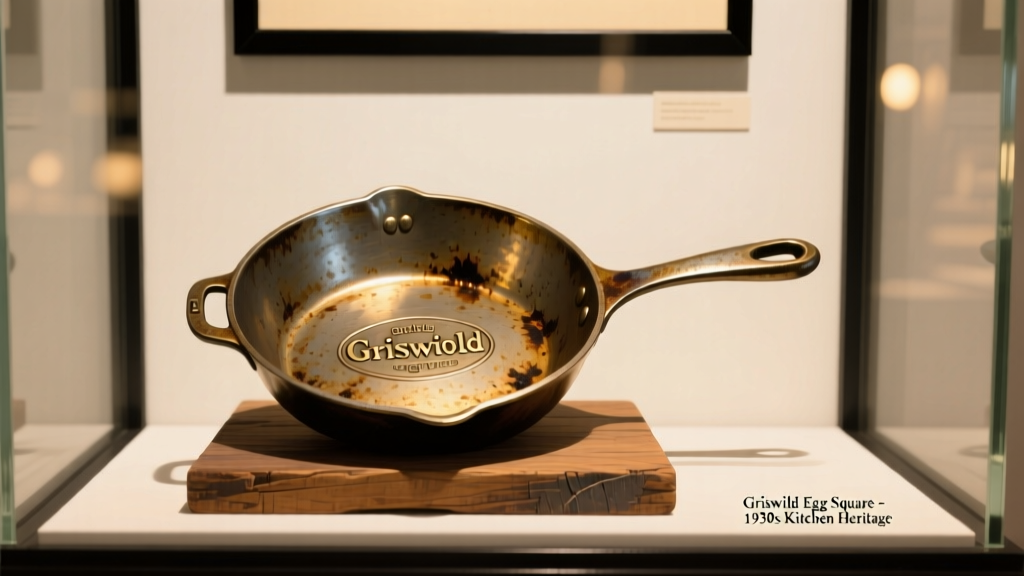
The Griswold Egg Square Skillet: A Collector’s Guide to Identification, Value, and Authenticity

Glasgow Pottery Company No. 4: Production History, Mark Identification, and Market Authentication

Collectors Conclave Exhibition and Banquet 5: Authentication Rigor, Market Impact, and the Rise of Verified Print Editions

Roseville Sugar Creamer Cover in Magnolia Pattern: Authentication, Market Value, and Collector Insights

Mark 3: Decoding the Authentication Landscape for Contemporary Print Editions

Louis Senneshac: The Enigmatic Printmaker Behind Mid-Century Modern Lithography
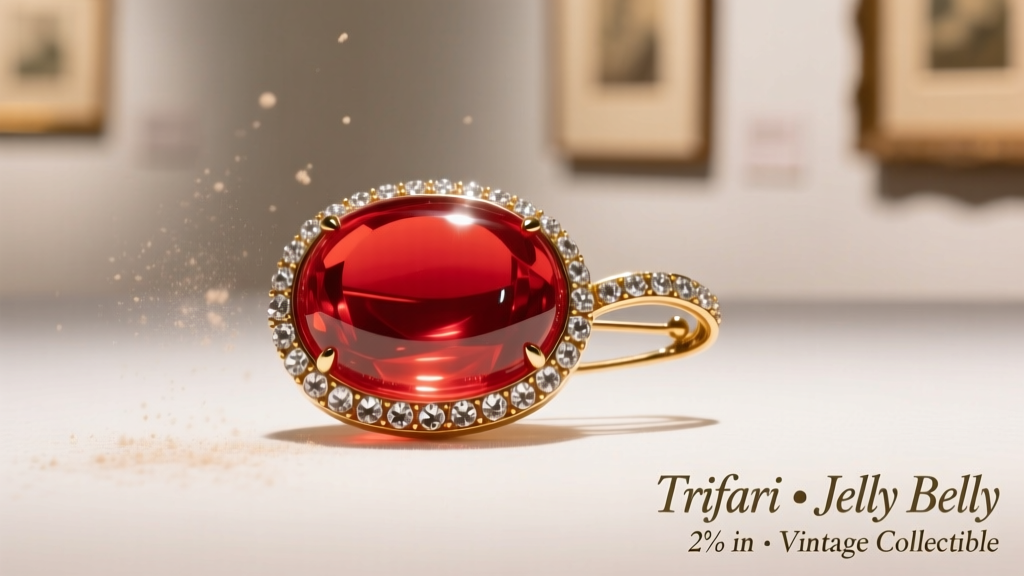
Trifari 'Jelly Belly' Pin Seal: Anatomy, Authentication, and Market Value of the 2½-Inch Lucite-and-Rhinestone Icon
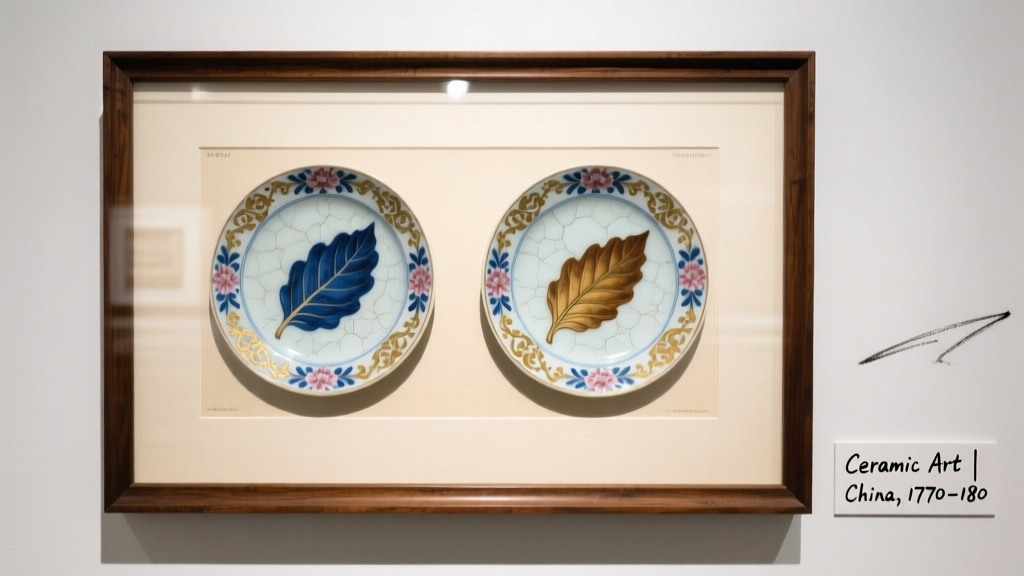
Chinese Export Plate: Tobacco Leaf Motif, c. 1770–1780 — A Pair of 9-Inch Porcelain Chargers in Context