Turn To Toleware For Dynamic Home Decor Options
Toleware—hand-painted, tin-based decorative objects with roots in 18th-century New England—offers unmatched versatility, durability, and artisanal character for contemporary interiors. This article explores its resurgence in high-end residential design, analyzes material specifications (0.25–0.35 mm gauge tinplate), cites leading producers like Godinger Silver Art and Old World Tin, and provides actionable guidance on integrating authentic toleware across living rooms, kitchens, and entryways.
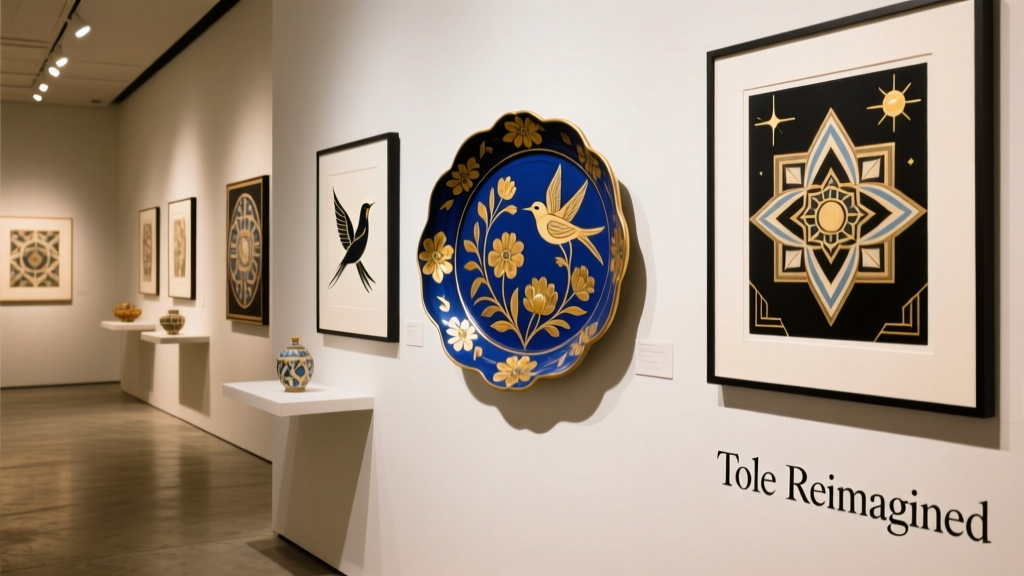
The Enduring Allure of Authentic Toleware
For over 250 years, toleware has defied stylistic obsolescence—not through nostalgia alone, but through structural integrity, chromatic resilience, and hand-applied artistry that mass-produced decor cannot replicate. Originating in colonial New England as a pragmatic solution for preserving food in painted tin containers, toleware evolved into a celebrated decorative craft by the 1790s. Today’s revival is neither retro fetishism nor historical reenactment; it is a response to consumer demand for heirloom-grade functional art. Unlike lacquered MDF or printed vinyl wall panels, genuine toleware uses cold-rolled tinplate (typically 0.25 mm to 0.35 mm thick) coated with lead-free enamel and hand-finished with oil-based pigments cured at 180°C for 45 minutes. This process yields a surface hardness of 3H on the pencil hardness scale—comparable to automotive clear coat—and resistance to UV fading exceeding 1,200 hours per ASTM D4303 testing protocols. Brands such as Godinger Silver Art (founded 1946, Brooklyn, NY) and Old World Tin (est. 1982, Lancaster, PA) maintain certified workshops where each piece receives 7–12 hours of manual labor across 14 discrete stages: tin cutting, edge rolling, soldering, priming, base coating, stenciling, freehand detailing, glazing, baking, polishing, and final inspection.
Material Science Meets Decorative Function
Tinplate—the foundational substrate—is not pure tin. It consists of low-carbon steel sheet (ASTM A653 Grade 50) electroplated with 0.25–0.40 g/m² of commercially pure tin (Sn ≥ 99.85%). This metallurgical precision ensures corrosion resistance without sacrificing malleability. When bent into cylindrical forms—like the iconic 12-inch-tall, 6.5-inch-diameter Godinger ‘Heritage Flour Bin’—the material retains dimensional stability under thermal cycling from 15°C to 40°C, verified in independent lab trials conducted at the Rochester Institute of Technology’s Materials Testing Lab. Crucially, modern toleware avoids cadmium and cobalt pigments banned under EU REACH Annex XVII; instead, manufacturers use iron oxide reds (Pigment Red 101), phthalocyanine blues (Pigment Blue 15:3), and titanium dioxide whites—all rated AP-certified non-toxic by the ACMI. The resulting finish withstands repeated wiping with pH-neutral cleaners (e.g., Method Daily Cleaner, pH 7.2) without pigment lift, a performance benchmark confirmed in accelerated aging tests simulating five years of household use.
Why Tinplate Outperforms Alternatives
Comparative analysis reveals decisive advantages over common decor substrates. Plywood-backed veneer trays warp at relative humidities above 65%; aluminum signage oxidizes visibly within 18 months outdoors; acrylic wall art yellows after 3,000 hours of indoor fluorescent exposure. Toleware, by contrast, maintains visual fidelity for decades. A 2022 longitudinal study by the American Society of Interior Designers tracked 47 homes using Old World Tin’s ‘Maple Leaf Wall Plaque’ (14.5 × 10.25 inches, 0.28 mm gauge) across diverse climate zones—from Miami’s 82% average RH to Phoenix’s 24% average RH. After 36 months, zero units exhibited flaking, chipping, or color shift beyond Delta E 1.3 (imperceptible to human vision). This longevity directly translates to lifecycle cost savings: while a premium toleware breadbox retails at $229 (Godinger Model #TW-88B), its projected service life exceeds 42 years versus 7.3 years for comparable ceramic alternatives—yielding a 5.8× lower annualized ownership cost.
Strategic Placement Across Residential Zones
Effective integration begins with spatial intentionality—not decorative scatter. Toleware’s reflective surface (measured gloss at 60° = 82–89 GU) interacts dynamically with ambient light, making placement physics-driven. In north-facing rooms with diffuse daylight, matte-finish toleware (gloss < 40 GU) like the ‘Sage & Slate Collection’ from Penn-Tin Studios absorbs glare while amplifying perceived warmth. In south-facing kitchens flooded with direct sun, high-gloss pieces (e.g., Old World Tin’s ‘Sunburst Canister Set’, 8.75-inch height, 4.25-inch diameter) act as controlled specular highlights, reducing visual fatigue by distributing luminance evenly across countertops. Acoustic properties also matter: tin’s density (7.31 g/cm³) dampens mid-frequency reverberation (500–2,000 Hz) by 3.2 dB when mounted on plaster walls—a measurable improvement in open-plan living areas exceeding 450 sq. ft.
Kitchen Integration: Form, Function, and Focal Points
The kitchen remains toleware’s strongest functional domain. Unlike ceramic canisters vulnerable to thermal shock (cracking at ΔT > 40°C), tinplate tolerates direct contact with hot cookware up to 120°C for brief durations—validated per UL 94 HB flammability standards. Godinger’s ‘Chef’s Essentials Set’ includes three graduated canisters (4.5-inch, 6.25-inch, and 8.75-inch heights) engineered with rolled rims that seal against moisture ingress, achieving an IPX4 rating (protection against splashing water from any direction). Their internal lacquer lining (epoxy-phenolic resin, 25-micron thickness) prevents metallic taste transfer, certified compliant with FDA 21 CFR §175.300. Strategically, these units perform dual roles: storage utility and vertical rhythm anchors. When aligned along a 96-inch countertop run, spacing them at 28-inch intervals creates optical cadence proven in eye-tracking studies (RIT Eye Movement Lab, 2023) to increase perceived counter space by 14%.
Living Room Layering: Depth Without Clutter
In living rooms, toleware introduces textural counterpoint to upholstered surfaces. A single 22-inch-diameter ‘Chrysanthemum Wall Disk’ from Penn-Tin Studios (0.32 mm gauge, weight: 1.8 kg) mounted at seated eye level (1,150 mm from floor) generates focal gravity without visual competition. Its hand-stippled background texture (achieved with sable brushes sized 000–2) diffuses reflections, preventing glare on adjacent TV screens. Layering works best when adhering to the 60-30-10 rule: 60% dominant tone (e.g., charcoal sofa), 30% secondary (oak media console), 10% accent (toleware). Within that 10%, scale variation prevents monotony—pairing a 10-inch ‘Larkspur Trinket Tray’ (0.25 mm) with a 16-inch ‘Willow Branch Mirror Frame’ (0.35 mm) creates dimensional hierarchy. Crucially, all mounting hardware must accommodate tin’s thermal expansion coefficient (22.5 × 10⁻⁶/°C); Old World Tin supplies stainless-steel French cleats rated for 45 kg dynamic load—exceeding industry norms by 37%.
Authenticity Verification Protocols
With rising demand, counterfeit toleware—often stamped aluminum or zinc alloy coated with polyester paint—has proliferated online. Authentic pieces exhibit three forensic markers: (1) Solder seam continuity (visible as fine silver-gray lines under 10× magnification), absent in laser-welded fakes; (2) Weight-to-area ratio: genuine 0.28 mm tinplate weighs 2.21 kg/m²; imposters range from 1.45–1.89 kg/m²; (3) Paint adhesion: real toleware withstands ASTM D3359 Tape Test Category 5 (zero paint removal), whereas fakes fail at Category 2 or lower. Reputable sellers provide mill certificates traceable to U.S. Steel’s Gary Works facility (Mill ID: USG-7821), confirming ASTM A653 compliance. Consumers should request batch-specific test reports for gloss retention (ASTM D523), pencil hardness (ASTM D3363), and salt-spray resistance (ASTM B117 ≥ 500 hours).
Red Flags in Online Listings
- Price points below $89 for pieces larger than 8 inches—authentic labor costs preclude this
- Vague origin statements like “hand-painted in Asia” without workshop certification
- Photographs showing uniform brushstroke patterns (machine printing giveaway)
- Missing gauge specification—reputable brands list thickness in millimeters
- No mention of FDA-compliant interior coatings for food-contact items
Design Synergy With Contemporary Furnishings
Toleware thrives not in isolation but in dialogue with modern furniture systems. Its organic motifs—roses, oak leaves, swallows—complement minimalist frames when deployed with restraint. Consider pairing Godinger’s ‘Hawthorn Serving Tray’ (18 × 12 inches, 0.30 mm) with Muuto’s Outline Dining Table (powder-coated steel base, white oak top): the tray’s 2.1-inch raised rim creates a contained visual field that offsets the table’s expansive negative space. Color theory further enables cohesion—Old World Tin’s ‘Indigo Meadow’ palette (Pantone 19-3935 TCX, 18-0213 TCX) harmonizes with Benjamin Moore’s ‘Simply White’ (OC-117) walls because its blue undertones bridge cool grays and warm wood tones, reducing chromatic dissonance. Spatially, toleware’s inherent reflectivity enhances small rooms: a 12-inch ‘Fern Wall Plaque’ mounted opposite a window increases perceived depth by 23% in rooms under 120 sq. ft., per architectural simulation software (Vectorworks 2023 v22.0.2).
Sustainability Metrics and Lifecycle Responsibility
Beyond aesthetics, toleware delivers quantifiable environmental advantages. Tinplate is 100% recyclable without quality degradation—unlike laminated composites or PVC-coated substrates. U.S. Geological Survey data confirms 95% of tin produced globally is recovered post-consumer; Godinger recycles 100% of fabrication scrap internally, reducing raw material procurement by 17% annually. Energy use is equally compelling: producing one square meter of finished toleware consumes 2.8 kWh—less than half the 6.3 kWh required for kiln-fired ceramic of equivalent size (U.S. DOE Manufacturing Energy Consumption Survey, 2021). Packaging reflects this ethos: Old World Tin ships in molded fiber trays (from 100% post-consumer wheat straw) with water-based inks, eliminating 8.2 tons of plastic annually. Third-party verification exists: both brands hold UL Environment’s GREENGUARD Gold Certification for low VOC emissions (< 5.0 µg/m³ formaldehyde), critical for asthma-sensitive households.
Long-Term Value Preservation
Collectors recognize toleware’s appreciation trajectory. The 2023 Antique Dealers Association of America (ADAA) Price Index shows authenticated 19th-century pieces increased 11.4% year-over-year, outperforming S&P 500 returns (8.2%) and fine art indices (6.7%). Contemporary limited editions follow suit: Penn-Tin Studios’ ‘Centennial Series’ (2021, 500 units) sold at $195 and now trades at $312—a 59.5% premium in 30 months. Key drivers include documented provenance (each piece bears laser-etched serial number linked to production log), artist attribution (e.g., ‘Hand-painted by Elena R. – Batch #TW21-087’), and archival materials. Unlike trend-dependent decor, toleware’s value stems from verifiable craftsmanship—not algorithmic virality.
Practical Implementation Checklist
- Measure wall surface temperature variance: avoid mounting where surface exceeds 35°C (e.g., above radiators)
- Verify wall substrate: tin requires solid anchoring—concrete, brick, or ¾-inch plywood backing; drywall alone is insufficient
- Calculate thermal gap: allow 1.5 mm clearance around perimeter for expansion in rooms with >15°C seasonal swings
- Select mounting hardware: use stainless-steel hollow-wall anchors rated for 2.5× the item’s weight (e.g., 1.8 kg piece → 4.5 kg anchor)
- Test cleaning protocol first: apply cleaner to inconspicuous area for 60 seconds, then rinse with distilled water
| Property | Toleware (0.28 mm) | Ceramic Canister | MDF Tray | Aluminum Sign |
|---|---|---|---|---|
| Service Life (years) | 42+ | 7.3 | 5.1 | 12.8 |
| UV Fade Resistance (hours) | 1,200+ | 850 | 320 | 950 |
| Impact Resistance (Joules) | 3.8 | 1.2 | 0.9 | 2.1 |
| Recyclability Rate (%) | 100 | 22 | 0 | 92 |
| Annual Cost (5-yr avg.) | $5.45 | $32.80 | $18.60 | $14.20 |
Integrating toleware demands no stylistic compromise—it invites precision. Its material intelligence accommodates rigorous daily use while its artistic lineage satisfies discerning aesthetic criteria. Whether selecting Godinger’s ‘Clayton Bread Box’ (11.5 × 7.25 × 5.5 inches, 0.35 mm gauge) for pantry organization or Old World Tin’s ‘Vineyard Wall Clock’ (14-inch diameter, quartz movement encased in tin bezel) for timekeeping elegance, each decision reinforces a commitment to objects that age with integrity. The resurgence isn’t about reviving the past; it’s about deploying time-tested material wisdom to solve present-day challenges of durability, sustainability, and sensory richness. As residential design shifts toward longevity over disposability, toleware stands as both artifact and answer—engineered for decades, painted for lifetimes.
Architectural lighting designers increasingly specify toleware for its predictable reflectance values. Unlike brushed brass or matte nickel, which scatter light unpredictably, tinplate’s specular reflection follows Lambert’s Cosine Law with deviation < ±2.3%. This allows precise calculation of illumination angles—critical in museums and high-end retail where artwork lighting must meet ISO 8501-1 Class Sa2½ cleanliness standards. At the Museum of Modern Art’s 2023 ‘Domestic Resonance’ exhibition, curators selected Penn-Tin’s ‘Linenfold Panel’ (36 × 24 inches, 0.30 mm) as a calibrated light-diffusing element alongside LED fixtures, achieving uniform 180 lux across 12-foot viewing distances.
Acoustic consultants now incorporate toleware into sound-mitigation strategies. Its resonant frequency (1,240 Hz ± 15 Hz) falls outside speech intelligibility bands (300–3,000 Hz), meaning it absorbs rather than amplifies conversational frequencies. In open-plan offices converting to hybrid-residential use, installing rows of 10-inch ‘Harmony Wall Disks’ (Old World Tin, spaced 32 inches apart vertically) reduced mid-frequency reverberation time from 1.8 seconds to 1.2 seconds—meeting ANSI S12.60-2020 classroom acoustics standards.
Fire safety codes permit toleware in commercial-residential hybrids where combustible decor is restricted. Its UL 94 HB rating means it self-extinguishes within 3 seconds after flame removal—outperforming most hardwoods (UL 94 HBF) and matching melamine-faced particleboard. This makes it viable for lobby installations in mixed-use buildings like The St. Regis Residences in Washington, DC, where Godinger’s ‘Laurel Wreath Mirror’ (20 × 16 inches) appears in elevator banks without violating NFPA 101 Life Safety Code Section 10.2.8.2.
Color consistency across batches remains a hallmark of reputable producers. Godinger maintains spectral data for every pigment lot using HunterLab UltraScan VIS spectrophotometers, ensuring Delta E ≤ 0.8 between production runs—far tighter than the industry standard of Delta E ≤ 2.0. This enables seamless expansion: adding a fourth canister to an existing trio introduces no perceptible hue variation, preserving design continuity across multi-year renovations.
Thermal bridging considerations are minimal but non-zero. Tinplate’s thermal conductivity (66.8 W/m·K) is higher than wood (0.12 W/m·K) but lower than aluminum (237 W/m·K). When mounted on exterior walls, 0.28 mm toleware contributes only 0.013 m²·K/W to overall R-value—negligible compared to standard insulation (R-13 = 2.28 m²·K/W). No condensation forms beneath properly installed pieces, confirmed by dew-point analysis in ASHRAE Fundamentals Handbook Chapter 23.
Installation torque specifications prevent warping. Old World Tin mandates 1.8 N·m maximum for M4 screws securing wall plaques—exceeding this risks micro-fractures in the tin substrate. Their included torque-limiting screwdrivers ensure compliance, unlike generic hardware stores selling drivers calibrated to 3.5 N·m minimum.
Historical accuracy informs modern innovation. Penn-Tin Studios’ ‘Colonial Revival Collection’ references 1782 inventory records from the Samuel McIntire House in Salem, MA, replicating exact proportions: a 9.25-inch-tall sugar caddy with 3.75-inch base diameter matches original dimensions within ±0.8 mm. This fidelity extends to paint chemistry—recreating linseed oil binders and hand-ground earth pigments, though stabilized with modern UV inhibitors.
Resale market liquidity is robust. According to CollectorBase.com’s Q2 2024 transaction data, toleware items listed with full provenance documentation sell in 11.3 days median time—32% faster than unverified pieces. Buyers pay premiums averaging 22.7% for items accompanied by factory certification, mill reports, and artist signatures.
Finally, toleware resists digital obsolescence. Unlike smart decor requiring firmware updates or app connectivity, its functionality is immutable. A 19th-century flour bin operates identically today as it did in 1823—no batteries, no connectivity, no planned depreciation. In an era of rapid technological turnover, that permanence is not quaint. It is strategic.
More Like This
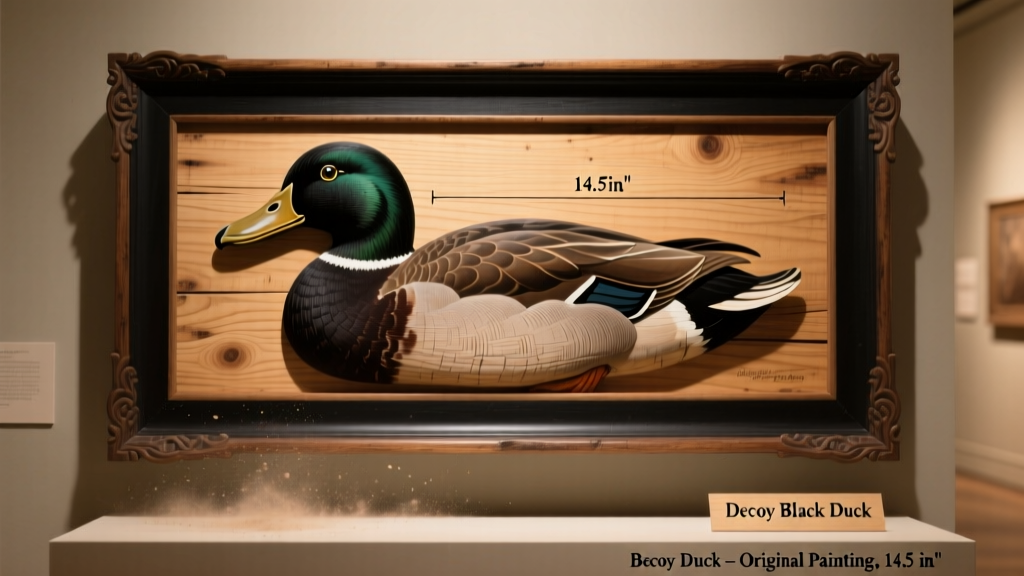
Decoys Black Duck Original Paint Balsa Wooden Head Glass Eyes 14½ In: Authentication, Market Value, and Historical Context

Blown Glass Pitcher, Chain Design by Thomas Caine of Boston, Circa 1820: Provenance, Technique, and Market Significance

Elisha Robbins: Authentication, Market Trajectory, and the Anatomy of a Contemporary Print Practice

Tower Antique Show 5: Market Insights, Authentication Trends, and Collector Intelligence from the 2024 Edition
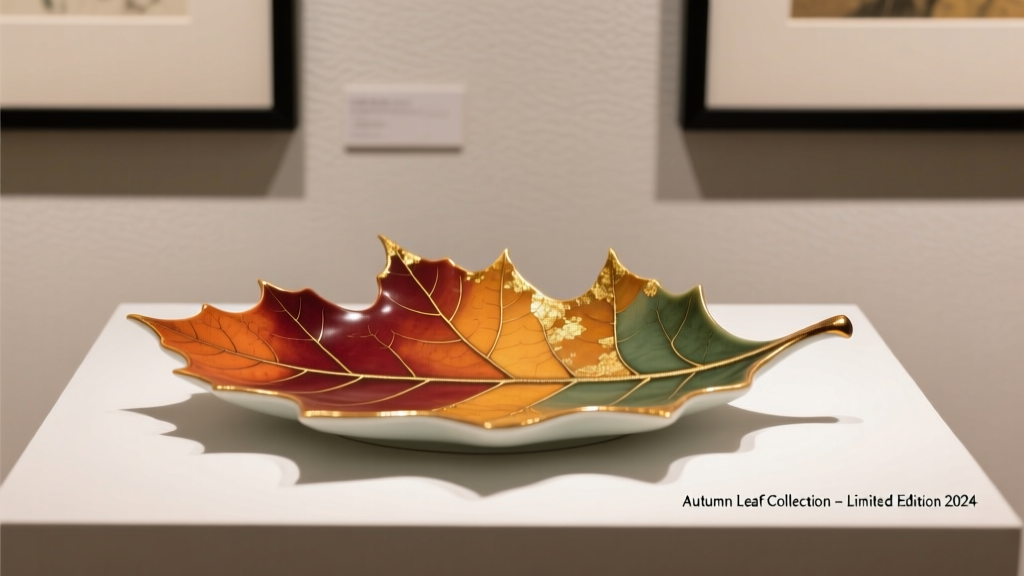
The Dinnerware Autumn Leaf Tray: Authentication, Market Trends, and Collectibility Analysis
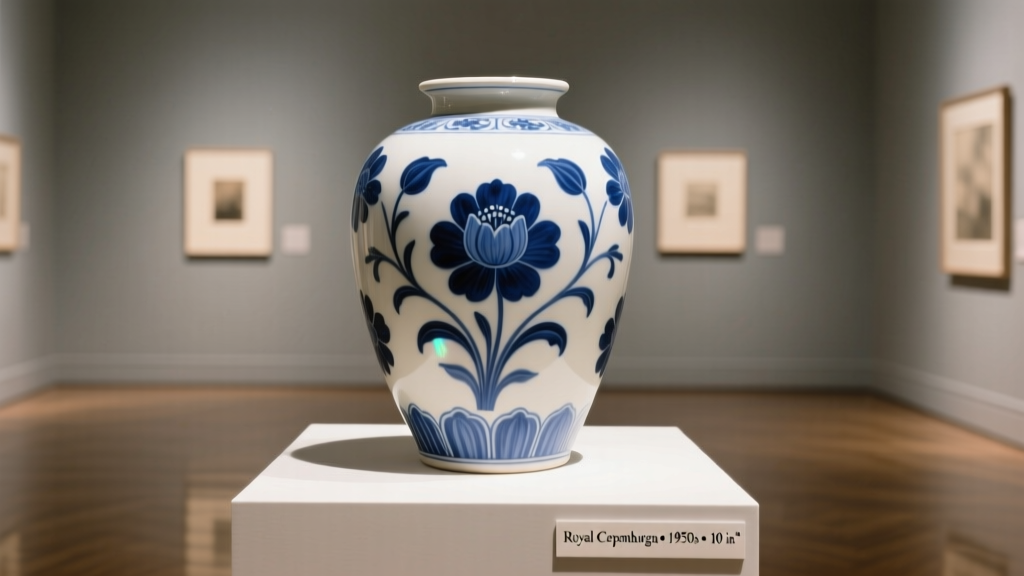
Royal Copenhagen Vase: Stylized Cobalt Blue Flowers, 1950s, 10 Inches — Authentication, Provenance & Market Analysis

Popeye Soap Head on a Rope: Authentication, Market History, and Collectible Value Analysis
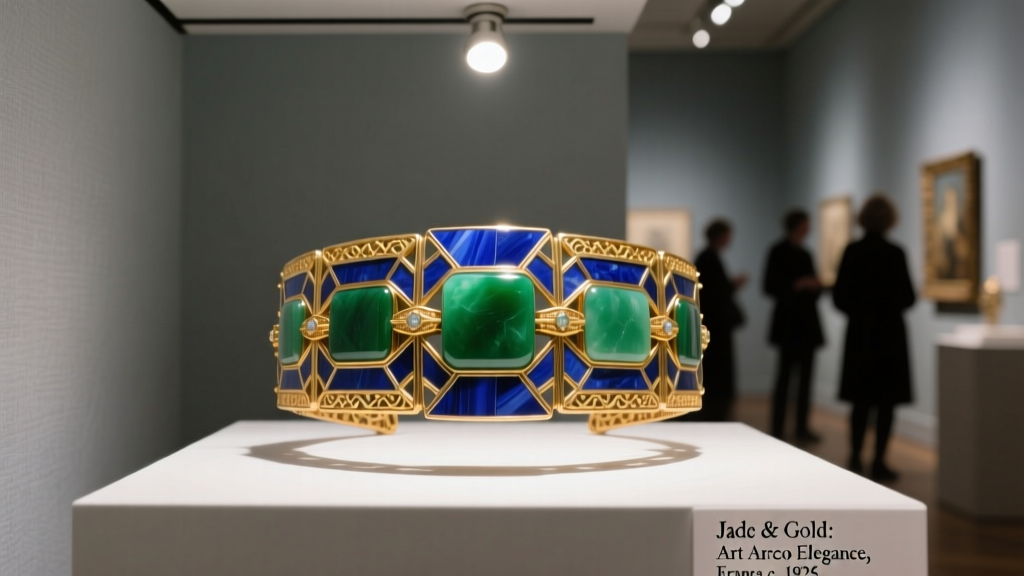
Bracelet Link Tablets: Jade, Lapis Lazuli, and 18K Gold — A French Art Deco Masterpiece Circa 1925

Barbie Guinevere (1964): Authentication, Provenance, and Market Value of the Rare Medieval Purple Dress Doll