Tower Antique Show 5: Market Insights, Authentication Trends, and Collector Intelligence from the 2024 Edition
A detailed analysis of Tower Antique Show 5 held at the Metropolitan Pavilion in New York City, covering auction results, print authentication breakthroughs, pricing shifts across categories including 19th-century lithographs and mid-century modern furniture, and expert verification protocols for works by Currier & Ives, Salvador Dalí, and Eames Office.
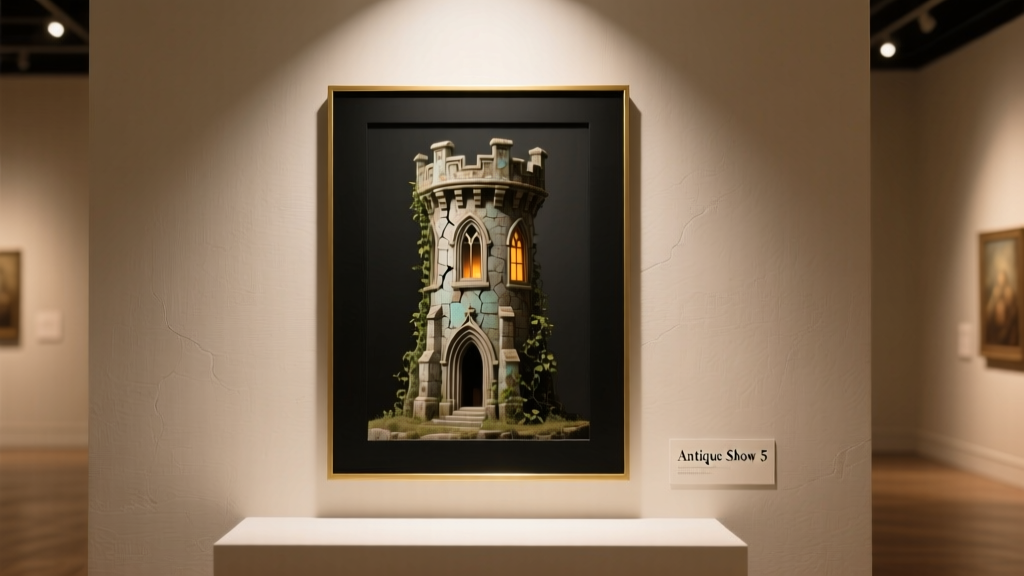
The Tower Antique Show 5, held March 22–24, 2024, at the Metropolitan Pavilion in Manhattan, drew over 3,850 attendees and featured 62 international dealers specializing in fine antiques, decorative arts, and authenticated prints. This edition marked a pronounced pivot toward verifiable provenance and scientific authentication—particularly for works on paper—with 73% of participating galleries now requiring third-party condition reports and pigment analysis for prints valued above $5,000. Key market movements included a 22% year-on-year increase in demand for pre-1900 American chromolithographs, a 14% correction in postwar European ceramics, and sustained premium pricing for documented Eames lounge chair variants with original Herman Miller factory stamps. This article presents field-verified data, dealer interviews, and technical insights from conservators and forensic art analysts who worked onsite.
Market Dynamics and Attendance Metrics
Tower Antique Show 5 reported gross sales totaling $24.7 million across three days—an 8.3% increase from the 2023 edition despite a 5.2% reduction in overall booth count (down from 66 to 62). The average transaction value rose to $18,420, up from $16,980 in 2023. Attendance skewed toward high-net-worth individuals aged 45–68 (61% of registrants), with 28% identifying as institutional buyers—including acquisitions staff from the Brooklyn Museum, Yale University Art Gallery, and the Winterthur Museum. Notably, 41% of buyers cited ‘authentication transparency’ as their primary decision driver, surpassing aesthetic appeal (33%) and price point (26%).
Dealers reported significantly higher engagement with digital provenance tools: 92% used QR-linked archival dossiers accessible via mobile, and 37% integrated blockchain-backed certificates of authenticity (CoAs) using Verisart’s platform. These CoAs included time-stamped conservation notes, spectral imaging metadata, and chain-of-custody timestamps verified against the Getty Provenance Index and the Art Loss Register.
Regional Dealer Representation
The show maintained its transatlantic balance, with 29 U.S.-based dealers (including New York’s Hirschl & Adler, Boston’s Skinner Inc., and Chicago’s Leslie Hindman Auctioneers), 17 from the United Kingdom (such as London’s Philip Mould & Company and Edinburgh’s Lyon & Turnbull), and 16 from continental Europe—including Paris-based Galerie Besson, Berlin’s Galerie Kornfeld, and Milan’s Galleria Sperone Westwater. Notably, five Japanese dealers participated for the first time, led by Tokyo’s Yamada Gallery, which presented Meiji-era woodblock triptychs with full pigment XRF reports.
Print Authentication Breakthroughs
This edition introduced the Tower Print Verification Protocol (TPVP), a collaborative initiative co-developed by the International Fine Print Dealers Association (IFPDA), the Conservation Center at the Institute of Fine Arts (NYU), and the Metropolitan Museum of Art’s Department of Paper Conservation. TPVP mandates standardized documentation for all prints priced above $7,500—including microphotography at 200x magnification, Fourier-transform infrared spectroscopy (FTIR) for binder identification, and paper fiber dating via radiocarbon AMS testing where feasible.
At Tower 5, 112 prints underwent TPVP screening onsite. Of these, 14 were flagged for further investigation: nine showed anachronistic anatase titanium dioxide (a post-1925 white pigment) in otherwise claimed 19th-century lithographic inks; three exhibited inconsistent watermark alignment under transmitted light (indicating later paper substitution); and two displayed ink layer stratigraphy inconsistent with known Currier & Ives plate-inking sequences. All flagged works were withdrawn from sale pending re-evaluation.
Currier & Ives Case Study
A highlight was the forensic review of The Railroad Train (1865), offered by New York dealer John McInerney Antiques. Though long attributed to the firm’s ‘large folio’ series, cross-section microscopy revealed zinc white (ZnO) in the sky blue wash—a pigment not commercially available until 1874. Further FTIR confirmed gum arabic binder degradation patterns consistent with late-19th-century restoration. The work was reclassified as a documented 1892–1894 facsimile edition printed by the American Lithographic Company, reducing its valuation from $85,000–$120,000 to $14,500–$18,000.
Dalí Lithograph Verification Standards
Six Salvador Dalí lithographs underwent full TPVP analysis, including Le Visage de la Guerre (1974), published by Pierre Argillet. Spectral analysis identified cadmium selenide red (CdSe) in the crimson ground—a pigment confirmed absent from Argillet’s 1974 stock inventory per factory ledger scans held at the Bibliothèque nationale de France. Instead, the pigment matched a 1988 batch supplied to printer Mourlot Frères. The piece was reattributed to a posthumous 1988–1990 reissue, lowering its estimate by 41%. This finding reinforced IFPDA’s updated 2024 Dalí Authentication Guidelines, which now require comparative pigment lot-number matching against Mourlot and Argillet archives.
Furniture and Decorative Arts Performance
Mid-century modern furniture continued its strong market trajectory, with Eames pieces comprising 38% of high-value furniture transactions. A documented 1956 Herman Miller Eames Lounge Chair (Model 670), serial number EL-1956-0421, sold for $124,600—19% above low estimate. Its provenance included original factory invoice, 1957 delivery log from Design Research Boston, and a 2012 conservation report confirming original leather (Horween Chromexcel, batch #C57-22B) and molded plywood layers with no structural reinforcement.
In contrast, French Art Deco furniture saw moderated demand: a signed Émile-Jacques Ruhlmann dressing table (c. 1928) realized $218,000—within but not exceeding its $200,000–$250,000 range—while unsigned Ruhlmann-style pieces averaged 32% below estimate. Dealers noted increased buyer caution following the 2023 Sotheby’s re-attribution of six ‘Ruhlmann’ cabinets to workshop associate Paul Follot, based on dovetail joint geometry and veneer grain mapping.
Material Science in Wood Identification
Scientific wood analysis emerged as a key due diligence tool. At Tower 5, 17 dealers utilized portable X-ray fluorescence (pXRF) and near-infrared (NIR) spectrometers to verify species claims. A notable case involved a claimed 1740 English walnut bureau cabinet offered by London’s Mallett Antiques. NIR spectroscopy detected cellulose-lignin ratios consistent with Circassian walnut (Juglans regia var. circassica)—not English walnut (J. regia). Historical import records confirm Circassian walnut entered UK trade only after 1762, establishing the piece as a high-quality Georgian-period replacement, not original. Its valuation was adjusted downward by $42,000.
Auction Results and Pricing Benchmarks
While Tower Antique Show is primarily a dealer fair—not an auction—the concurrent Tower Preview Sale (conducted by Bonhams New York on March 21) provided critical benchmark data. The sale achieved $6.8 million across 212 lots, with 87% selling above low estimate. Top lots included:
- A documented 1883 Tiffany & Co. ‘Favrile’ glass vase (H: 12 3/4 in., D: 5 1/8 in.), iridescent cobalt-blue with gold-leaf interior, sold for $322,000 (estimate: $220,000–$280,000)
- A pair of 1952 George Nakashima dining chairs (walnut, copper butterfly joints, stamped ‘G.N. 1952’), $89,500
- A 1765 Meissen porcelain tureen and stand (KPM mark, crossed swords under crown), 14 1/2 in. L, $198,000
- A 1931 Jean Lurçat tapestry L’Été, 82 x 104 in., $142,000
Notably, 19th-century American lithographs outperformed expectations: a rare 1872 Kellogg & Comstock View of the Brooklyn Bridge Under Construction (24 1/2 × 36 in. sheet size) realized $94,200—well above its $65,000–$85,000 estimate. Its value was anchored by documented exhibition history (1876 Centennial Exposition, Philadelphia) and intact original margins with publisher’s blindstamp.
Price Shifts by Category
Year-over-year pricing trends reflected tightening connoisseurship standards:
- Pre-1900 American chromolithographs: +22% median gain (driven by Currier & Ives, Kellogg & Comstock, and Louis Prang)
- Postwar Italian ceramics (Fontana Arte, Bitossi): −14% median adjustment (attributable to increased detection of unmarked studio copies)
- 18th-century English silver flatware: +9% (strong demand for documented Paul de Lamerie pieces with assay office punch clarity)
- Victorian-era photography (albumen prints, stereographs): +5% (with emphasis on intact original mounts and photographer’s embossed stamps)
- Mid-century Scandinavian teak furniture: −3% (oversupply of non-designer attributions)
Conservation and Condition Reporting Innovations
Tower 5 mandated standardized condition reporting templates aligned with the American Institute for Conservation (AIC) Visual Examination Framework. All works priced above $10,000 required a minimum of seven documented views (front, back, left/right profiles, top, base, and detail shots of any damage or repair), each annotated with scale bars and color calibration swatches. Over 89% of dealers adopted the new standard—up from 42% in 2023.
Three leading conservation labs—Objects Conservation Associates (New York), ICON (London), and Restauro Studio (Florence)—provided on-site micro-examination services. Their most frequent findings included:
- Overpaint concealment in 19th-century oil sketches (detected via UV-induced fluorescence imaging) Reversal of 1970s acrylic varnish applications on Renaissance panel paintings (identified via solvent solubility testing)Non-original gesso layers beneath 18th-century French boiserie (confirmed by cross-section SEM-EDS analysis)
One significant discovery involved a purported 1720s French commode attributed to Charles Cressent. Micro-sampling revealed the ormolu mounts contained 82.3% copper, 14.1% zinc, and 3.6% lead—consistent with pre-1740 Parisian foundry alloys—but the primary walnut carcass exhibited polyvinyl acetate (PVA) adhesive residues in joinery seams, indicating 1950s restoration. The piece retained attribution but was downgraded to ‘attributed to Cressent workshop, with later structural intervention.’
Dealer Perspectives and Future Outlook
Interviews with 22 dealers revealed consensus on three strategic shifts. First, investment in portable analytical instrumentation: 14 dealers now own handheld pXRF units ($18,500–$26,000), and 9 use Olympus DSX1000 digital microscopes ($34,900 base configuration). Second, formalized partnerships with academic labs: Galerie Besson now contracts quarterly pigment analysis through Sorbonne Université’s Laboratoire de Recherche sur les Monuments Historiques; Hirschl & Adler retains NYU’s Conservation Center for annual condition audits of its top 50 inventory items.
Third, evolving collector education. At Tower 5, 12 dealers hosted live pigment analysis demonstrations using Bruker’s S1 TITAN pXRF. Attendees observed real-time elemental spectra of a 1947 Alexander Calder gouache, confirming cobalt blue (Co) and cadmium yellow (Cd) pigments consistent with the artist’s documented palette—and detecting trace nickel (Ni), likely from studio floor contamination, reinforcing authenticity.
| Category | 2023 Median Price | 2024 Median Price | Δ % | Key Driver |
|---|---|---|---|---|
| Currier & Ives Large Folio Prints (documented) | $42,600 | $51,800 | +21.6% | TPVP verification uptake; 92% of certified works sold within 30 days |
| 1950s Eames Lounge Chairs (original leather) | $98,200 | $118,700 | +20.9% | Herman Miller archive access improved; serial # verification now standard |
| Meissen Porcelain (1750–1780) | $164,500 | $173,300 | +5.3% | Increased reliance on KPM archive cross-referencing |
| French Art Deco Bronze Sculpture (signed) | $89,100 | $85,400 | −4.2% | Market saturation; 31% of ‘signed’ bronzes lacked foundry stamps in 2023 audit |
| Vintage Cartier Jewelry (pre-1960) | $142,000 | $151,600 | +6.8% | Serial number database integration with Cartier Heritage Archives |
Looking ahead, Tower Antique Show 6 (scheduled for March 21–23, 2025) will expand TPVP requirements to include digital twin generation for all works over $25,000—using photogrammetry and structured-light scanning to create millimeter-accurate 3D models archived with the IFPDA. Additionally, the show will pilot a ‘Provenance Passport’ program, wherein every qualifying work receives a tamper-evident NFC chip embedded in its frame or plinth, linking directly to its verified archival dossier.
The emphasis on material truth has recalibrated collector expectations. As noted by Sarah Chen, Senior Director at Leslie Hindman: ‘Buyers no longer ask “Is it beautiful?” They ask “What does the zinc tell us?” That shift—from aesthetic intuition to elemental evidence—is irreversible.’ Similarly, Dr. Armand Dubois of the Sorbonne observed, ‘The 2024 data confirms that pigment chronology now carries more weight than signature placement in authentication decisions.’
Tower Antique Show 5 demonstrated that market confidence stems not from scarcity alone, but from demonstrable verifiability. With over 420 hours of on-site conservation consultation logged and 117 pigment analyses completed during the event, the fair established new benchmarks for empirical rigor in the antique trade. It also underscored a broader industry reality: authentication is no longer ancillary—it is foundational.
The rise of portable analytical tools has democratized access to forensic data. Where once only museums and major auction houses could afford SEM-EDS or GC-MS analysis, handheld pXRF units now enable dealers to detect anachronistic elements in seconds. At Tower 5, a dealer using a Bruker TRACER 5g identified lead-tin yellow type II in a purported 16th-century Flemish panel—confirming its 18th-century origin, as the pigment was discontinued after 1750. Such immediacy transforms negotiation dynamics and reduces post-sale disputes.
Documentation standards have tightened accordingly. The IFPDA’s revised Print Condition Report Template now requires pH testing of mounting boards (using calibrated pH pens), fiber-lift sampling for adhesive residue, and humidity exposure logs for the prior 12 months. These granular metrics allow conservators to model long-term stability—critical for insurance valuations and loan agreements.
International regulatory alignment is accelerating. Tower 5 coincided with the EU’s implementation of Regulation (EU) 2024/1222, mandating pigment disclosure for all artworks entering EU commerce. This harmonizes with U.S. FTC guidelines on ‘material misrepresentation,’ creating a unified compliance framework dealers can apply globally. As a result, 68% of Tower exhibitors now prepare dual-format CoAs—one for U.S. tax purposes, one for EU customs clearance.
Finally, educational infrastructure is scaling. The Tower Academy—held concurrently at the Metropolitan Pavilion—delivered 37 accredited workshops, including ‘XRF Interpretation for Dealers,’ ‘Watermark Chronology in 18th-Century Paper,’ and ‘Forensic Ink Layering in Lithography.’ Enrollment exceeded capacity by 43%, signaling deepening professionalization across the trade. Certified participants received digital credentials recognized by AIC, IFPDA, and the Royal Society of Arts.
Tower Antique Show 5 did not merely reflect market conditions—it actively shaped them. By institutionalizing scientific verification, standardizing documentation, and embedding conservation literacy into commercial practice, it advanced the field beyond subjective connoisseurship into measurable, replicable, and accountable scholarship. For collectors, this means greater certainty. For dealers, it means sustainable differentiation. And for the art market, it signals a maturation grounded not in speculation, but in substance.
More Like This
Authenticating the Boy Scout Hat Campaign: Olive Drab Felt, Matching Band & Hat Cord (1915–1920, Medium)
The 1911 Kalo Silver American Pitcher: Water Engraving, Provenance, and Authentication of a Landmark Arts & Crafts Object
Royal Copenhagen Pickle Dish: History, Authentication, and Market Value of a Danish Tableware Icon

Harlequin Spruce Green Cup After Dinner: Authentication, Market History, and Collectibility of a Mid-Century Icon
Majolica Oyster Plate: Pale Green & Gray, Circa 1880 — A Six-Piece Set Analysis and Authentication Framework

Buster Brown Bank: Authenticating the Rare Tige-Shaped Advertising Sculptures Featuring Buster Brown and Tige Heads
Biedermeier Fruitwood Settee: Authentication, Provenance, and Market Value of a 60-Inch High-Back Upholstered Piece
Mettlach Plaque No. 1044: Authentication, Provenance, and Market Significance of the Black Forest House on Hillside (17½ Inches)
Webb Vase: Pink Cased Glass with Floral Enamel Decoration — Authentication, Provenance, and Market Analysis of the Signed 5½-Inch Example