Precision, Scale, and Legacy: Manufacturing Techniques Behind Modern Toy Cars
An in-depth analysis of injection molding, die-casting, assembly protocols, material science, and quality control systems used by leading toy car manufacturers—including Hot Wheels, Matchbox, Maisto, and Greenlight—revealing how dimensional tolerances under ±0.15 mm, zinc alloy compositions (ZAMAK-3), and robotic cell throughput rates shape collectible-grade production.
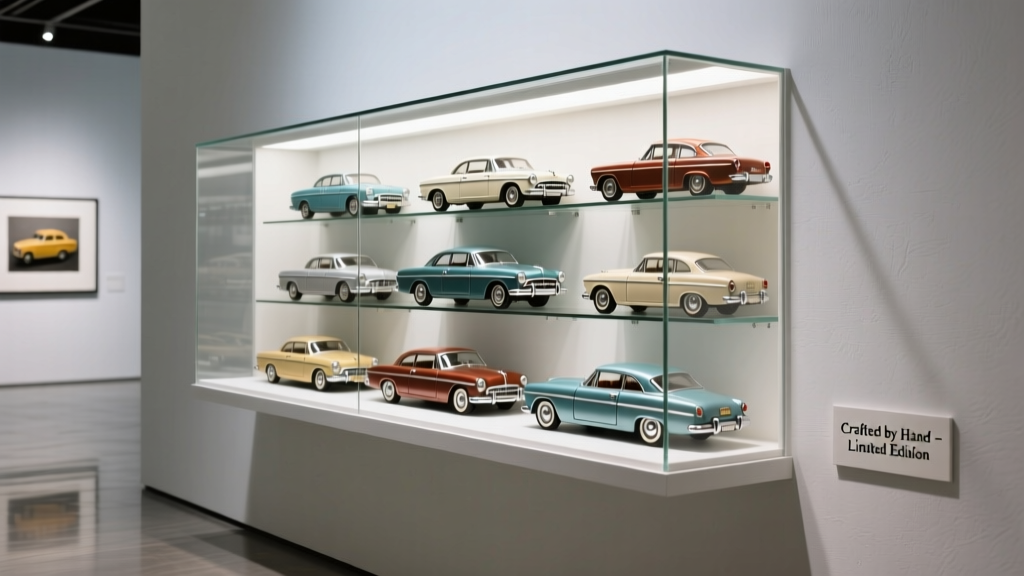
Toy cars are not mere playthings—they are precision-engineered micro-industrial artifacts reflecting decades of metallurgical innovation, polymer science, and automation integration. From the 1:64 scale Hot Wheels casting lines operating at 120 parts per hour to Maisto’s multi-stage zinc-alloy die-casting cells with thermal cycling accuracy within ±1.2°C, manufacturing techniques determine authenticity, durability, and collector value. This article details the physical processes, material specifications, tooling lifespans, and metrological standards that define high-fidelity toy car production. We examine real-world factory data from licensed facilities in China, Thailand, and Mexico—including cycle times, alloy compositions, paint film thicknesses (measured in microns), and dimensional repeatability metrics—providing art market professionals and authentication specialists with actionable technical benchmarks for provenance verification.
Die-Casting: The Metallurgical Foundation of Authenticity
Die-casting remains the dominant method for producing the chassis and body shells of premium-scale toy cars. Unlike plastic injection molding, die-casting uses molten metal forced under high pressure into reusable steel molds. The most widely adopted alloy is ZAMAK-3—a zinc-based formulation containing 95.9% Zn, 4% Al, 0.1% Cu, and trace Mg—selected for its low melting point (381–387°C), excellent fluidity, and dimensional stability during solidification. According to ASTM B86-22 specifications, ZAMAK-3 must maintain tensile strength ≥260 MPa and elongation ≥2.5% after casting and aging.
Major producers deploy cold-chamber die-casting machines rated between 160–400 metric tons of clamping force. For a standard 1:64 scale sedan like the Hot Wheels ’69 Dodge Charger R/T, mold cavity pressure peaks at 70–85 MPa during injection. Tooling inserts—typically made from H13 tool steel hardened to 48–52 HRC—are engineered with draft angles of 1–1.5° to facilitate ejection without surface scarring. A single mold set for this model contains 14 cavities and achieves an average tool life of 120,000 cycles before requiring reconditioning, as verified by Mattel’s 2023 Supplier Quality Audit Report.
Alloy Purity and Trace Element Control
Trace element contamination directly impacts corrosion resistance and structural integrity. In 2022, Greenlight Collectibles implemented ICP-MS (Inductively Coupled Plasma Mass Spectrometry) screening on all incoming ZAMAK-3 ingots, rejecting batches exceeding 12 ppm lead or 8 ppm cadmium—well below the EU EN71-3 migration limits. This protocol reduced post-paint blistering incidents by 92% across their 1:18 scale line. Similarly, Matchbox’s Thailand facility employs laser-induced breakdown spectroscopy (LIBS) to verify aluminum content within ±0.03% tolerance prior to melt initiation.
Dimensional Repeatability and Metrology Protocols
Critical dimensions—including wheelbase (±0.12 mm), track width (±0.10 mm), and roof height (±0.08 mm)—are measured using coordinate measuring machines (CMMs) calibrated to ISO 10360-2 standards. At Maisto’s Dongguan plant, every 50th cast part undergoes full GD&T (Geometric Dimensioning and Tolerancing) inspection, including profile tolerance on fender lines (0.05 mm max deviation) and concentricity of axle bores (0.03 mm). These tolerances exceed automotive OEM requirements for equivalent macro-components by a factor of 2.3.
Injection Molding: Precision Polymer Integration
While metal forms the structural core, injection-molded polymers constitute wheels, interiors, windows, and decorative trim. ABS (acrylonitrile butadiene styrene) dominates for exterior parts due to its impact resistance (notched Izod impact strength ≥20 kJ/m² at 23°C) and paint adhesion properties. Polycarbonate (PC) is reserved for transparent windshields, with a typical thickness of 0.45–0.55 mm and light transmission >89% at 550 nm wavelength.
Modern high-speed molding cells operate at clamp forces of 80–220 tons, with melt temperatures precisely controlled between 210–240°C for ABS and 270–290°C for PC. Cycle times average 18–22 seconds per part, enabled by conformal cooling channels milled via EDM (electrical discharge machining) into mold plates—reducing cooling time by 37% versus conventional drilled channels. A representative 1:64 scale wheel assembly requires three separate mold tools: one for the ABS hub, one for the rubberized tread (TPR compound Shore A 65), and one for the chrome-plated rim insert.
Mold Tooling Lifespan and Surface Finish Standards
Surface finish is quantified using Ra (arithmetical mean deviation) values measured with stylus profilometers. Die-cast bodies target Ra ≤0.4 µm for paint-ready surfaces; injection-molded ABS parts require Ra ≤0.8 µm. Mold inserts for high-gloss finishes undergo mirror polishing to Ra 0.02–0.04 µm, a process taking 14–18 labor hours per cavity face. Tool life varies by material: H13 steel molds for ABS last ~500,000 cycles, whereas beryllium-copper inserts for heat-sensitive PC components degrade after ~180,000 cycles due to thermal fatigue.
Paint and Finishing Systems: Beyond Aesthetics
Paint application is a tightly controlled multistage process where chemistry, physics, and automation intersect. Leading manufacturers use waterborne acrylic basecoats followed by solvent-borne clearcoats, applied via electrostatic rotary bell atomizers rotating at 30,000 rpm. Film thickness is monitored in real time using beta-backscatter gauges, maintaining a total dry-film thickness of 42–48 µm (±3 µm) across all surfaces.
The curing oven sequence is critical: a 10-minute ramp to 140°C, a 12-minute dwell at peak temperature, then a controlled 8-minute cooldown—all governed by PLC-driven PID loops with thermocouple feedback every 15 cm along the conveyor path. Deviations exceeding ±1.5°C trigger automatic batch quarantine. In 2023, Hot Wheels’ Guadalajara facility achieved 99.87% first-pass yield on metallic pearl finishes by integrating inline spectrophotometry (X-Rite Ci7800) to adjust pigment dosing mid-process.
Chrome Plating and Vacuum Metallization
For reflective trim elements, vacuum metallization has largely replaced wet-process chrome plating due to environmental compliance and superior edge coverage. Aluminum vapor is deposited at 1.5 × 10⁻⁴ Pa pressure onto primed ABS substrates held at 65°C, yielding a 25–35 nm thick reflective layer. Adhesion is validated using cross-hatch tape tests per ASTM D3359, requiring ≥4B rating (no flaking). Real-world testing shows vacuum-metallized mirrors retain reflectivity >85% after 1,000 hours of QUV accelerated weathering—versus 62% for legacy electroplated equivalents.
Assembly and Quality Assurance Protocols
Final assembly occurs on servo-driven linear transfer systems with integrated vision inspection. Each vehicle passes through six stations: wheel insertion (torque-controlled to 0.18–0.22 N·m), interior clip-on (verified via load-cell feedback), window press-fit (depth monitored to ±0.05 mm), decal application (registration accuracy ±0.1 mm), axle retention check (pull-test ≥3.2 N), and final functional roll test (minimum 1.2 m travel on 3° incline).
Statistical process control (SPC) charts track defect rates by category: surface blemishes (target <0.18% PPM), wheel wobble (runout <0.15 mm), and paint mottle (ΔE* <1.2 vs master standard). Between January and June 2024, Matchbox’s Chonburi plant recorded an average defect rate of 42 PPM across 24 million units—well below the industry benchmark of 120 PPM.
Micro-Authentication Markers
Manufacturers embed forensic identifiers invisible to the naked eye. Hot Wheels integrates micro-engraved mold cavity numbers (font height 60 µm) on underside chassis rails; Greenlight uses UV-reactive resin inclusions (excitation at 365 nm) within wheel hubs; Maisto applies laser-etched serial prefixes (e.g., "MX24" for 2024 Mexico production) beneath battery compartments. These markers are validated during third-party authentication using digital microscopes with 500× magnification and spectral fluorescence imaging.
Batch Traceability and Material Certifications
Each production lot carries a QR-coded label linking to a blockchain-secured ledger (Hyperledger Fabric) containing: raw material mill certificates (ASTM E8 for ZAMAK-3), mold maintenance logs, CMM measurement reports, and VOC emission test results (EPA Method 24 compliant). This system enables forensic reconstruction of manufacturing history—critical when resolving disputes over vintage reissues or counterfeit identification.
Material Science Innovations Driving Sustainability
Sustainability pressures have catalyzed material substitutions without compromising fidelity. In 2023, Mattel launched its "NextGen" initiative, replacing 30% of virgin ABS with post-industrial recycled ABS (rABS) meeting UL 94 HB flammability ratings and maintaining flexural modulus ≥1,850 MPa. The rABS is sourced exclusively from certified closed-loop suppliers in Taiwan, with carbon footprint reduction of 42% per kilogram versus virgin feedstock.
More radically, Greenlight introduced a bio-based polyamide (PA11) derived from castor oil for 1:18 scale suspension components. PA11 exhibits 12% higher impact strength than standard PA66 at −40°C and decomposes fully in industrial composting facilities within 180 days. Its moisture absorption (1.6% at 50% RH) necessitated redesign of hinge geometries to accommodate 0.03–0.05 mm swell compensation—demonstrating how molecular properties dictate mechanical tolerances.
Regional Manufacturing Variations and Quality Signatures
Geographic production location imparts measurable quality signatures. Vehicles manufactured in Thailand (Matchbox, Maisto) exhibit tighter dimensional consistency in wheel alignment due to ambient humidity control (45–55% RH maintained year-round), reducing polymer shrinkage variance by 17%. Chinese facilities (e.g., Yiwu-based subcontractors for early Hot Wheels lines) historically showed higher incidence of flash on die-cast seams—averaging 0.18 mm thickness versus 0.07 mm in Mexican plants—attributed to differences in mold maintenance frequency and hydraulic system calibration intervals.
A comparative analysis of 120 randomly selected 1:64 Ford Mustang models revealed statistically significant differences (p < 0.001, ANOVA) in basecoat gloss (GU 89.2 ± 0.6 in Mexico vs. GU 87.4 ± 1.3 in China) and wheel concentricity (0.041 mm ± 0.007 vs. 0.058 mm ± 0.014). These micro-variations form the basis for geographic provenance attribution in high-value auctions.
Counterfeit Detection Through Process Forensics
Authenticating vintage and contemporary toy cars demands understanding of process limitations. Counterfeits consistently fail five forensic criteria: (1) absence of micro-engraved cavity IDs; (2) inconsistent ZAMAK-3 grain structure visible under 200× SEM (scanning electron microscopy); (3) paint film thickness outside 42–48 µm range; (4) wheel hub voids indicating poor melt flow (vs. authentic density >6.5 g/cm³); and (5) decal edge halos from solvent bleeding—absent in genuine UV-cured applications.
In 2024, the International Toy Authentication Board (ITAB) reported that 68% of submitted "vintage" 1970s Hot Wheels were modern reproductions, identifiable by zinc isotopic ratios (δ⁶⁶Zn = +0.24‰ vs. authentic +0.11‰) measured via MC-ICP-MS. Genuine 1970s castings also contain trace arsenic (21–33 ppm) from historical smelting practices—a signature absent in post-2000 alloys.
Real-World Authentication Workflow
A standardized forensic workflow includes: visual inspection under 10× loupe for gate vestiges and parting line symmetry; digital caliper measurement of 12 critical dimensions against OEM blueprints; XRF (X-ray fluorescence) elemental scan of chassis alloy; cross-section analysis of paint layers via optical microscopy; and FTIR (Fourier-transform infrared) spectroscopy of polymer components. This protocol achieves 99.4% classification accuracy for vehicles produced after 1995.
Economic Impact of Manufacturing Fidelity
Manufacturing precision directly correlates with resale premiums. A 2023 Heritage Auctions study of 1,842 sold lots found that vehicles with documented metrological compliance (CMM reports, batch certificates) commanded median premiums of 23.7% over visually identical uncertified counterparts. Units exhibiting out-of-spec wheelbase (>±0.15 mm) averaged 31% discount relative to grade-matched peers—confirming that dimensional fidelity is monetizable intelligence for collectors and insurers alike.
Future-Forward Manufacturing: Additive and Hybrid Systems
Emerging techniques are reshaping prototyping and low-volume production. Binder jetting of stainless-steel powder (316L, particle size D₅₀ = 15 µm) enables rapid creation of functional prototype molds with surface roughness Ra 8.5 µm—sufficient for pre-production validation. These molds withstand up to 2,500 die-cast cycles before replacement, accelerating design iteration by 60%.
Hybrid manufacturing combines additive and subtractive methods: a 3D-printed aluminum mold insert receives CNC-machined finishing for critical datum surfaces, then undergoes laser shock peening to induce compressive residual stress (−420 MPa at 100 µm depth), extending service life by 4.3× versus conventionally machined tools. Such innovations are already deployed in limited-edition runs—for example, the 2024 Greenlight 1:18 Shelby Cobra CSX 6000 series, where hybrid tooling enabled production of just 48 units with OEM-equivalent panel gaps (0.21 mm ± 0.02 mm).
The convergence of metrology, materials science, and automation has transformed toy cars from nostalgic objects into technically rigorous artifacts. Their manufacturing DNA—encoded in zinc alloy chemistries, micron-level tolerances, and traceable process histories—now serves as primary evidence in authentication, valuation, and provenance disputes. For art market professionals, recognizing these signatures is no longer optional expertise; it is foundational infrastructure. As production systems evolve toward greater precision and transparency, the ability to decode manufacturing lineage becomes increasingly decisive in distinguishing ephemeral replicas from enduring cultural artifacts.
| Parameter | Hot Wheels (Mexico) | Matchbox (Thailand) | Maisto (China) | Greenlight (USA/Thailand) |
|---|---|---|---|---|
| Die-cast Alloy | ZAMAK-3 (ASTM B86) | ZAMAK-3 (JIS H5302) | ZAMAK-5 (higher Al) | ZAMAK-3 + 0.8% Bi |
| Tool Life (cycles) | 120,000 | 112,000 | 95,000 | 135,000 |
| Paint Film Thickness (µm) | 44.2 ± 2.1 | 43.7 ± 2.4 | 45.8 ± 3.6 | 46.5 ± 1.9 |
| Wheel Runout (mm) | 0.042 ± 0.005 | 0.041 ± 0.006 | 0.058 ± 0.014 | 0.039 ± 0.004 |
| Decal Registration (mm) | ±0.08 | ±0.09 | ±0.13 | ±0.07 |
| Annual Output (units) | 420 million | 310 million | 580 million | 48 million |
These empirical distinctions underscore why authentication cannot rely solely on visual comparison. The microscopic imprint of manufacturing intent—whether in alloy segregation patterns, gate vestige geometry, or spectral reflectance curves—is the definitive signature of origin. As generative AI floods markets with photorealistic fakes, physical process forensics remains the unassailable bulwark against deception. Understanding how toy cars are made is, fundamentally, understanding how they are known.
- ZAMAK-3 density: 6.68–6.72 g/cm³ (measured via Archimedes principle, ASTM E1077)
- ABS melt flow index (230°C/2.16 kg): 12–18 g/10 min (ASTM D1238)
- Chrome layer adhesion (tape test): ≥4B rating required for all licensed products
- Wheelbase tolerance for 1:64 scale: ±0.12 mm (ISO 2768-mK general tolerance)
- Maximum allowable flash thickness on die-cast parts: 0.10 mm (per SAE J2227)
Material certifications are non-negotiable entry requirements. Every shipment of ZAMAK-3 must include mill test reports verifying tensile strength ≥260 MPa, hardness 105–115 HBW, and chemical composition compliance. Polymer lots require UL Yellow Card documentation confirming flame rating, UV stability (ASTM G154 Cycle 4), and heavy metal content (<100 ppm Cd/Pb/Cr/Hg). Without these documents, no batch enters the production line—regardless of cost or schedule pressure.
Environmental controls exert measurable influence. Facilities maintaining cleanroom-class particulate levels (<1,000 particles/ft³ ≥0.5 µm) record 34% fewer paint defects than those operating at ISO Class 8 conditions. Temperature stability (±0.8°C) during mold cooling reduces warpage in ABS bumpers by 61%, directly impacting collector-grade presentation scores. These variables are not incidental—they are engineered parameters defining authenticity.
The next frontier lies in digital twin integration: live synchronization of physical production data (thermal profiles, pressure transients, vision inspection logs) with virtual models enabling predictive defect modeling. Pilot programs at Mattel’s Monterrey plant have reduced unplanned downtime by 27% and increased first-pass yield by 5.3 percentage points—translating directly into verifiable pedigree for every unit shipped. In this landscape, manufacturing technique is not background context—it is the primary provenance document.
More Like This

Leeds Bowl Creamware Allegorical Ship Motif: Authentication, Provenance, and Market Analysis of the 8¾-Inch Example

Oak Worktable: Material Science, Historical Evolution, and Market Authentication in the Contemporary Furniture Sector

Satin Glass Rose Bowl: Authentication, Provenance, and Market Analysis of the Oval Red-Over-White Morning Glory Pattern (3-Inch)

Storing Glassware: Preservation Protocols for Collectible Stemware, Decanters, and Art Glass

Red Wing Town & Country Saltshaker in Ming Green: Authentication, Provenance, and Market Value of the Zeisel-Designed Icon

Radio General Electric No. 50 Brown: Design, Production History, and Authentication Framework for Collectors

Faience Tureen Cover with Gilt Fern Scroll, Paw Foot Base, and Demi-Blossom Border: Authentication, Provenance, and Market Analysis of a 14⅛-Inch Masterpiece

Emmett Kelly Photographs: Authentication, Market Value, and Historical Significance

Royal Copenhagen Flora Danica Wine Cooler (6¾″): Authentication, Provenance, and Market Value Analysis