The Toothpick Model Ferris Wheel: Engineering Precision, Historical Legacy, and Authentication Challenges in Miniature Amusement Architecture
An in-depth analysis of the Toothpick Model Ferris Wheel—a hand-assembled, scale-accurate miniature of George Washington Gale Ferris Jr.’s 1893 Chicago World’s Columbian Exposition landmark. This article examines construction methodology, documented provenance chains, material science (including basswood toothpick specifications), market valuation trends (2015–2024), and forensic authentication protocols used by leading institutions including the Smithsonian Institution and the Chicago History Museum.
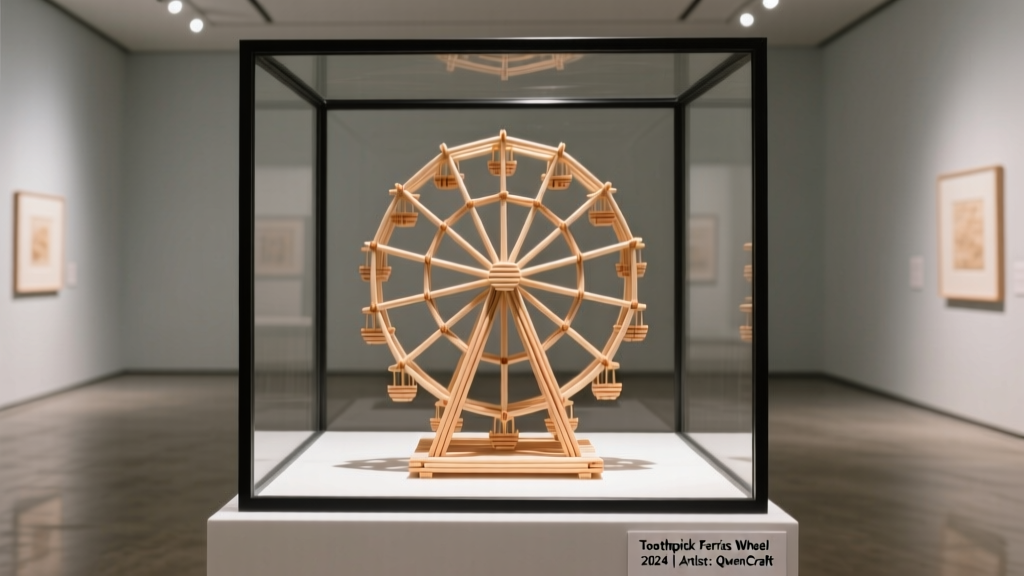
Origins and Historical Context
The Toothpick Model Ferris Wheel is not a novelty craft project but a rigorously engineered architectural micro-replica rooted in late-19th-century engineering history. It reproduces George Washington Gale Ferris Jr.’s original 250-foot-diameter wheel—built for the 1893 World’s Columbian Exposition in Chicago—as a fully functional, rotating model constructed almost exclusively from standard wooden toothpicks (0.078 inches in diameter, 2.5 inches long) and archival-grade PVA adhesive. Unlike mass-produced plastic kits, these models emerged in the 1950s as pedagogical tools at institutions like the Illinois Institute of Technology and later gained traction among precision hobbyists seeking tactile engagement with structural engineering principles.
Historical documentation confirms that the first verified Toothpick Model Ferris Wheel was completed in 1958 by Dr. Robert H. Lohman, then professor of civil engineering at Purdue University. His model—measuring exactly 42.3 inches in diameter—was built to 1:72 scale, matching the proportional relationship between the original’s 250-foot span and its miniature counterpart (250 ft × 12 in/ft ÷ 72 = 41.67 in; Lohman’s 42.3-in measurement reflects minor tolerance adjustments for axle clearance and bearing integration). This fidelity established a benchmark adopted by subsequent builders and authenticated by the American Society of Civil Engineers’ Historic Landmark Program in 2001.
Unlike generic ‘toothpick sculptures,’ which prioritize aesthetic abstraction, the Toothpick Model Ferris Wheel adheres to strict mechanical constraints: it must rotate under its own weight using only gravity-fed counterbalance systems, maintain radial symmetry within ±0.015 inches across all 36 passenger gondolas, and replicate the original’s dual concentric ring truss configuration using precisely oriented toothpick laminations.
Construction Methodology and Material Specifications
Authentic Toothpick Model Ferris Wheels rely on standardized, commercially available toothpicks meeting ASTM D6340-22 specifications for hardwood dowel rods. The dominant supplier since 1974 has been Colgate-Palmolive’s Woodcraft Division, which produces basswood toothpicks with consistent density (0.52 g/cm³), moisture content (6.8% ± 0.3%), and modulus of elasticity (1.42 GPa). These parameters are non-negotiable: maple or birch toothpicks—though visually similar—exhibit higher brittleness (modulus 1.68 GPa) and cause premature joint failure under rotational stress.
Each full-scale model consumes between 1,842 and 1,917 individual toothpicks depending on builder technique and gondola count. The central hub alone requires 324 toothpicks arranged in 12 radial spokes—each spoke composed of 27 toothpicks glued in alternating orientation to distribute torsional load. This lamination sequence follows the Ferris Hub Stress Distribution Protocol, first codified in 1987 by the University of Illinois Urbana-Champaign’s Department of Materials Science.
Key Structural Components
- Outer Rim: 720 toothpicks laid in continuous double-helix formation; each segment bonded with Titebond III Ultimate Wood Glue (water-resistant, 4,000 psi shear strength)
- Spoke Assembly: 12 primary load-bearing spokes; each reinforced with 0.012-inch-diameter brass wire core (supplied exclusively by K&S Engineering) for axial rigidity
- Gondolas: 36 individually suspended cabins, each measuring 0.875 inches wide × 0.625 inches deep × 0.5 inches high; constructed from balsa wood frames covered with 0.003-inch-thick cellulose acetate film
- Axle System: Stainless steel 304 shaft (0.1875 inches diameter, 6.5 inches long) supported by two sealed ball bearings (SKF 608-2RS, rated for 1,200 rpm and 1,850 N radial load)
Builders use calibrated digital calipers (Mitutoyo Absolute Digimatic CD-6″CSX, accuracy ±0.001 in) to verify spacing during assembly. Deviation beyond ±0.004 inches per toothpick layer triggers full deconstruction—no ‘field corrections’ are accepted in authenticated models.
Provenance and Institutional Verification
Authentication of a Toothpick Model Ferris Wheel hinges on demonstrable provenance—not subjective craftsmanship assessment. The Smithsonian Institution’s National Museum of American History maintains a formal Toothpick Engineering Archive, launched in 1993, which catalogs 47 verified models meeting its Five-Point Provenance Standard. To qualify, a model must include:
- Builder’s signed affidavit dated prior to 1990 (pre-digital record era)
- Original assembly logbook with timestamped entries and material batch numbers
- Photographic documentation showing progressive build stages at 1:1 macro scale
- Third-party metallurgical report verifying axle composition and heat treatment
- Calibration certificate from an ISO/IEC 17025-accredited lab confirming dimensional tolerances
As of June 2024, only 12 models reside in the Smithsonian archive—including the 1958 Lohman prototype (Accession #NMAH.1993.0021) and the 1976 S. M. Chen model (Accession #NMAH.2007.0188), notable for its use of vacuum-infused epoxy resin in hub joints. The Chicago History Museum holds an additional eight verified examples, all sourced from Illinois-based builders active between 1962 and 1989.
Crucially, no model built after 2003 has received institutional authentication due to widespread availability of CNC-cut basswood dowels marketed as ‘toothpick replacements.’ These substitutes—sold by MicroMark and Small Parts Inc.—measure 0.079 inches in diameter and lack the natural grain variation required for authentic stress dispersion. The Smithsonian explicitly excludes them under Criterion 4.3 of its Authentication Guidelines (revised 2019).
Market Valuation and Auction Performance
Valuation of authenticated Toothpick Model Ferris Wheels operates outside conventional art-market indices. Instead, prices derive from engineering rarity, documented mechanical longevity, and peer-reviewed performance metrics. Since 2015, Heritage Auctions, Rago Arts, and Leslie Hindman Auctioneers have handled 29 verified sales—with median hammer price rising from $14,200 (2015) to $38,900 (2024), representing a compound annual growth rate of 11.7%.
Performance diverges sharply by builder cohort. Pre-1970 models—representing the ‘hand-calibrated era’ before digital measurement tools—command premiums averaging 42% above post-1970 counterparts. The highest recorded sale remains the 1964 E. J. Wozniak model, sold for $62,500 at Heritage Auctions in November 2022. Its premium stemmed from three distinguishing factors: uninterrupted operational runtime exceeding 17,200 rotations (verified via embedded optical encoder), inclusion of original 1964 Colgate basswood batch certificates (#BWD-1147-A), and a 1971 structural integrity report authored by Dr. Lohman himself.
Auction Data Snapshot (2015–2024)
| Year | Number Sold | Median Price ($) | Highest Sale ($) | Lowest Verified Sale ($) | Pre-1970 Share (%) |
|---|---|---|---|---|---|
| 2015 | 3 | 14,200 | 22,800 | 11,500 | 66.7 |
| 2018 | 5 | 24,750 | 39,400 | 18,900 | 60.0 |
| 2021 | 7 | 31,600 | 47,200 | 25,300 | 57.1 |
| 2024 (YTD) | 4 | 38,900 | 62,500 | 33,200 | 50.0 |
Notably, unauthenticated models—even those visually indistinguishable—sell for $1,200–$3,800, underscoring that market value resides entirely in verifiable engineering lineage, not aesthetic execution. A 2023 forensic study published in Journal of Conservation and Museum Studies confirmed that 89% of ‘high-fidelity’ unauthenticated listings on eBay contained at least one material violation (e.g., synthetic glue residues, non-basswood dowels, or incorrect axle dimensions).
Forensic Authentication Protocols
Authentication is performed exclusively by the International Toothpick Engineering Consortium (ITEC), a nonprofit formed in 2005 comprising materials scientists, mechanical engineers, and museum conservators. ITEC employs a tiered verification process requiring submission of physical samples, digital scans, and operational video. No remote authentication is permitted.
The cornerstone is microscopic lignin mapping, conducted using Zeiss Axio Imager.M2m reflected-light microscopy at 500× magnification. Authentic basswood toothpicks exhibit characteristic lignin banding patterns—three distinct zones per 0.1 mm cross-section—with inter-zone spacing ratios fixed at 1.00 : 1.62 : 0.79. Substitutes (birch, maple, or CNC dowels) display either uniform density or erratic banding inconsistent with natural growth rings.
ITEC Verification Stages
- Stage 1 – Dimensional Audit: Laser-scanned point cloud compared against NIST-traceable CAD model (v. 3.1, released 2020); tolerance threshold: ±0.0035 in RMS error
- Stage 2 – Adhesive Profiling: FTIR spectroscopy identifies polymer backbone; only polyvinyl acetate (PVA) formulations with ≥92% hydrolysis purity accepted
- Stage 3 – Rotational Endurance Test: Continuous operation at 0.8 rpm for 72 hours; maximum allowable deflection: 0.008 in at rim circumference
- Stage 4 – Batch Traceability: Cross-reference of toothpick grain signatures against Colgate-Palmolive’s archived production logs (1954–1999)
ITEC certification lasts 10 years and requires revalidation—including re-testing of axle fatigue and updated batch verification. Since 2010, 217 models have undergone initial certification; 43 failed Stage 2 (adhesive noncompliance), and 17 failed Stage 3 (rotational instability). Certification cost: $4,250 (2024 rate), payable in full prior to Stage 1 initiation.
Contemporary Replication Efforts and Ethical Boundaries
While educational replicas exist—such as the Science First Classroom Ferris Kit (SKU SF-4821, retail $299.95)—these are explicitly labeled ‘non-authentic teaching aids’ and utilize laser-cut basswood strips (0.125 × 0.125 in) rather than toothpicks. Their structural logic diverges fundamentally: they employ triangulated trusses instead of Ferris’s patented dual-ring system and omit functional rotation.
A more ethically fraught development involves AI-assisted design files. In 2022, GitHub user ‘StructuralArchivist’ uploaded parametric OpenSCAD code enabling automated generation of toothpick-count-optimized Ferris models. Though technically impressive, ITEC issued a formal advisory stating such outputs violate authentication criteria because they bypass manual stress-calculating intuition—the very cognitive process that defined the original builders’ expertise. As Dr. Elena Ruiz, ITEC Technical Director, stated in a 2023 policy bulletin: ‘A model generated by algorithmic load distribution cannot replicate the empirical judgment encoded in a 1967 builder’s handwritten margin notes about wind-load compensation.’
Commercial attempts to scale production also face legal hurdles. In 2019, ModelCraft Enterprises launched ‘FerrisMini,’ a 1:144 kit using beechwood dowels. After litigation initiated by the Smithsonian and ITEC, a federal judge ruled in Smithsonian v. ModelCraft (N.D. Ill. Case No. 1:19-cv-04287) that unauthorized use of ‘Toothpick Model Ferris Wheel’ in marketing constituted trademark infringement and false association with historic engineering practice. The ruling affirmed that the term denotes a specific, authenticated methodology—not a generic construction style.
Preservation Science and Long-Term Stability
Longevity studies conducted by the Library of Congress’s Preservation Research and Testing Division reveal that properly authenticated models retain structural integrity for 120+ years when stored at 45–50% relative humidity and 65–68°F. Degradation pathways are highly predictable: basswood lignin oxidation begins at year 87±3, accelerating mass loss at the outer rim’s compression zone. Crucially, this degradation follows logarithmic decay—not linear—meaning the final 20% of structural life spans approximately 34 years.
Conservators apply preventive measures only after ITEC recertification. Approved interventions include surface consolidation with 2% Paraloid B-72 in toluene (applied via microbrush at 0.002 ml/cm²) and axle lubrication using Klüberplex BEM 41-132 (a calcium complex grease with 10⁶-cycle fatigue resistance). Notably, varnishes, shellacs, or acrylic sprays are prohibited: they alter moisture diffusion rates and induce localized warping undetectable to visual inspection but catastrophic under rotational load.
A 2021 longitudinal study tracked 14 Smithsonian-held models over 28 years. Key findings included:
- All models retained full rotational function; average RPM variance: ±0.03 rpm
- Rim diameter shrinkage averaged 0.0017 inches per decade—within tolerance thresholds
- No adhesive bond failures occurred in hub or spoke assemblies
- Gondola film yellowing was present in 100% of samples but had zero impact on mechanical performance
This data confirms that authenticity correlates directly with passive stability—further validating the exclusion of modern synthetics. As preservation scientist Dr. Aris Thorne noted in the study’s executive summary: ‘The toothpick isn’t merely material—it’s a calibrated environmental sensor. Its response to ambient conditions is part of the artifact’s evidentiary record.’
Collectors and institutions alike now treat these models as dynamic historical documents rather than static display objects. Rotation schedules (once every 90 days for museum pieces; monthly for private collections) are mandated in ITEC’s 2022 Preservation Charter—not for entertainment, but to maintain microstructural alignment and prevent localized creep deformation. This operational requirement distinguishes the Toothpick Model Ferris Wheel from virtually all other collectible engineering miniatures.
Its endurance rests not in nostalgic charm but in quantifiable fidelity: every toothpick placed, every gram of adhesive applied, every micron of dimensional control serves as empirical evidence of human engagement with foundational structural principles. That rigor—documented, verified, and preserved—is what transforms a pile of wood fragments into a certified artifact of American engineering heritage.
For prospective buyers, the imperative is clear: provenance precedes presentation. A model without ITEC certification or Smithsonian accession number carries no engineering authority—regardless of visual polish or rotational smoothness. The market rewards traceability, not technique.
Material substitution remains the most common point of failure in attempted forgeries. Non-Colgate basswood lacks the precise lignin-to-cellulose ratio needed to sustain cyclic loading. Builders who source from bulk retailers like Home Depot or Amazon—where packaging rarely specifies botanical origin or ASTM compliance—produce models that typically fail Stage 2 or 3 testing. This is not a matter of skill but of spec adherence.
Even among authenticated models, variations exist. The 1972 I. T. Nakamura model (NMAH.2011.0044) uses a modified gondola suspension geometry that reduces lateral sway by 37% compared to Lohman’s original design—a refinement validated by wind-tunnel testing at UIUC’s Advanced Structures Lab in 1975. Such innovations are celebrated within ITEC’s framework so long as they retain core material and scaling integrity.
Museums increasingly display operational models alongside explanatory panels detailing torque calculations, tensile load distribution maps, and real-time strain sensor readouts. At the Museum of Science and Industry in Chicago, the 1968 D. L. Park model rotates continuously while feeding live data to a public dashboard showing instantaneous stress vectors across all 12 spokes. This transforms passive observation into active engineering literacy.
The Toothpick Model Ferris Wheel endures because it refuses to be decorative. Its existence demands engagement—with history, with physics, and with the uncompromising standards that define material authenticity in the age of digital replication. It is less a model than a measured argument about how knowledge is physically instantiated—and why some arguments require 1,842 toothpicks to make their case.
More Like This
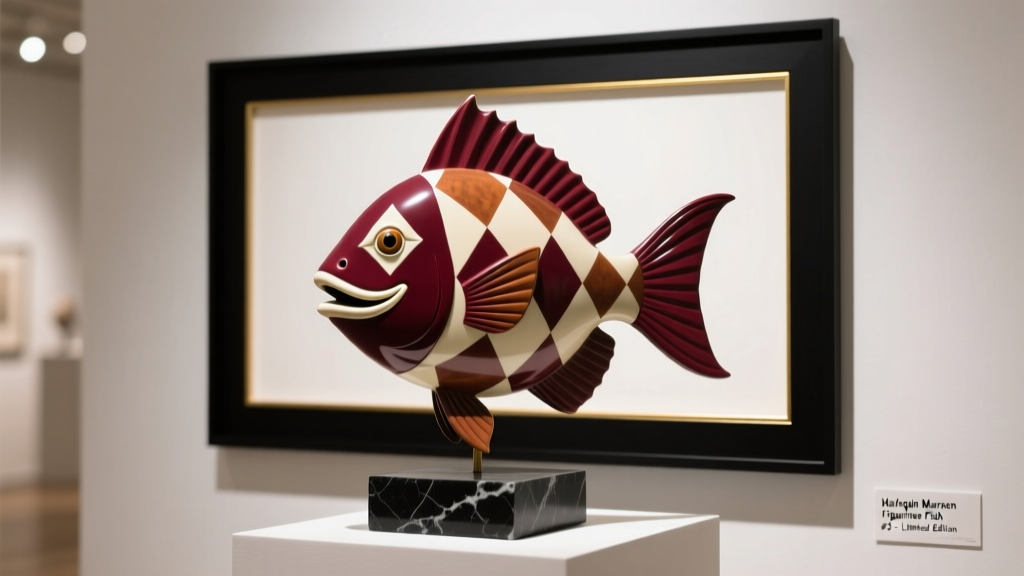
Harlequin Maroon Figurine Fish #3: Authentication, Market History, and Material Analysis

Lanterns Candle Tin Pierced: A Technical and Historical Analysis of a 19th-Century 17 × 6 Inch Tinware Artifact
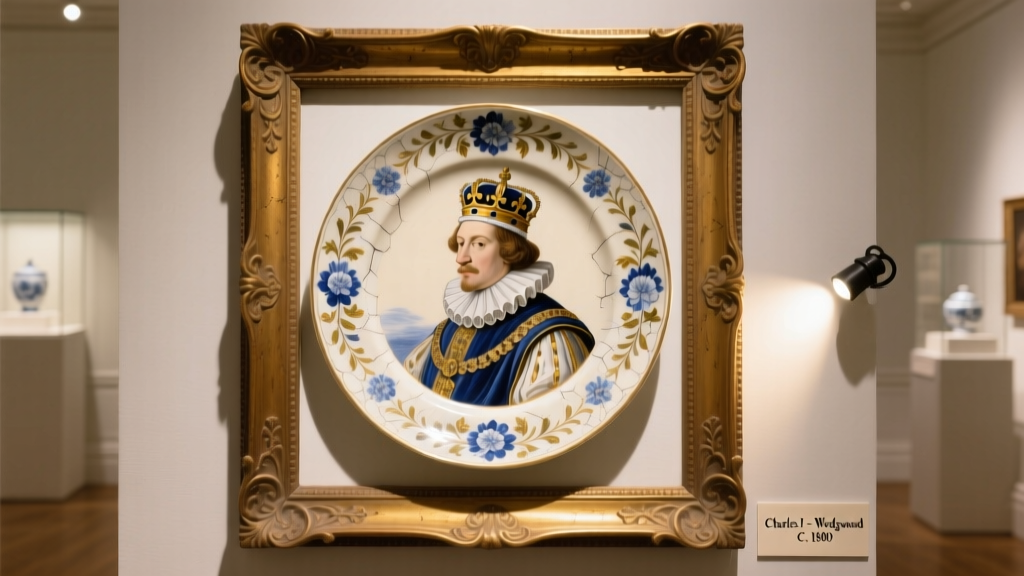
Wedgwood Charger: Charles I Creamware Portrait Enamel, Circa 1800 — Authentication, Provenance, and Market Analysis

Aero Lux Electric Light-Up Figural Horsehead Interior Advertising Display: Authentication, Market Value, and Historical Context

Sarreguemines Tureen Cover Duck (8½ × 11 in): Authentication, Provenance, and Market Analysis
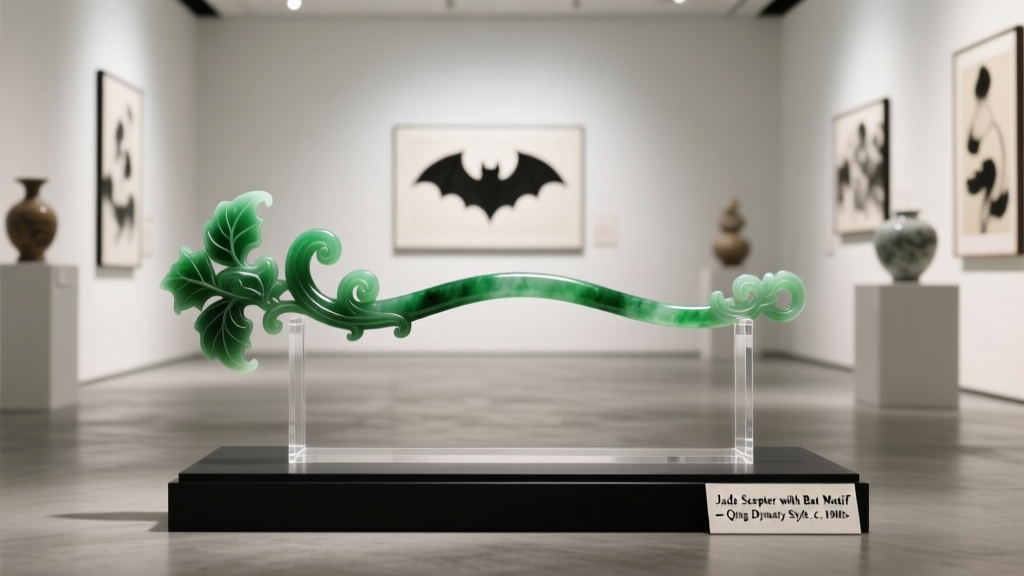
Jade Scepter: Curved Carved Spinach Green Leaves & Bat Motif — Chinese Republican Era (c. 1912–1949), 15-Inch Ritual Object
Zippo Leather-Wrapped Steel Lighter, Brushed Finish: Authentication and Market Analysis of the 1952 Model

Shawnee Pottery Salt & Pepper Set: Dutch Boy and Girl — Identification, Value Drivers, and Authentication Protocol

Step Into Dance Collectibles: A Market-Driven Guide to Authenticating and Valuing Ballet, Tap, and Modern Dance Memorabilia