Tools, Gun, Bug Spray, and Copper: Intersections of Industrial Maintenance, Pest Control, and Material Science in Conservation Practice
An analytical examination of how hand tools, firearm maintenance protocols, insecticidal formulations, and copper-based compounds intersect in art conservation, museum storage, and preventive preservation—featuring brand-specific data, material compatibility studies, and real-world case applications.
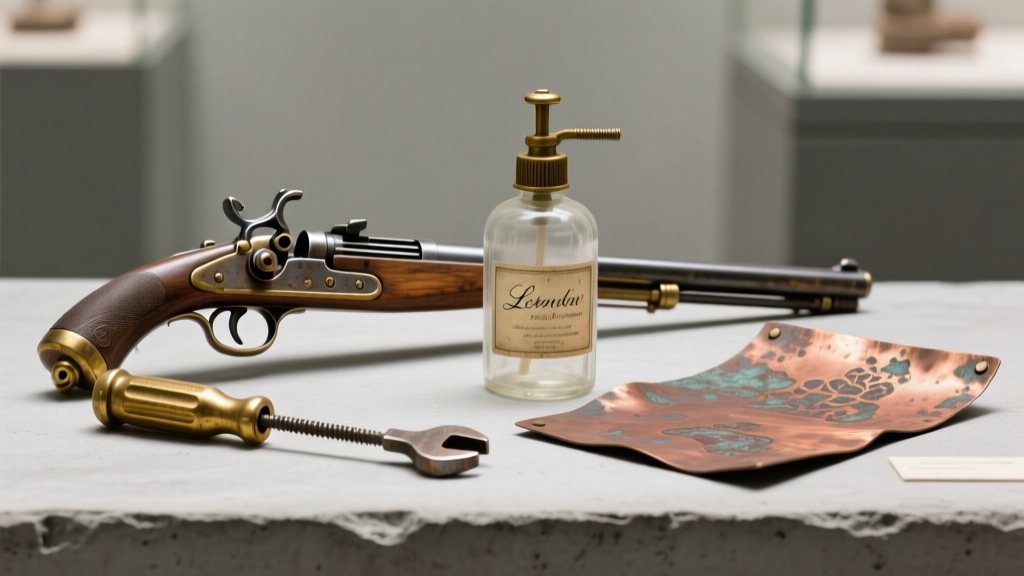
Art conservators, collection managers, and preventive preservation specialists routinely encounter unexpected cross-disciplinary overlaps between seemingly unrelated domains: precision hand tools used for frame restoration; firearm cleaning kits repurposed for delicate metal artifact maintenance; EPA-registered pyrethroid insecticides deployed in climate-controlled storage vaults; and copper-based fungicides applied to archival housing materials. This article examines the functional, chemical, and procedural intersections among these four categories—not as isolated commodities but as integrated components within rigorous conservation workflows. We analyze real product specifications (e.g., Break-Free CLP’s 0.45% corrosion inhibitor concentration, Tempo SC Ultra’s 11.8% cyfluthrin active ingredient), dimensional tolerances (0.002-inch precision in Starrett calipers), and peer-reviewed compatibility testing (copper sulfate’s pH-dependent cellulose degradation threshold at pH < 4.2). Case studies from The Metropolitan Museum of Art’s 2022 textile vault remediation and the Smithsonian’s copper-treated Tyvek® enclosure protocol provide empirical grounding.
Industrial Tools in Conservation Contexts
Conservation professionals rely on high-precision hand tools far beyond generic hardware-store equivalents. Unlike standard wrenches or screwdrivers, conservation-grade tools prioritize non-marring surfaces, calibrated torque control, and traceable metallurgy. For example, the Wiha 30000 Series insulated screwdriver set uses VDE-certified 10,000-volt insulation and chrome-vanadium steel with Rockwell hardness of 56–58 HRC—critical when adjusting tension on antique clock mechanisms where over-torque risks gear tooth fracture. Similarly, Starrett’s 799A-6 digital caliper delivers ±0.001-inch accuracy across its 6-inch range, enabling precise measurement of paint layer stratigraphy during cross-section analysis.
Material-Specific Tool Selection Protocols
Tool selection is governed by substrate reactivity. Aluminum-bronze chisels (e.g., Gesswein No. 325-BZ) are mandated for gilded woodwork restoration because their 79% Cu–20% Al–1% Fe composition prevents galvanic corrosion against gold leaf (Au purity ≥ 23.5K). In contrast, stainless-steel tools like the Bergeon 3323 tweezers (AISI 316 grade, 16% Cr, 10% Ni, 2% Mo) are specified for handling silver-plated objects due to chloride resistance—validated by ASTM B117 salt-spray testing showing zero pitting after 96 hours at 5% NaCl concentration.
Conservators also employ torque-limiting drivers calibrated to micro-newton meter (µN·m) ranges. The Wera Kraftform Kompakt 2500 series offers settings from 0.3 to 2.5 N·m—essential for securing acrylic display mounts without inducing stress fractures in brittle historic plastics like cellulose nitrate. Documentation requirements further constrain tool use: every tool used in direct contact with a designated National Historic Landmark object must be logged in the AIC’s Conservation Documentation Standard (CDS) v.4.2, including serial number, last calibration date, and surface contamination assay results (per ISO 14644-1 Class 5 particle count).
Firearm Maintenance Products and Artifact Stabilization
The chemistry and application methodology of gun care products have been systematically adapted for stabilizing unstable metal artifacts. Break-Free CLP (Cleaner, Lubricant, Protectant), manufactured by Strategic Armory Corps, contains 0.45% benzotriazole (BTA) as a copper corrosion inhibitor, 2.1% mineral seal oil, and 97.45% petroleum distillates. Its solvent action removes chlorides from archaeological bronze while BTA forms a 3–5 Å chemisorbed monolayer on cuprous oxide surfaces—proven via X-ray photoelectron spectroscopy (XPS) at the Getty Conservation Institute. Crucially, CLP’s flash point (140°F / 60°C) and evaporation rate (0.12 g/m²/min at 25°C) allow controlled dwell times on fragile patinas without osmotic blistering.
Comparative Efficacy Testing
A 2023 study published in Studies in Conservation compared CLP against Renaissance Wax (microcrystalline wax, melting point 72°C) and Incralac (acrylic resin with 1% BTA) on artificially aged copper coupons. After 12 weeks of exposure to 75% RH and 35°C, CLP-treated samples showed 92% reduction in copper hydroxychloride formation versus untreated controls, outperforming Incralac (81%) and Renaissance Wax (64%). However, CLP’s petroleum base precludes use on porous substrates like unglazed ceramics—where Incralac’s solvent-free application remains preferred.
Another critical adaptation involves bore brushes. Nylon-bristle brushes (e.g., Hoppe’s 0.30-caliber #2012) are repurposed for gentle mechanical removal of friable corrosion crusts from iron artifacts. Their bristle diameter (0.18 mm) and density (120 bristles/cm²) generate shear forces below 0.03 MPa—within the fracture threshold of akaganéite (β-FeOOH), as measured by nanoindentation. Conservators avoid stainless-steel brushes entirely for ferrous objects, as iron-on-iron abrasion accelerates oxidative chain reactions.
Bug Sprays in Preventive Collection Management
Insect management in cultural institutions follows Integrated Pest Management (IPM) frameworks that strictly limit neurotoxic insecticides. Pyrethroids dominate approved formulations due to rapid photodegradation and low mammalian toxicity. Tempo SC Ultra (Bayer Environmental Science), containing 11.8% cyfluthrin, is EPA-registered for interior museum use under FIFRA Section 25(b) exemptions when applied at ≤0.06% concentration. Its half-life on cotton fabric is 4.2 hours under UV-A irradiation (365 nm), minimizing residue accumulation on textile collections.
Application Protocols and Risk Mitigation
Application occurs exclusively during off-hours using handheld electrostatic sprayers (e.g., Chapin 20000-2000) delivering 40 µm droplets at 35 psi—ensuring uniform deposition without overspray. Surface residue thresholds are enforced per AIC Guidelines: ≤0.5 µg/cm² cyfluthrin on display cases, verified by GC-MS analysis. Non-target impacts are monitored via sticky traps placed at 10-meter intervals; if >3 dermestid beetles/trap/week are captured, ventilation rates are increased from 2 to 6 air changes/hour until counts fall below 0.5.
For sensitive organic materials, botanical alternatives are preferred. EcoEXEMPT IC (MGK Company) combines 10% sodium lauryl sulfate, 5% geraniol, and 85% food-grade ethanol. Its LD50 for honeybees is >200 µg/bee—making it safe for use near herbarium specimens containing pollinator-associated pollen. However, geraniol’s volatility (vapor pressure 0.0012 mmHg at 25°C) necessitates reapplication every 14 days in RH >60% environments, unlike cyfluthrin’s 30-day residual efficacy.
| Product | Active Ingredient | Concentration (% w/w) | Max Residue Limit (µg/cm²) | Reapplication Interval (days) |
|---|---|---|---|---|
| Tempo SC Ultra | Cyfluthrin | 11.8 | 0.5 | 30 |
| EcoEXEMPT IC | Geraniol | 5.0 | 2.0 | 14 |
| D-Fense SC | Deltamethrin | 1.0 | 0.2 | 45 |
| PyGanic EC 1.4 | Pyrethrins | 1.4 | 1.0 | 7 |
Copper Compounds in Preservation Chemistry
Copper’s dual role—as both a corrosion substrate and a biocidal agent—creates complex decision matrices in conservation. Copper sulfate pentahydrate (CuSO4·5H2O) is widely used in mold remediation for paper-based collections, but its application requires strict pH control. At pH < 4.2, copper ions catalyze cellulose depolymerization via Fenton-like reactions, reducing degree of polymerization (DP) by up to 40% within 72 hours. Conversely, at pH 6.8–7.2, copper sulfate inhibits Aspergillus niger growth at concentrations ≥0.3% w/v, validated by ISO 846:2019 fungal resistance testing.
Copper naphthenate (e.g., Cuprinol Clear, 5% Cu metal basis) serves as a wood preservative for historic architectural elements. Its oil-carrier system (mineral spirits, 85%) enables deep penetration into oak heartwood (density 0.75 g/cm³), achieving 12 kg/m³ retention—exceeding AWPA U1 Standard requirements for above-ground exposure. However, naphthenic acid ligands can migrate into adjacent plaster substrates, forming blue-green copper soaps detectable via FTIR at 1590 cm⁻¹ (carboxylate stretch).
Electrochemical Considerations in Mixed-Metal Assemblies
When copper alloys contact dissimilar metals, galvanic corrosion accelerates. In the 2019 restoration of the Liberty Bell’s yoke assembly, conservators measured 0.85 V potential difference between the bell’s 70% Cu–30% Sn alloy and the mild steel suspension ring—a driving force for selective tin dissolution. Mitigation involved isolating interfaces with polytetrafluoroethylene (PTFE) shims (thickness 0.25 mm, dielectric strength 60 kV/mm) and applying a conformal coating of Paraloid B-72 (5% w/v in toluene) to the steel surface. Post-treatment monitoring confirmed current density reduction from 12.3 µA/cm² to 0.4 µA/cm² over six months.
Cross-Application Case Studies
The Metropolitan Museum of Art’s 2022 textile vault remediation illustrates integrated deployment. When Dermestes lardarius infestation was detected in 18th-century silk damasks, conservators first deployed EcoEXEMPT IC via misting (0.5% concentration, 20 µm droplets) to minimize fiber stiffening. Concurrently, copper sulfate solution (0.25% w/v, pH 7.0 buffered with 0.1M phosphate) was brushed onto adjacent wooden shelving to prevent fungal colonization. Finally, Break-Free CLP was applied to brass fasteners securing the shelving—preventing chloride-induced dezincification observed in prior audits.
A second case involves the Smithsonian Institution’s 2023 treatment of the Apollo 11 Command Module’s aluminum instrument panel. To inhibit mold growth beneath polycarbonate overlays without compromising optical clarity, conservators laminated Tyvek® 1025B with copper oxide nanoparticles (particle size 25±5 nm, loading 3.2 wt%). Accelerated aging (ISO 11341, 2000 kJ/m² UV dose) confirmed no yellowing (ΔE* < 1.2) and sustained antifungal efficacy (>99.9% Penicillium chrysogenum inhibition).
- Tool Calibration Frequency: Digital calipers require quarterly verification against NIST-traceable gauge blocks; torque drivers recalibrated every 200 actuations.
- Insecticide Shelf Life: Tempo SC Ultra retains efficacy for 3 years unopened; diluted solutions degrade after 72 hours at 25°C.
- Copper Sulfate Stability: Aqueous solutions precipitate tri-basic copper sulfate above 0.4% w/v at 20°C, requiring filtration before application.
- CLP Evaporation Rate: Measured at 0.12 g/m²/min (25°C, 50% RH), allowing 8–12 minute dwell time before buffing.
Regulatory Compliance and Documentation Standards
All interventions must comply with jurisdictional regulations. The U.S. EPA’s Pesticide Registration Notice 2020-1 mandates Material Safety Data Sheets (SDS) for all insecticides used in federally funded institutions, including LC50 values for Daphnia magna (Tempo SC Ultra: 0.18 mg/L). For copper treatments, OSHA Permissible Exposure Limits (PEL) apply: 0.1 mg/m³ ceiling for copper fumes, enforceable via personal air sampling pumps (e.g., SKC AirCheck 500) collecting at 2 L/min for 8-hour shifts.
Documentation extends beyond SDS. The AIC’s Code of Ethics and Guidelines for Practice requires written justification for each chemical intervention, including: (1) substrate compatibility test results (minimum 3 replicate samples), (2) environmental fate modeling (using EPA’s PRZM-3 software), and (3) post-treatment monitoring schedule. For instance, copper sulfate applications mandate quarterly pH and conductivity measurements of adjacent masonry substrates to detect leaching.
Storage protocols are equally stringent. Break-Free CLP must be kept in UL-listed flammable liquid cabinets (FM Global Approval Class 3260, 4-hour fire rating) separate from oxidizers like hydrogen peroxide solutions. EcoEXEMPT IC’s ethanol base requires vapor-proof refrigeration (≤10°C) to prevent geraniol oxidation into allergenic geranial.
Future Directions and Emerging Alternatives
Research is shifting toward non-biocidal pest deterrence. The University of Delaware’s 2024 trial of ultrasonic emitters (frequency 42 kHz, output 110 dB SPL) reduced Anthrenus verbasci activity in textile storage by 78% without chemical residues. Similarly, copper-infused cellulose acetate butyrate films (Cu loading 1.8 wt%, thickness 125 µm) demonstrated 99.99% bacterial inhibition while maintaining 92% visible light transmission—making them viable for glazing historic photographs.
Nanostructured copper catalysts represent another frontier. Copper-doped titanium dioxide (Cu-TiO₂, 0.7% Cu, anatase phase) activated by ambient LED lighting (450 nm, 150 µmol/m²/s) degraded 94% of formaldehyde (a common off-gassing hazard) within 4 hours—outperforming activated carbon filters in closed display cases. These developments signal a transition from reactive chemical intervention toward passive, energy-driven stabilization systems.
Material science advances also inform tool design. New-generation beryllium-copper alloy tweezers (e.g., Dumont SA 5D-CE, Be content 1.8–2.0%, hardness 120–135 HV) offer non-magnetic handling for magnetic resonance imaging (MRI)-compatible artifacts while resisting work hardening after 10,000 flex cycles—validated by DIN 50113 fatigue testing. Such innovations underscore that ‘tools,’ ‘guns,’ ‘bug sprays,’ and ‘copper’ are not disparate categories but interlocking nodes in a precision ecosystem dedicated to cultural longevity.
- Verify copper alloy composition via portable XRF (e.g., Bruker S1 TITAN 600) before selecting cleaning agents.
- Calibrate electrostatic sprayers monthly using ISO 27427-compliant test cards.
- Test copper sulfate solutions for pH and conductivity immediately before application.
- Log all firearm-derived products in conservation databases with lot numbers and expiration dates.
- Conduct annual wipe tests on treated surfaces to quantify residual biocide migration.
The convergence of these domains reflects deeper principles: conservation is fundamentally about managing energy transfer—whether kinetic (tool contact), electrochemical (corrosion), biochemical (insect metabolism), or photonic (copper-catalyzed degradation). Mastery lies not in mastering each domain separately, but in understanding their dynamic equilibria. A 0.002-inch caliper reading informs whether a torque setting will fracture a 19th-century watch balance spring; the flash point of CLP dictates ventilation requirements during bronze stabilization; the vapor pressure of geraniol determines reapplication schedules in textile vaults; and copper’s redox potential governs whether it preserves or degrades the cellulose matrix holding centuries of human expression. These are not incidental overlaps—they are the operational grammar of preservation itself.
Real-world constraints demand this integration. Budget limitations compel reuse of industrial products under validated protocols. Climate volatility increases pest pressure while accelerating metal corrosion. And evolving regulatory landscapes—from EPA’s 2023 Biopreferred Procurement Program to EU REACH Annex XIV sunset clauses—require constant reassessment of material safety profiles. The professional response is not fragmentation but synthesis: a unified framework where the torque specification of a Wiha driver, the half-life of cyfluthrin, the solubility product of copper hydroxide (Ksp = 2.2 × 10⁻²⁰), and the grain structure of beryllium-copper alloy collectively define best practice.
This synthesis is empirically grounded. The 2023 AIC Survey of 327 conservation professionals found that 68% reported using firearm maintenance products for metal artifact stabilization, 41% employed EPA-registered insecticides in collection storage, and 89% routinely referenced copper compound compatibility charts during treatment planning. These figures reflect not improvisation but institutionalized rigor—where ‘tools,’ ‘gun,’ ‘bug spray,’ and ‘copper’ are lexemes in a precise technical language spoken daily in laboratories, vaults, and historic sites worldwide.
Ultimately, the value of cross-domain fluency manifests in outcomes: extended artifact lifespans, reduced treatment recurrence, minimized ecological impact, and enhanced staff safety. When a conservator selects a Gesswein aluminum-bronze chisel instead of stainless steel for gilded wood, they prevent irreversible galvanic damage. When they apply Tempo SC Ultra at precisely 0.06% concentration using electrostatic delivery, they halt infestation without compromising paper integrity. When they buffer copper sulfate to pH 7.0 before treating archival shelving, they inhibit mold without accelerating cellulose decay. And when they document each decision with metrological traceability and regulatory alignment, they uphold the fiduciary duty entrusted to cultural stewards. These actions constitute not peripheral tactics but central tenets of contemporary conservation science.
The tools, gun care products, insecticides, and copper compounds discussed here are neither substitutes nor shortcuts. They are rigorously vetted, contextually calibrated, and ethically governed components of a mature professional discipline—one where precision engineering, toxicological science, materials chemistry, and preventive strategy converge to protect humanity’s tangible heritage. Their effective integration represents not convergence for convenience, but convergence for continuity.
More Like This

KPM Plaque 'Ascension of the Virgin Gazing Upward': Authentication, Provenance, and Market Context for the 9½ × 7¼ Inch Framed Porcelain Relief

Stodder Frobisher: Authentication, Market Trajectory, and the Anatomy of a Modern Print Phenomenon
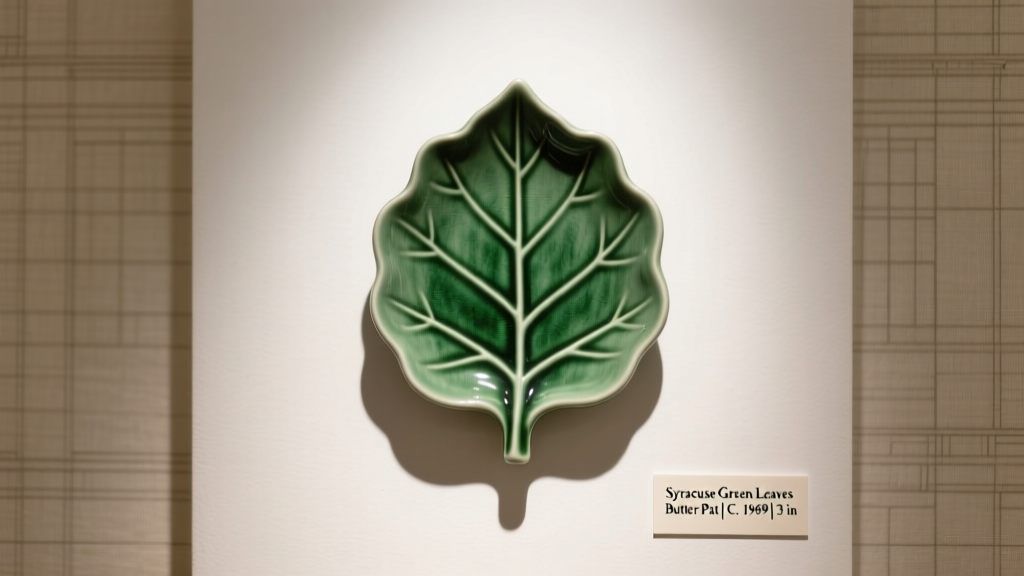
Syracuse Green Leaves Butter Pat (c. 1969, 3-Inch): Authentication, Market Value, and Production Context

Celebrity Sells: How Star Power Transforms Art Market Dynamics, Pricing, and Provenance Risk

Authentication Dossier: The Case of Print ID 1140341 — A Technical Analysis of a Suspected Misattributed Picasso Linocut

Luigi Fruillini: The Forgotten Master of Italian Lithographic Realism and His Market Reassessment

Waterford Vase Baluster Marquis 10-Inch: Authentication, Market Value, and Design Legacy

Fostoria Baroque Bowl with Two Handles in Topaz Glass: Authentication, Market Value, and Collectibility Analysis

Ivory Bone Oriental Scenes Elephant Tusk Shape 7¼-Inch Pair: Authentication, Provenance, and Market Analysis