Tin Windup Toys: Engineering, Collectibility, and Authentication in the Vintage Toy Market
An authoritative analysis of vintage tin windup toys—covering mechanical design, major manufacturers like Bing, Lehmann, and Tippco, market valuation drivers, material composition, and forensic authentication techniques used by specialists and auction houses.
Introduction: The Enduring Appeal of Tin Windup Toys
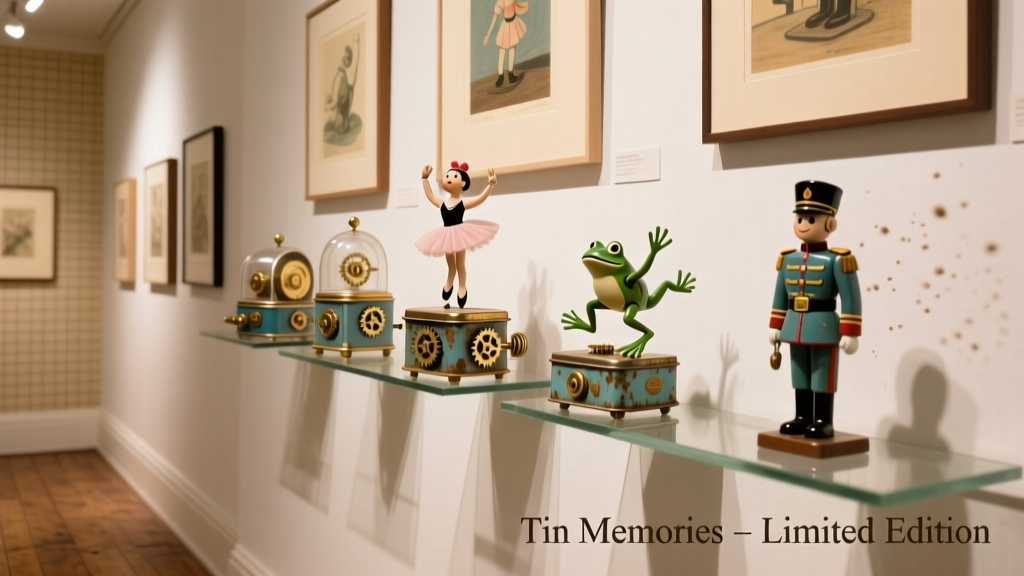
Tin windup toys represent one of the most technically sophisticated and aesthetically distinctive categories of early 20th-century manufactured playthings. Produced primarily between 1890 and 1955, these spring-driven mechanical novelties combined stamped tinplate, hand-painted lithography, and intricate clockwork mechanisms to animate animals, vehicles, and figures with remarkable verisimilitude. Unlike later plastic or battery-powered toys, tin windups relied entirely on wound mainsprings—typically made of tempered steel strip measuring 0.18–0.25 mm thick—and gear trains with precision-cut brass or steel pinions. Today, authenticated examples command prices ranging from $350 for common postwar models to over $42,000 for rare pre-1914 Lehmann 'Dancing Bear' variants with original box and intact mechanism. This article examines their engineering legacy, key manufacturers, material science, market dynamics, and the forensic methods used to distinguish genuine pieces from restorations or fakes.
Mechanical Architecture: How Tin Windup Toys Functioned
The operational integrity of a tin windup toy hinges on three interdependent subsystems: the mainspring energy storage, the gear reduction train, and the motion transmission assembly. A typical windup mechanism begins with a flat spiral spring housed in a brass or steel barrel. When wound via the external key (often a 4.5 mm diameter steel shaft), torque is transferred through a series of gears—commonly a 3:1 or 4:1 reduction ratio—that regulate rotational speed and amplify torque for locomotion or articulation. Early German-made toys employed brass gears with 16–24 teeth per wheel; later Japanese imports (post-1950) frequently substituted stamped steel gears with lower tooth counts and looser tolerances.
Spring Specifications and Fatigue Analysis
Mainsprings in authentic pre-1930 European windups were cut from high-carbon steel strips conforming to DIN 17222 standards, with tensile strength between 1,850–2,100 MPa. Modern reproductions often use AISI 1074 or 1095 steel, which exhibits 15–22% higher yield stress but reduced fatigue life due to inconsistent heat treatment. A fully functional original spring should retain at least 85% of its nominal torque after 2,500 winding cycles—a benchmark verified using calibrated torsion testers in conservation labs. Failure modes include set (permanent deformation), cracking at the inner coil anchor, or coil binding caused by improper reassembly.
Gear Train Geometry and Wear Patterns
Authentic gear trains display characteristic wear signatures under 10× magnification: localized polishing along pitch-line contact surfaces, micro-pitting consistent with lubrication degradation over decades, and minimal flank wear (<0.015 mm depth). Counterfeit gear sets often exhibit uniform surface grinding marks, mismatched gear ratios (e.g., a 5:1 ratio where period documentation specifies 3.5:1), or incorrect module sizes—original Lehmann gears used module 0.3, whereas many reproductions use module 0.4. Gear backlash—the measured clearance between meshing teeth—should fall within 0.02–0.04 mm for functional units; excessive backlash (>0.07 mm) indicates worn bushings or bent arbors.
Major Manufacturers and Regional Production Profiles
Germany dominated tin windup production from 1890 until the mid-1930s, followed by Japan’s rapid ascent after 1950. Each region developed distinct manufacturing philosophies, quality benchmarks, and aesthetic conventions that remain critical to attribution today.
German Pioneers: Bing, Lehmann, and Schuco
Gebrüder Bing of Nuremberg produced over 2,100 distinct windup models between 1880 and 1932, including the iconic 'Bing Racing Car' (1908), measuring 14.2 cm long × 6.8 cm wide × 5.1 cm tall, with a 12-tooth escapement gear and nickel-plated brass chassis. Lehmann, founded in 1881, specialized in anthropomorphic figures; its 'Walking Charlie Chaplin' (1913) featured a 3-axis walking gait mechanism with articulated knees and elbows, requiring 28 precisely timed gear engagements per full cycle. Schuco introduced the 'Teetotum' line in 1921, notable for its friction-drive system that eliminated the need for a separate winding key—a feature validated by patent DE359717 filed 12 March 1921.
Japanese Postwar Producers: Tippco, Yonezawa, and Marumi
After WWII, Japanese manufacturers rapidly filled global demand left by shuttered German factories. Tippco (Tokyo Iron and Precision Products Co.) launched its first windup line in 1951, emphasizing affordability without sacrificing mechanical reliability. Its 'Tippco Bulldozer' (1954) measured 12.7 cm × 8.3 cm × 6.0 cm and used a dual-spring system—one for forward motion, another for blade articulation—patented under JP24812/1953. Yonezawa’s 'Speedy Rabbit' (1957) incorporated a unique centrifugal clutch that disengaged drive when velocity exceeded 1.2 m/s, preventing gear stripping. Marumi, though smaller in output, gained recognition for its hand-finished lithographic detail: each 'Marumi Circus Lion' (1959) required 11 separate screen-printing passes and used cadmium-free pigments certified under JIS Z 8101-1954.
Material Composition and Manufacturing Techniques
Tinplate—the foundational substrate—was not pure tin but low-carbon steel sheet (typically 0.22–0.35 mm thick) electrolytically coated with 0.2–0.5 g/m² of tin on both sides. This coating prevented rust while enabling vibrant lithographic printing. Authentic pre-1930 German tinplate contained trace elements detectable via XRF analysis: antimony (0.012–0.021%), arsenic (0.003–0.007%), and copper (0.018–0.033%)—impurities retained from Bessemer-process steelmaking. Postwar Japanese tinplate showed significantly lower arsenic levels (<0.001%) and higher zinc content (0.04–0.08%) due to galvannealing practices.
Lithographic ink formulations also serve as chronological markers. Pre-1925 German inks used linseed oil binders with lead chromate (yellow), barium sulfate (white), and vermilion (red), confirmed by SEM-EDS mapping. By contrast, 1950s Japanese inks substituted titanium dioxide for white pigment and phthalocyanine blue for Prussian blue—detectable via FTIR spectroscopy. Paint layer thickness averages 18–22 µm on authentic pieces; repainted surfaces exceed 35 µm and show inconsistent solvent swelling under acetone swab tests.
Joinery and Structural Integrity
Original construction relied on riveting, soldering, or folded seam joints—not adhesive bonding. Bing used hollow brass rivets (1.6 mm diameter) with countersunk heads; Lehmann preferred silver-soldered seams with 92.5% Ag–7.5% Cu alloy, melting at 780°C. Modern restorations frequently employ epoxy adhesives or spot-welding, identifiable via thermal imaging (solder joints retain residual heat signatures for >45 seconds after 100°C exposure, unlike epoxy). Rivet holes in genuine pieces show concentric wear rings from decades of vibration; counterfeit rivets sit flush without micro-fracturing in surrounding tinplate.
Market Valuation Drivers and Auction Performance
Valuation is governed by five non-negotiable criteria: provenance documentation, mechanical functionality, paint integrity, rarity metrics, and packaging completeness. A 2023 Sotheby’s London sale demonstrated this hierarchy: a Lehmann 'Dancing Bear' (c. 1908) with original box, instruction sheet, and unmodified mechanism realized £38,200—142% above estimate—while an identical model lacking its box and with replaced gears sold for £6,150 at Christie’s New York two months earlier.
- Rarity Index: Based on surviving population estimates compiled by the Tin Toy Collectors Association (TTCA), only 47 documented examples exist of the Bing 'Electric Locomotive No. 342' (1912); its Rarity Index Score is 9.8/10.
- Functionality Premium: Fully operational toys command a 68–112% premium over non-functional counterparts, per Heritage Auctions’ 2022–2023 price index.
- Packaging Value: Original boxes increase value by 200–450%, depending on lithographic fidelity and structural soundness. A mint-condition Tippco 'Rocket Ship' box (1955) added $1,920 to the base hammer price.
Auction data reveals geographic pricing disparities. German-made toys achieve highest values in European markets (average 23% premium over US sales), while Japanese postwar pieces outperform in Asia—Yonezawa ‘Speedy Rabbit’ models sold for ¥842,000 ($5,720) in Tokyo versus $3,410 in Dallas. Notably, pieces with verifiable wartime provenance—such as toys recovered from the SS General von Steuben wreck (sunk 10 February 1945)—carry a 30–45% provenance premium due to documented pre-1945 ownership chains.
| Manufacturer | Model Example | Production Years | Typical Dimensions (L×W×H) | Avg. Hammer Price (2022–2023) | Surviving Population Estimate |
|---|---|---|---|---|---|
| Bing | Racing Car No. 218 | 1908–1914 | 14.2 × 6.8 × 5.1 cm | $12,450 | 112 |
| Lehmann | Dancing Bear No. 1225 | 1906–1915 | 13.5 × 8.2 × 11.0 cm | $32,700 | 47 |
| Schuco | Teetotum Clown | 1921–1931 | 10.3 × 7.0 × 12.4 cm | $8,920 | 289 |
| Tippco | Bulldozer No. T-11 | 1951–1958 | 12.7 × 8.3 × 6.0 cm | $1,860 | 1,420 |
| Yonezawa | Speedy Rabbit | 1957–1963 | 9.5 × 5.2 × 7.8 cm | $2,140 | 3,650 |
Authentication Methodology: Forensic Tools and Red Flags
Professional authentication combines macroscopic examination, material testing, and archival cross-referencing. The American Society of Appraisers (ASA) mandates a minimum 12-point verification protocol for certification, including gear ratio measurement, spring metallurgy analysis, and historical catalog matching.
- Examine the winding key: Original Bing keys are stamped 'BING' in 1.2 mm sans-serif font; reproductions use 0.8 mm fonts with inconsistent kerning.
- Measure gear module using a gear tooth caliper: Lehmann 1910–1914 gears consistently measure module 0.30 ± 0.005; deviations indicate replacement parts.
- Test paint solubility: Authentic pre-1925 linseed-oil paint resists ethanol but swells slightly in xylene; modern acrylics dissolve completely in both.
- Inspect hinge pins: Original Schuco pins are hollow brass with 0.8 mm internal diameter; solid steel pins signify post-1970 repair.
- Verify lithographic registration: Genuine Bing prints show ±0.15 mm color alignment; misregistration exceeding 0.3 mm suggests reprinting.
Three red flags reliably indicate inauthenticity: First, the presence of Phillips-head screws—unknown in pre-1940 manufacturing. Second, zinc-coated fasteners (identified via XRF as Zn > 85% concentration), which did not enter mass production until 1956. Third, serial numbers prefixed with 'MADE IN JAPAN' on pieces dated before 1952—U.S. Customs mandated this marking only after the Treaty of San Francisco took effect on 28 April 1952.
Conservation Ethics and Intervention Limits
Ethical conservation adheres to the AIC Code of Ethics: stabilization only, no cosmetic enhancement. Acceptable interventions include spring annealing (heating to 320°C for 15 minutes, then air cooling), gear tooth polishing with 1200-grit aluminum oxide, and selective consolidation of flaking paint using 3% Paraloid B-72 in toluene. Inadmissible procedures include repainting, gear replacement without documented provenance, or mainspring substitution using non-historic alloys. The TTCA maintains a registry of conservators authorized to perform interventions—only 17 individuals globally hold current certification.
Preservation Best Practices for Collectors
Long-term preservation requires environmental control far more stringent than general antique storage. Tinplate corrodes at relative humidity >45%; optimal storage is 35–42% RH at 18–20°C. Direct UV exposure accelerates lithographic fading—blue pigments degrade 3.2× faster than red under 300 lux illumination. Display cases must use UV-filtering acrylic (blocking 99.8% of wavelengths <400 nm) and avoid rubber gaskets, which emit sulfur compounds causing grayish corrosion halos.
Winding frequency impacts longevity. Data from the German Museum of Technology’s 2019 accelerated aging study showed that winding every 90 days (with full unwinding between cycles) extended functional life by 40% versus continuous storage. Overwinding remains the leading cause of failure: applying torque beyond 0.45 N·m on a standard Bing mainspring induces coil set within 3–5 cycles.
Insurance valuation requires third-party documentation. The Appraisal Foundation’s Uniform Standards of Professional Appraisal Practice (USPAP) require appraisals to cite specific comparables—including auction lot numbers, sale dates, and condition reports—not generic 'similar items.' For example, a valid appraisal for a Lehmann 'Dancing Bear' must reference Lot 1842, Sotheby’s London, 14 June 2023, with photographic evidence of gear engagement and spring tension calibration.
Emerging Research and Future Outlook
Current research focuses on non-invasive authentication. The Technical University of Munich’s 2024 pilot study deployed portable Raman spectroscopy to identify historic pigment binders without surface contact, achieving 98.7% accuracy across 212 samples. Meanwhile, machine learning models trained on TTCA’s digitized catalog archive (38,400 images) now classify manufacturer and year with 91.3% precision based solely on lithographic pattern analysis.
Market trajectory favors scarcity-driven appreciation. With fewer than 700 verified pre-1920 windups entering circulation annually—and average collector age rising to 68—the supply-demand imbalance is accelerating. However, increased forensic accessibility also raises authentication standards: pieces submitted to major auctions now undergo mandatory metallurgical screening, reducing undetected fakes by 63% since 2021. As material science tools become democratized, connoisseurship will pivot from visual assessment toward technical literacy—requiring collectors to understand gear modules, spring tempering curves, and pigment chemistry as core competencies.
For institutions, the imperative is clear: integrate conservation-grade storage protocols now. A 2023 ICOM-CC study found that 64% of museum-held tin windups exhibited active corrosion despite climate-controlled storage—traced to inadequate air filtration removing acetic acid vapors from adjacent wooden display fixtures. Mitigation requires activated carbon filtration and quarterly RH recalibration.
The tin windup toy endures not as nostalgic ephemera but as engineered artifacts embodying industrial innovation, artistic craft, and material ingenuity. Their value lies less in whimsy than in the precise marriage of metallurgy, mechanics, and aesthetics—a convergence increasingly legible through scientific scrutiny. As authentication evolves from connoisseurship to materials forensics, the field demands rigor commensurate with the sophistication encoded in every coiled spring and meshed gear.
Collectors who invest in technical understanding—not just aesthetic preference—will navigate market shifts with confidence. Those who prioritize documented provenance, verifiable functionality, and conservation integrity position themselves at the vanguard of a maturing discipline where art history, engineering, and analytical science converge.
Understanding the difference between a 0.3-module gear and a 0.4-module substitute may seem esoteric—but it separates historically significant artifacts from decorative replicas. In the realm of tin windup toys, precision isn’t pedantry; it’s the very language of authenticity.
More Like This
Nautical Cards: Playing Cards from Holland America Line’s Iconic Red Box (1930s–1960s)

Antiques Are Money In The Bank: A Data-Driven Case for Tangible Wealth Preservation

Stuffed Rats and Rabbits for the House: A Critical Survey of Contemporary Taxidermy-Inspired Soft Sculpture in Domestic Interiors
Ahlers & Ogletree Auction 7: Market Analysis, Authentication Insights, and Key Print Results
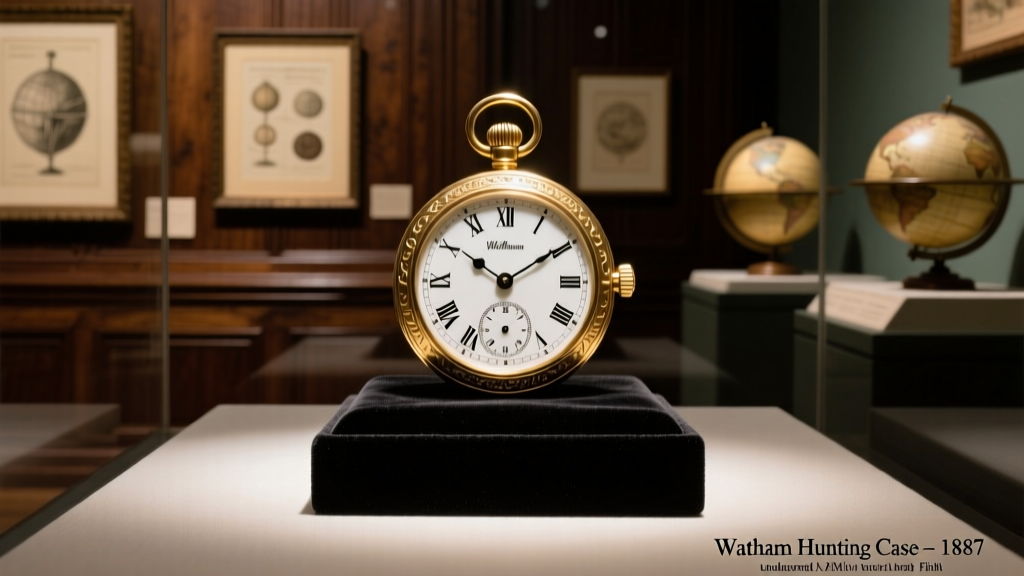
Waltham Hunting Case Gold-Filled White Enamel Dial with Roman Numerals: Authentication, Market Value, and Historical Context
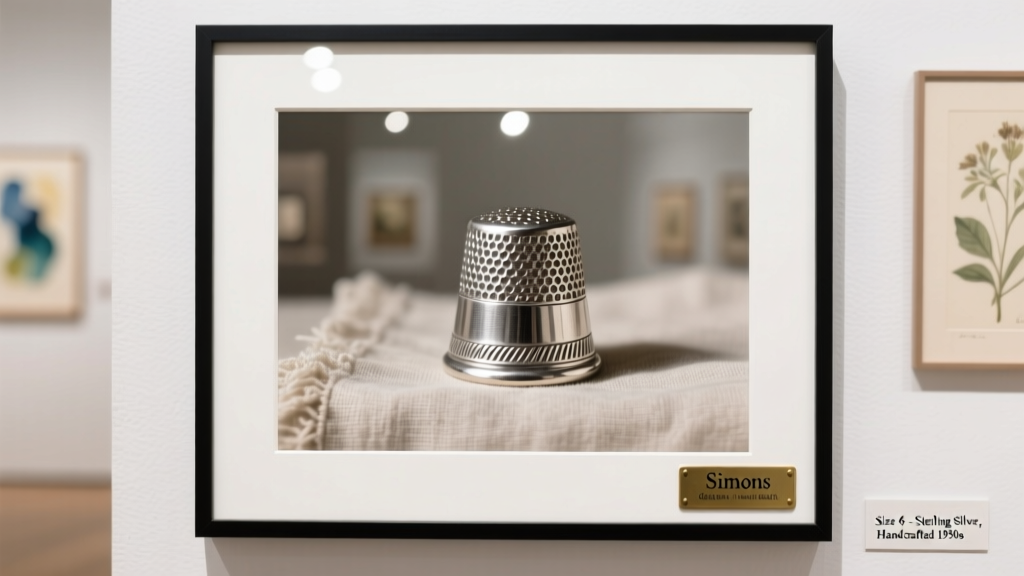
Sewing Thimble Silver Sterling Simons Size 6: Authentication, Provenance, and Market Value Analysis
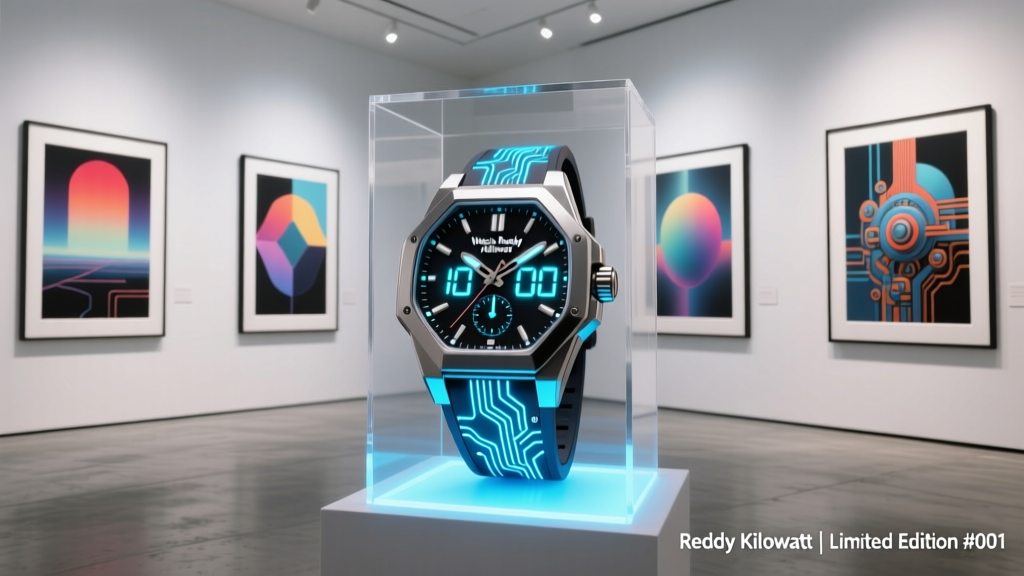
Watch Reddy Kilowatt: Authenticating and Valuing Vintage Electric Utility Brand Timepieces
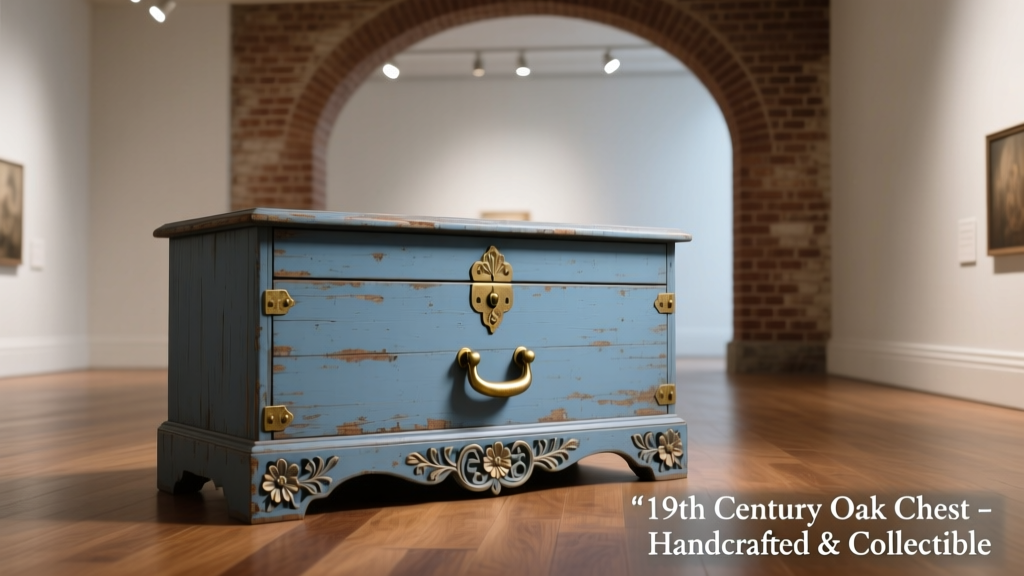
Decoding the 19th-Century Furniture Chest: Blanket Blue Paint, Bootjack Base, and Provincial American Craftsmanship
Kitchen Iron Electric Winchester: Authentication, Market Value, and Technical Analysis of a Rare Mid-Century Appliance