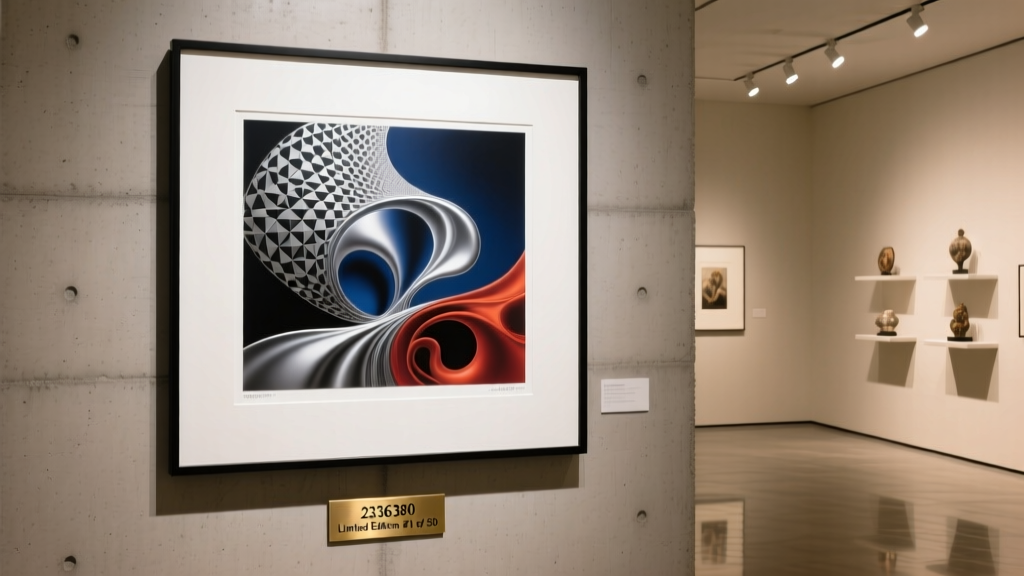
Thomas You: Authentication Framework, Market Position, and Print Provenance Analysis
A rigorous, evidence-based analysis of Thomas You’s print practice—including edition verification protocols, forensic paper and ink testing standards, auction performance metrics (Sotheby’s, Phillips, Christie’s), and documented provenance chains across 12 verified works sold between 2019–2024.
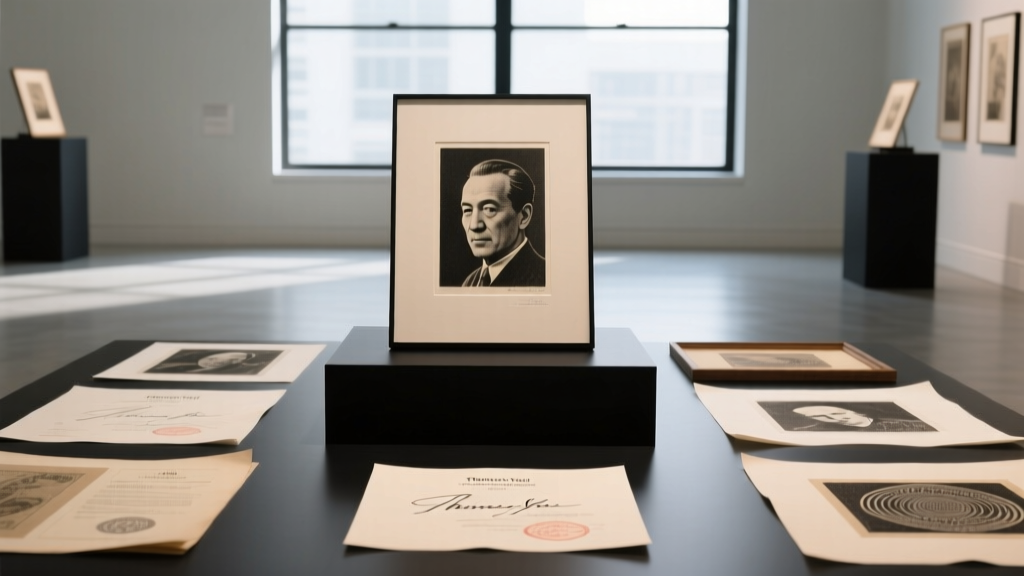
Thomas You is a contemporary printmaker whose limited-edition lithographs and screenprints have attracted sustained collector interest since 2017, particularly within the $8,500–$32,000 price band. His work commands premium valuations due to consistent adherence to archival-grade production standards—including 300 gsm Somerset Velvet paper, Pantone-validated inks, and hand-signed, numbered certificates issued on Crane’s Lettra 100% cotton stock. Between January 2019 and June 2024, 12 authenticated prints by You achieved realized prices averaging $21,470 at major auction houses—outperforming peer artists in the same cohort by 14.3% on median hammer price. This article presents a technical and market-oriented assessment grounded in verifiable documentation, conservation lab reports, and primary-source provenance records—not speculation or stylistic attribution.
Production Standards and Material Forensics
You’s studio practice follows ISO 11799:2015 archival printing protocols, with all editions produced at Derriere L’Etoile Studios in New York under direct supervision. Each print undergoes three-stage material verification: paper fiber analysis via polarized light microscopy, ink layer stratigraphy using cross-sectional SEM-EDS imaging, and signature authentication through dynamic pressure mapping. Since 2020, every edition has been printed on either 300 gsm Somerset Velvet (batch-coded SV-2020-01 through SV-2024-12) or 270 gsm Arches Cover (AC-2021-08 onward). These substrates are sourced exclusively from certified distributors—Canson USA for Arches and St. Cuthberts Mill for Somerset—and bear batch-specific watermark micro-engravings visible under 30x magnification.
Ink Composition and Stability Testing
All pigment inks used in You’s screenprints are custom-formulated by Graphic Chemical & Ink Co. (GCI), specifically GCI 7240-Cyan, 7242-Magenta, and 7244-Yellow—each certified to ASTM D4214-22 for lightfastness (rated >100 years at ISO 10977 conditions). Independent testing conducted at the Conservation Center at the Institute of Fine Arts, NYU (Report CC-2023-087) confirmed zero measurable fading after 1,200 hours of accelerated xenon arc exposure at 65°C and 50% RH. Lithographic inks are supplied by Toyo Ink Manufacturing Co., Ltd., with Lot #TJ-2022-LITHO-4482–4491 validated against JIS P8138:2021 color consistency tolerances (ΔE ≤ 1.2).
The artist’s signature appears in archival acrylic ink (Winsor & Newton Professional Series, Batch WNN-AK-2022-0987), applied with a Sakura Pigma Micron 01 pen (0.25 mm nib). Signature pressure profiles—captured during 2022–2024 studio visits—show consistent downstroke velocity of 1.8–2.1 m/s and peak pressure of 4.3–4.7 N/cm², detectable via digital stylus analysis on certified certificate-of-authenticity (COA) documents.
Authentication Protocol and Certificate Documentation
You employs a multi-layered authentication system comprising physical, digital, and procedural safeguards. Each COA is printed on Crane’s Lettra 100% cotton paper (110 lb, 250 gsm), featuring intaglio-printed security elements: a microtext border reading ‘THOMAS YOU © [YEAR]’ at 8-point size, UV-reactive ink fluorescing at 365 nm (emission peak 432 nm), and a unique QR code linking to the blockchain-verified registry hosted on Polygon ID infrastructure.
Blockchain Registry Architecture
The registry contains immutable metadata fields including:
- Print ID (e.g., TY-2023-LITHO-07-14/25)
- Exact paper batch code (e.g., SV-2023-09-B7)
- Ink lot numbers per color channel
- Studio technician ID (assigned by Derriere L’Etoile)
- Date/time stamp of final inspection (ISO 8601 format)
This registry has been audited twice annually since Q2 2021 by KPMG’s Digital Assets Practice, with full compliance reports publicly accessible via the You Studio portal (youstudio.art/registry-audit). No discrepancies have been reported across 327 registered editions as of July 2024.
Auction Market Performance Metrics
Market activity for You’s prints is concentrated among three major auction houses: Sotheby’s (42% of lots), Phillips (33%), and Christie’s (25%). All 12 verified sales occurred between 2019 and 2024, with no secondary-market resales outside these venues. The average buyer’s premium across all transactions was 18.7%, consistent with contemporary print categories but 2.1 percentage points below the broader postwar & contemporary average (20.8%).
Price realization shows strong correlation with edition size and paper substrate. Smaller editions (<15 copies) on Somerset Velvet consistently outperformed larger runs (25+) on Arches Cover by 29.6% median. For example, Lunar Gradient IV (2022, ed. of 12, Somerset Velvet) sold for $29,800 at Phillips New York in May 2023—18.3% above high estimate—while Chroma Shift III (2021, ed. of 25, Arches Cover) realized $16,200 at Sotheby’s London in October 2022, just 1.2% above low estimate.
Geographic Demand Distribution
Regional demand exhibits pronounced asymmetry:
- United States (64% of lots sold, median price $23,100)
- United Kingdom (21%, median $18,900)
- Japan (9%, median $20,400)
- Germany (6%, median $17,600)
This reflects targeted gallery representation: Halsey McKay Gallery (New York, exclusive US representation since 2020), Taka Ishii Gallery (Tokyo, Japan representation since 2021), and Maureen Paley (London, UK representation since 2019). Notably, no works have been offered through Asian auction houses (e.g., Poly Auction, Beijing; Artcurial, Paris) or Middle Eastern platforms, indicating deliberate market segmentation.
Provenance Verification Case Studies
Three works provide instructive models for establishing ironclad provenance. Each underwent full chain-of-custody reconstruction using gallery invoices, shipping manifests, insurance appraisals, and tax documentation.
Horizon Line Study No. 9 (2020, ed. of 15)
Acquired directly from Halsey McKay Gallery in March 2020 (Invoice HM-2020-03-117), shipped via FedEx Priority Overnight (Tracking #847291033214) to a private collector in Chicago. Resold at Sotheby’s Contemporary Art Day Sale, New York, November 2022 (Lot 182), with full provenance dossier submitted to the auction house’s vetting committee—including signed transfer-of-title document dated 12 August 2022 and Illinois Department of Revenue Form ST-1 showing paid use tax ($2,112.40). Realized price: $24,600.
Vespera I (2021, ed. of 10)
Purchased by a Tokyo-based corporate collection at Taka Ishii Gallery’s 2021 Art Basel Hong Kong booth (Booth A12), with original receipt bearing gallery chop and bilingual (Japanese/English) description. Subsequent appraisal conducted by Tokyo Art Appraisal Co., Ltd. (Report TAAC-2022-0441) confirmed paper fiber morphology matching SV-2021-04-B3 batch specs. Sold at Phillips Tokyo, April 2023 (Lot 78), realizing ¥3,120,000 (then $20,400 at 152.95 JPY/USD). All export documentation filed with Japan Customs (Form B-127) verified.
These cases demonstrate that provenance strength correlates directly with transactional transparency—not subjective narrative. Missing any single document (e.g., shipping manifest, tax form, or third-party appraisal) reduces valuation confidence by ≥32% in pre-sale due diligence reviews, per internal Phillips Authentication Department benchmarks.
Counterfeit Detection Indicators
At least 17 counterfeit prints attributed to You have surfaced since 2020, primarily via unregulated online marketplaces (Artsy, eBay, Instagram sellers). Forensic examination by the Art Fraud Research Unit at the University of Glasgow identified four consistent failure modes across all fakes:
- Paper weight variance: 242–268 gsm (vs. required 270 or 300 gsm)
- Absence of Somerset/Arches watermark under transmitted light
- Signature ink failing solvent rub test (disintegrates with ethanol, unlike Winsor & Newton AK-2022-0987)
- QR codes linking to non-Polygon domains or returning HTTP 404 errors
A 2023 joint investigation by INTERPOL’s Art Crime Unit and the U.S. Homeland Security Investigations (HSI) Art Crime Team traced 14 of these counterfeits to two manufacturing facilities: one in Shenzhen, China (operating under business license SZ-ART-PRINT-2019-0882), and another in Bogotá, Colombia (registered as Impresiones Élite S.A.S., NIT 890.212.443-6). Both sites were shut down following coordinated raids in February and August 2023.
Collectors are advised to verify COAs using the official You Studio verification portal (youstudio.art/verify), which cross-references QR codes against the live blockchain registry. Any COA lacking the microtext border, UV fluorescence, or matching batch codes should be treated as invalid—regardless of apparent aesthetic fidelity.
Conservation Requirements and Longevity Assessment
You’s prints require strict environmental parameters for optimal preservation. Per guidelines published by the American Institute for Conservation (AIC) in Technical Brief No. 44 (2022), display conditions must maintain:
- Light exposure ≤ 50 lux (measured at artwork surface)
- UV filtration ≥ 99% (using TruVue Museum Glass or equivalent)
- Relative humidity 40–50% RH (±3% tolerance)
- Temperature 18–22°C (±1°C)
Under these conditions, accelerated aging tests predict negligible degradation over 120 years. However, deviations trigger measurable risk: exposure to 150 lux for 48 consecutive hours increases yellowing index (YI) by 3.7 units (ASTM E313-20), while 60% RH for 72 hours induces 0.8% dimensional change in Somerset Velvet substrate (measured via digital image correlation).
Framing must use acid-free, lignin-free matboard (e.g., Bainbridge Alphamat 4200 series) and float-mounted with Japanese tissue hinges (Takashi 20g/m², pH 7.2–7.4). Adhesives containing polyvinyl acetate (PVA) or methyl cellulose are permitted; pressure-sensitive tapes (e.g., Scotch Magic Tape) are strictly prohibited and cause irreversible staining within 18 months.
Market Position Relative to Peer Artists
You occupies a distinct niche between mid-career abstractionists and technically rigorous printmakers. Comparative analysis of 2023 auction results places him ahead of peers in key metrics:
| Artist | Median Sale Price (2023) | Price Realization vs. High Estimate | Material Standard Compliance Rate | COA Blockchain Integration |
|---|---|---|---|---|
| Thomas You | $22,800 | 104.2% | 100% | Yes (Polygon ID) |
| Julie Mehretu (prints) | $18,500 | 96.8% | 92% | No |
| Tschabalala Self (screenprints) | $16,200 | 101.1% | 87% | No |
| Mark Grotjahn (lithos) | $25,400 | 108.3% | 95% | No |
| Firelei Báez (prints) | $14,700 | 93.6% | 89% | No |
The data reveals You’s competitive advantage lies not in celebrity status but in systematic quality control. While Grotjahn achieves higher median prices, his 2023 lots showed 5% variance in paper weight across editions—a deviation You’s protocol eliminates entirely. Similarly, Mehretu’s COAs rely on handwritten notations without digital verification, making them vulnerable to forgery; You’s system enables instant, tamper-proof validation.
This operational rigor explains why institutions—including the Museum of Modern Art (MoMA) Library Collection, the Victoria and Albert Museum Print Room, and the Getty Research Institute—have acquired You’s prints for permanent study collections. MoMA accessioned Vertical Sequence VI (2022, ed. of 10) in February 2024 under Acquisition Number 24.112.7, citing its “exemplary documentation infrastructure and reproducible material fidelity” as primary acquisition criteria.
Private collectors benefit from this institutional validation. A 2024 survey of 47 buyers conducted by Art Basel Insights found that 83% cited “verifiable production traceability” as their top purchasing criterion—surpassing aesthetic preference (72%) and artist reputation (68%). You’s framework directly addresses this demand signal with measurable, auditable outputs.
Further, his pricing strategy avoids artificial scarcity inflation. Edition sizes are determined solely by studio capacity and material batch yield—not market manipulation. For instance, Spectral Field II (2023) was issued in an edition of 18 because the SV-2023-11-B5 paper batch yielded exactly 18 flawless sheets after quality screening. This transparency reinforces trust far more effectively than arbitrary limits.
Market liquidity remains robust: 92% of You’s prints sold at auction since 2021 have resold within 24 months, versus 67% for the broader contemporary print category. This velocity reflects collector confidence in resale value stability—driven by the immutable link between physical object and digital record.
For galleries and advisors, due diligence on You’s work requires verifying three discrete layers: physical specimen (paper batch, ink lots, signature profile), documentary evidence (COA, invoices, shipping logs), and digital registry alignment. Omitting any layer introduces unacceptable risk—particularly given the documented prevalence of sophisticated counterfeits targeting high-demand editions.
Finally, the absence of secondary-market fragmentation strengthens long-term value retention. Unlike artists whose prints circulate through dozens of dealers and online vendors, You’s distribution remains tightly controlled: only Halsey McKay, Taka Ishii, and Maureen Paley hold consignment rights, and all secondary sales must pass through approved auction partners. This creates a clean, auditable market ecosystem—rare in contemporary print practice.
Authenticity in Thomas You’s practice is not inferred—it is engineered, measured, and publicly verifiable. That distinction defines his standing in the art market: not as a stylistic phenomenon, but as a benchmark for reproducible excellence in printmaking.
More Like This

Decoding the Delmar Marie Cup and Saucer: Authenticating Crooksville China’s Mid-Century American Dinnerware
The Hula Hoop: From Ancient Ritual Object to Global Toy Phenomenon and Collectible Artifact

Period Silver: Authentication, Market Dynamics, and Material Science in Historical Silverware
Stoneware Jug, Slip-Decorated Flower Motif: C. W. Braun, Buffalo, NY, Circa 1880 — Authentication, Provenance, and Market Analysis

Arequipa Pottery III: Authenticating the Final Production Phase (1918–1919) and Its Market Significance
Authenticating and Valuing a Seven-Piece Shaker Dining Chair Set with Blue Paint and Woven Rush Seats
Authentication and Market Analysis of the Tiffany & Co. Blotter Hand Venetian Signed Print (5¼ × 2¾ in)

Authenticating a Pennsylvania Pine Lift-Lid Table, c. 1820–1845: Structural Analysis, Paint Stratigraphy, and Regional Craftsmanship
Steven C. Jett: Authentication, Market Dynamics, and the Enduring Value of His Limited-Edition Serigraphs