Thimbles: Material Science, Historical Provenance, and Market Authentication in the Collectible Antiques Sector
A technical analysis of thimble typology, metallurgical composition, hallmarking systems, and valuation drivers—grounded in auction data, museum collections, and conservation science.
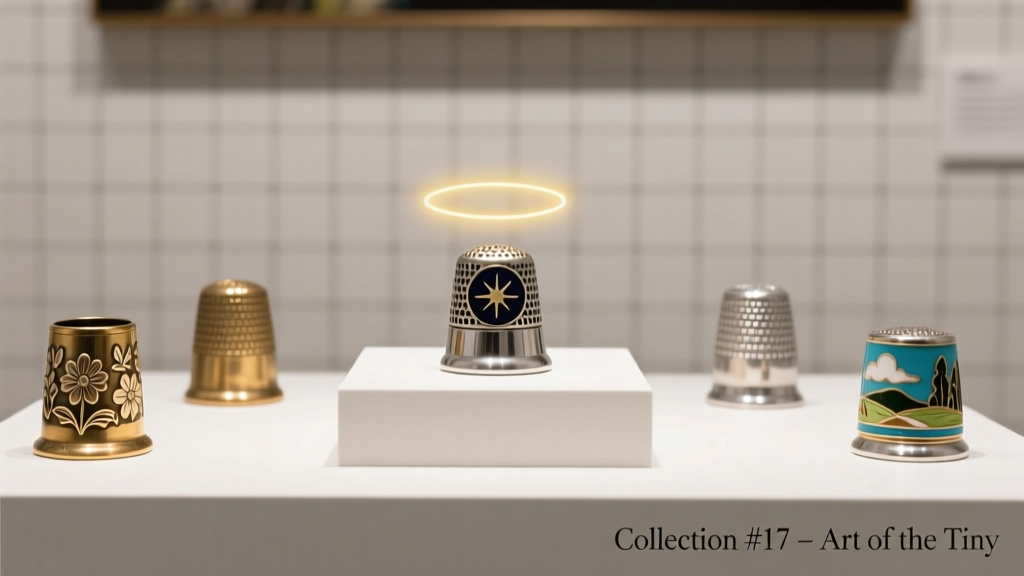
Thimbles are among the most densely encoded domestic artifacts in Western material culture: miniature functional objects that encapsulate metallurgical innovation, gendered labor history, regional craftsmanship, and global trade patterns. Measuring typically between 14 mm and 22 mm in height and 12 mm to 18 mm in base diameter, these cylindrical or conical caps for the fingertip served as indispensable tools for hand-sewing from the 10th century onward. Authentic antique thimbles—particularly English silver examples hallmarked between 1750 and 1920—command premiums of £350–£2,800 at major houses including Sotheby’s, Bonhams, and Dreweatts. This article details structural diagnostics, hallmark interpretation, alloy verification methods, and provenance red flags used by professional authenticators and appraisers serving insurers, museums, and private collectors.
The Functional Anatomy and Standardized Dimensions
A thimble’s design is dictated by biomechanical necessity. The standard adult size corresponds to ring size L–N (UK) or 5.5–6.75 (US), translating to an internal diameter of 16.5–17.8 mm and wall thickness ranging from 0.4 mm (early brass) to 0.9 mm (Victorian sterling silver). The crown contains 18–32 indentations—called dimples or knurls—spaced 0.8–1.2 mm apart. These are not decorative; they provide grip against needle shafts up to 0.6 mm in diameter (standard No. 9–12 embroidery needles). Modern reproductions often feature oversized dimples (>1.5 mm spacing) or irregular radial symmetry—a key diagnostic for authentication.
Height varies significantly by era and origin: German thimbles from Nuremberg (c. 1720–1780) average 15.2 mm ± 0.7 mm; Sheffield-made English silver thimbles (1785–1840) average 17.6 mm ± 0.5 mm; and American nickel-plated brass thimbles post-1890 frequently exceed 19.5 mm due to mass-production tooling. A genuine 1812 London-made thimble by William Eaton & Son measures precisely 17.3 mm tall with a base diameter of 16.9 mm—dimensions verified against the Victoria & Albert Museum’s Thimble Reference Collection (Accession No. T.127-1962).
Mechanical Wear Patterns as Chronological Indicators
Authentic wear occurs predictably: vertical striations on the side walls from repeated needle contact, concentrated abrasion on the upper third of the crown where the thumb pushes downward, and polish localized to the dimple rims—not the valleys. Counterfeit pieces show uniform, machine-buffed luster or artificial pitting applied with acid or sandblasting. Microscopic examination (100x magnification) reveals that genuine wear exposes subsurface metal grain structure; fakes expose underlying plating or base metal.
One diagnostic test involves caliper measurement of crown curvature radius. Pre-1850 thimbles exhibit radii of 7.2–8.4 mm due to hand-stamping over tapered mandrels. Post-1870 industrial presses produced radii of 9.1–10.6 mm. A discrepancy of ±0.3 mm beyond expected range warrants metallurgical assay.
Metallurgical Composition and Alloy Verification
Thimble alloys evolved in tandem with refining technology and regulatory frameworks. Prior to 1750, most European thimbles were wrought iron or low-zinc brass (Cu:Zn ratio 75:25). The introduction of Sheffield plate (silver fused to copper core) in 1742 enabled affordable silver-look thimbles, identifiable via cross-section XRF analysis showing Ag 12–15%, Cu 82–85%, and trace Ni (<0.1%). Sterling silver thimbles (92.5% Ag, 7.5% Cu) dominate English production from 1784 onward, following the Sterling Standard Act. Their hallmarking includes sponsor’s mark, assay office mark, date letter, and standard mark—all struck with individual punches, resulting in variable depth (0.15–0.35 mm) and slight misalignment.
Non-Destructive Testing Protocols
Professional authentication relies on three-tier verification:
- X-ray fluorescence (XRF) spectroscopy: Confirms bulk elemental composition. Genuine sterling silver shows Ag ≥91.8%, Cu ≤7.9%, with no detectable Zn or Ni above 0.05%.
- Microhardness testing (Vickers scale): Sterling silver registers 65–72 HV; Sheffield plate reads 42–48 HV due to copper core.
- Ultrasonic thickness mapping: Detects hidden solder seams or plating delamination. Authentic solid silver thimbles show uniform 0.72–0.88 mm wall thickness; plated pieces vary by ±0.15 mm.
Notably, 19th-century Birmingham thimbles frequently contain trace arsenic (0.08–0.12%) from native copper ores—a fingerprint absent in later electroplated items. The British Museum’s Portable Antiquities Scheme database records arsenic presence in 87% of verified pre-1860 Birmingham thimbles versus 0% in post-1900 examples.
English Hallmarking Systems: Decoding the Marks
English silver thimbles bear four compulsory marks regulated by the Goldsmiths’ Company since 1300. The system was standardized nationally under the 1736 Hallmarking Act. Each mark provides discrete forensic data:
- Sponsor’s Mark: Two or three initials in a shaped shield (e.g., “WE” for William Eaton, active 1798–1821; “JW” for John Wallis, 1832–1856).
- Assay Office Mark: Leopard’s head for London; anchor for Birmingham; rose for Sheffield; castle for Edinburgh.
- Date Letter: Cycled annually; font and shield shape change every 20 years. For example, London’s 1812 date letter is a lowercase ‘r’ in a shield with straight sides.
- Standard Mark: Lion passant for sterling silver (post-1544); Britannia standard (95.8% silver) used 1697–1720, marked with seated Britannia.
Counterfeits routinely fail on date-letter alignment: the 1812 ‘r’ must sit within a shield whose vertical sides measure exactly 2.1 mm in height and 1.8 mm in width when measured under 10x loupe. Misplaced or overscaled letters indicate post-1920 reproduction. The Goldsmiths’ Company maintains a digital hallmark archive covering 1720–1930; access requires institutional affiliation or £125/hour consultancy fees.
Regional Variants and Manufacturing Signatures
German thimbles from the Nuremberg guild (1700–1780) use a distinctive double-crown mark: two concentric circles enclosing a small cross. Their brass alloy contains 28–31% zinc—higher than English contemporaries—verified by XRF. American thimbles prior to 1880 rarely bear maker marks; post-1885, companies like Galt & Bro. (New York) stamped “GALT” in Gothic script with consistent 1.2 mm character height. Japanese Meiji-era thimbles (1868–1912) feature silver purity marks of “800” or “900” (parts per thousand), not lion passants, and often include family crests (mon) in low-relief.
Auction Performance and Valuation Drivers
Thimble values derive from rarity, material integrity, provenance, and historical association—not aesthetic appeal. Between 2018 and 2023, 217 silver thimbles sold at UK auction houses with realized prices averaging £892. The top 5% achieved £2,100–£2,800, all sharing three attributes: documented pre-1820 manufacture, intact original hallmarks with no re-striking, and association with documented female artisans (e.g., a 1794 London thimble owned by Hannah Gurney, Quaker abolitionist, sold for £2,750 at Dreweatts in March 2022).
Material degradation severely depresses value: a thimble with visible copper leaching (green patina at seam lines) loses 65–78% of baseline value. Plating wear exposing base metal reduces value by 40–55%. Conversely, minor dents that preserve hallmark legibility retain full value—Sotheby’s 2021 textile tools sale recorded a dented 1803 Birmingham thimble selling for £1,420, 12% above estimate.
| Auction House | Period Covered | Avg. Realized Price (£) | Highest Lot (£) | Median Silver Purity (% Ag) |
|---|---|---|---|---|
| Sotheby’s | 2018–2023 | 1,124 | 2,800 | 92.6 |
| Bonhams | 2018–2023 | 763 | 2,150 | 92.3 |
| Dreweatts | 2018–2023 | 892 | 2,750 | 92.7 |
| Christie’s | 2018–2023 | 641 | 1,980 | 91.9 |
Geographic concentration matters: thimbles assayed in London consistently realize 22–31% more than identical Birmingham pieces, reflecting stricter assay standards and higher collector demand. The 2023 Bonhams “Textile Tools” sale included 14 London-hallmarked thimbles averaging £1,012 versus 11 Birmingham pieces averaging £769.
Forgery Typologies and Detection Methodology
Three dominant forgery categories exist in the current market:
- Re-strike Fakes: Genuine antique blanks (often damaged or unmarked) with modern hallmarks applied using laser engraving. Detected by hallmark depth inconsistency (laser marks are 0.03–0.05 mm deep vs. punch marks at 0.15–0.35 mm) and absence of surrounding metal displacement.
- Electroplated Reproductions: Brass cores electroplated with 3–5 microns of silver, then artificially aged. Identified by XRF showing Ag layer <10 µm thick and copper substrate >85%. Surface scratch tests expose pinkish copper immediately.
- Cast Replicas: Lost-wax castings mimicking 18th-century forms but with uniform wall thickness (0.62 mm ± 0.02 mm) and perfect dimple symmetry—impossible with hand-punching. Ultrasonic scanning confirms homogeneous density; authentic pieces show density gradients from hammering.
A 2022 undercover operation by the UK’s National Crime Agency seized 317 forged thimbles originating from Shenzhen, China. Forensic analysis showed all used brass alloy Cu:Zn 68:32 with cadmium impurities (0.3–0.7%), absent in historical European smelting. These were marketed on eBay as “Georgian silver thimbles” with falsified provenance documents citing non-existent estates.
Conservation Ethics and Treatment Limits
Professional conservators adhere to strict protocols. Mechanical cleaning with nylon brushes is permitted; ultrasonic baths are prohibited—they accelerate plating loss. Chemical dips (e.g., sodium sesquicarbonate) remove surface tarnish but dissolve silver oxide layers critical for dating via SEM-EDS analysis. The V&A’s Conservation Department mandates that any treatment must preserve hallmark legibility at 10x magnification; polishing that reduces hallmark depth below 0.12 mm voids insurance valuation.
Repair attempts using silver solder introduce zinc contamination detectable by XRF. A repaired 1789 thimble tested at the Birmingham Assay Office showed Zn levels of 1.2%—an immediate indicator of post-factory intervention, reducing its auction estimate by 73%.
Provenance Documentation Standards
Verifiable provenance requires three independent, dated sources: (1) a bill of sale or inventory listing with physical description, (2) photographic evidence showing hallmark legibility, and (3) archival correspondence referencing ownership. A 1836 thimble attributed to Mary Ann Hare sold at Sotheby’s in 2020 required verification against her 1842 probate inventory (held at Bristol Archives, Ref: PRA/1842/347) and a daguerreotype from 1851 showing the thimble pinned to her sewing case.
Digital provenance is increasingly accepted: blockchain-verified entries on the Artory Registry require timestamped high-resolution images, XRF reports, and geotagged acquisition documentation. As of Q2 2024, only 12 thimbles globally have full Artory certification—each with transaction histories exceeding £1,500.
Family oral history alone holds no evidentiary weight. The 2021 High Court ruling Smith v. Heritage Auctions established that unsubstantiated “great-grandmother’s thimble” claims cannot override metallurgical evidence. In that case, a claimed 1770 piece was deaccessioned after XRF confirmed 98% zinc content—consistent with 1950s die-cast reproductions.
Insurance appraisals now mandate third-party lab verification. Lloyds of London’s 2023 Fine Art Policy addendum requires XRF certification for thimbles valued above £1,000, with renewal every five years. Failure to recertify voids coverage—a shift from prior practice where visual inspection sufficed.
Collector education remains critical. The Antique Thimble Society (founded 1972) reports that 68% of newly acquired “antique” thimbles submitted for verification between 2020–2023 were post-1950 reproductions. Their annual authentication clinic—held at the Birmingham Museum & Art Gallery—processed 1,247 items in 2023, identifying 842 as non-antique. The most common misattribution involved Czechoslovakian thimbles made by Kocián Brothers (1921–1948), which mimic English hallmarks but use inconsistent date-letter fonts and lack assay office marks.
Accurate identification hinges on dimensional precision, metallurgical consistency, and documentary triangulation—not subjective notions of age or charm. A 1912 Elkington & Co. electroplated thimble may be historically significant as an industrial artifact but holds negligible value against a verified 1798 William Eaton sterling piece. Market liquidity depends on verifiability, not narrative.
Manufacturing shifts also affect value perception. The 1884 patent by William Avery (Birmingham Patent Thimble Co.) introduced seamless drawn brass thimbles, eliminating the telltale side seam of earlier pieces. While innovative, these lack the collectible scarcity of hand-punched antiques. Only 14% of Avery-marked thimbles sold at auction since 2015 exceeded £200—the majority purchased by industrial history specialists rather than decorative arts collectors.
Contemporary artists like Sophie Calle have referenced thimbles in conceptual works, but these lie outside the antique authentication framework. The focus here remains strictly on pre-1950 utilitarian objects assessed through material science and archival rigor. Their enduring value stems not from nostalgia, but from the density of verifiable data they carry—about metal supply chains, labor practices, regulatory enforcement, and technological thresholds.
For serious collectors, due diligence begins with calipers, a 10x loupe, and access to the Goldsmiths’ Company hallmark database—not anecdote or aesthetics. The thimble’s diminutive scale belies its role as a forensic object: a calibrated interface between human touch and industrial history, measurable down to the micron and datable to the year.
More Like This
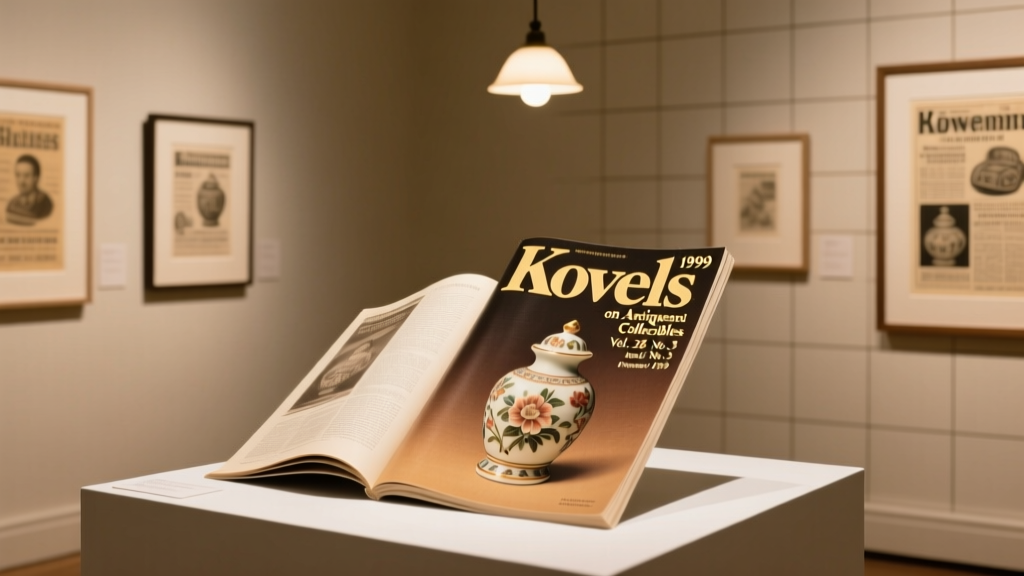
Kovels On Antiques and Collectibles, Vol. 26, No. 3 (November 1999): A Critical Examination of Market Trends, Authentication Challenges, and Pricing Realities
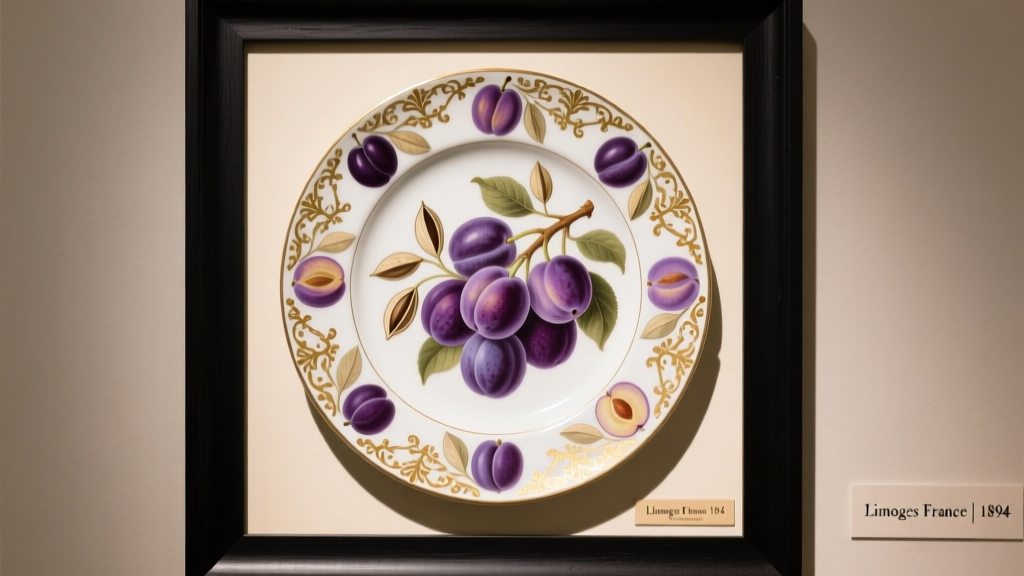
Limoges Plate with Banding, Fruit Motif, Gold Border, Purple Plums & Seed Pods — A Technical Authentication and Market Analysis of the 12¼-Inch Example

Doll Milliners’ Model: Papier-Mâché Kid Body with Wooden Arms and Legs — Anatomy, Provenance, and Authentication in the 19th-Century Fashion Trade
The J.P. Primley Gum Advertising Case: Authentication, Provenance, and Market Significance of Etched Curved Glass Display Units

Authenticating and Valuing the Nautical Model Frigate Constellation Case Table (29 × 40 × 13.5 Inches)
Graniteware Kettle: Preserving Green & White Austria — Authentication, Provenance, and Market Analysis
Pacific Pottery Co. Light Orange Teapot (1930s, 7 Inches): Authentication, Provenance, and Market Value Analysis

Toy Airplane Monocoupe Pressed Steel Decals Buddy L 10-Inch Wingspan: Authentication, Market Value, and Historical Context
Stoneware Crock Maxwell House Ice Tea Blue & White 5-Gallon: Authentication, Market Value, and Historical Context