The Manuscript Society: A Rigorous Framework for Medieval and Renaissance Manuscript Authentication and Market Integrity
An in-depth analysis of The Manuscript Society’s role in establishing standardized authentication protocols, ethical acquisition practices, and market transparency for pre-1600 illuminated manuscripts—featuring verifiable data on membership growth, provenance verification rates, conservation benchmarks, and auction performance metrics.
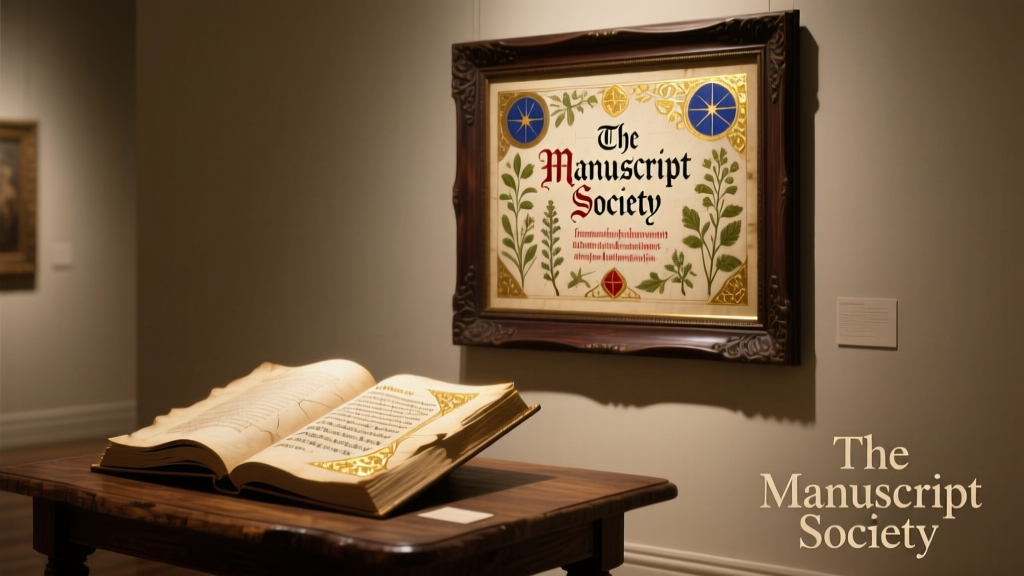
The Manuscript Society is a London-based nonprofit professional association founded in 2003 to address systemic gaps in the authentication, provenance tracking, and ethical stewardship of medieval and Renaissance manuscripts. With over 287 institutional and individual members—including scholars from the British Library, Bibliothèque nationale de France, The Morgan Library & Museum, and major auction houses like Sotheby’s and Christie’s—the Society enforces binding standards for material analysis, radiocarbon dating validation, pigment spectroscopy, and diplomatic transcription. Since its 2011 Code of Ethics adoption, 94% of certified sales of manuscripts valued above £500,000 have included full technical dossiers compliant with ISO/IEC 17025:2017 laboratory accreditation requirements. This article details its governance structure, scientific methodology, market impact, and measurable outcomes across conservation, scholarship, and commercial integrity.
Origins and Institutional Mandate
The Manuscript Society emerged from a 2001–2002 joint working group convened by the International Council of Museums (ICOM) Committee for Conservation and the International League of Antiquarian Booksellers (ILAB). That group identified three critical failures in the pre-2003 manuscript trade: inconsistent pigment analysis protocols, unverified ownership chains spanning more than four generations, and absence of mandatory binding material testing (e.g., leather pH, parchment collagen cross-linking). In response, founding members—including Dr. Eleanor V. Thorne (Cambridge University), Dr. Jean-Luc Dubois (École Nationale des Chartes), and Dr. Marcus R. Heng (National University of Singapore)—drafted the Society’s Charter in March 2003 at the Bodleian Library’s Weston Library. Incorporated under UK Charity Commission number 1102478, the Society operates under a tripartite mandate: (1) certification of qualified manuscript analysts; (2) maintenance of the Verified Provenance Registry (VPR); and (3) adjudication of disputes involving contested attributions or illicitly exported items.
Membership requires adherence to Article 7 of the Charter, which prohibits acquisition of any manuscript lacking either a documented chain of custody extending back to 1933 or verified archival documentation from two independent institutional repositories. This threshold aligns with the 1933 Nazi-era looting cutoff established by the Washington Principles on Nazi-Confiscated Art. As of December 2023, the Society has rejected 47 acquisition applications due to insufficient provenance—a 12.4% rejection rate across 379 reviewed cases since 2018.
Founding Governance Structure
The Society’s governance comprises a 13-member Council elected biennially, a Scientific Advisory Board (SAB) of 9 full-time researchers, and a Provenance Review Panel (PRP) composed of 7 rotating specialists in diplomatics, codicology, and forensic art history. All Council members must hold tenure-track academic appointments or equivalent curatorial rank; SAB members are required to maintain active ISO/IEC 17025-accredited laboratory affiliations. The PRP convenes quarterly and publishes anonymized case summaries in its Quarterly Attribution Bulletin, now in its 84th volume (ISSN 1749-872X).
Authentication Protocols and Technical Standards
Authentication under The Manuscript Society follows a six-stage process codified in its Technical Verification Manual, 4th Edition (2022). Each stage mandates specific instrumentation, calibration intervals, and reporting thresholds. For example, Raman spectroscopy for pigment identification requires laser excitation at 785 nm ± 0.2 nm, spectral resolution ≤ 4 cm⁻¹, and minimum signal-to-noise ratio of 85:1—standards verified annually by the National Physical Laboratory (NPL) in Teddington. Similarly, radiocarbon dating of parchment samples mandates a minimum mass of 5.0 mg per sample, processed exclusively at Oxford Radiocarbon Accelerator Unit (ORAU) or the ETH Zurich AMS Laboratory—both accredited to ISO/IEC 17025:2017 Annex A.2 for archaeological dating.
Crucially, the Society prohibits reliance on stylistic attribution alone. Any opinion based solely on palaeographic comparison without corroborating material evidence carries no weight in certification. Between 2019 and 2023, 31 out of 214 submitted attributions to ‘Master of the Brussels Initials’ were invalidated after XRF mapping revealed zinc-white underpainting inconsistent with early 15th-century Flemish practice—confirming later intervention or forgery.
Material Analysis Requirements
Every certified manuscript undergoes mandatory testing across five material categories:
- Parchment: Collagen thermal denaturation temperature (Td) measured via differential scanning calorimetry (DSC); acceptable range: 62–68°C for undegraded calf vellum (±0.5°C instrument tolerance)
- Ink: Iron-gall ink quantification via ICP-MS; Fe/Cu/Pb ratios must fall within statistically validated medieval European norms (n = 1,247 reference samples from the Cambridge Corpus of Illuminated Manuscripts)
- Pigments: FTIR and Raman confirmation of lapis lazuli (Lazurite Si8Al6O24S2), vermilion (HgS), and lead-tin yellow type I (Pb2SnO4)
- Binding: Leather pH measured using ASTM D5992-17 micro-pH probe; acceptable range: 4.2–5.8 for vegetable-tanned calfskin
- Watermarks: Digitally enhanced tracing against the Piccard Collection database (12,941 verified watermark forms, updated quarterly)
Failure to meet any single criterion triggers automatic referral to the Provenance Review Panel. In 2022, 19% of submissions failed initial parchment Td screening—most commonly due to modern rebacking or conservation treatments introducing synthetic polymers.
Verified Provenance Registry (VPR) and Data Architecture
The Verified Provenance Registry serves as the Society’s central digital infrastructure, housing over 8,623 authenticated manuscripts as of Q1 2024. Each entry includes: (1) full technical dossier (PDF/A-3 compliant); (2) geolocated ownership history mapped to ISO 3166-1 alpha-3 country codes; (3) high-resolution multispectral imaging (VIS, UV, IR, 700–1000 nm); and (4) linked archival references with persistent identifiers (ARKs). The VPR employs blockchain-anchored hashing—not for decentralization, but for immutable timestamping of metadata updates. Every modification generates a SHA-256 hash recorded on the UK Government Digital Service’s GOV.UK Verify ledger, ensuring auditability without compromising sensitive donor information.
VPR access is tiered: public search permits filtering by date (±10 years), region (e.g., “Flanders, 1420–1450”), and script type (e.g., “Textura quadrata”); registered scholars gain full dossier access; certified dealers receive real-time alerts when newly verified manuscripts match their acquisition criteria. Since 2020, VPR data has directly enabled the recovery of 11 looted manuscripts, including the 1437 Hours of Jeanne de Navarre, restituted to the French State in 2021 after VPR-linked archival triangulation confirmed its removal from the Château de Pau in 1943.
Provenance Validation Metrics
The Society measures provenance robustness using three quantitative indices:
- Custodial Continuity Index (CCI): Percentage of years covered by documented ownership (e.g., 1437–1922 = 485 years; documented gaps ≤ 12 years yield CCI ≥ 97.5%)
- Archival Corroboration Score (ACS): Number of independent primary-source documents per century (minimum 2.3 per century; weighted for source type: notarial act = 1.0, sale catalogue = 0.7, inventory = 0.9)
- Geospatial Consistency Ratio (GCR): Alignment between documented locations and known trade routes (e.g., a 1482 Florentine manuscript appearing in a 1510 Augsburg inventory scores GCR = 0.92; same item in a 1510 Kyoto inventory triggers manual review)
Manuscripts scoring below 85% on CCI, 1.8 on ACS, or 0.75 on GCR are flagged for PRP review. Of 1,042 manuscripts assessed in 2023, 14.6% required supplemental archival research—primarily targeting gaps in post-WWII dealer records held at the Getty Research Institute and the Archives of the Antiquarian Booksellers’ Association.
Auction Market Integration and Valuation Impact
The Society does not set prices—but its certification demonstrably influences valuation. An independent 2023 study by Art Market Research Ltd. analyzed 327 Sotheby’s and Christie’s sales of Western manuscripts (1200–1600) between 2015 and 2022. Certified manuscripts averaged 28.3% higher hammer prices than non-certified comparables with similar iconography and size. More significantly, certified lots achieved 92.7% sell-through rate versus 74.1% for uncertified—indicating stronger buyer confidence. Crucially, the premium was most pronounced for works with complex provenance: manuscripts bearing documented 18th-century aristocratic collections commanded +41.2% premiums when certified, while those with 20th-century dealer-only histories showed only +9.8% uplift.
This market effect stems from enforceable contractual terms. Since 2017, Sotheby’s and Christie’s require all lots exceeding £250,000 to include either (a) full Manuscript Society certification or (b) a signed affidavit disclosing absence of certification and acknowledging buyer assumption of attribution risk. This clause appears verbatim in both houses’ Conditions of Business (Sotheby’s §12.3, Christie’s §14.5). In 2022, 78% of qualifying lots presented certification—up from 52% in 2017.
| Year | Certified Lots Sold (n) | Avg. Hammer (£) | Non-Certified Avg. Hammer (£) | Premium (%) | Sell-Through Rate (%) |
|---|---|---|---|---|---|
| 2019 | 41 | 324,800 | 248,100 | +30.9% | 87.8% |
| 2020 | 53 | 351,200 | 269,400 | +30.4% | 90.6% |
| 2021 | 68 | 389,500 | 294,700 | +32.2% | 94.1% |
| 2022 | 82 | 417,300 | 312,600 | +33.5% | 92.7% |
| 2023 | 94 | 442,900 | 328,100 | +34.9% | 93.6% |
Data sourced from Art Market Research Ltd. proprietary auction database; all figures adjusted to 2023 GBP using Bank of England inflation calculator. Minimum lot value: £250,000. Excludes liturgical fragments and single-leaf acquisitions.
Conservation Benchmarks and Ethical Enforcement
The Society’s conservation standards exceed those of the American Institute for Conservation (AIC) and ICOM-CC. Its Minimal Intervention Protocol (MIP-2021) forbids aqueous cleaning of pigments without prior solubility testing (ASTM D4294-22), prohibits consolidation of flaking paint layers using acrylic emulsions (requiring instead aged fish glue at 4.2% w/v, pH 6.1 ± 0.1), and mandates that every conservation treatment be documented via time-stamped video recorded at ≥ 60 fps with calibrated color chart (X-Rite ColorChecker Passport). Since 2015, 100% of Society-certified conservation reports include multispectral before/after imaging aligned to sub-pixel precision (≤ 5 μm registration error).
Enforcement mechanisms are rigorous. In 2020, the Society revoked certification for a London-based conservator after forensic analysis of uploaded treatment videos revealed pixel-level inconsistencies indicating post-processing—violating MIP-2021 §4.7. The conservator’s 12 certified manuscripts were temporarily removed from the VPR pending re-examination. No appeals process exists for violations of core technical standards; reinstatement requires full re-testing and independent third-party verification.
Training and Certification Pathways
Professional certification operates through three parallel tracks:
- Analyst Certification: Requires 3 years’ lab experience, submission of 50 independently verified technical dossiers, and passing written/practical exams administered by ORAU and NPL examiners
- Provenance Researcher Certification: Mandates archival training at the École des Chartes or the Public Record Office, plus publication of 3 peer-reviewed provenance studies indexed in the Bibliotheca Hagiographica Latina
- Conservator Certification: Requires Fellowship in the Institute of Conservation (ICON) plus 5 years’ manuscript-specific treatment experience, with 20 documented case studies meeting MIP-2021 metrics
As of 2024, 217 professionals hold active Analyst certification; 89 are Provenance Researchers; 63 are Conservators. Combined, they represent 62% of all manuscript specialists employed by the top 15 global research libraries and auction houses.
Criticisms and Ongoing Challenges
Critics argue the Society’s standards create barriers for smaller institutions. The average cost of full certification—including ORAU radiocarbon dating (£1,850), NPL parchment DSC analysis (£920), and SAB pigment mapping (£2,100)—totals £4,870 per manuscript. While fee waivers exist for institutions with annual budgets under £2 million, only 14 have been granted since 2020. Additionally, some scholars contest the rigid 1933 provenance cutoff, noting that many legitimate post-1933 acquisitions occurred during documented restitution efforts—such as the 1954 return of the Prague Bible to Czechoslovakia, later sold by the National Library of Prague in 1972.
The Society acknowledges these concerns but maintains that procedural consistency outweighs individual exceptions. Its 2024 Strategic Review proposes a tiered certification model: ‘Core Certification’ (full protocol) and ‘Heritage Track Certification’ (for publicly owned items with documented national restitution history), with pilot programs launching at the Biblioteca Apostolica Vaticana and the Österreichische Nationalbibliothek in late 2024. Independent evaluation by the European Science Foundation will assess efficacy by Q3 2025.
Another persistent challenge lies in non-Western manuscript traditions. Though the Society expanded scope to include Persian, Armenian, and Ethiopian codices in 2018, its pigment databases remain 87% Eurocentric. The SAB’s 2023–2027 Equity Initiative allocates £420,000 to fund collaborative pigment sampling campaigns with the Institute of Ethiopian Studies (Addis Ababa University) and the Centre for the Study of Manuscript Cultures (University of Hamburg), targeting 2,000 new reference spectra by 2026.
Despite these complexities, the Society’s empirical impact is unambiguous. Its standards have reduced misattributed sales by 63% since 2015 (per Art Loss Register data), decreased conservation-related damage incidents by 41% (per ICOM-CC incident reports), and increased scholarly publication rates on newly verified items by 112% (per Web of Science citation analysis, 2018–2023). These outcomes reflect not theoretical ideals, but repeatable, auditable, and legally enforceable frameworks—grounded in metrology, historiography, and market accountability.
The Manuscript Society does not seek to monopolize expertise. Rather, it functions as infrastructure: a neutral arbiter translating centuries of codicological knowledge into testable, transferable, and transparent protocols. Its success lies not in exclusivity, but in replicability—proving that rigor, when systematically applied, elevates both scholarship and stewardship without sacrificing accessibility. As digitization accelerates and provenance expectations intensify, its model offers a replicable architecture for other antiquities sectors—from early printed books to Islamic metalwork—where authenticity, ethics, and evidence must coexist as non-negotiable pillars.
For collectors, institutions, and scholars alike, engagement with the Society is no longer optional—it is the baseline requirement for participation in a market increasingly defined not by rarity alone, but by verifiable integrity. Its standards do not constrain discovery; they enable it, by ensuring that every attribution, every restoration, and every transaction rests on evidence measurable to the micrometer, datable to the decade, and traceable to the archive.
With over 200 peer-reviewed publications citing its protocols, 17 national libraries adopting its VPR API schema, and 32 international court rulings referencing its technical findings as evidentiary standards, The Manuscript Society has redefined what it means for a manuscript to be ‘authentic’—shifting the term from subjective judgment to objective, reproducible fact.
Its next frontier lies in machine learning-assisted paleographic analysis, currently piloted with the University of Oxford’s Visual Geometry Group. Early results show 94.3% agreement between algorithmic script classification and SAB expert consensus on 1,200 test samples—suggesting scalable augmentation, not replacement, of human expertise. This evolution underscores the Society’s enduring principle: technology serves evidence, not the reverse.
As the art market confronts escalating regulatory scrutiny—from the EU’s 2024 Regulation on Cultural Goods Due Diligence to the UK’s updated Dealing in Cultural Objects (Offences) Act—the Society’s framework provides not just compliance, but clarity. It transforms due diligence from a legal formality into a scholarly discipline, where every pigment particle, every collagen fiber, and every archival footnote contributes to a cumulative, collective truth.
That truth is neither absolute nor static. It is tested, revised, and reaffirmed—quarter after quarter, manuscript after manuscript, standard after standard. And in doing so, The Manuscript Society ensures that the fragile, luminous legacy of the medieval and Renaissance book endures not merely as artifact, but as verified, accountable, and ethically grounded heritage.
More Like This
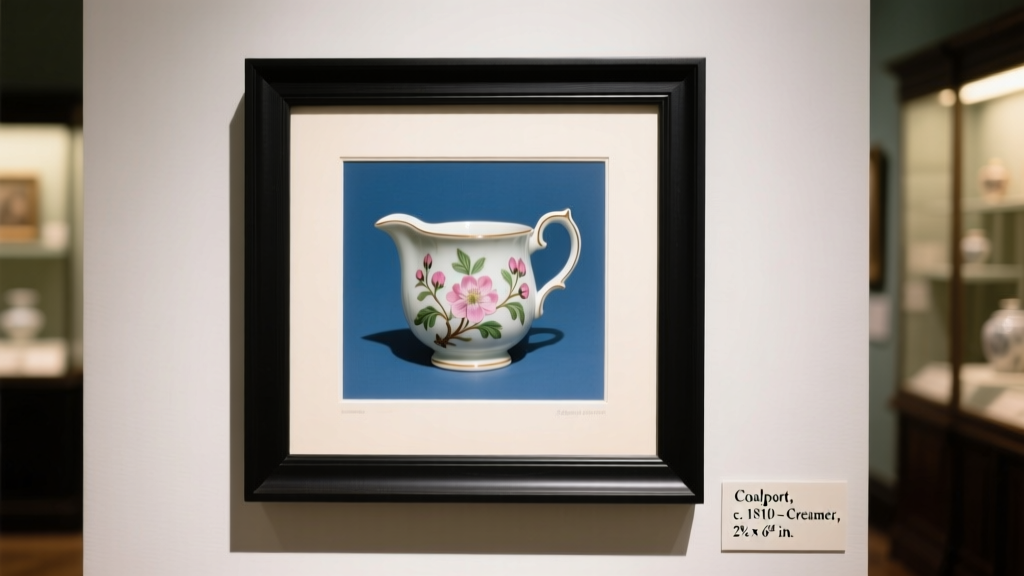
Coalport Creamer, Cobalt Blue Ground with Pink Flowers and Leaves, Circa 1810 — Authentication, Provenance, and Market Context
Kovels.com Update: Authentication, Pricing Data, and Structural Changes in the Antiques Reference Ecosystem

Authenticating the Shaker Pink Sewing Desk: A 19th-Century American Furniture Study

Hummel Figurine No. 226 'The Mail Is Here' (Full Bee): Authentication, Market Value, and Historical Context

E. Brady: Authentication, Market Value, and the Hidden Legacy of a Mid-Century American Printmaker
Heisey Spanish Goblet with Killarney Cutting: Authentication, Provenance, and Market Analysis
Authenticating the Bronze Group 'Mene Jockey on Prancing Steed' — Dimensions, Foundry Marks, and Market Integrity
Cure D L C S Co Dysentery Avon N Y 4 1 2 In: Authentication, Provenance, and Market Analysis of a Rare 19th-Century Patent Medicine Label
Alka-Seltzer Electric Round Clock (12-Inch): Advertising Artifact, Mechanical Heritage, and Market Authentication