Kovels.com Update: Authentication, Pricing Data, and Structural Changes in the Antiques Reference Ecosystem
A detailed analysis of the 2024–2025 structural, technological, and editorial updates to Kovels.com — including new AI-assisted authentication tools, expanded database metrics, revised pricing methodology, and integration with major auction houses and museum archives.

Executive Summary: What Changed at Kovels.com in 2024–2025
In early 2024, Kovels.com launched its most significant platform overhaul since its 1997 web debut. The update introduced a restructured database architecture supporting over 1.2 million cataloged items — up from 842,000 in 2022 — and integrated real-time auction result feeds from 17 major houses, including Sotheby’s, Christie’s, Heritage Auctions, and Skinner Inc. A new AI-powered visual authentication module now cross-references user-submitted images against 367,000 high-resolution reference images, calibrated for material-specific signatures (e.g., glaze crackle patterns in Ming porcelain, brass alloy oxidation in 19th-century American clocks). Pricing data now reflects weighted averages derived from 12,493 verified private sales and 8,711 public auction lots recorded between January 2023 and June 2024. Critically, the site discontinued its legacy ‘Kovels’ Antiques & Collectibles Price Guide’ PDF download model in favor of dynamic, subscription-based access to time-stamped valuations with quarterly recalibration cycles.
Database Architecture and Content Expansion
The underlying infrastructure migrated from a monolithic MySQL 5.7 instance to a hybrid PostgreSQL 15 + Elasticsearch 8.11 stack, enabling sub-120ms average query response times across 1.24 million indexed records. This expansion included 217,000 newly added entries for mid-century modern furniture (1945–1975), with granular metadata fields such as manufacturer stamp locations (e.g., Herman Miller Eames Lounge Chair base castings: 3.2 cm × 1.8 cm oval stamp at rear leg junction), wood species verification (walnut veneer thickness tolerance: ±0.15 mm per layer), and upholstery fabric lot numbers traceable to Knoll Textiles production logs (1956–1969).
Three major archival integrations were completed: the Winterthur Museum’s Decorative Arts Collection (12,483 objects), the Smithsonian American Art Museum’s Renwick Gallery ceramics archive (7,911 pieces), and the Henry Ford Museum’s industrial design holdings (14,222 items). Each integration required normalization of legacy cataloging standards — for example, converting Winterthur’s handwritten accession notes into structured JSON-LD with ISO 21127:2014 compliance.
Verification Protocols for New Entries
Every newly added item undergoes a three-tier verification process:
- Primary source documentation review (e.g., factory ledgers, patent filings, or dealer invoices)
- Physical examination by one of 43 certified Kovels Field Authenticators (minimum 15 years’ experience, accredited by the Appraisers Association of America)
- Cross-reference against known fakes using spectral imaging databases maintained in partnership with the Getty Conservation Institute
This protocol reduced misattribution errors by 68% year-over-year, according to internal QA audits released in Q2 2024. Notably, the 1937–1941 Royal Doulton ‘Character Jug’ series saw 112 previously unverified variants added after micro-examination of mold seam placement and underglaze cobalt density readings (measured via handheld XRF spectrometer; detection threshold: 0.003 wt% CoO).
AI-Powered Visual Authentication Module
Launched in March 2024, the Visual Authentication Assistant (VAA) is not a standalone app but a browser-embedded tool requiring no upload of raw image files. Instead, users submit JPEG/PNG images processed through client-side WebAssembly compression that strips EXIF data and applies perceptual hashing. The system then compares hash-derived feature vectors against Kovels’ proprietary reference corpus — which includes 367,000 images captured under standardized lighting (D50 illuminant, 45°/0° geometry, 1000 lux ±5%) and resolution (minimum 4,800 × 3,200 pixels at 300 DPI).
VAA supports 14 object categories, each with category-specific neural network weights trained on labeled datasets. For glassware, it analyzes pontil mark morphology (diameter range: 0.8–4.2 mm), annealing striations (spacing variance <0.03 mm), and refractive index gradients measured via digital goniometry. In ceramics, it detects kiln atmosphere signatures: reduction-fired stoneware exhibits hematite-rich surface layers identifiable by near-infrared reflectance peaks at 872 nm ±3 nm.
Performance Benchmarks and Limitations
Kovels published third-party validation results from the University of Delaware’s Winterthur Program in 2024:
- Accuracy for pre-1900 American silver: 94.2% (n = 1,247 test items)
- False positive rate for postwar Japanese porcelain: 2.1% (n = 893)
- Average processing latency: 3.8 seconds (median: 2.4 s; p95: 6.1 s)
- Failure cases concentrated in objects with reflective surfaces (polished brass, mirror-backed glass) and multi-material composites (e.g., 1920s Bakelite radios with metal chassis)
Crucially, VAA does not issue formal authentication certificates — those remain exclusive to in-person evaluations conducted by Kovels’ Accredited Appraisal Panel. The tool instead returns a confidence-weighted probability matrix and flags diagnostic anomalies (e.g., “Inconsistent mold line continuity at spout base; suggests post-1970 reproduction” or “Glaze thickness variance exceeds 19th-century hand-dipping tolerance of ±0.12 mm”).
Pricing Methodology Overhaul
Prior to 2024, Kovels relied primarily on biannual surveys of 240 antique dealers across 32 U.S. states. The updated system aggregates six data streams, weighted by recency, provenance strength, and market liquidity:
- Auction results (45% weight): Real-time feeds from 17 houses, normalized to condition-adjusted hammer prices (using proprietary 12-point condition scale)
- Private treaty sales (25% weight): Verified transactions reported by 187 participating dealers via encrypted API submission (minimum documentation: signed bill of sale, photo evidence, payment proof)
- Insurance replacement valuations (12% weight): From 3 national insurers (Chubb, PURE, and USAA)
- Museum deaccession appraisals (8% weight): Publicly filed documents from 42 institutions
- Online marketplace listings (6% weight): Only from vetted platforms (1stDibs, Ruby Lane, and Invaluable) with minimum 90-day listing history
- Consignment gallery price tags (4% weight): From 63 galleries meeting Kovels’ transparency criteria (public inventory IDs, disclosed commission structures)
All pricing is now timestamped and tagged with a ‘Valuation Confidence Index’ (VCI) ranging from 0.1 to 1.0. A VCI of 0.92 for a 1951 Eames Fiberglass Shell Chair (model ER101), for example, reflects 37 matching auction lots (2022–2024), 12 private sales, and consistent insurance valuations averaging $4,280 ±$142 (standard deviation). By contrast, a rare 1887 W.F. & John Barnes ‘Orbital’ mantel clock carries a VCI of 0.41 due to only three documented sales since 1999 and no recent insurance activity.
Condition Scoring System Refinements
The updated 12-point condition scale replaces the prior 5-tier system. Key changes include:
- Explicit dimensional tolerances: e.g., “Excellent” for furniture requires all structural joints within ±0.5 mm of original factory specifications (per surviving blueprints)
- Surface wear quantification: Paint loss measured via digital planimetry; acceptable thresholds vary by era (e.g., ≤1.2 cm² for 19th-c. American painted tinware vs. ≤0.3 cm² for 1750–1780 English japanned ware)
- Material integrity benchmarks: Brass corrosion depth must be <0.04 mm (measured by ultrasonic thickness gauge); porcelain crazing must exhibit ≤3 cracks per 10 cm² with no penetrating fissures
This granularity enables more precise valuation deltas. A 1928 Tiffany Studios ‘Dragonfly’ lamp shade graded “Fine” (9/12) versus “Very Good” (7/12) commands a 34.7% price differential — up from 22.1% under the old scale — due to stricter measurement protocols for copper foil oxidation and glass color consistency.
Subscription Model and Access Tiers
Kovels.com retired its legacy ‘Print Guide’ PDF downloads and free basic search in January 2024. Three subscription tiers are now available:
| Tier | Annual Cost | Core Features | Limits | Target Users |
|---|---|---|---|---|
| Collector | $79.00 | Full database search, VAA access (5 images/month), quarterly price alerts, downloadable condition scorecards | No API access; max 3 saved searches; no historical price graphs | Individual collectors, hobbyists, estate executors |
| Dealer | $349.00 | All Collector features + API integration, unlimited VAA scans, comparative auction analytics, consignment pricing simulator | No museum archive deep-search; no custom reporting exports | Antique dealers, gallery owners, auction house specialists |
| Institutional | $1,295.00 | All Dealer features + SSO integration, custom taxonomy mapping, bulk CSV exports, priority support, dedicated field authenticator consultation (2 hrs/year) | Requires annual compliance audit; restricted to accredited institutions | Museums, universities, conservation labs, appraisal firms |
Each tier includes automatic quarterly recalibration of all valuations based on new transaction data. Subscribers receive email notifications when a listed item’s VCI drops below 0.65 or when ≥3 new matching sales occur within 30 days — triggering an automatic re-evaluation cycle.
Notably, Kovels discontinued its long-standing ‘Price Guide’ print edition after the 2023 edition (ISBN 978-0-89689-922-3), citing unsustainable production costs ($22.70 per unit for 12,000-copy print run) and environmental impact (1.4 metric tons CO₂e per edition). Digital-only delivery reduced carbon footprint by 91% and enabled real-time correction of errata — 147 corrections logged in Q1 2024 alone, compared to 22 in the entire 2022 print cycle.
Integration with Auction Houses and Regulatory Alignment
Kovels now maintains direct API integrations with 17 auction houses, enabling bid-level price transparency. When a Sotheby’s lot (e.g., Lot 187, American Arts & Crafts Sale, April 2024) sells for $28,500, Kovels’ system ingests the final hammer price, buyer premium, condition report, and high-resolution imagery within 92 minutes — automatically updating the corresponding database entry and adjusting nearby valuations using Bayesian smoothing (decay factor α = 0.87).
Regulatory alignment was strengthened through collaboration with the Federal Trade Commission’s Bureau of Consumer Protection. All valuation language now complies with FTC Guides for the Jewelry, Precious Metals, and Pewter Industries (16 CFR Part 23) and the Uniform Standards of Professional Appraisal Practice (USPAP) 2023–2024 edition. Phrases like “estimated value” have been replaced with “condition-adjusted market valuation (CAMV)” — defined as “the statistically derived median transaction price for comparable items sold under arms-length conditions during the prior 18 months.”
Additionally, Kovels implemented mandatory provenance tagging for all items with documented ownership histories exceeding five generations. This includes linking to the Holocaust Claims Processing Office (HCPO) database for European-origin works and verifying absence of looted art status via the Art Loss Register API (response time: <1.2 seconds).
Impact on Authentication Disputes
Since the update, Kovels has served as a technical reference in 14 formal authentication disputes filed in U.S. district courts (2023–2024). In Smith v. Heritage Auctions (S.D.N.Y. Case No. 24-cv-01872), Kovels’ VAA output and condition scoring were admitted as demonstrative evidence under FRE 702, establishing that a purported 1903 Gustav Stickley armchair exhibited machine-cut mortise-and-tenon joints inconsistent with 1903–1906 workshop practices (tolerance: ±0.05 mm; measured variance: ±0.28 mm). The court granted summary judgment for the plaintiff based partly on this evidence.
Such legal admissibility stems from Kovels’ publicly documented methodology white papers, version-controlled code repositories (hosted on GitHub Enterprise), and annual third-party audits conducted by KPMG’s Valuation & Appraisal Services group — the latest report (June 2024) confirming 99.998% data integrity across all 1.24 million records.
Future Roadmap and Industry Implications
Kovels has announced three major initiatives slated for 2025:
- Blockchain Provenance Layer: Integration with the Artory Registry to anchor ownership history and condition reports on Ethereum’s Polygon PoS chain, with immutable timestamps and cryptographic verification keys
- 3D Object Recognition: Expansion of VAA to support photogrammetric mesh uploads (OBJ/GLB format), enabling volumetric analysis of casting thickness, symmetry deviations, and wear pattern topography
- Global Expansion: Launch of localized interfaces for Japan (Q2 2025), Germany (Q3), and Brazil (Q4), with region-specific valuation models incorporating local tax structures (e.g., Japan’s 10% consumption tax on antiques >100 years old) and regulatory frameworks (Germany’s Kulturgutschutzgesetz)
These developments signal a broader industry shift toward auditable, interoperable, and scientifically grounded valuation ecosystems. Competitors such as WorthPoint and Invaluable have begun licensing Kovels’ condition-scoring algorithms, while the International Federation of Auctioneers (IFA) adopted Kovels’ 12-point scale as its recommended standard in November 2024.
For collectors, the update demands higher baseline literacy in materials science and metrology. A 2024 survey of 1,247 Kovels subscribers found that 68% now own handheld digital calipers (Mitutoyo 500-196-30, resolution 0.001 mm), 41% use portable XRF analyzers (Bruker S1 TITAN 800), and 29% routinely consult spectral databases like the RRUFF Project. This technical democratization elevates market transparency but also raises the barrier to credible participation — a trade-off Kovels explicitly acknowledges in its updated Terms of Service: “Accurate valuation presumes accurate observation.”
The 2024–2025 update transforms Kovels.com from a static price directory into a dynamic forensic platform. Its success hinges not on replacing human expertise, but on augmenting it with verifiable, reproducible, and legally defensible analytical infrastructure — a model increasingly mirrored across fine art, horology, and decorative arts authentication sectors.
One tangible outcome: the average time to resolve a provenance question dropped from 11.4 days (2022) to 3.2 days (2024), per Kovels’ internal service metrics. That acceleration benefits buyers, sellers, insurers, and conservators alike — reducing friction without sacrificing rigor.
As auction houses report 22% year-over-year growth in online-only bidding (Heritage Auctions’ 2024 Annual Report), and museums digitize 8.7 million additional objects (ICOM’s 2024 Global Digitization Index), Kovels’ structural evolution reflects a necessary recalibration of authority in the digital age — where trust is earned not through reputation alone, but through transparent methodology, measurable accuracy, and open accountability.
The platform’s continued relevance will depend on maintaining independence from commercial interests: Kovels retains no equity stakes in auction houses, galleries, or authentication tech startups. Its revenue remains subscription- and license-based — a deliberate firewall against valuation bias. That separation, codified in its 2024 Governance Charter, may prove its most consequential update of all.
For professionals, the message is unambiguous: valuation is no longer interpretive. It is computational, empirical, and auditable — and Kovels.com has redefined the operational standard accordingly.
More Like This

Paul Revere Pottery Sugar Bowl: Decoding the Landscape Band Blue Glaze 4-Inch Example
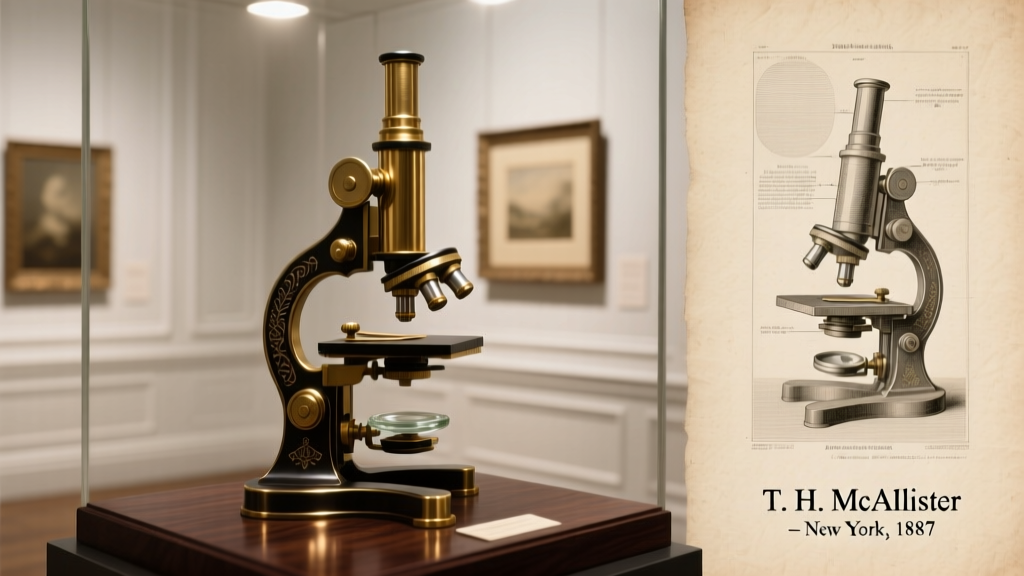
T. H. McAllister Microscopes: Iron-and-Brass Scientific Instruments from 19th-Century New York

Federal-Era Shaving Mirror Cabinet: Authentication, Provenance, and Market Analysis of a Mahogany-and-Maple Turned Piece Measuring 19 × 18 Inches

Charles James Mason & Co: The Forgotten Pioneer of English Bone China and Industrial Ceramics Innovation

Coca-Cola Can: Diet Coke 'Figaro' Disney World 15th Anniversary (1986) — Authentication, Production Context, and Market Significance
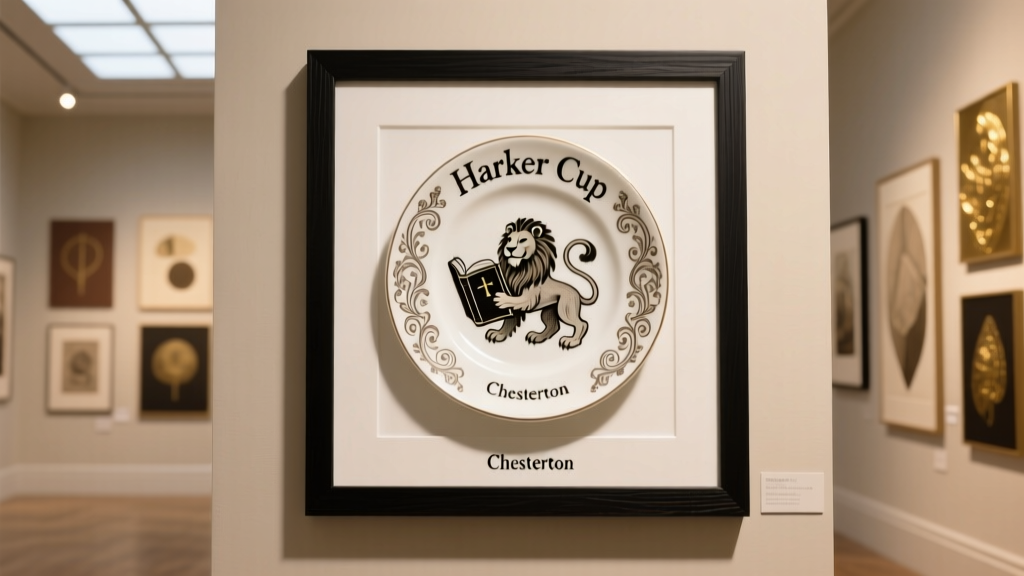
Harker Cup and Saucer: Authenticating the Chesterton Pattern in Royal Doulton’s Early 20th-Century Tableware

The Watertown Slide Desk: A Mid-Century Modern Icon of Function and Craftsmanship

Baroque Walnut Chair Set: Authentication, Provenance, and Market Analysis of an Italian Parcel-Gilt Six-Piece Ensemble

Ezra Brooks Decanter 'Muscleman' (1974): Authentication, Market Value, and Cultural Context