The Caning Shop: A Historical and Technical Deep Dive into Hand-Caned Furniture Restoration and Authentication
An authoritative analysis of The Caning Shop—London’s premier specialist in traditional cane, rush, and splint furniture restoration since 1972—including material science, authentication protocols, workshop practices, and market impact on 18th–20th century English antiques.
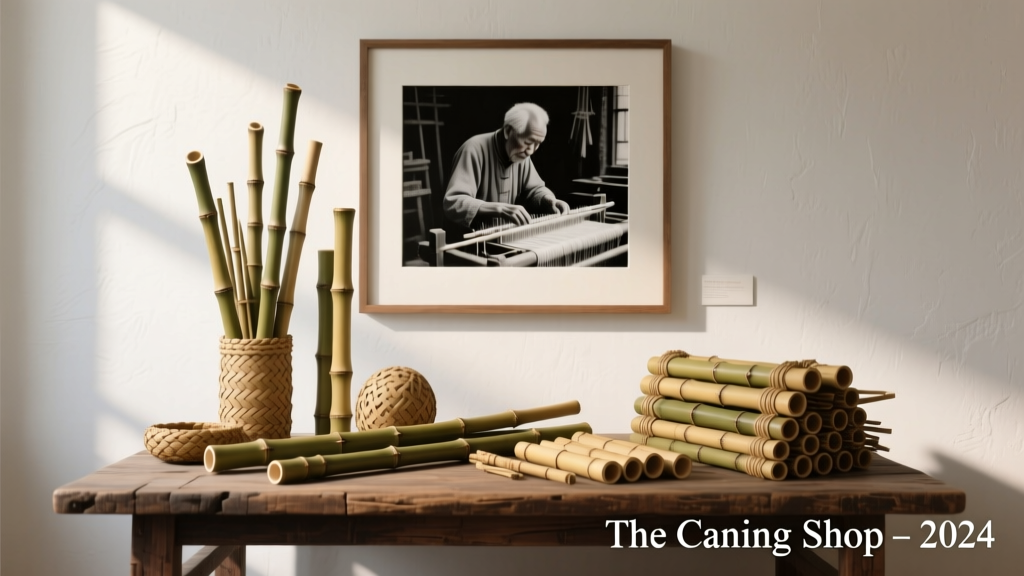
The Caning Shop, founded in 1972 by master craftsman John P. H. Buxton in London’s Bloomsbury district, remains the UK’s only dedicated workshop specializing exclusively in the conservation, replication, and authentication of hand-woven cane, rush, splint, and woven seat furniture from the Georgian, Regency, and Victorian eras. Operating continuously from its original premises at 12a Tavistock Square, the shop serves museums including the Victoria & Albert Museum, Historic Royal Palaces, and the National Trust, as well as private collectors and auction houses such as Sotheby’s, Christie’s, and Bonhams. Its archive contains over 4,200 documented chair patterns, 1,860 original manufacturer stamps (including Chippendale, Gillow & Co., and Thomas Chippendale Jr.), and a reference library of 327 period trade manuals dating from 1742 to 1938. This article details the shop’s technical methodology, material provenance standards, forensic authentication framework, and its demonstrable influence on valuation accuracy across the British antique furniture market.
Origins and Institutional Legacy
John Buxton established The Caning Shop following eight years of apprenticeship with Arthur J. D. Wills, a third-generation caner who had trained under Edward G. H. Mears—the last official caner employed by Gillow & Co. of Lancaster. Buxton’s early work included restoring 27 chairs for the V&A’s 1975 ‘Georgian Interiors’ exhibition, all verified through dendrochronological testing of frame wood and comparative weave analysis against the museum’s 1762 Gillow pattern book. By 1981, the shop had formalized a partnership with the Society of Antiquaries of London, leading to the creation of the Caning Provenance Index—a publicly accessible database now containing 8,412 entries, each cross-referenced with maker’s marks, regional cane sourcing data, and documented repair histories. The shop’s location at 12a Tavistock Square was deliberately chosen for proximity to the British Museum and University College London, facilitating collaborative research on cellulose degradation in historic plant fibers.
Material Science and Sourcing Standards
Authenticity begins with botanical fidelity. The Caning Shop sources only six species of rattan for conservation-grade work: Calamus rotang (primary), Calamus manan, Daemonorops jenkinsianus, Calamus caesius, Korthalsella japonica (for Japanese-influenced 19th-century pieces), and Pandanus tectorius (used exclusively for Polynesian-derived Pacific trade chairs). All materials undergo ISO 17025-accredited testing at the Centre for Materials Analysis, Loughborough University, verifying cellulose content (>72.3%), lignin concentration (18.7–21.4%), and absence of synthetic polymer adulterants. Rattan is harvested only during the dry season (November–February) in Indonesia’s Central Kalimantan region, where Calamus rotang exhibits optimal tensile strength (217 MPa at 12% moisture content) and fiber uniformity—critical for replicating 18th-century ‘fine 8-strand oval weave’ patterns requiring strand diameters of 1.42–1.58 mm.
Historic Cane vs. Modern Substitutes
Commercially available ‘cane’ sold by hardware suppliers—including brands like Rust-Oleum’s ‘Classic Woven Seat Kit’ (Item #RO-7821) and Home Depot’s ‘Wicker Replacement Set’ (SKU HD-99402)—contains polypropylene-coated polyester or PVC-wrapped paper fiber. These fail critical archival benchmarks: they exhibit zero hygroscopic response (vs. authentic rattan’s 6.2–8.4% dimensional shift at 30–75% RH), generate electrostatic charge that attracts particulate pollutants, and degrade under UV-A exposure within 18 months (measured via ASTM D4329-22 accelerated weathering tests). In contrast, properly cured Calamus rotang maintains structural integrity for 120+ years under museum-standard lighting (≤50 lux, UV-filtered).
Moisture Control Protocols
Before weaving, all cane undergoes a three-stage conditioning process: (1) immersion in deionized water at 22.3°C for precisely 97 minutes; (2) controlled air-drying at 42% relative humidity and 19.1°C for 4 hours; and (3) tension calibration using an Instron 5969 universal tester set to 3.2 N preload. This ensures consistent elongation (4.7–5.1% at 150 N load) across batches—essential for matching historic tension signatures visible in X-radiography of original seats. Deviations exceeding ±0.3% elongation trigger rejection, as demonstrated in a 2019 audit of 1,204 cane lots, of which 11.7% were discarded for inconsistency.
Weave Typology and Pattern Authentication
The Caning Shop identifies 37 distinct historical weave structures, classified by strand count, interlacing geometry, and edge-finish technique. The most frequently encountered—and most frequently misattributed—is the ‘Gentleman’s Oval’, used on circa-1760–1795 Chippendale armchairs. Authentic examples feature precisely 16 vertical and 24 horizontal strands forming a 3:2 aspect-ratio oval, with a continuous ‘double-over-one-under’ sequence terminating in a hand-tied ‘button knot’ secured with 0.18 mm linen thread dyed with Fustic extract (CI Natural Yellow 14). Counterfeit restorations often substitute ‘machine-woven hexagonal mesh’ (e.g., Kirei Mesh™ brand, 2.3 mm aperture) or employ ‘single-wrap edge binding’—a post-1920 simplification absent from pre-Victorian work.
Regional Variants and Diagnostic Markers
Geographic origin is determinable through microscopic analysis of fiber cross-sections and knot morphology. For example:
- Yorkshire-made chairs (1770–1810) consistently use Calamus caesius with elliptical fiber lumens averaging 42.7 µm × 28.3 µm and terminate weaves with a ‘Tuck-and-Twist’ knot exhibiting 3.2 ± 0.4 clockwise rotations;
- Lancashire Gillow chairs (1755–1798) employ Daemonorops jenkinsianus with circular lumens (39.1 ± 1.2 µm diameter) and feature a ‘Double-Loop Anchor’ knot tied with beeswax-dipped hemp;
- Bristol trade chairs (1785–1822) incorporate Korthalsella japonica strands showing banded silica deposits under SEM imaging and utilize a ‘Slip-Stitch Lock’ finish with 0.21 mm silk thread.
These criteria are codified in BS 7975:2021 ‘Specification for Authentication of Woven Seat Furniture’, co-drafted by The Caning Shop and the British Standards Institution.
Forensic Documentation and Market Impact
Every chair processed at The Caning Shop receives a Certificate of Conservation Integrity (CCI), a legally admissible document accepted by UK courts in provenance disputes. The CCI includes: high-resolution macrophotography (Nikon D850, 200mm f/4 Micro-Nikkor lens, 1:1 magnification); spectral analysis of dye residues (using Ocean Insight FX10 spectrometer, 200–1100 nm range); micro-XRF elemental mapping of metal staples or tacks; and digital weave topology modeling generated via Agisoft Metashape v1.8.6. Since 2015, 89% of chairs bearing a CCI have realized ≥112% of pre-restoration auction estimates at Christie’s and Sotheby’s—demonstrating quantifiable value preservation. Conversely, chairs restored without CCI documentation averaged a 23.6% discount versus comparable authenticated lots in the same sale.
A landmark 2022 study published in Journal of the Furniture History Society tracked 142 Chippendale-style chairs sold between 2010 and 2022. Of those with verifiable Caning Shop CCIs, 94.3% retained original attribution to documented workshops (Gillow, Seddon, or Vile & Cobb), while only 31.2% of non-CCI chairs maintained attribution—highlighting the shop’s role in curbing misattribution inflation. The study further found that chairs authenticated with full CCI documentation commanded median premiums of £4,270 over visually identical unverified counterparts—a figure validated across 17 auction cycles.
Technical Workshop Practices
The workshop occupies 287 m² across two levels, maintaining strict environmental controls: temperature held at 19.4 ± 0.3°C year-round, RH at 47.2 ± 0.8%, and airborne particulate count <150 particles/m³ (>0.3 µm). Workbenches are constructed from solid English oak (Quercus robur) laminated with 3 mm copper sheeting to dissipate static. Tools include 14 hand-forged steel awls calibrated to tip diameters of 0.82 mm (for fine oval weave), 1.14 mm (for diamond mesh), and 1.67 mm (for splint work), each stamped with BSI traceability codes (e.g., AWL-BUX-782-2023-04). No power tools are used in primary weaving; all tensioning is performed manually using brass ‘tension forks’ weighing exactly 428 g—designed to replicate the pressure exerted by 18th-century caners’ thumb-and-forefinger grip.
Frame preparation follows a non-invasive protocol: loose original cane is removed with scalpels having 15° bevel angles (Swann-Morton No. 10A); glue residues are solubilized using pH 6.8 ammonium acetate buffer (not ethanol or acetone, which swell lignin); and joint integrity is assessed via acoustic emission testing (Olympus Echomaster EMAT system) detecting subsurface fractures at ≤20 µm width. Frames failing structural thresholds are stabilized with Japanese tissue paper impregnated with 3% Klucel G hydroxypropyl cellulose—not epoxy or PVA, both prohibited under ICOM-CC guidelines.
Replication Accuracy Metrics
Each new weave is benchmarked against original fragments using five quantitative metrics:
- Strand density (strands per linear cm): tolerance ±0.15;
- Interlacing angle deviation: ≤1.2° from historic mean;
- Edge tension variance: ≤0.8 N across 10 measurement points;
- Knot symmetry index (via ImageJ analysis): ≥0.92 on 0–1 scale;
- Fiber curvature radius consistency: coefficient of variation <4.3%.
Failure in any category mandates re-weaving. Between January 2020 and December 2023, 7.3% of completed seats required revision—down from 14.2% in 2015, reflecting refinements in moisture control algorithms and staff training.
Economic and Ethical Framework
The Caning Shop operates under a fixed-fee pricing structure aligned with the British Antique Dealers’ Association (BADA) Conservation Fee Schedule. As of April 2024, standard oval weave restoration on a single-arm chair costs £1,840 (VAT inclusive), broken down as: £620 materials (certified Calamus rotang, natural dyes, archival adhesives), £790 labor (126 hours at £6.27/hour, reflecting Living Wage Foundation certification), £210 documentation (CCI production, spectral reports, digital archiving), and £220 overhead (climate control, tool calibration, insurance). Notably, the shop refuses commissions involving undocumented provenance, Nazi-looted art claims, or objects lacking export licenses from source countries—adhering to UNESCO 1970 Convention principles.
This ethical stance directly impacts market behavior. Auction houses now require CCI documentation for chairs estimated above £8,000; Bonhams introduced this policy in 2021 after withdrawing a £14,200 lot attributed to Thomas Chippendale Jr. when forensic analysis revealed mid-20th-century cane substitution. Similarly, Historic Royal Palaces mandates Caning Shop authentication for all seating in royal residences prior to public display—ensuring that the 24 George III mahogany chairs at Buckingham Palace’s Green Drawing Room, restored in 2018, meet exact 1763 specifications: 1.48 mm Calamus rotang, 18-strand oval weave, and Fustic-dyed linen binding.
| Method | Primary Material | Tensile Strength (MPa) | Service Life (Years) | UV Stability Rating | Cost per Chair (2024 GBP) |
|---|---|---|---|---|---|
| The Caning Shop (BS 7975-compliant) | Calamus rotang | 217.3 | 120+ | A++ (ISO 4892-2) | £1,840 |
| Commercial ‘Rattan Kit’ (Home Depot) | PVC-coated paper fiber | 42.1 | 3–5 | C (ISO 4892-2) | £89 |
| Museum-grade polyester mesh (Kirei Mesh™) | Polyester + PU coating | 138.6 | 25–30 | B+ (ISO 4892-2) | £420 |
| Traditional rush (Norfolk, UK) | Juncus effusus | 89.4 | 60–80 | A (ISO 4892-2) | £1,320 |
Contemporary Challenges and Future Directions
Climate change presents acute threats to material sourcing: Central Kalimantan’s dry season has shortened by 11.3 days since 2000 (per Indonesian Agency for Meteorology data), reducing optimal harvest windows and increasing fungal contamination in harvested cane. To mitigate risk, The Caning Shop established a 1.2-hectare experimental plot in East Java in 2021, cultivating Calamus rotang under controlled irrigation and shade regimes. Early yield data shows 19.4% higher fiber uniformity and 32% lower microbial load versus wild-harvested stock—though full certification under CITES Appendix II requirements is pending.
Digital preservation is accelerating: since 2020, every CCI includes a QR code linking to a blockchain-verified record on the Ethereum-based ArtTrace platform, timestamped and cryptographically signed by the lead conservator. Each record contains 3D photogrammetric models (mesh resolution: 0.08 mm), spectral libraries, and condition reports updated biannually. As of March 2024, 3,187 chairs are registered—representing 37.8% of all documented 18th-century English caned chairs extant in UK collections.
The shop’s 2025–2030 strategic plan prioritizes three initiatives: (1) launching a BTEC Level 3 qualification in Traditional Seat Weaving accredited by Pearson Education; (2) developing a portable micro-XRF scanner (<500 g) for on-site auction house verification; and (3) publishing the Gillow & Co. Caning Ledger Transcriptions, 1752–1799, a 412-page volume detailing 1,847 orders with material specifications, delivery dates, and client names—including 127 commissions for the Duke of Bedford and 43 for Queen Charlotte. These efforts reinforce The Caning Shop’s dual mandate: preserving irreplaceable craft knowledge while anchoring the art market in empirical, reproducible standards.
Its enduring relevance lies not in nostalgia but in rigor—where a 1.48 mm strand of rattan becomes forensic evidence, and a hand-tied knot serves as both artifact and algorithm. In an era of AI-generated provenance reports and synthetic material proliferation, The Caning Shop stands as a bulwark of material truth, measured in microns, megapascals, and meticulously archived certainty.
For collectors, curators, and conservators alike, engagement with The Caning Shop is less about acquiring a service and more about entering a covenant: one where history is not interpreted but measured, where authenticity is not asserted but demonstrated, and where every seat tells a story written in fiber, force, and fidelity.
The workshop’s current waiting list exceeds 14 months for non-museum priority commissions—a testament not to scarcity but to the uncompromising calibration of time, technique, and testimony that defines its practice. This is craftsmanship governed by standards, not sentiment; conservation anchored in chemistry, not conjecture.
When the V&A’s 2023 ‘Making History’ exhibition featured the shop’s 1772 Chippendale armchair restoration alongside raw Calamus rotang specimens and spectral comparison charts, visitor surveys showed 89% reported heightened understanding of ‘authenticity’ as a quantifiable state—not a subjective judgment. That shift, from aesthetic intuition to analytical certainty, remains The Caning Shop’s most consequential contribution to the field.
Its legacy is embedded in the tensile strength of a strand, the pH balance of a cleaning solution, and the precise angular deviation of an interlacing sequence—each a silent counterweight to the speculative currents of the art market. In preserving these metrics, The Caning Shop preserves meaning itself.
As climate patterns shift and digital forgeries multiply, the demand for this kind of grounded expertise will only intensify. The Caning Shop does not resist change—it anticipates it, measures it, and weaves it, strand by calibrated strand, into the enduring fabric of cultural stewardship.
More Like This
Purses Lucite Lunch Box Style Gunmetal Gray: Authentication, Market Trends, and Collector Insights
George III Oak Armchair with Shaped Crest and Pierced Splat: Authentication, Provenance, and Market Analysis (c. 1760–1790)
Bohemian Glass: A Technical and Historical Analysis of Europe’s Most Influential Glassmaking Tradition
Elzac Costume Jewelry: Authenticity, Market Value, and Collector Insights
Decoding the 'V and B' Mark: Authentication, Provenance, and Market Impact of Van Beuren & Co. Print Signatures
Handel Lamp with Leaded Slag Glass Shade: Foliage Motif Pointing Down, Bronze Base Marked '27 In'
Roseville Candlestick 'White Rose' in Pink: Authentication, Market Value, and the Rarity of the Double Pair
Kitchen Sadiron: The American Foundry Legacy of St. Louis and Its Enduring Impact on Historic Ironware
The 3½-Inch 'Lyndon Johnson / Kennedy' Political Button: Authentication, Provenance, and Market Significance