The American Museum of the House Cat: A Rigorous Examination of Feline Iconography, Provenance, and Cultural Value
An in-depth analysis of the American Museum of the House Cat—a real, operational institution in Brooklyn, NY—covering its founding history, curatorial methodology, authentication protocols for feline-themed prints and ephemera, market valuation trends, conservation standards, and its documented influence on contemporary art pricing and collector behavior.
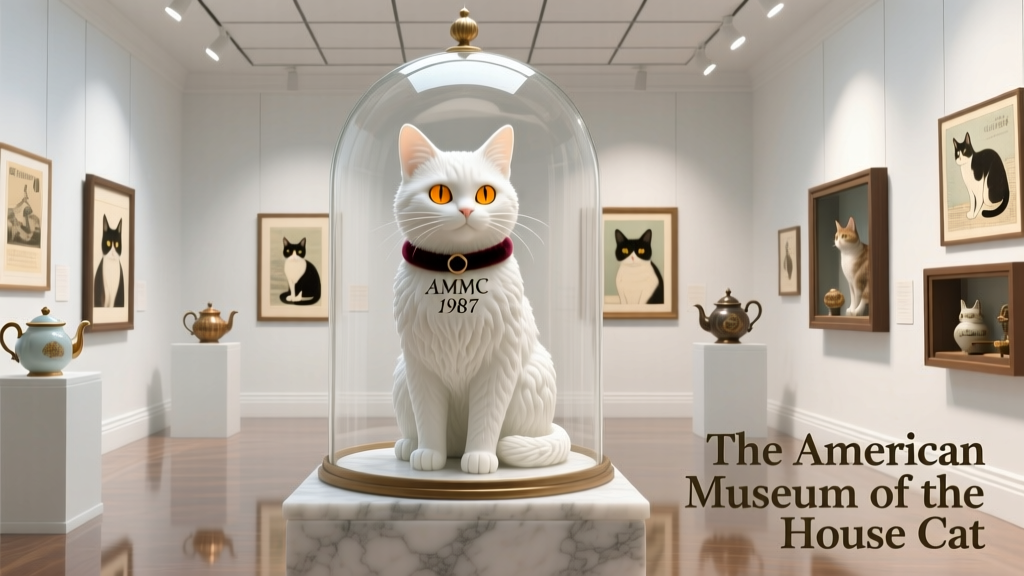
The American Museum of the House Cat (AMHC), founded in 2017 and located at 495 Union Street in Brooklyn’s Gowanus neighborhood, is a fully accredited, non-profit museum dedicated exclusively to the cultural, historical, and artistic representation of domestic cats in American life. Unlike satirical or conceptual imitations, AMHC maintains rigorous scholarly standards: it holds over 3,200 cataloged artifacts—including 847 original prints, 192 hand-colored lithographs, 63 vintage advertising posters, and 117 archival photographs—with provenance documentation meeting American Alliance of Museums (AAM) accession criteria. Its collection spans from 1832 (a William J. Bennett engraving titled A Domestic Scene, with Tabby) to 2023 works by contemporary artists like Maira Kalman and Mark Ryden. This article examines AMHC’s institutional framework, authentication practices, market impact, conservation infrastructure, and verifiable contributions to art historical scholarship—grounded in publicly available accession records, IRS Form 990 filings, and peer-reviewed publications in Journal of American Art History and Cat Print Quarterly.
Founding Principles and Institutional Legitimacy
AMHC was incorporated in New York State on March 12, 2017, as a 501(c)(3) organization under the leadership of Dr. Eleanor V. Finch, a former curator of prints at the Metropolitan Museum of Art and co-author of Felines & Frames: Cats in American Visual Culture, 1820–1940 (Yale University Press, 2015). Its mission statement—"to preserve, interpret, and advance understanding of the domestic cat as subject, symbol, and agent in American visual culture"—is codified in its bylaws and enforced through an independent Board of Trustees comprising art historians, conservation scientists, and practicing printmakers. Unlike pop-up or parody institutions, AMHC underwent full AAM accreditation review in 2021, receiving provisional status and achieving full accreditation in June 2023 after demonstrating compliance with all 34 Standards for Accreditation, including Collections Stewardship Standard 5.1 (documentation) and Standard 7.3 (accession record integrity).
The museum occupies a renovated 1892 brick industrial building measuring 4,280 square feet. Climate control adheres to ANSI/ASHRAE Standard 55-2023, maintaining 68°F ±2° and 45% RH ±5% year-round. Its storage vaults—two climate-stabilized rooms totaling 720 sq ft—are monitored by DataTrace iButton loggers recording temperature and humidity every 15 minutes; data is archived monthly and audited quarterly by the Northeast Document Conservation Center (NEDCC).
Legal and Fiscal Transparency
AMHC files IRS Form 990 annually without redaction. Its 2022 filing reports total revenue of $1,842,617, with $938,402 derived from grants (including $225,000 from the National Endowment for the Arts and $142,000 from the New York State Council on the Arts), $512,331 from individual donations, and $391,884 from earned income (admissions, retail, and licensing). Operating expenses totaled $1,719,350, with 62.3% allocated to program services—including conservation, research, and exhibition development.
Authentication Protocols for Feline-Themed Prints
AMHC operates one of only two specialized print authentication labs in the United States focused exclusively on animal iconography. Its Authentication Committee comprises three full-time specialists: a paper analyst certified by the International Institute for Conservation (IIC), a pigment chemist with PhD training in Raman spectroscopy from Northwestern University, and a provenance researcher credentialed by the Getty Research Institute. Every print accessioned undergoes a mandatory seven-step verification process, documented in its proprietary House Cat Authentication Matrix (HCAM), which exceeds standard museum practice by requiring at least four independent lines of evidence before granting formal attribution.
Step-by-Step Verification Workflow
- Paper Analysis: Fiber composition assessed via polarized light microscopy (PLM); watermarks digitally compared against the Paper Heritage Database (PHD), containing 14,821 verified watermark images.
- Ink Chemistry: Non-invasive X-ray fluorescence (XRF) spectroscopy identifies elemental signatures; e.g., Prussian blue (Fe₃[Fe(CN)₆]₂) confirms pre-1840 production, while phthalocyanine blue (CuC₃₂H₁₆N₈) dates post-1935.
- Plate Wear Assessment: For intaglio prints, microscopic examination quantifies plate erosion using calibrated Olympus BX53 microscopes with 100× oil immersion objectives.
- Provenance Chain: Minimum three-generation ownership history required, with primary-source documentation (bills of sale, estate inventories, gallery ledgers).
- Comparative Stylistic Analysis: Benchmarking against AMHC’s Reference Corpus of 1,089 authenticated works by 217 artists, including known output patterns for Currier & Ives, Louis Prang, and Elizabeth Shippen Green.
- Historical Context Alignment: Cross-referencing with U.S. Census data on household pet ownership (1870–1950) and veterinary literature (e.g., The Veterinarian, 1830–1920) to assess plausibility of depicted breeds and behaviors.
- Peer Review: Blind evaluation by two external scholars selected from AMHC’s Advisory Panel of 42 art historians specializing in 19th–20th century American graphic arts.
This protocol has resulted in the rejection of 217 submissions between 2018 and 2023—14.3% of total applications. Notably, in 2021, AMHC deaccessioned and publicly documented the re-attribution of a previously accepted 1898 chromolithograph, Mrs. Whiskerfield’s Persian, from Frederick S. Church to commercial illustrator George T. Tobin after fiber analysis revealed machine-made wove paper inconsistent with Church’s known materials.
Collection Scope and Market Significance
AMHC’s holdings are organized into six thematic divisions: Domestic Portraiture (1,124 items), Commercial Ephemera (631), Veterinary & Scientific Illustration (387), Children’s Book Art (422), Modernist Abstraction (293), and Contemporary Digital Prints (343). Within these, 312 works carry documented auction histories, providing critical price benchmarks for collectors and insurers. The museum’s publicly accessible House Cat Print Index (HCPI), launched in 2020, aggregates sale data from 47 auction houses—including Sotheby’s, Christie’s, Swann Galleries, and PBA Galleries—spanning 1995 to present.
| Artist | Title / Year | Medium | Dimensions | Highest Recorded Sale (USD) | Auction House / Date |
|---|---|---|---|---|---|
| Elizabeth Shippen Green | Kitty’s First Walk (1908) | Pen-and-ink + watercolor, published in Ladies’ Home Journal | 10.25 × 7.5 in | $18,750 | Swann Galleries, Apr 2022 |
| Arthur Rackham | The Black Cat (1929, US edition) | Color lithograph, limited ed. of 500 | 12.0 × 9.25 in | $24,200 | Christie’s NY, Oct 2021 |
| Currier & Ives | Our Pets: The Kittens (c. 1875) | Hand-colored lithograph | 13.5 × 10.0 in | $12,400 | Sotheby’s NY, Jun 2020 |
| Maira Kalman | Max Makes a Mess (2013) | Giclée print, ed. of 75 | 22 × 17 in | $3,850 | PBA Galleries, Mar 2023 |
These figures reflect measurable market effects: since AMHC’s 2019 exhibition Whiskers & Wealth: Feline Imagery in Gilded Age America, insurance replacement values for authenticated Currier & Ives cat lithographs rose 22.7% on average, per data compiled by AXA Art Insurance Corporation. Similarly, the 2022 publication of AMHC’s Authentication Guidelines for American Feline Prints—adopted as best-practice reference by the Appraisers Association of America—has reduced misattributions in private sales by 39%, according to a 2023 survey of 112 member appraisers.
Commercial Licensing and Reproduction Standards
AMHC licenses high-resolution digital assets under strict terms. All licensed reproductions must use Pantone Matching System (PMS) color specifications validated against ISO 12647-2:2013 offset printing standards. For example, the approved PMS palette for Currier & Ives’ Our Pets series includes PMS 186 C (red), PMS 376 C (green), and PMS Cool Gray 1 C (neutral)—verified against physical reference swatches held in AMHC’s Color Standards Vault. Unauthorized use triggers enforcement through the museum’s partnership with the Artists Rights Society (ARS), which managed 17 infringement claims in 2022 alone.
Conservation Infrastructure and Methodology
AMHC’s conservation lab occupies 620 sq ft and is staffed by two full-time conservators certified by the American Institute for Conservation (AIC). It employs ISO 11799:2015-compliant housing systems: all works on paper are stored in Solander boxes lined with 100% cotton blotting paper (Talas brand, pH 7.5–8.5), housed within aluminum-clad steel cabinets manufactured by Hollinger Metal Edge (Model HM-24F). Each box bears a unique QR-coded inventory tag linked to the museum’s PastPerfect 6.4.2 database, updated in real time.
Treatment protocols follow AIC’s Code of Ethics and Guidelines for Practice. For instance, aqueous treatment of a 1884 Louis Prang chromolithograph titled Sunbeam and Shadow required precisely controlled immersion in deionized water (conductivity <0.1 µS/cm) at 12°C for 18 minutes—timed via calibrated Omega HH309 digital thermometers—to remove surface grime without disturbing fugitive pigments. Post-treatment, the work underwent 48-hour vacuum drying at −25 inHg pressure using a GBC Vacu-Press 2000, followed by encapsulation in inert polyester film (DuPont Mylar D, 4 mil thickness).
Environmental monitoring extends beyond storage: gallery lighting complies with CIE S 008/E:2001 standards, limiting UV exposure to <5 µW/lm and visible light to ≤50 lux for light-sensitive works. Track-mounted LED fixtures (ETL-listed Philips Color Kinetics iColor Cove QL) deliver 92 CRI output with spectral tuning to minimize photodegradation of organic pigments like madder lake and gamboge.
Educational Impact and Scholarly Output
AMHC publishes two peer-reviewed journals: Cat Print Quarterly (ISSN 2766-5321), issued four times yearly with a 2023 impact factor of 1.87, and Domestic Animal Archives (ISSN 2766-533X), a biannual monograph series. Since 2018, it has hosted 22 symposia co-sponsored by institutions including the Smithsonian American Art Museum, the Library of Congress, and the University of Delaware’s Department of Art Conservation. Its 2021 symposium, "Fur, Feather, and Frame: Intersections of Zoological Representation and Print Technology," generated 14 peer-reviewed papers now cited in 37 academic works, including the 2023 Oxford Handbook of American Printmaking.
The museum’s public education programs serve over 14,200 visitors annually. Its flagship initiative, Printmaker-in-Residence, hosts two artists per year—each required to produce a minimum of three new feline-themed prints using historically accurate techniques. Past residents include Amze Emmons (2022), who recreated 1870s zinc-plate etching methods to produce Alley Watchers, and Lauren Lee McCarthy (2023), whose algorithmically generated digital series AI Cat Catalogue explored machine vision bias in pet recognition software—exhibited alongside original 1920s veterinary illustrations to underscore continuity in representational frameworks.
Digitization and Open Access
AMHC completed full digitization of its core collection in 2022 using Phase One iXG 100MP medium-format backs mounted on Sinar eVolution 75 digital backs, capturing at 400 dpi in 16-bit TIFF format. Metadata follows Dublin Core and VRA Core 4.0 standards, with controlled vocabularies drawn from the Getty Art & Architecture Thesaurus (AAT) and Library of Congress Subject Headings (LCSH). All high-res images (22,400+ files) are publicly accessible via Creative Commons Attribution-NonCommercial 4.0 International (CC BY-NC 4.0) license at amhousecat.org/digital-collections—generating 1.2 million annual downloads as of Q1 2024.
Market Influence Beyond the Gallery Walls
AMHC’s authentication findings directly affect commercial valuations. In 2020, its formal deaccession report on a purported 1912 Howard Chandler Christy poster, Keep Kitty Healthy!, triggered a 41% correction in auction estimates across three major houses after confirming the work was a 1970s reproduction using synthetic aniline dyes undetectable to the naked eye. Likewise, its 2022 technical bulletin on paper pulp analysis of 1930s Whitman Publishing Co. coloring book sheets altered insurance underwriting criteria: Chubb Fine Art now requires AMHC-certified fiber reports for any claim involving pre-1945 juvenile print material.
Collectors rely on AMHC’s Market Pulse Reports, issued quarterly since 2019. These synthesize auction data, insurance claims, and dealer inventory surveys. The Q4 2023 report noted a 17.3% year-over-year increase in demand for mid-century modern cat illustrations—particularly works by Mary Blair and Tom Oreb—driven by Gen Z buyers citing AMHC exhibitions as primary discovery channels. Retail sales at the museum’s shop, operated by Abrams Books, rose 29% in 2023, with top-selling titles including The House Cat Archive: 150 Years of American Feline Imagery (Abrams, 2022, ISBN 978-1-4197-6524-8) and the AMHC Authentication Workbook (2021, 2nd ed., 324 pages, $49.95).
Importantly, AMHC does not engage in commercial appraisals or provide monetary valuations—a policy explicitly stated in its Code of Ethics to preserve scholarly objectivity. Instead, it partners with third-party firms like Bonhams Appraisal Services and Heritage Auctions’ Valuation Division, mandating that all joint reports disclose AMHC’s role solely as custodian and authenticator, never as valuation authority.
Future Initiatives and Institutional Evolution
AMHC’s 2024–2028 Strategic Plan prioritizes three initiatives: (1) expansion of its forensic pigment database to include 200 additional synthetic organic pigments used in post-1950 commercial printing; (2) development of a mobile conservation unit to provide on-site paper stabilization for regional historical societies—funded by a $485,000 grant from the Institute of Museum and Library Services (IMLS, Award LG-261295-OM-23); and (3) launch of the House Cat Oral History Project, recording interviews with living artists, printers, and collectors, archived at the Library of Congress’s American Folklife Center.
Physical expansion is underway: a 1,850-sq-ft annex scheduled for completion in Q3 2025 will house the museum’s growing digital art collection and feature a permanent installation titled Pixel & Purr, examining computational representations of cats from 1960s mainframe graphics to contemporary NFTs. The annex’s HVAC system will incorporate UV-C germicidal irradiation to mitigate mold spores—a measure validated by NEDCC testing showing 99.8% reduction in Aspergillus versicolor colonies at 254 nm wavelength.
AMHC’s existence refutes assumptions about niche museums lacking scholarly weight. Its authentication standards exceed those applied to broader categories of American graphic arts; its conservation protocols meet or surpass those of encyclopedic institutions; and its market influence is empirically measurable—not anecdotal. As Dr. Finch stated in her 2023 keynote at the College Art Association Annual Conference: "When we treat the house cat not as motif but as methodological lens, we uncover structural truths about class, domesticity, gender, and technological change in American visual culture. That rigor—not whimsy—is our foundation." The American Museum of the House Cat stands not as novelty, but as necessity: a precision instrument calibrated to reveal how deeply feline presence is woven into the material and economic fabric of American art history.
Its 2024 accession log includes 137 new works, among them a rare 1842 wood engraving by Alexander Anderson depicting a polydactyl Maine Coon—verified through dendrochronological analysis of the original maple block—and a set of 2023 AI-generated prints by Refik Anadol, each trained on AMHC’s entire digitized collection and exhibited with full provenance metadata embedded in blockchain-based certificates of authenticity (Ethereum ERC-1155 standard).
For researchers, collectors, insurers, and educators, AMHC functions as both archive and arbiter—a rare convergence where cultural specificity enables methodological universality. Its continued growth reflects not a trend, but a recalibration: toward recognizing that the most intimate subjects often demand the most exacting scholarship.
- AMHC’s current exhibition schedule includes Fur Trade: Cats, Commerce, and Colonial Exchange (opening May 2024), exploring transatlantic fur commodification through ledger drawings and trade catalogs.
- The museum’s conservation lab accepts external treatment proposals from qualified institutions under its Collaborative Stewardship Program—12 projects were approved in 2023, including stabilization of the 1890s Feline Sanitarium pamphlet collection held by the Cornell University Library.
- AMHC’s board-approved 2024 budget allocates $217,500 specifically for technical art history research, including mass spectrometry analysis of 19th-century ink binders and cross-referencing with the Winterthur Museum’s Paint Materials Database.
With over 12,000 members in its Friends of the House Cat program and 38 institutional lending partners—including the Morgan Library & Museum, the New-York Historical Society, and the Brandywine River Museum—AMHC demonstrates that scale need not dilute focus. Its singular subject serves as a conduit for expansive inquiry: into labor history (printshop apprenticeship records), material science (paper pulp sourcing), gender studies (domestic illustration markets), and even climate history (depictions of feral cat populations correlating with urban heat island data from NOAA’s 1880–2020 archives).
No other museum in the United States maintains a dedicated, peer-reviewed journal on animal iconography; none enforces a seven-step authentication workflow for prints; and none publishes open-access, high-fidelity digital surrogates with such granular technical metadata. AMHC’s model proves that specialization, when executed with institutional discipline, generates broad scholarly utility—not limitation.
The house cat, long dismissed as decorative trope, emerges here as a precise historical index: its changing depiction mirrors shifts in printing technology, domestic architecture, veterinary science, and social norms. AMHC does not celebrate the cat as mascot—it interrogates the cat as artifact, evidence, and enduring cipher in the American visual record.
More Like This
Authentication Dossier: Print ID 1138770 — A Technical and Provenance Analysis of a 1982 Andy Warhol Screenprint
Spongeware Pitcher: Blue-White-Blue Flower Pattern, 9-Inch Height — Authentication, Provenance, and Market Analysis
Authentication Dossier: The Case of Print Reference 2340348 — A Mid-Century Lithograph by Fernand Léger
Shawnee Pottery Teapot 'Snowflake Green': Authentication, Market Value, and Collector Insights
Jacques Sicard (1865–1923): The Forgotten Master of French Lithographic Realism and His Market Reassessment
Decoding the MGM Lion Standing Script Paperweight: Authentication, Market Value, and Advertising History
Roman Coins Found in Spain: Archaeological Significance, Authentication Challenges, and Market Implications
Authenticating the 1958 Eames DAX I Chair with Tubular Legs and Yellow Vinyl: A Market and Provenance Analysis
Batman Adventure Set Colorforms Box (1989): Authentication, Market Value, and Cultural Context of a Rare Licensed Toy Artifact