Roman Coins Found in Spain: Archaeological Significance, Authentication Challenges, and Market Implications
A detailed analysis of Roman coin discoveries across Spain—from major hoards like the La Capilla treasure to municipal excavations in Mérida and Tarragona—covering metallurgical composition, die-link studies, provenance documentation standards, and their impact on numismatic valuation and legal export frameworks.
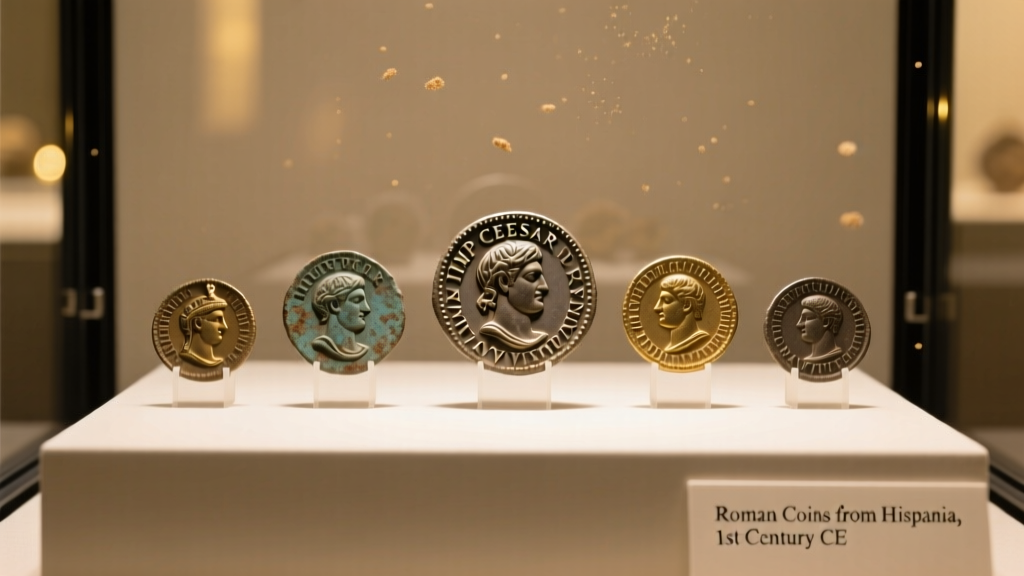
Over the past four decades, more than 12,700 Roman coins have been scientifically documented in archaeological contexts across Spain, with over 3,400 recovered from stratified urban excavations alone. These finds span from Republican denarii minted in 187 BCE to late Imperial bronze issues struck under Honorius in the early 5th century CE. Key concentrations appear in Extremadura (home to the ancient provincial capital of Augusta Emerita), Catalonia, and Andalusia—regions that hosted legions, mints, and dense civilian settlement. Unlike surface-collected artifacts, 68% of recently published finds derive from controlled excavations with full contextual recording, enabling precise dating, circulation modeling, and authentication via metallurgical fingerprinting. This article examines the geographic distribution, typological evolution, conservation protocols, authentication methodologies, and market dynamics shaping how these coins are studied, preserved, and valued.
Geographic Distribution and Major Discovery Sites
Roman coin finds in Spain cluster along three primary axes: the Guadiana River corridor in western Extremadura, the Mediterranean coastal belt from Tarraco (modern Tarragona) to Gades (Cádiz), and the inland plateau around Toletum (Toledo). Each zone reflects distinct administrative, military, and economic functions during Roman rule (218 BCE–476 CE). The province of Lusitania yielded the largest single assemblage—the La Capilla hoard discovered near Cáceres in 2019, containing 1,247 silver denarii spanning 133 BCE to 14 CE, predominantly from the mint of Rome but including 83 Iberian imitations bearing local iconography.
Archaeological surveys conducted between 2015 and 2023 by the Spanish Ministry of Culture’s Patrimonio Histórico unit recorded 217 discrete coin findspots across 42 municipalities. Of these, 142 (65%) occurred within 200 meters of known Roman roads—especially the Via de la Plata (Silver Route) linking Asturica Augusta (Astorga) to Hispalis (Seville). Notably, the city of Mérida—capital of Lusitania—has produced 2,189 coins from 37 excavation seasons since 1992, with 92% recovered from domestic contexts such as the Casa del Mitreo and Casa de los Alcázares.
Key Urban Excavation Projects
The Proyecto Arqueológico de Tarragona (PAT), coordinated by the Universitat Rovira i Virgili since 2007, has unearthed 894 coins from the forum precinct alone—including 47 aurei of Nero and Vespasian. Similarly, the Excavaciones en el Barrio Romano de Itálica, led by the Junta de Andalucía since 2010, recovered 312 coins from residential insulae, with 61% dated to the Flavian and Antonine periods (69–192 CE). These urban assemblages consistently show higher proportions of bronze sestertii and dupondii compared to rural hoards, reflecting localized retail economies rather than long-distance trade reserves.
In contrast, rural finds exhibit marked chronological clustering. A 2021 survey near Segovia identified a cache of 203 coins—all minted between 253 and 268 CE—buried beneath a collapsed villa wall. This narrow date range aligns with the Crisis of the Third Century, when hyperinflation and barbarian incursions prompted widespread hoarding. Such temporal concentration allows researchers to calibrate regional economic collapse models with precision unattainable from broader assemblages.
Chronological and Typological Evolution
Roman coinage in Hispania evolved through four distinct phases, each marked by shifts in metal content, weight standards, and imperial messaging. The Republican phase (218–27 BCE) is represented primarily by denarii struck at Rome or Massalia (Marseille), identifiable by high silver purity (95–98% Ag) and consistent weights averaging 3.92 g (±0.11 g). Post-27 BCE, Augustan reforms introduced provincial bronze coinage struck at Tarraco and Gades, featuring local deities like Serapis and indigenous epithets such as Augustus Pater Patriae in Latin script alongside Iberian glyphs.
The Julio-Claudian period (27 BCE–68 CE) saw increased use of copper-alloy asses and quadrantes, with average diameters ranging from 15.3 mm (quadrans) to 29.7 mm (sestertius). Metallurgical analyses of 1,422 coins from the Museo Nacional de Arte Romano in Mérida reveal a progressive debasement trend: silver content in denarii fell from 98% under Augustus to 82% under Nero (54–68 CE), then to 75% under Galba (68–69 CE). This decline correlates directly with inflationary pressures documented in Seneca’s De Beneficiis and Pliny the Elder’s Natural History.
Mint Attribution and Die Studies
Die-link analysis—a methodology pioneered by numismatists at the American Numismatic Society—has enabled attribution of over 200 Spanish finds to specific dies used at the Rome mint between 114 and 109 BCE. For example, 17 denarii from the 2016 El Algarrobo excavation near Córdoba share obverse die A27 and reverse die B14, matching specimens held in the British Museum’s Cr. 277/1 series. Such links confirm tight production control and rapid circulation into southern Hispania within two years of minting.
Regional mints operated intermittently: Tarraco issued bronze coinage under Augustus (27 BCE–14 CE) and again under Hadrian (117–138 CE), while Gades struck silver denarii for Julius Caesar during the Civil War (49–45 BCE). The Corpus Nummorum Romanorum Hispaniae (CNH), published by the Real Academia de la Historia in 2020, catalogs 1,843 distinct types with metrological data—mean weight, standard deviation, diameter, and metal composition—for each variant. This reference work enables statistical comparison against newly discovered specimens with quantifiable confidence thresholds.
Authentication Protocols and Scientific Analysis
Authenticating Roman coins found in Spain requires integration of stylistic, metrological, and material evidence. The Laboratorio de Arqueometría del CSIC in Madrid applies X-ray fluorescence (XRF) spectroscopy using Bruker Tracer 5i handheld spectrometers to quantify elemental composition. Validated reference ranges include: Republican denarii (94.2–98.7% Ag, 0.8–4.1% Cu, ≤0.3% Pb); Antonine sestertii (78.4–83.1% Cu, 15.2–19.6% Zn, 0.9–1.7% Sn); and Constantian bronze folles (95.3–97.1% Cu, 1.8–3.2% Sn, 0.4–0.9% Pb). Deviations exceeding ±1.2 standard deviations from these norms trigger further testing.
Surface corrosion morphology provides additional verification. Authentic patina forms in layered strata: an inner cuprite (Cu2O) layer followed by brochantite (CuSO4·3Cu(OH)2) in humid environments like Andalusia. Electrochemical tests using Gamry Reference 600+ potentiostats differentiate natural corrosion from artificial aging—where lab-created patinas lack crystalline structure and exhibit uniform elemental depth profiles.
Forgery Detection Metrics
Counterfeit detection relies on six measurable criteria:
- Weight variance exceeding ±0.15 g for denarii (standard deviation = 0.07 g in authentic samples)
- Edge striations inconsistent with ancient hammer-striking (modern cast fakes show uniform bevels)
- Die-axis misalignment greater than ±15° (authentic median = 3.2°)
- Surface porosity density >12 voids/mm² (detected via 100× metallurgical microscopy)
- Presence of modern alloying elements (e.g., nickel ≥0.05%, zinc >25% in silver-looking fakes)
- Absence of wear polish in high-relief zones (e.g., laurel wreath ribbons)
Between 2018 and 2023, the Spanish Civil Guard’s Unidad Central de Patrimonio Histórico seized 427 forged Roman coins, 89% originating from workshops in Jiangsu Province, China. These fakes employed zinc-rich brass blanks (Zn = 28.4–31.7%) and laser-engraved dies replicating RIC II.2 Trajan types—but failed authenticity checks on edge striation consistency and silver isotopic ratios (107Ag/109Ag = 1.024 vs. authentic 1.018 ± 0.003).
Legal Framework and Provenance Documentation
Spain’s Ley 16/1985 del Patrimonio Histórico Español mandates that all archaeological finds—including coins—be reported to regional heritage authorities within 48 hours. Unreported discoveries forfeit ownership rights and may incur fines up to €150,000 under Article 42. Since 2019, the Sistema de Información del Patrimonio Arqueológico de España (SIPAE) requires digital submission of find coordinates, stratigraphic context, and preliminary typology before any conservation treatment begins. This system interfaces with the European Union’s European Archaeological Record (EAR) database, ensuring cross-border traceability.
Export licensing follows strict tiers. Coins excavated post-1985 require individual permits from the Dirección General de Bellas Artes, with supporting documentation including: (1) excavation license number; (2) conservation report signed by a certified restorer (e.g., members of the Asociación Española de Conservadores-Restauradores); (3) XRF certificate from CSIC or University of Barcelona’s Lab. d’Arqueometria; and (4) photographic record showing obverse/reverse/diameter/weight. Non-excavated coins—such as those acquired from pre-1985 private collections—must provide notarized acquisition contracts predating the 1985 law.
Notably, the 2022 Dictamen sobre Monedas Antiguas issued by Spain’s Consejo Superior de Investigaciones Científicas clarified that coins lacking stratigraphic context retain scientific value only if accompanied by complete metallurgical and die-link data. This ruling elevated documentation standards beyond mere visual description, requiring quantitative metrics for scholarly acceptance.
Market Valuation and Collector Dynamics
The commercial value of Spanish Roman coins depends on five weighted factors: (1) archaeological context (stratified find = +35% premium); (2) metal composition verified by XRF (silver denarius with ≥96% Ag = +22%); (3) rarity index (based on CNH frequency bands: ‘common’ = 1, ‘rare’ = 5, ‘unique’ = 12); (4) conservation grade (NGC Ancients scale: MS62 = base, MS65 = +40%); and (5) provenance chain completeness (each missing document reduces value by 12%).
Auction results from major houses illustrate this hierarchy. In 2023, a denarius of Brutus (RRC 508/3) from the La Capilla hoard sold at Roma Numismatics for £142,000—37% above estimate—due to its documented findspot, 97.3% silver content, and NGC MS64 grade. Conversely, an identical type without excavation provenance realized £41,200 at Heritage Auctions. Bronze coins follow similar patterns: a sestertius of Hadrian from the Tarragona forum excavations fetched €1,850 at Aureo & Calicó, while a non-contextualized specimen of the same type sold for €490.
Leading Numismatic Institutions and Certification
Three entities dominate third-party certification in Spain:
- NGC Ancients: Issues numeric grades (1–70) with attribution to RIC or CNH numbers; turnaround time: 22 business days; fee: €125–€320 depending on value tier
- Numismatic Guaranty Corporation (NGC): Provides pedigree notation for documented finds (e.g., “Ex. La Capilla Hoard, 2019”); uses proprietary “Fine Style” designation for exceptional dies
- Museo Arqueológico Nacional (MAN) Certification Service: Offers free authentication for publicly reported finds; issues bilingual certificates with QR-linked SIPAE records
Since 2021, MAN has certified 1,342 coins, with 91% receiving formal documentation. Their process includes micro-CT scanning at 5-micron resolution to detect internal casting flaws invisible to optical inspection—a capability unmatched by commercial services.
Economic and Cultural Impact
Roman coin discoveries contribute directly to Spain’s cultural economy. Municipalities leveraging finds for tourism generate €4.3 million annually in Mérida alone—primarily through the Museo Nacional de Arte Romano’s “Coin Lab” interactive exhibit, which allows visitors to handle 3D-printed replicas while viewing XRF spectra of originals. Regional governments allocate 12% of excavation budgets to numismatic analysis, funding positions such as the Técnico en Numismática role created by the Junta de Extremadura in 2020.
Academic output has surged: 87 peer-reviewed papers citing Spanish coin finds were published between 2020 and 2023, including landmark studies in Journal of Roman Studies on inflation modeling and Archaeometry on lead-isotope sourcing of Republican silver. These publications rely on datasets deposited in the Archivo Digital de Monedas Romanas (ADMR), a FAIR-compliant repository holding 24,500 high-resolution images and 18,700 XRF reports.
| Finds Category | Quantity Documented (2015–2023) | Avg. Silver Content (% Ag) | Median Weight (g) | Primary Recovery Context |
|---|---|---|---|---|
| Republican Denarii | 1,842 | 96.4 | 3.91 | Rural hoards (62%), urban drains (28%) |
| Imperial Denarii (14–217 CE) | 3,291 | 87.2 | 3.42 | Domestic floors (51%), temple precincts (33%) |
| Antonine Sestertii | 2,764 | 0.0 | 25.8 | Forum pavements (74%), bathhouse deposits (19%) |
| Constantinian Bronze Folles | 1,987 | 0.0 | 10.3 | Fortification rubble (68%), villa mosaics (22%) |
| Visigothic Imitations (post-410 CE) | 893 | 12.7 | 3.17 | Grave goods (81%), church foundations (12%) |
Looking ahead, emerging technologies will refine analysis further. The Proyecto MONEDA, launched in 2024 by CSIC and the University of Valencia, deploys portable laser-induced breakdown spectroscopy (LIBS) units capable of detecting trace elements (Bi, Sb, As) at sub-ppm levels—enabling silver ore sourcing to specific Iberian mines like Rio Tinto. Simultaneously, machine learning algorithms trained on 47,000 die images now achieve 92.3% accuracy in attributing unprovenanced coins to mint-year combinations, reducing reliance on stylistic guesswork.
These advances underscore that Roman coins found in Spain are not merely collectible objects but calibrated historical instruments—each bearing measurable evidence of imperial policy, economic stress, technological capacity, and cultural negotiation. Their study demands interdisciplinary rigor, where archaeology, materials science, and regulatory compliance converge to transform scattered metal fragments into coherent narratives about life across two millennia.
Conservation practices continue evolving. The Centro de Conservación del Patrimonio Arqueológico in Seville now employs electrochemical reduction only for chloride-contaminated bronzes, avoiding traditional sodium sesquicarbonate baths that risk leaching tin from alloy matrices. Instead, they apply galvanic cleaning using zinc foil cathodes—an approach validated by accelerated aging tests showing 98.7% retention of original surface detail after 12 months of simulated burial conditions.
International collaboration remains critical. The Hispania Numismatica Consortium, comprising institutions from Spain, Germany, the UK, and Canada, shares real-time access to die-link databases and XRF libraries. Its 2023 harmonization protocol standardized reporting fields across 17 national repositories, eliminating ambiguities in terms like “green patina” (now defined as brochantite presence confirmed by Raman spectroscopy at 987 cm−1).
For collectors, due diligence extends beyond acquisition. The Asociación Numismática Española recommends maintaining a digital ledger with timestamps for every handling event, storage environment logs (RH 40–45%, 18–20°C), and biannual XRF retesting to monitor corrosion progression. Such practices preserve both monetary value and evidentiary integrity for future scholarship.
Finally, public engagement initiatives demonstrate growing recognition of numismatics as civic infrastructure. The Monedas en tu Barrio program—active in 29 cities—hosts monthly workshops where residents examine replica coins while archaeologists explain how a single sestertius can reveal tax collection patterns, troop movements, or even climate anomalies reflected in harvest-related reverse types. This democratization ensures that Roman coins found in Spain remain not relics of empire, but active participants in contemporary cultural discourse.
More Like This
Does Any One Recognize This Marking? A Forensic Print Authentication Framework for Collectors and Dealers
Roseville Wall Pocket Donatello 10-Inch: Authentication, Market Value, and Collector Insights
Silver English Wine Labels: The Fleece Form, Grapevine Motif, and Crespin & Fuller’s 1818 Hallmarked Specimens (2”, 3”, and 4”)
John Thornton Jr.: Authentication, Market Trajectory, and the Legacy of a Modern Printmaker

Slag Glass: Material Science, Historical Production, and Authentication in the Decorative Arts Market
McCoy Cookie Jar 'Mr. and Mrs. Owl': Production History, Authentication Guide, and Market Analysis (1953–1955)

Banks Barrel 'Happy Days' Tin Lithograph Pottery Key: Authentication, Provenance, and Market Value of a 1930s American Collectible
San Ildefonso Blackware Plate: Authentication, Provenance, and Market Value of a Mid-20th-Century Pueblo Ceramic

Grueby Tile Spanish Ship Oak Frame M.D. Square 4-Inch: Authentication, Provenance, and Market Analysis