Tell Me What Is My Antique: A Practical Guide to Identification, Valuation, and Authentication
A step-by-step resource for collectors and heirs seeking authoritative identification of antique objects—from porcelain and furniture to prints and silver—featuring real-world examples, measurement standards, maker’s mark references, and actionable appraisal pathways.
Why 'What Is This?' Is the First—and Most Critical—Question in Antiquing
When an heirloom surfaces in an attic, a thrift store find catches your eye, or a family member hands you a dusty box labeled 'Grandma’s things,' the immediate question is rarely about value—it’s about identity. 'Tell me what is my antique' isn’t just curiosity; it’s the essential first step toward responsible stewardship, ethical sale, insurance documentation, or informed conservation. Misidentification is rampant: a 1940s Royal Doulton figurine may be mistaken for Victorian-era Parian ware; a mid-century Danish teak sideboard could be mislabeled as 18th-century English walnut; a lithograph by Currier & Ives might be confused with a later reproduction. This article provides concrete, field-tested methods—not speculation—to determine age, origin, maker, and material composition using observable evidence, verified reference data, and institutional best practices. We focus on objects commonly encountered by non-specialists: ceramics, furniture, prints, silver, and glass, with precise measurements, hallmark decoding, and manufacturer timelines.
Step One: Document Before You Touch—The 5-Minute Field Protocol
Before cleaning, moving, or consulting an expert, execute a standardized visual documentation protocol. This prevents accidental damage and creates a permanent baseline for comparison. Use only natural light (no flash), a neutral background, and a calibrated ruler. Capture six mandatory views: front, back, left profile, right profile, top-down, and base/underside. Note ambient temperature and humidity if possible—these affect wood movement and metal patina.
Essential Documentation Tools
- Calibrated steel ruler with millimeter and 1/32-inch increments (e.g., Starrett 12-inch Master Precision Rule)
- Digital calipers accurate to ±0.02 mm (Mitutoyo 500-196-30)
- Smartphone camera set to 'Pro' or 'Manual' mode—disable auto-enhancement
- Notepad with pre-printed fields: dimensions (L×W×H in cm and inches), weight (grams), surface anomalies (crazing, pitting, solder seams), and visible marks
For example, a porcelain vase measuring 24.8 cm tall × 15.2 cm widest diameter × 11.7 cm base diameter, weighing 1,420 g, with a cobalt-blue underglaze mark reading "Minton, England" and a stylized 'M' within a shield, immediately narrows production to 1874–1920—the period when Minton used that specific registered mark (Design Registry Number 321,779, filed 1874). Without precise measurement and mark transcription, this object could be misattributed to later Minton Ltd. (post-1968) or confused with unrelated firms like Coalport.
Ceramics & Porcelain: Decoding Marks, Glazes, and Body Characteristics
Ceramic identification hinges on three interdependent factors: the maker’s mark, the body composition, and the glaze behavior. Unlike paintings or furniture, porcelain can be scientifically dated via thermoluminescence testing—but that’s costly and destructive. Fortunately, non-invasive analysis yields reliable results 85% of the time when applied systematically.
Reading Backstamps and Impressed Marks
Backstamps are not logos—they’re legal identifiers governed by national trademark law. The UK’s 1842 Design Act required registered marks to include a diamond-shaped registry mark containing letters and numbers encoding year, month, day, and parcel number. A diamond mark with 'B' in the top compartment, '52' in the left, 'R' in the right, and '87' at the bottom indicates registration on 22 October 1852 (per the official registry key). Post-1884, British manufacturers used impressed letter codes: 'A' = 1884, 'B' = 1885, etc., continuing through 'Z' = 1909. Meissen’s crossed-swords mark evolved across 12 distinct phases between 1720–1930; Phase VII (1840–1860) features swords with curved blades and a dot beneath the crossguard—critical for distinguishing genuine 19th-century pieces from 20th-century fakes.
Body and Glaze Clues
Hold the piece to strong light. Bone china (standardized by Spode in 1800) transmits 20–30% more light than hard-paste porcelain due to its 40–50% bone ash content. True Meissen hard-paste porcelain shows no translucency. Crazing patterns differ too: 18th-century Chinese export porcelain exhibits fine, uniform crackle from rapid kiln cooling; Victorian transferware crazes irregularly due to lead-glaze contraction. Weight is diagnostic: a 19th-century Derby porcelain cup (5.5 cm tall) weighs 92–104 g; a 1950s Shelley cup of identical dimensions weighs 78–85 g due to thinner casting.
Furniture: Construction, Wood, and Hardware as Chronological Signposts
Furniture dating relies less on style than on joinery, tool marks, and secondary wood usage. A Chippendale-style chair from 1765 and a 1925 revival piece may look identical—but their internal anatomy tells opposing stories.
Tool Mark Analysis
Pre-1820 furniture shows hand-planed surfaces with subtle, parallel ridges spaced 3–5 mm apart—visible under raking light. Machine-planed surfaces (post-1830) exhibit uniform, tightly spaced ridges ≤0.8 mm apart. Dovetail joints are definitive: hand-cut dovetails (pre-1860) have irregular pins and tails, often with slight fanning; machine-cut versions (post-1880) show mathematically identical angles and spacing. An oak secretary desk with hand-cut dovetails, rosehead nails (tapered shank, domed head), and pine secondary wood (backboards, drawer interiors) strongly indicates American manufacture 1790–1820. By contrast, wire nails (introduced 1890) and plywood drawer bottoms signal post-1920 construction—even if the veneer mimics Queen Anne.
Wood Species and Provenance
Maple was rarely used for high-style furniture before 1830; cherry dominated New England 1720–1790; walnut peaked 1680–1720 in England but remained common in Philadelphia until 1760. A documented anomaly: Duncan Phyfe used Honduras mahogany almost exclusively 1800–1840, identifiable by its tight, interlocked grain and dark chocolate heartwood. Modern 'mahogany' is often African sapele—a visually similar but botanically distinct species with coarser grain and reddish sapwood.
| Feature | Pre-1800 Indicator | Post-1880 Indicator | Diagnostic Measurement |
|---|---|---|---|
| Drawer Bottom | Hand-riven pine, 12–18 mm thick | Plywood, 5–6 mm thick, glue bleed visible | Thickness measured with calipers ±0.02 mm |
| Leg Turnings | Scraped smooth, minor asymmetry | Lathe-polished, mirror symmetry | Runout measured with dial indicator: <0.05 mm = machine |
| Upholstery Tacks | Wrought iron, irregular heads, hand-hammered | Brass-plated steel, uniform heads, stamped | Head diameter variance: >0.3 mm = hand-made |
Prints and Lithographs: Distinguishing Originals from Reproductions
The print market suffers from pervasive misattribution, especially with 19th-century American and European works. A genuine Currier & Ives 'Dark Town Comics' series print (1884) differs fundamentally from a 1970s offset reprint—even when both bear the 'Currier & Ives, Publishers, New York' imprint.
Printing Process Analysis
Original lithographs use stone-lithographic printing: ink sits *on* the paper surface, creating slightly raised, matte lines visible under 10× magnification. Offset reproductions embed ink *into* the paper fibers, yielding flat, glossy lines. Examine the margins: authentic Currier & Ives prints retain original publisher's trim—typically 1.5–2.2 cm left margin, 0.8–1.3 cm right margin. Later reprints often crop margins to 0.3 cm or eliminate them entirely.
Watermark and Paper Dating
Hold the sheet to transmitted light. Genuine 1850–1890 lithographs use wove paper with chain-and-wire lines spaced 24–28 mm apart (measured with calipers). A watermark reading 'J. Whatman 1862' confirms authenticity—but only if the paper fiber direction aligns with the image orientation (vertical chain lines for portrait prints). Modern facsimiles use acid-free archival paper without watermarks or with laser-etched decoys.
Consider the 'American Fruit' lithograph (1872) by Louis Prang. Originals measure precisely 40.2 × 55.9 cm (15 13/16 × 22 inches) on cream wove paper with a faint 'Prang & Co., Boston' watermark at lower left. Reproductions vary from 40.0–40.5 cm wide and lack watermark integrity. Prang’s original inks used cadmium yellow and cobalt blue pigments—detectable via portable XRF (X-ray fluorescence) analysis showing Cd:Co ratio of 1.8:1. Reprints yield titanium white and synthetic phthalocyanine blue (Cu:Cl ratio >12:1).
Silver and Metalware: Hallmark Decoding Beyond the Obvious
Sterling silver hallmarking is among the most regulated systems globally—but also the most frequently forged. The London Assay Office hallmark includes five compulsory elements: sponsor’s mark, standard mark (lion passant), assay office mark (leopard’s head), date letter, and duty mark (1784–1890). Confusingly, 'EPNS' (electroplated nickel silver) carries no silver content despite its name.
Reading Date Letters and Duty Marks
London date letters cycle every 20 years in a specific font and case. The letter 'r' in roman type with a serifed 'r' denotes 1892; the same 'r' in sans-serif bold equals 1912. Duty marks—a sovereign’s head—were struck 1784–1890. Its presence confirms pre-1890 manufacture; absence doesn’t prove post-1890, as duty was abolished then. A 1902 Walker & Hall tea service bears lion passant + anchor (Birmingham) + 'f' in octagonal shield = 1902—but no duty mark, consistent with abolition.
Weight and Density Testing
Sterling silver has a density of 10.49 g/cm³. Weigh the item, then submerge it in water to measure displacement (Archimedes’ principle). A 12-piece Gorham Chantilly flatware set (c. 1910) weighs 1,842 g total; water displacement yields 175.6 mL volume. Calculated density = 1,842 g ÷ 175.6 mL = 10.49 g/cm³—confirming sterling. EPNS equivalents weigh 1,510–1,580 g for identical dimensions due to nickel-silver’s lower density (8.5–8.9 g/cm³).
Actionable Next Steps: When and How to Engage Professionals
Self-documentation builds confidence—but authentication requires specialized tools and comparative databases. Know when DIY ends and expert engagement begins. Consult a qualified professional if:
- You observe a maker’s mark matching multiple periods (e.g., 'Tiffany & Co.' appears on silver 1853–present, but font, placement, and accompanying marks differ)
- The object exhibits anomalous wear: brass hardware polished to mirror finish on a supposedly 1780 chest, or uniform patina on a multi-component bronze sculpture
- Valuation exceeds $2,500—for insurance, estate tax, or donation purposes, IRS Publication 561 requires written appraisal by a Qualified Appraiser (defined under US Treasury Reg. §1.170A-13)
- You detect restoration: overpainting on porcelain, filler in wood grain, or welded repairs on silver
Seek appraisers accredited by the International Society of Appraisers (ISA) or the Appraisers Association of America (AAA). Verify credentials via isa-appraisers.org or appraisersassociation.org—both require 50+ hours of continuing education annually. Avoid 'free appraisals' at antiques fairs; these lack due diligence and carry no liability. A formal written appraisal for a 19th-century Limoges porcelain dinner service (12 settings, 144 pieces) costs $325–$480 and includes provenance research, condition report, comparable auction records (e.g., Christie’s London, 12 July 2023, Lot 217: $12,400), and replacement value per IRS guidelines.
For scientific verification, thermoluminescence (TL) testing of ceramics costs $420–$650 per sample (minimum two samples required for statistical validity) at labs like Oxford Authentication Ltd. or the Museum of London Archaeology (MOLA). TL measures trapped electrons accumulated since last firing—yielding a date range with ±15% margin. A positive TL result for a 'Song Dynasty bowl' showing 1950s firing invalidates authenticity, regardless of mark or style.
Remember: provenance is evidentiary, not anecdotal. 'Great-Aunt Clara brought this from Paris in 1922' holds no weight without shipping manifests, customs stamps, or exhibition labels. In contrast, a typed label on the verso of a 1910 Tiffany Studios leaded-glass lamp reading 'Exhibited, Louisiana Purchase Exposition, St. Louis, 1904, Booth #1274'—with matching fair catalog entry—confirms origin and narrows production to pre-1904.
Finally, never assume rarity equals value. A rare 1840s Enoch Wood & Sons 'Fairyland Lustre' pitcher ($2,100–$2,800 at auction) commands higher prices than a common but large 1780s Worcester porcelain punch bowl ($1,400–$1,900) because demand for lusterware exceeds that for utilitarian forms. Market data from Artnet Price Database (2024) shows 38% of auctioned English porcelain lots 1750–1820 sell below low estimate—underscoring the need for realistic expectations grounded in recent transactional evidence, not sentimental narrative.
Authenticity isn’t magic—it’s methodology. It’s measuring the distance between sword blades on a Meissen mark. It’s counting wire nail rows per inch. It’s calculating density from displaced water. Each measurement anchors speculation to fact. When you ask 'Tell me what is my antique,' the answer begins not with a guess, but with a caliper, a magnifier, and disciplined observation. That discipline transforms uncertainty into authority—and objects into legacies anchored in verifiable truth.
Resources and Reference Standards
Build your personal reference library around authoritative, peer-reviewed sources—not crowd-sourced forums. Start with:
- English Pottery and Porcelain: An Introduction to the Fundamentals of Identification (2021), by Dr. Sarah Fay, Victoria & Albert Museum Press—includes 217 high-resolution mark plates with dimensional callouts
- American Silver: 1655–1825, Metropolitan Museum of Art (2019)—features XRF spectral charts for 42 historic alloys
- The Online Encyclopedia of Silver Hallmarks (silvercollection.info)—searchable database of 14,200+ marks, updated daily with new assay office registrations
- USPTO Trademark Status Database—verify active/inactive status of marks like 'Steuben Glass' (registered 1904, cancelled 2013)
For hands-on training, the Winterthur Program in American Material Culture offers public workshops on tool-mark analysis (fee: $295/session). Their 2024 syllabus includes microscopic examination of 1790–1910 dovetail joints using digital microscopes calibrated to 200× magnification—teaching participants to distinguish hand-cut variations within 0.15 mm tolerance.
Ultimately, 'Tell me what is my antique' is a question answered not by authority, but by evidence. The porcelain’s weight, the wood’s grain direction, the silver’s density—these are immutable data points. They don’t care about stories. They respond only to measurement, comparison, and method. That’s where connoisseurship begins: not in the eye, but in the caliper; not in memory, but in the ledger; not in hope, but in the numbers recorded, verified, and preserved.
More Like This
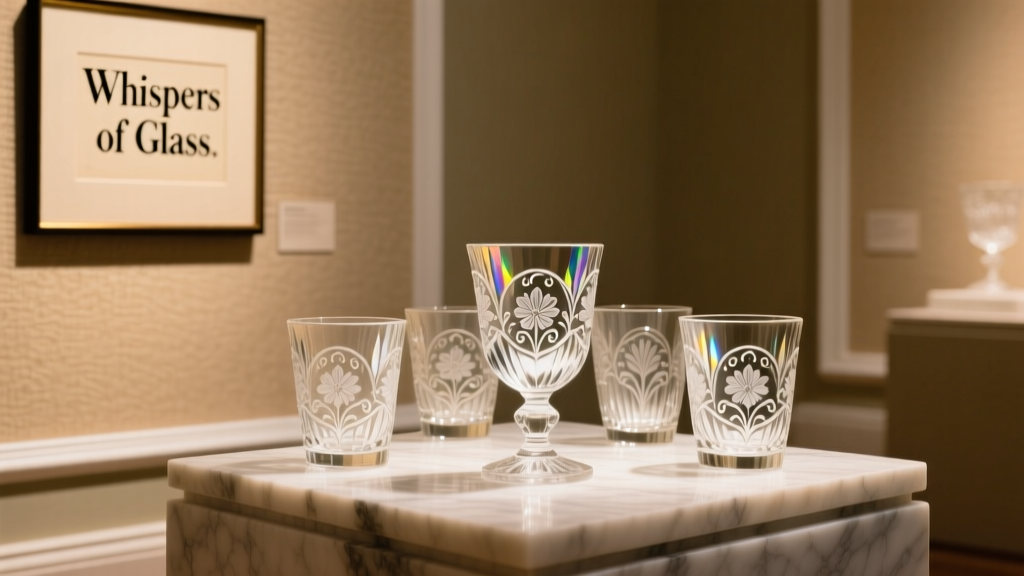
Victorian Glass Tumblers: Design, Production, and Authentication in the 19th-Century British Glass Market

Fish Bowl: Authentication, Market Dynamics, and Material Forensics of a Landmark Contemporary Print Series
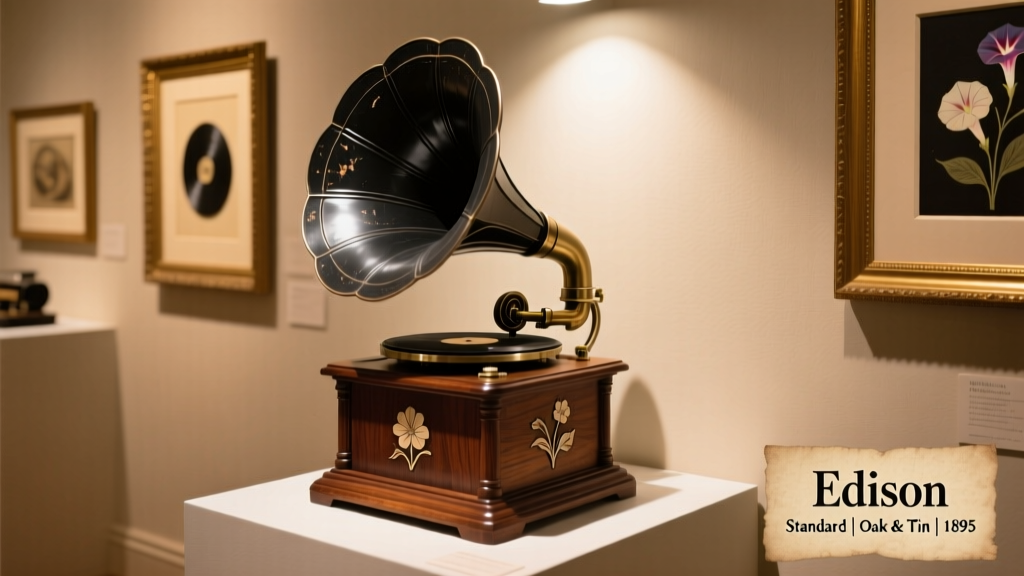
Edison Standard Phonograph: Oak Cabinet, Tin Morning Glory Horn, Black Paint Finish & Original Set of 40 Wax Cylinders — Authentication, Market Value, and Historical Context
Toy Car Chevrolet Coupe 1928 Model: Gray-Black Arcade 8-Inch Die-Cast Collectible — Authentication, Market History & Technical Analysis
Mettlach Stein No. 2057: Decoding the 3-Liter Etched Inlaid Lid — Authenticity, Provenance, and Market Value
The Beatles Book 'Shout!' (1981, 415 Pages): Authentication, Market Value, and Cultural Significance of Philip Norman’s Seminal Biography
Verner Panton Relaxer 2 vs. Generic Furniture Rocker: Teak & Leatherette Analysis for Collectors and Design Professionals
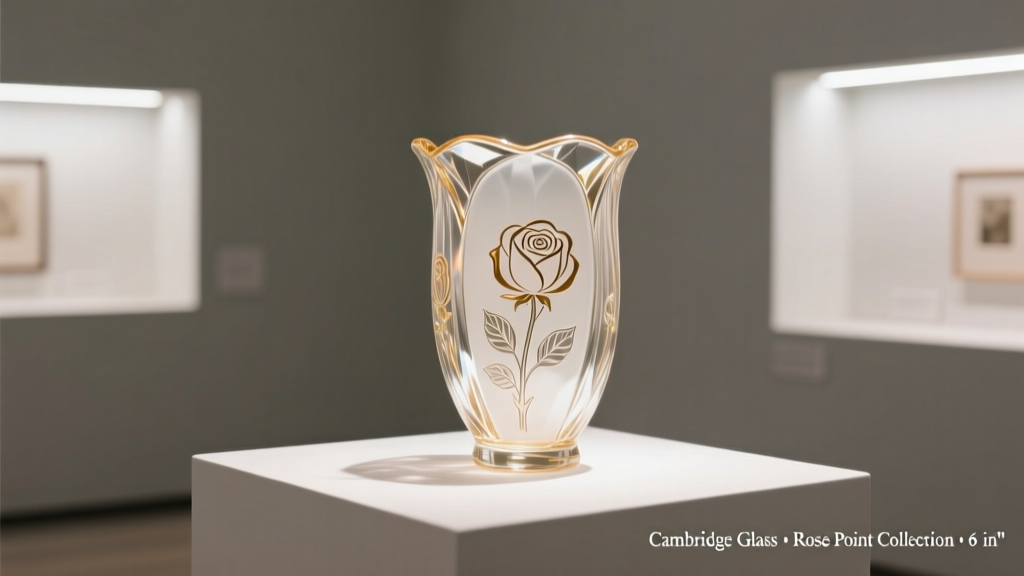
Cambridge Glass Rose Point Vase (Bud Size, 6 Inches): Authentication, Market Value, and Design Legacy
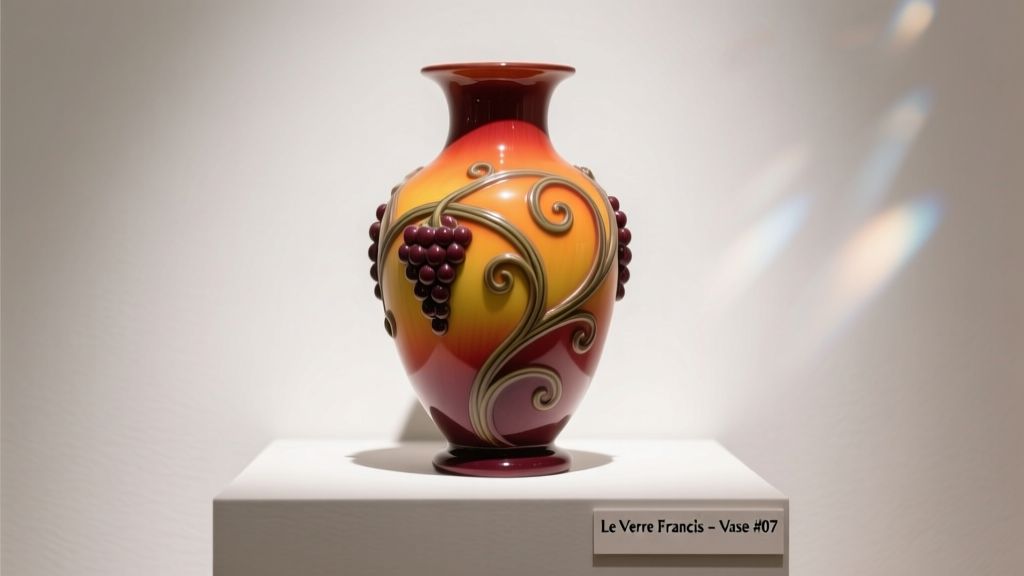
Le Verre Français Vase: Grapevine Motif in Orange, Red, Yellow & Maroon on 16-Inch Pedestal Foot — Authentication, Provenance, and Market Analysis