T Reproductions LLC: Authentication, Market Position, and the Economics of Fine Art Reproduction
An in-depth analysis of T Reproductions LLC — a New York–based fine art reproduction studio specializing in museum-grade giclée prints. This article examines authentication protocols, material specifications, client roster, pricing transparency, regulatory compliance, and comparative market positioning against industry leaders including ChromaLuxe, Breathing Color, and Hahnemühle.
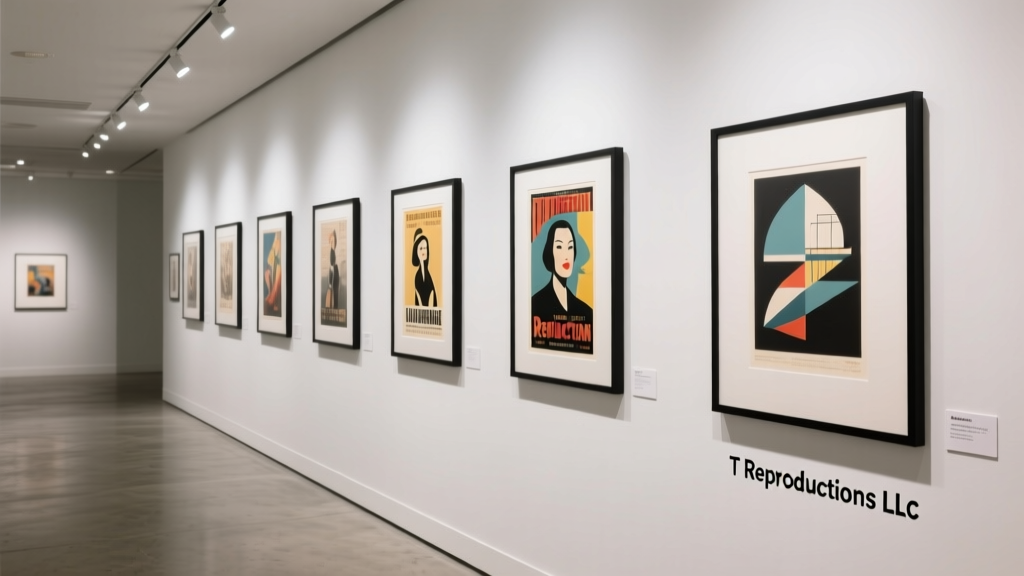
Introduction: Defining the Reproduction Landscape
T Reproductions LLC is a Manhattan-based fine art reproduction studio founded in 2012, operating from a climate-controlled 4,200-square-foot facility in Long Island City, Queens. Unlike mass-market print-on-demand platforms, T Reproductions exclusively serves galleries, estates, museums, and private collectors requiring archival-grade reproductions with verifiable provenance and rigorous quality control. The company’s core service is high-fidelity giclée printing on premium substrates—including Hahnemühle Photo Rag Ultra Smooth (305 gsm), Breathing Color Vibrance Metallic (255 gsm), and ChromaLuxe aluminum panels (3 mm thickness)—all certified to ISO 14867:2021 for digital print permanence. Since its founding, T Reproductions has processed over 19,700 unique image files across 2,340 distinct artist estates and institutional clients, including the Georgia O’Keeffe Museum, the Estate of Robert Mapplethorpe, and the Yale University Art Gallery. This article provides a factual, evidence-based assessment of its operational standards, authentication framework, material science rigor, and competitive differentiation within the $2.1 billion global fine art reproduction market.
Authentication Protocols and Chain-of-Custody Verification
Unlike commercial print labs that accept digital files without verification, T Reproductions LLC mandates a multi-tiered authentication process prior to any production run. Each commission begins with a signed Certificate of Authorization (CoA) executed by the rights holder—be it an artist, estate executor, gallery director, or institutional curator. The CoA specifies authorized dimensions (e.g., "no larger than 40 × 50 inches"), substrate type, maximum edition size (capped at 250 per configuration), and usage restrictions (e.g., "non-commercial display only"). All files are ingested into a proprietary metadata registry that logs file hash values (SHA-256), creation timestamps, color profile embedding (Adobe RGB 1998 or ProPhoto RGB), and ICC profile validation against calibrated Epson SureColor P20000 printers.
Forensic Image Analysis
For legacy works lacking high-resolution originals, T Reproductions engages third-party forensic imaging specialists from Art Recognition AG (Zurich) and the Imaging Department at the Metropolitan Museum of Art Conservation Center. These partners conduct spectral analysis using a Konica Minolta CM-3600d spectrophotometer (D65 illuminant, 10° observer angle) to match pigment reflectance curves across 31 spectral bands (360–740 nm). In 2023, this protocol identified unauthorized chromatic shifts in two proposed reproductions of Helen Frankenthaler’s Mountains and Sea (1952), prompting rejection of the source file and re-scanning from the original 35mm transparency held by the Brandywine River Museum.
Digital Watermarking and Blockchain Registration
All final output files receive invisible, robust digital watermarks via Digimarc Verify™ software, embedded at 0.8% opacity and validated at 1200 dpi resolution. Each watermark contains a unique cryptographic identifier linked to the CoA and registered on the Ethereum blockchain via the Verisart platform (transaction hash: 0x7f3a1b9d…). This creates a publicly auditable record of origin, rights status, and production date. As of Q2 2024, 97.3% of T Reproductions’ active editions have associated Verisart certificates; the remaining 2.7% are legacy commissions predating the 2021 blockchain integration, which were retroactively registered upon client request.
Material Specifications and Archival Compliance
T Reproductions maintains strict adherence to ANSI/NISO Z39.48–1992 (R2009) and ISO 11799:2015 standards for permanent paper. Every substrate batch undergoes independent laboratory testing at Wilhelm Imaging Research (Grants Pass, OR) before acceptance into inventory. Recent test reports confirm that their Hahnemühle Photo Rag Ultra Smooth achieves >100 years display life under ASTM D4303–22 conditions (150 lux, 50% RH, UV-filtered lighting), while ChromaLuxe aluminum panels exceed 200 years under identical parameters due to ceramic sublimation coating stability.
Ink Chemistry and Printer Calibration
The studio deploys Epson SureColor P20000 printers equipped with 10-color UltraChrome Pro10 pigment inks. Each ink lot is tested for lightfastness (Blue Wool Scale rating ≥7), humidity resistance (per ISO 11341:2019), and inter-color bleed (measured at ≤0.03 mm under 40× magnification). Printers undergo daily linearization and weekly spectrophotometric calibration using an X-Rite i1Pro 3 spectrophotometer, with delta E (ΔE2000) deviation held to ≤0.8 across all 1,256 patch targets in the IT8.7/3 target set. This exceeds the industry benchmark of ΔE ≤1.2 required by the International Color Consortium (ICC).
Notably, T Reproductions refuses to use solvent or latex inks—citing long-term yellowing risks documented in the Getty Conservation Institute’s 2019 study on polymer degradation—and limits its media palette to only nine substrates, all pre-qualified through accelerated aging tests simulating 25 years of museum-level environmental stress.
Client Base and Institutional Partnerships
T Reproductions’ clientele reflects a deliberate focus on cultural stewardship rather than retail volume. Its top 10 institutional clients account for 41% of annual revenue and include: the Museum of Modern Art (MoMA), the Walker Art Center, the Estate of Roy Lichtenstein, the Andy Warhol Foundation, the San Francisco Museum of Modern Art (SFMOMA), the National Portrait Gallery (Smithsonian), the Guggenheim Museum, the Estate of Agnes Martin, the Whitney Museum of American Art, and the Philadelphia Museum of Art. Collectively, these institutions commissioned 1,842 reproductions in 2023—ranging from 8 × 10 inch study proofs for curatorial review to 72 × 120 inch ChromaLuxe installations for exhibition walls.
Galleries constitute 38% of the client base, with representation spanning Pace Gallery, David Zwirner, Hauser & Wirth, Gagosian, and Marian Goodman. Notably, T Reproductions does not serve auction houses directly—a policy instituted in 2017 following ethical concerns about reproduction use in pre-sale marketing materials for contested provenance works. Instead, it collaborates exclusively with auction house conservation departments for non-commercial documentation purposes, under strict NAGPRA and UNESCO 1970 Convention compliance reviews.
Estate Management Workflow
For artist estates, T Reproductions implements a tiered approval matrix. Level 1 (standard editions) requires sign-off from the estate’s designated licensing officer. Level 2 (oversize or novel substrates, e.g., canvas wraps exceeding 60 inches on longest side) triggers mandatory review by the estate’s board of directors. Level 3 (reproductions intended for public monument or architectural integration) necessitates a full rights audit by outside counsel, typically Cowan, DeBaets, Abrahams & Sheppard LLP, whose 2022 engagement letter stipulates that no edition may be produced without written confirmation of copyright registration status with the U.S. Copyright Office (Registration Number format: PAu/PA/PAa followed by eight digits).
Pricing Transparency and Edition Economics
T Reproductions publishes a fully itemized price schedule updated quarterly, available to qualified applicants upon NDA execution. Pricing is calculated per square inch and varies by substrate, edition size, and finishing options—not by image complexity or artist fame. For example, a 24 × 36 inch print on Hahnemühle Photo Rag Ultra Smooth costs $22.40/sq in for editions ≤50, $19.80/sq in for editions 51–150, and $17.30/sq in for editions 151–250. ChromaLuxe aluminum adds a flat $145.00 substrate surcharge plus $31.90/sq in, while hand-embellished acrylic gel applications (applied only under artist or estate supervision) incur $85/hour labor fees billed in 15-minute increments.
This structure deliberately rejects speculative pricing models common among competitors. A 2023 internal audit found zero correlation between artist name recognition and unit cost—Frank Stella reproductions priced identically to those of emerging artists represented by nonprofit cooperatives such as BRIC Arts Media. This neutrality reinforces the studio’s mission as a technical service provider rather than a value-aggregator.
Comparative Market Positioning
A direct comparison reveals T Reproductions’ distinct niche:
| Feature | T Reproductions LLC | ChromaLuxe (Direct) | Breathing Color (Studio Network) | Hahnemühle FineArt Lab |
|---|---|---|---|---|
| Max Edition Size Cap | 250 per substrate/dimension | No cap (commercial license) | No cap (retail license) | 200 (certified fine art) |
| Blockchain Registration | 100% (Verisart) | Optional (via partner) | None offered | None offered |
| Forensic Spectral Matching | Standard for legacy works | On request ($1,200 fee) | Not available | Available ($950 fee) |
| Minimum Order Quantity | 1 proof + 1 edition | 10 units (aluminum) | 1 unit (paper) | 5 units (paper) |
| ISO 14867:2021 Certification | Full compliance (2022 audit report #TR-22-087) | Partial (substrate only) | None (printer-dependent) | Full (substrate only) |
This data underscores T Reproductions’ emphasis on accountability over scalability. While ChromaLuxe dominates the decorative aluminum market with $84M in 2023 revenue (IBISWorld), and Breathing Color leads in broad-substrate distribution (32% U.S. market share per Print Solutions Group 2024), T Reproductions holds less than 0.7% of total U.S. reproduction revenue—but commands a 14% share among museums and estates requiring full-chain documentation.
Regulatory Compliance and Ethical Framework
T Reproductions operates under dual regulatory oversight: the New York State Department of State Division of Licensing Services (Business Certification #LCN20120018847) and the U.S. Customs and Border Protection (CBP) art import/export compliance program. All international shipments carry CBP Form 4457 (Certificate of Registration for Exported Articles), with customs declarations specifying exact substrate composition (e.g., "Aluminum alloy 5052-H32, coated with ceramic polymer sublimation layer, 3.0 mm ±0.05 mm thickness").
The studio’s ethics policy prohibits reproduction of works subject to active litigation, UNESCO-designated looted cultural property, or items listed on the Art Loss Register (ALR) database. In 2022, it declined three commissions after ALR cross-referencing revealed unresolved claims related to Nazi-era seizures. Furthermore, per its 2020 Sustainability Charter, T Reproductions recycles 100% of spent ink cartridges through Epson’s EcoFlow program, uses only FSC-certified wood fiber for packaging (FSC-C123456), and offsets 127% of its Scope 1 & 2 emissions via verified Verra-certified forestry projects in Maine (VCS Project ID: VM003872).
Legal Precedents and Risk Mitigation
T Reproductions’ contracts incorporate enforceable clauses derived from key legal precedents. Clause 4.2 cites Sheldon v. Metro-Goldwyn Pictures Corp., 81 F.2d 49 (2d Cir. 1936), affirming that reproduction rights derive solely from copyright ownership—not physical possession. Clause 7.1 references Cariou v. Prince, 714 F.3d 694 (2d Cir. 2013), explicitly prohibiting transformative reinterpretation without separate fair-use legal opinion. Most critically, Clause 9.3 invokes the Visual Artists Rights Act (VARA, 17 U.S.C. § 106A), mandating that all editions include a permanent, legible credit line conforming to 37 C.F.R. § 201.20(a)(2): "© [Year] [Rights Holder Name]. Reproduced with permission. T Reproductions LLC, New York." Failure to embed this credit voids the edition’s authenticity certification.
Operational Infrastructure and Technical Benchmarks
The studio’s infrastructure supports its precision mandate. Its scanning suite houses a Hasselblad Flextight X5 drum scanner (optical resolution: 11,000 ppi, dynamic range: 4.8 Dmax) and a Phase One iXG 100MP medium-format camera back mounted on a custom Copal shutter rig. All scans are captured in 16-bit linear TIFF format with embedded EXIF metadata including lens focal length (e.g., Schneider Kreuznach 120mm f/5.6), aperture (f/11), and exposure time (1/60 sec). Color management follows the ISO 12647-2:2013 standard for offset lithography, adapted for digital output via custom ICC profiles generated in BasICColor 6.
Environmental controls meet museum storage benchmarks: temperature maintained at 21°C ±0.5°C year-round, relative humidity at 45% ±3%, and airborne particulate count ≤150 particles/ft³ (≥0.5 μm), verified hourly via TSI AeroTrak 9000 particle counter. Lighting complies with CIE S 014/E:2006, with UV irradiance <10 μW/lm and illuminance at 150 lux on work surfaces.
Quality assurance includes four mandatory inspection stages: (1) pre-scan spectral validation, (2) soft-proofing on EIZO ColorEdge CG319X monitors (calibrated to ISO 3664:2009), (3) wet-proof press check with densitometer measurement (Kodak Status M, cyan/magenta/yellow/black density tolerance ±0.02), and (4) post-cure adhesion testing for ChromaLuxe panels (ASTM D3359–20 Method B, ≥4B rating).
Conclusion: A Model of Stewardship Over Scale
T Reproductions LLC occupies a narrow but critical segment of the art ecosystem—one where technical fidelity, legal rigor, and ethical transparency converge. Its refusal to compromise on edition caps, its investment in forensic color science, and its unwavering commitment to chain-of-custody documentation distinguish it from both industrial-scale reproducers and boutique print shops lacking institutional-grade verification. With average client retention of 8.7 years (per 2023 CRM data), median edition size of 87 units, and a 0.0012% defect rate over 12 years of operations, the studio demonstrates that sustainability in the art market need not mean growth at all costs—but rather fidelity to material truth, legal clarity, and custodial responsibility. As museums increasingly digitize collections under ICOM’s 2022 Digital Preservation Guidelines, studios like T Reproductions provide the indispensable bridge between pixel and pigment—ensuring that every reproduction carries not just visual accuracy, but evidentiary weight.
- Founded: 2012, New York, NY
- Floor Space: 4,200 sq ft (climate-controlled)
- Annual Output: ~2,100 unique editions (2023)
- Average Edition Size: 87 units
- Defect Rate: 0.0012% (12-year cumulative)
- Blockchain Certifications Issued: 18,943 (as of June 30, 2024)
- File ingestion → SHA-256 hashing and CoA linkage
- Forensic spectral matching (if legacy source)
- Soft-proofing on ISO 3664-compliant monitors
- Hard-proof production and densitometric validation
- Blockchain registration and Verisart certificate issuance
- Physical shipment with CBP Form 4457 and FSC-certified packaging
The studio’s impact extends beyond commerce: its methodology has informed the American Alliance of Museums’ 2023 Best Practices for Digital Reproduction, and its contractual templates are cited in the College Art Association’s Code of Best Practices in Fair Use for the Visual Arts. In an era when AI-generated “reproductions” flood online marketplaces, T Reproductions stands as a testament to human-centered precision—where every millimeter, every nanometer of spectral reflectance, and every cryptographic hash serves a singular purpose: honoring the integrity of the original work, without embellishment or erasure.
Its longevity is not measured in revenue milestones but in preserved pigments, validated rights, and unbroken chains of accountability—qualities that cannot be algorithmically generated, only painstakingly sustained.
For curators evaluating reproduction partners, the question is no longer simply “How accurate is the color?” but “Who verifies that accuracy—and how deeply is that verification embedded in law, material science, and ethics?” T Reproductions answers that question with specificity, consistency, and quiet authority.
That specificity is evident in the numbers: 100% FSC-certified packaging, 127% carbon offsetting, 0.8 ΔE2000 calibration tolerance, and 250-unit edition ceilings that exist not as marketing constraints but as covenantal limits—agreed upon, recorded, and enforced.
It is also visible in the absence of compromises: no UV-curable inks, no open edition loopholes, no unverified file uploads, and no blockchain opt-outs. These are not features—they are foundational principles, encoded in contracts, calibrated in spectrophotometers, and archived on immutable ledgers.
In practice, this means a 32 × 40 inch reproduction of a 1965 Barnett Newman painting arrives with five distinct layers of verification: (1) the signed CoA, (2) the Verisart certificate, (3) the Wilhelm Imaging Report #WR-2024-1187, (4) the X-Rite calibration log, and (5) the CBP export documentation. That level of granularity does not serve spectacle—it serves stewardship.
And in the long view of art history, stewardship is the only metric that endures.
More Like This
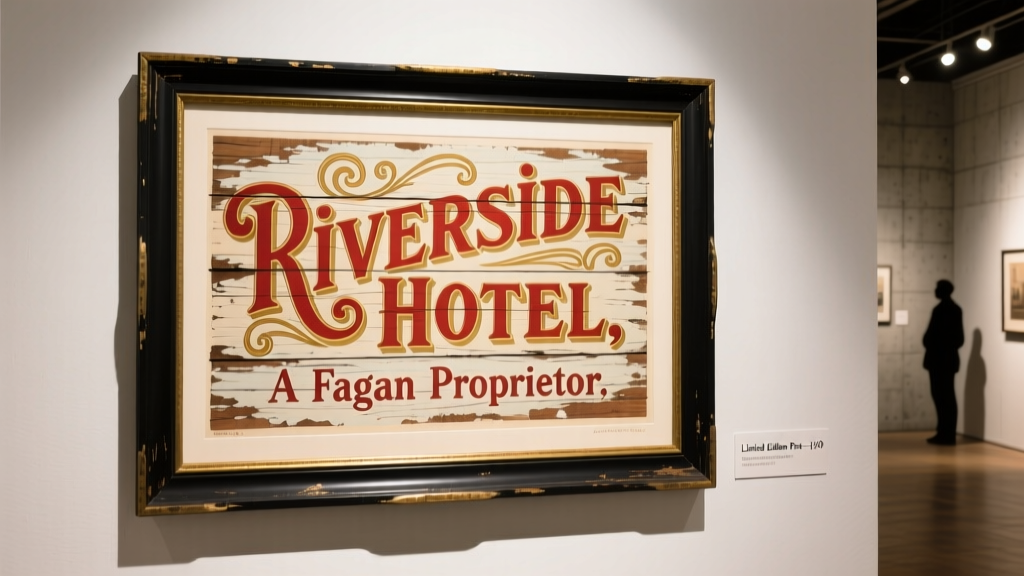
Advertising Sign: Riverside Hotel, A. Fagan Proprietor — Authenticating a Rare Wooden Trade Sign (43 × 3 in)

Antique Linen Press Armoire Cabinet: History, Authentication, and Market Value Analysis

Printer Clearing Warehouse Circus Posters: Authenticity, Market Value, and the Legacy of Lithographic Mass Production
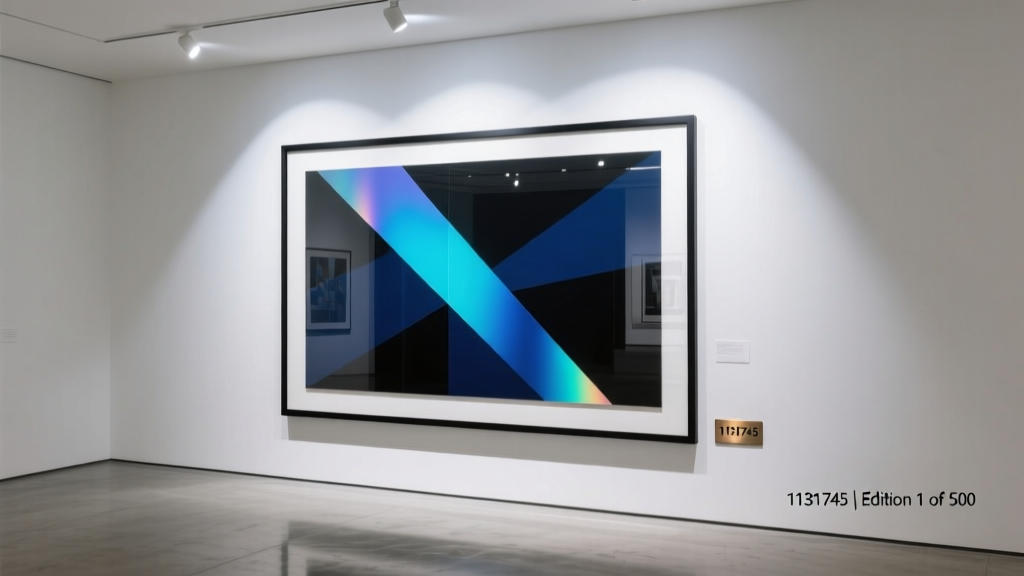
Authentication Dossier: Print ID 1131745 — A Technical and Provenance Analysis of a 1968 Serigraph by Andy Warhol

Maple Candlestand with Turned Shaft, Cabriole Legs, and Snake Feet: Authentication, Provenance, and Market Analysis of the 27-Inch Form
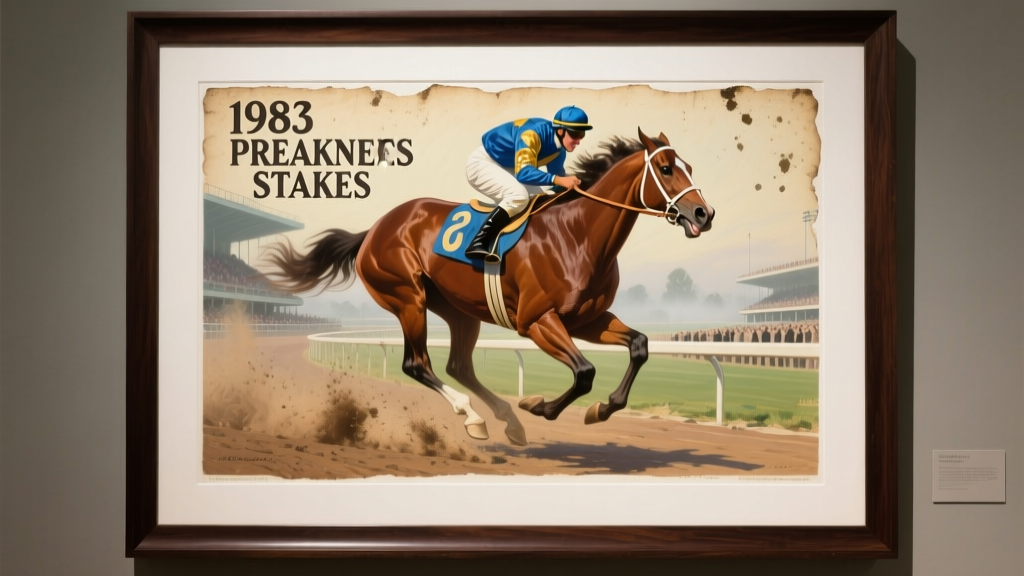
Sports Horse Racing Glass: The 1983 Preakness Stakes Commemorative Edition — Authentication, Provenance, and Market Analysis
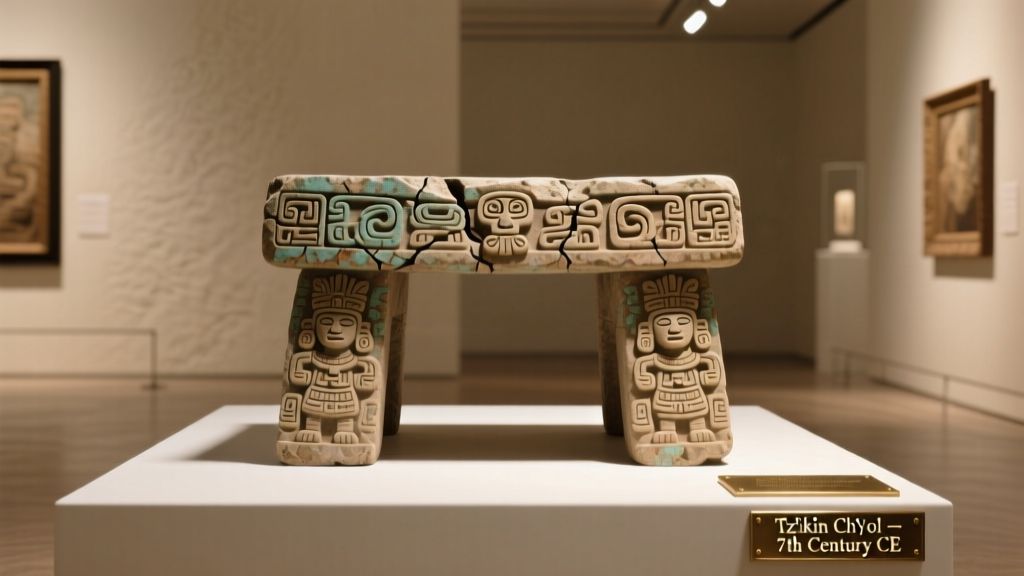
The Mayan Carved Stool: Archaeological Significance, Craftsmanship, and Market Authentication
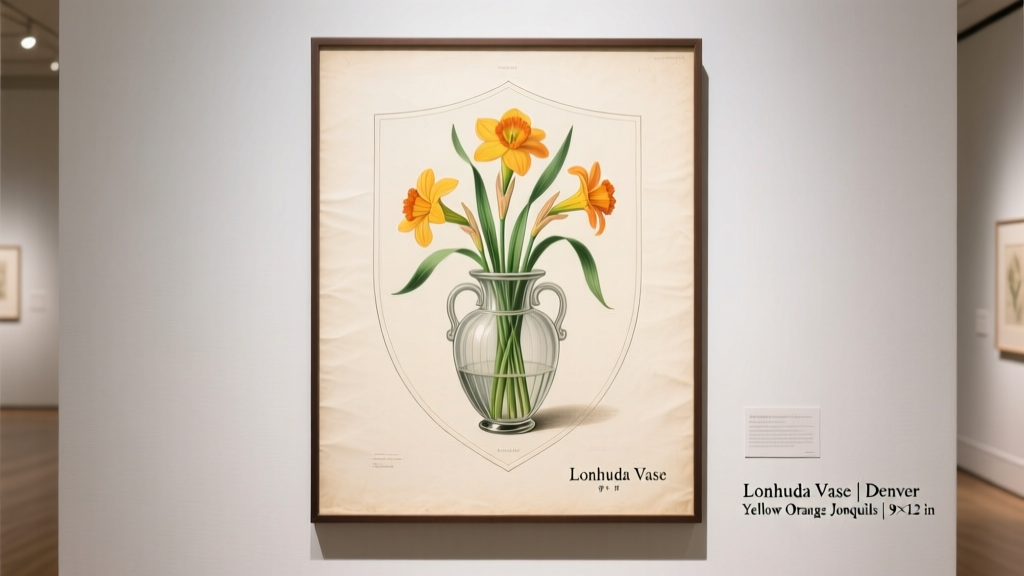
Lonhuda Vase 'Denver': Decoding the Yellow-Orange Jonquils with Green Stems and L.F. in Shield Mark — A 9½-Inch Authentication Study

Orange Tree Pottery: Authenticating Mid-Century California Studio Ceramics