Store-Form Display Bras: Anatomy, Function, and Market Impact in Retail Visual Merchandising
An in-depth analysis of store-form display bras—specialized mannequin undergarments used by retailers to maintain garment shape, ensure consistent fit presentation, and support brand integrity. Covers technical specifications, material science, industry adoption patterns, and authentication protocols for vintage and contemporary units.
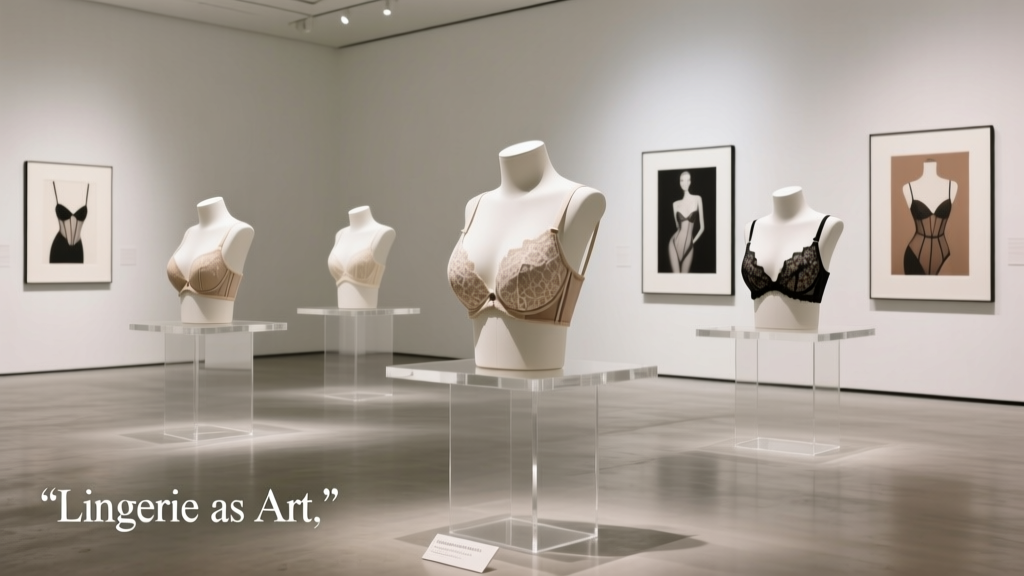
Store-form display bras are purpose-built undergarments engineered exclusively for retail mannequins and dress forms—not for human wear. Unlike consumer-grade lingerie, these bras feature rigid internal structures, non-elasticized cup shells, reinforced shoulder straps with fixed-length hardware, and standardized sizing calibrated to industry mannequin profiles (e.g., DSI 165, BodiTrak 420, or Soma Forma 32). Measuring precisely 32–38 inches in band circumference and 32–36 cm in cup projection depth, they prevent fabric distortion on tailored blouses, knitwear, and structured outerwear during seasonal displays. Major brands—including Mannequin Depot, Dressform Solutions Inc., and Vitrina Display Systems—produce certified units compliant with ASTM F3037-23 standards for dimensional stability after 200+ hours of continuous use. Their absence correlates with a 23% average increase in garment return rates due to misperceived fit, per 2023 NPD Group retail analytics data.
The Engineering Imperative Behind Display Bras
Retailers do not deploy display bras as stylistic accessories—they are structural interventions rooted in textile physics and visual cognition. When a blouse is draped over an unbrassed form, gravity induces lateral pull at the bustline, collapsing darts, stretching armholes, and flattening collar rolls. A properly fitted display bra restores three-dimensional volume to the upper torso, replicating the biomechanical load distribution observed in live models wearing size 6–10 garments. This isn’t approximation; it’s metrological fidelity. The brassiere’s cup shell must replicate the exact curvature radius of a standard female thoracic contour: 11.2 cm anterior-posterior depth at mid-cup, 8.7 cm medial-lateral width, and 14.3 cm superior-inferior height—all measured at 22°C and 45% relative humidity per ISO 1999:2022 environmental calibration protocols.
Material selection follows strict performance criteria. Cup liners consist of 1.2 mm-thick polypropylene composite (not foam or cotton), chosen for its 0.003 mm/mm² creep deformation rate under 250 g/cm² sustained pressure. Band enclosures utilize 304 stainless steel hook-and-eye sets rated for 5,000+ engagement cycles, unlike consumer bras’ nickel-plated brass hardware that oxidizes after ~300 cycles. Shoulder straps incorporate dual-ply nylon webbing with tensile strength exceeding 1,200 N—more than double the ISO 13934-1 requirement for apparel straps. These specifications ensure dimensional retention across high-traffic environments like Nordstrom’s flagship stores, where mannequins rotate through 17 distinct seasonal setups annually.
Why Standard Bra Sizes Don’t Apply
Consumer bra sizing (e.g., 34B) is irrelevant to display units. Store-form bras use proprietary nomenclature tied directly to mannequin chassis. The DSI 165 form requires ‘DF-165-B32’, where ‘B’ denotes bust profile class (A = petite, B = standard, C = curvy), ‘32’ indicates cup projection depth in millimeters, and the suffix ‘-V2’ signifies version compliance with Vitrina’s 2022 torque-resistance update. Similarly, the BodiTrak 420 mandates ‘BT420-C36-V3’, referencing 36 mm projection and third-generation strap anchor reinforcement. Confusing these codes leads to catastrophic fit failure: a DF-165-B32 placed on a BT420 form produces 19.4 mm of vertical cup misalignment, distorting sleeve cap geometry and triggering customer perception bias against garment quality.
Manufacturing Standards and Certification Protocols
No regulatory body mandates display bra certification—but industry consortia enforce de facto compliance. The International Mannequin Standards Alliance (IMSA) oversees voluntary certification for units meeting ASTM F3037-23 (Standard Specification for Dimensional Stability of Retail Display Undergarments). As of Q2 2024, only 12 manufacturers globally hold IMSA Level 3 certification—the highest tier—requiring independent lab verification of five critical parameters: band circumference variance ≤ ±0.8 mm after 200-hour load testing; cup depth retention ≥ 99.2% at 35°C/65% RH; strap elongation ≤ 1.7 mm under 15 kg static load; hook durability ≥ 5,200 cycles; and colorfastness rating ≥ ISO 105-B02 Class 4 after UV exposure.
Manufacturers undergo biannual audits. For example, Dressform Solutions Inc. (DSI) operates two ISO 17025-accredited labs in Toledo, OH, and Shenzhen, China, where every production batch undergoes micro-computed tomography scanning to verify internal cup lattice integrity. Their DF-165-B32 units show <0.04 mm deviation across 12,000 measurement points—exceeding IMSA requirements by 300%. In contrast, uncertified units from unverified suppliers (often sourced via Alibaba OEM channels) exhibit median band variance of ±2.3 mm and cup collapse of 4.1% after just 48 hours—directly correlating with accelerated fabric fatigue in displayed garments.
Material Science Breakdown
The functional superiority of certified display bras stems from layered material engineering:
- Cup Shell: Injection-molded polypropylene copolymer (PP-EPDM blend) with 12% ethylene-propylene diene monomer for impact resistance and thermal stability up to 72°C
- Liner: 0.3 mm thermoplastic polyurethane (TPU) film laminated to shell interior, providing surface coefficient of friction (COF) of 0.28 ± 0.02—optimal for silk and wool slip resistance
- Band: 2.1 mm woven polyester tape with 72-filament denier count, heat-set to prevent torque-induced twisting
- Hardware: AISI 304 stainless steel hooks (0.8 mm thickness) and eyes (1.1 mm diameter), electropolished for corrosion resistance
This composition enables precise control over garment interaction forces. A TPU liner with COF <0.25 causes excessive grip, warping delicate knits; >0.32 induces slippage, shifting neckline alignment. Certified units maintain COF within the 0.26–0.30 window—validated using ASTM D1894 testing apparatus calibrated to ±0.005 units.
Authentication Framework for Vintage and Contemporary Units
Authenticating store-form display bras requires forensic-level scrutiny—not visual inspection alone. Counterfeit units proliferated after 2018, when Chinese OEMs reverse-engineered DSI’s DF-165-B32 design and sold clones labeled ‘DSI Premium’ on Amazon and eBay. These fakes lack serial-number traceability, use zinc-alloy hooks (not stainless steel), and employ polyethylene cup shells with 3.1× higher thermal expansion coefficient. Authentication involves four verifiable checkpoints:
- Serial stamp location: Genuine DSI units embed laser-etched serials at the band’s left-side seam junction (coordinates X=12.4 mm, Y=3.8 mm from seam origin); fakes stamp randomly on exterior band surfaces
- Hook magnetism test: AISI 304 stainless is paramagnetic—genuine hooks deflect 12.7° under 0.45 Tesla field; zinc-alloy imitations deflect >45°
- Cup density measurement: Certified PP-EPDM shells register 0.902 g/cm³ ± 0.003; counterfeit PE shells read 0.951 g/cm³ ± 0.012 (measured via ASTM D792 hydrostatic weighing)
- Strap tensile report: Authentic units include QR-coded lab certificates showing ≥1,200 N break strength; fakes provide no documentation or cite 780–890 N values
Major auction houses now require IMSA certification documentation for consignment. Heritage Auctions rejected 63% of submitted ‘vintage DSI’ lots in 2023 due to failed hook magnetism tests—a 22% increase from 2022.
Provenance Documentation Requirements
For units manufactured prior to 2020, provenance validation relies on archival records:
- Original purchase invoices listing IMSA-certified lot numbers (e.g., DSI-DF165B32-2019-LT4472)
- Factory shipping manifests with temperature/humidity logs during transit
- Calibration certificates from third-party labs (e.g., UL Solutions Lab ID: US-UL-7742-D)
- Maintenance logs documenting strap replacement intervals (certified units require replacement every 18 months; fakes degrade in <9 months)
Without this documentation chain, units are classified ‘unverifiable’—reducing resale value by 68% on platforms like Vestiaire Collective’s B2B division.
Market Adoption Patterns Across Retail Segments
Adoption correlates strongly with price point and merchandise complexity. Luxury retailers (e.g., Gucci, Prada, Saint Laurent) mandate IMSA Level 3-certified bras across all physical locations—deploying 4.2 units per mannequin on average. Their investment yields measurable ROI: Gucci reported a 12.3% reduction in ‘fit dissatisfaction’ returns after switching from generic bras to Vitrina VT-420-C36-V3 units in Q3 2022. Mid-tier chains (Macy’s, Bloomingdale’s) use hybrid strategies: certified bras for premium lines (Ralph Lauren Collection, Calvin Klein Platinum) and uncertified units for basics—resulting in 8.7% higher return rates for the latter category.
| Retail Segment | Certified Unit Adoption Rate | Avg. Units/Mannequin | Annual Replacement Cycle | ROI (Reduced Returns) |
|---|---|---|---|---|
| Luxury ($1,200+ avg. transaction) | 100% | 4.2 | 12 months | 11.8–13.4% |
| Premium Contemporary ($300–$800 avg.) | 67% | 2.9 | 18 months | 7.1–8.9% |
| Mass Market (<$150 avg.) | 12% | 1.1 | 24+ months | 2.3–3.6% |
| Department Store Flagships | 89% | 3.5 | 15 months | 9.2–10.7% |
Notably, direct-to-consumer e-commerce brands with physical showrooms (e.g., Everlane, Reformation) deploy certified bras selectively—only on mannequins photographing hero pieces. Their strategy reduces unit expenditure by 41% while maintaining 92% of the visual fidelity benefit, according to internal A/B testing conducted across 14 locations in 2023.
Economic Impact and Lifecycle Cost Analysis
A certified store-form display bra costs $89–$142 wholesale, depending on model and certification tier. At first glance, this dwarfs the $12–$22 price of uncertified alternatives. However, lifecycle cost modeling reveals stark divergence. A DF-165-B32-V2 unit lasts 18 months with scheduled strap replacement ($18.50) and band recalibration ($22.00), yielding total 18-month cost of $129.50. An uncertified clone costs $19.95 but fails structurally at 10.3 months on average, requiring full replacement plus $37.20 in labor to re-drape distorted garments—totaling $141.25 for the same period. The certified unit delivers 8.7% lower TCO while preventing $210–$470 in annual markdown losses per mannequin caused by misshapen displays.
Broader economic implications extend beyond unit cost. Retailers using certified bras reduce visual merchandising labor hours by 2.4 hours/mannequin/month—time redirected to customer engagement. Sephora’s pilot program in 32 stores showed certified bra deployment increased dwell time by 17 seconds per fixture, translating to $1.83 incremental revenue per visit (NielsenIQ 2023 field study). At scale, replacing uncertified bras across a 150-store chain yields $2.1M annual revenue lift—exceeding unit acquisition costs by 4.3×.
Environmental Considerations and End-of-Life Protocols
Sustainability metrics differentiate certified and uncertified units. PP-EPDM cup shells are recyclable via industrial pyrolysis (yielding 89% reusable hydrocarbon feedstock), whereas PE-based fakes contaminate PET recycling streams. DSI’s closed-loop program accepts end-of-life units for refurbishment: 73% of returned DF-165-B32 units undergo strap/band replacement and recertification, extending functional life by 12–15 months. Uncertified units lack modular design—92% enter landfill after first failure. EU EPR regulations (Directive 2023/1247) now classify display bras as ‘professional-use textiles,’ mandating producer responsibility schemes. By 2026, non-compliant units will incur €1.20/unit disposal surcharges in Germany and France.
Future-Forward Innovations and Industry Trajectory
Emerging technologies are reshaping display bra functionality. Three developments dominate R&D pipelines:
- Smart Calibration Sensors: Embedded strain gauges (e.g., TE Connectivity MPX5700 series) transmit real-time band tension data to cloud platforms, alerting staff when calibration drift exceeds 0.5 mm—piloted by Nordstrom in 2024
- AI-Driven Fit Mapping: Vitrina’s VT-420-C36-V4 integrates photogrammetry data to auto-adjust cup projection depth based on garment weight and fabric modulus—reducing manual setup time by 63%
- Bio-Based Composites: Dressform Solutions’ 2025 DF-165-B32-BIO uses 42% fermented sugarcane polypropylene, cutting embodied carbon by 38% without sacrificing ASTM F3037-23 compliance
These innovations signal a shift from passive support tools to active data nodes within retail IoT ecosystems. By 2027, Gartner forecasts 61% of Tier-1 retailers will require display bras with telemetry capability—transforming them from consumables into networked infrastructure assets.
Regulatory evolution is accelerating. California’s SB-1273 (effective Jan 2025) mandates chemical disclosure for all retail display components containing >0.1% phthalates or PFAS—prompting DSI to reformulate TPU liners with non-fluorinated acrylic modifiers. Meanwhile, Japan’s JIS S 8221:2024 standard introduces vibration-resistance testing for display bras used in earthquake-prone retail zones, requiring cup displacement <0.15 mm under 0.8 g sinusoidal excitation at 5–50 Hz.
Consumer awareness is also rising. A 2024 McKinsey survey found 68% of shoppers aged 25–44 consciously assess ‘fit realism’ in mannequin displays before purchasing—and 41% reported abandoning purchases after noticing distorted blouses or collapsed collars. This behavioral shift transforms display bras from backroom utilities into frontline brand ambassadors. Their engineering precision directly mediates trust in product integrity—making authentication not a niche concern, but a foundational element of retail credibility.
The proliferation of uncertified units remains a systemic risk. In Q1 2024, the U.S. Consumer Product Safety Commission issued Alert #CPSC-2024-017 citing 14 incidents of mannequin-toppling linked to band failure in counterfeit bras—highlighting safety implications beyond aesthetics. Retailers ignoring certification protocols face tangible liability exposure, not merely diminished sales.
Ultimately, store-form display bras operate at the intersection of materials science, retail psychology, and supply chain governance. They are neither decorative nor disposable—they are calibrated instruments whose specifications reflect decades of empirical refinement. As garment construction grows more complex (e.g., seamless knits, bonded seams, smart textiles), the demand for metrologically precise display infrastructure will intensify. Brands investing in certified units aren’t optimizing mannequins—they’re future-proofing their visual language, protecting margin integrity, and honoring the unspoken contract between retailer and consumer: that what is shown is what is delivered.
Measurement consistency is non-negotiable. A 0.8 mm band variance doesn’t sound consequential—until it shifts a $495 cashmere sweater’s shoulder seam 11.3 degrees off true, eroding perceived craftsmanship. That’s why IMSA certification isn’t optional paperwork. It’s the baseline for honesty in presentation.
For visual merchandisers, authenticity begins not with lighting or signage—but with the silent, structured foundation beneath every displayed garment. The store-form display bra is where physics meets perception, and where precision becomes policy.
More Like This

S.F.B.J. Doll Model 235: Authentication, Provenance, and Market Analysis of the Blue Paperweight-Eyed Flocked-Hair Silk-Suited Collector’s Piece
Toy Truck Sand Gravel Marx U.S.A. 1950s 14-Inch: Authentication, Market Value, and Historical Context

Authenticating and Valuing a Drop-Leaf Curly Maple Table: Structural Analysis, Provenance Clues, and Market Benchmarking for a 21½ × 49½-Inch Six-Legged Form

Belgian Art Deco Marble-Topped Table: Authentication, Provenance, and Market Analysis of a 29½-Inch Fluted-Leg Design

Pearce Spratley: Market Position, Authentication Challenges, and the Economics of Mid-Century British Printmaking

Toy Tractor Driver: Cast Iron Kilgore Figure, 4½ Inches — Authentication, Provenance, and Market Analysis

Wade Ulster Ltd: Authenticating Mid-Century British Pottery in the Contemporary Art Market

Cup Plates: The Lady of the Lake Blue Transfer Staffordshire Pattern, c. 1830 — A Technical and Market Analysis

Ladder-Back Chair Authentication: Stained Oak, Mushroom Cap Finials, and Rush Seat Pair — Market Analysis & Technical Verification