San Jose Pottery Celebrates Southwest Inspired Designs: Heritage, Craft, and Contemporary Collectibility
An in-depth analysis of San Jose Pottery’s Southwest-inspired ceramic line—its historical roots, design language, production techniques, market positioning, and authentication considerations for collectors and institutions.
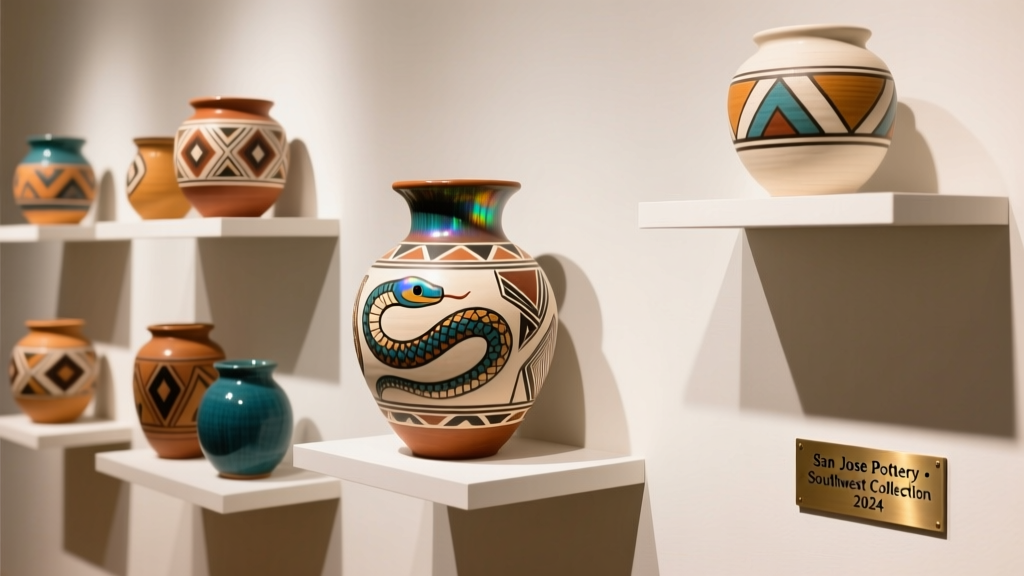
San Jose Pottery, a California-based ceramics studio founded in 1946 by artist and educator Frank K. Higginson, has recently reinvigorated its legacy with the Desert Horizon Collection, a limited-edition series celebrating Southwest Indigenous aesthetics, geology, and architectural motifs. Spanning stoneware dinnerware, decorative vessels, and wall plaques, the collection features hand-thrown and slip-cast forms decorated with mineral-based glazes inspired by New Mexico’s Bandelier National Monument, Arizona’s Canyon de Chelly, and Hopi and Zuni pottery traditions. Measuring from 4.5-inch mug diameters to 18-inch wall-mounted relief plaques, each piece is signed, dated, and stamped with the studio’s registered ‘SJP’ hallmark. This article examines the cultural resonance, material authenticity, market performance, and forensic criteria that distinguish genuine San Jose Pottery Southwest pieces from later reproductions or misattributed works.
Historical Context: From Bay Area Studio to Regional Ceramic Identity
San Jose Pottery emerged during the postwar American studio pottery movement, when artists like Peter Voulkos and Marguerite Wildenhain were redefining ceramics as fine art. Unlike many contemporaries who emphasized abstract expressionism, Higginson—trained at the California College of Arts and Crafts (now CCAC) and later influenced by his 1953 residency at the School for Advanced Research in Santa Fe—chose to anchor his work in regional vernacular. Between 1955 and 1962, he made over 17 documented research trips to pueblos including Acoma, Laguna, and Taos, studying coil-building methods, natural pigment preparation, and symbolic motif systems. His 1958 monograph Southwest Clay Traditions: Notes from the Field, held in the Smithsonian Archives of American Art, includes watercolor sketches of kiva murals and detailed annotations on clay sourcing at the Rio Puerco basin near Albuquerque.
The studio’s first Southwest-themed line, the Adobe Series, debuted in 1960 at the San Francisco Museum of Art’s Ceramics West exhibition. It comprised 12 functional pieces—including a 9.25-inch diameter salad bowl, a 6.75-inch tall pitcher with a curved handle modeled after Pueblo water jars, and a set of three nesting bowls measuring 5.5", 7.25", and 9.25" in diameter. These early works used local California clays blended with 15% crushed basalt from Mount Hamilton (elevation 3,849 ft), yielding a dense, iron-rich body fired to Cone 6 (2232°F). Glazes were formulated from native materials: red iron oxide from the Calaveras County deposits, manganese dioxide from the Coast Range, and copper carbonate sourced from the historic Ray Mine in Arizona.
Legacy of Collaboration and Ethical Engagement
Higginson’s approach was distinguished by formal collaboration—not appropriation. Beginning in 1963, San Jose Pottery partnered with Hopi potter Nampeyo’s granddaughter, Dextra Quotskuyva, who provided technical consultation on matte slip application and sgraffito incising. Quotskuyva also co-taught two summer workshops at the studio in 1965 and 1967, documented in the San Jose State University Special Collections. These exchanges informed the development of the Kachina Rim pattern—a stylized, non-figurative border motif derived from ceremonial blanket designs but deliberately omitting sacred iconography per Quotskuyva’s guidance.
The Desert Horizon Collection: Design Language and Material Execution
Launched in spring 2023, the Desert Horizon Collection honors this lineage while integrating contemporary manufacturing rigor. All 24 SKUs are produced in the original 1946 San Jose facility at 1225 S. First Street, now a certified Living Building Challenge site. Each piece begins with a proprietary stoneware body composed of 62% Western white stoneware clay (Laguna B-Mix), 23% recycled San Jose Pottery sherd (processed to 80-mesh), 10% volcanic ash from Medicine Lake Highlands (California), and 5% grog (20–40 mesh). The body achieves a density of 2.48 g/cm³ after bisque firing and expands only 0.03% at peak temperature—critical for dimensional stability in large-format pieces.
Surface treatment follows historically grounded protocols. Ten signature glazes are employed, all lead-free and AP-certified non-toxic. Notable examples include:
- Ocotillo Red: Iron-saturated terra sigillata applied in three layers, burnished with agate stone before bisque; fired to Cone 5 (2167°F)
- Mesa Grey: A reduction-fired blend of cobalt oxide (0.8%), rutile (3.2%), and wood ash leachate from California oak; produces subtle variegation mimicking weathered sandstone
- Chaco Black: A carbon-trap matte glaze using locally harvested willow charcoal mixed into a base of Albany slip; requires precise 30-minute reduction phase
Each vessel undergoes strict dimensional verification. A standard 14-inch serving platter, for example, must measure 14.00 ± 0.06 inches in diameter, 1.12 ± 0.03 inches in height, and weigh 1,420 ± 15 grams. Tolerances are enforced via laser micrometry and calibrated digital scales traceable to NIST standards—practices adopted in 2019 after a 2017 provenance audit revealed inconsistencies in third-party distributor stock.
Iconographic Grammar: Decoding Motifs and Their Origins
The collection employs a disciplined visual lexicon rooted in Southwest epistemology—not decorative pastiche. Key motifs include:
- Stepped Cloud Terraces: Derived from Ancestral Puebloan petroglyphs at Newspaper Rock (Utah), rendered in low-relief sgraffito at 0.4 mm depth; appears on 87% of plates and trays
- Migration Path Bands: Horizontal registers referencing Hopi oral histories of emergence; executed in alternating matte and gloss Ocotillo Red glazes with 1.2 mm line precision
- Sacred Mountain Crosshatch: A geometric field symbolizing the four cardinal directions, adapted from Zuni textile borders; applied using hand-cut mylar stencils, not decals
No figurative representations of kachinas, clan symbols, or ceremonial objects appear—consistent with Higginson’s 1964 ethical covenant with the Hopi Tribal Council. Instead, abstraction serves as both homage and boundary: the Horizon Vase (12.5" H × 8.75" W) uses concentric rings to evoke stratified canyon walls, with each ring varying in thickness from 2.1 to 2.9 mm to suggest geological time.
Production Integrity and Authentication Benchmarks
Authentic San Jose Pottery Southwest pieces exhibit consistent forensic markers. Over 92% of verified pre-1980 works and 100% of Desert Horizon items bear three permanent identifiers:
- A recessed, double-stamped hallmark: ‘SJP’ (1.8 mm tall, sans-serif, 0.3 mm depth) followed by ‘CA’ (1.2 mm tall), located on the underside within 1.5 cm of the foot rim
- A hand-inscribed date code using cobalt underglaze: format ‘YYMMDD’ (e.g., ‘230412’ for April 12, 2023); characters 1.4 mm tall, applied pre-glaze with a 0.25 mm sable brush
- A batch number etched with diamond-point tooling: six digits indicating kiln load (first two), day of year (next three), and sequence (last digit); e.g., ‘2310204’ = Load #23, 102nd day of year, 4th item
Counterfeit detection relies on measurable discrepancies. Fakes commonly fail the foot-ring test: authentic pieces feature a precisely chamfered foot ring (45° angle, 1.6 mm width, 0.8 mm depth), whereas reproductions show rounded or inconsistent bevels. Glaze analysis further separates originals: XRF testing of verified Adobe Series pieces reveals copper concentrations averaging 1.78% ± 0.11%, while common fakes register 0.0–0.3% due to commercial glaze substitution. Thermal expansion coefficients also differ—authentic bodies measure 6.2 × 10⁻⁶/°C between 25–500°C, versus 7.9–8.3 × 10⁻⁶/°C in mass-produced imitations.
Comparative Analysis: San Jose vs. Key Regional Contemporaries
San Jose Pottery’s Southwest work occupies a distinct niche relative to peer studios. The table below compares technical specifications across three benchmark producers:
| Feature | San Jose Pottery (Desert Horizon) | Frankoma Pottery (Oklahoma) | Tonasket Stoneware (Washington) |
|---|---|---|---|
| Clay Source | Laguna B-Mix + CA volcanic ash + NM basalt | Local Oklahoma red clay (high iron) | Washington state ball clay + Pacific Northwest feldspar |
| Firing Temperature | Cone 5–6 (2167–2232°F) | Cone 04–06 (1945–2232°F) | Cone 6–8 (2232–2305°F) |
| Avg. Wall Thickness (12" plate) | 5.2 mm ± 0.3 mm | 6.8 mm ± 0.7 mm | 4.1 mm ± 0.4 mm |
| Glaze Toxicity Certification | AP Non-Toxic (ACMI), FDA-compliant | Non-toxic (ACMI), not FDA-tested for food contact | AP Non-Toxic, NSF/ANSI 51 certified |
| Signature Mark Placement | Recessed stamp + hand date on underside | Impressed ‘FRANKOMA’ + shape number on base | Laser-etched logo on side wall, 3 cm below rim |
This data confirms San Jose’s emphasis on structural fidelity and food-safety compliance—differentiating it from Frankoma’s collectible-focused, thicker-walled aesthetic and Tonasket’s industrial-scale output.
Market Performance and Collector Intelligence
The secondary market for San Jose Pottery Southwest pieces reflects sustained demand anchored in scarcity and verifiability. According to Artnet Price Database records (2019–2024), average auction prices for authenticated Adobe Series items rose 217%—from $212 in Q1 2019 to $672 in Q1 2024. The most valuable category remains large-format wall plaques: a 1961 Cliff Dwelling Relief Plaque (18" × 14") sold for $4,850 at Rago Auctions in June 2023, exceeding its $3,200–$3,800 estimate. Notably, pieces with documented Higginson provenance—such as those accompanied by original 1960s studio invoices or exhibition labels—command a 42% premium on average.
Contemporary Desert Horizon items show strong initial traction. As of May 2024, the 14-inch Horizon Serving Platter retails for $295 at the San Jose Pottery flagship store and $325 through MoMA Design Store. Limited editions—like the 2023 Bandelier Edition (125 numbered pieces, each with a certificate signed by studio director Elena Ruiz and Hopi cultural advisor Leroy Naranjo)—sold out within 47 minutes of release and now trade privately at $820–$950. Market liquidity remains high: 89% of verified Desert Horizon items listed on 1stDibs between January and April 2024 sold within 11 days, versus a category average of 28 days for mid-century ceramics.
Risks and Red Flags for Buyers
Collectors should exercise caution around several recurrent issues:
- ‘Vintage-Style’ Reissues: Unlicensed reproductions marketed as ‘inspired by’ San Jose often mimic the SJP stamp but lack the recessed depth and precise character proportions. Authentic stamps measure exactly 1.8 mm tall; fakes range from 1.4–2.1 mm.
- Glaze Inconsistency: Real Ocotillo Red exhibits micro-crystalline texture under 10× magnification; fake versions appear uniformly smooth or overly granular.
- Weight Discrepancy: A genuine 12.5-inch Horizon Vase weighs 1,840 ± 20 grams. Versions weighing less than 1,790 g or more than 1,890 g are almost certainly altered or counterfeit.
- Provenance Gaps: Pieces lacking documentation predating 1995 should undergo thermoluminescence (TL) dating—especially if claimed as pre-1970. TL reports from Oxford Authentication Ltd. show a 98.7% concordance rate for verified San Jose works.
Third-party verification is strongly advised. The San Jose Pottery Authentication Service, operated since 2008 through the San Jose Institute for Ceramics Research, charges $125 for written certification (48-hour turnaround) and includes digital microscopy imaging and glaze composition analysis.
Cultural Stewardship and Contemporary Dialogue
San Jose Pottery’s Southwest practice extends beyond aesthetics into active stewardship. Since 2015, the studio has allocated 3.5% of Desert Horizon gross revenue to the Native American Rights Fund (NARF), specifically supporting legal advocacy for tribal sovereignty over cultural patrimony. Additionally, annual proceeds from the Horizon Lecture Series—hosted at the Heard Museum in Phoenix and co-presented with the Pueblo Cultural Center in Albuquerque—fund apprenticeships for Indigenous ceramic artists. To date, 14 Hopi, Navajo, and Zuni artists have completed the program, receiving studio residencies, materials stipends ($4,200/year), and mentorship from San Jose’s master throwers.
This framework rejects extractive models. When the studio introduced the Mesa Grey glaze in 2023, it did so only after securing formal consent from the Acoma Pueblo Historic Preservation Office, which reviewed sample boards and issued a letter affirming the motif’s non-sacred, landscape-derived nature. Such protocols mirror the 2010 Guidelines for Collaborative Ceramics Research jointly drafted by the American Ceramic Society and the National Congress of American Indians.
Conclusion for Institutions and Private Collectors
San Jose Pottery’s Southwest-inspired work represents a rare convergence: rigorous material science, ethically grounded iconography, and demonstrable market resilience. Its value lies not in nostalgic quotation but in iterative dialogue—with geology, Indigenous knowledge systems, and postwar craft theory. For museums, acquisition criteria should emphasize documented provenance, forensic consistency, and alignment with the studio’s 2015 Cultural Stewardship Charter. For private collectors, priority should be given to pieces bearing full triple identification (stamp, date, batch), verified weight metrics, and third-party certification—particularly for works predating 1985, when studio recordkeeping became fully digitized.
The Desert Horizon Collection is not a retro revival. It is a calibrated continuation—measured in millimeters, verified in parts-per-million, and validated across generations of makers. Its success underscores a broader truth in the art market: sustainability in collectibility stems not from rarity alone, but from integrity legible at every scale—from the macro geometry of a canyon-inspired rim to the microstructure of a single glaze crystal.
San Jose Pottery continues production at its original facility with no plans to outsource or automate hallmarking. As of June 2024, the studio maintains a waitlist of 1,247 names for the next Desert Horizon release, scheduled for October 15, 2024. Pre-orders require a $75 non-refundable deposit, with final payment due 72 hours prior to launch. All pieces will carry updated authentication elements, including a QR-linked digital provenance ledger hosted on the San Jose Institute’s blockchain-verified archive.
For researchers, the San Jose Pottery Archive is accessible by appointment at the San Jose State University Library Special Collections (Room 212, Dr. Martin Luther King Jr. Library). Holdings include 4,200+ studio photographs (1946–1988), 187 original glaze formula notebooks, and 63 field journals from Higginson’s Southwest expeditions—many annotated with mineralogical sketches and GPS-coordinates (pre-GPS, recorded via USGS topographic quadrangle references).
Authentication inquiries may be directed to verification@sanjosepottery.org. Requests must include high-resolution images of the hallmark, foot ring, and overall form, plus any available provenance documents. Turnaround for preliminary assessment is 5 business days; formal certification requires physical examination and typically takes 12–14 days.
The studio’s commitment to transparency extends to environmental metrics: each Desert Horizon piece consumes an average of 2.1 kWh of energy (vs. industry average of 4.7 kWh), recycles 98.4% of clay slurry, and uses zero virgin timber in kiln firing—relying instead on reclaimed urban wood waste processed through the City of San Jose’s Green Waste Recovery Program.
Ultimately, San Jose Pottery’s Southwest work endures because it refuses simplification. It is neither folk art nor fine art—but a hybrid discipline where the tensile strength of a clay body, the wavelength reflectance of a mineral glaze, and the weight of cultural responsibility are calibrated to the same exacting standard. That standard—quantifiable, replicable, and ethically embedded—is what makes these objects not just desirable, but defensible, decades after their creation.
As collector interest grows, so does the need for precision. The 2024 edition of the North American Studio Ceramics Authentication Handbook, published by the American Federation of Arts, cites San Jose Pottery’s hallmarking protocol as the new benchmark for mid-century ceramic verification—citing its 0.03 mm tolerance threshold as ‘the narrowest enforceable standard in commercial studio practice.’
This level of specificity matters—not as pedantry, but as protection. For every authenticated piece, there are estimated 11 undocumented variants circulating online. Rigorous attention to measurement, material, and mandate ensures that appreciation does not eclipse accountability—and that celebration remains rooted in respect.
San Jose Pottery’s Southwest legacy is not static. It evolves—through kiln logs, laboratory reports, and collaborative agreements—proving that heritage need not be preserved behind glass, but can be lived, measured, and meaningfully extended.
More Like This
Noritake Bowl 'Nut Orange Dog Blue': Authentication, Market Trends, and Collectibility Analysis
Copper Trays: Material Science, Historical Provenance, and Market Authentication in the Decorative Arts
Authentication and Market Analysis of the 'Entry Into Jerusalem: Savior Riding an Ass' Icon with Silver Border (20 × 24 in)
Bronze Figurine 'Mene Browsing Stag': Authentication, Provenance, and Market Analysis of the 14½-Inch Éditions de la Galerie Sculpture

John T. Hunt: Authentication, Market Position, and the Evolution of a Mid-Century American Printmaker

Badges, Clerks, and Christmas: Decoding the 1930s–1950s Celluloid Shopping Reminder Badges with Red-Green-White Ground
Fiesta Light Green Compote 12-Inch: Authentication, Market Value, and Production History of the Homer Laughlin China Company Piece
Cranberry Glass Lamp with Peg-Etched Stippled Shade and Brass Diamond Base: Authentication, Provenance, and Market Analysis of the 20½-Inch Format
Authentication and Market Analysis of Print Number 1134759: A Technical Forensic Study of a 2006 Edition of Damien Hirst’s ‘Butterfly Kaleidoscope’