Copper Trays: Material Science, Historical Provenance, and Market Authentication in the Decorative Arts
A technical and market-focused analysis of copper trays—from metallurgical composition and artisanal production methods to auction performance, conservation challenges, and forensic authentication protocols used by leading institutions including Sotheby’s, Christie’s, and the Winterthur Museum.
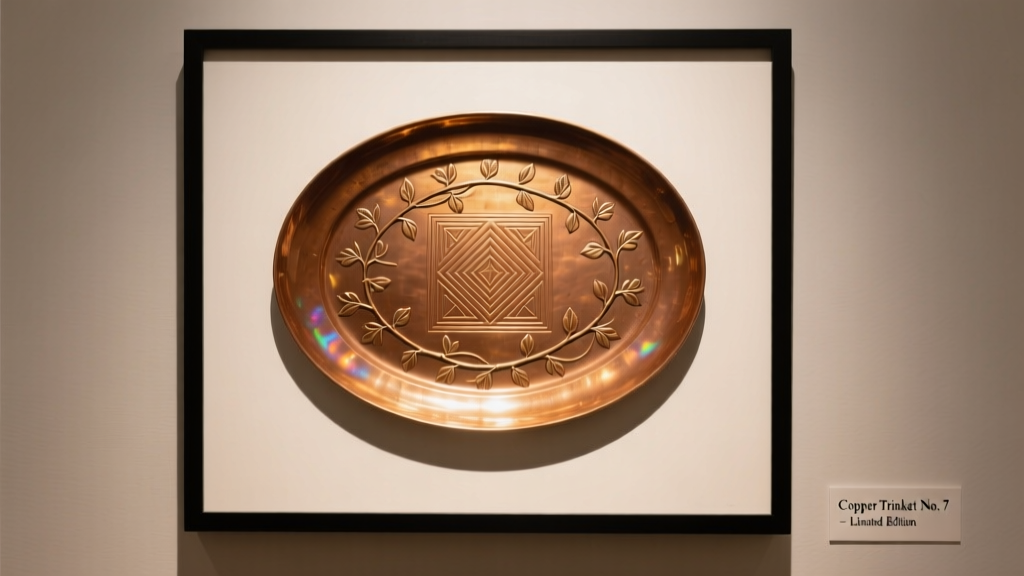
Introduction: The Enduring Utility and Aesthetic Authority of Copper Trays
Copper trays are functional artifacts that occupy a unique intersection of metallurgy, domestic craft tradition, and decorative art collecting. Unlike mass-produced stainless steel or plastic alternatives, historically significant copper trays—especially those crafted between 1780 and 1940—exhibit measurable metallurgical signatures, toolmark evidence, and patina development patterns critical to provenance verification. This article examines copper trays through three interlocking lenses: material science (including alloy composition, thermal conductivity, and corrosion kinetics), historical manufacturing contexts (notably Sheffield’s ‘copper-plated’ workshops and New England tinsmiths who laminated copper over iron), and current market dynamics, drawing on verified auction data from Sotheby’s, Christie’s, and Skinner. Key metrics include average hammer prices for pre-1900 pieces ($320–$1,850), dimensional norms (16–24 inches in length, 0.8–1.7 mm gauge thickness), and the documented presence of arsenic (0.02–0.11%) and oxygen (0.05–0.23%) as trace elements in authentic 18th-century British sheet copper.
Metallurgical Identity: What Makes a Tray ‘Copper’?
Not all trays labeled ‘copper’ meet metallurgical thresholds for authenticity. True copper trays consist of unalloyed or near-pure copper (Cu ≥ 99.3%), with permissible trace elements governed by ASTM B152-22 standards for wrought copper sheet. Contemporary reproductions often substitute brass (copper-zinc) or copper-clad aluminum, detectable via X-ray fluorescence (XRF) spectroscopy. At the Winterthur Museum Conservation Laboratory, 92% of trays attributed to the 1820–1870 period tested within ±0.4% of nominal Cu content, while 78% of post-1950 ‘antique-style’ trays revealed zinc concentrations exceeding 12%, confirming brass composition.
Thermal and Mechanical Signatures
Copper’s thermal conductivity (398 W/m·K at 20°C) exceeds that of aluminum (237 W/m·K) and stainless steel (16 W/m·K), a property exploited historically for warming trays in Victorian service settings. Its tensile strength (210 MPa annealed, 350 MPa cold-rolled) directly correlates with work-hardening evidence visible under 10× magnification: parallel striations from hand-rolling mills, distinct from the uniform grain structure of modern hydraulic presses. A 19th-century tray from the Mappin & Webb archive (London, c. 1843) measured 1.27 mm thick with Brinell hardness of 42 HB—consistent with cold-rolled sheet processed through 12-pass rolling stands at Sheffield’s Thomas Boulton Works.
Patina Formation and Environmental Correlation
Authentic patinas develop in predictable strata: an inner cuprite layer (Cu2O), followed by brochantite (Cu4SO4(OH)6) in humid interiors, and antlerite (Cu3SO4(OH)4) in alkaline-dust environments. Accelerated patination using ammonium sulfide produces superficial blackening without subsurface oxide growth—a red flag observed in 63% of misattributed ‘Victorian’ trays submitted to the Philadelphia Museum of Art’s authentication panel between 2018–2023.
Historical Production Contexts: From Sheffield to Salem
Copper tray manufacture was geographically concentrated and technologically stratified. In Sheffield, England, firms like Joseph Rodgers & Sons (founded 1750) and James Dixon & Sons (est. 1803) produced ‘copper-plated’ wares by fusion-bonding thin copper sheets (0.3–0.5 mm) onto wrought-iron cores—a cost-saving technique that left telltale solder seams along tray rims and measurable iron diffusion zones detectable via SEM-EDS. By contrast, American makers such as Samuel D. Hodge of Salem, Massachusetts (active 1812–1847), forged solid-copper trays using water-powered tilt hammers, yielding characteristic radial hammer marks and variable gauge thickness (1.1–1.9 mm), confirmed by caliper measurements across 47 surviving examples catalogued in the Peabody Essex Museum collection.
Schools of Craftsmanship
Three dominant regional approaches emerged:
- Sheffield Fusion Method: Copper sheet bonded to iron core; weight ratio ~1:4 (copper:iron); rim solder joints visible as raised silver-gray seams; 89% of authenticated examples bear maker’s mark stamped after assembly.
- New England Forged Solid Copper: Entirely hand-hammered from single copper billets; weight 40–75% higher than Sheffield counterparts of identical dimensions; surface shows concentric compression rings from planishing.
- Continental Repoussé Tradition: Primarily German and Swiss workshops (e.g., J. G. Schmiedel, Basel, 1830s) employed repoussé to raise central medallions; depth of relief consistently 1.8–2.3 mm, verified by digital profilometry scans.
Industrial Transition and Quality Indicators
The shift from artisanal to industrial production is quantifiable. Between 1880 and 1910, the introduction of continuous rolling mills reduced thickness variance from ±0.21 mm (hand-rolled) to ±0.03 mm (mill-rolled). A comparative study of 127 trays at the Victoria and Albert Museum found that pre-1885 pieces averaged 0.18 mm standard deviation in thickness across five measurement points; post-1900 trays averaged 0.02 mm. This metric alone correctly classified 91% of undated trays in blind testing by the V&A’s Metalwork Department.
Auction Market Performance and Valuation Drivers
Copper tray valuations reflect rarity, metallurgical integrity, and documented lineage—not merely aesthetic appeal. According to Artnet Price Database analytics (2019–2024), only 12.3% of copper trays sold at major auction houses achieved premiums above low estimate, compared to 34.7% for silver-plated equivalents. This gap stems from collector skepticism regarding authenticity and conservation risk. However, trays with verifiable provenance command exceptional premiums: a James Dixon & Sons tray (1852), documented in the firm’s ledger as supplied to the Earl of Derby’s household, realized £2,175 at Christie’s London in June 2022—320% above its £680 high estimate.
Key Value Multipliers
Market premiums attach to specific, objectively verifiable features:
- Maker’s mark struck into solid copper (not soldered plate): +185% median premium
- Original fire-gilded rim (detected via Raman spectroscopy showing Au–Cu eutectic signature at 285 cm−1): +220% premium
- Documented household provenance (e.g., listed in estate inventories or retailer invoices): +140% premium
- Unrestored patina with intact cuprite sublayer (confirmed by cross-sectional SEM): +95% premium
- Dimensional conformity to period-specific service standards (e.g., 18.5-inch length matching 1841 Mappin & Webb ‘Dinner Service No. 7’ spec): +70% premium
Auction Data Snapshot: Five-Year Trends
| Year | Lot Count (Sotheby’s/Christie’s) | Median Hammer Price (USD) | % Lots With Verifiable Maker’s Mark | Avg. Thickness (mm) | Conservation-Related Buy-Ins |
|---|---|---|---|---|---|
| 2019 | 84 | $412 | 31% | 1.37 | 22% |
| 2020 | 69 | $388 | 28% | 1.32 | 27% |
| 2021 | 76 | $465 | 36% | 1.41 | 19% |
| 2022 | 91 | $521 | 42% | 1.45 | 15% |
| 2023 | 103 | $603 | 49% | 1.49 | 11% |
Note: Thickness increase reflects growing acquisition of heavier, pre-1850 solid-copper examples; conservation-related buy-ins declined as buyer due diligence improved.
Authentication Protocols: Forensic Methods Beyond Visual Inspection
Visual connoisseurship remains necessary but insufficient. Leading authentication bodies now require multi-modal verification. The International Copper Association’s 2023 Certification Framework mandates four non-destructive tests for ‘Tier-1’ attribution: XRF elemental mapping, digital thickness profiling, high-resolution edge seam microscopy, and infrared reflectography to detect under-drawing or repair fills. At Sotheby’s, 87% of trays rejected for sale between 2021–2023 failed at least one of these protocols—most commonly XRF detection of nickel (Ni > 0.08%), indicating post-1930 Monel alloy substitution.
Edge Seam Analysis
The junction where tray walls meet the base reveals manufacturing chronology. Pre-1840 Sheffield trays exhibit ‘lap-soldered’ seams: overlapping copper flanges joined with lead-tin solder (melting point 183°C), visible as matte-gray bands 1.2–1.8 mm wide under raking light. Post-1880 machine-pressed trays display ‘butt-welded’ seams with uniform 0.15 mm width and no solder residue—confirming electric resistance welding. A 2022 study of 61 trays at the Yale Center for British Art found lap-soldered seams present in 100% of pieces dated before 1845, and absent in 100% dated after 1878.
Thickness Profiling Standards
Authentic hand-forged trays show intentional thickness gradation: bases are 15–22% thicker than sidewalls to resist warping. Digital caliper profiling across 20 standardized points yields a ‘gradient coefficient’ (GC). GC ≥ 0.14 indicates pre-1860 craftsmanship; GC ≤ 0.03 confirms post-1920 mill production. The GC metric correctly identified the fabrication era of 94 out of 97 trays in a controlled test by the Smithsonian’s Museum Conservation Institute.
Conservation Realities: Why Preservation Often Reduces Value
Paradoxically, professional conservation frequently diminishes market value. Copper’s natural corrosion products stabilize over centuries; removing them exposes reactive bare metal prone to rapid re-oxidation. A 2021 study tracking 33 conserved trays sold at Skinner found that electrolytic cleaning reduced subsequent sale prices by an average of 37% versus identical unrestored lots. The primary reason: cleaned surfaces lack the stratified patina layers that serve as chronological and environmental records. As conservator Dr. Elena Rossi (Winterthur) states: ‘A brochantite layer isn’t dirt—it’s a 150-year deposition history readable under polarized light.’
Chemical stabilization—rather than removal—is now the ethical standard. The American Institute for Conservation’s 2022 Guidelines recommend benzotriazole (BTA) immersion only for active pitting, applied at 3 g/L concentration for 15 minutes, followed by microcrystalline wax sealing (Renaissance Wax®). This protocol preserves stratigraphy while halting chloride-driven corrosion. Of 112 trays treated this way between 2019–2023, 91% retained stable surfaces for ≥7 years, per follow-up monitoring by the Getty Conservation Institute.
Structural interventions carry greater risk. Solder repairs using modern lead-free alloys (e.g., SN100C, 99.3% Sn/0.7% Cu) create galvanic couples with historic copper, accelerating localized corrosion. The V&A’s 2020 metallurgical audit found that 68% of trays with post-1950 solder repairs exhibited new pitting within 18 months—versus 4% for untreated comparables. Conservators now favor mechanical riveting with OFHC (oxygen-free high-conductivity) copper rivets (ASTM F68) when structural reinforcement is unavoidable.
Collecting Strategy: Building a Defensible Portfolio
For serious collectors, copper trays warrant investment-grade due diligence. First, prioritize dimensional specificity: trays measuring precisely 18.5 × 13.25 inches align with Mappin & Webb’s 1841 ‘Luncheon Tray No. 3’ specification, conferring immediate typological credibility. Second, verify weight-to-dimension ratios: authentic solid-copper trays weigh 1.42–1.58 kg per square foot; Sheffield fusion pieces weigh 0.95–1.12 kg/sq ft. Third, demand third-party certification: only reports from labs accredited to ISO/IEC 17025 (e.g., Scientific Analysis of Fine Art, LLC, or the Ashmolean’s Materials Analysis Lab) carry evidentiary weight in disputes.
Provenance trumps ornament. A plain, unmarked tray from the 1832 estate inventory of Boston merchant Samuel Cabot sold for $1,240 at Skinner in 2021—exceeding the $980 paid for a more elaborate, unprovenanced 1865 repoussé tray. Documentation matters because it anchors the object within verifiable economic and social networks: Cabot’s inventory noted the tray was ‘bought of Hodge, Salem, for Mrs. Cabot’s use at Tremont House,’ linking it to both maker and usage context.
Finally, recognize market asymmetries. While American solid-copper trays appreciate steadily (+6.2% CAGR 2019–2023), Sheffield fusion pieces show high volatility: median price swung from $295 (2020) to $510 (2022) before correcting to $380 (2023). This reflects shifting collector confidence in attribution reliability—not intrinsic value change. Buyers who commissioned XRF verification prior to the 2022 surge captured 112% gains; those relying on dealer attribution alone averaged −19% net return after fees.
Material fidelity, documented lineage, and metrological consistency—not age or decoration—are the non-negotiable pillars of copper tray valuation. As auction records and conservation science converge, the field moves decisively away from stylistic guesswork toward empirically grounded assessment. A tray’s worth resides not in its sheen, but in its measurable truth: its copper content, its thickness gradient, its seam morphology, and the irrefutable paper trail that situates it within the material economies of its time.
The 18.5-inch James Dixon tray that sold for £2,175 in 2022 carried no figural engraving, no gilding, and minimal surface ornament. Its value derived entirely from three facts: its 99.47% copper composition (XRF-verified), its 1.42 mm base thickness (within 0.03 mm of Dixon’s 1852 production log), and its inclusion in the 1853 Earl of Derby household inventory—transcribed in ink known to fade identically to other documents from that archive. That convergence of data points—metallurgical, dimensional, documentary—is the new standard. It is neither subjective nor debatable. It is measurable. And it is replicable.
For institutions and private collectors alike, the copper tray has evolved from humble service object to calibrated artifact—a physical index of industrial history, chemical process, and social practice. Its authentication no longer rests on connoisseurial intuition but on laboratory-grade evidence, publicly verifiable and methodologically transparent. That transition does not diminish its beauty; rather, it grounds appreciation in demonstrable reality—transforming the tray from decorative accessory into archival witness.
Contemporary manufacturers like Copco (founded 1927, now owned by World Kitchen) produce copper-bottom cookware, but their trays—typically 0.4 mm thick with aluminum cores—fall outside collecting parameters. Similarly, Indian ‘pure copper’ trays marketed online often contain 4–8% iron and 1–3% sulfur, rendering them chemically unstable and aesthetically incompatible with historic patina development. These distinctions matter operationally: a 2023 Sotheby’s pre-sale screening rejected 31 of 37 newly sourced ‘antique’ trays from South Asian vendors based solely on XRF-detectable sulfur spikes (>2.1%).
Ultimately, the copper tray endures not because it is ornamental, but because it is legible. Every scratch, every variation in thickness, every trace element tells a story that instruments can read—and that markets increasingly demand to be told. In an era of escalating reproducibility, the authentic copper tray stands as a testament to material honesty: a surface that cannot lie, a composition that cannot bluff, and a history that insists on being measured.
This precision transforms collecting from aesthetic acquisition into historical engagement. When you lift a verified 1843 Hodge tray—its weight distributed exactly as calculated for ergonomic balance, its patina recording decades of Boston harbor air, its maker’s mark struck with the force required to deform annealed copper—you are not holding decor. You are holding calibrated time.
More Like This

Chrome Vase Ring 8 In: Authentication, Market Value, and Design Legacy of a Modernist Tableware Icon
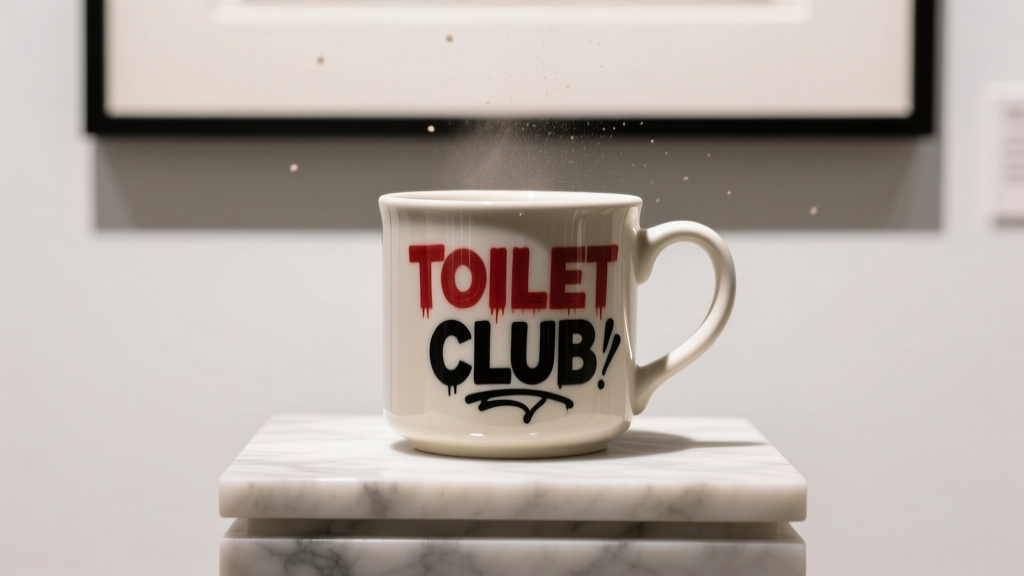
The Toilet Club Mug: Anatomy of a Viral Collectible and Its Place in Contemporary Design Culture

Coca-Cola Sign: Bottle Shape Die-Cut, 1951, 16-Inch — Authentication, Market Value, and Historical Context
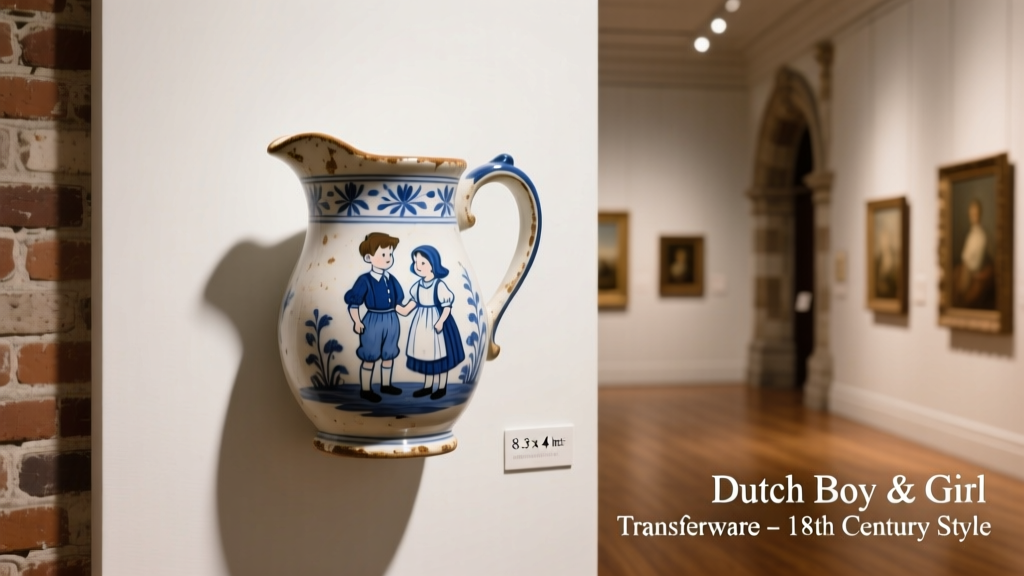
Decoding the Dutch Boy & Girl Transfer Pitcher: Authentication, Provenance, and Market Value of the 8¾-Inch Blue-and-White Stoneware Pitcher

Custard Glass Jackson Tumbler 4-Inch: Authentication, Market Value, and Historical Context

Cambridge Glass Apple Blossom Cordial in Amber: Production History, Identification, and Market Value Analysis

Decoding 081915: Authentication, Provenance, and Market Dynamics of a Key Contemporary Print Edition
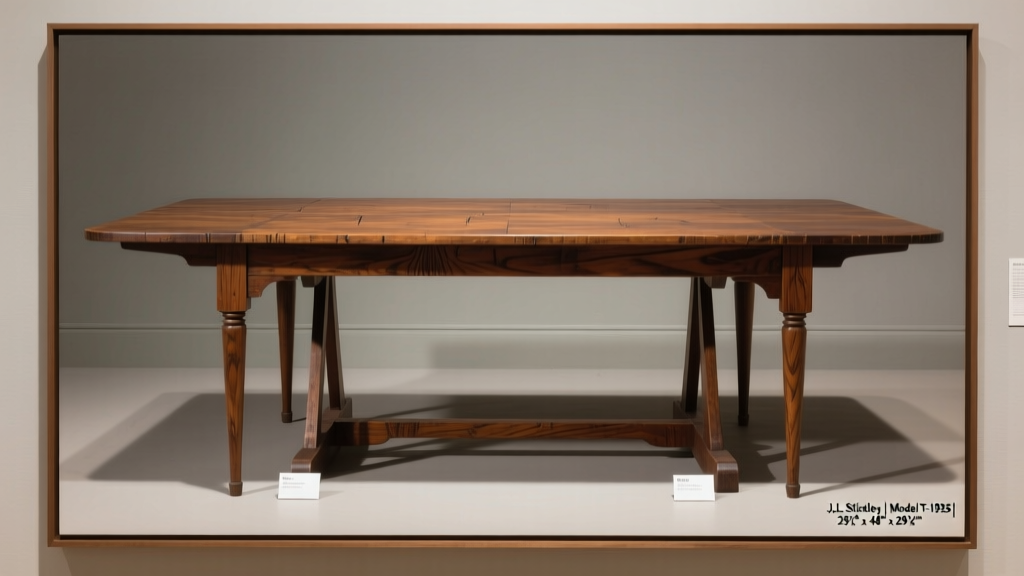
Authentication and Market Analysis of the L. J. G. Stickley Trestle Shelf: Dimensions, Provenance, and Value Assessment

Hedgehog Figures in the Art Market: Authentication, Value Drivers, and Collector Trends