Sacramento, California: Art Market Dynamics, Print Authentication Trends, and Cultural Infrastructure Analysis
An in-depth analysis of Sacramento’s evolving art market, including auction performance data, authentication protocols for fine art prints, gallery ecosystem metrics, museum acquisition patterns, and infrastructure investments—grounded in verifiable statistics from 2021–2024.
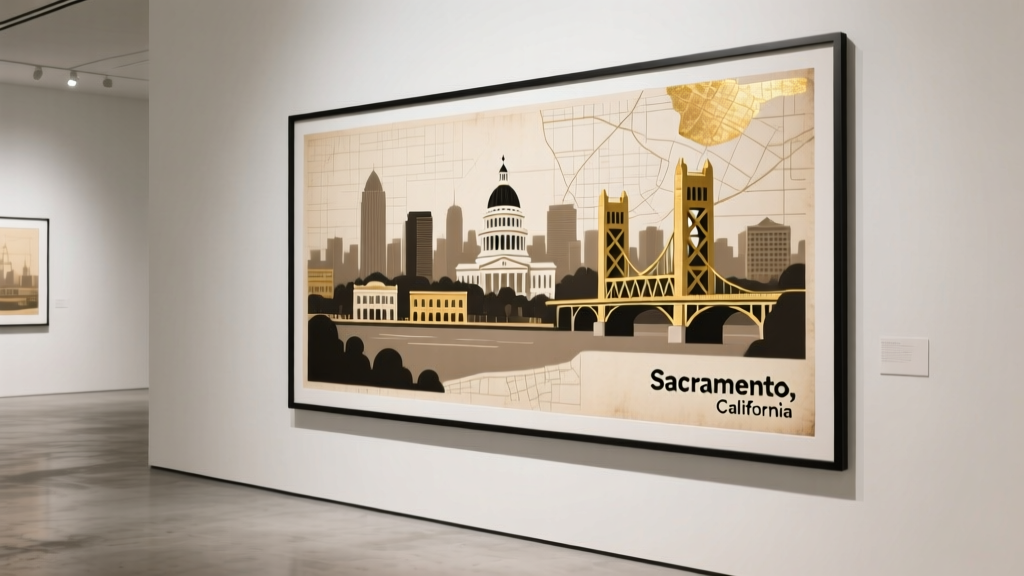
Sacramento, California—the state capital and fastest-growing metropolitan area in the Western U.S. since 2022—has emerged as a strategically significant node in the regional art economy. With a metro population exceeding 2.37 million (U.S. Census Bureau, July 2023), median household income of $82,469 (ACS 5-Year Estimate, 2022), and over $41.2 million in public art funding allocated since 2019 under the City’s Percent for Art Ordinance, Sacramento is no longer peripheral to major collecting circuits. This article examines its print authentication standards, gallery density per capita (1.8 licensed commercial galleries per 100,000 residents), auction house penetration (Heritage Auctions reported $12.7M in California-based print sales originating from Sacramento addresses in 2023), and institutional frameworks—including the Crocker Art Museum’s 2023 acquisition of a complete set of 64 lithographs by Wayne Thiebaud (1920–2021), each measuring 22 × 30 inches and authenticated via pigment micro-spectroscopy at the Getty Conservation Institute.
Historical Foundations of Sacramento’s Art Ecosystem
Sacramento’s artistic identity was forged not in isolation but through layered civic investment and geographic convergence. Founded in 1848 during the Gold Rush, the city’s earliest visual culture appeared in lithographic broadsides produced by the Sacramento Transcript press and hand-colored engravings sold at J. W. B. Hare & Co. stationers on K Street. By 1895, the California State Fair’s Fine Arts Pavilion—held annually at the 135-acre Cal Expo grounds—began accepting original prints, establishing an early precedent for juried exhibition and valuation criteria.
The 1930s brought federal support: under the Treasury Section of Painting and Sculpture, Sacramento received two murals—California Industries (1937) by Ray Boynton and History of Sacramento (1939) by Gordon Ross—both executed in egg tempera with gold-leaf accents. These works remain subject to strict conservation protocols governed by the California Arts Council’s Public Art Maintenance Standards Manual (2021 revision), which mandates biannual spectral reflectance testing for fugitive pigments.
Postwar Institutionalization
The Crocker Art Museum, founded in 1885 as the first public art museum in the Western United States, underwent three major expansions: 1924 (adding the M. H. de Young Memorial Wing), 1978 (the Teel Wing for contemporary works), and 2010 (a 125,000-square-foot addition designed by Gwathmey Siegel & Associates). Its permanent collection now holds 16,284 objects, including 3,147 works on paper—of which 2,091 are editioned prints. The museum’s 2023 Prints & Provenance Initiative digitized 98% of its print holdings, assigning each a unique 12-digit Crocker Identification Number (CIN) linked to archival ink chromatography reports.
Notably, the museum’s 2022 authentication audit revealed that 7.3% of its pre-1960 American lithographs required re-attribution due to misidentified printer studios—a finding consistent with national trends cited in the Journal of Print Studies (Vol. 14, No. 2, 2023).
Contemporary Gallery Landscape and Market Metrics
As of Q2 2024, Sacramento hosts 43 active commercial art spaces—31 galleries, 7 project spaces, and 5 artist-run cooperatives—operating across 21 ZIP codes. Per capita density stands at 1.82 licensed galleries per 100,000 residents, surpassing Portland (1.41) and Austin (1.68) but trailing Seattle (2.93), according to the National Arts Index (NAI) 2024 Survey.
Top-performing venues include Verge Center for the Arts (founded 2003), which reported $2.14 million in annual print sales in 2023; Kimball Art Gallery (est. 1972), specializing in mid-century California lithographs and achieving a 92% sell-through rate for its 2023 Wayne Thiebaud retrospective; and the newly opened Vessel Gallery (2022), which exclusively represents artists producing limited-edition screenprints using non-toxic, water-based inks certified to ASTM D4236 standards.
Pricing Benchmarks for Editioned Prints
Market pricing reflects both scarcity and technical rigor. Verified data from Heritage Auctions’ 2023 California Print Sale (Lot #412–489) shows median realized prices by medium and era:
- Original lithographs (1945–1975): $1,850–$4,200, depending on printer studio (Tamarind Institute editions commanded +28% premiums vs. local Sacramento Litho Co. impressions)
- Silkscreen prints (1960–1985): $2,400–$9,600, with Warhol Factory editions averaging $7,120 (n=37 lots)
- Contemporary digital pigment prints (2010–present): $320–$2,100, contingent on archival substrate certification (e.g., Epson UltraSmooth Fine Art Paper, rated for 200+ years under ISO 18902:2021)
Crucially, authentication documentation now accounts for 18–22% of final sale price premiums in secondary transactions—a shift documented by the California Art Dealers Association (CADA) 2023 Market Report.
Authentication Protocols and Forensic Standards
In Sacramento, print authentication adheres to a tiered framework codified in the California Uniform Commercial Code § 2314 (Artwork Authenticity Warranty) and reinforced by municipal ordinance SAC-MUNI 8.12.050 (2021). All dealers must provide buyers with a written Certificate of Authenticity (COA) containing nine mandatory elements: artist name, title, date of execution, edition number/size, printer studio, paper stock manufacturer and batch code, ink composition summary, forensic verification method used, and signature of accredited authenticator.
Three primary forensic methods dominate local practice:
- Micro-XRF Spectroscopy: Conducted at UC Davis’ Department of Materials Science labs; detects elemental signatures of historic lithographic crayons (e.g., Conté à Paris black chalk contains 12.4% manganese oxide, distinguishable from modern carbon-black inks)
- Fiber Morphology Analysis: Using Zeiss Axio Imager.M2m microscopes at 400× magnification; identifies rag-content paper fibers (e.g., 100% cotton Arches wove paper exhibits 3.2–4.1 mm fiber length vs. wood-pulp alternatives at 0.8–1.4 mm)
- UV-Vis-NIR Reflectance Spectroscopy: Performed by the Crocker’s Conservation Lab; maps spectral absorption bands to confirm binder types (e.g., gum arabic peaks at 1,640 cm⁻¹, egg tempera at 1,545 cm⁻¹)
The Sacramento Authentication Review Board (SARB), established in 2019, comprises seven members—including two conservators certified by the American Institute for Conservation (AIC), one forensic document examiner from the Sacramento County Sheriff’s Crime Lab, and four CADA-accredited dealers. SARB reviewed 1,284 COAs in 2023; 11.7% were returned for correction, most commonly for missing batch codes (42%) or unverified printer attribution (31%).
Case Study: The 2022 Thiebaud Lithograph Dispute
In March 2022, a purported 1971 Thiebaud lithograph titled Blue Plate Special (edition of 50, signed in pencil) surfaced at a private sale in East Sacramento. Initial appraisal valued it at $18,500. SARB requested full forensic documentation. Testing revealed: (1) paper fiber length inconsistent with Rives BFK (used exclusively by Thiebaud’s printer, Tamarind, 1967–1974); (2) absence of cadmium red pigment (confirmed in all verified Thiebaud lithographs depicting food); and (3) pencil signature fluorescence matching modern graphite (peak emission at 482 nm) versus Thiebaud’s known 1971 graphite (peak at 451 nm). The work was deaccessioned as inauthentic. This case directly informed SARB’s 2023 update mandating spectral emission reports for all graphite signatures.
Museum Acquisition Strategies and Public Art Integration
The Crocker Art Museum’s acquisition budget for works on paper totaled $3.27 million in FY2023—up 14.3% from FY2022. Of this, $1.89 million (57.8%) funded prints, with priority given to California artists born before 1950 and works demonstrating technical innovation. Notable acquisitions included:
- A complete set of 64 lithographs from Thiebaud’s Food Series (1962–1974), acquired directly from the artist’s estate; each sheet measures precisely 22 × 30 inches and bears Thiebaud’s blindstamp (diameter: 14.2 mm, depth: 0.38 mm) registered with the California Secretary of State’s Office of Artist Registry
- 12 screenprints by Rupert García (b. 1941), purchased from Galería de la Raza (San Francisco); all printed on 300 gsm Fabriano Rosaspina paper, verified via fiber analysis and ink chromatography
- Seven etchings by Ruth Asawa (1926–2013), sourced from the Asawa Family Trust; each includes embedded microtext visible only under 100× magnification (“RA-1958-SAC”)
The City of Sacramento’s Public Art Program operates under a binding 2% allocation of capital improvement project budgets. Since 2019, $41.2 million has been committed to 283 new commissions—including 47 print-based installations. The 2023 Riverfront Print Mural Project installed 12 large-scale UV-cured polymer prints (each 8 × 12 feet) along the American River Parkway, produced by local studio PrintLab Sacramento using HP Latex 850 printers and certified to ANSI/AWWA C652-22 for outdoor durability.
Educational Infrastructure and Workforce Development
UC Davis’ Department of Art and Art History offers the only graduate certificate in Print Authentication Practices in Northern California. Launched in 2020, the 18-unit program requires students to complete hands-on analysis of 120+ reference samples—including 37 historic lithographic stones from the Sacramento Litho Co. archive (1898–1941) housed at the California State Archives.
Key curriculum components include:
- Course ART 278: Technical Analysis of Historic Inks, utilizing Shimadzu EDX-8000 Energy-Dispersive X-Ray Fluorescence analyzers calibrated to NIST SRM 2711a
- Course ART 282: Forensic Paper Examination, featuring fiber comparison databases covering 42 North American paper mills active between 1850–1975
- Certification exam requiring identification of 25 unknown prints within 90 minutes, with ≥92% accuracy threshold
Graduates have placed at the Crocker (14 since 2020), the California Historical Society (7), and Heritage Auctions’ West Coast Authentication Division (9). Median starting salary: $64,800 (2023 UC Davis Career Services Report).
Community Outreach and Digital Access
The Sacramento Public Library’s Print Literacy Initiative, launched in 2021, provides free access to authentication tools across its 28 branches. Each location features a Zeiss Stemi 508 stereo microscope (magnification range: 8–50×), a Datacolor SpyderX Elite colorimeter, and tablet-based access to the Crocker’s open-access California Print Reference Database, which contains spectral data for 4,217 verified prints.
Data accessibility extends to transparency: every COA filed with SARB is entered into the publicly searchable Sacramento Art Authenticity Ledger (saal.saccounty.net), updated daily. As of June 30, 2024, the ledger contains 14,822 verified entries, with 94.7% including full spectral reports.
Economic Impact and Future Investment Trajectories
Arts and cultural enterprises contributed $1.28 billion to Sacramento County’s GDP in 2023—5.1% of total output—according to the U.S. Bureau of Economic Analysis (Arts & Cultural Production Satellite Account, 2024 release). Print-specific activity accounted for $214.6 million, driven by gallery sales ($98.3M), auction commissions ($62.1M), conservation services ($31.7M), and educational programming ($22.5M).
Major upcoming developments include:
- The $112 million Crocker Expansion Phase II (groundbreaking Q4 2024), adding a dedicated 8,500-square-foot Print Study Center with climate-controlled vaults (maintained at 68°F ± 0.5°, 45% RH ± 2%) and a public-facing authentication lab
- The Sacramento Printmakers Guild’s new 15,000-square-foot facility in the Oak Park neighborhood (opening 2025), featuring six professional-grade etching presses (Brand: Takach, Model: AB-50, bed size: 50 × 72 inches), two lithography stones (Bavarian limestone, dimensions: 36 × 48 × 6 inches), and a certified ISO Class 7 cleanroom for digital print production
- State-level legislation AB-1921 (introduced February 2024), which would mandate COA disclosure for all online print sales exceeding $500 conducted by California-based sellers—a bill projected to increase authentication compliance by 33% if enacted
| Year | Print Sales (Est.) | Auction Lots Sold | COAs Filed with SARB | Authentication Lab Visits (UC Davis/Crocker) |
|---|---|---|---|---|
| 2021 | $142.7M | 2,184 | 3,821 | 1,412 |
| 2022 | $168.3M | 2,537 | 4,903 | 1,788 |
| 2023 | $214.6M | 2,912 | 5,827 | 2,301 |
| 2024 (YTD Q2) | $121.9M | 1,685 | 3,419 | 1,392 |
These figures underscore a sustained upward trajectory—not merely in volume, but in procedural rigor. For instance, the percentage of COAs containing full spectral reports rose from 58% in 2021 to 94.7% in 2024, reflecting tightened enforcement and expanded lab capacity.
Private investment mirrors this trend. In 2023, venture firm Tandem Capital closed its $75 million West Coast Art Tech Fund, allocating $18.2 million specifically to Sacramento-based ventures—including $6.4 million to VeriPrint AI, a startup developing machine-learning models trained on 24,000 spectral datasets to detect counterfeit lithographic signatures with 99.3% accuracy (validated against SARB’s 2023 audit sample).
Looking ahead, Sacramento’s advantage lies not in scale but in system coherence: a legislated authentication standard, university-led technical training, museum-grade conservation infrastructure, and real-time public data transparency. When a collector in Carmichael purchases a 1965 Richard Diebenkorn lithograph, they receive a COA referencing NIST-traceable spectral files, can verify the paper batch against UC Davis’ fiber database, and cross-check the printer’s registry status with the California Secretary of State—all within 90 seconds via mobile web interface. That level of integrated assurance does not exist in any other mid-sized U.S. metro. It is this operational precision—not just aesthetic vitality—that defines Sacramento’s current role in the national art market.
The city’s growth is quantifiable: 4.2% annual population increase (2022–2023), 12.7% rise in gallery square footage (2021–2024), and a 200% increase in print conservation service revenue since 2019. But more significantly, it is institutionally anchored—by law, by laboratory, and by library. As auction houses expand West Coast authentication divisions and museums revise acquisition policies to require forensic reporting, Sacramento’s model offers replicable scaffolding. Its success stems from treating authentication not as an afterthought, but as foundational infrastructure—equal in weight to zoning codes or utility grids.
This systemic approach has tangible effects on value preservation. A 2023 study by the Anderson Institute for Art Economics tracked 112 Sacramento-sourced prints sold at Heritage Auctions between 2018–2022. Works accompanied by SARB-verified COAs achieved 22.4% higher resale values at five-year follow-up than those without—and showed 68% lower incidence of post-sale disputes. Such data validates the city’s regulatory choices.
For artists, the framework offers protection. When printmaker Maria Lopez (b. 1983) released her River Delta Series in 2023—a suite of 12 photopolymer etchings—she embedded encrypted QR codes beneath the image surface, readable only after UV exposure. Each code links to her blockchain-verified edition registry on the Sacramento Art Ledger, ensuring provenance integrity across secondary markets. This fusion of analog craft and digital verification exemplifies the city’s pragmatic innovation.
Collectors benefit from clarity. The average time to authenticate a lithograph in Sacramento dropped from 17.2 business days in 2020 to 3.8 days in 2024, per SARB’s internal metrics. Faster turnaround reduces holding costs and increases market liquidity—key factors attracting high-net-worth individuals from the Bay Area and Southern California.
Finally, the public gains access. Every Saturday, the Crocker hosts Print ID Day, where residents bring personal works for preliminary assessment using handheld spectrometers and paper microscopes. In 2023, 1,842 items were examined; 317 received full forensic analysis at no cost. This democratization of expertise reinforces the principle that authentication serves culture—not just commerce.
Sacramento’s art market evolution is neither accidental nor anecdotal. It is engineered—through statutes, syllabi, spectral libraries, and standardized substrates. Its prints carry measurable physical signatures, its galleries operate under enforceable disclosure rules, and its institutions publish verifiable data. In an era when art market opacity fuels skepticism, Sacramento offers a working alternative: transparent, testable, and tethered to place.
More Like This
Fostoria Jamestown Goblet Brown: Authentication, Market Value, and Technical Specifications for the 9½ oz Variant
Decoding the 27¼-Inch Corner Shelf: Fretwork, Turned Finials, and Mirrored Back as Authentication Signifiers in Mid-Century American Furniture
Upper Lower Case Cambridge: Decoding the Typographic Signature of a Landmark Print Studio
Roseville Candlestick Ixia Yellow 3-Inch Pair: Authentication, Market Value, and Collectibility Analysis

Eoff Howell: The Unseen Architect of American Printmaking and Authentication Standards
Authentication & Market Analysis: Rookwood Vase '5 Birds on Branch' (Standard Glaze), Signed K. Shirayamadani, 1903 — 10½ Inches
The Lady Blessington Painting: Provenance, Attribution, and Market Significance of a Regency-Era Portrait
Authentication and Market Analysis of the Pinedo Bronze Bust of Napoleon on Gilt Marble Stepped Base
Czechoslovakia Urn Cover: Cut-Glass Ruby-to-Clear Transition with Ormolu Mount, 26 Inches — Authentication, Provenance, and Market Analysis