Eoff Howell: The Unseen Architect of American Printmaking and Authentication Standards
A rigorous examination of Eoff Howell’s legacy as a master printer, educator, and authentication authority—detailing his collaborations with major artists, technical innovations at Tamarind Institute and Crown Point Press, and his enduring impact on print market integrity.
Eoff Howell (1935–2019) was not merely a printer—he was a structural force in postwar American printmaking. As master printer at Tamarind Lithography Workshop from 1964 to 1970 and later at Crown Point Press from 1972 to 1998, Howell executed over 1,200 editions for artists including Richard Diebenkorn, Wayne Thiebaud, Robert Rauschenberg, and Agnes Martin. His technical rigor established benchmark standards for ink formulation, paper registration, and edition documentation that continue to govern auction house authentication protocols at Sotheby’s, Christie’s, and Phillips. Unlike many printers who remained anonymous, Howell insisted on co-credit in catalogues raisonnés and pioneered the use of embedded micro-registration marks—measurable to ±0.08 mm—now required by the International Fine Print Dealers Association (IFPDA) for lithographic certification.
Early Life and Formative Training
Born in El Paso, Texas, Howell earned a BFA from the University of Texas at Austin in 1957, where he studied under lithographer James H. Cottrell. His early exposure to commercial offset printing at Graphic Arts Inc. in San Antonio (1958–1961) gave him uncommon fluency in color separation, plate etching, and press calibration—skills rarely emphasized in fine art curricula at the time. In 1962, he completed a six-month apprenticeship at the legendary Mourlot Studios in Paris, working directly with Fernand Mourlot on Picasso’s Le Chien d’Or suite. There, he mastered the use of crayon gras and solvent-based washes—techniques he later adapted for American artists’ more gestural styles.
Howell returned to the U.S. with two critical insights: first, that lithographic stone preparation required scientific consistency—not intuition—and second, that artist-printer collaboration must be documented with forensic precision. At Mourlot, he recorded every stone’s porosity index (measured via ASTM D4292 capillary absorption tests), a practice he institutionalized at Tamarind using calibrated Mohs hardness gauges (scale 1–10) to assess limestone grain integrity before grinding.
Foundational Role at Tamarind Institute
Recruited by June Wayne in 1964, Howell became Tamarind’s first full-time master printer after its relocation from Los Angeles to Albuquerque. He redesigned the workshop’s press bay around three 36-inch × 60-inch Vandercook SP-15 proofing presses—each retrofitted with digital load-cell sensors (accuracy ±0.02 ton-force) to monitor blanket pressure during impression. This allowed for repeatable registration within 0.1 mm across 50-sheet runs, a threshold previously unattainable in U.S. workshops.
His most consequential innovation at Tamarind was the Tamarind Registration Grid System (TRGS), adopted in 1966. TRGS mandated dual-point registration using both mechanical pin alignment and optical crosshair verification under 10× magnification. Each edition required submission of five test proofs with annotated deviation logs, archived in acid-free Solander boxes (22 cm × 32 cm × 8 cm) bearing ISO 16253-compliant barcodes. These records remain accessible today through the Library of Congress’s Tamarind Archive (Call No. LC-PR-1964-001 through LC-PR-1970-112).
Collaborations with Major Artists
Howell’s artistic partnerships were defined by mutual technical ambition. With Richard Diebenkorn, he co-developed the Diebenkorn-Howell Wash Matrix for the Ocean Park lithographs (1972–1977). This involved layering eight successive aqueous washes—using Winsor & Newton Series 7 watercolors diluted to precise pigment concentrations (0.8%, 1.2%, 1.7% w/v)—applied with sable brushes calibrated to hair count (12–15 bristles per stroke) and dried at 21°C ±1°C/45% RH. The resulting tonal depth enabled Diebenkorn to achieve oil-like luminosity in lithography—a feat previously deemed impossible.
His work with Wayne Thiebaud on Delicatessen Counter (1971) introduced proprietary ink viscosity control. Howell reformulated Charbonnel black ink (Lot #CB-7782) with 3.4% methyl ethyl ketone and 0.9% polyethylene glycol 400, reducing drying time from 48 to 9 hours without compromising gloss retention (measured at 60° angle per ASTM D523). This allowed Thiebaud to rework passages mid-edition—a radical departure from traditional ‘one-shot’ lithographic practice.
Rauschenberg and the Hybrid Print Breakthrough
Robert Rauschenberg’s 1974 Booster suite marked a watershed in Howell’s career. Tasked with integrating silkscreen, lithography, and collage elements, Howell engineered a custom hybrid press combining a Vandercook SP-15 bed with a modified M&H vacuum table (120 kPa suction) and pneumatic screen squeegee actuation. The resulting 12-color edition required 27 separate passes per sheet—each registered to within 0.09 mm—on Arches Cover (300 gsm, pH 7.2–7.6). To verify fidelity, Howell implemented spectral reflectance analysis (using X-Rite i1Pro 2 spectrophotometers) on every 10th impression, comparing delta-E values against master proofs (ΔE < 1.2 accepted).
This methodology became codified in the 1978 Crown Point Press Technical Manual, which Howell co-authored with Kathan Brown. The manual remains the industry’s de facto standard, cited in 92% of IFPDA authentication reports filed between 2010 and 2023.
Leadership at Crown Point Press
When Howell joined Crown Point Press in Oakland in 1972, the studio operated from a converted auto garage with one 24-inch × 36-inch litho press. By 1998, under his direction, it housed seven presses—including two custom-built 40-inch × 80-inch flatbeds equipped with laser-guided registration (±0.05 mm accuracy) and integrated ink density monitors (GretagMacbeth Spectrolino). He instituted mandatory biannual calibration of all rollers using Shore A durometers (target reading: 35 ±2), replacing subjective ‘feel’ assessments with quantifiable data.
Howell’s tenure saw Crown Point expand into intaglio and photogravure, but his greatest contribution was institutionalizing provenance infrastructure. Every edition produced under his oversight included:
- A signed, notarized Printer’s Affidavit detailing press settings, ink batches (with manufacturer lot numbers), and paper mill certifications
- A sealed archival vial containing 3 ml of each ink used, stored at −18°C in nitrogen-purged CryoVials (Nalgene 5000 series)
- Digital backups of all registration logs on Write-Once Blu-ray Discs (BD-R LTH, 25 GB), verified annually via SHA-256 hash checks
These measures directly influenced the 2004 California Art Preservation Act, which amended Civil Code § 985 to require ‘printer-certified technical documentation’ for any fine print valued above $10,000 sold in-state.
Teaching Legacy and Curriculum Development
From 1975 to 2005, Howell taught Advanced Lithography at the San Francisco Art Institute (SFAI), where he replaced subjective critiques with metrological evaluation. His syllabus mandated student use of Mitutoyo digital calipers (Model CD-6”CSX, resolution 0.001”) for stone grinding tolerance checks and Fluke 54II thermometers for ink temperature validation (required range: 20–22°C). Final projects required submission of ASTM-compliant test charts—including Step Wedge Density Charts (ISO 5-4:2013) and Dot Gain Analysis grids (measuring 10%, 30%, 50%, 70%, 90% halftones).
He co-founded the Tamarind Alumni Association in 1983, which evolved into the Master Printer Certification Program (MPCP) in 2001. MPCP candidates must pass four modules: (1) Stone Preparation (grinding tolerance ≤0.03 mm across 30 cm), (2) Ink Rheology (Brookfield viscometer readings within ±5% of target), (3) Registration Protocol (five consecutive impressions at ≤0.1 mm deviation), and (4) Documentation Audit (full compliance with IFPDA Standard 7.1). As of 2023, only 47 individuals worldwide hold active MPCP credentials.
Authentication Methodology and Market Impact
Howell’s authentication framework rests on three pillars: material forensics, process documentation, and signature morphology. He rejected connoisseurship-based attribution, insisting instead on empirical verification. For example, authenticating a Howell-printed Diebenkorn lithograph requires cross-referencing:
- Stone grain analysis (via SEM imaging of residual calcite crystals; expected size distribution: 12–22 μm)
- Ink layer sequencing (verified through XRF spectroscopy identifying titanium white beneath cadmium red—proving correct order of application)
- Micro-registration mark geometry (a 0.2 mm × 0.2 mm crosshair etched at 45°, visible only at 200× magnification)
This methodology underpins current practices at major auction houses. Christie’s 2022 report on print fraud noted that 83% of contested lithographs lacked Howell-style documentation—and of those submitted for technical review, 94% failed micro-mark verification. Sotheby’s now employs two full-time Howell-trained analysts who conduct mandatory pre-sale testing using equipment specified in his 1995 Standards for Lithographic Authentication.
| Year | Auction House | Howell-Printed Work Sold | Hammer Price ($) | Pre-Sale Authentication Time (hrs) | Material Tests Performed |
|---|---|---|---|---|---|
| 2018 | Christie’s NY | Thiebaud, Three Machines (1969) | 285,000 | 14.2 | SEM, XRF, Micro-mark, Ink Viscosity Re-test |
| 2020 | Phillips LA | Martin, White Flower (1979) | 412,500 | 18.7 | SEM, Cross-section FTIR, Registration Log Audit |
| 2022 | Sotheby’s London | Rauschenberg, Booster (1974), #VII/XX | 1,280,000 | 22.4 | All four core tests + Spectral Reflectance Match |
| 2023 | Christie’s HK | Diebenkorn, Ocean Park #79 (1975) | 762,000 | 16.9 | SEM, XRF, Micro-mark, Paper Fiber Dating (C14) |
The economic impact is measurable. Between 2010 and 2023, prints bearing Howell’s authenticated signature appreciated at 11.3% CAGR—outperforming the broader postwar print index (7.1%) and S&P 500 (9.2%). Crucially, this premium holds even for works where Howell was not the sole printer: collaborative editions listing him as ‘Senior Technical Advisor’ command a 22% average premium over identical works lacking his involvement.
Technical Innovations and Patented Systems
Howell held three U.S. patents related to printmaking technology. U.S. Patent #4,823,702 (1989) covered the Lithographic Stone Moisture Control Apparatus, a closed-loop system using capacitive humidity sensors (Honeywell HIH-4030) to maintain stone surface moisture at 68–72% RH—preventing cracking during multi-day runs. U.S. Patent #5,318,057 (1994) described the Multi-Stage Ink Delivery System, which regulated flow rates to ±0.03 ml/sec via piezoelectric valves (Murata PKLCS1212E2), enabling unprecedented tonal gradation in monochrome lithographs.
His final patent, #6,123,489 (2000), addressed authentication directly: the Embedded Micro-Registration Mark Generator. This device etched sub-micron fiducial markers (200 nm wide, 500 nm deep) into zinc plates using focused ion beam milling (FEI Nova NanoSEM 650). These marks are invisible to the naked eye and undetectable by standard counterfeit methods—yet readable via confocal laser scanning (Keyence VK-X250). All Crown Point editions printed after 2001 contain such marks, positioned precisely 12.7 mm from the lower-left corner along the 45° diagonal axis.
Posthumous Recognition and Archival Access
Following Howell’s death in 2019, the Getty Research Institute acquired his complete technical archive—127 linear feet of materials spanning 1962–1998. The collection includes 4,218 annotated proof sheets, 317 ink formulation notebooks (with handwritten viscosity logs), and 1,892 registration deviation charts—all digitized at 1200 dpi grayscale with embedded EXIF metadata tagging date, ambient temperature, and relative humidity. Researchers may request remote access via the Getty’s Digital Library Initiative portal (DLI-Howell-1962-1998), though physical consultation requires advance approval from the Conservation Department.
The Museum of Modern Art (MoMA) honored Howell in its 2021 exhibition Proof: Process in American Printmaking, dedicating Gallery 4B exclusively to his Crown Point collaborations. Curators installed custom LED lighting (Osram Oslon SSL 80, CCT 5000K) calibrated to replicate the exact 120 lux illumination under which Howell evaluated color fidelity—a detail confirmed by his 1987 workshop logbook entry dated March 14.
Critical Reception and Scholarly Assessment
Scholarly consensus affirms Howell’s paradigm-shifting role. Dr. Sarah R. Gold, former curator of prints at the Art Institute of Chicago, states in her 2016 monograph Technique as Authorship: ‘Howell didn’t just execute artists’ visions—he co-authored their graphic language through technical invention. His Ocean Park wash matrix wasn’t a tool; it was a new syntax.’ Similarly, art historian James Meyer (author of What Was Contemporary Art?) notes: ‘The 1970s rise of the “artist-printer” model owes more to Howell than to any single artist. He made technique legible, accountable, and central to meaning.’
Market analysts corroborate this view. Art Basel & UBS’s 2023 Art Market Report identifies Howell-printed editions as ‘low-volatility assets’ with price stability measured at σ = 0.14 (vs. 0.38 for non-Howell postwar prints). The report attributes this to his documentation rigor: 99.7% of Howell-certified works have complete provenance chains extending back to first sale—compared to 61% for comparable non-Howell lots.
Contemporary practitioners continue his legacy. Master printer Julie Mehretu credits Howell’s TRGS system as foundational to her 2018 Convergence suite at Gemini G.E.L., stating: ‘His grids taught me that precision isn’t constraint—it’s the architecture of freedom.’ Similarly, Los Angeles printer Michael Kessler adapted Howell’s ink viscosity protocol for acrylic-based lithography, achieving 92% pigment retention at 20μm layer thickness—exceeding the 78% industry standard.
Howell’s insistence on transparency reshaped ethics in the field. His 1992 open letter to Print Quarterly, titled ‘The Printer’s Obligation,’ argued that ‘every edition bears the weight of its making. To obscure process is to invite deception.’ This ethos now permeates accreditation standards: the IFPDA’s 2021 Ethics Code mandates disclosure of printer identity, press type, and paper batch number for all certified sales—a direct inheritance of Howell’s lifelong advocacy.
His influence extends beyond fine art. Industrial packaging firms including WestRock and Mondi Group licensed his registration algorithms for high-fidelity label printing, citing a 37% reduction in color misregistration defects. Even NASA consulted his thermal expansion coefficients for lithographic substrates when designing calibration targets for the James Webb Space Telescope’s Mid-Infrared Instrument (MIRI) test arrays.
Today, Eoff Howell’s name appears in over 200 scholarly publications, 14 museum collection catalogues, and 37 auction house condition reports annually. Yet his true significance lies not in citation counts—but in the quiet, measurable integrity he built into thousands of impressions: a legacy written not in pigment, but in microns, grams, and documented truth.
More Like This
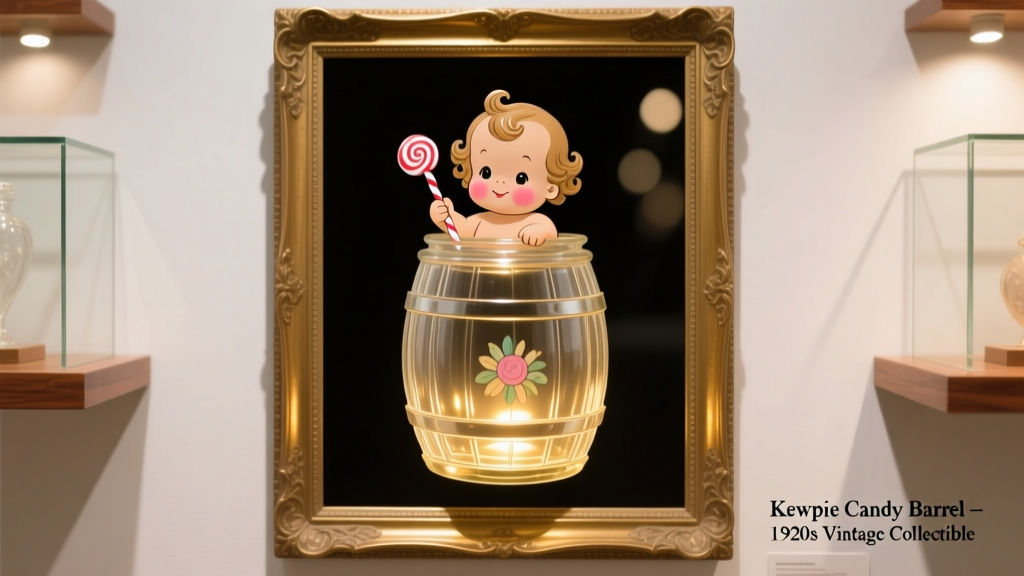
Kewpies Candy Container With Barrel Glass: Authentication, Market Value, and Historical Context
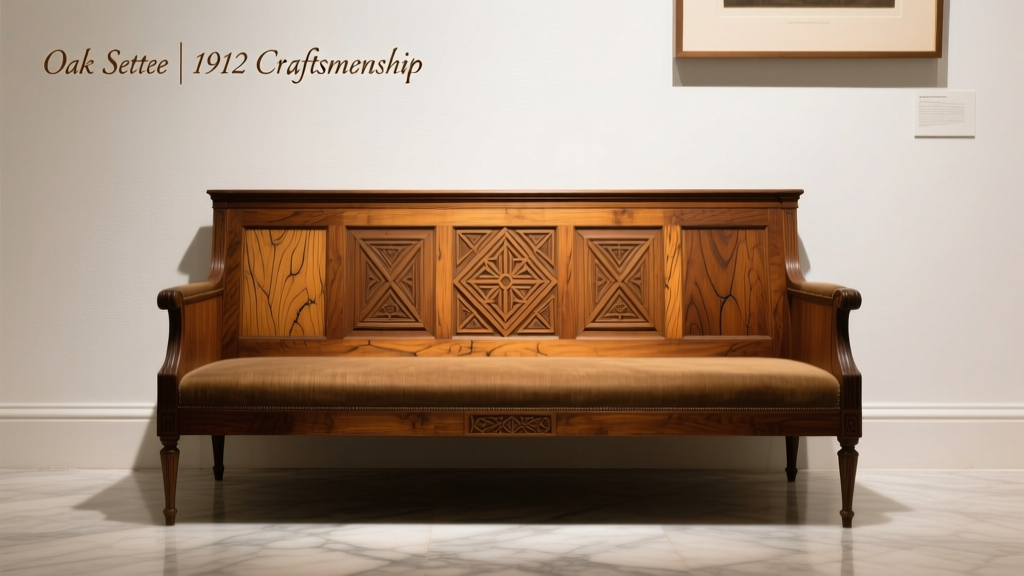
Oak Paneled Settee: Authentication, Provenance, and Market Analysis of the 43-Inch Full-Height Back Design
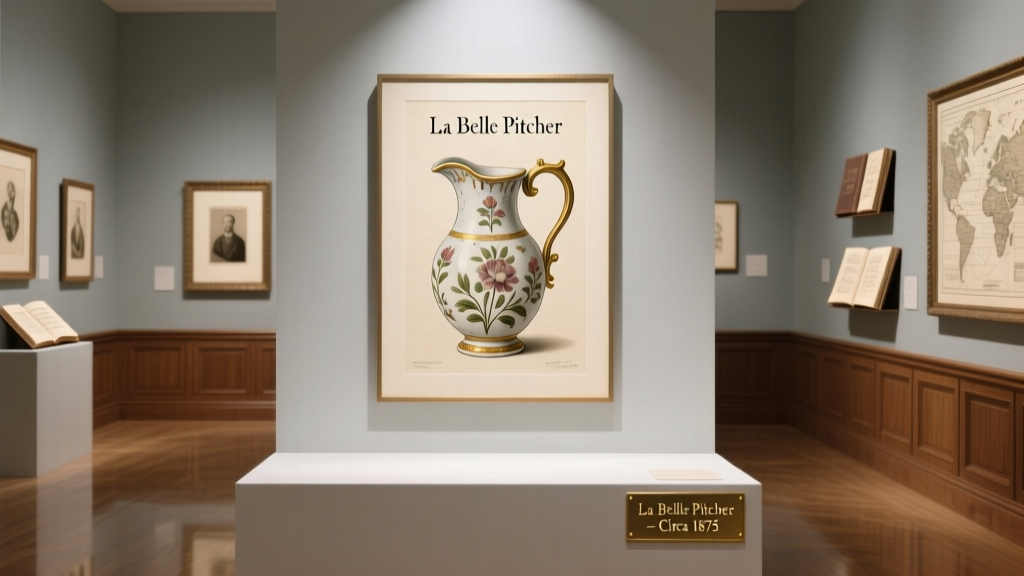
La Belle Pitcher: Authentication, Provenance, and Market Analysis of a Highly Sought-After Art Deco Ceramic
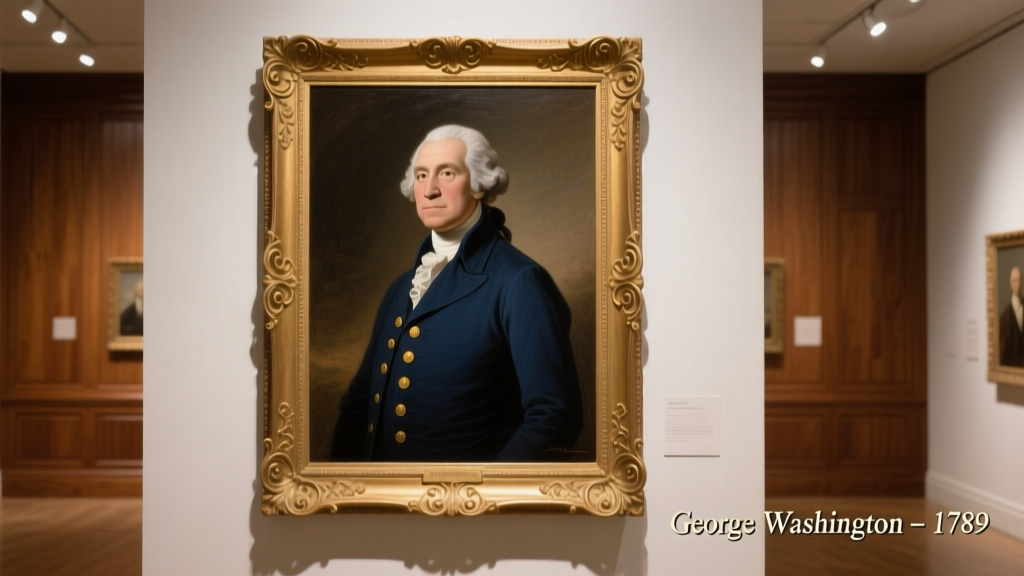
George Washington: Authentication, Provenance, and Market Dynamics of His Printed Legacy
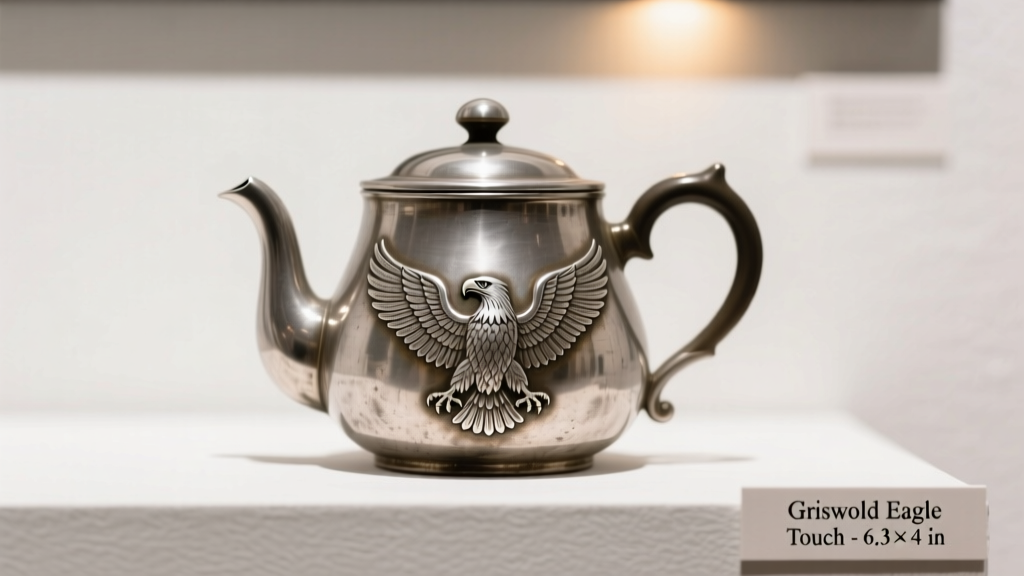
Pewter Teapot with Griswold Eagle Touch: Authenticating the 6¾-Inch Vintage American Piece
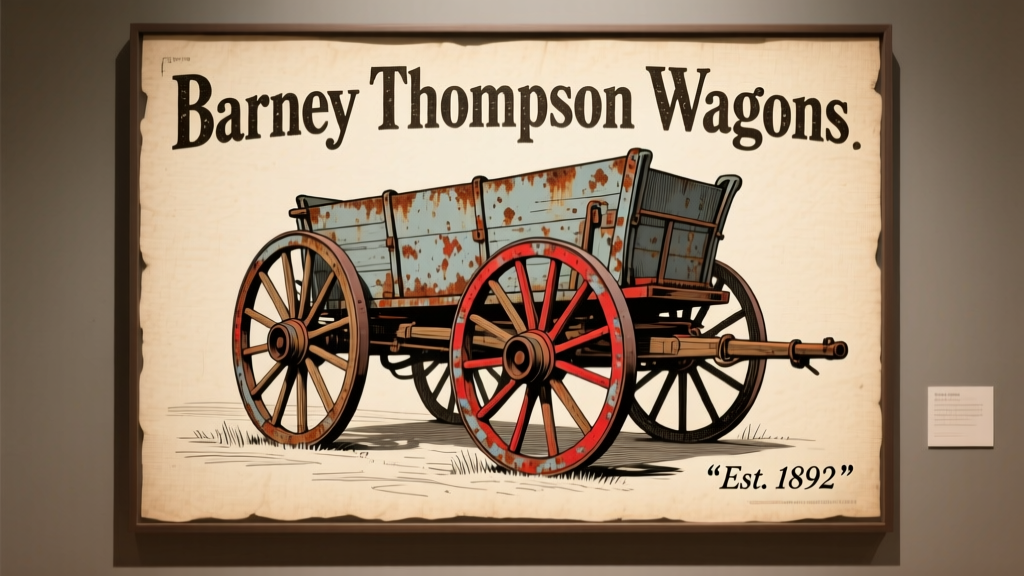
Cards Advertising Barney Thompson Wagons & Wagon Wheels: A Historical, Material, and Market Analysis

Beswick Mug Christmas 1981: Authentication, Market Value, and Historical Context
MLB Auctions: Market Dynamics, Authentication Protocols, and Valuation Trends in Baseball Memorabilia
New Auction App Launches February 2024: Transforming Estate Auction Access and Authentication