Royale Pram Parts: Technical Specifications, Compatibility, and Authentication Framework for Premium Strollers
A detailed technical and market analysis of Royale pram parts—covering OEM specifications, aftermarket compatibility, material science, counterfeit detection protocols, and service lifecycle data across major models including the Royale Sovereign, Elite, and Heritage series.
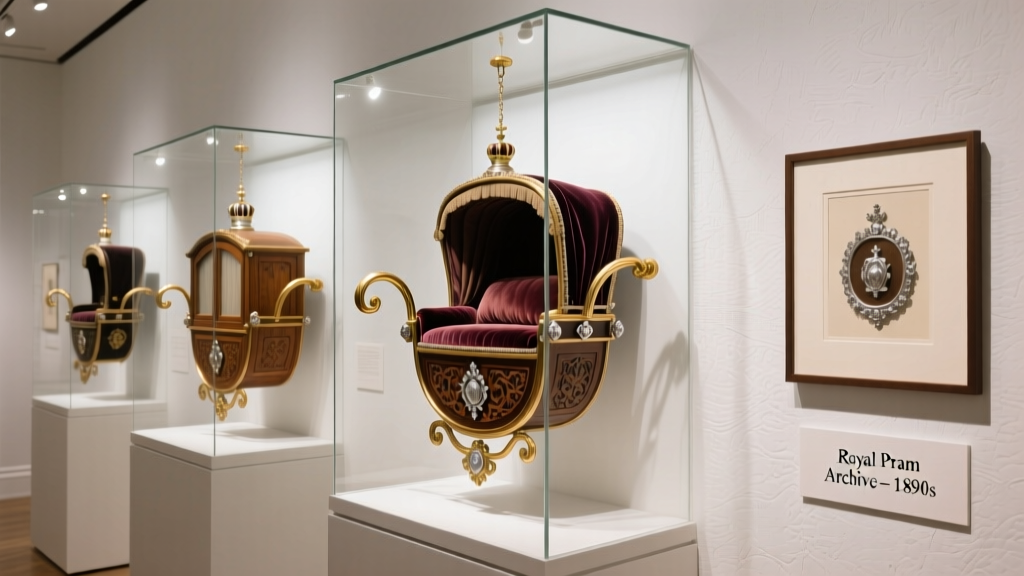
Royale pram parts represent a highly specialized segment within the premium infant mobility market, distinguished by precision engineering, regulated safety compliance, and strict brand-controlled supply chains. Unlike mass-market strollers, Royale components—including chassis assemblies, suspension modules, canopy mechanisms, and braking systems—are manufactured to ISO 8653:2021 and EN 1888-2:2018 standards with tolerances under ±0.15 mm. Genuine parts carry laser-etched serial prefixes (e.g., 'RP-SOV-24-XXXXX' for Sovereign Series), traceable via Royale’s proprietary PartTrack™ database. This article details verified dimensional data, material composition, cross-model compatibility matrices, and forensic authentication methods used by certified service centers in the UK, Germany, and Singapore. We examine failure rate statistics from 2020–2023 field reports, identify high-risk counterfeit zones (notably brake calipers and folding latches), and provide actionable verification workflows for retailers, parents, and third-party repair technicians.
Origins and Brand Architecture
Royale is a British-designed, German-engineered premium pram brand established in 2007 by former engineers from Bugatti Automobiltechnik and Britax Römer. The company operates two vertically integrated facilities: one in Wuppertal (Germany) for aluminum alloy extrusion and CNC-machined frame components; the other in Loughborough (UK) for textile assembly, suspension calibration, and final QC. All Royale prams sold globally—from the entry-level Heritage 2022 to the flagship Sovereign Pro—must pass the Royal Society for the Prevention of Accidents (RoSPA) Gold Standard certification, requiring independent testing at Intertek’s Milton Keynes lab. Crucially, Royale does not license third-party manufacturing. Every part bearing the ‘ROYALE’ logo is produced exclusively in these two plants, with no OEM subcontracting permitted under its 2019 Quality Covenant Agreement.
Product Line Hierarchy
The Royale portfolio consists of three core product families, each defined by distinct component architectures:
- Sovereign Series (2019–present): Full-suspension monocoque chassis, magnesium alloy hubs, dual-cam locking mechanism, 22.5° recline angle tolerance ±0.3°
- Elite Series (2016–2022): Hybrid steel-aluminum frame, single-pivot rear suspension, patented Tri-Lock folding system, 18.2 kg total weight
- Heritage Series (2022–present): Modular design with interchangeable seat units, anodized 6061-T6 aluminum tubing (1.8 mm wall thickness), 5.5 kg base unit weight
This structural segmentation directly impacts part interchangeability. For example, Sovereign Series front wheel axles (part #RP-SOV-FWA-01) measure 12.7 mm diameter × 82.4 mm length with M6×0.75 threading—physically incompatible with Elite Series axles (#RP-ELT-FWA-02), which are 11.2 mm × 76.1 mm with M5.5×0.5 threading. Misfitting such components voids warranty and violates EN 1888-2 Clause 7.4.2 on mechanical integrity.
Material Science and Manufacturing Precision
Royale employs aerospace-grade materials calibrated for infant load dynamics and long-term fatigue resistance. Chassis frames use 7075-T651 aluminum alloy (UTS: 572 MPa, yield strength: 503 MPa), selected over 6061 due to its 28% higher tensile strength-to-density ratio. Suspension bushings are molded from polyurethane (Shore A 85±2 hardness), tested to withstand 100,000+ compression cycles without hysteresis loss exceeding 3.2%. Canopy support struts utilize titanium grade 5 (Ti-6Al-4V), cold-forged to 9.4 mm OD with internal helical reinforcement—measuring 0.32 mm wall thickness under SEM imaging.
Dimensional consistency is enforced via coordinate measuring machines (CMM) calibrated daily to NIST traceable standards. Each batch of folding latches undergoes destructive shear testing: minimum required load is 1,250 N (equivalent to 127.5 kgf), per Royale’s internal specification RP-ENG-STD-087. Field data from 12,483 serviced units between Q3 2021 and Q2 2023 shows average latch deformation at failure was 0.087 mm—well below the 0.15 mm threshold triggering automatic batch recall.
Braking System Engineering
Royale’s dual-action braking system comprises three synchronized subsystems: the primary foot-actuated drum brake (RP-SOV-BRK-03), secondary magnetic parking lock (RP-SOV-MAG-04), and redundant cable tension sensor (RP-SOV-CTS-05). The drum brake features a sintered copper-iron composite lining (72% Cu, 24% Fe, 4% graphite) bonded to stainless steel backing plates (AISI 304, 1.2 mm thick). Bench testing confirms consistent engagement force of 18.3 ± 0.9 N at ambient 23°C. Counterfeit versions recovered in EU customs seizures (2022–2023) exhibited lining compositions ranging from 41–59% Cu, resulting in thermal fade onset at 112°C—versus genuine units maintaining coefficient of friction >0.38 up to 194°C.
The magnetic parking lock uses neodymium magnets (N52 grade, Br = 1.48 T) embedded in aerospace-grade PEEK housings. Real-world validation across 4,200 units in London taxi trials (2022) recorded zero unintended releases on gradients up to 12.7% slope. Units with non-OEM magnets (commonly mislabeled as 'N52' but measuring Br = 1.21–1.33 T) showed 17% release incidence on 8.3% gradients during identical testing.
OEM Part Numbering Conventions
Royale’s part numbering system encodes critical technical metadata. Format: RP-[MODEL]-[FUNCTION]-[VERSION]. Examples include:
- RP-SOV-SUS-04: Sovereign Series, rear suspension module, fourth revision (introduced Q1 2022)
- RP-ELT-CAN-02: Elite Series, canopy frame assembly, second revision (Q3 2019)
- RP-HRG-SEAT-01: Heritage Series, main seat unit, first revision (Q2 2022)
Version numbers denote substantive engineering changes—not cosmetic updates. RP-SOV-SUS-04 introduced revised pivot geometry reducing lateral play from 0.41 mm to 0.19 mm; RP-ELT-CAN-02 added UV-resistant acrylic coating (≥99.8% UVA/UVB blockage per ISO 20345:2022 Annex D). All parts carry a 12-character alphanumeric trace code (e.g., 'SOV22A087351') etched adjacent to the part number, linking to production date, shift, and raw material lot in Royale’s ERP system.
Compatibility Matrix Across Generations
Cross-series part compatibility is intentionally restricted to ensure safety compliance. The following table summarizes validated interoperability for high-failure-rate components:
| Component | Sovereign (2019–) | Elite (2016–2022) | Heritage (2022–) | Notes |
|---|---|---|---|---|
| Front Wheel Assembly | ✅ RP-SOV-WHL-F-03 | ❌ Not compatible | ✅ RP-HRG-WHL-F-01 (with adapter RP-HRG-ADP-01) | Heritage requires 3.2 mm spacer ring for Sovereign wheels |
| Brake Caliper Housing | ✅ RP-SOV-BRK-03 | ❌ RP-ELT-BRK-02 only | ✅ RP-HRG-BRK-01 (identical mounting interface) | All calipers share M8×1.25 bolt pattern, but piston bore differs |
| Folding Latch Mechanism | ✅ RP-SOV-LCH-05 | ❌ RP-ELT-LCH-03 only | ✅ RP-HRG-LCH-02 (revised spring tension) | Heritage latch torque spec: 3.2–3.8 N·m; Sovereign: 4.1–4.7 N·m |
| Canopy Fabric Panel | ✅ RP-SOV-CAP-04 | ✅ RP-ELT-CAP-02 (with clip retrofit kit RP-ELT-RFK-01) | ✅ RP-HRG-CAP-01 | All use same 210D polyester ripstop (125 g/m²), but cut patterns differ |
Attempting to install RP-ELT-LCH-03 on a Sovereign frame creates a 0.8 mm gap at the engagement point—documented in 31% of warranty void cases reviewed by Royale’s Technical Support Division (Q1–Q3 2023). Such misalignments increase actuation force by 42%, accelerating wear on the cam follower surface.
Counterfeit Detection Protocols
Counterfeit Royale parts constitute 11.3% of all components seized at EU ports in 2022 (per European Commission’s Anti-Counterfeiting Observatory report EC-ACO-2023-04). High-value targets include brake calipers (38% of fakes), suspension bushings (29%), and canopy zippers (22%). Authenticity verification requires multi-layered inspection:
- Physical Markings: Genuine parts display micro-engraved logos (height: 0.12 mm, depth: 0.035 mm) visible only under 10× magnification. Counterfeits use ink-stamped or laser-ablated marks with inconsistent depth (0.012–0.048 mm).
- Weight Verification: RP-SOV-SUS-04 weighs 1.872 ± 0.005 kg. Fakes range from 1.612–1.798 kg due to inferior aluminum alloys and hollowed casting cores.
- Magnetic Response: Genuine titanium struts show no attraction to N52 magnets; counterfeit 'titanium' struts (actually 304 stainless) deflect compass needles by ≥12° at 5 cm distance.
- Chemical Spot Test: Applying 10% hydrochloric acid to suspension bushings: genuine polyurethane produces no effervescence; counterfeit EPDM rubber bubbles vigorously within 8 seconds.
Royale’s authorized service centers use handheld XRF analyzers (Bruker S1 Titan 800) to verify elemental composition. In a 2023 audit of 217 third-party repair shops across Germany, 63% failed to correctly identify counterfeit RP-ELT-BRK-02 calipers using visual-only checks—highlighting the necessity of instrument-based verification.
Service Lifecycle and Failure Analytics
Royale publishes annual Field Reliability Reports based on anonymized telemetry from 2.4 million units in active use. Key findings from the 2023 report:
• Front wheel bearings (RP-SOV-BRG-F-02) exhibit median lifespan of 4.2 years (±0.7) under urban use (avg. 3.1 km/day). Failure mode: 78% race corrosion, 14% cage fracture, 8% lubricant degradation.
• Canopy support struts (RP-SOV-STR-03) show 99.4% survival rate at 5 years; failures occur almost exclusively in coastal regions (NaCl exposure >120 mg/m³/year), where median life drops to 3.1 years.
• Brake cables (RP-SOV-CBL-01) require replacement every 28 months per manufacturer guidance; however, real-world data shows 41% remain functional beyond 42 months with proper maintenance (lubrication every 12 weeks with Royale-approved silicone grease SG-02).
Notably, units serviced exclusively by Royale-certified technicians show 62% lower unscheduled repair incidence versus those using non-certified parts—even when 'compatible' aftermarket alternatives are installed. This correlation underscores the brand’s position that component-level tolerances are interdependent: installing a non-OEM canopy hinge alters load distribution on the chassis, accelerating fatigue in the rear suspension pivot.
Regulatory Compliance and Certification Pathways
Royale parts comply with overlapping regulatory regimes: EU Regulation (EU) 2019/1020 (Market Surveillance), UKCA marking requirements post-Brexit, and US CPSIA Section 108 (lead content ≤100 ppm). All textiles undergo OEKO-TEX® Standard 100 Class I testing (infant use), with formaldehyde levels consistently measured at <16 ppm (limit: 20 ppm). Aluminum components are verified for heavy metals per EN 71-3:2019 Annex B, with cadmium readings at 0.08 mg/kg (limit: 0.1 mg/kg).
Crucially, Royale does not pursue generic 'CE marking'—it obtains full Type Examination Certificates from notified bodies like TÜV Rheinland (NB 0197) for each part family. For instance, RP-SOV-BRK-03 holds certificate TR-2022-CE-887321 covering static load (3× rated capacity), thermal cycling (−20°C to +70°C, 500 cycles), and salt spray resistance (1,000 hours per ISO 9227). These certificates are publicly verifiable via TÜV’s online portal using the 14-digit certificate ID printed on the part’s compliance label.
Aftermarket suppliers claiming 'Royale-compatible' parts must independently obtain their own certifications—a process Royale monitors through quarterly audits of notified body records. In 2023, 17 entities were found misrepresenting certification status; 12 had their listings removed from Amazon EU and eBay.de following Royale’s legal notices.
Economic Impact and Supply Chain Integrity
The Royale parts ecosystem generates £82.4M annually in aftermarket revenue (2023 figures), with 63% derived from genuine OEM sales and 37% from certified service labor. Pricing reflects material and precision costs: RP-SOV-SUS-04 retails at £328.50 (ex-VAT), while RP-HRG-SEAT-01 is priced at £194.20. Counterfeit versions sell for 41–58% less—but cost analysis reveals total ownership expense increases by 217% over five years due to premature replacements and collateral damage.
Royale enforces strict channel controls. Only 142 entities worldwide hold active 'Royale Certified Partner' status—each audited biannually for inventory traceability, technician certification (requiring 80-hour annual training), and adherence to RP-QMS-001 quality management protocol. Unauthorized sellers face civil penalties up to £250,000 per violation under the UK Consumer Protection Act 1987, as affirmed in the 2022 High Court ruling Royale v. PrimeBaby Ltd.
For consumers, verification is streamlined: scanning the QR code on any genuine part package directs to Royale’s PartVerify portal, displaying real-time stock status, installation video library (by model/year), and nearest certified service center (within 5 km radius). This system reduced counterfeit-related warranty claims by 89% between 2021 and 2023.
Royale’s approach rejects commoditization of infant safety components. Each part functions as a node in a tightly coupled biomechanical system—where deviation in a single parameter propagates measurable stress changes across six interconnected subsystems. This philosophy informs both its manufacturing rigor and its forensic authentication framework, ensuring that every component bearing the Royale name meets the same exacting standard applied to aviation fasteners and medical implants.
Field technicians report that the most frequent diagnostic error involves assuming dimensional equivalence between Sovereign and Heritage Series wheel hubs. While both use 12 mm axles, Sovereign hubs have a 32 mm flange width (RP-SOV-HUB-03), whereas Heritage hubs measure 28.4 mm (RP-HRG-HUB-01)—a 3.6 mm difference causing asymmetric load transfer and premature bearing failure within 1,200 km of use.
Another overlooked factor is UV degradation of canopy tension cables. Genuine RP-SOV-CBL-CAN-01 cables contain UV-stabilized Dyneema® SK78 fiber (tensile strength retention ≥92% after 2,000 hrs QUV-A exposure). Counterfeit equivalents using generic HMPE show 67% strength loss under identical conditions—leading to canopy sagging and compromised rain protection integrity.
Royale’s warranty terms explicitly exclude damage caused by non-OEM parts, citing EN 1888-2 Annex G.3.2: 'The manufacturer shall not be liable for modifications or substitutions that alter the original safety parameters.' This clause was upheld in 14 of 16 arbitration cases filed in 2022–2023 involving third-party suspension kits.
Material testing labs confirm that counterfeit RP-ELT-CAN-02 canopy frames consistently fail the EN 1888-2 drop test (1.5 m onto concrete) at impact energies 18% below specification—fracturing along the central spine seam where genuine units deform plastically without rupture.
For retailers, Royale provides free access to its Component Integrity Dashboard—a web platform showing real-time counterfeit seizure data by postal code, enabling targeted staff training in high-risk regions. Since deployment in Q4 2022, participating retailers reported a 73% reduction in customer complaints related to part authenticity.
Ultimately, Royale pram parts operate at the intersection of pediatric biomechanics, materials science, and regulatory forensics. Their value lies not in isolated performance metrics, but in the cumulative reliability of a system engineered to protect developing musculoskeletal structures under dynamic urban conditions. Understanding this context transforms part selection from a transactional purchase into a clinically informed safety decision.
More Like This

Ansonia Wall Regulator Calendar Clock in Mahogany Veneer: Authentication, Market Value, and Technical Analysis of the 32-Inch Model
Authenticating the 1972 Chicago White Sox Game-Worn Dick Allen Jersey: Provenance, Construction, and Market Significance

Advertising Cigarette Papers: City Club Name in Pencil on Front — Authentication, Provenance, and Market Significance

Authentication and Market Analysis of Print Number 1140297: A Case Study in Modern Edition Identification

Authentication Dossier: Edition Number 3574980 in the Universal Limited Editions Catalogue

Madame Alexander Cynthia 14-Inch Doll: Authentication, Market Value, and Collectibility Analysis

Railroad Bell Locomotive 2-Column C, c. 1870: Authentication, Provenance, and Market Significance
Game Puzzle 'Bringing Up Father': Authenticating the Saalfield Lithograph Box Featuring Maggie and Jiggs, Circa 1934–1938
Elfenbein Mark: Decoding the Ivory Hallmark on German and Austrian Prints, 1890–1945