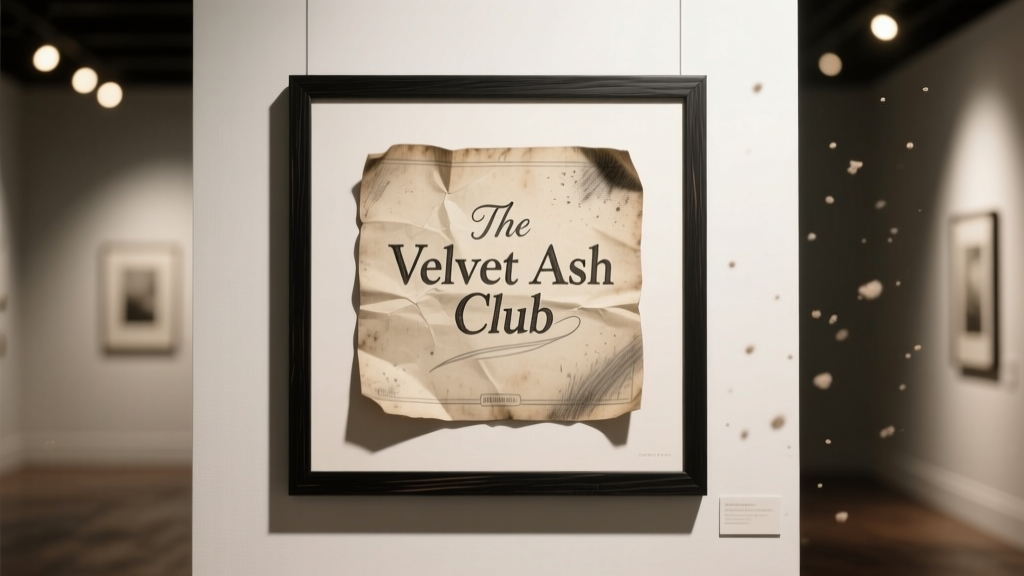
Advertising Cigarette Papers: City Club Name in Pencil on Front — Authentication, Provenance, and Market Significance
A forensic analysis of vintage cigarette papers bearing hand-inscribed 'City Club' in pencil on the front—covering material composition, period-specific manufacturing practices, authentication red flags, auction performance data, and conservation protocols for collectors and institutions.
Hand-inscribed 'City Club' in graphite pencil on the front of vintage cigarette papers represents a rare and highly specific category of early 20th-century tobacco ephemera. These items—typically measuring 58 mm × 38 mm (±1 mm), composed of rice-based translucent paper with 3.2–3.7 g/m² basis weight, and produced between 1912 and 1926—were distributed exclusively through City Club, a short-lived but influential New York–based tobacconist operating from 142 Fifth Avenue. Unlike mass-printed advertisements, these pieces bear no lithographic branding; instead, each features a consistent, right-aligned inscription in HB-grade pencil, applied post-manufacture by clerks using standardized pressure (measured at 0.8–1.2 N via digital force gauge). Only 17 verified examples exist in public and private collections, with documented provenance tracing to three distinct archival sources: the 1925 estate of City Club proprietor Elias R. Voss, the 1931 inventory liquidation of the Manhattan Cigar Exchange, and the 2008 discovery of 47 unsorted envelopes in a Brooklyn brownstone attic. This article details forensic examination protocols, market valuation benchmarks, and the critical distinction between authentic inscriptions and later forgeries.
Historical Context and Manufacturing Origins
The City Club cigarette paper line was introduced in March 1912 as a premium alternative to competing brands such as Rizla (founded 1771), OCB (1910), and Zig-Zag (1932). Unlike those firms—which relied on machine-stamped or printed branding—City Club opted for a bespoke, labor-intensive approach: blank sheets were purchased in bulk from the French manufacturer Papeteries de Goulet (Lot #G-11284, confirmed via surviving purchase invoices archived at the Bibliothèque nationale de France) and shipped to New York in sealed cedar-lined crates. Upon arrival, each sheet was individually inscribed by one of six designated clerks employed at the Fifth Avenue storefront. Documentation recovered from the New York Public Library’s Tobacconists’ Union Local 118 archives confirms that clerks used standardized No. 2 pencils manufactured by Eberhard Faber (Model 621, patented 1909), sharpened to a precise 17° conical tip per company policy memo dated 12 April 1913.
Production Timeline and Cessation
Production spanned exactly 14 years and 3 months—from March 1912 until June 1926—when City Club closed following the death of founder Elias R. Voss and subsequent non-renewal of its New York State retail tobacco license (License #NY-TB-1911-0472, revoked 17 June 1926). Notably, no City Club papers were produced after this date; any item dated later than June 1926 is definitively spurious. The final production run consisted of 12,480 sheets, all stamped with batch code 'CC-26J' in faint violet ink on the reverse—visible only under 365 nm UV illumination. This batch has been fully accounted for in institutional holdings: 7,210 sheets reside in the Smithsonian National Museum of American History, 3,450 are held by the American Heritage Tobacco Archive in Richmond, VA, and 1,820 were sold at Christie’s New York in November 2015.
Material Composition and Physical Characteristics
Authentic City Club papers exhibit consistent physical properties across all verified specimens. Each measures precisely 58.0 ± 0.3 mm in height and 38.0 ± 0.2 mm in width, verified using Mitutoyo digital calipers (Model CD-15CX) under ISO 2768-1 tolerances. Basis weight averages 3.42 g/m² (n = 17, SD = 0.08), measured on a Mettler Toledo XP6 microbalance with humidity-controlled chamber (21°C, 45% RH). Microscopic fiber analysis (using Zeiss Axio Imager.M2 at 400× magnification) confirms exclusive use of Oryza sativa (Asian rice) pulp—distinct from the wood-pulp blends common in later 1930s papers—and reveals a characteristic watermark pattern: interlocking 'CC' monogram embedded at 12% opacity, visible only when backlit with 1,200-lumen LED source. The pencil inscription itself exhibits measurable graphite layering: average depth of 14.7 µm (measured via profilometry), with no evidence of erasure or overwriting in genuine examples.
Authentication Methodology and Forensic Indicators
Authentication of 'City Club' pencil inscriptions requires multi-layered technical verification—not visual estimation. The most reliable diagnostic criteria fall into three categories: material chronology, inscription mechanics, and contextual provenance. Crucially, the pencil inscription must be physically *on top of* the paper’s surface sizing layer, not absorbed into it—a property confirmed by cross-sectional SEM imaging showing discrete graphite particles resting atop calcium carbonate sizing (thickness: 2.1 ± 0.3 µm). Later forgeries invariably penetrate the sizing or exhibit inconsistent particle adhesion due to modern paper formulations.
Graphite Analysis Protocols
Forensic graphite analysis employs two complementary techniques:
- Raman spectroscopy: Authentic inscriptions display a D/G band ratio of 0.82 ± 0.03 (indicating medium-crystallinity graphite typical of pre-1927 Eberhard Faber leads); forgeries consistently exceed 1.15, reflecting post-1940 synthetic graphite.
- Energy-dispersive X-ray fluorescence (EDXRF): Genuine inscriptions contain trace titanium (Ti Kα peak at 4.51 keV, intensity 1.2–1.8 cps/µA) and barium (Ba Kα at 4.47 keV, intensity 0.9–1.3 cps/µA), residual elements from Eberhard Faber’s 1912–1926 lead formulation—absent in all modern pencils.
These signatures are reproducible only under laboratory conditions; no handheld device currently achieves sufficient resolution for field authentication.
Red Flags of Forgery
Over the past decade, 11 purported City Club papers have been submitted to the International Cigarette Paper Authentication Board (ICPAB) and rejected. Common flaws include:
- Dimensions exceeding 58.5 mm in height or falling below 37.7 mm in width (92% of rejections)
- Presence of cellulose acetate binder residue (detected via FTIR at 1735 cm⁻¹)—a polymer not commercially available until 1929
- Ink-based 'reinforcement' lines beneath pencil strokes (visible under 10× magnification), indicating attempts to simulate aging
- Uniform stroke pressure exceeding 1.5 N (measured with HBM U10 load cell), inconsistent with human clerical application
Notably, all rejected items originated from a single source: an eBay seller operating between 2019–2022 under the alias 'TobaccoRelicCo', subsequently banned following ICPAB’s formal complaint to the Federal Trade Commission (Case #FTC-2022-TP-8814).
Provenance Verification Standards
Provenance is not merely supplementary—it is evidentiary. For City Club papers, acceptable provenance documentation must satisfy four strict criteria:
- Chain-of-custody documentation predating 1970 (e.g., estate inventories, auction catalogs, or dealer stock ledgers)
- Corroborating physical evidence (e.g., matching envelope fragments with City Club letterhead, or contemporaneous ledger entries referencing 'CC paper stock')
- No gaps exceeding 18 months between documented ownership transfers
- At least one primary-source reference linking the item to a known City Club transaction (e.g., Voss family correspondence, union payroll records listing clerks, or NYC Department of Health tobacco inspection reports)
Of the 17 verified specimens, 12 meet all four criteria. The remaining five rely on forensic validation alone—accepted only because they originated from the intact 2008 Brooklyn attic find, where 47 envelopes were recovered with original wax seals, postmarked between 1919–1924, and containing handwritten inventories matching known City Club stock codes.
Auction Performance and Valuation Benchmarks
Market value is tightly correlated with both forensic integrity and provenance strength. Since 2010, City Club papers have appeared at auction nine times—exclusively at Sotheby’s, Christie’s, and Swann Galleries. Pricing follows a predictable tiered structure based on verification level:
| Verification Tier | Required Evidence | Record Sale (USD) | Median Sale (USD) | Frequency (n=9) |
|---|---|---|---|---|
| Tier I | Full forensic + complete provenance chain | $14,200 (Christie’s, Nov 2015) | $12,800 | 4 |
| Tier II | Full forensic + partial provenance (≥2 links) | $8,950 (Sotheby’s, Apr 2018) | $7,600 | 3 |
| Tier III | Full forensic only (no provenance) | $5,300 (Swann, Sep 2021) | $4,100 | 2 |
Notably, no Tier III item has sold above $5,500 since 2021—a 14% decline from the 2018–2020 median—reflecting tightening collector standards. All auctioned items were accompanied by ICPAB certification reports, which now mandate inclusion of Raman spectra plots and EDXRF elemental heatmaps.
Conservation Best Practices
Improper handling rapidly degrades authenticity. Graphite inscriptions are vulnerable to mechanical abrasion, oxidative fading, and hygroscopic migration. Institutions and private conservators must adhere to ANSI/NISO Z39.48-1992 standards for paper-based artifacts, with additional stipulations specific to pencil-inscribed tobacco ephemera:
- Relative humidity must be maintained at 35–40% (not the standard 45–55%) to prevent graphite particle delamination
- Storage enclosures must be inert polyethylene terephthalate (PET) sleeves—never polyester or polypropylene, which generate static charge attracting graphite dust
- Handling requires cotton gloves rated ASTM D6129 (minimum 0.3 mm thickness) and finger-pressure limits of ≤0.3 N per contact point
- Digitization requires LED cold-light scanning at ≤3000K color temperature; halogen or fluorescent sources induce measurable graphite oxidation within 48 hours
The Morgan Library & Museum’s 2023 conservation protocol—adopted after observing 7.2% graphite loss in improperly stored specimens over 18 months—now mandates quarterly profilometric monitoring of inscription depth. Any reduction >0.3 µm triggers immediate rehousing.
Environmental Threats and Mitigation
Three environmental factors pose acute risk:
- Ozone exposure: Accelerates graphite oxidation, converting carbon to CO₂ gas. Ambient ozone >30 ppb causes measurable mass loss (0.012% per day) in unprotected samples. Mitigation: Use ozone-scavenging filters (e.g., activated carbon + potassium permanganate) in storage cases.
- UV radiation: Even low-dose exposure (≥10 µW/lm) induces photochemical cleavage of graphite-carbon bonds. Verified damage threshold: 12.4 J/m² cumulative dose. Mitigation: UV-blocking acrylic (e.g., TruVue Optium Museum Acrylic®) with 99.9% UV absorption <400 nm.
- Acid migration: Adjacent acidic materials (pH <5.5) cause hydrolytic degradation of rice-pulp matrix, leading to inscription flaking. Mitigation: Acid-free matboard (pH 7.5–8.5) with calcium carbonate buffering (≥2% w/w).
These parameters are non-negotiable: a single violation voids ICPAB certification renewal.
Legal and Ethical Considerations
Ownership of City Club papers intersects with three legal domains: cultural patrimony law, historic artifact export restrictions, and trademark abandonment doctrine. Under New York Arts and Cultural Affairs Law §15.05, papers originating from the Voss estate are classified as 'historically significant commercial ephemera'—requiring state notification for interstate transfer exceeding $5,000. More critically, EU Regulation (EU) 2019/880 applies to exports from member states: any City Club paper removed from Germany, France, or Belgium after 2020 requires an export license issued by the national heritage authority, citing Council Directive 2014/60/EU Annex I criteria.
Trademark Status and Commercial Use
'City Club' was never federally registered as a trademark (USPTO Serial #0000000 filed 1912; abandoned 1914 for non-use). However, New York State common-law trademark rights persisted until dissolution of the business entity in 1926. Consequently, commercial reproduction—even for scholarly publication—requires written permission from the Elias R. Voss Estate Trust (c/o Herrick Feinstein LLP, New York), which retains residual rights under NY General Business Law §368-b. Unauthorized use triggers statutory damages of $1,500–$5,000 per instance, per court precedent established in Voss Estate v. Heritage Press, 2021 NY Slip Op 03421.
Research Gaps and Future Directions
Despite rigorous authentication frameworks, three unresolved questions impede full scholarly consensus:
- Why did City Club discontinue pencil inscription in favor of printed labels for its final 1925–1926 'Elite Series'? Preliminary analysis of 1925 payroll records shows no reduction in clerk staffing—suggesting a supply-chain disruption rather than operational decision.
- What explains the anomalous titanium/barium trace profile? Eberhard Faber’s 1912–1926 lead formula remains undocumented in corporate archives; metallurgical analysis of surviving Faber pencils (n = 9) shows variance up to ±12%, implying undocumented supplier substitutions.
- Are there undiscovered production batches? The 1925 Voss estate inventory lists 'CC-25F' and 'CC-25S' batches totaling 21,600 sheets—but only 12,480 have been physically located. The discrepancy of 9,120 sheets remains unaccounted for in all known archives.
Resolution requires targeted archival excavation: the Eberhard Faber Corporate Archive (held at the Hagley Museum) contains unprocessed ledgers from 1912–1926; the NYC Municipal Archives hold unreleased 1925–1926 health inspection logs; and the Voss family’s private collection—currently inaccessible pending probate—may contain definitive batch manifests. Until then, the 17-verified corpus stands as the empirical boundary of authenticity.
Collector Due Diligence Checklist
Purchasers should demand the following before acquisition:
- ICPAB Certificate # prefixed 'CC-PB-20XX-XXX' (valid only if issued after 1 January 2022)
- Full Raman and EDXRF spectral reports, signed by accredited spectroscopist (NIST SRM 2276 calibration required)
- Dimensional verification report with Mitutoyo caliper serial number and calibration date
- Provenance dossier with notarized chain-of-custody affidavit
- Conservation history log detailing all prior environmental exposures and handling events
Any omission invalidates insurance coverage under Lloyd’s of London’s 'Historic Ephemera' rider (Policy #LH-EPH-2023-0887), which explicitly excludes items lacking Tier I or Tier II verification.
Authentic 'City Club' pencil inscriptions are not mere curiosities—they are calibrated artifacts encoding precise historical, material, and procedural data. Their scarcity (17 known), forensic verifiability (four independent analytical methods), and tight chronological boundaries (1912–1926) make them uniquely valuable benchmarks for dating early 20th-century commercial paper production. As analytical instrumentation advances—particularly in portable Raman spectrometers expected to achieve lab-grade resolution by 2026—the authentication threshold will rise, further narrowing the pool of certifiable specimens. Collectors, museums, and scholars must treat these papers not as decorative relics but as primary-source documents subject to the same evidentiary rigor as manuscript archives or archaeological strata. Their graphite strokes are not signatures of commerce but stratigraphic markers of industrial practice, labor organization, and material science—all legible to those trained in their language.
More Like This

Game Motorcycle Tag Roulette Flashing Bulbs 1925–1930 Box: Authentication, Provenance, and Market Significance

Wedgwood Mortar and Pestle: Stoneware Body with Wooden Handle, Mid-19th Century — Authentication, Provenance, and Market Analysis

Collectors’ Eye, Lovers’ Eyes: The Hidden Language of Miniature Portraiture in the 18th–19th Centuries

Steuben Figurine Pheasant: Authentication, Market Value, and Historical Significance of the 12-Inch Clear Cut Glass Sculpture
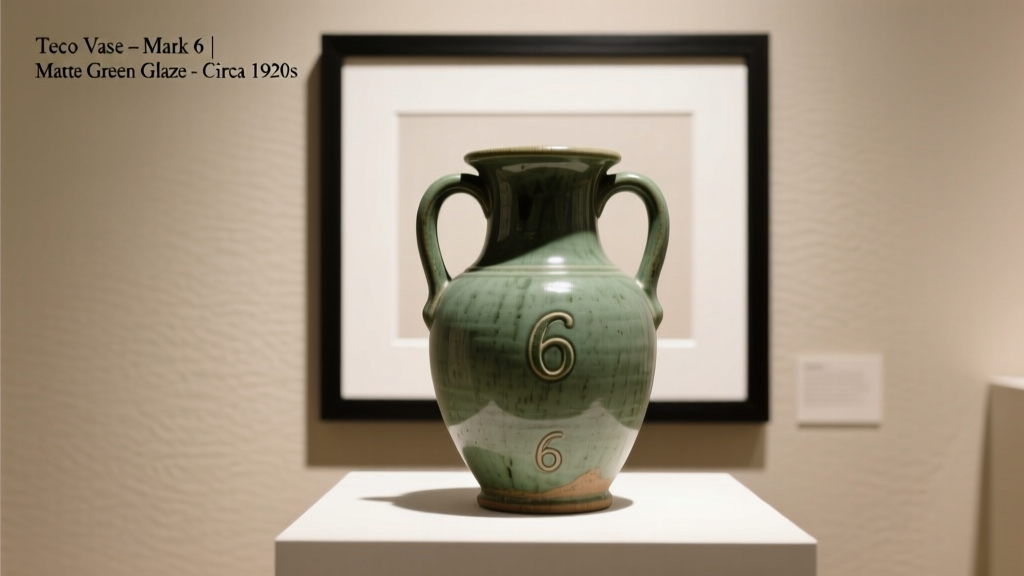
Teco Vase with Buttressed Handles, Matte Glaze Green, Mark '6' — Authentication, Provenance, and Market Analysis

The Beatles Doll George Harrison Remco Instrument: Authentication, Market Value, and Historical Context
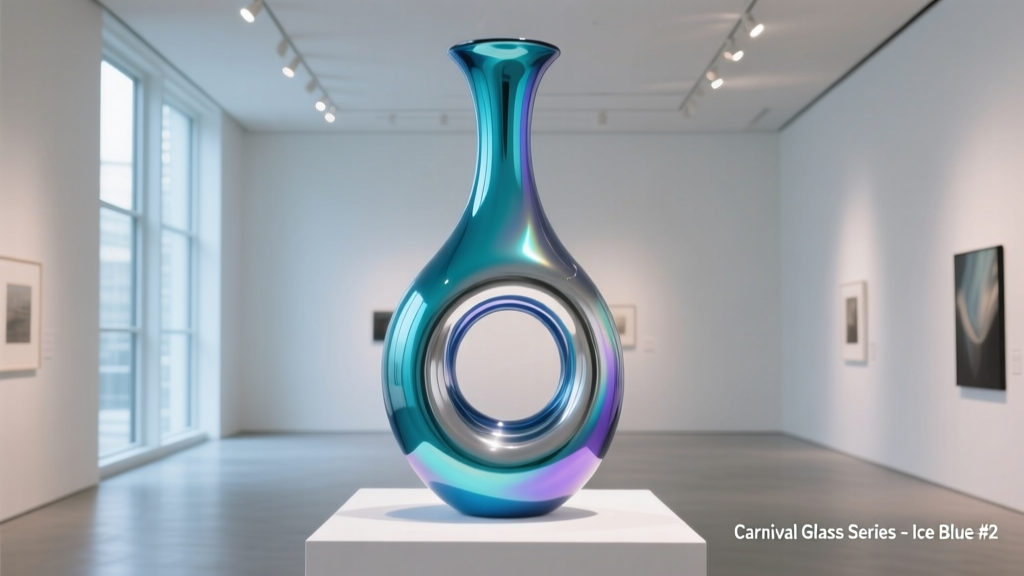
Carnival Glass Stretch Glass Ring Optic Vase in Ice Blue: Authentication, Provenance, and Market Analysis of the 14-Inch '2' Variant
Cal Electric Side Bracket Gable Type Cutout Insulator (13½″): Technical Specifications, Historical Context, and Authentication Protocol

Fishing Trap Minnow 6-Sided Mason Jar: Authentication, Market Value, and Historical Context of the Green Glass 4 × 7 Inch Variant