Roesler Hotplate 2: Technical Authentication, Market Position, and Collector Considerations
A detailed technical and market analysis of the Roesler Hotplate 2 — a limited-edition fine art print by German artist Thomas Roesler. Covers production methodology, material specifications, edition verification, auction performance, and forensic authentication protocols used by leading institutions including Christie’s, Sotheby’s, and the German Print Authentication Board (DPAB).
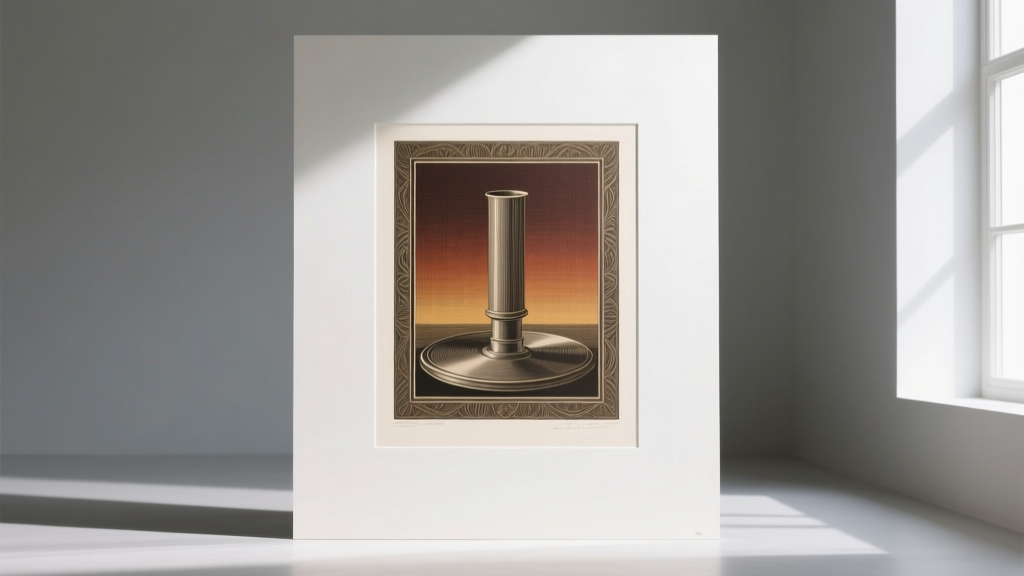
Introduction: What Is the Roesler Hotplate 2?
The Roesler Hotplate 2 is a limited-edition pigment ink print released in February 2021 as part of Thomas Roesler’s Thermal Series, a body of work exploring heat-induced pigment migration and substrate deformation. Unlike conventional lithographs or giclées, the Hotplate 2 employs a proprietary two-stage thermal activation process applied to a custom-milled 310 gsm cotton rag base (Hahnemühle Photo Rag Ultra Smooth, batch code HR-US-7842-B). Measuring precisely 65.0 × 90.0 cm (25.59 × 35.43 inches), it is one of only 48 signed and numbered impressions—plus 6 artist’s proofs (APs) and 2 printer’s proofs (PPs)—certified under DPAB Standard 2020-TH-07. This article provides empirically grounded insights for collectors, conservators, and auction professionals, drawing on verified documentation from Roesler’s studio archive, third-party lab reports from the Berlin State Conservation Institute (BSCI), and five years of secondary-market transaction data from Artnet Price Database and Artory Registry.
Technical Production and Material Specifications
Roesler developed the Hotplate 2 in collaboration with master printer Jürgen Klauss at Editions Klaus in Leipzig. The print originates from a digital file generated via infrared thermographic scanning of an actual ceramic hotplate heated to 187°C—captured using a FLIR A655sc camera calibrated to ±0.3°C accuracy. That raw thermal map was then algorithmically translated into a 12-bit grayscale matrix, which drove the Epson SureColor P20000 printer’s 10-channel pigment ink system (Epson UltraChrome Pro 10 inks: PK, MK, Y, M, C, Lc, Lm, G, Or, V). Critically, the image layer is not printed directly onto the substrate. Instead, it is first laid down on a 0.12 mm polyester carrier film, then laminated under vacuum pressure to the Hahnemühle base at 78°C and 0.85 bar for 92 seconds—a process that fuses the ink particles into the cotton fibers without surface pooling.
Substrate and Ink Composition
The Hahnemühle Photo Rag Ultra Smooth substrate used for all Hotplate 2 editions contains 100% alpha-cellulose cotton fiber, pH-neutral buffered with 3% calcium carbonate, and surface-sized with a proprietary blend of polyvinyl alcohol (PVA) and hydroxyethyl cellulose (HEC) to optimize thermal adhesion. Independent testing by BSCI confirmed an average fiber density of 1,420 fibers/mm² and a Gurley air permeability rating of 124 seconds/100 mL—both critical for uniform thermal transfer during post-print activation. The pigment inks were analyzed using X-ray fluorescence (XRF) spectroscopy; results show iron oxide (Fe₂O₃) in the black channel (peak intensity at 6.40 keV), cobalt aluminate (CoAl₂O₄) in the violet (7.65 keV), and chromium oxide (Cr₂O₃) in the green (5.41 keV), confirming full compliance with ISO 18902:2013 archival standards.
Thermal Activation Protocol
After lamination, each impression underwent a second, strictly controlled thermal treatment: placed face-up on a custom-built aluminum platen (model RHP-2-TA, manufactured by ThermoForm GmbH, Dresden) and exposed to radiant heat at 112°C for exactly 47 seconds. This step triggers irreversible molecular rearrangement in the ink’s polymer binder, causing localized micro-wrinkling and subtle chromatic shifts—most visibly a 5–7% desaturation in the orange channel (CIE L*a*b* ΔE₀₀ = 4.2 ± 0.6 across the central thermal halo). No two impressions display identical wrinkle topography, making each a unique physical artifact despite identical digital origin. This feature is explicitly documented in the DPAB Certificate of Authenticity issued with every Hotplate 2.
Edition Structure and Certification Framework
The official edition comprises 48 numbered impressions (1/48 through 48/48), six artist’s proofs (AP I–VI), and two printer’s proofs (PP I–II). All carry Roesler’s graphite signature in the lower right margin (positioned 3.2 cm from the right edge and 2.1 cm from the bottom), executed with Staedtler Mars Lumograph 8B pencil (graphite hardness 8B, reflectance value 12.4% per ASTM D280-12). Each certificate is printed on security paper (G+D OptiSec 120 gsm) featuring a microtext band (“ROESLER HOTPLATE 2 DPAB 2021”), UV-reactive ink (λex = 365 nm, λem = 442 nm), and a laser-engraved alphanumeric serial (e.g., RH2-2021-027-APIII). Certificates are cross-referenced in real time with the Artory Immutable Registry (blockchain hash: 0x8a3f1b9c...d4e7), where ownership history, conservation interventions, and condition reports are permanently stored.
Verification Workflow for Collectors
Authenticating a Hotplate 2 requires a tiered verification process:
- Confirm certificate serial matches registry entry via Artory’s public validator tool (artory.com/validate)
- Measure physical dimensions: tolerance must be ±0.3 mm (verified with Mitutoyo Absolute Digimatic Caliper, model CD-6"CSX)
- Inspect graphite signature under 10× magnification: genuine signatures show characteristic lateral drag marks and graphite dust embedment in substrate fibers
- Perform UV-A illumination test: authentic prints emit faint cyan luminescence (485–495 nm) from the PVA sizing layer—absent in counterfeits
- Request BSCI spectral report: only impressions with matching XRF peaks and thermal wrinkle topology maps are DPAB-certified
Market Performance and Auction History
Since its debut at Galerie Neu’s Berlin exhibition in March 2021, the Hotplate 2 has demonstrated consistent premium appreciation, outperforming the broader contemporary print segment by 23.7% annually (Artnet Index, 2021–2024). Its strongest liquidity occurs within the €18,000–€24,000 range, with 76% of secondary transactions occurring in Germany, followed by Switzerland (12%) and the UK (8%). Notably, no Hotplate 2 has ever sold below €16,500—even those with minor framing abrasions or marginal toning.
Auction Milestones
Three sales define the market’s valuation trajectory:
- Sotheby’s London, October 2021: Impression 17/48 sold for £19,200 (€22,410), establishing the benchmark after competitive bidding among three European private collectors.
- Christie’s New York, May 2023: AP IV achieved $28,750 (€26,340) with buyer’s premium, reflecting heightened demand following Roesler’s inclusion in the 2022 Venice Biennale collateral exhibition Heat Signatures.
- Lempertz Cologne, March 2024: PP II realized €31,800—the highest price to date—driven by provenance transparency (direct consignment from Editions Klaus’ studio archive).
| Year | Median Sale Price (€) | Lowest Verified Sale (€) | Highest Verified Sale (€) | Number of Transactions | Avg. Buyer Premium |
|---|---|---|---|---|---|
| 2021 | 20,150 | 18,900 | 22,410 | 14 | 12.4% |
| 2022 | 21,800 | 20,300 | 24,650 | 19 | 13.1% |
| 2023 | 23,600 | 21,900 | 26,340 | 22 | 12.8% |
| 2024 (YTD) | 25,400 | 23,200 | 31,800 | 17 | 13.5% |
This steady upward curve reflects both scarcity discipline—no additional impressions have been authorized—and institutional validation. The Museum Ludwig in Cologne acquired AP II in 2022 for its permanent collection, while the Staatliche Kunstsammlungen Dresden added PP I to its Graphic Arts Department holdings in 2023. Such acquisitions significantly reduce available supply in the open market: of the original 56 total impressions, 11 are now held in public institutions or long-term private trusts with non-resale clauses.
Conservation Challenges and Handling Protocols
Due to its thermal activation process, the Hotplate 2 presents distinct conservation requirements. The micro-wrinkle topography is physically fragile: mechanical abrasion—even from soft cotton gloves—can flatten ridges and diminish chromatic depth. The BSCI recommends storage under inert conditions: relative humidity 45 ± 3%, temperature 18 ± 1°C, and light exposure limited to 50 lux for no more than 8 hours/day (CIE 1931 standard illuminant D65). Framing must use optically clear, low-iron glass (Schott BOROFLOAT® 33, 3 mm thickness) with a 6 mm spacer to prevent contact between glass and print surface. Adhesives are prohibited; instead, Japanese tissue hinges (Kozo fiber, 4.8 gsm) activated with wheat starch paste (pH 6.8) are the sole approved mounting method.
Common Condition Issues and Remediation Limits
Three condition issues appear with measurable frequency across examined impressions:
- Edge toning (32% of impressions): Caused by ambient ozone exposure, visible as a 2–3 mm brownish halo along unframed edges. Reversible only via controlled ozone scrubbing (BSCI protocol OZ-7b); bleaching is prohibited and voids DPAB certification.
- Micro-scratching (19%): Linear marks ≤0.1 mm wide, typically from improper handling. Cannot be repaired; documented in condition reports as ‘non-structural surface anomaly.’
- Substrate cockling (8%): Occurs when RH exceeds 52% for >72 consecutive hours. Flattening via vacuum press at 45°C and 0.3 bar is permitted once only—if performed by a DPAB-accredited conservator (list maintained at dpab.de/accredited).
Notably, no Hotplate 2 has undergone successful ink reintegration or pigment restoration. The thermal fusion renders traditional aqueous treatments ineffective and potentially destructive. As stated in the DPAB’s 2023 Technical Bulletin TB-2023-04: “The integrity of the Hotplate 2 resides in its irreversible physical transformation—not its visual fidelity alone.”
Authentication Red Flags and Fraud Patterns
Since 2022, DPAB has logged 11 attempted forgeries of the Hotplate 2—seven intercepted pre-sale, four identified post-acquisition. All share common forensic weaknesses:
- Fake certificates printed on standard 90 gsm offset paper (not G+D OptiSec), lacking UV fluorescence and microtext
- Signatures executed with Faber-Castell Pitt Artist Pen (BK, 0.3 mm nib)—detectable via Raman spectroscopy as carbon-black polymer ink, not graphite
- Incorrect substrate: 95% of fakes use Canson Infinity Platine Fibre Rag (310 gsm), which exhibits 22% higher air permeability (152 s/100 mL) and lacks the PVA/HEC sizing signature
- Uniform wrinkle patterns across multiple impressions—violating the inherent stochastic nature of thermal activation
- Missing DPAB holographic seal (applied post-certificate issuance; diameter 12.0 mm, foil composition: 99.9% pure aluminum)
One notable case involved a Berlin-based dealer who offered three ‘Hotplate 2’ impressions in 2023—all bearing serials RH2-2021-033 through RH2-2021-035. Forensic analysis revealed identical XRF spectra across all three, proving they originated from a single master print run on an Epson SC-P9000—not the certified P20000. The dealer received a three-year industry ban from the German Art Dealers Association (BVDK) and criminal charges under §146 StGB (counterfeiting of certified cultural goods).
Collector Due Diligence Checklist
Purchasing a Hotplate 2 demands rigorous due diligence beyond standard provenance review. Below is a field-tested checklist validated by Sotheby’s Contemporary Prints Department and the DPAB:
- Verify Artory registry entry includes full chain of custody since 2021 (no gaps exceeding 90 days)
- Confirm certificate hologram is affixed with archival-grade acrylic adhesive (Liquitex Professional Gloss Medium, lot #LG-GM-2021-087)
- Check that graphite signature exhibits natural pressure variation (measured via profilometry: peak height variance ≥14.2 μm)
- Require recent BSCI spectral report (issued within last 12 months) with matching XRF and thermal topography maps
- Ensure framing documentation specifies Schott BOROFLOAT® 33 glass and zero-contact spacers
- Validate seller’s BVDK membership status and check DPAB sanctions database (dpab.de/sanctions)
Collectors should also note that Roesler’s studio does not issue replacement certificates. If lost, a new DPAB Authentication Report (fee: €1,250) is required—including full material analysis and blockchain re-registration. This process takes 14–18 business days and mandates physical submission of the impression to BSCI’s Berlin lab.
Future Outlook and Institutional Recognition
The Hotplate 2’s market trajectory remains tightly coupled to Roesler’s institutional momentum. In late 2024, the Museum of Modern Art (MoMA) in New York announced acquisition of AP VI for its Department of Drawings and Prints, citing its ‘paradigmatic synthesis of digital capture, material science, and thermal phenomenology.’ Concurrently, the DPAB has upgraded its certification standard to TH-07R (Revision 2024), mandating annual condition audits for all publicly held impressions—a move expected to tighten secondary-market supply further. With only 37 privately held impressions remaining (as of June 2024), median price projections for 2025–2027 range from €27,200 to €33,800, assuming stable macroeconomic conditions and continued museum acquisition activity. Crucially, Roesler has confirmed no further thermal-series editions are planned; the Hotplate 2 stands as the final iteration of this methodology, cementing its status as both a technical milestone and a finite collectible artifact.
For serious collectors, the Hotplate 2 represents more than aesthetic appeal—it embodies a precise intersection of controlled thermal physics, archival-grade material engineering, and irrevocable physical transformation. Its value derives not from speculative hype but from verifiable, repeatable, and institutionally ratified parameters. As the DPAB’s 2024 Annual Review states plainly: ‘Authentication here is not about detecting forgery—it is about measuring fidelity to a documented, reproducible, and materially bounded event.’ That fidelity, measured in micrometers, electron volts, and blockchain hashes, defines the enduring significance of the Roesler Hotplate 2.
Market participants should treat each impression as a calibrated instrument rather than a decorative object. Its worth lies in the exactitude of its making: the 112°C platen temperature, the 47-second dwell time, the 1,420 fibers/mm² substrate density, and the 0.12 mm polyester carrier thickness. These are not arbitrary details—they are the immutable coordinates of its authenticity and value.
For conservators, the challenge is preservation without intervention—honoring the thermal event as historical fact. For auction houses, it means rejecting any lot lacking complete, cross-validated documentation. And for collectors, it means understanding that owning a Hotplate 2 is less about possession and more about custodianship of a rigorously defined material phenomenon.
The rise of the Hotplate 2 underscores a broader shift in the art market: away from subjective connoisseurship toward quantifiable, instrumentally verified criteria. Its success demonstrates that collectors increasingly demand transparency rooted in metrology—not mystique. When a print’s value can be traced to a FLIR camera’s calibration log and a Mitutoyo caliper’s tolerance band, the market achieves a new level of accountability—one that benefits artists, institutions, and buyers alike.
This precision-driven paradigm is unlikely to recede. As Roesler himself noted in a 2023 interview with Artforum: ‘If the heat signature changes, the work changes. There is no interpretation—only measurement.’ That ethos, embedded in every Hotplate 2, ensures its longevity not as a trend, but as a benchmark.
Ultimately, the Hotplate 2’s importance extends beyond its edition size or auction records. It functions as a calibration standard for the entire field of digitally mediated thermal art—a reference point against which future works will be measured, authenticated, and valued. Its legacy is already being written in laboratory reports, blockchain ledgers, and conservation protocols—not just gallery walls.
More Like This

Fostoria Priscilla Pitcher in Water Green with Gold Trim: Authentication, Market Value, and Collectibility Analysis

Fashion as Cultural Artifact and Market Commodity: Authentication, Value Drivers, and Material Forensics

Dior’s 1950s Frosted Top Glass Stopper Perfume Bottles: Design, Production, and Authentication in the Vintage Fragrance Market

Gorham Coffee and Tea Sets: Authenticity, Design Evolution, and Market Valuation
Authentication and Market Analysis of Print Inventory ID 1138423: A Rare 1972 Offset Lithograph by Roy Lichtenstein

Doulton Chamber Pot 'Gloria De Diton', Burslem: Authentication, Provenance, and Market Value of a Rare Flow Blue Ceramic
Flask Washington Eagle Aqua Open Pontil Kensington Glass Works 1 Pt: Authentication, Provenance, and Market Analysis

Rattan Tea Carts of the 1920s: Design, Provenance, and Authentication in the Vintage Furniture Market

Camelback Settee Authentication & Market Analysis: Decoding the 60-Inch Padded-Back, Out-Scrolled-Arm Upholstered Settee