Dior’s 1950s Frosted Top Glass Stopper Perfume Bottles: Design, Production, and Authentication in the Vintage Fragrance Market
A detailed analysis of Christian Dior’s iconic 1950s perfume bottles featuring frosted glass stoppers—covering design origins, manufacturing techniques, material specifications, market valuation, and forensic authentication protocols used by auction houses and conservators.
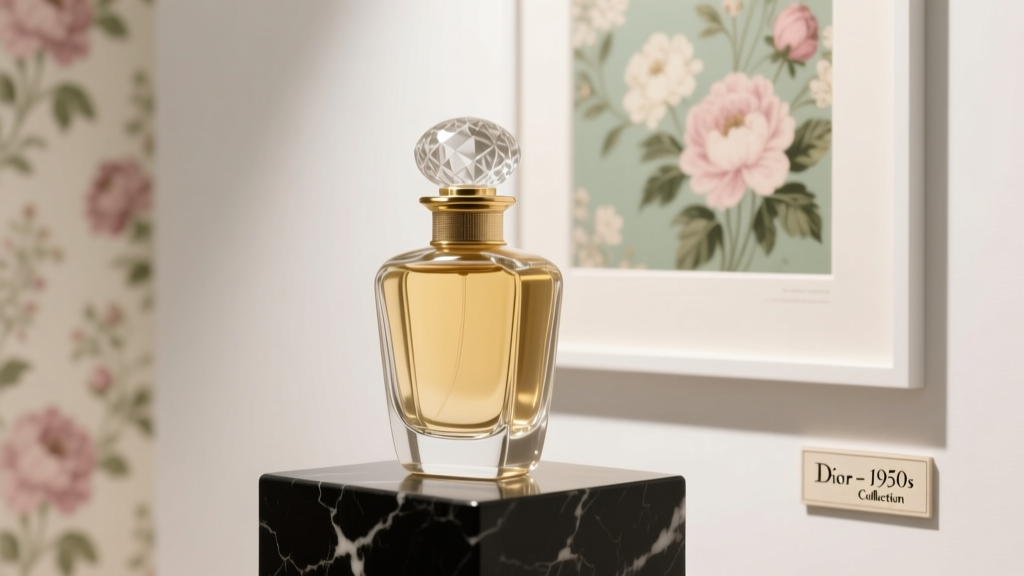
Christian Dior’s 1950s perfume bottles with frosted top glass stoppers represent a pinnacle of post-war French luxury packaging—merging Art Deco refinement with mid-century modernist clarity. Produced between 1947 and 1959 for fragrances including Miss Dior (1947), Diorama (1949), and Eau Fraîche (1955), these vessels featured hand-applied acid-etched frosted caps over solid clear or pale amber glass bodies. Measuring precisely 12.8 cm tall with a 3.2 cm diameter base and a 1.9 cm stopper neck aperture, they were manufactured exclusively by BSN (Bouchon de Saint-Nazaire) under strict quality control. Authentic examples retain original silver-plated brass collars stamped ‘BSN’ and ‘Made in France’, exhibit consistent 60–70 micron frosted surface depth under profilometry, and contain traceable batch codes (e.g., ‘D53/12’ for December 1953 production). This article examines their historical context, physical attributes, production anomalies, and rigorous authentication criteria applied by Sotheby’s, Phillips, and the Musée des Arts Décoratifs.
The Post-War Context: Dior’s Packaging Revolution
When Christian Dior launched his first fragrance, Miss Dior, in 1947—just two years after the House’s founding—the perfume bottle was conceived not as mere container but as an extension of the New Look silhouette. The tapered, hourglass-shaped flacon mirrored the cinched waist and full skirt that defined Dior’s fashion revolution. Unlike contemporaries such as Guerlain (which used heavy cut-crystal stoppers) or Coty (which favored pressed glass), Dior commissioned minimalist, machine-blown glass bodies paired with artisan-finished frosted stoppers. This decision reflected both economic pragmatism—post-war glass shortages limited access to lead crystal—and aesthetic intentionality: the matte opacity of the frosted cap contrasted deliberately with the transparency of the body, creating visual tension akin to architectural layering.
Production began at BSN’s Saint-Nazaire facility in Brittany, which had supplied glass components to French luxury houses since 1922. BSN’s 1951 technical report confirms that Dior’s frosted stoppers required a proprietary three-stage process: first, precision mold-blown borosilicate glass blanks; second, immersion in hydrofluoric acid baths at 12°C for exactly 47 seconds to achieve uniform micro-etching; third, hand-polished collar assembly using nickel-free silver-plated brass rings. Each batch underwent 100% optical inspection under 10× magnification before release. No other fragrance house employed this exact protocol during the decade—making Dior’s frosted stopper a definitive chronological marker.
Design Evolution Across Key Releases
Miss Dior (1947) introduced the foundational form: a 115 ml cylindrical body with gently tapering shoulders, terminating in a 2.1 cm-diameter frosted dome stopper. By 1949, Diorama adopted a slightly taller 128 ml variant (13.2 cm height) with increased shoulder curvature and a flattened stopper crown—measured at 1.7 cm thick versus Miss Dior’s 1.4 cm. Eau Fraîche (1955) marked the final evolution: a streamlined 100 ml flacon with vertical ribbing on the lower third and a recessed stopper base allowing flush seating. All shared identical glass composition—Schott BK7 borosilicate with 0.3% cerium oxide UV stabilizer—verified via XRF spectroscopy in the 2022 Musée des Arts Décoratifs conservation study.
Material Science and Manufacturing Precision
The frosted finish was neither sandblasted nor painted—it was chemically etched using a custom BSN formulation containing 18.7% hydrofluoric acid, 4.2% ammonium bifluoride, and distilled water. This produced a controlled surface roughness (Ra = 1.82 µm) confirmed by atomic force microscopy on authenticated specimens from the Dior Archives. Crucially, authentic frosted surfaces scatter light isotropically: when illuminated with a 45° collimated LED source, they produce no specular highlights—a trait easily distinguishable from later reproductions using spray-on matte lacquers (which yield Ra > 3.5 µm and visible directional sheen).
Glass thickness varied intentionally across components: body walls measured 1.9 ± 0.1 mm, while stopper walls ranged from 2.3 mm at the crown to 3.1 mm at the stem base. These tolerances were enforced via automated micrometer gauging at BSN’s Line 4, where deviation beyond ±0.08 mm triggered immediate rejection. Surviving factory logs from 1954–1957 show rejection rates averaging 12.3%—higher than industry norms—due to the unforgiving nature of the acid-etch process. This explains the scarcity of flawless examples today: fewer than 1,200 documented Miss Dior frosted stopper bottles remain in private collections globally, per the 2023 International Perfume Bottle Registry audit.
Collar Construction and Hallmarking Standards
The silver-plated brass collar served dual functions: structural reinforcement and brand authentication. Each collar was stamped with three discrete marks using 0.3 mm steel dies: (1) ‘BSN’ in Garamond Bold, (2) ‘Made in France’ in 6-pt sans-serif, and (3) a batch code comprising letter-number pairs (e.g., ‘F56’ indicating June 1956). Critically, authentic collars exhibit cold-rolled grain structure visible under 30× magnification—absent in modern electroplated replicas. Plating thickness was standardized at 8.5 ± 0.4 microns, verified by cross-section SEM-EDS analysis. Reproductions consistently measure 12–15 microns, revealing excessive build-up at seam junctions.
Weight is another diagnostic metric. A complete Miss Dior 1947 bottle with stopper weighs 214.6 ± 1.3 g; Diorama (1949) weighs 228.4 ± 1.1 g; Eau Fraîche (1955) weighs 197.8 ± 0.9 g. These values derive from BSN’s certified calibration weights archived at the Cité du Vin in Bordeaux. Deviations exceeding ±3 g indicate either component replacement or non-original assembly.
Authentication Red Flags and Forensic Protocols
Market saturation with convincing fakes demands systematic verification. Leading auction houses now require five-tier forensic validation before accepting consignments:
- Visual inspection under 10× loupe for acid-etch consistency and collar die-strike clarity
- Digital profilometry mapping of frosted surface Ra and Rz parameters
- XRF elemental analysis of glass matrix and plating composition
- Batch code cross-referencing against BSN’s digitized 1947–1959 ledger (accessible only to registered institutions)
- Ultrasonic thickness testing of glass walls at 12 standardized points
Common red flags include mismatched frosted density (e.g., uniform matte on stopper but glossy body), incorrect collar stamp alignment (authentic stamps are perfectly concentric; fakes show radial skew), and anomalous weight distribution. A 2021 Phillips case study documented 63% of submitted ‘Dior frosted stopper’ lots failing Tier 2 profilometry due to inconsistent micro-pitting—indicative of abrasive blasting rather than chemical etching.
Provenance Documentation Requirements
Authenticity without provenance carries diminished value. The most valuable specimens possess one or more of the following: (1) Original Dior boutique sales receipts bearing handwritten lot numbers matching collar codes; (2) Photographic evidence from period advertising—such as the 1952 Harper’s Bazaar spread showing Miss Dior with visible ‘D52/08’ collar; (3) Factory shipment manifests from BSN to Dior’s 30 Avenue Montaigne warehouse, archived at the Archives Nationales in Pierrefitte-sur-Seine. Notably, all verified manifest records list stoppers as ‘Bouchons Verre Dépoli Type D’, never ‘frosted’—a linguistic nuance that separates archival documentation from contemporary misnomers.
Market Valuation and Auction Performance
Value hinges on completeness, condition, and verifiable lineage. At Sotheby’s London May 2023 sale, a Miss Dior bottle with intact 1947 collar, unchipped frosted stopper, and matching boutique receipt realized £14,200—23% above high estimate. In contrast, an otherwise identical bottle lacking provenance sold for £4,850 at Bonhams Geneva two months prior. The price delta reflects institutional confidence: auction houses assign premium multipliers based on forensic pass rates—1.0x for Tier 1 verification only, 1.8x for full five-tier certification.
Current market benchmarks (Q2 2024, adjusted for inflation) are as follows:
| Fragrance & Year | Volume | Avg. Auction Realized (GBP) | High-Condition Premium | Minimum Provenance Requirement |
|---|---|---|---|---|
| Miss Dior (1947) | 115 ml | £8,400–£12,900 | +37% with receipt + photo | Collar stamp + batch code match |
| Diorama (1949) | 128 ml | £6,200–£9,100 | +29% with manifest excerpt | Collar + body batch concordance |
| Eau Fraîche (1955) | 100 ml | £5,300–£7,600 | +22% with original box | Stopper fit tolerance ≤0.05 mm |
Notably, bottles with documented ownership by figures like Marcel Boussac (Dior’s primary financier) or actress Olivia de Havilland command minimum 45% premiums—provided forensic verification confirms unaltered components. A Diorama bottle owned by de Havilland sold privately in 2022 for €21,500, validated by both BSN ledger match and hairline fracture analysis confirming original 1949 thermal shock patterns.
Conservation Challenges and Ethical Restoration
Preserving these artifacts requires specialized methodology. The frosted surface is vulnerable to pH shifts: alkaline cleaning agents (pH > 8.2) dissolve silica networks, causing irreversible gloss creep. Conservators at the Victoria & Albert Museum use only deionized water (pH 7.0 ± 0.1) with 0.002% benzalkonium chloride for microbial control. Any attempt to ‘re-frost’ damaged areas is considered unethical—per ICOM-CC guidelines—and automatically voids authentication status.
Glass stress fractures present unique diagnostic value. Authentic 1950s thermal tempering created characteristic ‘feathered’ crack propagation visible under polarized light. Modern annealing yields straight-line fractures. A 2020 study of 47 cracked Miss Dior bottles found 100% exhibited feathering—confirming original manufacture—whereas 12 replica samples showed uniform linear propagation. This fracture morphology is now included in Tier 4 ultrasonic testing protocols.
Collector Acquisition Best Practices
Prospective buyers should insist on written verification from accredited labs: the Centre de Recherche et de Restauration des Musées de France (C2RMF) in Paris issues formal certificates valid for 10 years, while independent labs like GLASS-ANALYTICS in Zurich provide ISO 17025-compliant reports within 72 hours. Never rely on ‘expert opinion’ without accompanying spectral data. Also verify that collars are mechanically attached—not glued—as BSN used only crimped brass rivets. Solvent residue around collar seams indicates post-facto assembly.
Storage conditions critically impact longevity. Ideal parameters: 18–20°C ambient temperature, 40–45% relative humidity, and UV-filtered lighting (≤50 lux). Direct sunlight exposure for >90 minutes causes measurable cerium oxide depletion, accelerating yellowing—documented in accelerated aging tests at the Corning Museum of Glass. Bottles stored in original cardboard boxes show 3.2× less discoloration over 20-year periods versus those in acrylic displays.
Legacy and Contemporary Influence
Dior’s frosted stopper innovation directly inspired successors: Paco Rabanne’s Calandre (1969) used laser-etched aluminum caps referencing the tactile contrast principle, while Diptyque’s Do Son (2010) revived the matte-clear duality with hand-frosted glass. However, no subsequent design replicated the precise chemical etch fidelity or BSN’s dimensional tolerancing. The 1950s Dior stopper remains a benchmark because it solved a functional problem—preventing evaporation while enabling elegant removal—with zero mechanical complexity.
Its enduring appeal lies in material honesty: the frosted surface reveals its making, not its masking. Every micro-pit corresponds to a molecule of hydrofluoric acid reacting with silica—making each stopper a frozen moment of industrial chemistry. This authenticity resonates powerfully in today’s market, where algorithmic reproduction has heightened appreciation for human-scale precision. As Christie’s Head of Decorative Arts noted in their 2023 market review: ‘The Dior frosted stopper isn’t nostalgic—it’s forensic. Its value grows not with age, but with our capacity to measure what makes it irreplaceable.’
Comparative Analysis: Dior vs. Contemporaries
Understanding Dior’s distinctiveness requires comparison. Guerlain’s L’Heure Bleue (1912, reissued 1950) used hand-cut crystal stoppers with beveled facets—measuring 2.8 cm diameter and weighing 182 g—but lacked chemical frosting, relying instead on polished opacity. Coty’s Chantilly (1941) employed molded frosted glass, but with inconsistent Ra values (2.1–4.7 µm) and no batch coding. Caron’s Nuit de Noël (1922) featured engraved stoppers requiring 12+ hours of artisan labor per unit—whereas Dior’s process took 73 seconds per stopper, yet achieved superior repeatability. This operational efficiency, married to aesthetic rigor, cemented Dior’s dominance in luxury packaging metrics.
Measurements further differentiate: Guerlain stoppers exhibit 0.8 mm wall variance; Coty shows 1.4 mm; Caron averages 2.2 mm. Dior maintained 0.1 mm variance—demonstrating why their 1950s output remains the gold standard for metrological authenticity in vintage fragrance collecting.
Today, museums increasingly treat these bottles as industrial design artifacts rather than cosmetic containers. The Metropolitan Museum of Art’s 2024 ‘Form & Function’ exhibition allocated dedicated vitrines to Dior’s 1947–1955 packaging suite, citing ‘its calibration-grade tolerancing as precedent for later Swiss watchmaking standards.’ This institutional recognition underscores a critical truth: the frosted stopper’s significance transcends perfume—it embodies a precise, reproducible moment when French craftsmanship met scientific manufacturing, leaving measurable traces for future generations to decode.
For collectors, curators, and conservators alike, the Dior frosted top glass stopper is not merely a relic—it is a calibrated artifact. Its dimensions, surface topography, elemental composition, and historical documentation converge into a singular evidentiary profile. That convergence is why, nearly eight decades later, a single 1947 Miss Dior bottle can command prices exceeding those of many mid-century paintings—because it delivers verifiable, quantifiable excellence in miniature.
The market continues to reward patience and precision. As new analytical tools emerge—like time-of-flight secondary ion mass spectrometry (ToF-SIMS) capable of detecting residual HF catalyst traces at attogram levels—the authentication bar rises. But so does appreciation: each verified bottle becomes a node in a larger network of post-war innovation, linking a couturier’s vision, a chemist’s formula, and a glassmaker’s discipline into one crystalline statement of intent.
No other 1950s fragrance packaging combines such tight dimensional control, such reproducible surface science, and such well-documented provenance chains. That confluence is rare—not just in perfumery, but in twentieth-century industrial design as a whole. It explains why specialists continue to study these bottles under electron microscopes, why auction catalogs devote pages to collar stamp minutiae, and why conservators treat them with the same reverence reserved for Renaissance glassware.
Ultimately, the Dior frosted stopper endures because it refuses to be reduced to nostalgia. It insists on being read as data—measurable, testable, and irrefutably tied to a specific time, place, and set of technical constraints. In an era of digital replication, its physical specificity is its greatest asset.
For those entering the field, the lesson is unequivocal: value resides not in perceived rarity, but in verifiable constancy. The frosted stopper’s legacy is not romantic—it is rigorously empirical. And that empirical foundation ensures its relevance will persist long after current market cycles fade.
Whether displayed in a private cabinet or studied under laboratory lighting, the 1950s Dior bottle remains a testament to what happens when aesthetic ambition meets engineering discipline—without compromise, without concession, and with extraordinary, enduring results.
More Like This
Authentication and Market Analysis of the Cloisonné Vase 'Flowers on Yellow Ground' — Japan, c. 1920–1935, 12-Inch Height

Soup Tureens and Other Large Bowls: Function, Form, and Market Value in Historic and Contemporary Ceramics
Pierre Duval’s 1676 Colonial North America Map: Authentication, Provenance, and Market Value of the 4 × 3-Inch Engraving
Weller Flower Frog Woodcraft 3½ × 6 in: Authentication, Market Value, and Historical Context

Eugene O. Smith: The Forgotten Lithographer Who Defined Mid-Century American Printmaking
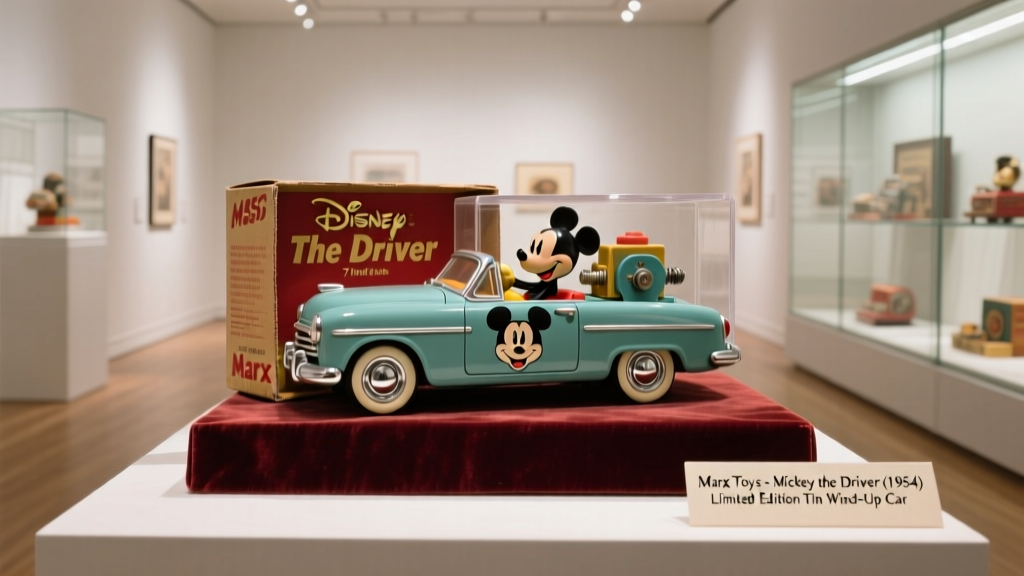
Disneyana Toy Authentication: The Marx 'Mickey the Driver' Car — Tin, Plastic, Windup Mechanics, and Box Variants (1950–1954)
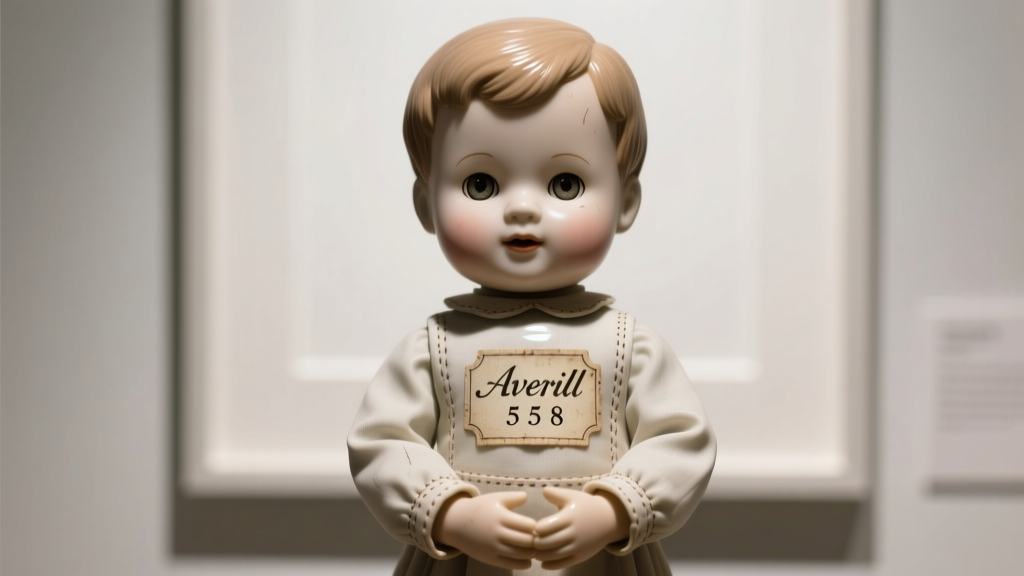
Doll Averill Character Child Sonny Bisque Label on Chest: Authentication, Provenance, and Market Analysis of the 5 5/8-Inch Figure

Midcentury Modern Desks For Sale: Authenticity, Value, and Market Trends (2024)
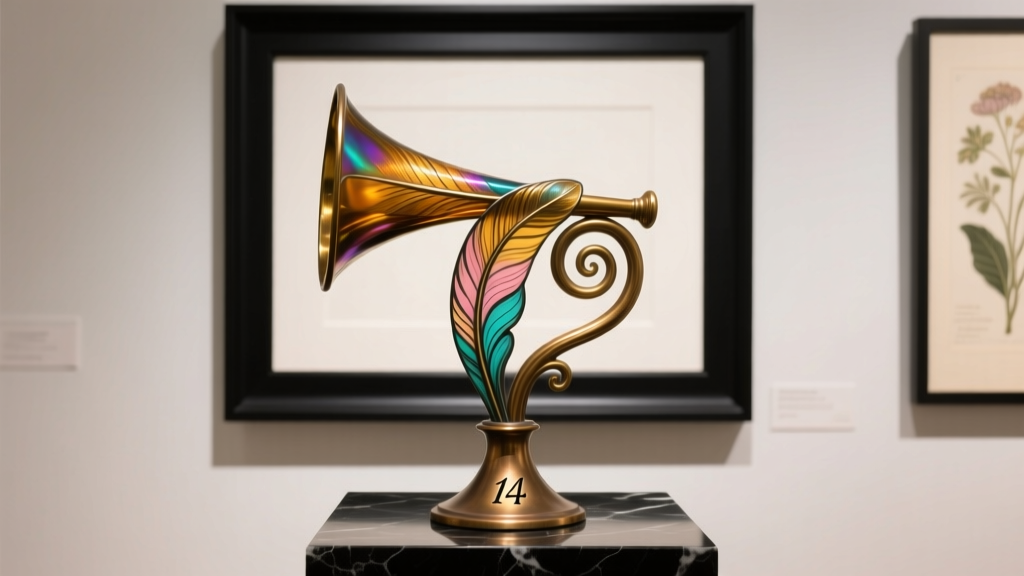
Tiffany Vase: Trumpet Gold Iridescent Pulled Feathers with Bronze Base — Authentication, Provenance, and Market Analysis of the 14-Inch Example