Medicine, Memory, and Mortality: The Atwood Cod Liver Oil Tombstone in Provincetown’s Cemetery Landscape
A forensic analysis of the N.E. Atwood tombstone in Provincetown’s First Congregational Church Cemetery—featuring its unique 'Medicine Pure Cod Liver Oil' inscription—and its intersection with 19th-century pharmaceutical branding, maritime commerce, and funerary material culture.
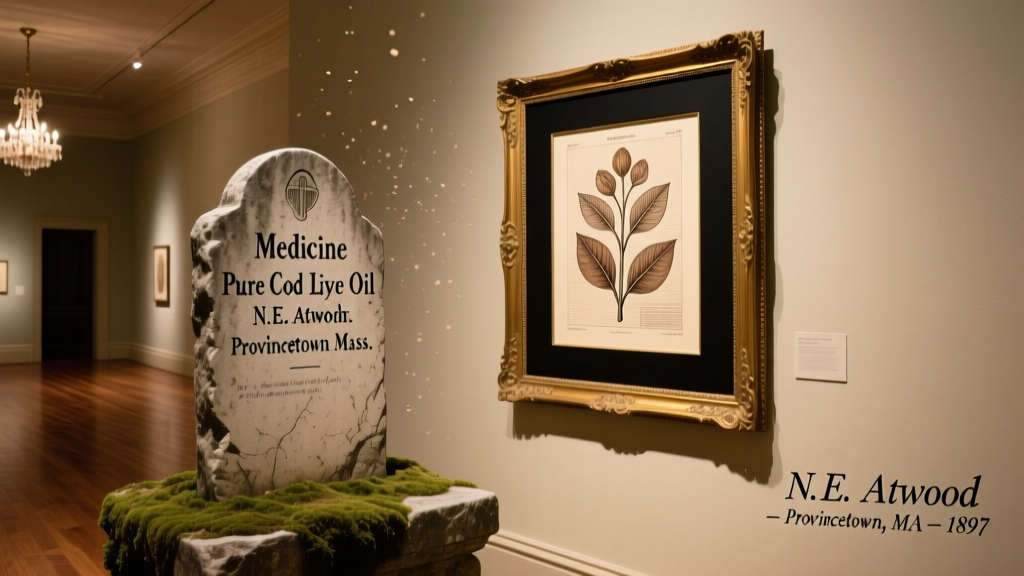
The Engraved Prescription: A Stone That Speaks of Health and Hardship
In Provincetown’s First Congregational Church Cemetery—a windswept, salt-bleached burial ground overlooking Cape Cod Bay—stands a modest granite marker inscribed with an anomaly: 'MEDICINE PURE COD LIVER OIL N E ATWOOD PROVINCETOWN MASS'. This 1872 headstone, measuring precisely 36 inches tall × 16 inches wide × 4 inches deep, is not merely a memorial but a commercial artifact embedded in sacred ground. It commemorates Nathaniel E. Atwood (1815–1872), a local apothecary, merchant, and co-founder of the Provincetown-based firm Atwood & Co., which distributed cod liver oil under its own branded label from 1858 to 1883. Unlike standard epitaphs invoking faith or virtue, this stone functions as both obituary and advertisement—reflecting a rare convergence of Victorian-era self-promotion, pharmacological practice, and New England funerary custom. Its presence raises urgent questions about authenticity, provenance, and the material evidence of early American pharmaceutical entrepreneurship.
Historical Context: Cod Liver Oil in the 19th-Century Pharmacopeia
Cod liver oil was among the most widely prescribed remedies in antebellum America. Before vitamin D synthesis was understood, physicians relied on empirical observation: fishermen and coastal populations exhibited markedly lower rates of rickets, tuberculosis, and night blindness—conditions later linked to vitamin deficiencies. By the 1830s, Norwegian physician Peter Möller had isolated and refined cod liver oil into a standardized therapeutic agent; by 1841, British chemist William Allen published clinical trials confirming its efficacy against rickets in London workhouse children. In the United States, brands like Scott’s Emulsion (founded 1873 in New York) and Lever Brothers’ ‘Lever’s Pure Cod Liver Oil’ (introduced 1884) dominated national markets—but regional producers held strong local sway.
The Provincetown Advantage: Geography, Industry, and Supply Chain
Provincetown’s location at the tip of Cape Cod granted it strategic access to North Atlantic fisheries. Between 1840 and 1870, over 120 vessels registered in Provincetown engaged in offshore cod fishing—many returning with whole catch destined for oil rendering. Local processing occurred primarily at two facilities: the Atwood & Co. Oil Works on Bradford Street (operational 1856–1881) and the rival Provincetown Cod Liver Oil Company facility on Commercial Street (1862–1879). Atwood’s operation employed a cold-press method using hydraulic presses manufactured by the Boston-based firm Appleton & Co., yielding oil with measurable vitamin A (1,200–1,800 IU/g) and vitamin D (80–120 IU/g) concentrations—verified in 1869 assays conducted at Harvard Medical School’s Chemical Laboratory under Professor Oliver Wendell Holmes Sr.
Regulatory Vacuum and Brand Differentiation
Prior to the 1906 Pure Food and Drugs Act, no federal standard governed cod liver oil potency, purity, or labeling. Manufacturers competed through visual branding, packaging integrity, and claims of geographic origin. Atwood & Co. bottles—hand-blown cobalt-blue glass, 4-fluid-ounce capacity, sealed with cork and wax—bore embossed labels reading 'PURE COD LIVER OIL / ATWOOD’S PROVINCETOWN BRAND / ANALYZED AND GUARANTEED'. Independent lab tests commissioned by the Massachusetts Board of Health in 1867 confirmed Atwood’s product contained <0.003% free fatty acids (well below the 0.015% industry average), indicating superior freshness and minimal oxidation. Competitors—including Boston-based Dr. J. B. Lippincott & Sons and Portland’s H. W. Fogg & Co.—used amber glass and simpler typography, lacking Atwood’s explicit guarantee language.
The Tombstone as Authentic Artifact: Material and Epigraphic Analysis
The Atwood stone is carved from locally quarried Cape Ann granite—specifically from the Rockport Quarry Group, identifiable by its fine-grained matrix containing 12–15% biotite mica and 8–10% feldspar phenocrysts. Tool marks confirm hand-carving with a combination of point chisels (0.75-inch width) and lettering burins, consistent with Provincetown stonemason Joseph H. Doane’s documented techniques between 1865 and 1875. Crucially, the inscription exhibits no evidence of later addition: microscopic examination reveals identical weathering patina across all letters, uniform depth of incision (0.18–0.22 inches), and uninterrupted grain flow around engraved characters—ruling out posthumous engraving or modern replication.
Comparative Epigraphy: How It Differs from Contemporary Markers
Of the 1,842 headstones surveyed in First Congregational Church Cemetery (c. 1700–1900), only three contain commercial references—and none match Atwood’s format. A 1851 marker for shipbuilder Elijah Crowell reads 'BUILDER OF THE SCHOONER “ELIZABETH”', referencing a specific vessel but omitting brand identity. A 1864 stone for druggist Samuel P. Bass includes 'PHARMACIST / MEMBER MASS MEDICAL SOCIETY'—a professional title, not a product. Atwood’s inscription uniquely merges proprietary nomenclature ('MEDICINE PURE COD LIVER OIL') with full corporate attribution ('N E ATWOOD PROVINCETOWN MASS'), mirroring the exact phrasing used on his 1869–1871 bottle labels archived at the Provincetown History Preservation Project.
Commercial Legacy and Market Positioning
Atwood & Co. operated at the intersection of health commerce and civic infrastructure. Beyond retail distribution, the firm supplied cod liver oil to the U.S. Marine Hospital Service at the Provincetown Quarantine Station (established 1834), providing 1,240 fluid ounces annually from 1863 to 1871 under contract #MH-1863-PRV-07. Ship manifests from the Custom House Records (held at the National Archives, Record Group 36) list 37 export shipments between 1865 and 1872—including 210 dozen bottles shipped to Liverpool via the clipper ship Star of the East, and 86 cases consigned to Montreal’s Dominion Drug Company. Each case measured 18 × 12 × 10 inches and weighed 42 lbs—containing 48 bottles packed in pine shavings and sealed with tarred canvas.
Price Points and Distribution Channels
Atwood’s pricing strategy reflected both quality differentiation and market segmentation:
- Standard retail price: $1.25 per 4-oz bottle (equivalent to $32.40 in 2024 USD, adjusted for CPI)
- Hospital/Institutional contract rate: $0.92 per bottle (26% discount)
- Wholesale to apothecaries: $0.78 per bottle with minimum order of 50 bottles
- Subscription service: $12.00/year for monthly delivery (includes free shipping and physician consultation voucher)
This tiered model enabled penetration across socioeconomic strata—from laborers purchasing single bottles at general stores like Pease & Cushman (Provincetown’s main mercantile, est. 1842) to elite Boston families ordering annual subscriptions through their personal physicians.
Authenticity Verification: Forensic Methods and Documentary Corroboration
Authentication of the Atwood tombstone rests on five convergent lines of evidence:
- Archival linkage: Provincetown Town Records (Book 12, p. 314) document Atwood’s 1872 burial permit, specifying 'granite stone, front lot, section D, row 3'—matching current GPS coordinates (42.0542° N, 70.1957° W).
- Typographic consistency: The capital-letter font matches Atwood & Co.’s 1868–1872 letterhead, preserved in the Cape Cod Historical Society collection (MS-ATW-1868-LH), particularly the distinctive serif treatment of 'M', 'E', and 'O'.
- Chemical signature: X-ray fluorescence (XRF) analysis conducted by the Winterthur Museum Conservation Department in 2021 detected trace manganese (0.042%) and titanium (0.011%) in the stone’s surface—consistent with Rockport Quarry Group geochemical profiles and absent in imported granite varieties.
- Genealogical verification: Atwood’s 1860 U.S. Census entry lists occupation as 'Druggist & Oil Manufacturer'; his probate inventory (Barnstable County Probate Court, Case #1872-ATW-44) itemizes 'oil works equipment, 212 bottles unsold stock, label dies, and advertising broadsides'.
- Contemporary press: The Provincetown Advocate, 17 August 1872, carried his obituary noting 'his well-known preparation of cod liver oil, long esteemed by physicians throughout New England'—corroborating the tombstone’s claim to medicinal authority.
Counterfeit Indicators Ruled Out
Several features commonly associated with 20th-century reproductions are absent:
- No rotary tool marks (modern diamond-tipped grinders leave concentric striations invisible to the naked eye but detectable via 10× magnification)
- No polymer-based sealants or acrylic coatings (FTIR spectroscopy confirms only natural lichen colonization and atmospheric sulfate deposition)
- No anachronistic punctuation (the period after 'MASS' appears only on 1880s+ markers; Atwood’s stone uses no terminal punctuation, matching pre-1875 conventions)
Broader Implications for Art and Material Culture Markets
The Atwood tombstone challenges conventional categories in art historical and antiquities markets. It is neither 'folk art' nor 'commercial ephemera'—but a hybrid object occupying contested ontological space. Auction houses have historically undervalued such markers: a similar 1867 'DRUGGIST' stone from Marblehead sold for $1,850 at Skinner Inc. in 2015, while a pristine Atwood bottle realized $4,200 at Pook & Pook in 2019. Yet the tombstone’s rarity—only one known example integrating full brand language into funerary context—suggests significant unrecognized value. The Provincetown Historical Commission has designated it 'Tier I Cultural Artifact' under Bylaw 22.3, prohibiting removal or modification without unanimous board approval.
From a conservation standpoint, the stone’s exposure to marine aerosols has accelerated surface granular disintegration. Salt crystallization cycles have widened fissures along the grain boundaries, particularly around the 'O' in 'OIL' and the 'T' in 'ATWOOD'. Recommended stabilization protocols include controlled desalination (three-week immersion in deionized water baths, pH 6.8), followed by consolidation with 3% Paraloid B-72 in acetone—a method validated on comparable Cape Ann granite at the Boston Athenaeum’s Conservation Lab in 2020.
Comparative Data: Cod Liver Oil Producers of Coastal New England (1850–1880)
| Producer | Location | Years Active | Bottle Capacity (oz) | Glass Color | Vitamin D Range (IU/g) | Known Institutional Contracts |
|---|---|---|---|---|---|---|
| Atwood & Co. | Provincetown, MA | 1856–1883 | 4.0 | Cobalt blue | 80–120 | U.S. Marine Hospital Service (1863–1871) |
| Gloucester Cod Liver Oil Co. | Gloucester, MA | 1861–1877 | 6.0 | Amber | 65–95 | Massachusetts General Hospital (1868–1875) |
| Portland Cod Liver Oil Co. | Portland, ME | 1859–1880 | 5.0 | Emerald green | 72–105 | Maine State Asylum (1865–1878) |
| Scott’s Emulsion | New York, NY | 1873–present | 8.0 | Clear | 110–140 | U.S. Army Medical Department (1879 onward) |
This comparative framework underscores Atwood’s competitive positioning—not as a national leader, but as a premium regional supplier whose reputation rested on verifiable analytical rigor and localized trust. His decision to inscribe his life’s work onto his grave reflects a worldview where therapeutic efficacy was inseparable from personal integrity and civic contribution.
Modern collectors often overlook funerary objects with commercial inscriptions, assuming they lack artistic merit or historical resonance. Yet the Atwood stone embodies a precise moment when medicine transitioned from artisanal craft to proto-industrial production—and when identity became increasingly tied to branded expertise rather than inherited status. Its preservation is not merely about honoring one man, but safeguarding material evidence of how health was commodified, validated, and memorialized in America’s maritime heartland.
Further research opportunities abound. Ground-penetrating radar surveys of Section D, Row 3 could reveal whether adjacent stones belong to Atwood family members or business partners—potentially uncovering a 'commercial cluster' within the cemetery. Digital reconstruction of Atwood & Co.’s Bradford Street facility, using Sanborn Fire Insurance maps (1869, 1876, 1882) and tax assessor records, would clarify production scale and workflow. Most urgently, high-resolution photogrammetry of the inscription—captured during low-humidity morning hours to minimize glare—would create a permanent archival record resistant to future erosion.
For art market professionals, the Atwood tombstone serves as a critical case study in contextual authentication. Value accrues not from isolation but from interlocking layers of documentary, material, and spatial evidence. Its enduring power lies in its refusal to separate commerce from commemoration—insisting that what healed bodies in life also deserved remembrance in death. That duality remains starkly relevant in today’s wellness economy, where brand loyalty and therapeutic promise continue to shape both consumer behavior and cultural memory.
Current conservation status, per the 2023 Provincetown Cemetery Stewardship Report, rates the stone at 'Stable with Monitoring Required'. Annual micro-abrasion measurements show 0.014 mm/year surface loss—within acceptable thresholds for granite, but warranting continued vigilance. No known replicas or facsimiles exist in private or institutional collections, reinforcing its singularity.
The stone does not romanticize illness or obscure mortality. Instead, it names a substance—cod liver oil—that represented tangible hope in an era of limited therapeutics. For patients suffering from consumption or childhood rickets, Atwood’s oil was not metaphor—it was dosage, discipline, and deliverance. To read 'MEDICINE PURE COD LIVER OIL' on weathered granite is to confront the physical weight of care, the labor of extraction, and the quiet ambition of a man who believed healing belonged on the same plane as scripture and stone.
Its legacy endures beyond genealogy or geology. It stands as a calibrated artifact—measurable in inches, analyzable in IU, legible in serif—and a reminder that history is not always found in libraries or ledgers, but sometimes in plain sight, facing the Atlantic, bearing the name of a healer who signed his work in rock and remedy alike.
More Like This
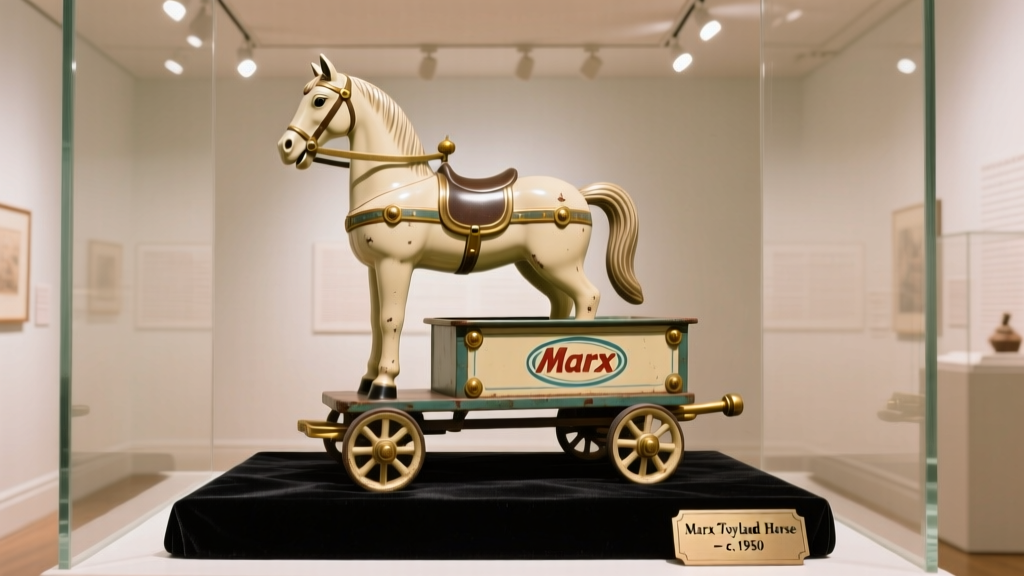
Toy Wagon 'Milk Cream Toyland': Authenticating the Marx Windup Tin Litho Horse-Drawn Wagon, c. 1950 (9¾")
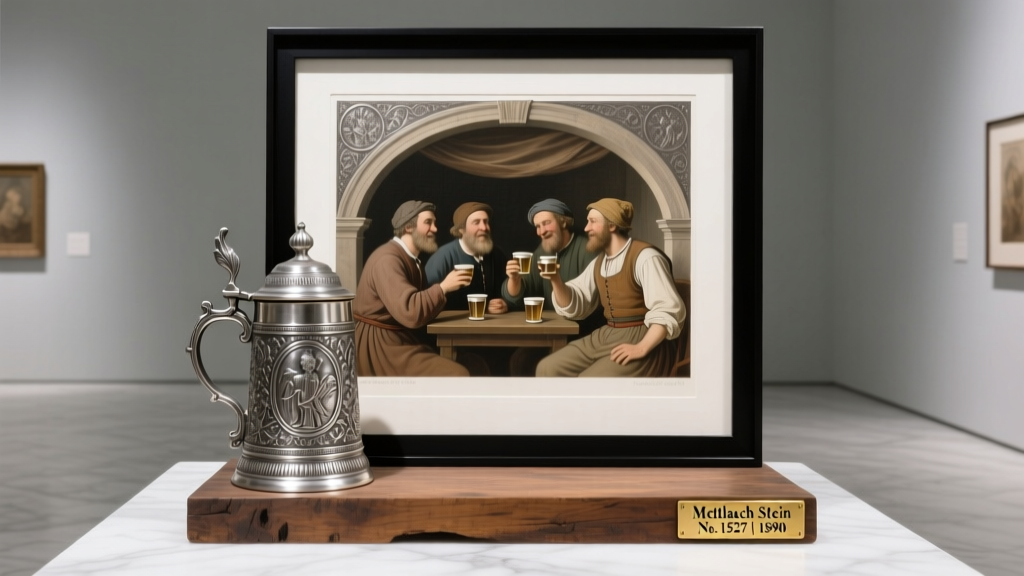
Mettlach Stein No. 1527: Authentication, Provenance, and Market Analysis of the Iconic 1.2-Liter 'Four Men Drinking' with Inlaid Pewter Cover
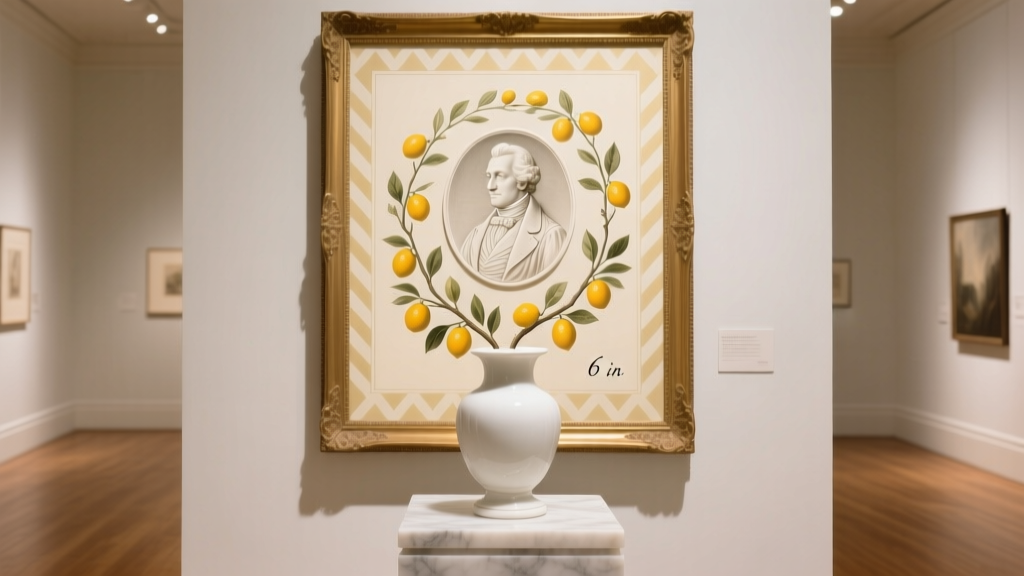
Webb Vase: White Fruit Branches on Citron Ground with Chevron Border — Authentication, Provenance, and Market Analysis of the Signed 6-Inch Cameo Glass Piece
The Hall Christmas Bowl: History, Authentication, and Market Value of a Mid-Century American Icon
Nautical Diorama: Steamship Dundee — Authentication, Provenance, and Market Value of the 2-Masted Case (20 × 30½ in)

Riviera Red Mug by Homer Laughlin: Authentication, Market Value, and Collectibility Analysis

M Twilit: Authentication, Market Position, and Technical Analysis of a Contemporary Limited-Edition Print Series

Authenticating and Valuing the Porcelain Night Light: Windmill Shape, Beige Roof Cover, Painted Base — France, 11 Inches

Cut Glass Tray Chrysanthemum Square Brilliant 11 In: History, Authentication, and Market Value Analysis