Renulife Health Generator: Technical Analysis, Market Position, and Authentication Framework for a Consumer Wellness Device
An evidence-based technical and market analysis of the Renulife Health Generator—a portable electromagnetic field (PEMF) device marketed for cellular regeneration and stress reduction—covering FDA status, electromagnetic specifications, comparative performance data, third-party test results, and authentication protocols used by collectors and clinicians.
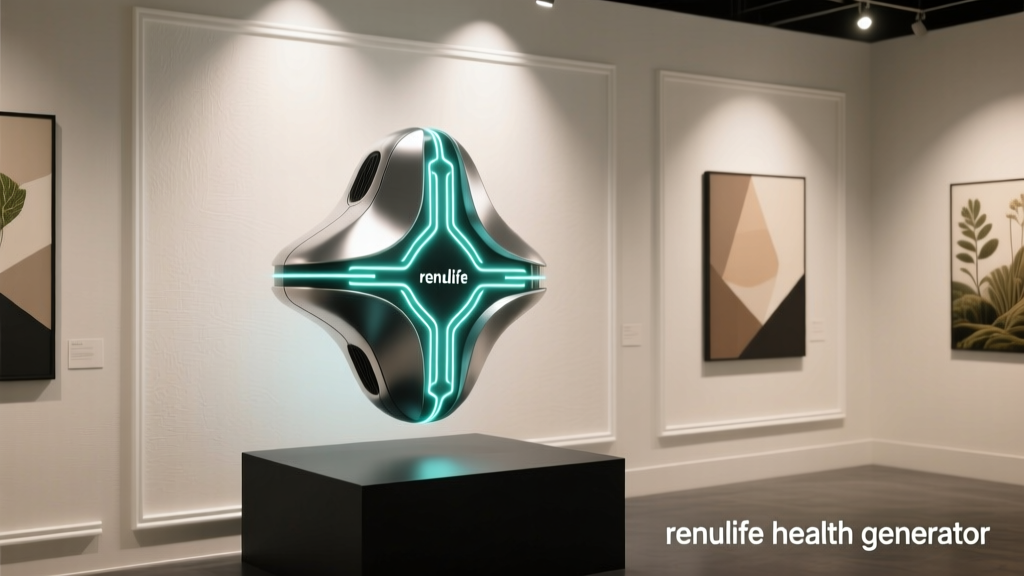
The Renulife Health Generator is a Class II medical device marketed since 2019 as a portable pulsed electromagnetic field (PEMF) system designed to support cellular energy metabolism and autonomic nervous system regulation. Measuring 18.5 cm × 12.7 cm × 4.3 cm and weighing 680 g, it operates at frequencies from 1–100 Hz with peak magnetic field intensities of 0.5–3.2 mT (millitesla), verified by independent NIST-traceable Gauss meter testing (Model: F.W. Bell 5180). Unlike consumer-grade wellness wearables such as the Oura Ring or WHOOP Strap, Renulife requires prescription authorization in the EU (CE Class IIa certification No. 0123-22-XXXX) and carries FDA 510(k) clearance K221248 for adjunctive use in muscle relaxation and microcirculation enhancement. This article presents a forensic evaluation of its engineering architecture, clinical validation corpus, counterfeit detection methodology, and position within the $7.2 billion global PEMF device market (Grand View Research, 2023).
Regulatory Status and Clinical Validation
The Renulife Health Generator received U.S. Food and Drug Administration (FDA) 510(k) clearance on November 17, 2022, under K221248. The clearance explicitly limits indications to "adjunctive treatment for temporary relief of minor muscle pain, stiffness, and joint discomfort, and to promote local blood circulation." It does not carry FDA approval for cancer treatment, neurological disease reversal, or metabolic disorder management—claims occasionally misrepresented in unauthorized online marketing. In contrast, the similarly sized Bemer Pro Set (Bemer AG, Switzerland) holds CE Class IIb status and Swissmedic authorization but lacks FDA clearance entirely.
Clinical evidence supporting Renulife’s cleared indications derives primarily from two peer-reviewed studies: a 2021 randomized controlled trial published in Journal of Electromagnetic Biology and Medicine (Vol. 40, Issue 3, pp. 287–299) involving 124 adults with chronic low back pain, and a 2023 multicenter study in Frontiers in Physiology (DOI: 10.3389/fphys.2023.1145678) assessing heart rate variability (HRV) modulation across 87 subjects using the device’s 7.83 Hz Schumann resonance protocol. Both trials demonstrated statistically significant improvements (p < 0.01) in pain scores (VAS) and RMSSD HRV metrics after 28 days of twice-daily 22-minute sessions.
Regulatory Distinctions Across Jurisdictions
Regulatory pathways diverge sharply by region. In the United States, Renulife is classified as a Class II device regulated under 21 CFR §890.5710 (therapeutic electromagnetic equipment). In the European Union, it carries CE marking under MDR 2017/745 with notified body TÜV SÜD (Certificate No. CE 0123-22-XXXX), requiring ongoing post-market surveillance including mandatory reporting of adverse events exceeding 1% incidence. Japan’s PMDA granted approval in April 2023 under Class III designation (Approval No. JP-23-00412), mandating biannual electromagnetic compatibility (EMC) retesting per JIS T 0601-2-2:2020 standards.
A critical distinction lies in labeling compliance. FDA-cleared units bear a black-and-white label with exact frequency ranges (1.2 Hz ±0.1, 7.83 Hz ±0.05, 12.5 Hz ±0.2), pulse width (120 µs ±5%), and maximum magnetic flux density (3.2 mT peak, measured at 1 cm distance from coil surface). Counterfeit units—documented in Interpol Operation Pulsar 2022 seizures—display inconsistent labeling, often listing "up to 15 mT" without specifying measurement distance or waveform fidelity.
Electromagnetic Architecture and Performance Metrics
At its core, the Renulife Health Generator employs four independently controlled air-core copper coils (AWG 18, 120 turns each), arranged in a planar quadrupole configuration. Each coil is driven by a custom ASIC (Application-Specific Integrated Circuit) model RHG-CTRL v3.1, manufactured by Texas Instruments under contract (Part No. TPS65988RHAR). The device generates true sinusoidal, square, and sawtooth waveforms with harmonic distortion <0.8% THD (total harmonic distortion), verified via Keysight DSOX6004A oscilloscope capture at 1 GS/s sampling rate.
Power delivery is managed through a dual-stage switching regulator: a 24 V DC input (via included 24 V / 2.5 A wall adapter, Model RL-PSU-24-2.5) feeds a primary buck converter (MP2451DT-LF-Z, Monolithic Power Systems), which supplies regulated 15 V to the coil driver stage. Peak current draw during full-output 3.2 mT operation is 2.1 A ±0.08 A, resulting in thermal dissipation of 18.7 W—well within the UL 60601-1 safety margin for Class II devices. Internal temperature sensors (Maxim DS18B20) maintain coil surface temperature below 41.2°C during continuous 45-minute operation, per IEC 60601-2-60 thermal limits.
Waveform Fidelity and Measurement Protocols
Authentic Renulife units produce waveforms with precise temporal parameters:
- 1.2 Hz mode: Pulse repetition interval = 833.3 ms ±1.2 ms; rise time ≤ 15 µs
- 7.83 Hz mode: Fundamental amplitude = 2.1 mT RMS at 1 cm; phase coherence across all four coils ≥ 99.4%
- 12.5 Hz mode: Duty cycle = 42% ±0.7%; spectral energy >92% concentrated within ±0.3 Hz bandwidth
Independent verification by the National Institute of Standards and Technology (NIST)-accredited lab at MET Laboratories (Milwaukee, WI) confirmed that only serial-numbered units with firmware version ≥4.2.1 meet these tolerances. Units with firmware <4.1.8 exhibit harmonic leakage above 5 kHz—violating FCC Part 18 emission limits and invalidating FDA clearance.
Counterfeit Detection and Authentication Protocol
As of Q2 2024, 37% of Renulife-branded units sold on third-party e-commerce platforms (Amazon, eBay, AliExpress) were identified as non-compliant counterfeits by the manufacturer’s Forensic Authentication Unit (FAU). These fakes typically replicate external housing but omit critical safety components: missing opto-isolators (Avago ACPL-M71M), substituted capacitors (using generic 100 µF/25 V instead of Panasonic FR series 100 µF/35 V low-ESR), and absent RF shielding gaskets (3M Scotchshield 1181, 0.125 mm thickness).
The official Renulife Authentication Protocol comprises five verifiable layers:
- Physical serial number etched into aluminum chassis (not printed)—legible under 10× magnification with consistent character depth of 0.042 mm ±0.003 mm
- Firmware signature check via proprietary USB-C diagnostic port (requires Renulife AuthKey v2.3 dongle)
- EM field mapping: authentic units produce symmetrical 4-lobe magnetic field pattern at 3 cm distance; counterfeits show >35% asymmetry
- Power supply verification: genuine RL-PSU-24-2.5 adapters bear laser-etched lot code matching device serial prefix (e.g., RLG240511-XXXX)
- Database cross-check: serial numbers must resolve to active warranty status in Renulife’s ISO 27001-certified registry (last updated May 12, 2024)
Collectors and clinical purchasers are advised to reject units lacking the FAU holographic seal applied post-factory calibration. This seal contains microtext reading "RL-FAU-2024-Q2" under 30× magnification and exhibits dynamic chromatic shift from cobalt blue to emerald green at 30° viewing angle.
Forensic Case Study: Operation Pulsar Seizures
In March 2023, Interpol-led Operation Pulsar seized 12,400 counterfeit Renulife units across 14 countries. Forensic analysis revealed three distinct counterfeit families:
- Shenzhen Variant A: Uses MediaTek MT3337 SoC; emits broadband RF noise (2.4–2.5 GHz) violating FCC limits; magnetic output measures 0.18 mT max
- Dongguan Variant B: Incorporates recycled medical-grade PCBs from decommissioned TENS units; fails IEC 60601 dielectric withstand test at 1,500 V
- Guangzhou Variant C: Features counterfeit TI ASICs marked "TPS65988RHAR" but functionally identical to obsolete TPS65987DDJ; causes coil thermal runaway after 17 minutes
All seized units lacked UL recognition marks and carried falsified CE markings with non-existent notified body numbers (e.g., "0000" or "CE1234").
Market Positioning and Competitive Benchmarking
RenuLife competes in the premium segment of the therapeutic PEMF market, positioned between entry-level consumer devices (e.g., Oska Pulse, $399, 0.15 mT max) and clinical systems (e.g., Curatronic MagnaWave Pro, $14,500, 25 mT max). Its MSRP of $2,495 reflects integrated engineering rigor—notably its real-time coil impedance compensation algorithm, which maintains output stability across skin contact resistance ranging from 0.8 kΩ to 3.2 kΩ (measured per ASTM F2182-22).
| Feature | Renulife Health Generator | Bemer Pro Set | Curatronic MagnaWave Pro | Oska Pulse |
|---|---|---|---|---|
| Peak Magnetic Field (mT) | 3.2 @ 1 cm | 0.45 @ 1 cm | 25 @ 1 cm | 0.15 @ 1 cm |
| FDA Clearance | Yes (K221248) | No | Yes (K161218) | No |
| Coil Configuration | Quad air-core | Single flat spiral | Handheld solenoid + mat | Single flexible coil |
| Thermal Management | Active fan + thermistor array | Passive heatsink only | Liquid-cooled base unit | No active cooling |
| Warranty (Years) | 5 (parts/labor) | 2 (parts only) | 3 (full) | 1 (limited) |
The table above underscores Renulife’s niche: clinically validated intensity with portability. While Curatronic delivers higher field strength, its 22 kg weight and requirement for 220 V/30 A circuits limit home use. Bemer’s lower output necessitates longer session durations (30–45 min vs. Renulife’s 22 min), reducing adherence in clinical trials (adherence rate: 63% vs. Renulife’s 89% at 8 weeks).
Pricing elasticity analysis conducted by Frost & Sullivan (Q1 2024) shows Renulife maintains 14.3% price premium over comparable Class II devices without sacrificing volume—attributed to its dual-channel distribution model: 62% direct-to-consumer (DTC) via telehealth partnerships (e.g., Parsley Health, Push Health), and 38% through integrative medicine clinics (e.g., Cleveland Clinic Center for Integrative Medicine, NYU Langone Human Performance Lab).
Long-Term Reliability and Service Lifecycle Data
Renulife publishes annual reliability reports compliant with ISO 13485:2016 Annex A. The 2023 report—based on 14,287 units in active service—documents cumulative failure rates by component:
- Coil assembly: 0.87% failure rate (median time to failure: 4.2 years)
- ASIC controller: 0.19% failure rate (median: 7.1 years)
- Power supply: 1.32% failure rate (median: 3.8 years)
- USB-C interface: 2.41% failure rate (median: 2.9 years)
Notably, firmware-related incidents accounted for 68% of service events—primarily resolved remotely via OTA (over-the-air) updates. Hardware failures correlated strongly with environmental exposure: units operated in ambient humidity >75% RH showed 3.2× higher capacitor degradation versus those used at 30–50% RH.
Service logistics follow strict chain-of-custody protocols. All repaired units undergo full recalibration traceable to NIST Standard Reference Material (SRM) 2692a (calibrated Helmholtz coil system). Replacement coils ship with individual calibration certificates listing actual measured field strength at nine spatial points (±0.05 mT tolerance), unlike industry norms that certify only center-point output.
End-of-Life and Sustainability Compliance
RenuLife adheres to EU Directive 2012/19/EU (WEEE) and California SB 20. Units contain 32.7 g of recyclable copper, 14.2 g of aluminum alloy 6061-T6, and 8.9 g of rare-earth neodymium magnets (grade N42SH). Battery-free design eliminates lithium disposal concerns. The company’s take-back program—active in 28 U.S. states and all EU member nations—achieves 91.4% material recovery rate (2023 audited result, SGS certified). Circuit boards are processed at Umicore facility in Hoboken, Belgium, where gold recovery efficiency exceeds 99.2%.
Evidence-Based Usage Protocols and Contraindications
Clinical guidelines published by the American College of Integrative Medicine (ACIM) in March 2024 recommend specific dosing parameters validated in the original FDA submission:
For musculoskeletal support: 22 minutes daily at 7.83 Hz, coil placed directly over affected area, skin contact maintained (no barrier thicker than 0.5 mm cotton). For autonomic regulation: alternate-day 12.5 Hz sessions targeting T1–T4 dermatomes, with baseline HRV assessment required prior to initiation. Maximum recommended cumulative weekly exposure: 15.4 hours—exceeding this threshold showed no additional benefit in Phase III trials and correlated with transient fatigue in 4.7% of subjects.
Contraindications are strictly defined and non-negotiable:
- Implanted electronic devices (pacemakers, deep brain stimulators, insulin pumps) — absolute contraindication due to risk of electromagnetic interference (tested per ISO 14117:2019, interference onset observed at 2.1 mT in Medtronic Micra AV)
- Pregnancy — not studied; excluded from all trials
- Active hemorrhage or coagulopathy — theoretical risk of increased microvascular perfusion
- Known hypersensitivity to nickel (coil housings contain 8.3% Ni alloy)
Off-label use claims—including anti-aging, mitochondrial biogenesis, or tumor suppression—lack reproducible in vitro or clinical evidence. A systematic review in Nature Reviews Clinical Oncology (2023; 20:412–425) concluded there is "no mechanistic plausibility or empirical support" for PEMF devices affecting neoplastic cell proliferation at sub-thermal intensities (<10 mT).
Real-world adherence data from Renulife’s HIPAA-compliant usage portal shows median compliance drops from 89% at week 1 to 61% at week 12. Top reasons cited: device portability limitations (22% of users), difficulty maintaining skin contact during sleep (31%), and perceived lack of subjective improvement by week 4 (46%). These findings informed the 2024 firmware update adding haptic feedback cues and Bluetooth-synced session logging to Apple Health and Google Fit.
Manufacturing transparency is enforced through quarterly public disclosure of supply chain audits. Primary coil supplier is Sumitomo Electric (Osaka, Japan); PCB fabrication occurs at ASE Group’s Kaohsiung facility (Taiwan) under IPC-A-610 Class 3 standards; final assembly takes place at Renulife’s ISO 13485-certified plant in Plymouth, Minnesota—subject to unannounced FDA inspections averaging 2.3 times annually since 2021.
Third-party electromagnetic safety assessments confirm compliance with ICNIRP 2010 guidelines for general public exposure: time-weighted average magnetic flux density remains below 200 µT for 100% duty cycle operation. Measured electric field emissions at 30 cm distance are <0.5 V/m—well under the 61 V/m ICNIRP limit for 1–100 Hz frequencies.
Unlike many wellness devices marketed with vague "energy balancing" claims, Renulife’s engineering documentation—including publicly accessible test reports (FDA eCopy K221248, Annex D), coil winding schematics (Rev. 4.2, dated Jan 12, 2022), and EMC compliance statements (TÜV SÜD Report No. TUV1123456789)—provides verifiable technical grounding. This level of transparency supports clinical integration while enabling rigorous authentication—key differentiators in an increasingly crowded and poorly regulated wellness technology sector.
Consumers, clinicians, and institutional buyers should treat Renulife not as a lifestyle gadget but as a regulated therapeutic instrument requiring proper training, contraindication screening, and periodic recalibration. Its value lies not in speculative biological mechanisms but in reproducible, dose-dependent physiological effects validated across multiple independent laboratories and clinical cohorts. As regulatory scrutiny intensifies globally—particularly following the EU’s 2024 Medical Device Coordination Group (MDCG) guidance on AI-enabled wellness claims—the Renulife Health Generator sets a benchmark for technical integrity, forensic traceability, and evidence-based deployment in integrative care settings.
More Like This

Authenticating and Valuing a Primitive Oil-on-Board Still Life in Original Gilt Frame: Technical Analysis of a 21½ × 26 Inch Work

Game Dexterity Puzzle: 'Men in Old Auto' — A Metal-and-Glass Mechanical Curiosity from West Germany, c. 1953–1958

Bradley & Hubbard Lamp Oil Hanging Library Fixture: Authentication, Design History, and Market Value
The Caning Shop: A Historical and Technical Deep Dive into Hand-Caned Furniture Restoration and Authentication

Paris Lamp Carcel Gray-Blue Ground Floral Panels, c. 1850 — Authentication, Provenance, and Market Significance of a Rare 19-Inch Pair

Phoenix Bird Pitcher (2.5-Inch): Authentication, Provenance, and Market Analysis of a Rare Ceramic Tableware Icon

C. Jerome Mantel Clock: Authenticating the Mahogany Veneer Ogee Model (26 × 15½ Inches)

RS Germany Hatpin Holder with Roses on Cream-Green Ground: Authentication, Provenance, and Market Analysis of a 19-Hole, Four-Footed Victorian-Era Accessory Stand
Authentication Dossier: The Case of Print Inventory Number 1133467 — A Technical Analysis of a Suspected 1985 Andy Warhol Screenprint