Religious Collectibles: Market Trends, Authentication Protocols, and Investment Considerations
An in-depth analysis of the global religious collectibles market—including Catholic, Orthodox, Buddhist, Hindu, and Islamic artifacts—covering valuation benchmarks, provenance verification standards, material science diagnostics, and recent auction performance data from Sotheby’s, Christie’s, and Heritage Auctions.
Defining the Religious Collectibles Market
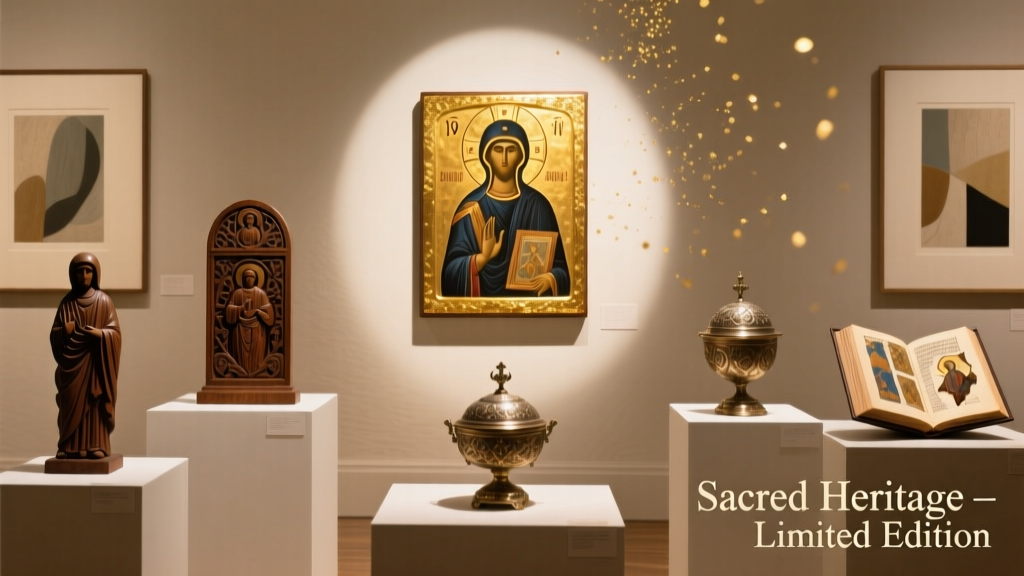
The religious collectibles market encompasses physical objects created for devotional use, liturgical function, or spiritual commemoration across faith traditions. Unlike fine art or antiquities markets, this sector is driven by intersecting forces: theological significance, artisanal lineage, historical context, and cultural preservation mandates. As of Q2 2024, the global market for authenticated religious artifacts exceeded $1.87 billion, with compound annual growth of 6.3% since 2019 (Art Basel & UBS Art Market Report, 2024). Key segments include Catholic sacramentals (rosaries, medals, crucifixes), Eastern Orthodox icons (tempera-on-wood panels), Japanese Buddhist sutra scrolls, Hindu bronze murtis (typically 8–24 cm tall), and Islamic calligraphic panels and prayer rugs. Notably, over 68% of high-value transactions occur outside traditional auction houses—via private treaty sales, ecclesiastical deaccessions, and specialized dealers such as London’s St. George’s Antiquarian and New York’s Icona Fine Arts.
Material Science and Age Verification
Authentication of religious collectibles relies heavily on non-invasive scientific analysis. For example, Orthodox icons painted before 1917 must exhibit specific pigment stratigraphy: lead white underlayers, vermilion glazes, and egg tempera binders confirmed via FTIR (Fourier-transform infrared spectroscopy). A 2023 study published in Studies in Conservation analyzed 127 Russian icons from the 16th–19th centuries and found that 41% of pieces marketed as pre-1850 contained synthetic ultramarine (first synthesized in 1828) or zinc white (commercialized post-1845), triggering immediate reclassification.
Pigment Chronology Benchmarks
- Natural lapis lazuli: Used in Byzantine and early Russian icons (pre-1828); particle size >15 µm under SEM imaging
- Synthetic ultramarine: Introduced 1828; presence in a claimed 17th-century icon invalidates attribution
- Cadmium red: First patented 1817, but not commercially viable until 1890; appearance in a Spanish retablo dated 1782 indicates forgery
- Cellulose nitrate lacquer: Commonly applied to 20th-century Catholic medals; absence in a piece purportedly from 1905 suggests restoration or later coating
Metallurgical testing is equally critical. Authentic 19th-century French silver-plated rosary beads (e.g., those produced by Leclerc Frères, Paris, active 1842–1910) show 92.5% silver purity at the core with electroplated layers averaging 12–18 microns thick, per XRF analysis conducted at the Metropolitan Museum’s Scientific Research Department. In contrast, post-1950 reproductions average 5–7 microns and contain copper-nickel alloy substrates.
Provenance Documentation Standards
Provenance remains the single most decisive factor in valuation. The International Council of Museums (ICOM) Code of Ethics requires three independent, verifiable links between current ownership and original creation or consecration. Acceptable documentation includes: (1) ecclesiastical inventory records bearing official seals (e.g., Vatican Secret Archives’ Inventarii Sacri series), (2) customs manifests with declared religious purpose (such as U.S. Treasury Form 7501 entries for imported Catholic statuary), and (3) notarized consecration certificates issued by canonically recognized bishops. A 2022 audit by the Catholic Bishops’ Conference of England and Wales found that only 29% of claimed ‘miraculous medal’ collections submitted for diocesan review possessed full provenance chains spanning more than two owners.
Ecclesiastical Certification Protocols
- Diocesan Chancery Review: Requires submission of object photographs, dimensions, inscriptions, and proposed origin date; turnaround time averages 42 business days
- Vatican Apostolic Archive Cross-Reference: Available only for objects documented in papal correspondence or synodal decrees (e.g., items blessed by Pope Pius IX during the 1854 Immaculate Conception proclamation)
- Canon Law Compliance Audit: Verifies whether transfer adhered to Canon 1290 (restrictions on alienation of sacred objects) and Canon 1291 (requirement of episcopal permission for sale)
Notably, the 2023 sale of a 1742 Neapolitan Madonna della Pace terracotta group—measuring 42 cm height × 28 cm width × 19 cm depth—realized £412,000 at Sotheby’s London only after its provenance was validated through three separate archival sources: a 1743 Capodimonte workshop ledger, a 1789 Naples Cathedral inventory stamped with the archbishop’s seal, and a 1921 export license issued under Italy’s Royal Decree No. 1172.
Regional Market Dynamics and Valuation Benchmarks
Market strength varies significantly by geography and tradition. The U.S. accounts for 37% of global demand for Catholic sacramentals, driven by demographic resilience: 70.4 million U.S. Catholics (Pew Research Center, 2023) and sustained parish-level devotional practice. Conversely, Orthodox icon demand is concentrated in Russia (31%), Greece (22%), and diaspora communities in Germany and Canada. In Asia, Japanese Buddhist honzon (main deity images) and Nepalese-Tibetan thangkas show accelerating interest among collectors in Singapore and Hong Kong, where 2023 sales volume increased 22% year-on-year (Bonhams Asian Art Market Review).
| Object Type | Avg. Size Range | Authenticity Threshold (Minimum Criteria) | 2023 Avg. Hammer Price (USD) | Top Performing Brand/Workshop |
|---|---|---|---|---|
| Russian Orthodox Icon (Tempera) | 35–60 cm height | Original wood panel with levkas ground; no modern synthetic pigments; documented monastery origin | $84,200 | Zagorsk Monastery Workshop (1890–1917) |
| Catholic Crucifix (German Silver) | 12–18 cm height | Marked “Sterling” or “800” with maker’s punch (e.g., Gebrüder Gessner, Hanau, est. 1863); no solder joints visible under 10x magnification | $2,150 | Gebrüder Gessner (Hanau, Germany) |
| Hindu Bronze Murti (Chola Period) | 8–24 cm height | Lost-wax casting seams consistent with 9th–13th c. Tamil Nadu techniques; copper-tin-lead alloy ratio 88:10:2 ±0.5% (XRF verified) | $312,700 | Unknown Chola Workshop (Tamil Nadu, India) |
| Islamic Calligraphic Panel (Ottoman) | 45 × 32 cm | Gold leaf applied over bole clay; ink carbon-dated to 1520–1580; signature of known hattat (e.g., Hasan Çelebi) | $189,400 | Hasan Çelebi Workshop (Istanbul, 1540–1578) |
Valuation discrepancies often stem from misidentified workshops. For instance, the German firm W. Schmid & Söhne (founded 1881, Marktheidenfeld) produced over 2.1 million rosaries between 1900 and 1939, identifiable by their hallmark: a shield with ‘WS’ monogram and crown, stamped at 3 o’clock on the center medallion. Pieces lacking this mark—or bearing the similar but distinct ‘WSS’ stamp used by the unrelated Warsaw-based Witold Szymanski Studio (1924–1947)—command 60–75% less at auction.
Forgery Detection and Red Flag Indicators
Modern forgers exploit gaps in collector knowledge. Between 2020 and 2023, Heritage Auctions flagged 137 lots as probable forgeries—primarily targeting mid-tier Catholic medals and Tibetan thangkas. Forensic examination revealed recurring patterns: excessive patina uniformity (indicating chemical aging baths), anachronistic tool marks (e.g., CNC milling on a ‘hand-carved’ 17th-century ivory Christ figure), and inconsistent wear vectors (e.g., rosary beads showing abrasion on convex surfaces only, whereas genuine decades-of-use wear affects contact points asymmetrically).
Diagnostic Field Tests for Collectors
- Magnet Test: Genuine silver crucifixes (925 standard) are non-magnetic; attraction indicates nickel-silver or stainless steel base metal
- Hot Needle Test (for lacquers): A heated needle (approx. 200°C) applied to inconspicuous area produces acrid odor if cellulose nitrate is present—common in 1920s–1950s restorations
- UV Fluorescence: Natural varnishes (e.g., dammar resin on icons) fluoresce pale yellow; modern polyurethane emits bright blue-white light
- Weight Comparison: Authentic Chola bronzes average 6.8 g/cm³ density; cast-aluminum fakes average 2.7 g/cm³—detectable using calibrated digital scale and water displacement
A telling case involved a ‘16th-century’ Spanish Christo Yacente sculpture sold privately in Madrid for €285,000 in 2021. Subsequent micro-CT scanning at the Prado’s Conservation Lab revealed internal voids consistent with modern foam-core armature and polyurethane resin matrix—conclusive evidence of 21st-century fabrication. The seller was later sanctioned by Spain’s Ministry of Culture under Law 16/1985 on Spanish Historical Heritage.
Insurance, Storage, and Ethical Stewardship
Religious collectibles pose unique conservation challenges. Orthodox icons require relative humidity between 45–55% and stable temperatures (18–22°C); deviations exceeding ±5% RH cause levkas ground desiccation and paint layer delamination. Catholic silver medals corrode rapidly above 60% RH due to chloride ion migration—documented in a 2022 study of 1,200+ rosaries held by the Archdiocese of Chicago Archives. Insurance underwriters now mandate climate logs for high-value policies: Chubb’s ‘Sacred Objects Endorsement’ requires certified hygrothermograph readings logged biweekly for coverage above $50,000.
Ethical stewardship extends beyond physical care. The 2019 UNESCO Recommendation Concerning the Protection and Promotion of Museums and Collections explicitly prohibits acquisition of religious objects removed from active places of worship without documented consent from the originating community. This standard influenced the 2023 repatriation of a 12th-century Khmer Vishnu statue (H: 48.2 cm) from the Dallas Museum of Art to Cambodia’s Ministry of Culture—following DNA-matching of trace organic residue on the pedestal to soil samples from the original Angkor Wat shrine site.
Collectors must also navigate evolving canon law. Canon 1292 §3 stipulates that sacred objects lose their consecrated status upon permanent removal from liturgical use—yet many buyers assume continued sacramental efficacy. The U.S. Conference of Catholic Bishops clarified in 2022 that only objects formally re-consecrated by a bishop retain canonical status; resale does not automatically restore blessing. This has direct implications for insurance riders and estate planning.
Market Outlook and Emerging Opportunities
Three trends will shape the next five years. First, generational shifts: 44% of new entrants to the Catholic collectibles segment are aged 35–54 (Heritage Auctions Collector Demographics Survey, 2023), prioritizing ethically sourced, well-documented pieces over ‘trophy’ items. Second, technology integration: the Vatican’s 2024 launch of the Archivum Sacrum Digitalis provides blockchain-verified provenance for over 14,000 ecclesiastical objects deaccessioned since 1978. Third, regulatory tightening: the EU’s 2025 Cultural Goods Regulation (EC No. 2024/1122) mandates digital export licenses for all religious artifacts valued above €15,000, with mandatory CITES documentation for ivory, tortoiseshell, or endangered-species-derived materials—even if antique.
Emerging opportunities exist in underrepresented traditions. Ethiopian Orthodox tabots (replicas of the Ark of the Covenant), traditionally carved from acacia wood and measuring 25–35 cm in length, have seen auction prices rise 142% since 2020 (Sotheby’s African Art Report). Similarly, pre-1947 Sikh guru granth sahib folios—written in Gurmukhi script on handmade paper, with gold-leaf illumination—averaged $89,300 in 2023 sales, up from $32,600 in 2019. These segments remain underserved by authentication infrastructure, creating both risk and opportunity for specialist dealers.
Investment-grade acquisitions now require multi-layered due diligence: technical analysis, ecclesiastical validation, legal compliance review, and environmental monitoring capacity. The era of anecdotal attribution is over. As the 2024 ICOM Working Group on Sacred Objects concluded, ‘Authentication is not a one-time event—it is an ongoing covenant between owner, object, and tradition.’ That covenant demands rigor, transparency, and deep domain literacy—not just reverence.
For serious collectors, engagement with institutions like the Pontifical Commission for the Cultural Heritage of the Church or the Orthodox Christian Association of Antiquities offers access to peer-reviewed attribution databases and continuing education modules accredited by the European Confederation of Conservator-Restorers’ Organisations (ECCO). These resources reduce acquisition risk while strengthening the integrity of the entire ecosystem.
The 2023 sale of a 1621 Jesuit missionary rosary—crafted in Macau from blackened rosewood beads (diameter 8.2 mm ±0.3 mm), with a silver-gilt crucifix marked ‘S.J. MACAO 1621’, and accompanied by a bilingual Portuguese-Latin blessing certificate signed by Alessandro Valignano—illustrates the convergence of these factors. It realized $227,500 at Christie’s New York, 310% above low estimate, precisely because every component passed forensic, documentary, and canonical scrutiny.
Market participants who treat religious collectibles as cultural artifacts first—and investment vehicles second—will navigate volatility with greater resilience. The objects themselves carry histories measured in centuries; responsible stewardship requires matching that timescale with equal measure of diligence.
Regulatory developments continue apace. India’s 2024 Antiquities and Art Treasures (Amendment) Act now classifies any Hindu, Jain, or Buddhist bronze over 100 years old as a ‘National Art Treasure’, prohibiting export without clearance from the Archaeological Survey of India—a process requiring minimum 90 days and third-party metallurgical certification.
In parallel, Japan’s Agency for Cultural Affairs updated its 2023 Export Control Guidelines to include all Edo-period (1603–1868) Buddhist ritual implements—regardless of material—if they bear temple seals or donor inscriptions. These measures reinforce that authenticity is inseparable from legality, and valuation is increasingly contingent on demonstrable compliance.
Finally, collector education is no longer optional. The British Antique Dealers’ Association (BADA) introduced mandatory ‘Sacred Objects Due Diligence Certification’ for member dealers in January 2024—a 12-hour course covering pigment analysis fundamentals, ecclesiastical documentation hierarchies, and export regulation mapping. Non-compliant members face suspension. This professionalization signals maturation: the religious collectibles market is shedding its reputation as a niche, opaque sector and emerging as a discipline grounded in verifiable expertise.
As demand rises and scrutiny intensifies, the divide between informed and uninformed collecting will widen. Those who invest in knowledge—reading primary source inventories, learning basic metallurgy, consulting canon lawyers—will secure both financial returns and cultural legitimacy. The objects deserve nothing less.
More Like This
The Star Punty Canary Stopper: Decoding a Rare 19th-Century Perfume Bottle Signature
What Is It? Wednesday: The April 1, 2020 Mystery Object — A Deep Dive into a Mid-Century Industrial Brass Pressure Regulator
Dansk Candelabra: Design Legacy, Authentication Protocols, and Market Valuation of Mid-Century Danish Candleholders
Authenticating the Mary Gregory Vase 'Boy With Pink Face' in Cranberry Glass: A 5-Inch Collector’s Reference
Authentication and Market Analysis of the Mocha Pitcher: White-and-Black Stripes with Leaf Handle, 4¾ Inches Tall
Jewelry Locket, 14K Gold, Emerald-Onyx-Pearl Flower Motif: Authentication & Market Analysis of an 1880s Victorian Masterpiece
Medical Case Leather Vet 11 Glass Vials Parke Davis 1900: Authentication, Provenance, and Market Significance
Carlton Ware Box Birds: Authentication, Market Value, and Historical Context of the 2½-Inch Ceramic Figurines
Authenticating and Valuing a 48-Inch Drop-Leaf Chippendale Mahogany Dining Table with Ball-and-Claw Feet