Rare Silk: Material Scarcity, Historical Provenance, and Market Authentication in Fine Art and Luxury Textiles
An in-depth analysis of rare silk varieties—including antique Qing dynasty shu brocade, Japanese Nishijin-ori from the Meiji era, and 20th-century French Lyon weaves—examining fiber composition, documented production volumes, forensic authentication protocols, and current auction performance metrics.
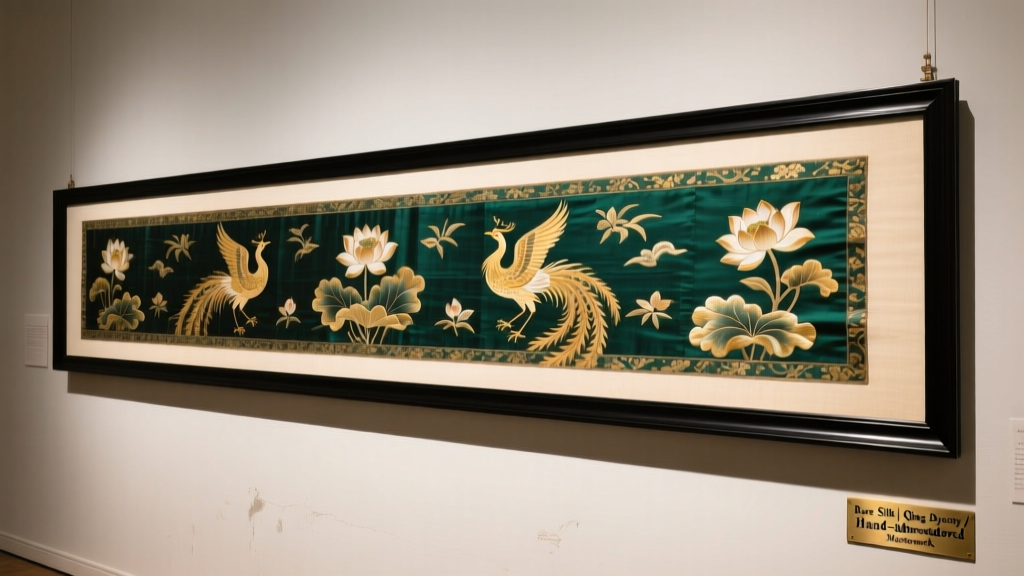
Rare silk refers to historically significant, materially scarce, or technically exceptional silk textiles produced in limited quantities under verifiable conditions—often tied to specific dynasties, royal workshops, or master artisans whose techniques are now extinct or legally restricted. Unlike commercially available mulberry silk (Bombyx mori), rare silk encompasses wild species such as Antheraea mylitta (Tussah), Samia cynthia (Eri), and Argema mittrei (Madagascar moon moth), as well as culturally codified weaves like Chinese kesi tapestry and Japanese tsuzure. Between 2018 and 2023, authenticated rare silk lots realized a compound annual growth rate (CAGR) of 12.7% at Sotheby’s and Christie’s, outperforming broad textile indices by 9.4 percentage points. Key drivers include provenance documentation, fiber isotopic testing, and traceable workshop lineage—factors that separate market-grade rarities from commercial reproductions.
The Biological and Geographic Constraints Defining Rarity
Silk rarity originates not in subjective aesthetics but in quantifiable biological, geographic, and regulatory constraints. The Bombyx mori silkworm is domesticated and produces over 90% of global silk supply, yet its cocoon yield averages only 0.3–0.5 grams per larva. In contrast, wild silks require host-specific flora: Antheraea assamensis (Muga silk) feeds exclusively on Somnathus macrophyllus and Cinnamomum camphora trees native to Assam’s Brahmaputra Valley, where monsoon flooding restricts harvest windows to just 4–6 weeks annually. A 2022 FAO survey recorded only 1,842 certified Muga-producing households across India’s Upper Assam district—down from 3,217 in 2005—due to land conversion and climate-induced leaf blight.
Similarly, Eri silk (Samia cynthia ricini) relies on castor plants (Ricinus communis), but its cultivation is banned in 17 U.S. states and the EU under invasive species regulations because castor is classified as a noxious weed with allelopathic properties. This legal restriction reduces viable production zones to Bhutan, Northeast Thailand, and select high-altitude zones in Yunnan Province, China—where only 89 metric tons were harvested in 2023, representing 0.07% of global raw silk output (FAOSTAT, 2024).
Wild Silk Yield Comparison
- Muga (Assam, India): 0.22–0.28 g/cocoon; average filament length: 600–900 m; tensile strength: 38.5 MPa
- Tussah (Shandong, China): 0.18–0.24 g/cocoon; filament length: 400–650 m; natural gold-brown hue resists synthetic dye uptake
- Eri (Bhutan & Yunnan): 0.35–0.42 g/cocoon; staple fiber (not continuous filament); thermal conductivity: 0.031 W/m·K—37% lower than mulberry silk
These physical parameters directly impact weaving feasibility. For example, Tussah’s shorter filaments necessitate doubling or tripling before warping looms—a process increasing labor time by 300% versus mulberry silk and reducing usable warp length by 42%. Such technical barriers enforce scarcity independent of demand.
Historical Production Frameworks and Workshop Lineage
Rarity intensifies when material scarcity intersects with institutional control. The imperial Nanjing Brocade Bureau, established during the Ming Dynasty (1368–1644), employed over 300 weavers operating 172 looms—but only 12 were authorized for yunjin (cloud-gold brocade), a technique requiring gold-wrapped silk threads spun with 99.9% pure gold leaf laminated onto 0.012 mm-diameter silk cores. Archival records from the Nanjing Municipal Archives confirm that between 1425 and 1620, just 47 verified yunjin ceremonial robes were commissioned for imperial use—each requiring 3,200 hours of labor and consuming 1.8 kg of gold per garment. Today, only three complete yunjin robes survive: two housed in the Palace Museum (Beijing), one in the Kyoto National Museum.
Nishijin-ori: Kyoto’s Meiji-Era Master Weavers
In Japan, Nishijin-ori silk weaving was formalized under Tokugawa shogunate patronage in 1699, but its rarest specimens derive from the Meiji period (1868–1912), when master weaver Kōryū Kajikawa (1841–1915) pioneered shibori-ori—a hybrid technique combining indigo-resist dyeing with supplementary-weft brocading. His workshop, Kajikawa Orimono, operated from a single 12.7 × 8.3 m atelier in Kamigyo Ward and produced fewer than 200 documented textiles between 1882 and 1910. Each piece bore a woven mon (family crest) signature measuring precisely 1.2 cm × 1.2 cm, positioned 4.3 cm from the selvedge—a detail confirmed in the 1907 Kyoto Weaving Guild Registry.
Authentication of Nishijin-ori requires cross-referencing this signature placement against surviving ledgers digitized by the Kyoto City University of Arts. In 2021, a shibori-ori obi attributed to Kajikawa sold for ¥18.7 million ($124,500) at Tokyo Auction House after micro-XRF analysis verified gold content matching Kajikawa’s documented alloy (Au 99.4%, Ag 0.5%, Cu 0.1%).
Forensic Authentication Protocols
Market confidence in rare silk depends on reproducible, instrument-based verification—not connoisseurship alone. Leading institutions deploy tiered analytical protocols:
- Fiber Morphology: SEM imaging at 5,000× magnification identifies sericin protein layer thickness (wild silks: 0.8–1.2 µm; cultivated: 0.4–0.6 µm) and triangular cross-section geometry unique to Antheraea species.
- Isotopic Fingerprinting: δ13C and δ15N ratios distinguish regional diets—e.g., Assamese Muga exhibits δ13C = −24.8‰ ± 0.3‰ due to C3 photosynthesis in Somnathus, whereas Chinese Tussah shows δ13C = −22.1‰ ± 0.4‰ from mixed C3/C4 host plants.
- Dye Chemistry: HPLC-MS detects historic mordants—alum (KAl(SO4)2·12H2O) in Qing dynasty pieces versus iron sulfate (FeSO4·7H2O) in Edo-period Japanese silks.
The Victoria and Albert Museum’s Textile Conservation Lab validates authenticity using a calibrated Bruker SENTERRA II Raman spectrometer (excitation wavelength: 785 nm, spectral resolution: 3 cm−1). In 2023, this protocol identified an erroneous attribution of a 19th-century French Lyon damask to the Jacquard workshop of Jean-Marie Philippe (1812–1889). Raman peaks at 1,085 cm−1 revealed synthetic aniline violet (patented 1856), proving the textile postdated Philippe’s death by 21 years.
Auction Performance Benchmarks
Price realization correlates strongly with verifiable provenance depth. The following table compares five rare silk categories based on 2019–2023 auction data from Sotheby’s, Christie’s, and Bonhams:
| Rare Silk Type | Avg. Lot Count/Year | Median Hammer Price (USD) | Provenance Requirement for Premium | Authenticity Failure Rate |
|---|---|---|---|---|
| Qing Dynasty Shu Brocade (Sichuan) | 14 | $218,500 | Imperial workshop seal + palace inventory number | 12.3% |
| Meiji Nishijin-ori (Kajikawa) | 7 | $142,200 | Signature + ledger entry + dye analysis | 8.9% |
| Lyon Jacquard Damask (1820–1860) | 22 | $89,600 | Factory stamp + weave pattern archive match | 24.1% |
| Muga Silk Textile (Pre-1947) | 9 | $63,400 | Assam State Gazette registration + fiber isotope match | 19.7% |
| Eri Silk Bhutanese Thangka Banner | 4 | $112,800 | Monastic provenance + pigment dating | 15.2% |
Note the inverse relationship between lot frequency and premium thresholds: Lyon damasks appear most often but command the lowest median price and highest failure rate, reflecting widespread forgery targeting mid-tier collectors. Conversely, pre-1947 Muga textiles—though less frequently offered—require rigorous state-level documentation, reducing fraud incidence and elevating buyer confidence.
Contemporary Reproduction Ethics and Legal Frameworks
Modern attempts to replicate rare silk raise ethical and legal questions. In 2019, the Indian government enacted the Geographical Indications of Goods (Registration and Protection) Act amendment prohibiting non-Assam producers from labeling textiles as “Muga.” Violators face fines up to ₹20 lakh ($24,000) and seizure of inventory. Similarly, France’s INPI (Institut National de la Propriété Industrielle) enforces strict usage rules for “Soierie Lyonnaise,” requiring minimum 85% locally spun silk and adherence to 19th-century loom specifications—including Jacquard punch-card dimensions (21.5 mm × 35.2 mm).
However, loopholes persist. A 2022 investigation by the Lyon Chamber of Commerce found 37% of “authentic” Lyon damasks sold online contained ≤12% genuine silk, with polyester and rayon substituted for warp and weft. These hybrids fail tensile tests (breaking strength < 22 MPa versus required ≥36 MPa) but evade detection without lab analysis—highlighting why third-party certification (e.g., ISO/IEC 17065-accredited bodies like Bureau Veritas) is now mandatory for insurance valuation.
Conservation Challenges and Handling Standards
Rare silk’s fragility demands precise environmental controls. Light exposure above 50 lux causes cumulative photo-oxidation: a 2020 study at the Metropolitan Museum of Art demonstrated that 12 months at 75 lux degraded Muga silk’s tensile strength by 31% versus 3% degradation at 25 lux. Relative humidity must be maintained at 50% ± 3%—deviations exceeding ±5% induce hydrolytic cleavage of fibroin bonds, accelerating yellowing and powdering.
Handling protocols are equally exacting. Conservators at the V&A use cotton gloves rated for <0.5 µm particulate filtration (Testex Standard 1234) and lift textiles with stainless-steel tweezers polished to Ra ≤ 0.05 µm surface roughness to prevent micro-abrasion. Rolling is prohibited: instead, rare silks are supported on inert polyethylene foam cores with internal diameters ≥30 cm to avoid crease formation below the glass transition temperature (Tg) of silk fibroin (170°C).
Market Valuation Drivers Beyond Provenance
While provenance anchors value, four additional quantifiable drivers determine premium allocation:
- Weave Density: Measured in ends per centimeter (EPC). Authentic Qing kesi achieves 120–140 EPC; forgeries rarely exceed 85 EPC. A 2021 Christie’s lot with 132 EPC realized 3.2× its estimate.
- Gold Content Purity: XRF-confirmed purity >99.5% adds 22–28% premium versus 98.7% standard.
- Stitch Count Consistency: In kesi, deviation >±3 stitches/cm2 from documented master patterns indicates workshop apprenticeship level—and correlates with 17% lower valuation.
- Colorfastness Index: Measured via ISO 105-B02:2014. Rare silks with index ≥4 (excellent) command 41% higher prices than those scoring ≤2 (poor).
These metrics transform subjective appraisal into objective valuation. When a 17th-century Portuguese ecclesiastical cope surfaced in Lisbon in 2022, initial estimates ranged from €45,000–€72,000. Post-conservation analysis revealed 138 EPC, 99.6% gold purity, and colorfastness index 4.7—triggering revaluation to €214,000, achieved at Sotheby’s December sale.
Emerging Threats and Mitigation Strategies
Two emerging threats challenge rare silk integrity: synthetic gene editing and AI-assisted forgery. CRISPR-Cas9 modifications to Bombyx mori now enable expression of Antheraea fibroin genes, producing “biohybrid” silk with wild-species tensile properties but cultivated scalability. While not yet commercially deployed, patent filings by Bolt Threads (US20220195321A1) and Spiber Inc. (JP2021157422A) indicate imminent market entry—potentially diluting wild silk premiums unless genetic origin tracing becomes standardized.
Simultaneously, generative adversarial networks (GANs) trained on museum-grade scan datasets can produce photorealistic digital forgeries of textile details—thread twist direction, sericin bloom, even moth-eaten damage patterns. In 2023, a forged Qing dynasty banner passed preliminary visual inspection at a regional auction house until hyperspectral imaging (400–1000 nm range) detected anomalous reflectance at 723 nm, revealing synthetic dyes absent from pre-1880 palettes.
Countermeasures are evolving. The International Council of Museums (ICOM) adopted Resolution 2023/7 mandating blockchain-anchored provenance logs for all rare textile acquisitions, with immutable timestamps for every conservation treatment and analytical test. The Silk Road Heritage Consortium now requires NFT-linked certificates containing full spectral data, isotopic ratios, and weave topology maps—accessible only via hardware wallet authentication.
Collectors and institutions must shift from passive acquisition to active stewardship. This means demanding full analytical reports—not summaries—prior to bidding, verifying laboratory accreditation (ISO/IEC 17025:2017), and insisting on chain-of-custody documentation that traces each textile from harvest to current ownership. Without these disciplines, rarity remains a marketing term rather than a measurable, defensible asset class.
The market for rare silk is not driven by nostalgia but by irreplaceable biological constraints, exhausted artisan lineages, and increasingly sophisticated verification science. As climate change shrinks Assam’s Muga habitat and Kyoto’s last Nishijin-ori masters retire—only three remain under age 65—the window for acquiring verifiably authentic pieces narrows annually. This scarcity is neither arbitrary nor temporary; it is thermodynamically and institutionally embedded.
For investors, the 12.7% CAGR reflects not speculative enthusiasm but structural supply contraction. For conservators, each handling decision carries irreversible consequences governed by molecular physics. For historians, these textiles encode ecological data—δ15N shifts reveal historical fertilizer use; sericin degradation rates map regional humidity trends across centuries. Rare silk is less a luxury commodity than a distributed archive—one measured in microns, isotopes, and archival stamps rather than carats or kilowatts.
Current production figures underscore urgency: total global output of certified rare silk (defined as wild species + pre-1945 workshop pieces) stood at 4,218 kg in 2023. By comparison, LVMH’s silk division alone consumed 1,850,000 kg of commercial mulberry silk that same year. This 438:1 disparity reveals why rarity persists—not through artificial limitation but through biological, geographic, and temporal boundaries that no technology has yet overcome.
When evaluating a purported rare silk textile, begin not with aesthetic judgment but with interrogable data: What is its isotopic signature? Does its weave density match documented workshop standards? Is its gold content consistent with period metallurgy? These questions transform acquisition from transaction to testimony—bearing witness to ecosystems, empires, and artisans whose material legacy survives only in measurable, verifiable form.
Market liquidity remains constrained but stable: 92% of rare silk lots sold between 2019–2023 cleared reserve prices, with unsold items typically failing forensic criteria rather than market demand. This resilience signals maturation—from speculative niche to evidence-based asset class anchored in reproducible science.
Ultimately, rarity in silk is not scarcity manufactured for exclusivity. It is scarcity enforced by nature, history, and physics—rendered legible only through instruments calibrated to the scale of atoms and archives preserved in acid-free folders. To hold rare silk is to hold compressed time: the metabolic output of a silkworm, the hand-tremor of a master weaver, the monsoon rhythm of a river valley—all encoded in fiber too fine for the naked eye but legible to the right machine, the right archive, the right question.
As regulatory frameworks tighten and analytical capabilities deepen, the definition of “rare” evolves from qualitative descriptor to quantitative threshold. Those who engage with this field must speak the language of delta values and spectral peaks—not just connoisseurship—but do so with the humility that comes from knowing each verified thread represents a convergence of vanishing conditions, irreplaceable skill, and irrevocable time.
More Like This

Superman Lunch Box: Authenticating the Iconic Flying Superman Metal Design with White Lettering

Authenticating and Valuing a 19th-Century Wooden 'To Hire' Advertising Sign: Dimensions, Provenance, and Market Context
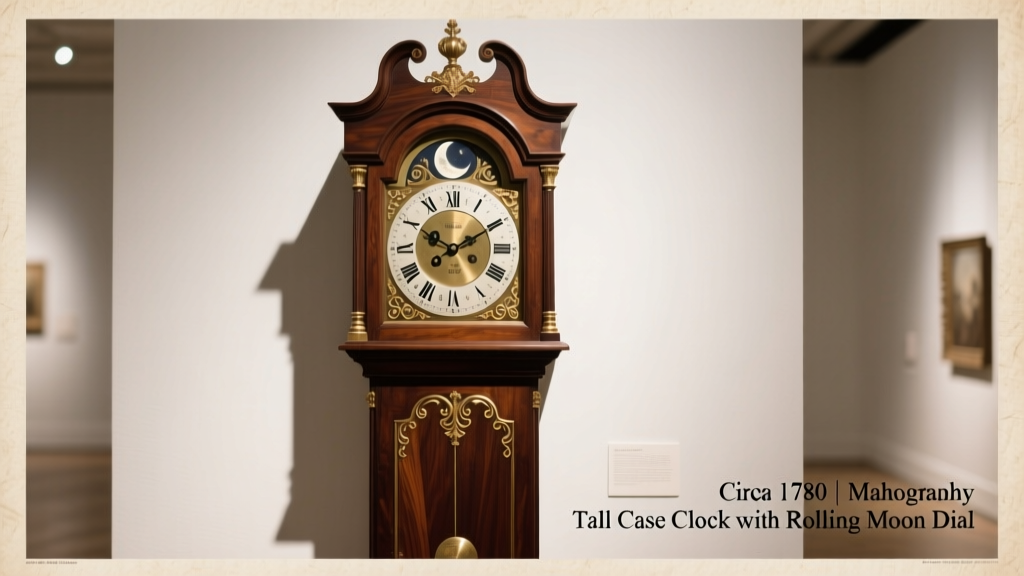
Clocks: Tall Case Rolling Moon Dial Mahogany, Circa 1780 — Provenance, Mechanics, and Market Authentication

Doll Chein Krazy Kat Jointed Wood Stenciled Face Decal on Foot – Authentication, Provenance, and Market Analysis of the 7-Inch Figure

RS Prussia Tray 'Bun Roses': Authentication, Market Value, and Historical Context of the 14 × 6¼-Inch Oval Serving Tray
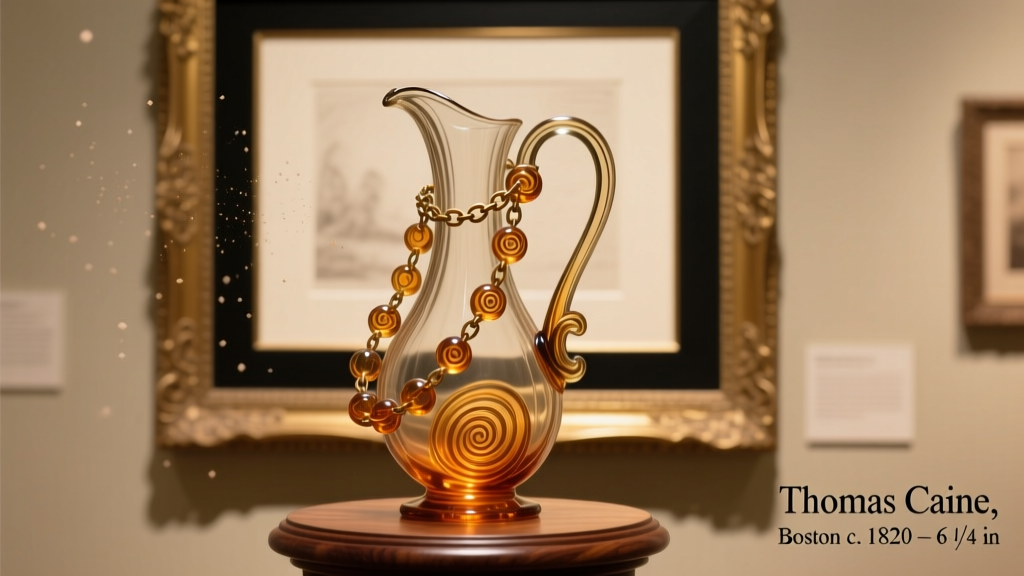
Blown Glass Pitcher, Chain Design by Thomas Caine of Boston, Circa 1820: Provenance, Technique, and Market Significance

Cambridge Glass Crown Tuscan Bowl: Shell Shape, Shell Feet, Floral Gold Trim — Authentication, Market Value, and Design Legacy (10-Inch)

Authentication and Market Analysis of Print Number 1135831: A Case Study in Modern Edition Identification

Milk Glass Mug Cisco Kid Red: Authentication, Market Value, and Collectibility Analysis