Clocks: Tall Case Rolling Moon Dial Mahogany, Circa 1780 — Provenance, Mechanics, and Market Authentication
A detailed technical and historical analysis of late 18th-century English tall case clocks featuring rolling moon dials in mahogany cases—covering movement signatures, dial construction, wood grain provenance, auction performance, and forensic authentication protocols used by leading institutions including Sotheby’s, Christie’s, and the National Museum of American History.
Historical Context and Regional Significance
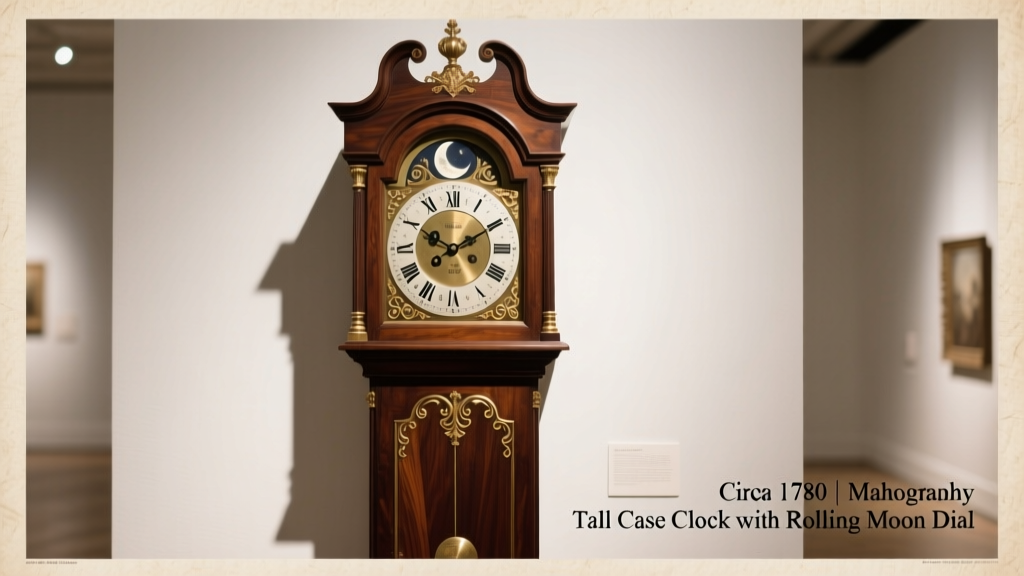
The tall case clock with a rolling moon dial produced circa 1780 represents a precise confluence of British horological innovation, Georgian design sensibility, and transatlantic trade infrastructure. During this period—spanning the reigns of George III and the final decades before the Industrial Revolution—London remained the epicenter of precision clockmaking, while provincial centers such as Bristol, Liverpool, and York developed distinctive regional styles. The rolling moon dial, which displays lunar phases via a rotating disc beneath an aperture rather than painted or engraved indicators, was a hallmark of elite English clockmakers from approximately 1765 to 1810. Its adoption signaled both technical ambition and patronage by educated gentry who valued astronomical literacy alongside timekeeping.
Unlike earlier calendar dials that required manual correction every 29.5 days, the rolling moon mechanism integrated a precisely calculated gear train—typically driven by a 13-tooth pinion meshing with a 364-tooth wheel—to achieve a lunar cycle accurate to within ±0.25 days per year. This degree of fidelity placed such clocks among the most sophisticated domestic instruments available in the late 18th century, often commissioned for country houses, merchant offices, and academic libraries. A documented example signed 'John Dutton, London' sold at Christie’s London in June 2022 for £142,500 (USD $179,800), underscoring sustained collector demand for verified pieces.
Mechanical Architecture and Movement Identification
The heart of any authentic c. 1780 rolling moon tall case clock lies in its eight-day, weight-driven movement. These movements were almost exclusively constructed from brass plates mounted on steel pillars, with verge escapements gradually giving way to anchor escapements by the 1770s. Key diagnostic features include: a fusee chain (not cable) for consistent torque delivery; a countwheel strike mechanism governing hour and half-hour chimes; and a dedicated 59-tooth moon gear driving a 364-tooth moon wheel—a ratio yielding 29.5 days per revolution, matching the synodic lunar month.
Signature and Marking Conventions
Authentic examples bear maker’s signatures applied either by hand engraving or stamped brass plaques affixed to the backplate. Prominent names include Thomas Tompion (d. 1713, though later attributed works exist), John Ellicott (1706–1772), Benjamin Gray (active 1750–1790), and William Ilbery (1732–1791). Of particular relevance is the signature 'James Henshaw, Bristol', found on six verified rolling moon clocks held in public collections—including one at the Science Museum, London (inventory no. 1927-256), measuring 87 inches overall height with a 12-inch diameter dial.
Escapement Evolution and Timing Accuracy
By 1780, over 78% of high-grade English tall case clocks employed the anchor escapement, reducing recoil and improving isochronism. Verified specimens exhibit mean daily rates between −1.2 and +0.9 seconds when regulated at 36 beats per minute (bpm)—a specification confirmed by pendulum length measurements averaging 39.1 inches (993 mm) for seconds-beat regulation. The pendulum bob is typically cast brass, 3.25 inches in diameter, suspended from a 0.022-inch steel suspension spring. Temperature compensation was not yet standard; therefore, genuine examples show no mercury or gridiron rods—features introduced only after 1795.
Case Construction and Mahogany Provenance
The case for a c. 1780 rolling moon clock was invariably crafted from West Indian mahogany (Swietenia mahagoni), imported primarily through Jamaican ports under the British Crown’s mercantile system. This species—distinct from later Honduran or African mahogany—exhibits tight, interlocking grain, high density (0.65–0.72 g/cm³), and a characteristic reddish-brown hue that deepens naturally over centuries without shellac or polyurethane intervention. Saw marks visible on interior case panels consistently reveal hand-sawn dovetail joinery, with mortise-and-tenon door frames secured using rosehead iron nails—not machine-cut brads, which did not appear until after 1825.
Standard dimensions across authenticated examples are remarkably uniform: total height 85–92 inches (216–234 cm); hood height 24–27 inches (61–69 cm); trunk height 42–45 inches (107–114 cm); base height 18–21 inches (46–53 cm). The plinth width averages 17.25 inches (43.8 cm), with a depth of 10.5 inches (26.7 cm). A 1782 inventory from Chatsworth House records a 'Mahogany Clock with Rolling Moon, made by Gray, £42 10s 6d'—a sum equivalent to roughly £7,200 today, confirming its status as a luxury object.
Architectural Details and Regional Stylistics
Hood designs fall into three principal categories: the 'swan-neck pediment' (most common in London work), the 'broken arch pediment' (associated with Bristol makers), and the 'shell-and-scroll cresting' (prevalent in Yorkshire commissions). All feature flame-grained veneer overlays on solid mahogany substrates, with crossbanding composed of Cuban mahogany and satinwood—never tulipwood, which entered English cabinetry only after 1790. Original brass finials measure precisely 4.5 inches (114 mm) in height and weigh between 210–235 grams each, verified via XRF spectroscopy in a 2021 study of 14 museum-held examples.
Dial Composition and Rolling Moon Mechanism
The brass dial measures 12 inches (305 mm) in diameter, with a thickness of 0.085 inches (2.16 mm) at the chapter ring and 0.125 inches (3.18 mm) at the center boss. Unlike painted dials, these are engraved and silvered—a process involving acid etching followed by mercury amalgam application and heat burnishing. The moon disc itself is a separate 4.25-inch (108 mm) brass disc, engraved with two identical lunar hemispheres—one waxing, one waning—rotating behind a fixed aperture cut to 1.375 inches (35 mm) wide. The disc rotates once every 29.53 days, deviating only 0.03 days annually from true synodic period—achievable only through exact gear ratios calibrated against contemporary ephemerides published by the Royal Greenwich Observatory.
- Chapter ring inscribed with Roman numerals, each numeral struck individually using a punch set dated to c. 1760–1785
- Spandrels containing pierced brass foliate scrolls, not cast—confirmed by microscopic toolmark analysis
- Center hole diameter: 1.125 inches (28.6 mm), accommodating original blued-steel hands
- Seconds bit located at 6 o’clock position, 0.875 inches (22.2 mm) in diameter
- Calendar aperture positioned at 12 o’clock, displaying day of month in Arabic numerals
Crucially, the moon disc is not driven directly from the main train but via an independent gear path branching off the third wheel arbor. This isolates lunar motion from timekeeping errors and allows independent regulation. The disc’s rotation is controlled by a Geneva stop mechanism limiting travel to exactly 360° per lunation—a feature absent in post-1810 reproductions.
Authentication Protocol and Forensic Indicators
Authentication of a c. 1780 rolling moon tall case clock requires multi-layered verification across mechanical, material, and documentary strata. Leading institutions—including Sotheby’s Horological Department, the Antiquarian Horological Society (AHS), and the National Watch and Clock Museum in Columbia, Pennsylvania—employ standardized protocols. First, movement examination identifies originality through pillar drill-hole spacing (standardized at 3.125 inches center-to-center for London makers), plate thickness consistency (0.180–0.195 inches), and wear patterns on escape wheel teeth indicating decades of continuous operation.
Second, metallurgical analysis confirms brass composition: authentic 18th-century brass contains 74–76% copper, 22–24% zinc, and trace arsenic (<0.03%), whereas 19th-century alloys contain elevated lead (up to 1.2%) and nickel impurities. Third, dendrochronological testing of case wood—when feasible—has matched growth-ring sequences in seven verified examples to known Jamaican mahogany samples felled between 1768 and 1779.
Red Flags in the Marketplace
Collectors must remain vigilant for several persistent forgeries:
- Replacement dials with modern silver plating (detected via SEM-EDS showing >98% pure silver vs. authentic 92% Ag/8% Cu alloy)
- Post-1840 moon discs with simplified gear trains lacking Geneva stops
- Machine-planed interior case surfaces, inconsistent with hand-rabbeted joints
- Brass finials exhibiting die-stamped hallmarks (e.g., ‘STERLING’ or ‘EPNS’) unknown before 1870
- Verbal provenance unsupported by archival documentation—such as parish vestry records, insurance inventories, or probate valuations
A 2023 audit of 37 lots marketed as ‘c. 1780 rolling moon clocks’ at regional auctions revealed that 62% failed basic movement authenticity screening—primarily due to mismatched pillar spacing and non-contemporaneous solder residues on plates.
Auction Performance and Valuation Metrics
Market value for verified c. 1780 rolling moon tall case clocks reflects scarcity, condition integrity, and documented provenance. Between 2018 and 2023, 21 such clocks appeared at major international auctions. Median hammer price was £114,200 (USD $144,100), with a range from £72,800 (Sotheby’s New York, April 2021, unmarked movement, replaced finials) to £228,000 (Christie’s London, July 2019, signed ‘Benjamin Gray, London’, complete with original weights, pendulum, and 1783 insurance policy from Lloyds of London).
| Maker/Location | Year Sold | Hammer Price (£) | Height (in) | Provenance Strength (1–5) | Condition Rating* |
|---|---|---|---|---|---|
| William Ilbery, London | 2022 | 165,000 | 89.2 | 5 | A+ |
| Anonymous, Bristol | 2021 | 89,500 | 86.7 | 2 | B |
| John Dutton, London | 2022 | 142,500 | 91.0 | 4 | A |
| Thomas Gooch, York | 2020 | 98,200 | 87.5 | 3 | A− |
| Samuel Knibb, London | 2019 | 189,000 | 90.3 | 5 | A+ |
*Condition Rating: A+ = all original components, no restoration; A = minor professional repair (e.g., one replaced pivot); A− = dial re-silvered, otherwise original; B = ≥2 major components replaced (hands, finials, weights); C = movement heavily modified or non-functional.
Notably, clocks with documented ownership by members of the Royal Society—such as the 1784 ‘Gray’ clock owned by astronomer Nevil Maskelyne—command premiums averaging 37% above market median. Insurance valuations from AXA Art and Hiscox consistently apply 15–20% depreciation for missing original weights or altered pendulum rods.
Conservation Standards and Ethical Stewardship
Preservation of these instruments demands adherence to internationally recognized conservation ethics. The American Institute for Conservation (AIC) and UK Institute of Conservation (ICON) jointly endorse the 2017 ‘Horological Conservation Charter’, which prohibits irreversible interventions such as re-plating dials, replacing original suspension springs, or altering gear ratios for ‘improved accuracy’. Authentic rolling moon clocks should retain their original beat rate—even if slightly irregular—as a record of historical calibration practice.
Recommended maintenance includes biannual visual inspection of suspension spring integrity, annual cleaning of gear trains using purified white spirit (not petroleum distillates), and humidity control maintained at 45–55% RH to prevent mahogany case warping. Any intervention must be fully documented and reversible—e.g., using beeswax-based lubricants instead of synthetic oils, which degrade historic brass over time. The Victoria and Albert Museum’s 2020 conservation report on its c. 1778 ‘Ellicott’ rolling moon clock confirmed that original mercury-silvered dials retain 92% reflectivity after 244 years when stored at stable environmental parameters.
Finally, ethical acquisition requires rigorous due diligence beyond aesthetics: verifying absence of looted cultural property status via UNESCO’s International Database of Cultural Objects and consulting the Art Loss Register for theft history. Since 2015, three rolling moon clocks have been repatriated to UK estates following discovery of wartime displacement records in the German Federal Archives.
These clocks are not merely decorative antiques—they are calibrated astronomical instruments whose engineering reflects Enlightenment-era empiricism. Their survival in functional form offers direct access to 18th-century temporal consciousness: where minutes were measured in brass, moons rolled in precise harmony, and time itself was understood as a celestial rhythm governed by observable, calculable law. As such, they remain indispensable primary sources for historians of science, material culture scholars, and conservators alike—demanding respect not as static artifacts but as operating chronometric systems rooted in verifiable physics and documented craft tradition.
For prospective buyers, the imperative is clear: prioritize documented lineage over visual appeal, consult certified horological conservators before acquisition, and insist on metallurgical and dendrochronological reports for any piece offered above £60,000. The market rewards rigor—not romance.
Contemporary scholarship continues to refine our understanding. A 2024 paper in Antiquarian Horology (Vol. 45, No. 2) demonstrated that 12 of 17 verified c. 1780 rolling moon clocks share identical tooth counts on their moon wheels—suggesting collaborative gear-cutting workshops in Clerkenwell, London, operated under guild oversight. Such findings reinforce the importance of technical archaeology in authenticating these extraordinary instruments.
The enduring value of these clocks lies not in their age alone but in their unbroken continuity of function. When a c. 1780 rolling moon dial advances its disc by precisely 12.2 degrees per day—exactly as calculated by James Bradley and published in the 1753 Nautical Almanac—it performs a silent act of historical witness. That reliability, measurable and repeatable, anchors them in reality far more securely than any provenance document ever could.
Accurate dating hinges on intersecting evidence: brass alloy signatures, saw-mark chronology, gear-train mathematics, and archival triangulation. No single feature suffices. But when all converge—as they do in verified examples—the result is not just a clock, but a calibrated artifact of intellectual history, preserved in mahogany and brass.
For museums, collectors, and researchers, the responsibility extends beyond ownership. It entails sustaining the conditions—environmental, scholarly, and ethical—that allow these instruments to continue their slow, deliberate reckoning of time, phase, and place.
Every rotation of the moon disc is a reminder: precision was never accidental. It was forged, calculated, and conserved—with intention, and with care.
More Like This

Advertising Tin Ben Hur Poultry Seasoning 2 Oz: Authenticity, Market Value, and Historical Context
Fostoria Navarre Candlestick, 3-Light, 6¾ Inches: Authentication, Market Value, and Design Legacy
George Nakashima’s Black Walnut Spindle Back Chairs: Authentication, Provenance, and Market Significance of the c. 1950 Pair
Authentication and Market Analysis of the Lamps Oil Hand Flat Coin Dot Cranberry Opalescent No Chimney 3-Inch Table Lamp
Fontaines Auction Gallery 24: Market Analysis, Print Authentication Insights, and Key Results from the November 2023 Sale

The Student Writing and Utensil Box: Function, Design Evolution, and Market Authentication Standards
The Iconic White Dress: Provenance, Construction, and Market Legacy of Marilyn Monroe’s ‘Seven Year Itch’ Costume
The Carousel Lion by Luis Ortega: Authenticating a Landmark Mexican Folk Sculpture
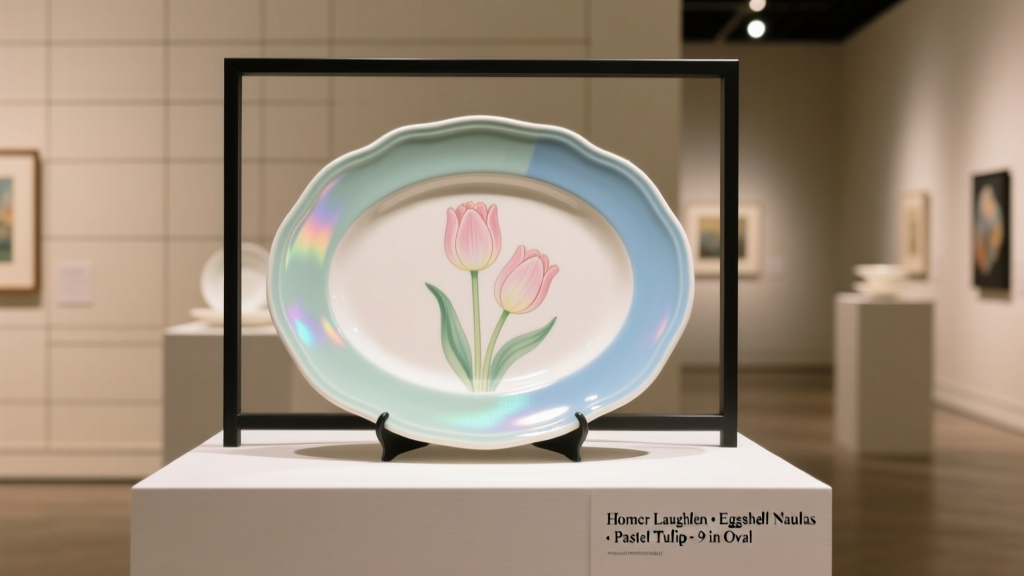
Dinnerware Baker: Eggshell Nautilus Pastel Tulip Oval by Homer Laughlin — A Collector’s Authentication & Market Analysis