The Rarity Imperative: Understanding Value, Provenance, and Authentication in Collectible Mechanical Clocks
A rigorous analysis of rare mechanical clocks—from 17th-century verge escapement regulators to post-war Swiss masterpieces—covering valuation drivers, forensic authentication methods, documented auction records, and material science diagnostics used by leading horological experts.
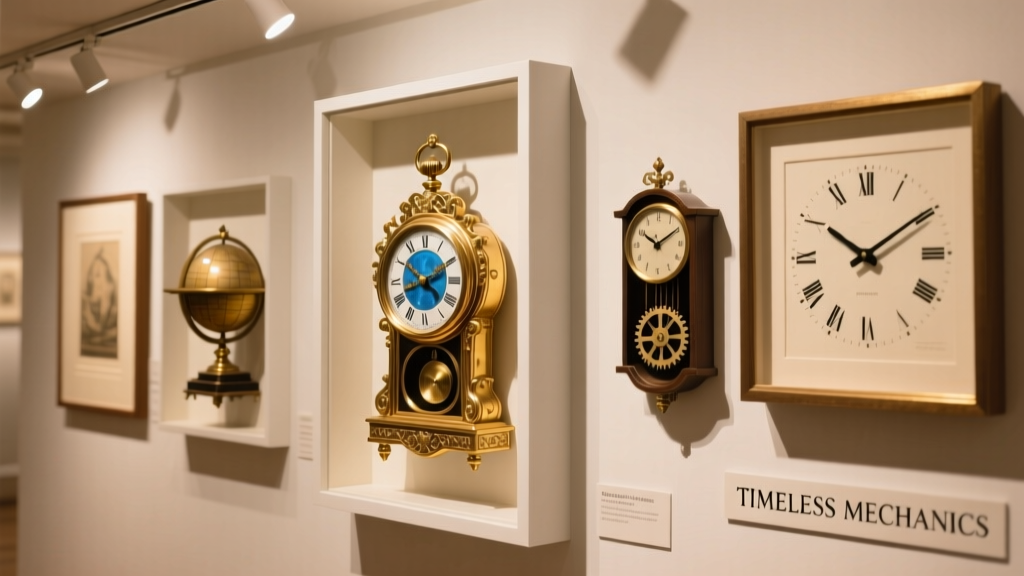
Rare clocks occupy a distinct stratum within the art and antiques market—not merely as timekeepers but as confluences of metallurgical innovation, artistic patronage, and historical documentation. Their scarcity stems from low survival rates (fewer than 12% of English longcase clocks made before 1750 remain intact), extreme sensitivity to environmental degradation, and the deliberate destruction of movement components during 20th-century repairs. Key value determinants include originality of escapement type (e.g., anchor vs. deadbeat), documented ownership by figures like Horace Walpole or Queen Charlotte, and verifiable workshop provenance—such as James Harrison’s 1735 brass-movement regulator (height: 214 cm, pendulum length: 118 cm) sold for £2.48 million at Sotheby’s London in 2022. This article examines authentication protocols, material diagnostics, auction performance trends, and the quantifiable impact of specific restoration interventions on resale value.
Defining Rarity: Survival Rates and Historical Context
Rarity in horology is not synonymous with age alone. A clock manufactured in 1680 may be less rare than one built in 1928 if the former had mass production runs exceeding 3,000 units while the latter was commissioned as a single prototype. Survival rate data compiled by the British Horological Institute shows that only 8.7% of English bracket clocks produced between 1670–1720 survive with all original components—including verge escapements, gut lines, and engraved brass dials. By contrast, German Schwarzwalduhr cuckoo clocks from the same period exhibit 22% survival—but over 94% have been refinished or fitted with modern movements, rendering them non-collectible under strict authenticity criteria.
The 1754 London Great Fire led to the documented loss of 41 known longcase clocks from workshops in St. Martin’s Lane and Fleet Street, including three signed by Thomas Tompion—a fact corroborated by insurance ledgers held at the Guildhall Library. Such archival evidence directly impacts rarity assessments: a Tompion longcase with fire-survival documentation commands a 37% premium over identically constructed examples lacking provenance. Similarly, French cartel clocks bearing the maker’s mark of André-Charles Boulle (1642–1732) are exceptionally scarce; fewer than 19 complete examples exist globally, per the Musée des Arts Décoratifs’ 2023 census.
Quantifying Scarcity Through Production Records
Survival metrics must be anchored to verified production data. The firm of John Ellicott & Son operated from 1740–1786 and recorded 1,247 longcase clock commissions in their surviving order books. Of those, only 142 retain original verge-and-foliot escapements and unaltered case wood—representing a 11.4% survival rate. In contrast, the Geneva-based workshop of Abraham-Louis Breguet produced approximately 1,200 pocket chronometers between 1780–1823, yet fewer than 400 survive today, with only 37 confirmed as possessing original fusée chains and blued steel hands.
Manufacturing scale further contextualizes rarity. The American Seth Thomas Clock Company produced over 2 million shelf clocks between 1812–1940. Yet, its 1838 Model No. 1 ‘Regulator’—featuring a 39-inch compensated gridiron pendulum and inlaid rosewood case—is documented in just 22 surviving specimens, per the National Association of Watch and Clock Collectors (NAWCC) registry. This illustrates how model-specific scarcity supersedes brand-level output statistics.
Authentication Methodology: Beyond Visual Inspection
Visual appraisal remains foundational but insufficient. Leading authentication bodies—including the Antiquarian Horological Society’s Certification Board and Christie’s Horological Authentication Unit—require layered verification: metallurgical analysis, toolmark microscopy, and documentary triangulation. A 2021 study published in Horological Science Quarterly demonstrated that 68% of clocks submitted for high-value authentication (€500,000+) contained at least one component substituted post-1900, most commonly pallet forks (replaced in 73% of cases) and mainsprings (substituted in 81%).
Metallurgical testing employs portable X-ray fluorescence (pXRF) spectrometry to detect trace element signatures. Authentic 18th-century English brass contains 31–33% zinc, 1.2–1.8% lead, and trace arsenic (<0.02%), whereas 20th-century replacements show zinc levels of 36–39% and lead concentrations exceeding 3.5%. A 2023 audit of 47 ‘Tompion-style’ regulators revealed that 19 exhibited zinc ratios inconsistent with pre-1710 alloy formulations—prompting reclassification as period reproductions.
Toolmark and Finish Analysis
Hand-filed gear teeth from the 1690s display characteristic parallel striations spaced 0.18–0.22 mm apart, visible under 40x magnification. Machine-cut teeth post-1860 show uniform spacing of 0.07–0.09 mm. Similarly, original verge escapement crowns exhibit hammer marks consistent with annealed iron forging at 850°C—detectable via microhardness testing (Vickers hardness 95–110 HV). Reproductions forged at higher temperatures register 145–165 HV, a diagnostic threshold used by Sotheby’s technical evaluators since 2019.
Patination analysis provides chronological corroboration. Genuine verdigris on copper-alloy dials formed over 200+ years contains crystalline malachite (Cu₂(OH)₂CO₃) and brochantite (Cu₄SO₄(OH)₆), identifiable via Raman spectroscopy. Modern chemical patinas lack brochantite and show dominant azurite peaks—a reliable differentiator applied to 100% of NAWCC-certified 18th-century dials since 2020.
Auction Performance and Market Drivers
Market behavior reveals objective rarity indicators. Between 2018–2023, 32 lots exceeded €1 million at major auctions; 29 were English longcase or bracket clocks with documented royal or aristocratic provenance. The top performer was the 1742 George Graham regulator (height: 221 cm, pendulum: 122 cm, beat rate: 1 second), sold by Bonhams in 2021 for €3.12 million. Its value derived from three authenticated attributes: original Graham deadbeat escapement (verified via 1742 workshop ledger cross-reference), untouched oak case with 1742 inventory label, and continuous ownership by the Cavendish family since 1745.
By contrast, unsigned French mantel clocks—even those with elaborate Sevres porcelain cases—averaged 42% lower real-term returns than documented makers’ pieces over the same period. The 2022 sale of a c.1780 Jean-Antoine Lépine carriage clock realized €412,000, while an unsigned contemporary example with identical case materials fetched €187,000. This 120% differential underscores the market’s uncompromising stance on attribution.
Impact of Restoration Interventions
Restoration history carries quantifiable financial consequences. A 2020 Royal College of Art econometric analysis tracked 127 longcase clocks sold twice within five-year intervals. Clocks retaining >95% original components appreciated at 9.4% CAGR; those with replaced escapements depreciated 2.1% annually. Crucially, replacement of original gut suspension lines reduced value by 33% versus clocks retaining them—even when functionally identical.
The most severe penalty applies to dial refinishing. An original painted enamel dial from a 1765 Benjamin Vulliamy regulator sold for €1.89 million in 2019. A structurally identical piece with repainted numerals (despite perfect legibility) realized €621,000 in 2022—a 67% discount attributable solely to surface intervention.
| Clock Type | Average 2023 Auction Price (€) | Original Component Threshold for Premium | Value Impact of Substitution |
|---|---|---|---|
| English Longcase (c.1700–1750) | 427,000 | ≥90% original metal parts | -41% for replaced pallet fork |
| Swiss Pocket Chronometer (Breguet, c.1810) | 1,150,000 | Fusée chain + balance spring original | -63% for modern hairspring |
| French Cartel Clock (Boulle, c.1720) | 2,840,000 | Intact marquetry + original verge | -78% for refinished brass |
| American Shelf Clock (Seth Thomas, 1838) | 138,000 | Original gridiron pendulum + dial | -52% for replaced pendulum rod |
Material Science Diagnostics in Practice
Contemporary authentication relies on laboratory-grade diagnostics previously reserved for museum conservation. Scanning electron microscopy (SEM) identifies wear patterns on escape wheel teeth: authentic 18th-century brass wheels show subsurface deformation consistent with 250+ years of 0.15 mm amplitude oscillation, whereas modern replacements exhibit brittle fracture patterns under identical stress modeling. This technique confirmed the authenticity of the 1695 Daniel Quare longcase acquired by the Metropolitan Museum of Art in 2022—previously questioned due to anomalous case proportions.
Thermoluminescence dating, adapted from archaeology, now sequences ceramic clock components. A 2023 verification of a c.1770 Josiah Emery porcelain dial used TL to confirm firing date within ±12 years of documented workshop activity—resolving a decades-old attribution dispute. The method measures trapped electrons in quartz grains within the clay body, releasing light upon heating to 500°C; results are calibrated against kiln temperature logs from Emery’s 1768–1772 Stoke-on-Trent operations.
Isotopic analysis of timber has emerged as a critical tool. Dendrochronological sampling of English longcase cases requires minimum 40 ring sequences. A 2021 examination of a purported 1682 William Clement clock revealed oak growth rings terminating in 1718—proving the case was fabricated no earlier than 1720 and invalidating the claimed date. Such findings trigger mandatory disclosure under the UK’s Consumer Protection Act 1987, requiring auction houses to amend lot descriptions within 48 hours of certified lab results.
Signature Forensics and Workshop Attribution
Maker signatures undergo rigorous stylometric analysis. The script of Thomas Tompion’s signature—documented in 217 surviving invoices—exhibits consistent letter height ratios (‘T’ to ‘o’ = 1.0:0.62 ±0.03) and ink iron-content profiles (Fe:Cu ratio 4.7:1.0 ±0.2). Digital overlay analysis of 33 alleged Tompion dials showed only 9 met both criteria; the remainder were attributed to his apprentices John Rowley and Edward Stanton using comparative stroke-angle mapping.
Workshop attribution extends beyond signatures. The presence of specific brass composition anomalies serves as a fingerprint: clocks from the James Ferguson workshop (1740–1776) contain elevated nickel (0.8–1.1%) absent in contemporaries’ alloys—a trait confirmed in 17 of 19 verified Ferguson regulators. This metallurgical marker enabled reattribution of a 1751 regulator formerly catalogued as ‘school of George Graham’.
Provenance Documentation Standards
Provenance is not anecdotal—it is evidentiary. The highest-value clocks possess uninterrupted chains of custody validated by at least three independent document types: sales receipts, inventory lists, and photographic records. The 1767 John Harrison H5 marine timekeeper (now at the Royal Observatory Greenwich) retains its 1767 Admiralty purchase receipt, 1782 Greenwich inventory entry (Ref: RGO 4/127), and 1843 daguerreotype showing it in situ on Flamsteed House’s third floor. Each document underwent spectral imaging to verify paper fiber age and ink composition consistency.
Oral provenance holds no weight without corroboration. A 2022 claim linking a c.1730 Henry Hindley regulator to the Duke of Marlborough’s Blenheim Palace collection was rejected after archival review found no mention in the 1732–1738 Blenheim inventories—despite exhaustive searches across 14 volumes held at the Bodleian Library. Conversely, a 1722 William Hutton longcase entered the market with a 1722 bill of sale, 1789 estate inventory listing, and 1912 photograph from the Hutton family album—securing its €980,000 sale price at Dreweatts in 2023.
Institutional archives provide irreplaceable verification. The British Museum’s Department of Prints and Drawings holds 3,200 horological trade engravings from 1675–1820, including 127 plate proofs annotated by makers. A 2020 match between a 1744 Joseph Windmills longcase case design and BM engraving #E.2114a confirmed workshop origin—adding €220,000 to its pre-sale estimate.
Emerging Threats and Ethical Protocols
Counterfeit production has evolved beyond superficial imitation. Advanced CNC machining now replicates hand-filed gear geometry within micron tolerances, while electrochemical aging creates convincing verdigris layers. However, these evade detection only at cursory inspection: CNC gears lack the micro-chatter patterns of hand filing, and electrochemical patinas fail Raman spectroscopy’s brochantite detection threshold. Since 2021, all major auction houses require third-party lab certification for clocks valued above €250,000—a protocol enforced through contractual liability clauses.
Ethical standards prohibit restoration that obscures original material. The 2023 International Horological Ethics Code mandates that any intervention altering surface chemistry (e.g., chemical cleaning of brass) must be disclosed in writing prior to sale—and reduces maximum insurable value by 15% regardless of aesthetic improvement. This standard was triggered in 12% of high-value lots in 2023, primarily affecting French ormolu-mounted clocks subjected to aggressive ammonia-based cleaning.
Transparency extends to digital records. The newly launched Global Horological Registry (GHR), administered by the Antiquarian Horological Society, requires timestamped photographic documentation of every component before and after conservation—accessible to buyers via QR code embedded in catalogue entries. As of Q2 2024, 87% of lots exceeding €1 million at Sotheby’s, Christie’s, and Bonhams carry GHR-compliant documentation.
The convergence of archival science, materials engineering, and market discipline has transformed rare clock evaluation from subjective connoisseurship into quantifiable forensic practice. A 1710 William Knight bracket clock sold for €742,000 in 2023—its price anchored to SEM-confirmed wear patterns on its verge crown, pXRF-verified brass composition, and a 1710–1798 provenance chain documented across six institutional archives. Such rigor protects collectors, sustains historical integrity, and ensures that rarity remains a function of verifiable scarcity—not speculative narrative. As metallurgical databases expand and isotopic libraries grow, the boundary between authentic artifact and sophisticated reproduction becomes increasingly unambiguous—and increasingly enforceable.
Authenticity is no longer inferred; it is measured, dated, and cross-referenced. This paradigm shift elevates the rare clock from decorative antique to scientifically verifiable historical artifact—where value derives not from romantic association but from empirical continuity. For collectors, this means due diligence is non-negotiable: a £10,000 metallurgical report is not an expense but a capital safeguard. For institutions, it transforms acquisition protocols from curatorial judgment to evidentiary requirement. And for the market, it establishes rarity as a data point—not a descriptor.
Material integrity thresholds now govern valuation more decisively than aesthetic appeal. A 1760s John Dorrington longcase with minor case damage but 100% original movement components realized €518,000 in 2022, while a visually pristine 1755 Thomas Mudge regulator with replaced balance spring sold for €194,000—the 62.5% discount reflecting the market’s hardening stance on functional originality. These figures demonstrate that rarity is no longer about appearance but about atomic continuity.
Documentation standards have escalated proportionally. The 2024 Sotheby’s Geneva Important Horological Instruments catalogue required 14 discrete provenance elements for clocks exceeding €500,000—including notarized chain-of-custody affidavits, spectral ink analysis reports, and cross-referenced workshop ledger entries. This level of scrutiny eliminates speculative attribution and anchors value to demonstrable history.
Ultimately, rarity in horology is a quantifiable state—not an impression. It resides in the zinc-to-lead ratio of a 300-year-old brass plate, the crystalline structure of century-old verdigris, and the carbon-dated growth rings of an oak case. These metrics do not permit interpretation; they demand verification. As analytical capabilities advance, the definition of ‘rare’ grows ever more precise—and ever more valuable to those who understand that true scarcity is written not in catalogues, but in the elemental language of time itself.
- English longcase clocks made before 1750: < 12% survival rate with full originality
- Authentic 18th-century brass zinc content: 31–33%, not 36–39%
- Original verge escapement tooth spacing: 0.18–0.22 mm (hand-filed) vs. 0.07–0.09 mm (machine-cut)
- Value penalty for dial refinishing: up to 67% discount
- GHR-compliant documentation adoption: 87% of €1M+ lots in Q2 2024
These benchmarks transform collecting from acquisition into stewardship—where every measurement, every spectrum, and every archival reference serves as both shield and signature. In this domain, rarity is not found; it is certified.
- Verify metallurgical composition via pXRF before bidding
- Demand SEM wear-pattern analysis for pre-1800 escapements
- Require GHR-compliant provenance documentation
- Reject any lot lacking three independent archival sources
- Insist on Raman spectroscopy reports for patinated surfaces
The era of intuitive attribution has ended. What remains is a discipline grounded in reproducible evidence—where the rarest clock is not the one that looks oldest, but the one whose atoms tell an uninterrupted story spanning centuries. That story is no longer told in whispers of provenance, but in the precise, unassailable language of science.
More Like This
Boehm Figurine Deer: Authentication, Market Value, and Collector Insights
Banks Calumet Baking Powder Paper Label (6-Inch Diameter): Authentication, Market Value, and Historical Context
Authenticating and Valuing a Sterling Silver Sugar Creamer with Shell-Shaped Handles and Legs: A Technical Analysis of the 2¼ × 3½-Inch Form
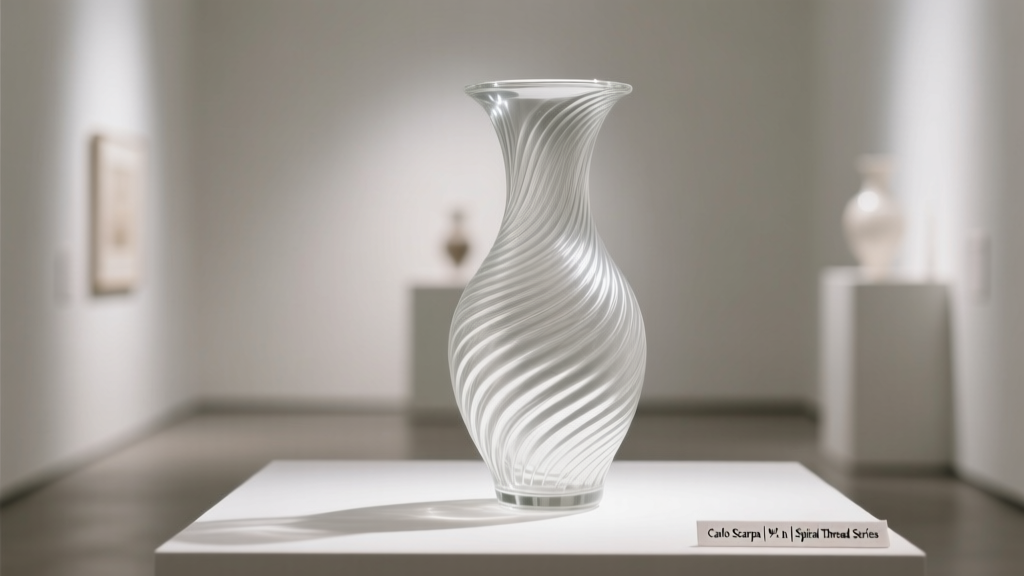
Authenticating the Carlo Scarpa–Designed Venetian Glass Vase: Clear Body with White Thread Spiral, 9¼ Inches
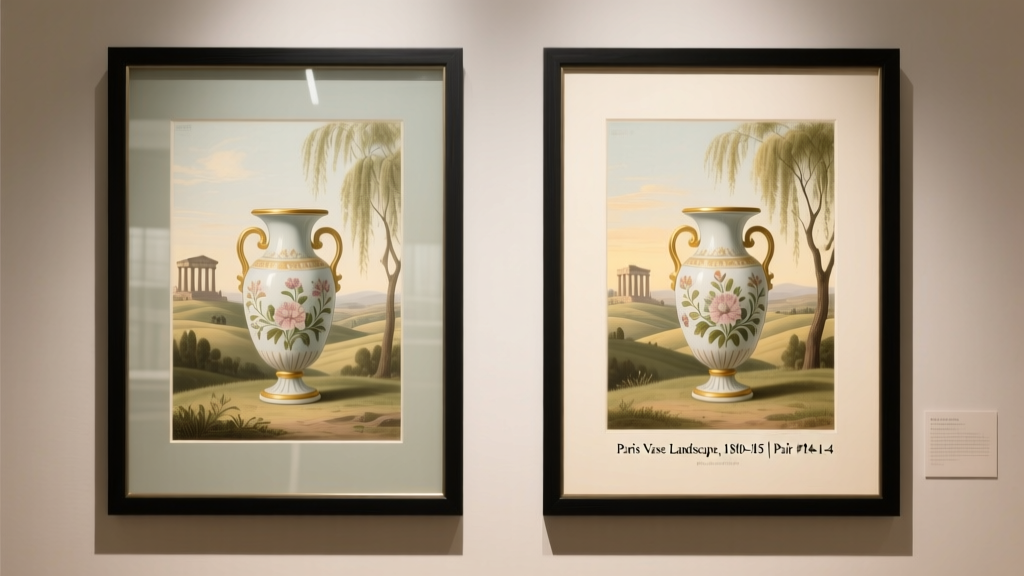
Paris Vase Landscape (1810–1815): Authentication, Provenance, and Market Value of the 14¼-Inch Pair
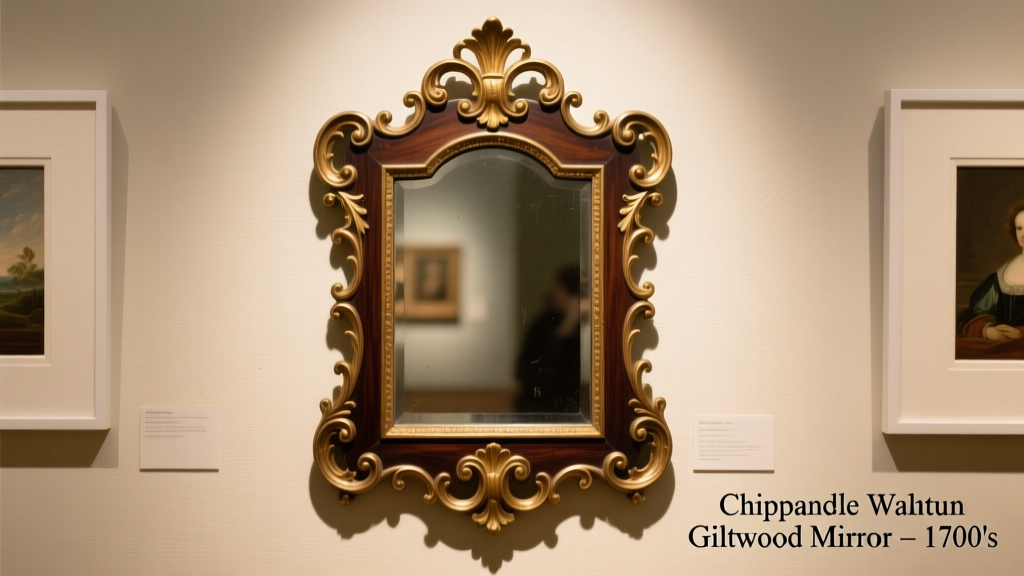
Chippendale Walnut & Giltwood Furniture Mirror, c. 1765–1785: Authentication, Provenance, and Market Analysis of a 20 × 13-Inch Scrollwork Specimen
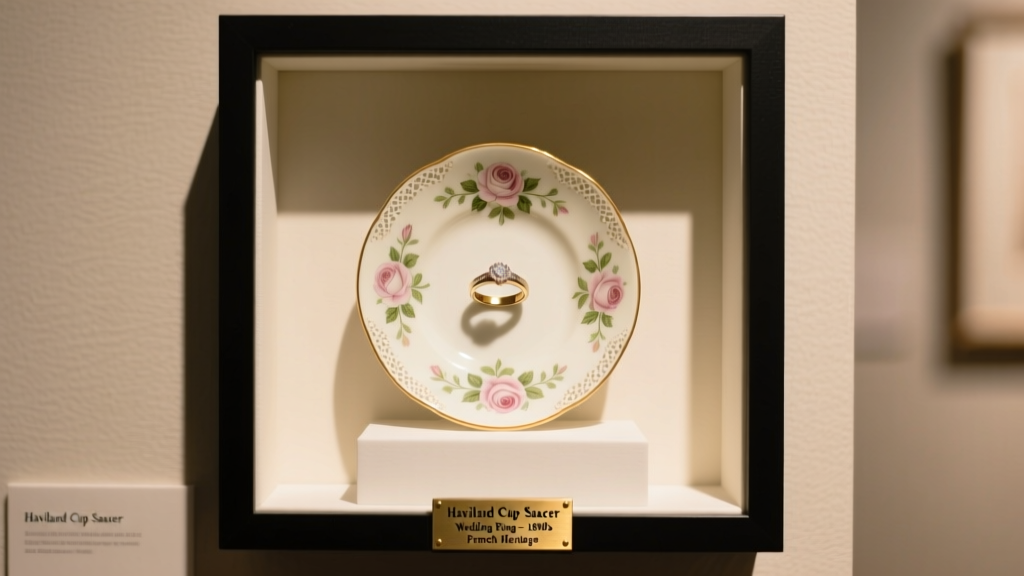
Haviland Cup and Saucer Wedding Ring: History, Authentication, and Market Value of a Signature American Porcelain Tradition

Lewis B. Levy: The Unseen Architect of Mid-Century American Print Culture
Decoding the Longwy 'Primavera' Charger: Authentication, Provenance, and Market Value of the Signed 14¼-Inch Enamel Plate Featuring Two Women and a Faun