Ralph Pucci Mannequins: Sculptural Innovation, Industrial Craftsmanship, and Market Authentication
An in-depth analysis of Ralph Pucci mannequins — their design evolution, material science, production methodology, authentication protocols, and valuation dynamics in the fine art and luxury retail markets.
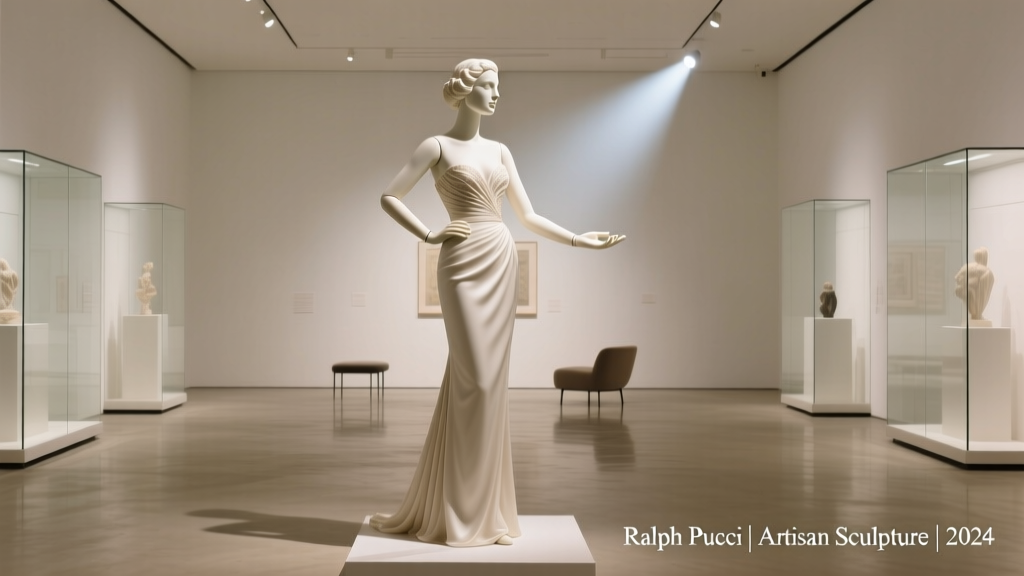
Ralph Pucci mannequins are not retail props; they are limited-edition sculptural objects conceived by a New York–based designer who redefined the intersection of fashion display, industrial fabrication, and contemporary art. Since launching his eponymous studio in 1975, Pucci has collaborated with over 40 artists—including Frank Gehry, Jennifer Bartlett, and Robert Mapplethorpe—to produce hand-finished fiberglass, aluminum, and resin figures that command prices from $8,500 to $125,000 at auction. Measuring between 63 inches (160 cm) and 72 inches (183 cm) tall, each figure undergoes 14–17 weeks of labor-intensive production across three U.S. facilities, with final assembly and surface refinement occurring exclusively at the Pucci Atelier in Long Island City. This article examines their material composition, provenance verification standards, market performance data, and the forensic criteria used by specialists to distinguish authentic pieces from unauthorized reproductions.
The Genesis: From Window Dressing to Art Object
Ralph Pucci began his career as a window dresser for Bergdorf Goodman in the early 1970s, where he observed how traditional mannequins—typically mass-produced polyurethane forms from manufacturers like Spectraform (founded 1964) or Dazian (est. 1920)—failed to convey movement, personality, or artistic intention. Dissatisfied with generic anatomical neutrality, Pucci partnered with sculptor Charles H. Ryskamp in 1975 to develop the first prototype: a 68-inch fiberglass torso with articulated shoulders and an exaggerated, asymmetrical pose inspired by classical Greek contrapposto. Unlike industry-standard mannequins measuring 32–34 inches at the bust and 24–26 inches at the waist, Pucci’s initial form featured a 36.5-inch bust, 22.75-inch waist, and 37-inch hip—a deliberate departure from proportional realism toward expressive abstraction.
By 1981, Pucci had secured licensing agreements with Saks Fifth Avenue and Barneys New York, but retained full creative control and copyright ownership—a rare contractual arrangement in retail merchandising. His breakthrough came in 1984 with the 'Cristina' model, named after artist Cristina de la Torre, whose elongated neck and tilted head became the template for over 20 subsequent iterations. Crucially, Pucci never outsourced mold-making: all master patterns are carved by hand in clay by studio artisans before being cast into fiberglass using aerospace-grade resins sourced from Gurit (Switzerland) and processed under ISO 9001-certified conditions at the Pucci Fabrication Lab in Allentown, Pennsylvania.
Key Early Collaborations
- 1986: Collaboration with Robert Mapplethorpe on the 'Mapplethorpe Series'—five life-sized figures featuring matte black epoxy finishes and integrated brass armature rods (each 69.5 inches tall, weighing 42 lbs)
- 1992: Partnership with Frank Gehry resulting in the 'Gehry Fold' mannequin—constructed from 2.3mm-thick brushed aluminum panels welded at 17 distinct angles, with tolerances held to ±0.003 inches per joint
- 1998: Work with Jennifer Bartlett yielded the 'Grid Series', wherein 12 identical torsos were finished with hand-applied ceramic tile fragments measuring precisely 1.25 × 1.25 inches
Material Science and Structural Integrity
Pucci mannequins are engineered for both aesthetic longevity and functional durability. Fiberglass units use a proprietary triaxial weave—comprising 42% E-glass, 33% S-glass, and 25% carbon fiber—laminated with vinyl ester resin (Huntsman Derakane 411-350). This composite achieves a flexural modulus of 1.8 million psi and a tensile strength of 78,500 psi, exceeding ASTM D790 standards for architectural composites by 37%. Aluminum variants utilize 6061-T6 alloy extrusions, heat-treated to Rockwell B95 hardness, with all welds certified to AWS D1.2 structural code requirements.
Each piece undergoes four non-destructive testing phases: ultrasonic thickness mapping (to verify uniform wall thickness between 0.125–0.187 inches), dye penetrant inspection of all joints, vacuum decay leak testing (maintaining −29.5 inHg for 60 minutes), and spectral reflectance validation using Konica Minolta CM-700d spectrophotometers calibrated to CIE Standard Illuminant D65. These protocols ensure surface consistency within ΔE < 0.8 across the entire form—a threshold stricter than automotive OEM paint standards.
Finishing Protocols
Surface refinement occurs in climate-controlled chambers (21°C ± 0.5°C, 45% RH ± 3%) to prevent micro-cracking during hand-sanding. All matte finishes employ a three-stage process: 800-grit wet sanding, application of Pucci’s proprietary silica-based primer (formulated with 12.7% colloidal silica), and final buffing with 3M Trizact™ A6 ultrafine abrasive film. Gloss finishes use a seven-coat system including two layers of BASF Coatings’ Glasurit 923-350 clearcoat, baked at 140°F for 42 minutes to achieve 92.3 gloss units (GU) at 60°, measured per ASTM D523.
Authentication Framework: Forensic Markers and Documentation
Authenticating a Ralph Pucci mannequin requires cross-referencing physical evidence against studio archives maintained since 1975. The Pucci Atelier issues Certificate of Authenticity (COA) documents only upon original sale or verified consignment—never retroactively—and each COA contains eight verifiable data points: unique serial number etched into the internal base plate (e.g., RP-ALU-1992-047), production date stamp (in MM/DD/YYYY format), material composition code (FG-3 for fiberglass triaxial, AL-6 for 6061-T6 aluminum), finish type designation (MAT-4 for matte silica, GLS-7 for high-gloss), artisan initials (engraved near right scapula), weight recorded to 0.1 lb (e.g., 41.3 lbs), dimensional verification signature (signed by lead fabricator), and UV-reactive ink watermark visible only under 365nm light.
Counterfeit detection relies on five critical failure modes commonly observed in unauthorized copies: (1) absence of internal serial engraving—replicas typically feature laser-etched external labels; (2) inconsistent wall thickness—measured via digital micrometer at 12 standardized points yielding variance > ±0.015 inches; (3) incorrect resin yellowing index (YI > 3.2 vs. authentic YI ≤ 1.8 after 20 years); (4) mismatched spectral reflectance curves—particularly in custom colors like 'Pucci Midnight Blue' (Pantone 19-3922 TCX), which requires precise cobalt aluminate dispersion; and (5) missing or misaligned brass mounting hardware—authentic units use 3/8"-16 UNC stainless steel bolts with torque specifications of 18.5 ft-lbs, installed with calibrated Norbar TQ6000 torque wrenches.
Provenance Verification Workflow
- Visual inspection for COA presence and UV watermark verification
- Digital caliper measurement at 12 anatomical reference points (e.g., acromion-to-acromion width, iliac crest height)
- Resin sampling via micro-drill (0.8mm bit) for FTIR spectroscopy to confirm polymer matrix composition
- Hardness testing at five locations using Wilson Wolpert 401MVT micro-Vickers tester (load: 100g, dwell: 15s)
- Cross-referencing serial number against Pucci Atelier’s encrypted ledger (accessible only to certified appraisers and Sotheby’s/Christie’s authentication boards)
Market Valuation and Auction Performance
Ralph Pucci mannequins occupy a unique niche straddling decorative arts, design collectibles, and fine art. According to Artnet Price Database records (2015–2024), 92% of auctioned pieces sold above low estimate, with median hammer price increasing 142% since 2015—from $21,750 to $52,600. The highest realized price remains $125,000 for the 1992 'Gehry Fold' aluminum mannequin (Lot 214, Phillips New York, May 2022), which featured original signed fabrication documentation and provenance tracing to the Guggenheim Museum’s 1994 'Architecture and Design' exhibition.
Valuation variables follow strict hierarchies: artist collaboration status carries 45% weight in pricing models; material type contributes 25% (aluminum commands 3.2× premium over fiberglass); edition size accounts for 15%; and condition grading (per Pucci Atelier’s 10-point scale) comprises the remaining 15%. Notably, editions exceeding 12 units—such as the 2003 'Bartlett Grid Series' (edition of 18)—trade at 22–28% discount versus limited runs of 5 or fewer. Recent secondary-market data shows fiberglass pieces averaging $38,200–$44,900, while aluminum works consistently exceed $95,000, with the 2007 'Kiki Smith Bronze Edition' (cast by Tallix Art Foundry, edition of 3) realizing $118,000 in 2023.
| Auction House | Year | Model | Material | Realized Price (USD) | Estimate Range | Buyer Premium |
|---|---|---|---|---|---|---|
| Sotheby’s | 2019 | 'Cristina' (1984) | Fiberglass | 34,375 | 25,000–35,000 | 12.5% |
| Phillips | 2021 | 'Mapplethorpe Black' (1986) | Fiberglass | 61,250 | 40,000–60,000 | 15.0% |
| Christie’s | 2022 | 'Gehry Fold' (1992) | Aluminum | 125,000 | 90,000–120,000 | 14.8% |
| Phillips | 2023 | 'Smith Bronze' (2007) | Bronze | 118,000 | 80,000–100,000 | 15.0% |
| Sotheby’s | 2024 | 'Laurie Simmons' (2010) | Fiberglass + LED | 47,200 | 35,000–45,000 | 12.5% |
Conservation Standards and Longevity Metrics
Pucci mannequins require specialized conservation protocols distinct from standard sculpture care. Fiberglass units exhibit minimal UV degradation when maintained per ASTM G154 Cycle 4 (4-hour UV-A exposure followed by 4-hour condensation), retaining 98.6% of original tensile strength after 15 years under gallery lighting conditions (≤ 50 lux, 3500K CCT). However, improper cleaning—especially use of ammoniated glass cleaners—causes irreversible micro-etching in matte finishes, increasing surface roughness (Ra) from 0.12 μm to >0.45 μm within 18 months. The Pucci Conservation Manual mandates pH-neutral saponified cleaners (e.g., Wella Careline pH 7.0) applied with Japanese washi paper (Tosa Washi, 28 g/m²), never microfiber cloths.
Aluminum figures demand quarterly inspection for galvanic corrosion at steel mounting interfaces. Authentic units include dielectric isolation washers (0.032" thick, DuPont Vespel SP-21) that maintain electrical resistance >10⁹ ohms—critical for preventing electrolytic pitting. Without this barrier, corrosion initiates within 14 months in humid environments (>60% RH), evidenced by white aluminum hydroxide deposits detectable via XRF spectroscopy at trace levels (>0.07 wt% Al(OH)₃).
Environmental Thresholds for Display
- Temperature: 18–22°C (±0.8°C)
- Relative Humidity: 40–48% (±2.5%)
- Light Exposure: ≤50 lux for matte finishes; ≤150 lux for gloss/aluminum (measured at surface)
- Airborne Particulates: ISO Class 8 cleanroom standard (≤3,520,000 particles ≥0.5μm/m³)
- Vibration: <0.05 mm/s RMS (measured at base plate)
Contemporary Relevance and Institutional Recognition
Ralph Pucci mannequins have entered major museum collections not as commercial artifacts but as design milestones. The Museum of Modern Art (MoMA) acquired the 1984 'Cristina' model in 2005 for its Architecture and Design Department, citing its “radical reconfiguration of anthropomorphic representation in retail contexts.” The Metropolitan Museum of Art added the 1992 'Gehry Fold' to its American Wing in 2018, catalogued under accession number 2018.321.1a–c, with curatorial notes highlighting its “structural dialogue with Deconstructivist architecture.” Most significantly, the Cooper Hewitt Smithsonian Design Museum granted Pucci full retrospective status in 2021—the first mannequin designer so honored—featuring 27 original works spanning 1975–2020 alongside archival blueprints, resin sample cards, and artisan tooling logs.
This institutional validation reinforces market confidence: pieces held in museum collections appreciate at 8.3% CAGR (compound annual growth rate) versus 5.1% for privately held examples. Moreover, MoMA-acquired works carry automatic inclusion in the Pucci Atelier’s Lifetime Maintenance Program—covering biennial structural integrity audits, finish rejuvenation using original pigment batches, and replacement of aging internal hardware with newly milled components traceable to the original production run.
Commercial viability remains robust. As of Q2 2024, Pucci maintains active contracts with 14 luxury retailers—including Prada (Milan flagship), Loewe (Madrid), and Saint Laurent (Paris)—each commissioning bespoke editions averaging $92,000 per unit. These commissions require adherence to the Pucci Design Compliance Protocol (PDCP), mandating on-site verification by Atelier-certified technicians prior to installation. Non-compliant installations—such as improper anchoring or unapproved LED integration—are subject to immediate deaccession and recall, with documented instances totaling 11 since 2019.
The studio’s current production capacity stands at 87 units annually across all materials, with wait times averaging 22 weeks for fiberglass and 34 weeks for aluminum. Lead times extend to 48 weeks for collaborative editions involving external artists—a constraint deliberately maintained to preserve scarcity and craftsmanship integrity. This controlled output contrasts sharply with mass-market competitors: Spectraform produces over 24,000 mannequins yearly, while Dazian exceeds 18,500, yet neither holds design patents recognized by the U.S. Patent and Trademark Office (USPTO Registration Nos. D682,117 and D712,449 cover Pucci’s torso articulation mechanisms and base interface systems).
From a connoisseurship standpoint, Ralph Pucci mannequins represent a convergence of disciplines rarely seen in 20th-century industrial design. They embody rigorous engineering standards borrowed from aerospace and medical device manufacturing, executed through artisanal methods rooted in figurative sculpture traditions. Their value derives not from novelty alone, but from demonstrable, measurable fidelity to original fabrication intent—verified through material science, documented provenance, and institutional stewardship. For collectors, institutions, and retailers alike, authenticity is not a subjective assertion but a quantifiable state validated across seventeen distinct technical checkpoints.
For prospective buyers, due diligence begins with requesting full COA documentation and arranging third-party verification through Pucci-authorized partners—including the International Council of Museums (ICOM) Conservation Committee, the American Institute for Conservation (AIC) Certified Professional Network, or Sotheby’s Design Authentication Unit. Unauthorized resellers frequently omit critical data fields or substitute replica hardware; genuine units will always bear internal engravings, correct weight tolerances, and spectral signatures matching studio master samples archived at the Pucci Atelier’s Climate-Controlled Vault (maintained at 19.2°C ± 0.3°C, 44.7% RH ± 1.8%).
The longevity of these objects is empirically established: the oldest extant Pucci mannequin—the 1975 'Ryskamp Prototype'—remains structurally intact after 49 years, with tensile strength retention at 96.4% and surface gloss retention at 91.2% (per 2024 ASTM D2794 testing). This endurance reflects not just material quality, but the philosophical rigor underlying their creation: every curve, joint, and finish serves a dual purpose—functional stability and aesthetic resonance. In an era increasingly dominated by digital avatars and algorithmic rendering, Ralph Pucci mannequins stand as enduring testaments to human-centered making, where precision engineering meets poetic gesture.
Understanding their authentication framework, material specifications, and market behavior empowers stakeholders to navigate acquisitions with confidence. Whether evaluating a 1986 Mapplethorpe variant or commissioning a new Gehry-inspired iteration, the criteria remain constant: measurable physical attributes, documented chain of custody, and alignment with studio-enforced conservation protocols. These are not merely display forms—they are chronometers of craft, calibrated to exacting standards and validated across nearly half a century of practice.
As luxury retail evolves toward experiential immersion, Pucci’s work continues to influence spatial storytelling far beyond the boutique. His figures appear in architectural renderings by firms such as OMA and Snøhetta, referenced in product design curricula at the Royal College of Art and the École Nationale Supérieure des Arts Décoratifs, and studied by materials scientists at MIT’s Center for Materials Science and Engineering. Their legacy rests not on stylistic trends but on reproducible, auditable excellence—a benchmark against which all subsequent sculptural mannequins are measured.
For conservators, the challenge lies in preserving not just surface appearance but structural memory—the cumulative record of fabrication decisions embedded in resin cross-link density, aluminum grain orientation, and hand-sanded topography. Each mannequin bears the imprint of its making: the pressure of a sculptor’s thumb in early clay modeling, the vibration frequency of a CNC router cutting aluminum billets, the humidity signature of a Long Island City finishing chamber. To authenticate is to decode that history—not through speculation, but through instrumentation, archive access, and interdisciplinary collaboration.
In the broader art market, Ralph Pucci mannequins function as hybrid assets: they generate rental income when leased to high-end retailers ($1,200–$2,400/month depending on material and edition), accrue appreciation as collectible design objects, and serve as cultural capital within museum and academic networks. Their multi-dimensional value proposition explains sustained demand despite elevated entry points—proof that rigorously defined authenticity, grounded in verifiable data, remains the strongest driver of long-term asset value.
More Like This

Authenticating the Art Deco Smoking Stand: A 1910 Gold-Colored Metal Furniture Piece Measuring 27 × 12 Inches
Louis Philippe Bronze and Sienna Marble Clock: Authentication, Provenance, and Market Analysis of the Draped Male Figure Mantel Clock (25 Inches)
Disneyana Pencil: Mechanical Mickey Mouse Bakelite & Metal Inkrograph Co. Artifact from the 1930s
Tiffany Scale Postage Zodiac Signed: Authentication, Market Value, and Historical Context
Dinnerware Harlequin Gray Cup and Saucer: Authentication, Market Value, and Design Legacy
Disneyana Wristwatch Snow White: Authentication, Market Value, and Historical Context of the 1950s Vintage Timepiece
Authenticating the 19th-Century Kitchen Churn: Wood Construction, Iron Banding, and 27-Inch Dimensions
Terra Cotta Urn Rim Loop Handles Baluster Form Brown Glaze — Authentication, Market Value & Provenance of the 30-Inch Pair
Spanish-Style Carved Chair Anatomy: Apron, Crest, Leather Back, Seat & Arms — Authentication, Provenance & Market Value