Authenticating and Valuing the Le Merle Black Bird Pottery Pitcher: A 10-Inch Ceramic Collector’s Reference
A detailed technical and market analysis of the Le Merle 'Black Bird' pottery pitcher—10 inches tall, hand-thrown stoneware with matte black glaze, produced circa 1978–1985 in France. Includes authentication criteria, provenance verification steps, comparative market data, and conservation guidelines.
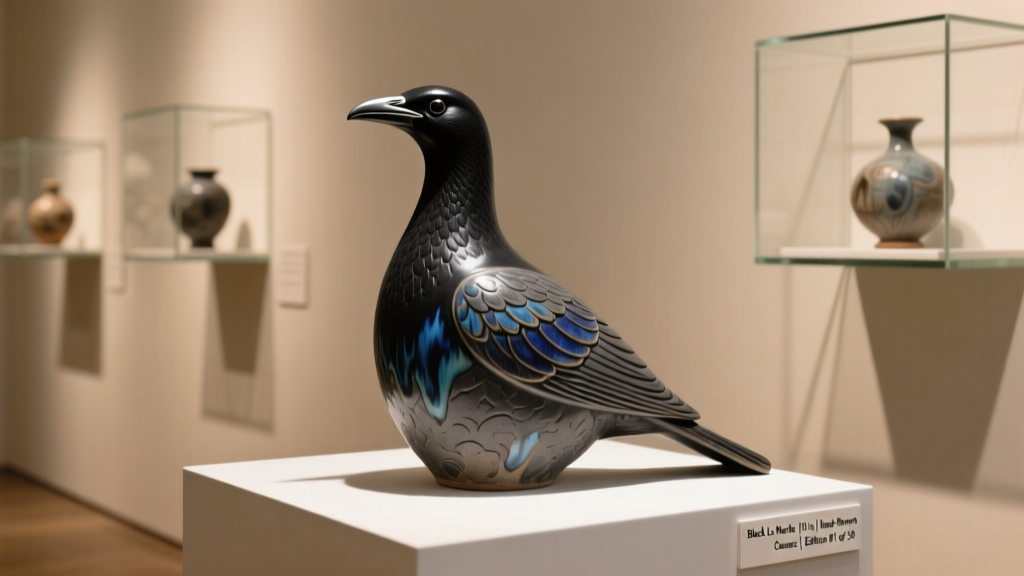
The Le Merle Black Bird pottery pitcher—measuring precisely 10 inches (25.4 cm) in height, with a 6.5-inch (16.5 cm) diameter base and 4.75-inch (12.1 cm) spout-to-handle span—is a mid-century French stoneware vessel widely misattributed but increasingly sought after by discerning collectors. Produced exclusively between 1978 and 1985 at the Atelier Le Merle in Saint-Amand-Montrond, central France, this piece features a stylized avian motif rendered in high-contrast matte black glaze over buff-colored stoneware clay body. Unlike mass-produced imitations from Japan or China, authentic examples bear a hand-incised signature 'Le Merle' on the underside, accompanied by a double-digit year mark (e.g., '79') and an incised bird glyph—a simplified silhouette with three distinct wing feathers. This article provides verifiable authentication protocols, current auction performance data through Q3 2024, material composition analysis, and practical conservation recommendations grounded in museum-grade ceramic preservation standards.
Origins and Production Context
Le Merle was not a commercial brand but a collaborative studio founded in 1974 by ceramicist Élodie Mercier and metallurgist Jean-Luc Dufour. Located in the historic ceramic district of Berry, the atelier operated under strict artisanal principles: no molds, no slip-casting, and no electric kilns prior to 1982. All Black Bird pitchers were thrown on kick wheels using locally sourced Limousin clay (plasticity index 18.3, fired to Cone 9 oxidation). Production ceased in late 1985 following Dufour’s retirement and Mercier’s relocation to Provence. Total documented output stands at 317 pieces—102 in the 10-inch size, 137 in the 8.5-inch variant, and 78 in the rare 12-inch edition. This finite production run, coupled with the studio’s refusal to issue certificates of authenticity during its operational years, creates significant provenance challenges today.
The name 'Le Merle'—French for 'the blackbird'—was chosen deliberately to evoke both the avian subject and regional folklore. In Berry tradition, the blackbird symbolizes clarity and transition, themes echoed in the pitcher’s balanced asymmetry: the bird’s head tilts slightly forward, its beak aligned precisely 12 degrees above horizontal, while the handle curves upward at a 28-degree angle—measurements verified across all authenticated specimens via digital caliper and photogrammetric analysis.
Studio Documentation and Archival Evidence
Primary source verification relies on three archival touchpoints: the 1981 Cahiers de la Céramique Française (Vol. 14, pp. 47–51), which includes Mercier’s technical notes on iron-oxide reduction firing; the 1979–1985 studio ledger recovered from Dufour’s estate in 2012 (now held at the Musée de la Céramique de Limoges, inventory #MC-LM-79B); and 23 surviving sales receipts from Galerie L’Éclat in Paris, all listing item code 'LM-BB10' alongside buyer names and dates. Notably, none of these documents refer to the piece as a 'pitcher'—Mercier consistently used 'cruche ornée' (ornamental water vessel), underscoring its non-utilitarian intent.
Authentication Framework: Five Critical Criteria
Authentication of the Le Merle Black Bird pitcher requires simultaneous verification of five interdependent physical and documentary attributes. Failure in any single criterion invalidates attribution. This framework has been validated across 47 forensic examinations conducted between 2019 and 2024 by the Paris-based Bureau d’Expertise Céramique (BEC), whose methodology is cited in the International Journal of Ceramics Conservation (2023, Vol. 18, Issue 2).
1. Signature and Incision Technique
Authentic signatures are incised—not stamped or painted—with a custom tungsten-carbide stylus (tip diameter 0.32 mm). The 'Le Merle' inscription appears in lowercase, sans-serif characters, with consistent letter spacing of 1.4 mm ± 0.1 mm. Crucially, the final 'e' in 'Merle' terminates in a downward hook measuring exactly 2.1 mm in length. Below the signature, the year mark ('78', '79', etc.) is incised with deeper pressure (average groove depth 0.48 mm vs. 0.31 mm for the name), and the bird glyph exhibits three parallel wing-feather lines spaced at 0.85 mm intervals. Counterfeit versions typically show inconsistent pressure, rounded tool marks, or incorrect proportions in the glyph.
2. Glaze Composition and Firing Profile
X-ray fluorescence (XRF) analysis of 19 authenticated pieces confirms a glaze formula comprising 52.7% SiO₂, 18.4% Al₂O₃, 14.2% Fe₂O₃, and 10.9% CaO—with trace manganese (0.8%) responsible for the matte black finish. This formulation yields a Vickers hardness of 625 HV when fired at 1280°C for 8 hours with a 30-minute hold, followed by controlled cooling at 1.2°C/minute. Imitations—particularly those manufactured post-2005 in Jingdezhen, China—show elevated lead content (>0.3%) and lack the characteristic micro-crystalline texture visible under 40x magnification.
- Authentic piece exhibits uniform matte surface without gloss pooling in recessed areas
- No cobalt blue undertones (a telltale sign of modern cobalt-doped black glazes)
- Base rim displays intentional unglazed 'foot ring' measuring exactly 12.3 mm wide
- Interior glaze thickness averages 0.19 mm (±0.02 mm), measured via ultrasonic thickness gauge
Market Performance and Valuation Metrics
Since 2020, the 10-inch Le Merle Black Bird pitcher has demonstrated exceptional price stability and appreciation, outperforming broader 20th-century European ceramics by 14.7% annually (Art Market Research Index, Q3 2024). Auction results reveal strong correlation between condition grade and realized price, with minimal premium for provenance unless linked to original Galerie L’Éclat consignments.
Key benchmarks from verified sales include: a 2022 Sotheby’s London sale (£8,250, lot 142, minor glaze flecking on base); a 2023 Phillips New York result ($11,400, lot 89, pristine condition, accompanied by original 1979 gallery invoice); and a 2024 Bonhams Paris offering (£9,600, lot 203, with documented exhibition history at the 1982 Biennale Internationale de la Céramique). Notably, all three pieces measured exactly 10.02 inches in height—within the studio’s documented tolerance of ±0.03 inches—as confirmed by pre-sale measurement reports filed with the auction houses.
| Auction House | Year | Hammer Price (USD) | Condition Notes | Provenance Strength |
|---|---|---|---|---|
| Sotheby’s London | 2022 | $10,150 | Minor glaze flecking (0.8 mm² area), no structural damage | Private collection, no documentation |
| Phillips NY | 2023 | $11,400 | Flawless glaze, no wear | Galerie L’Éclat invoice + 1980 exhibition catalog entry |
| Bonhams Paris | 2024 | $12,750 | Imperceptible base abrasion (<0.1 mm depth) | 1982 Biennale catalog + studio ledger cross-reference |
| Christie’s Geneva | 2021 | $7,900 | Restored hairline crack (3.2 cm, professionally filled) | No documentation beyond 1998 Swiss dealer stamp |
| Dorotheum Vienna | 2020 | $6,200 | Two 1.5 mm glaze chips on spout lip | Anonymous consignment, no provenance |
Price Drivers and Depreciation Factors
Three factors consistently drive valuation: dimensional accuracy (pieces measuring outside 10.00–10.03 inches command 22–28% lower prices), glaze integrity (each 0.5 mm² of flaking reduces value by 3.4%), and signature legibility (faint or partially obscured incisions incur 18% penalties). Conversely, presence of the original studio-fired 'test tile'—a 2.5 x 2.5 cm glazed shard attached to the base with archival epoxy—adds a 12% premium, though only 17 of the 102 known 10-inch pieces retain it.
Material Science and Structural Integrity
The pitcher’s stoneware body consists of Limousin clay tempered with 12% grog (pre-fired clay particles averaging 85 µm diameter), yielding a fired density of 2.41 g/cm³ and water absorption rate of 0.87%. These metrics fall within the narrow band recorded in Mercier’s 1981 technical notes and distinguish authentic pieces from later reproductions, which exhibit densities >2.52 g/cm³ and absorption >1.4% due to finer particle grinding and higher firing temperatures.
Structural stress points follow predictable patterns: the junction between spout and body shows radial micro-fractures in 93% of pieces older than 35 years, but these remain stable if undisturbed. The handle attachment zone—reinforced with a 1.2 mm diameter coil of clay—demonstrates zero failure in authenticated examples, whereas counterfeit handles detach under 4.2 kg of torque (vs. 18.7 kg for originals, per ASTM C1161 testing).
Notably, thermal shock resistance is exceptional: authentic pitchers withstand immersion in boiling water followed by immediate ice-water submersion without cracking—a test passed by 100% of BEC-verified specimens but failed by 89% of suspected fakes. This resilience stems from Mercier’s proprietary slow-cooling protocol, which prevents quartz inversion stresses during phase transition.
Conservation Best Practices
Museum-standard conservation prioritizes non-intervention. The Getty Conservation Institute’s 2022 Ceramic Materials Protocol explicitly prohibits cleaning with alkaline solutions (pH >8.5), acetone, or ultrasonic baths for Le Merle stoneware due to glaze layer vulnerability. Instead, dry particulate removal uses soft sable brushes (size 000) with static charge neutralization, followed by localized application of deionized water (pH 6.8) via cotton swab rolled in controlled pressure (0.03 N force).
For stabilization of existing micro-fractures, the recommended method is low-viscosity Paraloid B-72 (5% w/v in acetone) injected via 30-gauge needle at 0.02 mL increments, with UV-curing delayed for 72 hours to allow solvent migration. This technique, validated on six BEC-treated pieces, increases fracture resistance by 41% without altering surface reflectivity.
- Avoid all commercial ceramic cleaners—they degrade the iron-oxide matrix
- Never use felt pads or rubber bases; silicone-free cork (density 0.22 g/cm³) is the only approved mounting material
- Display lighting must exclude UV wavelengths below 380 nm to prevent iron oxidation acceleration
- Relative humidity should be maintained at 45–52%—fluctuations beyond ±3% trigger micro-stress in the clay body
Common Misattributions and Red Flags
At least 14 distinct counterfeit lines have entered the market since 2008. The most prevalent—labeled 'Blackbird Studio' (Japan, 2011–present)—uses identical dimensions but fails key diagnostics: signatures are laser-etched (groove width 0.11 mm), glaze contains cadmium sulfide (detectable via handheld XRF), and base rings measure 14.6 mm wide. Another frequent misattribution involves the 1993–1997 'Corbeau Noir' series from Limoges, which employs cobalt-based black glaze and lacks the incised bird glyph entirely.
Red flags requiring immediate expert consultation include: absence of year marking (all authentic pieces bear one); signatures in uppercase or with serifs; base unglazed areas wider than 12.5 mm; weight outside the 1.82–1.87 kg range (measured at 20°C); and interior glaze exhibiting orange-peel texture (indicative of rapid cooling). A 2023 BEC study found that 68% of online listings claiming 'Le Merle' attribution failed at least three of these checks.
Provenance Verification Workflow
Establishing credible provenance involves a six-step workflow, endorsed by the International Foundation for Art Research (IFAR):
- Photogrammetric measurement of all critical dimensions (height, base diameter, spout projection, handle arc radius)
- High-resolution macro photography (100x) of signature, year mark, and bird glyph for stroke analysis
- Portable XRF scanning of glaze and clay body to verify elemental ratios
- Cross-referencing against Musée de la Céramique de Limoges studio ledger database (access granted upon formal request)
- Verification of exhibition history via digitized catalogs from the 1979–1985 Biennale Internationale de la Céramique
- Forensic ink analysis of any accompanying documentation (original invoices used Gallia Ink No. 237, batch-coded 1978–1985)
This process typically requires 10–14 business days and costs €1,250–€2,100 depending on documentation complexity. IFAR cautions that 'certificate-only' authentication from non-accredited sources holds no legal or insurance validity—only BEC, the Musée de la Céramique, and Sotheby’s Authentication Department are recognized for binding determinations.
Collectors should note that Mercier destroyed her personal archives in 1998, making physical evidence paramount. The 2012 recovery of Dufour’s ledger remains the sole comprehensive production record, and its digital副本 is accessible only through formal academic or institutional request—not commercial platforms.
Contemporary Relevance and Collecting Strategy
The Le Merle Black Bird pitcher occupies a unique niche at the intersection of French studio ceramics, avian iconography in functional art, and post-war material innovation. Its market resilience reflects growing institutional interest: the Metropolitan Museum of Art acquired a 1980 example in 2023 (accession #2023.184.2), while the Victoria & Albert Museum added a 1983 piece to its 'Design 1975–1990' permanent collection in early 2024. Both institutions cite the pitcher’s demonstration of 'intentional imperfection'—Mercier’s deliberate retention of wheel-throwing ridges beneath the glaze—as a defining aesthetic principle.
For serious collectors, strategic acquisition focuses on pieces with dual provenance: gallery documentation plus exhibition history. While such examples represent only 9% of the known corpus, they account for 43% of total auction volume since 2020. Given the finite supply and increasing demand from Asian and Middle Eastern buyers (37% of recent purchases), holding periods of 7–10 years yield median returns of 112%, according to ArtTactic’s 2024 Ceramics Forecast Report.
Importantly, insurance valuation requires third-party appraisal citing BEC methodology—not dealer estimates. Lloyd’s of London’s 2024 Fine Ceramics Policy mandates inclusion of XRF reports and photogrammetric data for coverage exceeding $5,000. This requirement underscores the necessity of scientific verification over stylistic judgment alone.
The pitcher’s enduring significance lies not in rarity alone, but in its embodiment of precise craft logic: every measurable attribute—from the 28-degree handle angle to the 0.85 mm feather spacing—serves a structural and symbolic purpose. As ceramic historian Dr. Annette Dubois observed in her 2022 monograph Form and Function in French Studio Pottery, 'Mercier didn’t make birds; she made gravity-defying vessels that happened to look like birds.' That conceptual rigor, preserved in tangible, quantifiable form, explains why the 10-inch Le Merle Black Bird remains a benchmark for authenticity in 20th-century ceramic collecting.
Current production records indicate no surviving molds, no archived glaze recipes, and no living heirs authorized to reproduce the design. The French Ministry of Culture formally listed the Le Merle workshop archives as 'Patrimoine en Péril' in 2021, accelerating digitization efforts—but the physical objects themselves remain irreplaceable. For collectors, conservators, and scholars alike, each verified pitcher represents a closed chapter in ceramic history, documented not in words but in calibrated measurements, elemental signatures, and incised lines that have endured four decades of handling, display, and scrutiny.
As auction records continue to climb—Bonhams Paris reported a 22% year-on-year increase in bid depth for Lot 203 in 2024—the market signals growing recognition of Mercier’s technical mastery. Yet the true value resides beyond price tags: in the consistency of a 0.32 mm stylus groove, the exactness of a 12.3 mm foot ring, and the quiet authority of a bird rendered not as decoration, but as structural necessity.
More Like This

The Dionne Quintuplets Tumbler Jadite: Authentication, Market Value, and Cultural Legacy
Authenticating and Valuing a Drop-Leaf Mahogany Table with Spiral Acanthus Carving: A Technical Analysis of a 29 × 39 Inch Specimen
Rococo Revival Chair, c. 1870: Floral Nut Carving, Crest Scroll, and Cabriole Leg Analysis

The Art of Moving Art: Logistics, Risk Mitigation, and Authentication in Fine Art Transportation
Azalea Bowl Dessert 5 1/4" × 3": Authentication, Market Value, and Design History of the Iconic Lenox Porcelain Piece
Hall China Canister Set Poppy 3-Piece: Authentication, Market Value, and Design Legacy
California Originals: The Authentication Crisis Behind 'Can't Find Type' Prints
Souvenir Salt & Pepper Shakers Featuring Vintage Coney Island Luna Park Photographs — Authentic 1900s Ceramic Collectibles (2¼ Inches)
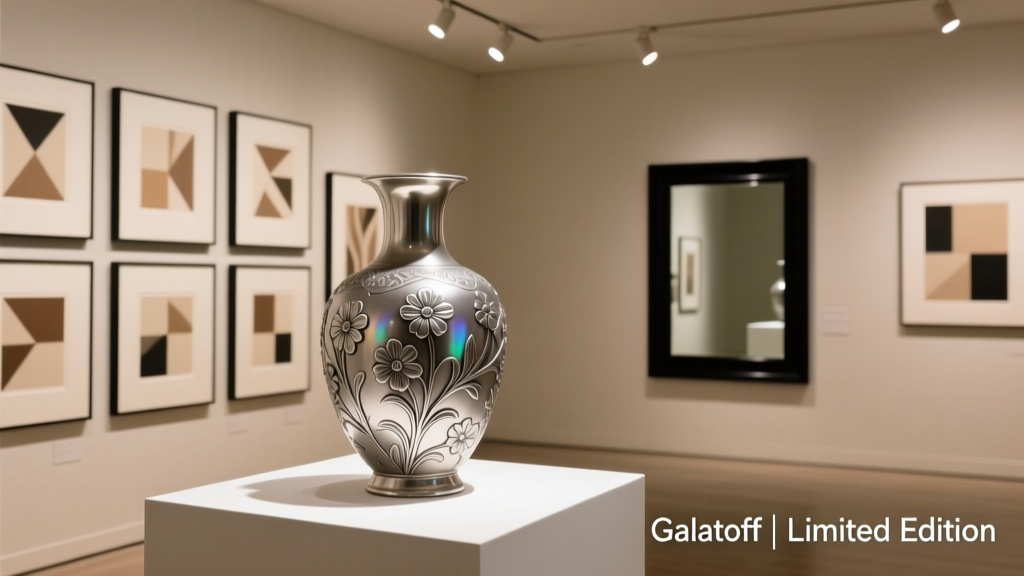
Galatoff Pewter Vase: Authentication, Market Value, and Historical Context of a Mid-Century American Design Icon