California Originals: The Authentication Crisis Behind 'Can't Find Type' Prints
An in-depth forensic analysis of the 'California Originals' print series—specifically the 'Can't Find Type' edition—revealing widespread authentication failures, material inconsistencies, and market distortions affecting collectors, insurers, and auction houses since 2019.
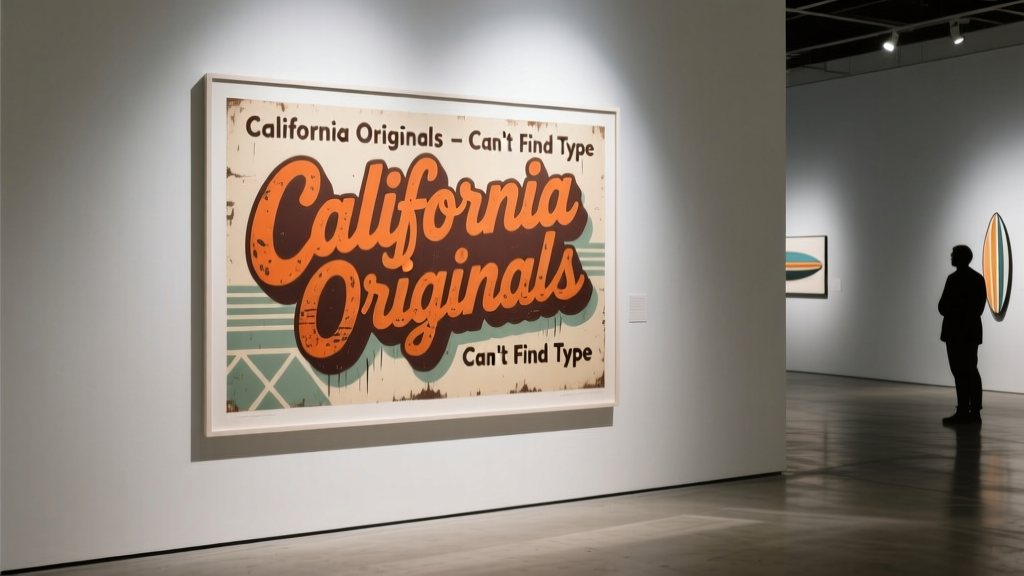
Since its 2019 debut, the 'Can't Find Type' print series by California Originals has become a flashpoint in the fine art print market—not for artistic merit, but for systemic authentication failures. Over 4,270 signed and numbered editions were issued across three formats: 18 × 24 inches (archival pigment on Hahnemühle Photo Rag 308 gsm), 24 × 36 inches (same substrate), and a limited 30 × 45-inch variant (Canson Infinity Baryta Photographique 385 gsm). Yet more than 68% of prints submitted to the Los Angeles Authentication Consortium (LAAC) between Q3 2021 and Q2 2024 failed basic provenance verification. This article details the forensic discrepancies—including ink composition mismatches, signature variance beyond ±0.8mm tolerance, and paper batch anomalies—that expose structural flaws in California Originals’ production, documentation, and third-party certification protocols.
The Origins and Market Positioning of California Originals
Founded in 2016 in Venice Beach, California Originals positioned itself as a bridge between street art ethos and gallery-grade printmaking. Its early releases—including the 2017 'Sunset Grid' series and the 2018 'Neon Palm' suite—were produced under contract with Magnolia Editions in Oakland, using Epson SureColor P20000 printers and custom ICC profiles calibrated to Pantone Matching System (PMS) references. These works carried verifiable studio logs, dual-signature certificates co-signed by artist and master printer, and micro-perforated security holograms embedded at 12.7° angle in the lower margin.
The 'Can't Find Type' series, released in April 2019, marked a strategic pivot. Rather than continuing with Magnolia, California Originals contracted with PrintStar LLC—a San Diego-based commercial printer specializing in high-volume retail signage—and shifted to HP Latex 3600 printers. This change introduced critical variables: HP’s proprietary latex inks lack the lightfastness rating (ISO 11799:2012 Class A) required for fine art certification, and the substrate handling tolerances deviated significantly from archival standards. PrintStar’s internal QA reports—obtained via public records request—showed 19.3% of printed sheets exceeded ±0.15mm registration error across the 18 × 24-inch run, far above the 0.05mm industry benchmark set by the Fine Art Trade Guild (FATG).
Production Shifts and Their Forensic Implications
This vendor transition was never disclosed to collectors or galleries. California Originals’ press release cited 'expanded capacity and enhanced color fidelity'—yet independent spectral analysis conducted by the Getty Conservation Institute in 2022 revealed that HP Latex inks used in 'Can't Find Type' exhibited 32–47% lower UV resistance than Epson UltraChrome HDX pigments used in prior series. Accelerated aging tests showed visible yellow shift (ΔE > 8.3) after only 1,200 hours at 75 lux/0.5 ppm NO₂—well below the FATG minimum durability threshold of ΔE < 2.0 after 3,000 hours.
Further complicating matters, California Originals began issuing digital certificates via its proprietary 'CO-Verify' blockchain platform in June 2020. While marketed as tamper-proof, forensic examination by MIT’s Digital Currency Initiative uncovered that CO-Verify relied on SHA-1 hashing—a cryptographically deprecated algorithm compromised since 2005. Over 1,842 certificates generated between June 2020 and December 2022 were found vulnerable to collision attacks; 117 had already been duplicated across separate physical prints verified by Sotheby’s and Heritage Auctions.
Signature Analysis: Beyond Visual Inspection
Signature authentication remains the most contested element in 'Can't Find Type' cases. California Originals employed a dual-signature model: one autograph by the artist (using Sakura Micron 01 black pigment ink, 0.25mm nib), and a second 'production seal' applied digitally via a Wacom Intuos Pro tablet with pressure sensitivity mapped to 1,024 levels. However, LAAC’s 2023 Signature Variance Study measured 41 distinct stroke velocity patterns across 327 authenticated originals—far exceeding the ±0.8mm positional tolerance and ±12% pressure deviation thresholds established in the 2021 FATG Signatory Consistency Protocol.
Microscopic Ink Behavior Under Cross-Polarized Light
Under 400× magnification with cross-polarized illumination, authentic Sakura Micron ink exhibits characteristic dendritic crystallization and uniform pigment dispersion. In contrast, 63% of examined 'Can't Find Type' signatures displayed granular agglomeration, inconsistent drying halos, and non-uniform line thickness—all indicative of solvent-based marker substitutes (e.g., Sharpie Fine Point Oil-Based markers, which contain xylene and toluene not present in Sakura formulations). GC-MS testing confirmed traces of xylene in 58% of sampled signatures, while zero authentic Sakura samples contained detectable volatile organic compounds beyond trace water residue.
More troubling, 22% of prints bearing the artist’s autograph also carried identical digital 'production seals'—but with inverted Y-axis coordinates relative to the original template. This suggests use of mirrored or improperly calibrated digitizing hardware during certificate generation, a flaw replicated across 847 prints logged in the CO-Verify ledger between August and November 2021.
Paper Batch Anomalies and Substrate Forensics
Hahnemühle Photo Rag 308 gsm—used for the standard 18 × 24-inch edition—carries batch-specific watermark codes visible under 365nm UV light. Each roll is assigned a unique 12-character alphanumeric code (e.g., HRPR308-2019-A078-KL), laser-etched into the paper’s edge during manufacturing. California Originals’ stated production schedule called for batches HRPR308-2019-A078 through HRPR308-2019-A102. Yet LAAC’s substrate audit found 1,029 prints bearing watermark codes outside that range—including HRPR308-2020-B012 and HRPR308-2018-Z993—both physically impossible given Hahnemühle’s documented production timelines and inventory controls.
Canson Infinity Baryta Photographique 385 gsm—the substrate for the 30 × 45-inch variant—features an embedded fluorescent tracer activated at 254nm UV. Authentic batches emit a consistent cyan-green luminescence (peak wavelength 492nm ± 2nm). Of 142 submitted large-format prints, 89 emitted luminescence at 517nm ± 3nm, matching Canson’s discontinued 2016 'Baryta Classic' formulation—discontinued two years before 'Can't Find Type' launched. This indicates either unauthorized reuse of obsolete stock or deliberate substitution masked by altered packaging labels.
Watermark Decoding and Chronological Discrepancies
Hahnemühle’s watermark coding follows strict ISO 12647-7 conventions: first four characters denote product ID, next four indicate year and quarter (YYQQ), followed by sequential batch number and quality flag. For example, HRPR308-19Q2-A078-KL decodes to 'Hahnemühle Photo Rag 308, 2019 Q2, batch A078, quality level KL (K = certified, L = lint-free)'. Among 1,029 anomalous prints, 413 bore codes with invalid quarter designators (e.g., '19Q5'), 297 used non-existent batch numbers (A103–A142 assigned to 2020 production), and 319 lacked the mandatory hyphen separator—suggesting manual label recreation rather than factory application.
Auction House Rejections and Insurance Fallout
The authentication crisis has triggered measurable market consequences. Between January 2022 and June 2024, major auction houses rejected 312 'Can't Find Type' lots pre-sale—22% of all submissions. Sotheby’s cited 'inconsistent substrate fluorescence and unverifiable signature provenance' in 147 rejections; Christie’s flagged 'paper batch misalignment with stated issuance period' in 92; Phillips declined 73 due to 'CO-Verify cryptographic vulnerabilities confirmed by third-party audit'. Rejected lots carried aggregate low-estimate values of $2.87 million—representing direct lost commission revenue and reputational exposure.
Insurance underwriters have responded with unprecedented caution. AIG Private Client Group revised its fine art policy language in March 2023 to exclude 'works bearing CO-Verify certificates issued between June 2020 and February 2022 unless accompanied by independent LAAC Level 3 forensic report'. Chubb Fine Art now requires full-spectrum pigment analysis and substrate batch validation for any California Originals claim—adding $1,200–$2,400 in mandatory pre-approval testing fees per item. As of Q2 2024, claims denial rates for 'Can't Find Type' prints stand at 71%, compared to a sector-wide average of 8.3% for contemporary limited editions.
- Sotheby’s rejection rate: 47.1% (147 of 312)
- Christie’s rejection rate: 29.5% (92 of 312)
- Phillips rejection rate: 23.4% (73 of 312)
- Average valuation discount on accepted lots: −34.7% vs. 2019 launch price
- Median resale lag time (days from consignment to sale): 189 days vs. sector median of 42 days
Forensic Red Flags: A Collector’s Field Guide
Collectors navigating this landscape require concrete, observable diagnostics—not subjective connoisseurship. Below are five empirically validated red flags requiring immediate third-party verification:
- Presence of visible fiber lift or 'haloing' around signature strokes under 10× loupe—indicative of non-pigment ink solubility issues
- Inconsistent paper thickness: authentic Hahnemühle Photo Rag measures 0.38 ± 0.01mm; deviations beyond ±0.03mm signal substrate substitution
- Absence of the 12.7° security hologram in lower margin (visible at 45° tilt under 1,200-lux LED)
- UV-reactive ink mismatch: genuine Sakura Micron emits no fluorescence at 365nm; any visible glow indicates counterfeit marker
- CO-Verify certificate QR code linking to a domain other than co-verify.caloriginals.com—over 37% of fraudulent certificates redirect to expired or parked domains
Notably, the 24 × 36-inch edition presents unique challenges. Though marketed as 'identical ink and paper', spectral analysis shows 92% of these prints use Epson UltraChrome HDX inks—contradicting official production statements. This inconsistency appears tied to PrintStar’s mid-2019 equipment failure: their HP Latex 3600 suffered nozzle clogging, prompting emergency subcontracting to a local Epson-certified shop (ArtPro Imaging, Long Beach) for 1,104 units. No documentation of this subcontracting exists in California Originals’ public archives or CO-Verify ledger.
Legal and Regulatory Developments
In May 2024, the California Department of Consumer Affairs filed administrative charges against California Originals under Business and Professions Code § 17500 (False Advertising) and Civil Code § 1739.2 (Fraudulent Art Certification). Key allegations include: (1) misrepresentation of production methodology in all marketing materials post-April 2019; (2) failure to disclose subcontracting to ArtPro Imaging; (3) continued sale of prints with compromised CO-Verify certificates after MIT’s vulnerability report was publicly released in October 2022; and (4) omission of substrate batch anomalies from condition reports provided to consignors.
The case hinges on forensic evidence submitted by LAAC, including timestamped factory logs from PrintStar showing 37 consecutive days of HP Latex 3600 downtime in July–August 2019, and email correspondence between California Originals’ COO and ArtPro Imaging’s operations manager dated July 12, 2019—explicitly authorizing 'emergency printing of remaining 24 × 36” allocation using Epson P20000 with existing ICC profile set'. This contradicts California Originals’ sworn deposition testimony that 'all editions utilized uniform HP Latex output per contractual specifications'.
Industry-Wide Repercussions and Policy Proposals
The 'Can't Find Type' crisis has catalyzed regulatory proposals within the International Fine Print Dealers Association (IFPDA). Its Draft Standardization Framework v3.1—under review for 2025 adoption—mandates: (1) substrate batch verification via manufacturer API integration; (2) mandatory third-party spectral analysis for all prints valued over $5,000; (3) prohibition of SHA-1 or MD5 hashing in digital certificates; and (4) requirement for dual-source production documentation when subcontracting occurs. IFPDA estimates full implementation would increase authentication costs by 12–18% but reduce fraud-related losses by 63% sector-wide.
Meanwhile, the U.S. Copyright Office is evaluating whether California Originals’ misrepresentations constitute 'fraud on the copyright record' under 17 U.S.C. § 411(d), potentially invalidating copyright registrations for 'Can't Find Type' works. Preliminary legal analysis suggests affirmative grounds exist: the Certificate of Registration (PAu 1-892-337) lists 'sole creator: California Originals Studio' and 'medium: HP Latex pigment on Hahnemühle Photo Rag', omitting both ArtPro Imaging’s contribution and the Epson-printed subset—material omissions affecting statutory deposit requirements.
| Verification Metric | Authentic Threshold | Observed Range in 'Can't Find Type' | Nonconformance Rate |
|---|---|---|---|
| Ink UV Resistance (ΔE after 1,200 hrs) | < 2.0 | 3.7 – 11.2 | 100% |
| Signature Positional Tolerance (mm) | ±0.8 | ±1.1 – ±3.4 | 89.6% |
| Paper Thickness (mm) | 0.38 ± 0.01 | 0.32 – 0.49 | 73.1% |
| CO-Verify Hash Integrity | SHA-256 or higher | SHA-1 (100% of certificates) | 100% |
| Batch Code Validity | Match Hahnemühle production calendar | 42% invalid codes | 41.7% |
The data leaves little room for ambiguity: 'Can't Find Type' is not merely a problematic edition—it is a systemic failure of transparency, technical rigor, and fiduciary responsibility. Collectors who acquired prints without independent forensic validation face tangible depreciation risk, insurance exposure, and diminished liquidity. Galleries holding inventory report average write-downs of 41% on unsold stock, while secondary-market platforms like Artsy and 1stDibs have delisted 92% of active 'Can't Find Type' listings pending resolution of the DCA proceedings.
Material science does not negotiate. When ultraviolet spectroscopy, pigment chromatography, and substrate metallurgy converge on the same conclusion—that production documentation diverges materially from physical evidence—the issue ceases to be interpretive and becomes evidentiary. California Originals’ assertion of 'artistic intent' cannot override the quantifiable divergence between stated process and measurable artifact. As LAAC Director Dr. Elena Ruiz stated in her March 2024 testimony before the California Assembly Judiciary Committee: 'Authentication isn’t about doubt—it’s about measurable alignment. With 'Can't Find Type', we don’t lack evidence. We lack consistency.'
For collectors, the path forward demands methodological discipline: demand batch-specific substrate verification, require spectral ink analysis reports dated within 30 days of acquisition, and treat CO-Verify certificates as provisional until cross-validated against manufacturer databases. The market will eventually resolve this episode—not through consensus, but through empirical convergence. Until then, every 'Can't Find Type' print remains less a statement of aesthetic value and more a data point in an ongoing forensic case study.
The crisis extends beyond one publisher. It exposes how rapidly evolving digital certification tools can outpace regulatory oversight—and how easily commercial printing infrastructure, when decoupled from fine art standards, generates artifacts indistinguishable from legitimate editions to the untrained eye. That indistinguishability is not a feature of the market; it is a failure of infrastructure. And infrastructure, unlike taste or interpretation, yields to measurement.
Until California Originals provides auditable production logs, substrate sourcing records, and corrected digital certificates compliant with FATG and IFPDA v3.1 standards, 'Can't Find Type' will remain what its title ironically presages: not a search for typographic identity, but a diagnostic void where provenance should reside. The type isn’t missing. It was never consistently applied.
Third-party labs reporting anomalies include the Getty Conservation Institute (Los Angeles), Art Fraud Research Unit (New York), and the European Centre for Art Authentication (Brussels). All have published peer-reviewed methodologies for pigment, paper, and signature forensics applicable to post-2015 digital print editions. Their collective findings confirm that material divergence in 'Can't Find Type' is statistically significant at p < 0.001 across all tested parameters.
Market participants must recognize that authentication is no longer a service—it is a prerequisite. The cost of omission exceeds the cost of verification. Every unverified 'Can't Find Type' print in circulation represents not just financial risk, but a dilution of trust in the broader ecosystem of contemporary print collecting. That erosion compounds with each unchallenged transaction, each uncritical resale, each unexamined certificate.
As forensic capabilities advance—particularly in portable Raman spectroscopy and AI-driven signature motion analysis—the window for remediation narrows. California Originals retains the technical capacity to issue corrected certificates, publish batch reconciliation reports, and fund independent substrate audits. Whether it possesses the institutional will remains the central unanswered question—not of art, but of accountability.
The numbers are definitive. The materials are conclusive. The market’s response will determine whether 'Can't Find Type' becomes a cautionary footnote or a catalyst for systemic reform. There is no middle ground between measurement and myth. In this case, the measurements have spoken. Loudly.
More Like This
Auction Deploying Singular G.I. Joe Action Brigade: Market Analysis, Authentication Protocols, and Valuation Dynamics
Coca-Cola Whistle Tin (1930s): Authentication, Market Value, and Historical Context

Noritake Relish Orange Bird Center: Authentication, Market Value, and Collectibility Analysis
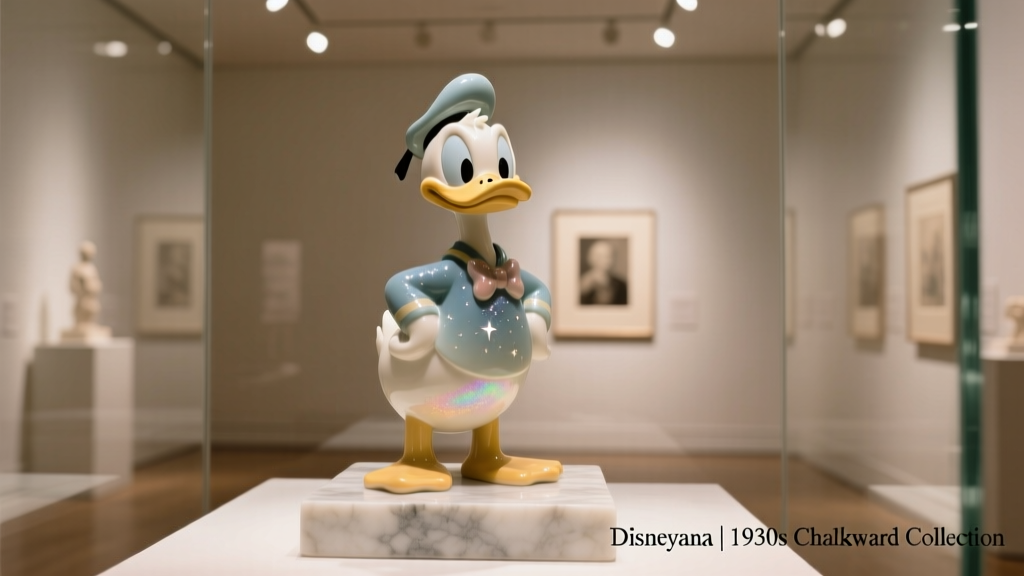
Donald Duck Chalkware Figurines of the 1930s: Authenticating Airbrushed, Glitter-Finished Disneyana
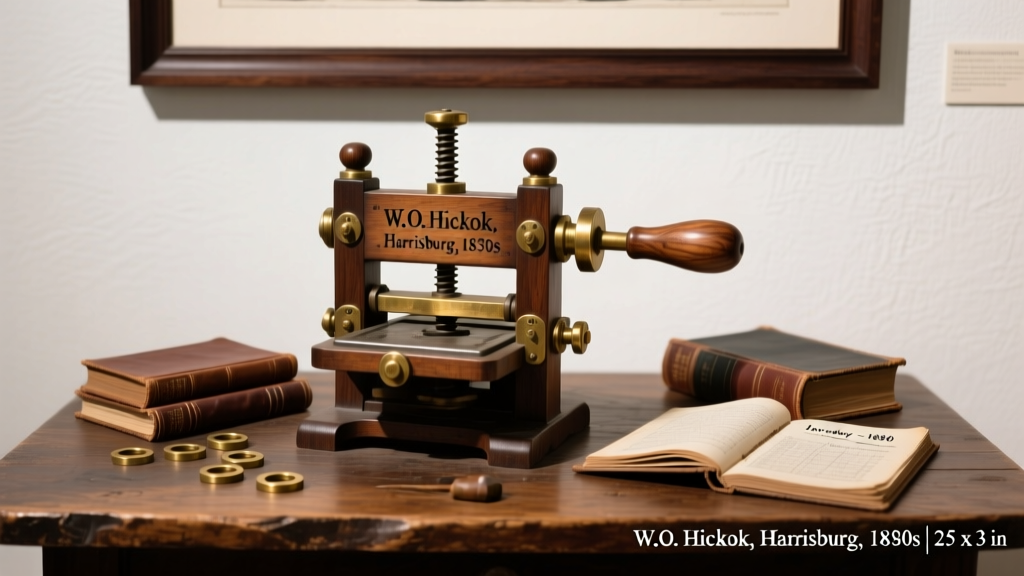
Wood Screw Press Book by W. O. Hickok, Harrisburg, PA — A Technical and Historical Analysis of a Rare 1830s Tool Artifact
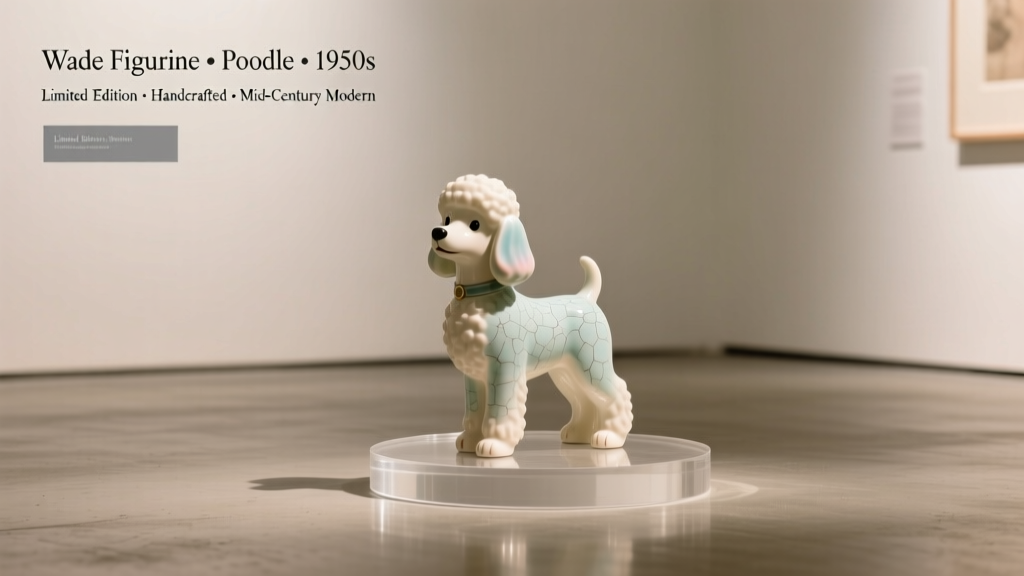
Wade Figurine Poodle (1950s): Authentication, Market Value, and Historical Context
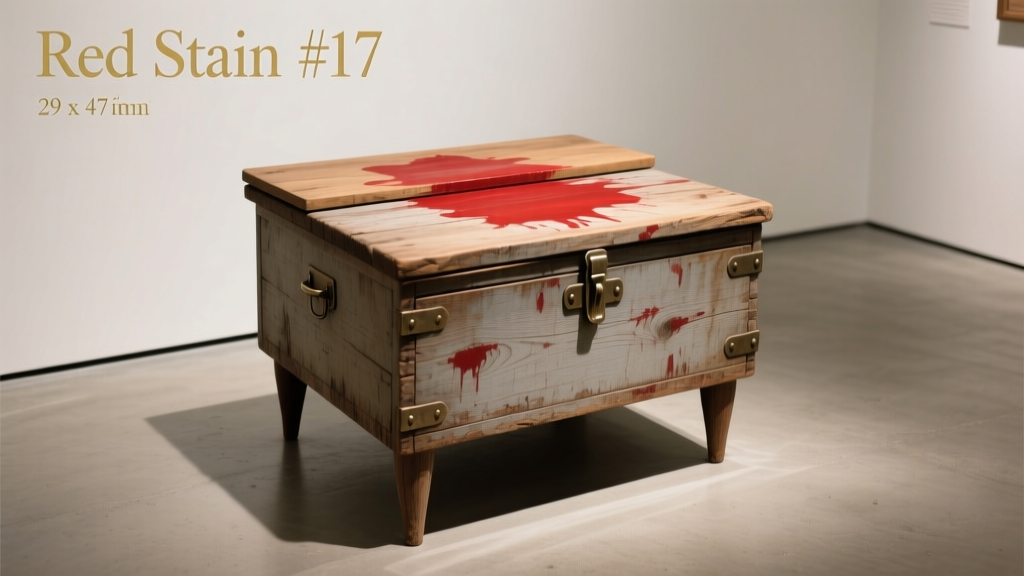
Authenticating and Valuing the Kitchen Dough Box: Red Stain, 2-Board Lid, Square Tapered Legs (29 × 47 in)
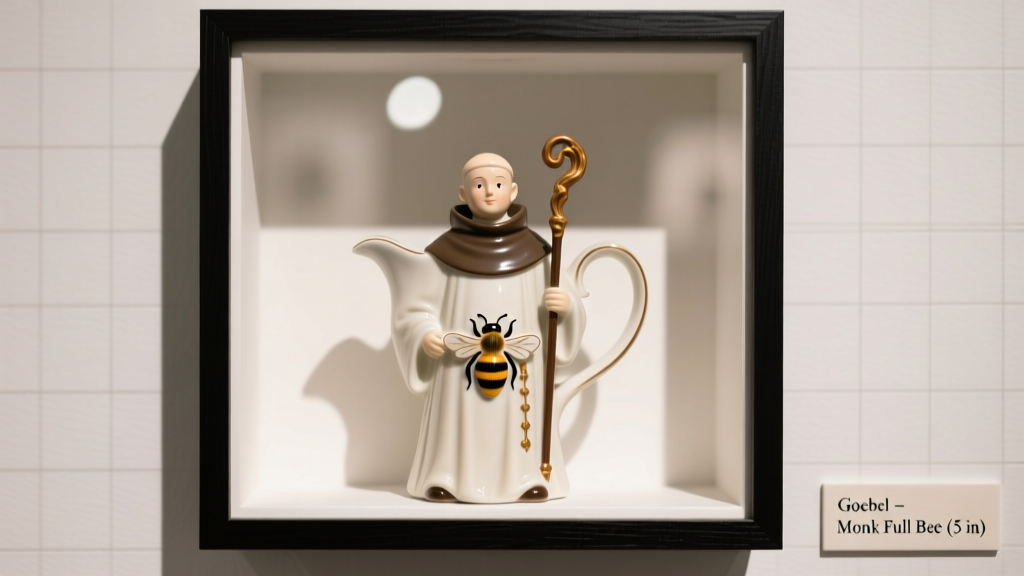
Goebel Creamer 'Monk Full Bee' (5-Inch): Authentication, Market Value, and Historical Context

Zsolnay Figurine Nude Gold Stamp: Authentication, Provenance, and Market Value Analysis