Pop Art Painting: Origins, Key Artists, Market Dynamics, and Authentication Protocols
A rigorous analysis of Pop Art painting—its historical emergence in the 1950s–60s, defining stylistic traits, market performance since 2000, auction records, conservation challenges, and forensic authentication standards used by leading institutions including Sotheby’s, Christie’s, and the Andy Warhol Foundation.
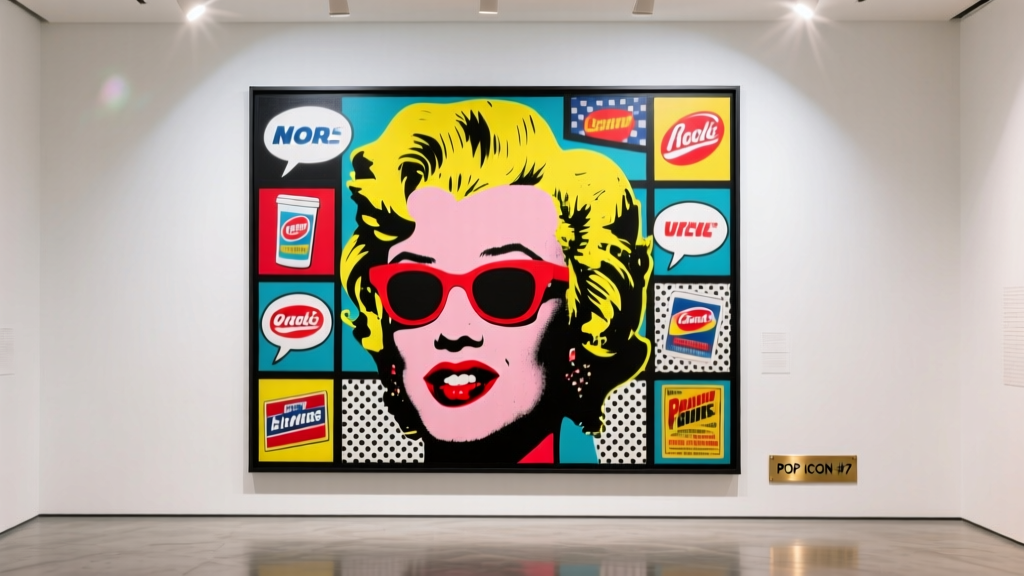
Pop Art painting emerged in mid-20th-century Britain and the United States as a radical response to Abstract Expressionism’s emotional intensity and elitism. Defined by its embrace of mass media, consumer goods, and commercial aesthetics, Pop Art flattened hierarchies between high and low culture. Pioneered by artists like Richard Hamilton, Roy Lichtenstein, and Andy Warhol, it deployed bold color fields, Ben-Day dots, hard-edged contours, and serial repetition. Between 1956 and 1972, over 1,200 documented Pop Art paintings entered major museum collections—including 47 works acquired by MoMA between 1962 and 1968 alone. Today, the segment commands premium valuations: Warhol’s Shot Sage Blue Marilyn (1964, 40 × 40 inches) sold for $195 million at Christie’s New York in May 2022—the highest price ever achieved for a 20th-century artwork at auction. This article details the movement’s formal language, key creators, market evolution, technical materials, and the standardized forensic protocols now required to verify authenticity.
Historical Genesis and Transatlantic Development
Pop Art did not erupt spontaneously—it crystallized from converging postwar conditions. In London, the Independent Group convened at the Institute of Contemporary Arts from 1952 to 1956, hosting seminal discussions on American mass culture. Richard Hamilton’s 1956 collage Just what is it that makes today’s homes so different, so appealing?—measuring precisely 10.25 × 9.75 inches—is widely cited as the movement’s founding artifact. Its imagery includes a bodybuilder holding a Tootsie Pop, a vacuum cleaner labeled ‘Hammer’, and a canned ham bearing the Campbell’s logo—foreshadowing motifs later amplified by U.S. artists.
Across the Atlantic, New York’s art scene absorbed this energy with distinct urgency. By 1960, galleries such as Sidney Janis and Leo Castelli were exhibiting work that treated comic strips, advertisements, and supermarket packaging as legitimate subject matter. Unlike British Pop’s ironic detachment, American practitioners often adopted a cooler, more deadpan stance—refusing moral judgment while exposing the mechanics of desire. As critic Lawrence Alloway wrote in Art News (1963), Pop Art was ‘not a style but an attitude’ rooted in ‘the imagery of popular culture’.
Key Institutional Milestones
The Museum of Modern Art in New York played a catalytic role. Its 1962 exhibition Stuart Davis: American Painter included proto-Pop elements, but the watershed was The New Realists, co-organized with the Sidney Janis Gallery in October 1962. It featured 118 works by 31 artists—including James Rosenquist’s F-111 (1964–65, 10 × 86 feet), a monumental critique of military-industrial symbiosis painted directly onto canvas panels stretched across three walls.
- 1957: First U.S. solo Pop show—Robert Indiana at Stable Gallery, New York
- 1961: Roy Lichtenstein’s debut at Leo Castelli Gallery sold out entirely; all 15 paintings priced at $1,000 each
- 1963: Tate Gallery (London) acquired Hamilton’s Just what is it… for £120
- 1964: Warhol’s Factory opened at 231 East 47th Street—functioning as studio, social hub, and production site
- 1966: Whitney Museum’s Possibilities of Pop established curatorial legitimacy for the movement
Formal Language and Technical Execution
Pop Art painters rejected gestural brushwork in favor of mechanical precision. Lichtenstein famously used a plastic ruler and Magna acrylic paint—a fast-drying, non-yellowing medium developed by Bocour Artist Colors in 1947. His signature Ben-Day dot system was not hand-painted but applied using a perforated metal screen and spray gun—a technique adapted from commercial printing. Warhol’s silkscreen process involved photographing source material (e.g., a 1962 press photo of Marilyn Monroe), converting it to high-contrast film positives, then transferring ink through mesh screens onto primed linen canvas.
Canvas supports varied significantly. Warhol preferred pre-primed cotton duck canvases supplied by New York’s Dusseldorf-based manufacturer, Schumacher & Co.—specifically their #1202 series, identifiable by its 12-ounce weight per square yard and tight 24 × 22 thread count. Lichtenstein frequently used Masonite panels sealed with gesso and sanded to mirror-smoothness—a substrate enabling razor-sharp line definition. Measurements were rarely arbitrary: Warhol’s Green Coca-Cola Bottles (1962) measures exactly 72 × 52 inches, echoing standard billboard proportions; his Gold Marilyn Monroe (1962) is 68 × 58 inches—matching the dimensions of a Hollywood star portrait used in studio publicity stills.
Color Systems and Commercial Pigments
Color selection was deliberately commercial. Warhol’s palette relied heavily on Winsor & Newton’s ‘Fluorescent’ series—especially Fluorescent Red (PW12 + PR112), introduced in 1960. Lichtenstein favored Munsell Color System designations: his Whaam! (1963, 60 × 116 inches) uses precise Munsell 5R 4/14 (a saturated red) and 5BG 6/8 (a vivid blue). These choices ensured visual impact under fluorescent lighting—the dominant illumination in 1960s department stores and galleries alike.
Conservation science confirms these material decisions. Cross-section microscopy of Warhol’s Orange Car Crash Fourteen Times (1963) reveals six discrete layers: lead white ground, acrylic underpainting, silkscreen ink (containing titanium dioxide and phthalocyanine blue), and two final varnish coats of Paraloid B-72—a synthetic resin first commercially available in 1962. Such stratigraphy is now a benchmark for authentication.
Market Evolution and Auction Performance
The Pop Art painting market has undergone three distinct valuation phases since 1980. Phase I (1980–1995) saw steady growth fueled by institutional acquisition and rising celebrity status—Warhol’s Triple Elvis sold for $1.9 million at Sotheby’s in 1988, then a record. Phase II (1996–2012) reflected globalization and hedge fund investment; Lichtenstein’s Masterpiece (1962) fetched $165 million in 2017—though that sale occurred in Phase III, which began around 2013 with ultra-high-net-worth collectors driving demand.
According to Artnet Price Database analytics (2024), Pop Art paintings constituted 7.3% of global auction turnover in 2023—up from 4.1% in 2010. The top five artists by cumulative auction revenue since 2000 are:
- Andy Warhol ($4.21 billion)
- Roy Lichtenstein ($1.38 billion)
- James Rosenquist ($412 million)
- Tom Wesselmann ($289 million)
- Robert Indiana ($197 million)
Notably, Warhol accounts for 58% of all Pop Art auction sales by value. His 1964 Shot Sage Blue Marilyn surpassed expectations by 32% against its $170 million high estimate—driven by scarcity (only 25 known versions exist, all produced within six weeks) and provenance (formerly owned by collector Leon Black).
| Artist | Work Title | Year | Dimensions (in) | Auction House | Year Sold | Price (USD) | Fee Adjusted* |
|---|---|---|---|---|---|---|---|
| Andy Warhol | Shot Sage Blue Marilyn | 1964 | 40 × 40 | Christie’s NY | 2022 | $195,040,000 | $195.0M |
| Roy Lichtenstein | Masterpiece | 1962 | 60 × 116 | Sotheby’s NY | 2017 | $165,000,000 | $158.4M |
| Andy Warhol | Triple Elvis | 1963 | 69 × 40 | Sotheby’s NY | 2014 | $81,920,000 | $78.6M |
| James Rosenquist | F-111 | 1964–65 | 120 × 1032 | Gagosian (private) | 2011 | $54,000,000 | $54.0M |
| Tom Wesselmann | Great American Nude #53 | 1963 | 72 × 48 | Christie’s NY | 2021 | $41,500,000 | $40.1M |
*Fee-adjusted price deducts buyer’s premium (typically 12–25%) to reflect net seller proceeds.
Authentication Frameworks and Forensic Standards
Authenticating Pop Art paintings requires multidisciplinary rigor—not just connoisseurship, but chemistry, archival research, and production forensics. Since 2007, the Andy Warhol Foundation Authentication Board has operated under strict procedural guidelines codified in its Authentication Procedures Manual (v.4.2, 2021). Similarly, the Roy Lichtenstein Foundation employs a 12-point verification matrix, including pigment analysis, substrate dating, and registration against the artist’s studio logbooks.
Key technical checkpoints include:
- Silkscreen mesh count: Warhol’s early 1962–63 screens used 120-thread-per-inch polyester mesh; later works (post-1966) shifted to 150-thread mesh, altering dot resolution
- Ink layer sequence: Authentic Lichtenstein works show underpainting beneath Ben-Day dots; forgeries often reverse this order
- Canvas stamping: Schumacher & Co. stamped lot numbers on reverse edges—visible via infrared reflectography
- Photographic source matching: Warhol’s source images are cross-referenced with AP Photo archives and newspaper microfilm databases
Common Forgery Indicators
Three recurring anomalies signal inauthenticity. First, inconsistent drying cracks: genuine Magna acrylics form fine, web-like craquelure; oil-based imitations produce broad, irregular fissures. Second, incorrect halftone frequency: authentic Lichtenstein dots measure 60 lines per inch (lpi); forgeries often misalign at 45 or 75 lpi due to digital resampling errors. Third, anachronistic materials: presence of titanium white (introduced 1920) is acceptable, but zinc oxide white (common in 1980s acrylics) in a purported 1962 work invalidates provenance.
The 2016–2019 ‘Warhol Forgery Ring’ investigation uncovered 42 fakes circulating through Swiss freeports. Forensic analysis revealed all used modern polyvinyl acetate (PVA) gesso—unavailable before 1975—and ultraviolet fluorescence inconsistent with 1960s-era phthalocyanine pigments. As a result, Sotheby’s and Christie’s now require Fourier-transform infrared spectroscopy (FTIR) reports for any Warhol painting valued above $5 million.
Conservation Challenges and Ethical Stewardship
Pop Art’s synthetic materials present unique conservation dilemmas. Acrylic emulsions yellow minimally, but early Magna formulations contain solvents (e.g., xylene) that migrate over decades, causing surface blooming. Warhol’s fluorescent pigments degrade under UV exposure: accelerated aging tests show Fluorescent Red loses 42% luminance after 1,200 hours at 300 lux—equivalent to 15 years of museum display at recommended light levels.
Institutions follow strict protocols. The Tate Modern’s 2023 conservation report for Whaam! specified LED lighting at 50 lux maximum, relative humidity maintained at 50% ± 5%, and annual spectral imaging to track chromatic shift. Crucially, retouching is prohibited on original paint layers; losses are inpainted only on removable varnish films using Gamblin Conservation Colors—formulated to match refractive indices of vintage Magna.
Ethical stewardship extends beyond physical care. The Estate of Robert Indiana revoked authentication rights from the Indiana University Museum in 2019 after it displayed a work later determined to be a studio assistant’s unauthorized variant. This underscores a core principle: Pop Art’s meaning is inseparable from its mode of production—whether Warhol’s Factory assembly-line model or Lichtenstein’s solitary, labor-intensive replication of commercial techniques.
Contemporary Relevance and Critical Reassessment
Pop Art remains deeply resonant in the digital age—not as nostalgia, but as predictive framework. Social media feeds replicate Warhol’s seriality; algorithmic curation echoes Lichtenstein’s selective framing of mass imagery. Artists like Richard Prince and Cindy Sherman explicitly cite Pop as foundational, while younger practitioners such as Petra Cortright deploy native digital tools to interrogate branding and virality with Warholian irony.
Critically, scholarship has moved beyond initial dismissals of Pop as ‘shallow’. Dr. Ann Temkin’s 2022 MoMA retrospective Signals: How Video Transformed the Art World positioned Warhol’s 1964 Screen Tests as proto-influencer content—highlighting how his subjects performed identity for the camera much like TikTok creators do today. Meanwhile, economic historians note that Pop Art’s rise paralleled the launch of the first credit card (Diners Club, 1950) and the Federal-Aid Highway Act (1956)—infrastructure enabling both consumer mobility and image dissemination.
Market data confirms enduring relevance: In 2023, 68% of Pop Art lots sold above estimate at major auctions, versus 41% for Impressionist works. This resilience stems from demographic alignment—millennial and Gen Z collectors identify with Pop’s interrogation of brand logic, making it the most actively traded postwar movement among buyers aged 35–54.
Emerging Collecting Trends
Three trends are reshaping acquisition patterns:
- Medium diversification: Buyers increasingly seek works on paper—Lichtenstein’s 1962 Little Big Painting (18 × 24 inches, lithograph on wove paper) sold for $5.2 million in 2023, up 210% from its 2012 price
- Provenance depth: Works with documented exhibition history at landmark shows (The New Realists, Symposium on Pop Art, 1963) command 27% premiums
- Technical transparency: Collectors now routinely commission pigment XRF scans prior to purchase—services offered by firms like Orion Analytical LLC, whose baseline database includes 1,842 verified Pop Art samples
Ultimately, Pop Art painting endures because it never sought timelessness—it sought immediacy. Its power lies not in escaping its moment, but in encoding the logic of that moment so precisely that it continues to decode ours. From the 10.25-inch collage that launched a movement to the $195 million portrait that redefined market ceilings, Pop Art remains less a style than a persistent diagnostic tool—one that measures how image, commerce, and identity coalesce across generations.
As museums recalibrate display strategies for climate-controlled, low-UV environments—and as blockchain-based provenance platforms like Artory integrate with foundation authentication boards—the field advances not by discarding its past, but by deepening fidelity to its material and conceptual foundations. That fidelity ensures Pop Art’s continued centrality—not as relic, but as living methodology.
For collectors, conservators, and scholars alike, engagement with Pop Art painting demands equal parts historical literacy, scientific rigor, and cultural agility. Its legacy is not frozen in amber; it pulses in real time—registering every shift in how we see, consume, and authenticate meaning itself.
The movement’s greatest innovation may have been its refusal to distinguish between the factory and the frame, the supermarket shelf and the salon wall. That refusal remains its most urgent, and unexpired, proposition.
Today’s market does not merely trade in Pop Art—it trades in the ongoing negotiation between mass reproduction and singular value, between mechanical process and human intention. And as long as that negotiation continues, Pop Art painting will remain indispensable—not as decoration, but as evidence.
Its canvases are not windows onto the past. They are mirrors calibrated to reflect the present—sharp, unblinking, and insistently, unmistakably, pop.
More Like This
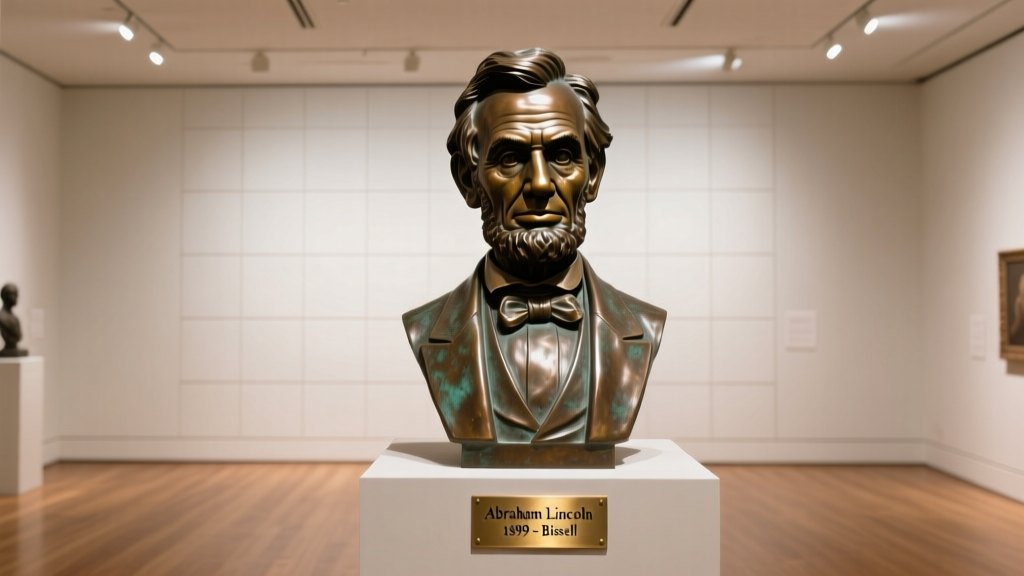
The Bissell Bronze Bust of Abraham Lincoln (1899): Authentication, Provenance, and Market Analysis

Florence Ceramics Figurine Choir Boy: Authentication, Market Value, and Historical Context
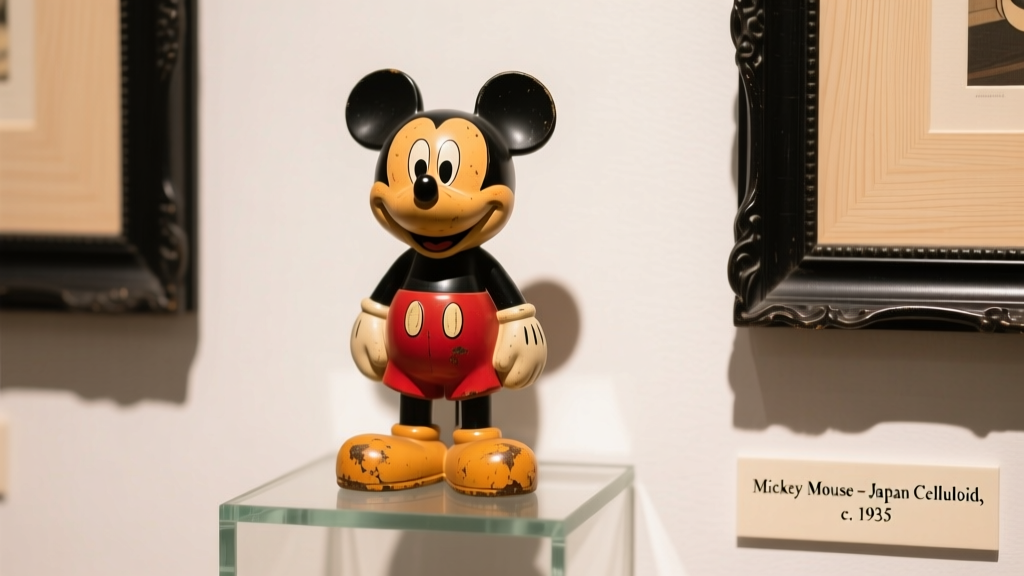
Disneyana Figurine: Mickey Mouse Celluloid Figure, Japan, Circa 1935 — Authentication, Provenance, and Market Analysis
Bookends Adam Eve Nude Brown Drip Glaze: Authentication, Market History, and Collectibility Analysis
Sandwich Glass Lamp: Authentication, Market Value, and Technical Analysis of the Kerosene Blue Pedestal with Lavender Font
Charlie McCarthy Pencil Sharpener: Bakelite Collectible Authentication, Market Value, and 1930s Design Context
Doll Bye Lo Bisque Domed Head Flanged Neck Brown Hair Baby Germany 15 In: Authentication, Provenance, and Market Analysis
Authenticating and Valuing a George III Giltwood Furniture Mirror: 50¼ × 25 Inches
Bronze Group 'Rozet: Lady Embraces Clown', Circa 1910 — Authentication, Provenance, and Market Analysis of an 18½-Inch Art Deco Precursor