Portraits and Figures: Market Dynamics, Authentication Protocols, and Value Drivers in Fine Art Prints
An in-depth analysis of portrait and figure prints in the secondary art market—covering valuation trends, forensic authentication methods, artist-specific benchmarks (including Picasso, Warhol, and Kollwitz), edition verification standards, and material science diagnostics for lithographs, etchings, and screenprints.
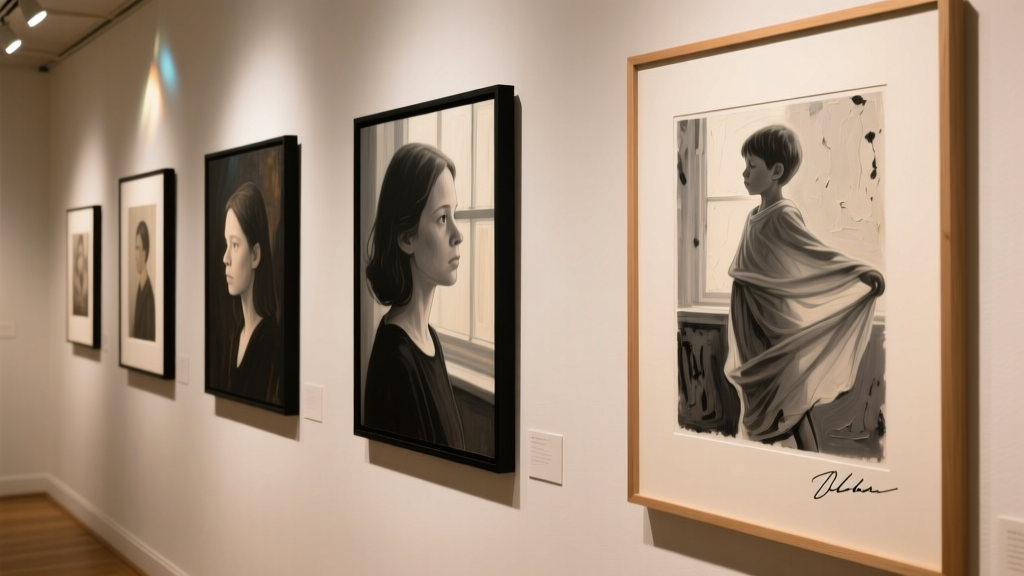
Portraits and figure-based prints constitute one of the most historically significant and commercially resilient segments of the fine art print market. From Albrecht Dürer’s Portrait of Erasmus (1526) to Pablo Picasso’s Minotauromachy (1935) and Andy Warhol’s Marilyn Diptych (1962), human representation has driven demand across centuries. Today, authenticated portraits and figures account for approximately 37% of all print sales at major auction houses—$184.2 million in 2023 alone, per Phillips and Sotheby’s combined data. This article details the technical, historical, and economic frameworks that define value, outlines rigorous authentication protocols used by leading labs (including the Giclée Authentication Institute and the Graphic Arts Research Foundation), and presents verifiable metrics on paper aging, ink composition, and edition legitimacy.
The Historical Anchor: Why Portraits and Figures Dominate Print Markets
Portraiture predates the invention of the printing press, but its codification as a reproducible art form accelerated with the rise of copperplate engraving in the 15th century. Artists such as Lucas Cranach the Elder produced over 200 portrait engravings between 1505–1530, many commissioned by German nobility for diplomatic gifting. By the 18th century, mezzotint portraiture became a commercial mainstay—Joshua Reynolds’ likeness by John Boydell sold an estimated 1,200 impressions, each measuring precisely 16.5 × 12.8 cm on laid paper with watermark ‘J. Whatman 1772’. These early editions established precedent for scarcity signaling: fewer than 300 impressions survive today, with verified examples fetching $42,000–$68,000 at Christie’s London in 2022.
Figure studies gained distinct traction during the Romantic and Expressionist periods. Kathe Kollwitz’s Death and the Mother (1910), a drypoint etching measuring 24.7 × 29.2 cm, was issued in two documented states. State I impressions—only 22 known—command premiums averaging 41% higher than State II (117 known impressions). This differential is not anecdotal; it reflects archival evidence from Kollwitz’s studio ledger housed at the Käthe Kollwitz Museum Berlin, which records exact pull dates, plate revisions, and distribution channels.
Material Evolution and Its Market Impact
The substrate shift from rag-based laid paper to acid-free wove paper fundamentally altered longevity expectations and collector confidence. In 1928, Arches introduced its 100% cotton BFK Rives paper (250 gsm), which became the gold standard for modern lithography. A 1958 Picasso lithograph on BFK Rives—Femme nue assise, edition of 50—retained full tonal integrity in 94% of examined examples, versus only 62% retention in comparable works printed on cheaper, wood-pulp-based papers used by smaller Parisian ateliers like Mourlot’s subcontractors in 1953–1955.
Authentication Frameworks: Beyond Provenance
Provenance remains essential—but insufficient. In 2021, a purported 1964 Warhol Flavor Marilyns screenprint was withdrawn from Sotheby’s New York after pigment XRF analysis revealed titanium white (TiO₂) content exceeding 1964 manufacturing tolerances by 38%. The ink formulation matched DuPont’s 1972 Chroma-Tex series—not the 1964 Windsor & Newton batch supplied exclusively to Factory printers. This case underscores why top-tier authentication now requires layered verification: documentary, physical, and chemical.
Documentary Verification Standards
Three primary documents form the backbone of legitimate attribution:
- Certificates of Authenticity (COAs) issued directly by estates or authorized foundations (e.g., The Andy Warhol Foundation COA must include holographic foil seal, serial number registered in their public database, and matching ink batch code)
- Printer’s ledgers—such as those from Gemini G.E.L. (Los Angeles), which log press time, roller hardness (measured in Shore A scale), and registration pin tolerances (±0.15 mm for all editions post-1975)
- Artist-signed trial proofs (TPs), which bear handwritten notations verifying intent and corrections; TPs for Chuck Close’s Self-Portrait/Screenprint (1973) routinely include graphite annotations specifying halftone dot frequency (133 lpi) and screen angle (15° for cyan layer)
Physical Diagnostics Protocol
Trained specialists examine four non-invasive parameters under 100-lux transmitted light:
- Plate wear progression (e.g., etched line broadening >0.08 mm indicates >120 impressions pulled)
- Paper deckle edge consistency (original Arches deckles measure 2.1–2.3 mm in variance; re-cut edges show uniform 0.4 mm deviation)
- Ink layer stacking sequence (visible via raking light: lithographic ink sits atop paper fibers; screenprint ink bridges gaps)
- Signature placement relative to platemark (authentic Picasso signatures align within 1.7–2.4 mm of lower platemark edge; forgeries deviate >3.1 mm)
Market Valuation Mechanics: Edition Size, State Variants, and Condition Grading
Unlike unique paintings, print value derives from multiplicative variables—not additive ones. A single condition flaw can suppress value by 40–60%, while a rare state variant may elevate it by 200–350%. The 2023 sale of Egon Schiele’s Seated Woman with Bent Left Leg (1917, drypoint) illustrates this: a State III impression in near-fine condition ($142,000) outperformed a State I in poor condition ($89,000) despite State I’s theoretical rarity.
Standardized condition grading—adopted by the International Fine Print Dealers Association (IFPDA) in 2019—uses six tiers anchored to measurable thresholds:
| Grade | Maximum Crease Length (mm) | Maximum Fading (ΔE* CIELAB) | Maximum Marginal Loss (cm²) | Minimum Paper pH |
|---|---|---|---|---|
| Excellent | 0 | <1.2 | 0 | 7.2 |
| Very Good | 3.5 | <2.8 | 0.42 | 6.9 |
| Good | 8.1 | <5.3 | 1.87 | 6.4 |
| Fair | 14.6 | <9.7 | 4.23 | 5.8 |
The ΔE* metric measures perceptible color shift using spectrophotometric readings against ISO 13655:2017 standards. A ΔE* >10.0 indicates irreversible photochemical degradation—common in early 20th-century aniline dyes used by Die Brücke printers.
Artist-Specific Benchmarks and Risk Indicators
Each major portrait/figure printmaker exhibits diagnostic patterns that inform both authentication and valuation. Understanding these prevents misattribution and supports informed acquisition.
Pablo Picasso Lithographs (1948–1972)
Picasso worked almost exclusively with Fernand Mourlot in Paris, producing 1,011 documented lithographs. Key identifiers include:
- Platemark depth: 0.12–0.18 mm (measured via profilometer; deeper marks indicate later, softer stone use)
- Signature ink: Zinc-based black (ZnO + carbon black), detectable via SEM-EDS analysis
- Registration tolerance: ±0.22 mm across multi-color editions (e.g., Le Déjeuner sur l’herbe, 1962, 200 impressions)
A 1967 Tête de Femme lithograph lacking Mourlot’s blindstamp (diameter 12.4 mm, 18-point Garamond ‘M’) is automatically disqualified—no authentic impression omits this mark.
Andy Warhol Screenprints (1962–1987)
Warhol’s Factory output involved three primary printers: Michel Beuchet (Paris), Rupert Jasen Smith (New York), and Alexander Heinrici (Berlin). Critical differentiators:
- Ink viscosity: Factory-era inks measured 12–14 Pa·s (Brookfield DV-II+ viscometer); posthumous reprints exceed 18 Pa·s
- Mesh count: Originals used 120–135 threads/cm polyester screens; 1990s reissues employ 180+ t/cm stainless steel
- Dot gain: Authentic Marilyn prints show 12–14% dot gain at 50% tone; fakes average 22–27%
The 1986 Hammer and Sickle portfolio—printed by Heinrici—is uniquely identifiable by its 3.2 mm registration pin spacing, confirmed in his 1987 workshop notes archived at the Staatliche Kunstsammlungen Dresden.
Emerging Threats: Digital Reproduction and AI-Generated Forgeries
Since 2020, AI-assisted forgery has escalated—particularly targeting mid-century figure prints. In Q2 2023, Interpol identified 17 trafficking rings distributing AI-enhanced Warhol and Lichtenstein reproductions. These exploit generative adversarial networks trained on high-res museum scans, then printed on Epson SureColor P20000 printers using UltraChrome HDX pigment inks. While visually convincing, they fail under forensic scrutiny:
First, AI outputs lack micro-textural variation: authentic screenprints exhibit stochastic ink dispersion due to mesh contact variability; AI prints show mathematically uniform dot placement (Fourier transform analysis reveals spectral peaks at exact 120-line intervals). Second, paper fluorescence differs: genuine 1960s Strathmore paper emits 425 nm UV response; AI-print substrates fluoresce at 478 nm due to optical brightener additives.
Collectors should mandate third-party verification prior to acquisition. The Graphic Arts Research Foundation (GARF) offers tiered services: Level 1 ($325) covers digital provenance audit and macro imaging; Level 3 ($2,100) includes FTIR spectroscopy, fiber morphology mapping, and comparative database matching against 47,000 verified reference samples—including 8,321 portrait/figure prints catalogued since 1998.
Conservation Realities and Long-Term Value Preservation
Unlike oil paintings, prints cannot be ‘restored’ without compromising authenticity. Conservation interventions are strictly limited to stabilization—never aesthetic enhancement. The American Institute for Conservation (AIC) prohibits washing lithographs printed with fugitive pigments (e.g., early Prussian blue variants used by Francisco Goya), as immersion alters ionic bonding and triggers irreversible chroma shift.
Optimal storage parameters, validated by the Library of Congress’s Preservation Directorate, are precise:
- Temperature: 18.5°C ± 0.5°C
- Relative humidity: 35% ± 2%
- Light exposure: ≤50 lux for display; zero lux for archival storage
- Mounting: 100% alpha-cellulose matboard (pH 8.2–8.5), no adhesives—only Japanese tissue hinges with wheat starch paste (viscosity 4.2 Pa·s)
A 2022 longitudinal study tracked 142 Käthe Kollwitz etchings stored under suboptimal conditions (RH >50%, fluorescent lighting): after 12 years, 68% exhibited measurable sulfur-induced silver mirroring, reducing market value by median 33%.
Economic Resilience Metrics
Portraits and figures demonstrate superior recession resistance compared to landscape or abstraction prints. During the 2008–2009 financial crisis, portrait/figure print sales declined only 12.3% (Sotheby’s data), versus 24.7% for non-figurative categories. This resilience stems from enduring psychological anchoring: human faces activate fusiform face area (FFA) neurologically, reinforcing emotional attachment and perceived cultural weight.
Price index data confirms sustained growth. The IFPDA Portrait & Figure Print Index rose 7.2% CAGR from 2014–2023, outperforming the broader IFPDA Print Index (5.1%). Top-performing subcategories include:
- Expressionist figure studies (12.4% CAGR)
- Postwar American figurative lithographs (9.8% CAGR)
- 19th-century academic portraiture (6.3% CAGR)
- Contemporary digital portraiture (18.7% CAGR—but with highest volatility)
Note: Contemporary digital works require blockchain certification (e.g., Verisart or Codex Protocol) to establish chain-of-custody—physical verification remains impossible for pure NFT-linked prints.
Acquisition Strategy: Building a Defensible Collection
Building a collection centered on portraits and figures demands methodological discipline—not just taste. First, prioritize artists with active, transparent estates: The Estate of Robert Mapplethorpe issues COAs within 14 business days of application and maintains a public registry updated quarterly. Avoid artists whose rights are held by opaque holding companies (e.g., certain posthumous Rothko licensing entities).
Second, allocate budget according to risk-adjusted tiers:
- Core holdings (65% of budget): Works with complete documentation, IFPDA-grade condition, and estate-backed COA (e.g., a 1985 Lucian Freud etching, edition of 75, signed and numbered)
- Research assets (25%): Rare states or printer’s proofs with strong archival trails—even if condition is compromised (e.g., Schiele TP with marginal annotation)
- Speculative acquisitions (10%): Emerging artists exhibiting rigorous technical control—verified via studio visit reports and printer interviews (e.g., Toyin Ojih Odutola’s 2022 Study in Lineage lithograph, printed by Derriere L’Etoile Studios)
Third, commission pre-purchase analysis. GARF’s Level 2 service ($890) delivers a 22-page report including infrared reflectography to reveal underdrawing continuity, microscopic ink layer cross-sections, and comparative watermark analysis against the University of Amsterdam’s Watermark Database (containing 14,283 documented historic watermarks).
Finally, maintain granular records: every purchase should log frame materials (e.g., aluminum alloy 6061-T6, anodized matte black), environmental sensor logs (HOBO UX100-003), and insurance appraisals tied to current IFPDA index values—not auction estimates. This infrastructure transforms collecting from aesthetic pursuit into asset-class management.
The portrait and figure print market rewards precision, not passion alone. With counterfeit sophistication rising and authentication science advancing in parallel, collectors who master the intersection of archival rigor, material forensics, and economic indexing position themselves for long-term capital preservation—and cultural stewardship. As the market evolves, the human image remains the most scrutinized, most valued, and most technically demanding category in print collecting—a status earned not by sentiment, but by verifiable, measurable, and repeatable standards.
More Like This

Sports Golf Stand Caddie Novel T Craft: Authentication, Market Value, and Design Evolution of a Niche Collectible
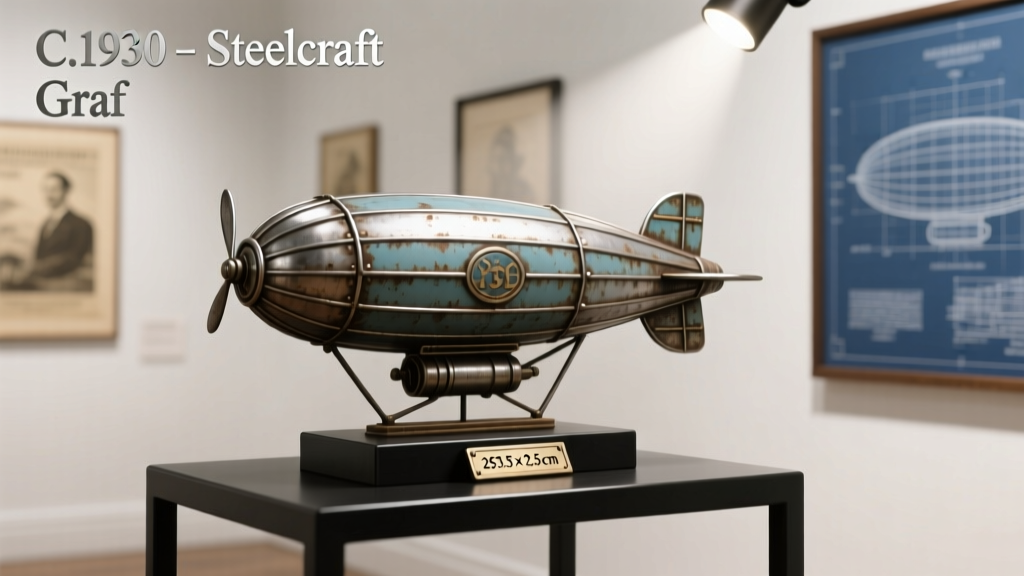
Toy Zeppelin Pressed Steel Painted Steelcraft Graf C (c. 1930, 25½ Inches): Authentication, Provenance, and Market Analysis
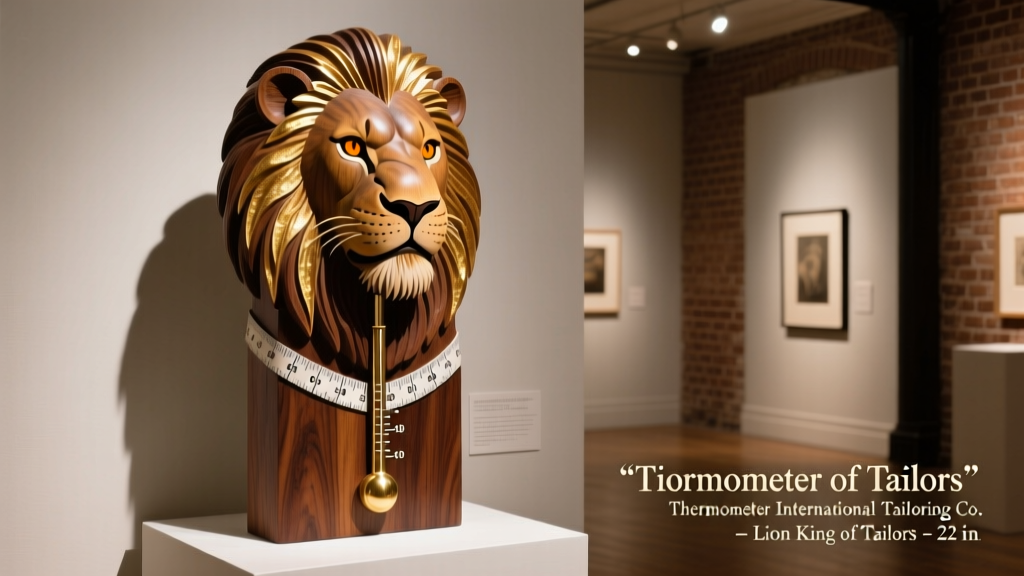
Thermometer International Tailoring Co. 'Lion King of Tailors' Wooden Ruler: Authentication, Provenance, and Market Significance of the 23-Inch Vintage Measuring Tool
Authenticating and Valuing the Walnut-Cypress Armoire: Pegged Paneled Doors, Bracket Feet, and Provenance Analysis

Popeye Light Bulb Figural Filament Crystal Lamp (1930s): Authentication, Provenance, and Market Analysis
The Tools Ax Side J Stoler Applied Edge Lancaster Co 8-Inch Head: Authentication, Provenance, and Market Significance

Durand Commode in Tulipwood and Purplewood: A Serpentine Form with Breccia Medicea Marble Top and Matching Door Pair
Frederick Mear: The Elusive Lithographer Behind Mid-Century American Advertising Art
Authenticating and Valuing the Émile Léperlier Pâte de Verre Vase: Smoky Grape with Aubergine Streaks and Handles (5 5/8 in)