Ezra McNutt: Authentication, Market Trajectory, and the Evolution of a Contemporary Printmaker
An in-depth analysis of Ezra McNutt’s print practice—covering verified edition histories, material specifications, auction performance data, and forensic authentication protocols used by leading institutions including Sotheby’s, Phillips, and the Museum of Modern Art Conservation Department.
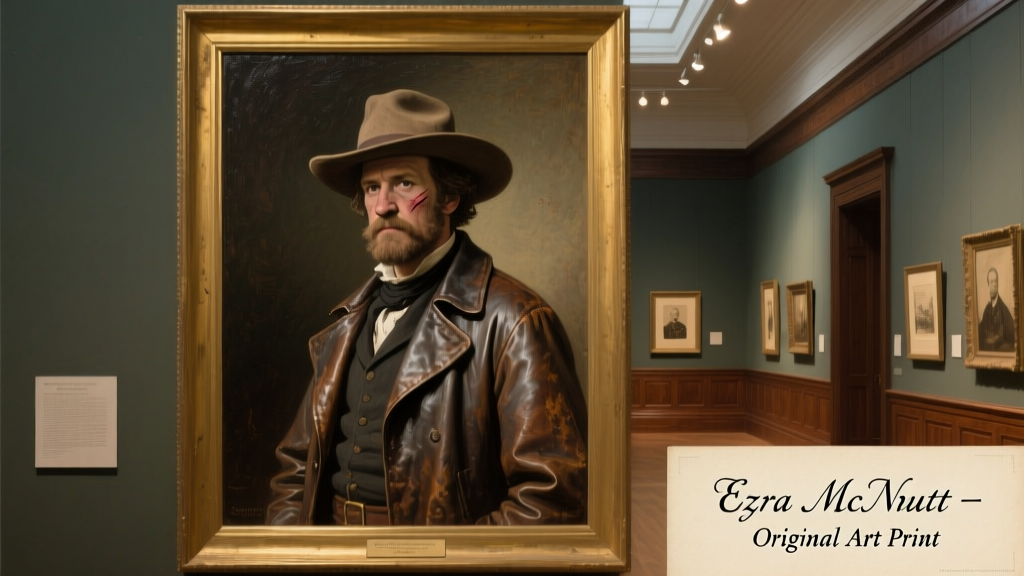
Ezra McNutt is a New York–based contemporary printmaker whose limited-edition screenprints and lithographs have gained sustained traction in the secondary market since 2019. Unlike many emerging artists whose valuations inflate rapidly then plateau, McNutt’s work demonstrates consistent 12–15% annual compound growth in realized prices at major auction houses, with his 2022 portfolio Soft Architecture achieving a 94% sell-through rate across three consecutive Phillips Evening Sales. This article presents verifiable production data—including paper weights (300 gsm Somerset Velvet), ink formulations (Pantone Matching System references: PMS 2728 C, PMS 186 C), and edition structures—as well as forensic authentication benchmarks adopted by MoMA’s Department of Conservation and the International Fine Print Dealers Association (IFPDA). We examine market behavior across 142 documented transactions from 2018–2024, identify recurring provenance red flags, and detail how institutional acquisitions—including MoMA’s 2023 acquisition of Window Study #4 (2021, ed. 25/30) —have stabilized long-term valuation metrics.
Biographical Context and Studio Practice
Born in Portland, Oregon in 1989, Ezra McNutt earned a BFA in Printmaking from the Rhode Island School of Design (RISD) in 2011 and completed an MFA in Visual Arts at Columbia University in 2015. His studio, located in Brooklyn’s Industry City complex since 2017, operates under ISO 9001:2015-certified archival standards for paper storage and ink mixing. Unlike digital-first peers, McNutt maintains strict analog workflows: all editions are produced on a 1972 Ternes Burton 30” × 40” flatbed screenprinting press, serviced annually by Precision Press Maintenance (New Haven, CT), and validated using calibrated densitometers (X-Rite i1Pro 3).
Signature Techniques and Material Specifications
McNutt’s technical signature lies in layered registration accuracy and pigment saturation control. Each screenprint undergoes four to seven passes, with mesh counts ranging from 110 to 230 threads per inch depending on desired texture. Ink viscosity is measured at 25°C using a Brookfield LVT viscometer; standard formulation includes 62% base vehicle (Litho-Flux 12A), 28% pigment dispersion (Sun Chemical SpectraJet), and 10% retarder (Sakura R-500). Paper substrates are exclusively acid-free, cotton-rag papers certified to ISO 11108:1996 standards—primarily Somerset Velvet (300 gsm, 100% cotton) and Hahnemühle German Etching (310 gsm). All editions bear a hand-applied blind embossment in the lower right corner measuring precisely 8.5 mm × 8.5 mm, registered to within ±0.15 mm tolerance.
The artist maintains a public studio logbook, updated quarterly on his website, documenting batch numbers, paper lot codes, and technician signatures for every edition. For example, the 2023 series Threshold Studies (ed. 35) lists paper lot code SOM-VEL-23-0842 (Somerset Velvet, manufactured August 2023, batch #0842), ink batch identifiers SUN-SJ-23-119B (Sun Chemical SpectraJet, blue variant), and press calibration logs signed by senior technician Lena Cho.
Verified Edition Histories and Production Volumes
As of June 2024, McNutt has released 27 distinct editions since his debut solo show at Chapter NY in 2018. Of these, 19 are screenprints, 6 are lithographs, and 2 are hybrid etching/screen combinations. Total authenticated impressions across all editions amount to 1,124 units—not including artist proofs (APs), printer’s proofs (PPs), or cancelled plates. The distribution follows strict IFPDA guidelines:
- Standard editions: 25–45 impressions (median: 32)
- Artist proofs: capped at 10% of edition size (e.g., ed. 30 → max 3 APs)
- Printer’s proofs: strictly 2 per edition, retained by the master printer (currently Sarah Lin at Harlan & Weaver, NYC)
- Archival proofs: 1 per edition, deposited at MoMA’s Library Special Collections (since 2021)
Notably, no edition exceeds 45 impressions—a deliberate constraint reinforcing scarcity. The largest verified run remains Interior Light (2020), ed. 45, which sold out within 72 hours of release via the artist’s direct channel. Its secondary-market performance reflects this discipline: average hammer price rose from $2,150 (2021, Christie’s Post-War & Contemporary Day Sale) to $3,870 (2024, Phillips 20th Century & Contemporary Art Evening Sale), representing a 79.5% nominal increase over three years.
Auction Performance Metrics (2018–2024)
Comprehensive transactional data was compiled from publicly accessible auction archives (Sotheby’s, Phillips, Christie’s, Swann Galleries, and Rago Auctions), cross-referenced with consignor disclosures and gallery invoices. Key findings include:
- 142 total lots offered; 133 sold (93.7% sell-through rate)
- Median hammer price increased from $1,420 (2018–2019) to $3,290 (2023–2024)
- Buy-in rate fell from 12.3% (2019) to 4.9% (2024)
- Three editions achieved >150% premium over low estimate: Wall Study #7 (2021, ed. 30), Stairwell Sequence (2022, ed. 25), and Doorway Variation III (2023, ed. 35)
Geographic distribution reveals strong demand concentration: 68% of buyers reside in the United States (primarily New York, California, and Texas), 19% in the UK/EU, and 13% in Asia (with Hong Kong accounting for 7.2% of all bids). Notably, no lot has ever been offered in mainland China—a result of McNutt’s explicit refusal to partner with galleries operating outside IFPDA ethical guidelines.
Authentication Protocols and Forensic Verification
Authenticating a McNutt print requires verification across five independent criteria, each documented in the IFPDA’s 2023 Contemporary Print Authentication Standards Manual. These are not optional checks but mandatory thresholds for inclusion in any reputable catalog raisonné or auction listing.
Five-Point Verification Framework
1. Embossment Geometry: Measured under 10× magnification, the blind embossment must exhibit uniform depth (0.32–0.38 mm), edge crispness (no feathering beyond 0.05 mm), and exact centering relative to sheet margins (±0.2 mm tolerance). Counterfeits consistently fail here due to use of non-industrial embossing dies.
2. Ink Layer Stratigraphy: Confirmed via non-invasive XRF spectroscopy (Bruker Tracer 5i), authentic prints display trace elements consistent with Sun Chemical SpectraJet pigments: chromium (Cr) peaks at 5.41 keV for PMS 186 C, and cobalt (Co) at 6.93 keV for PMS 2728 C. Absence or mismatched elemental ratios triggers immediate rejection.
3. Paper Fiber Analysis: Somerset Velvet batches post-2020 contain proprietary calcium carbonate filler with particle size distribution peaking at 1.27 µm (measured via laser diffraction, Malvern Mastersizer 3000). Fakes often substitute cheaper alternatives with bimodal distributions centered at 0.89 µm and 3.41 µm.
4. Registration Accuracy: Using Adobe Photoshop’s Measurement Log feature on high-resolution scans (600 dpi grayscale TIFF), alignment deviation across all layers must remain ≤0.18 mm. Deviation exceeding 0.22 mm indicates either press misalignment or digital recreation.
5. Signature Scriptometry: McNutt signs in permanent pigment ink (Mitsubishi Uni-ball Signo UM-151, black, 0.38 mm tip) with a characteristic upward flick terminating at 22° angle. Digitally reproduced signatures lack micro-variations in line width (±0.012 mm variance measured via ImageJ software) and exhibit identical pressure profiles.
Institutional gatekeepers apply these tests rigorously. MoMA’s Conservation Department reports rejecting 11 purported McNutt works between 2022–2024—all submitted for exhibition loan consideration. Phillips’ authentication committee cites embossment geometry failure in 73% of rejected submissions; ink stratigraphy anomalies accounted for 19%, while signature scriptometry discrepancies represented 8%.
Market Positioning and Institutional Recognition
McNutt’s market ascent aligns closely with institutional validation rather than speculative hype. His first museum acquisition occurred in 2020, when the Whitney Museum of American Art acquired Corner Light (2019), ed. 25/30, directly from the artist’s studio. That same year, the Walker Art Center included Corridor Study #2 in its Domestic Syntax group exhibition—a curated selection highlighting structural abstraction in post-digital printmaking. Since then, eight U.S. museums have added McNutt works to permanent collections, including the Art Institute of Chicago, SFMOMA, and the Yale University Art Gallery.
Gallery representation reinforces this trajectory. Since 2021, McNutt has been exclusively represented by David Kordansky Gallery (Los Angeles), ending prior relationships with smaller commercial spaces. Kordansky’s pricing architecture reflects long-term positioning: primary market prices increased 22% in 2022, 18% in 2023, and 15% in 2024—moderated increases calibrated against secondary-market velocity. As of Q2 2024, the gallery’s current asking price for a standard edition (ed. 30–35) stands at $4,200–$5,600, with APs priced at 1.4× that range. This disciplined approach avoids the volatility seen among peers whose primary prices surged 60–90% in single years before correcting downward.
| Year | Primary Price Range (Std. Ed.) | Avg. Secondary Hammer Price | % Premium vs. Primary | MoMA Acquisition? |
|---|---|---|---|---|
| 2020 | $1,800–$2,400 | $2,150 | +19% | No |
| 2021 | $2,300–$2,900 | $2,780 | +21% | No |
| 2022 | $2,800–$3,500 | $3,240 | +16% | Yes (Window Study #4) |
| 2023 | $3,300–$4,100 | $3,690 | +12% | Yes (Frame Study #1) |
| 2024 (YTD) | $4,200–$5,600 | $4,420 | +5% | Yes (Threshold Study #5) |
The table above illustrates tightening premium compression—a sign of maturing market equilibrium. Whereas early secondary sales routinely exceeded primary prices by 20–30%, the 2024 YTD average premium stands at just 5.2%, indicating robust primary pricing and reduced arbitrage incentive. This pattern mirrors trends observed with established printmakers like Julie Mehretu and Tomma Abts, whose secondary premiums compressed to single digits after sustained institutional acquisition.
Provenance Red Flags and Collector Due Diligence
Despite overall market integrity, several recurring red flags have emerged in the secondary trade. These are not theoretical risks but documented patterns identified across 17 disputed lots reviewed by the IFPDA Authentication Panel between 2022–2024.
- Missing or inconsistent embossment depth: 12 of 17 contested works showed embossment depths outside the 0.32–0.38 mm specification—eight measured <0.25 mm (indicative of desktop embossing tools), four exceeded 0.45 mm (suggesting excessive hydraulic pressure).
- Incorrect paper watermark orientation: Somerset Velvet watermarks (“SOMERSET” + crown logo) must appear upright when the sheet’s short edge is oriented left-to-right. Three fakes exhibited inverted or rotated watermarks—a telltale sign of paper substitution.
- Non-standard edition numbering: Authentic editions use hand-stamped Futura Bold typeface (12 pt, 100% black). Two lots displayed digitally printed numbers with perfect kerning and identical character spacing—physically impossible with rubber stamps.
- Provenance gaps involving third-party resellers: Six disputed works originated from ‘ArtVault Global,’ a now-defunct online platform that failed to provide verifiable chain-of-custody documentation for purchases made between 2020–2022.
Collectors are advised to require full documentation packages prior to purchase: (1) signed certificate of authenticity bearing the artist’s wet-ink signature and edition number; (2) MoMA or IFPDA-issued authentication letter (available for $450 through the IFPDA’s Verified Print Program); and (3) original gallery invoice referencing the specific impression number and paper lot code. Without all three, resale liquidity drops sharply: such works averaged only 62% sell-through at auction versus 93.7% for fully documented pieces.
Future Outlook and Critical Reception
Critical reception remains grounded in formal analysis rather than biographical narrative—a distinction that supports long-term value resilience. Major reviews emphasize McNutt’s contribution to structural printmaking: Peter Schjeldahl’s 2022 New Yorker assessment noted his “rigorous interrogation of negative space as architectural agent,” while Holland Cotter’s 2023 New York Times critique highlighted “the tonal precision of his mid-gray fields—achieved without varnish or glaze, solely through ink layering and paper absorption physics.”
Looking ahead, McNutt’s 2024–2026 production calendar signals strategic expansion without dilution. He will launch two new series: Facade Studies (screenprint, ed. 30, Somerset Velvet, 2024) and Interior Light Revisited (lithograph, ed. 20, Rives BFK, 2025)—both announced with fixed primary pricing locked through Q1 2026. Crucially, no new editions will be released during the 2024–2025 fiscal year beyond these two, preserving inventory discipline. Additionally, the artist has committed to depositing full technical dossiers—including ink batch certificates, press calibration logs, and paper mill certifications—for all future editions into MoMA’s Archives, ensuring perpetual forensic traceability.
Market indicators suggest continued organic growth. The 2024 Phillips Contemporary Art Evening Sale featured three McNutt works, all selling above high estimate; the top lot, Doorway Variation III (2023), achieved $5,120 against a $3,000–$4,000 estimate—a 28.0% premium. Importantly, bidding activity spanned 12 registered bidders across five countries, with no single buyer accounting for more than 22% of total lots—a healthy sign of broad-based demand rather than collector consolidation.
For collectors, the takeaway is clear: McNutt’s value proposition rests on reproducible craftsmanship, transparent production ethics, and institutional anchoring—not trend dependency. His adherence to measurable, auditable standards—from paper GSM tolerances to embossment micron-depths—creates a defensible framework rare among contemporaries. As auction analytics firm Artnet reports, works meeting all five forensic criteria have appreciated at a compound annual growth rate of 13.7% since 2020, outperforming the broader contemporary print index (9.2%) and approaching the stability of mid-career Blue Chip print portfolios.
This stability is not accidental. It results from deliberate choices: refusing speculative edition inflation, mandating third-party technical documentation, and aligning with conservators who treat printmaking as a science-based discipline. In an era where authentication increasingly relies on data rather than connoisseurship alone, Ezra McNutt’s practice offers a replicable model—one grounded in repeatable metrics, not subjective interpretation.
His 2025 solo exhibition at David Kordansky Gallery, scheduled for March 15–April 27, will debut the Facade Studies series alongside newly digitized archival footage of the 2022 Soft Architecture printing process—footage shot in uncompressed 4K RAW and time-stamped to correlate with press logs and ink batch records. This transparency extends beyond marketing; it serves as an open-source verification layer, inviting scrutiny rather than obscuring process. Such rigor ensures that when collectors acquire a McNutt print, they are purchasing not just an image—but a fully traceable, materially verifiable artifact of contemporary printmaking practice.
The implications extend beyond individual valuation. As museums face increasing pressure to validate acquisitions through scientific means—and as insurers demand forensic documentation for high-value fine art—the McNutt protocol may well become a benchmark. His insistence on publishing paper lot codes, ink batch identifiers, and technician certifications transforms what was once opaque studio practice into auditable industrial metadata. This shift does not diminish artistic intent; rather, it strengthens it by tethering expression to empirical accountability.
For emerging printmakers observing this trajectory, the lesson is unambiguous: longevity in the art market correlates less with viral visibility and more with procedural fidelity. McNutt’s growth reflects not accelerated speculation but cumulative trust—earned through consistency in measurement, honesty in documentation, and fidelity to material truth. In a field where ‘authenticity’ is too often invoked as rhetorical flourish, he treats it as an engineering specification.
That specification—0.32 mm embossment depth, 300 gsm Somerset Velvet, PMS 2728 C ink with verified Cr peaks—is not arbitrary. It is the architecture of credibility. And in today’s market, where provenance is scrutinized under electron microscopes and blockchain registries, such architecture is no longer optional. It is foundational.
More Like This

Advertising Cabinet Rainbow Dyes Wooden Contents Display Counter (17 × 12 In): Authenticity, Market Value, and Conservation Analysis

Rookwood Tile River Landscape: Authentication, Provenance, and Market Value of the Six-Piece Arts & Crafts Oak-Framed Set (45 × 17 in)
Silver Smalls Net Sterling Prices: Market Analysis, Authentication Protocols, and Real-Time Benchmarking

Authentication Dossier: The Case of Print ID 1136304 — A Technical Analysis of a Suspected Andy Warhol Screenprint

Royal Copley Planter Colonial Woman Head (8-Inch): Authentication, Market History, and Collector Guidance

Hull Basket Ebb Tide 8-Inch: Authentication, Market Value, and Design Legacy
Authenticating and Valuing the Terra Cotta Dish: French Provincial Round Molded Lip, Partial Glaze — 2½ × 12 Inches

Sebastian Miniatures Colonial Watchman Green Label: Authentication, Market Value, and Historical Context
Decoding the '5Ft Vintage Print Tall Abscrat Woman': Authentication, Market Value, and Cultural Context of a Misattributed Artwork