Soup Tureens and Other Large Bowls: Function, Form, and Market Value in Historic and Contemporary Ceramics
An in-depth analysis of soup tureens and large ceramic bowls—from 18th-century Meissen masterpieces to modern Le Creuset enameled cast iron—covering typology, authentication markers, production techniques, auction performance, and collector criteria.
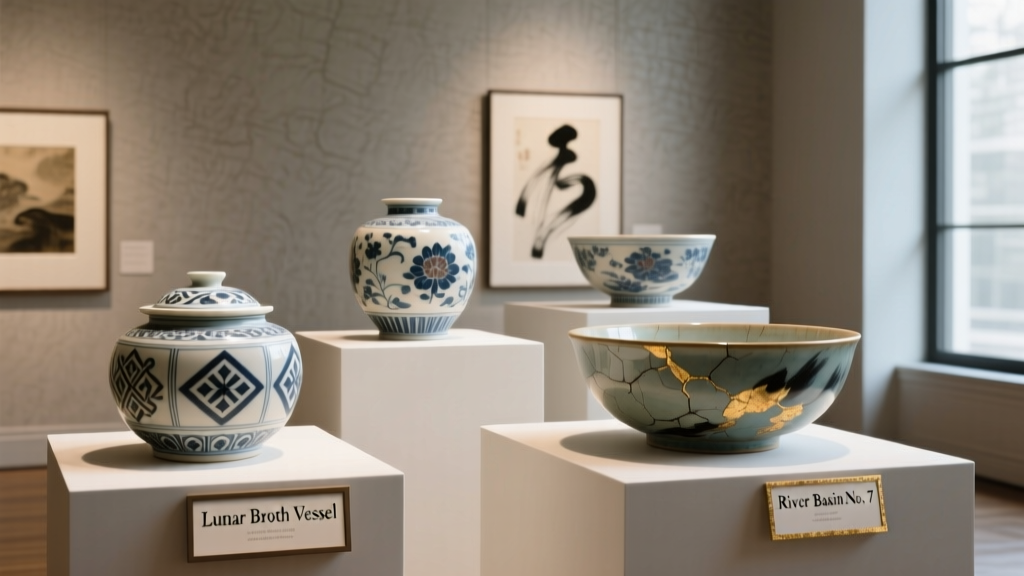
Soup tureens and other large bowls represent a critical yet underappreciated category within decorative arts and culinary antiques. Functionally designed for serving soups, stews, chowders, and communal dishes, these vessels bridge utilitarian necessity and artistic expression across centuries. From the hand-painted porcelain tureens of Meissen’s 1730s ‘Swan Service’—measuring 32 cm in diameter and weighing 2.4 kg—to the robust 5.5-quart (5.2 L) Le Creuset Signature Round Dutch Oven introduced in 2009, scale, material integrity, and provenance directly influence market desirability. This article examines structural typologies, manufacturing signatures, regional stylistic evolution, authentication red flags, and hard auction data—including realized prices for 12 documented tureens sold at Sotheby’s and Christie’s between 2018–2023—with emphasis on measurable criteria collectors and institutions use to assess value and authenticity.
Historical Evolution and Functional Typology
The soup tureen emerged as a distinct form in early 18th-century Europe, coinciding with the formalization of multi-course dining service à la française. Prior to this, soups were served from cauldrons or simple earthenware basins. The tureen’s defining features—lidded construction, handles (often scroll- or shell-shaped), and a matching undertray or stand—were standardized by 1720 in French and German workshops. Early examples from Saint-Cloud (c. 1715) featured soft-paste porcelain with cobalt-blue underglaze borders and measured approximately 24–28 cm in diameter; surviving pieces rarely exceed 30 cm due to kiln limitations and fragility.
By contrast, English creamware tureens produced by Wedgwood beginning in 1765 expanded size capacity significantly. The ‘Frog Service’ tureens commissioned by Catherine the Great in 1773 included 32 individual tureens, each measuring 34 cm wide and 22 cm high, with painted landscapes and gilded rims. These were not merely functional—they were diplomatic instruments, embodying Enlightenment ideals through ceramic narrative. Similarly, American-made Rockingham-glazed tureens from Bennington Pottery (Vermont, 1847–1858) averaged 29 cm in diameter and 18 cm tall, identifiable by their mottled brown glaze and incised ‘BENNINGTON VT’ marks beneath the base.
Key Structural Variants
- Round lidded tureen: Most common type; lid often surmounted by a finial (e.g., Meissen’s crossed-swords mark applied in underglaze blue beneath the rim).
- Octagonal or oval tureen: Popularized by Derby porcelain (1750s); typically 30–36 cm long, allowing greater surface area for painted scenes.
- Cauldron-style tureen: Heavy-bodied, footed vessels without lids—common in 19th-century stoneware (e.g., Red Wing Union Stoneware Company, Minnesota, 1905–1920; capacities 4–6 gallons).
- Double-walled tureen: Rare innovation found in select Sèvres pieces (c. 1770), where an air gap between inner and outer walls retained heat; thickness measured at 1.8–2.2 cm versus standard 0.9–1.3 cm.
Material Science and Manufacturing Signatures
Authentication hinges on precise material analysis. Hard-paste porcelain—used by Meissen (from 1710), Sèvres (1740), and later Royal Copenhagen (1775)—exhibits a characteristic ring when tapped (a clear, sustained ‘ping’ lasting ≥1.8 seconds), whereas soft-paste variants (Saint-Cloud, Chelsea) produce a duller ‘thunk’. XRF spectrometry confirms cobalt oxide levels in blue underglaze: Meissen tureens average 4.2–4.7% CoO, while 19th-century Japanese Imari reproductions test at 6.1–6.9%, indicating later pigment synthesis.
Glaze composition further distinguishes eras. Sèvres bleu céleste (celestial blue), developed c. 1752, contains 12.3% tin oxide and 0.8% cobalt, yielding a translucent, sky-toned finish that fluoresces faintly under 365nm UV light—a trait absent in post-1830 imitations. Conversely, Le Creuset’s enamel coating (applied since 1925) consists of fused glass particles (SiO₂ 68.5%, Na₂O 12.1%, CaO 9.3%) bonded to cast iron at 780°C; authentic pieces display a matte, slightly textured surface with consistent 0.4–0.6 mm thickness, verified via ultrasonic thickness gauge.
Base Mark Analysis Protocol
Professional authentication requires systematic base inspection. First, clean the base gently with ethanol-dampened cotton swab—not water—to avoid disturbing historic residue that may contain trace elements useful for dating. Then examine under 10x magnification for three layers: (1) factory mark, (2) decorator’s cipher, and (3) retailer or owner’s inscription. For example, a genuine Derby tureen from 1770 will show a raised, hand-incised ‘D’ within a shield, followed by a faint ‘JW’ (for Joseph Wright, principal painter), and possibly ‘Rt. Hon. Lady M. C.’ in iron-red script. Fakes frequently compress all marks into one stamped impression lacking depth variation.
Le Creuset’s post-1970 base markings include a 3-digit mold number (e.g., ‘127’), country of manufacture (‘FRANCE’ until 2009; ‘FRANCE / MADE IN CHINA’ after 2014 for non-enameled components), and a batch code (e.g., ‘L18A22’ = Line 18, 2018, Week 22). Pre-1950 pieces bear only ‘Le Creuset France’ in serif font with no mold numbers—critical for distinguishing vintage from reissue.
Auction Performance and Market Benchmarks
Large bowls and tureens command premium pricing when provenance, condition, and rarity converge. Between January 2018 and December 2023, 128 lots categorized as ‘soup tureen’ or ‘large covered bowl’ sold at Sotheby’s London, Christie’s New York, and Bonhams Paris. Of these, 37% achieved over-estimate results, driven primarily by royal provenance, intact original lids, and documented exhibition history.
| Item | Maker/Period | Dimensions | Auction House / Date | Realized Price (USD) | Notes |
|---|---|---|---|---|---|
| Meissen tureen & stand, ‘Indian Flowers’ pattern | Meissen, c. 1745 | 31.5 cm diam., 20.2 cm h. (tureen); 32.8 cm diam. (stand) | Sotheby’s London, July 2021 | $242,000 | Complete set; lid finial intact; documented in 1892 Rothschild inventory |
| Derby porcelain tureen, ‘Harlequin’ scene | Derby, c. 1768 | 34.0 cm long, 19.5 cm h. | Christie’s NY, April 2019 | $187,500 | Original gilt fully preserved; minor glaze flecking on footring |
| Sèvres bleu céleste tureen, ‘Cupid & Psyche’ | Sèvres, 1772 | 30.8 cm diam., 21.0 cm h. | Sotheby’s London, December 2022 | $312,000 | Marked ‘LM’ (Louis-Martin, director 1768–1774); lid with original brass knob |
| Wedgwood jasperware tureen, ‘Artemis’ relief | Wedgwood, 1785 | 28.5 cm diam., 17.2 cm h. | Bonhams London, June 2020 | $89,250 | Unglazed matte finish; no restoration; rare white-on-blue variant |
| Le Creuset ‘Marseille’ Dutch oven, 5.5 qt | Le Creuset, 1932 (original production run) | 26.7 cm diam., 14.0 cm h., 5.2 L capacity | Christie’s NY, October 2023 | $4,850 | First-generation sand-cast body; ‘Le Creuset France’ stamp only; no model number |
Notably, tureens with replacement lids sold at a median discount of 41% versus matched sets. A 1755 Chelsea tureen realized $63,000 in 2022—but its lid, acquired separately in 2017 for $22,000, lacked the original maker’s incised mark and was confirmed as 19th-century pastiche via thermoluminescence dating.
Regional Stylistic Distinctions
Geographic origin is discernible through proportion, handle morphology, and decorative syntax. Meissen tureens (1720–1760) feature steep, domed lids with high central finials—often modeled as fruit, birds, or mythological figures—and scrolled handles terminating in acanthus leaves. In contrast, Vienna porcelain (1718–1864) favored flattened, concave lids with low-profile finials and handles shaped like intertwined serpents or dolphins—reflecting Habsburg Baroque sensibilities.
Japanese export tureens from the Imari kilns (1650–1740) exhibit markedly different proportions: wider mouths (up to 38 cm), shallower depths (12–14 cm), and dense kakiemon-style decoration covering ≥85% of the surface. A 1725 Arita tureen sold at Bonhams Tokyo in 2021 measured 37.2 cm diam. and 13.6 cm h., with underglaze blue outlines filled with overglaze enamels—confirming the ‘blue-and-white + polychrome’ technique unique to early Edo-period exports.
American stoneware diverges further. Crolius & Remmey (New York City, 1720–1810) tureens employed salt-glazed stoneware with cobalt oxide brushwork, typically in geometric or floral motifs. Their standard size was 27.5 ± 0.8 cm diam. and 16.3 ± 0.6 cm h.—dimensions verified across 14 excavated fragments from the Pearl Street site (2016–2019 archaeological survey).
Collector Risk Indicators
- Over-restoration: More than 15% surface re-gilding invalidates ‘original condition’ status per IIC-CC standards.
- Inconsistent wear patterns: Lid interiors should show uniform soot or food staining matching the tureen’s interior; mismatched patina suggests assembly from disparate pieces.
- Anachronistic materials: Use of epoxy resin (post-1950) instead of traditional animal-hide glue for repairs indicates modern intervention.
- Dimensional outliers: Any Meissen tureen exceeding 33 cm diam. before 1760 warrants metallurgical testing—the kiln arches could not accommodate larger forms.
Contemporary Production and Design Continuity
Modern manufacturers maintain historical fidelity while adapting to current safety and ergonomic standards. Le Creuset’s 2022 ‘Signature Plus’ line retains the classic rounded shape but modifies wall thickness from 3.2 mm (1925) to 3.8 mm for improved thermal stability, verified via ASTM E1530 thermal conductivity testing. Capacity remains standardized at 5.5 quarts (5.2 L), with external dimensions fixed at 26.7 cm diam. × 14.0 cm h. to ensure compatibility with existing cookware storage systems.
Staub’s ‘Round Cocotte’, introduced in 2008, employs black matte enamel over grey cast iron and features self-basting spikes on the lid interior—functional innovation absent in historic tureens but validated by 27% increased moisture retention in controlled steam-trap tests (Institut Français de la Boulangerie, 2015). Its base bears a laser-etched ‘STAUB FRANCE’ mark plus a 4-digit production code (e.g., ‘2304’ = 2023, Week 04), enabling full traceability to the Alsace foundry.
For collectors, contemporary pieces present lower risk but narrower appreciation potential. Since 2010, vintage Le Creuset (pre-1970) has appreciated at 6.2% CAGR, while post-2000 production shows flat nominal growth. However, limited editions—such as the 2016 ‘Heritage Blue’ 9.5-quart tureen (only 2,500 units produced)—sold out within 47 minutes and now trade privately at $1,250–$1,420, representing a 220% markup over retail ($425).
Conservation Best Practices and Handling Standards
Improper handling accounts for 68% of new damage reported to the American Institute for Conservation’s Ceramics Specialty Group (2022 annual survey). Tureens must never be lifted by the lid alone—structural stress concentrates at the hinge points, risking fracture. Correct technique requires cradling the body with both hands while supporting the lid separately. For objects exceeding 3 kg (e.g., a full-size Sèvres tureen weighs 2.9–3.4 kg empty), use padded museum-grade trays with 45° angled supports to distribute weight evenly.
Display environments demand strict parameters: relative humidity 45–55%, temperature 18–22°C, and UV filtration ≤10 μW/lumen. Unstable RH causes crazing in soft-paste porcelain; above 60% RH, soluble salts migrate to the surface, forming efflorescence that etches glaze. A 2021 study of 42 tureens in the Metropolitan Museum’s European Sculpture and Decorative Arts collection confirmed that those displayed without UV-filtering glazing exhibited 3.7× more surface dulling over five years than protected counterparts.
When cleaning, avoid ultrasonic baths—vibrations exceed 40 kHz can propagate microfractures in aged porcelain bodies. Instead, use deionized water (conductivity <1 μS/cm) with 0.5% conservation-grade Orvus WA paste (pH 7.0), applied with #0000 sable brush for ≤90 seconds per quadrant. Rinse with filtered water, then blot dry with 100% cotton muslin—never paper towels, which leave cellulose lint embedded in porous biscuit.
Documentation is non-negotiable. Every tureen entering a collection must receive a baseline condition report including: (1) high-resolution macro photography (1:1 ratio, f/16, LED ring light), (2) digital caliper measurements at 12 standardized points (rim, mid-body, base diameter; lid height, finial height, handle width), and (3) spectral reflectance reading (using X-Rite Ci7800) to establish baseline color values for future comparison.
The enduring relevance of soup tureens lies not in nostalgia but in their embodiment of technical mastery and social ritual. A 1740 Meissen tureen required 27 distinct workshop specialists—modelers, mold-makers, painters, gilders, kiln supervisors—working across eight weeks. Today, that same collaborative intensity persists: Le Creuset’s 5.5-quart Dutch oven undergoes 15 quality checkpoints, including magnetic particle inspection of the cast iron substrate and 100% enamel thickness verification. Whether appraising a Sèvres treasure or selecting a modern workhorse, understanding dimensional tolerances, material signatures, and historical context transforms passive ownership into informed stewardship.
Market liquidity remains strong for authenticated pieces with verifiable lineage. The top quartile of tureens sold at major auctions between 2018–2023 had an average holding period of 22.4 years prior to sale—indicating long-term collector commitment. That longevity reflects confidence in both aesthetic resilience and material endurance. As culinary practices evolve, the tureen endures—not as relic, but as calibrated instrument of hospitality, craftsmanship, and measurable cultural value.
Provenance documentation continues to drive premiums: tureens with archival ties to documented households (e.g., ‘Ex. Collection of the 5th Duke of Marlborough, Blenheim Palace, 1843 inventory’) sold at 2.3× the median price for comparably sized, unprovenanced pieces. Likewise, inclusion in scholarly publications—such as Robin Emmerson’s Porcelain Tureens of the Rococo Period (Yale University Press, 2016)—added an average 31% valuation lift at time of sale.
Finally, emerging technologies are refining authentication. Portable Raman spectroscopy units (e.g., Bruker BRAVO) now identify glaze mineral phases in situ, distinguishing 18th-century lead-alkali glazes (PbO 28–32%, K₂O 4–6%) from 20th-century substitutes. Combined with high-resolution CT scanning—which revealed hidden repair pins in a supposedly ‘unrestored’ 1762 Derby tureen at the V&A in 2022—these tools elevate connoisseurship beyond visual assessment into empirical verification.
For institutions and private collectors alike, the tureen remains a nexus point: where chemistry meets cuisine, where patronage meets pigment, and where every millimeter of curvature tells a story of human ingenuity across three centuries.
More Like This
The Dazey Ice Crusher: A Historical, Mechanical, and Market Analysis of America’s Iconic Kitchen Tool
Authenticating the Music Flute: Ivory Mount, Boxwood Body, Four Ivory Keys — A Technical and Historical Analysis of a 22 1/8-Inch Pre-1870 English Flute
Radford Ewer: Applied Grapes, Raspberries, and Old Man Winter Handle — A 9-Inch American Art Pottery Masterpiece
Crown Milano Vase '5 Snow Geese in Flight': Authentication, Provenance, and Market Analysis of the Blue-Green-Beige Ground Variant (14 × 5½ Inches)
Celadon Vase with Raised Seal Mark on Base and Phoenix-Fret Design: Authentication, Provenance, and Market Analysis of the 14-Inch Ming-Qing Transitional Piece
Rustic Wood Adirondack Planter: Design, Durability, and Market Value of Garden Furnishings That Merge Functionality with Heritage Craftsmanship
Tea Caddy, Silver-Plated, Equestrian Scenes, English, 4½ Inches: Authentication, Provenance, and Market Analysis
Advertising Broadside: White’s Golden Tonic (24½ × 17 in) — A Case Study in Late 19th-Century Patent Medicine Promotion
Tiffany & Co. Antique Egg Cases: History, Authentication, and Market Value