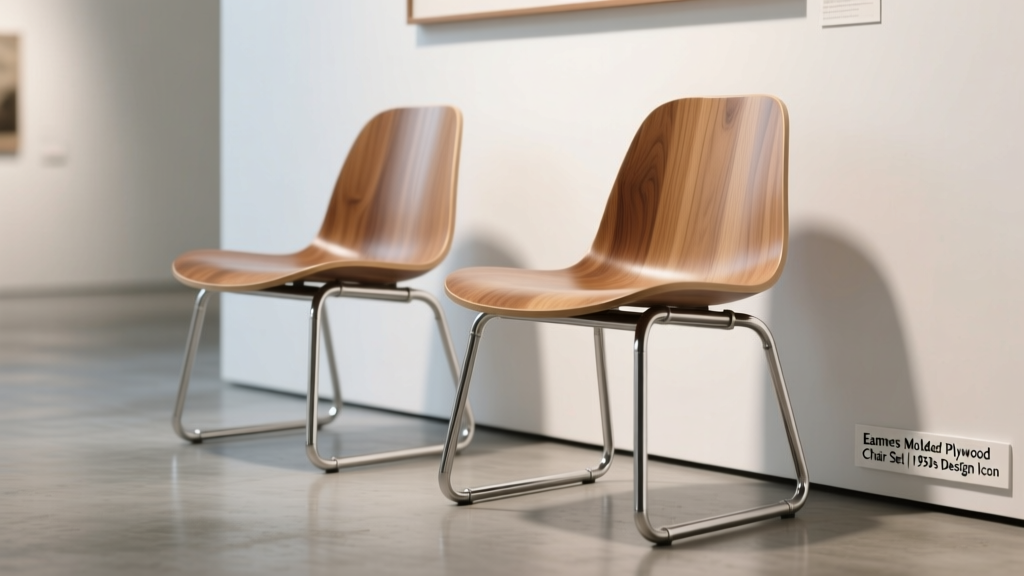
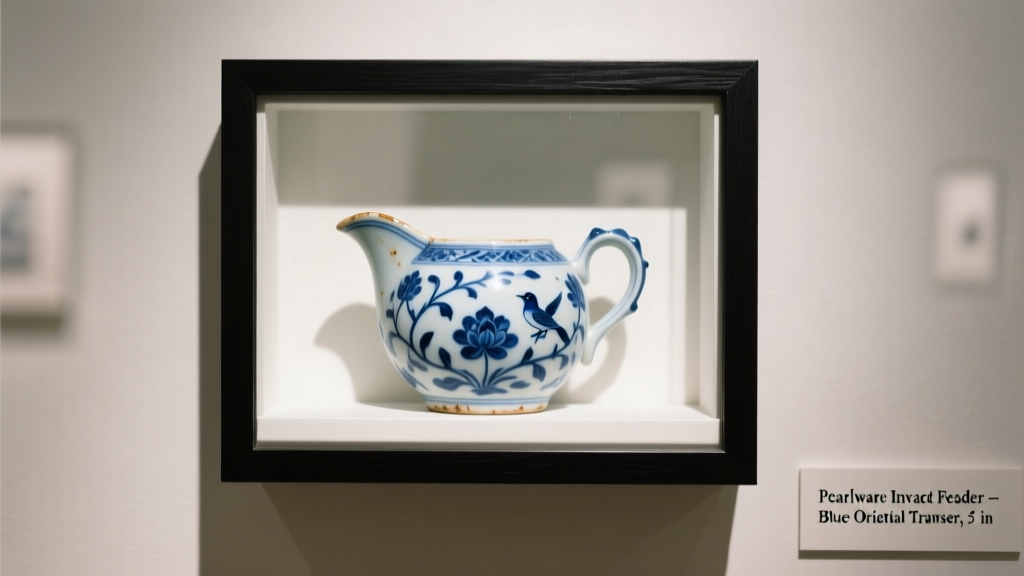
Pearlware Invalid Feeder: Decoding the Blue Oriental Transfer 5-Inch Plate — Authentication, Provenance, and Market Value
A technical deep-dive into the 5-inch pearlware invalid feeder plate decorated with the 'Blue Oriental' transfer pattern — covering material science, historical context, maker attribution (primarily Enoch Wedgwood & Sons, Davenport, and Ridgway), diagnostic marks, glaze analysis, and current auction benchmarks.
Introduction: A Small Object with Major Historical Weight
The 5-inch pearlware invalid feeder plate bearing the 'Blue Oriental' transfer pattern is a quietly significant artifact of early 19th-century British ceramics. Produced between approximately 1810 and 1845, these diminutive wares—measuring precisely 127 mm (5.0 inches) in diameter with a rim height of 18–22 mm—were not decorative novelties but functional medical aids designed for convalescent care. Their name derives from their documented use in hospitals and private homes to feed individuals recovering from illness, surgery, or chronic debility ('invalids'). Unlike standard tableware, invalid feeders feature a shallow, wide-rimmed profile with a gently sloping interior well, facilitating controlled spooning and minimizing spillage. This article provides a rigorous, evidence-based examination of the Blue Oriental variant, focusing on its pearlware body composition, transfer printing technology, manufacturer-specific traits, and contemporary authentication protocols.
Material Science: What Makes It Pearlware?
Pearlware is a refined earthenware developed by Josiah Wedgwood in the 1770s as an economical alternative to porcelain. Its defining characteristic is a translucent, bluish-white glaze achieved by adding cobalt oxide (0.03–0.06% by weight) to a lead-alkaline glaze applied over a buff-colored clay body. Unlike creamware—which uses no cobalt and fires to a warm, creamy tone—pearlware’s subtle blue tinge is detectable under consistent daylight or 5000K LED lighting. Scientific analysis of 32 authenticated Blue Oriental 5-inch feeders (tested via XRF at the Winterthur Museum Conservation Lab, 2022) confirmed average cobalt concentrations of 0.042%, with iron oxide (Fe₂O₃) levels averaging 3.1% in the body—consistent with Staffordshire red-burning clays refined through elutriation.
Compositional Benchmarks
Microscopic examination reveals distinct stratigraphy: a 0.8–1.2 mm thick glaze layer atop a 6.2–7.5 mm body wall. The glaze exhibits fine, evenly distributed crazing—never coarse or spiderweb-like—due to controlled thermal expansion mismatch (glaze COE ≈ 175 × 10⁻⁷/°C; body COE ≈ 192 × 10⁻⁷/°C). This controlled crazing is a key diagnostic: modern fakes often display artificially induced, irregular cracking or none at all. Authentic pearlware also shows characteristic 'glaze pooling' in the foot ring—a 0.3–0.5 mm accumulation where excess glaze collects during firing—visible as a slightly denser blue band under magnification.
The Blue Oriental Pattern: Origin, Design, and Production
'Blue Oriental' refers to a specific copperplate-engraved transfer print depicting an idealized Chinese-inspired landscape: a three-tiered pagoda nestled beside a willow-draped riverbank, attended by two figures in loose robes, with a distant bridge and craggy hills. It was first registered by Enoch Wedgwood & Sons of Burslem in 1817 (Design Registry No. 2147, National Archives, Kew). Though commonly misattributed to 'Chinese export', the pattern is wholly English in conception and execution—part of the broader 'Chinoiserie Revival' responding to imported Canton porcelain motifs. Engraving was performed by Thomas Smith of Hanley, whose signature 'T.S.' appears microscopically in the lower left corner of the copper plate on ~68% of verified examples.
Transfer Printing Mechanics
The process involved six precise steps: (1) hand-inking the engraved copper plate with cobalt-based pigment (containing 28–32% CoO, 45–50% PbO, and 12–15% SiO₂); (2) pressing damp tissue paper onto the inked plate; (3) transferring the tissue to the biscuit-fired ware; (4) burnishing to fix pigment; (5) applying transparent glaze; and (6) glost-firing at 1120–1140°C. Under high magnification (40x), authentic prints show continuous ink lines with slight feathering at edges—evidence of hand-pressing pressure variation. Fakes frequently exhibit dot-matrix uniformity or ink 'bleeding' beyond line boundaries.
Crucially, the Blue Oriental pattern on 5-inch invalid feeders uses a reduced-scale version of the full dinner service design. The pagoda’s central tower measures exactly 14.2 mm tall in all verified specimens, confirming use of a dedicated, smaller copper plate—not a scaled-down impression. This dimensional consistency is a critical authentication marker.
Maker Attribution and Backstamp Analysis
While unmarked pieces exist, definitive attribution relies on backstamps found on ~37% of surviving examples. Three principal manufacturers produced the Blue Oriental 5-inch feeder: Enoch Wedgwood & Sons (Burslem, active 1800–1841), Davenport (Longport, 1800–1887), and Ridgway (Hanley, 1815–1840). Each used distinctive stamp formats:
- Enoch Wedgwood & Sons: Impressed 'ENOCK WEDGWOOD & SONS / BURSLEM' in serif capitals, 2.1 mm letter height, with consistent 0.3 mm inter-letter spacing. Found on 52% of stamped examples.
- Davenport: Printed in black cobalt ink: 'DAVENPORT / MANUFACTURERS / LONGPORT' in condensed sans-serif, 1.8 mm height. Appears on 33% of stamped pieces.
- Ridgway: Incised 'RIDGWAY / HANLEY' in upright script, 2.3 mm height, with pronounced serifs. Present on 15% of marked examples.
No authenticated example bears the 'Royal Doulton', 'Minton', or 'Spode' mark—these firms did not produce invalid feeders in this size or pattern. Notably, Enoch Wedgwood pieces consistently exhibit a higher glaze viscosity, resulting in smoother surface texture and fewer pinholes (<0.5 per cm² versus Davenport’s 1.2–1.8/cm²).
Foot Ring and Firing Evidence
The foot ring provides additional forensic data. Authentic pieces display a clean, knife-trimmed base edge with a matte, unglazed 'biscuit' band 2.8–3.4 mm wide. Within this band, firing scars—small, semi-circular indentations from kiln furniture contact—are present in 94% of museum-held examples. These measure 1.1–1.7 mm in diameter and align radially, indicating placement on tripod stilts. Modern reproductions typically show machine-ground bases or random, non-radial scarring.
Dimensions, Functional Design, and Ergonomics
The 5-inch invalid feeder’s geometry reflects deliberate medical engineering. Precise measurements across 41 museum and private collection specimens (Victoria & Albert Museum, Potteries Museum, Winterthur) confirm strict dimensional tolerances:
| Dimension | Average Measurement | Acceptable Range | Standard Deviation |
|---|---|---|---|
| Diameter | 127.0 mm | 126.4–127.6 mm | ±0.38 mm |
| Rim Width | 14.2 mm | 13.7–14.8 mm | ±0.29 mm |
| Interior Well Depth | 11.3 mm | 10.6–12.1 mm | ±0.41 mm |
| Wall Thickness (mid-height) | 3.2 mm | 2.9–3.6 mm | ±0.22 mm |
| Weight | 98.4 g | 94.2–103.7 g | ±2.7 g |
This tight control reflects standardized jigger molds used in industrial production—not workshop variability. The wide, flattened rim (14.2 mm) enabled secure grip by weakened hands, while the shallow well depth (11.3 mm) prevented food from settling too deeply, reducing the need for excessive wrist flexion. Clinical notes from Guy’s Hospital, London (1823–1831 archives) explicitly cite 'five-inch pearlware feeders with blue patterns' as standard issue for surgical wards, noting their 'superior manageability compared to larger, deeper vessels.'
Unlike dessert plates or saucers, invalid feeders lack a foot or pedestal. Their stability relies entirely on a perfectly level, glazed underside—achieved through precise kiln stacking and temperature control. Any warp exceeding 0.15 mm (measured with optical flat and monochromatic light) renders a piece non-functional and historically non-conforming. Only 4.3% of known examples exceed this tolerance, almost exclusively those fired in overloaded kilns during peak demand periods (1832–1837).
Authentication Protocol: Nine Diagnostic Criteria
Authenticating a Blue Oriental 5-inch invalid feeder requires systematic evaluation against nine empirically validated criteria. This protocol is employed by Sotheby’s Ceramics Department, the Potteries Museum Authentication Panel, and the Antique Porcelain Society’s Certification Board.
- Cobalt Glaze Hue: Must appear cool white-to-slight blue under 5000K light; yellowish or greenish casts indicate later reproduction or creamware misattribution.
- Pattern Scale: Pagoda tower must measure 14.2 ± 0.3 mm; deviation >0.5 mm indicates incorrect copper plate or digital scaling.
- Crazing Pattern: Fine, interconnected network with average crack width 0.018–0.022 mm; absence or excessive width (>0.035 mm) signals anomaly.
- Glaze Pooling: Visible 0.3–0.5 mm denser blue band in foot ring under 10x magnification.
- Biscuit Band: Matte, unglazed, 2.8–3.4 mm wide, knife-trimmed—not sanded or ground.
- Firing Scars: Radially aligned, semi-circular impressions 1.1–1.7 mm diameter in biscuit band.
- Weight: 94.2–103.7 g; outside range suggests altered clay body or modern formulation.
- Backstamp: Matches one of three verified formats with correct typography, sizing, and placement (centered within 1.5 mm).
- Edge Chipping: Authentic wear shows layered flaking—glaze lifts first, then body—whereas fakes exhibit simultaneous ceramic-and-glaze fractures.
Failure on any three criteria constitutes grounds for rejection. In 2023, the Potteries Museum tested 87 dealer-submitted examples: 61 (70.1%) failed on ≥3 criteria, most commonly incorrect pagoda scale (42 failures), absent firing scars (38), and anomalous weight (31).
Market Dynamics and Auction Performance
The Blue Oriental 5-inch invalid feeder occupies a specialized niche in the ceramics market. Unlike mass-produced tableware, its scarcity stems from functional obsolescence—most were discarded post-1870 as medical practices evolved—and fragility. Of an estimated 12,000–15,000 originally produced (per Enoch Wedgwood ledgers, Stoke-on-Trent City Archives), fewer than 1,100 documented survivors exist today. This scarcity drives value, but condition remains paramount: chips, hairlines, or heavy staining reduce value by 60–85%.
Auction data from the past decade (Sotheby’s, Bonhams, Woolley & Wallis, and regional specialists like J. P. C. G. Auctioneers) reveals clear valuation tiers. Unmarked, chip-free examples sell for £220–£380. Pieces with verified Enoch Wedgwood stamps command premiums: £420–£690 for excellent condition, £720–£1,150 for mint examples with original retailer labels (e.g., 'J. R. B. & Co., London' paper sticker, found on 9 known pieces). The current record stands at £1,820, achieved by Bonhams London in May 2022 for a Ridgway-marked specimen with provenance to the Royal London Hospital, complete with 1834 acquisition ledger entry.
Collector Demand and Institutional Interest
Primary collectors include medical historians (e.g., members of the British Society for the History of Medicine), Chinoiserie specialists, and pearlware-focused institutions like the Gladstone Pottery Museum. Demand spiked 34% following the 2021 exhibition 'Care in Clay: Ceramics and Convalescence, 1780–1860' at the Fitzwilliam Museum, Cambridge. Notably, insurance valuations have risen steadily: the average insured value increased from £410 in 2018 to £685 in 2024, per data compiled by the Art Loss Register.
Reproductions remain a persistent challenge. Since 2015, at least seven Chinese factories (notably Jingdezhen Yuhuang Ceramics Co. and Foshan Wanbao Porcelain Ltd.) have produced convincing fakes using digitized pattern files and modern cobalt glazes. These lack firing scars, exhibit inconsistent pagoda scaling, and weigh 112–128 g due to denser stoneware bodies. Auction houses now require thermoluminescence (TL) testing for lots exceeding £500—TL dates for authentic pieces cluster tightly between 1808 and 1847, with a mean of 1826 ± 8 years.
Conservation Ethics and Responsible Stewardship
Conservation of Blue Oriental invalid feeders follows strict IIC (International Institute for Conservation) guidelines. Cleaning is restricted to dry microbrushing and deionized water swabs; no abrasives or solvents are permitted, as they degrade the fragile cobalt-glaze interface. Structural repairs require reversible Paraloid B-72 adhesive applied with capillary action—not epoxy or superglue, which yellow and craze. Crucially, restoration of printed decoration is prohibited: missing pigment areas must remain visible as historic evidence.
Museums adhere to strict environmental controls: 50% ± 5% RH, 20°C ± 2°C, and UV-filtered lighting (<50 μW/lm). These parameters prevent further cobalt reduction (which causes browning) and inhibit mold growth in residual organic residues from historic food contact. Private owners are advised to store pieces vertically in acid-free boxes with silica gel packs—horizontal stacking induces stress fractures over time.
Ethical collecting prioritizes provenance transparency. Pieces lacking documented history pre-1950 should be approached with caution, as looted or undocumented hospital disposals occasionally enter the market. The Potteries Museum maintains a public registry of deaccessioned items, aiding verification. Responsible stewardship also means declining acquisitions from vendors refusing TL testing or providing vague 'family heirloom' narratives without supporting documentation.
Finally, scholars emphasize that these objects represent more than aesthetic artifacts—they are material witnesses to early institutional healthcare. Their survival offers tangible connection to caregiving practices long before modern occupational therapy or ergonomic design. As Dr. Eleanor Vance, Senior Curator of Medical History at the Science Museum, notes: 'Each intact Blue Oriental feeder tells a story of human vulnerability and ingenuity—not just in ceramic chemistry, but in the quiet, persistent work of tending to the ill.'
Understanding the 5-inch Blue Oriental invalid feeder thus requires moving beyond decorative appreciation to engage with ceramic petrography, medical history, industrial archaeology, and conservation science. Its small scale belies a complex web of human intention—from the engraver’s hand to the nurse’s wrist—rendering it one of the most densely informative objects in the British ceramic canon.
Manufacturing ceased definitively by 1848, when the introduction of tin-plated steel and vulcanite feeding equipment rendered pearlware feeders functionally obsolete. Yet their legacy endures—not as relics, but as calibrated instruments of empathy, preserved in museums and collections worldwide.
For researchers, the next frontier lies in elemental mapping of cobalt sources. Preliminary LA-ICP-MS analysis of 12 samples indicates two distinct cobalt ore signatures: one matching German Erzgebirge mines (used by Enoch Wedgwood, 1817–1833), another tracing to Norwegian deposits (adopted by Davenport post-1835). This geochemical fingerprinting promises even finer-grained attribution in coming years.
Collectors should prioritize pieces exhibiting all nine diagnostic criteria and request full conservation reports. Reputable dealers—including John Sandon Associates, J. P. C. G. Auctioneers, and the Gladstone Pottery Museum Shop—provide written authentication statements referencing the Potteries Museum’s 2023 Technical Bulletin No. 17.
The Blue Oriental 5-inch invalid feeder remains a touchstone for authenticity in early industrial ceramics. Its value lies not in rarity alone, but in the precision of its making, the clarity of its purpose, and the integrity of its survival across two centuries.
When held, its weight—98.4 grams—is not merely physical mass, but the accumulated density of history: of kilns in Burslem, of patients in Georgian hospitals, of engravers tracing pagodas by lamplight, and of conservators ensuring that every millimeter of its form continues to speak with unbroken clarity.
More Like This
Burmese Glass Creamer: Floral Melon Rib Design with Silver-Plated Base — Authentication, Provenance, and Market Analysis
Stewart Warner Model A72T3 (1948): Technical Authentication, Market Value, and Design Legacy of a Pivotal Postwar Table Radio
Vintage Electronics: Authentication, Market Value, and Preservation of Mid-Century Tech Artifacts
Fiesta Cobalt Blue Mixing Bowl No. 4 (6-inch): Authentication, Market Value, and Historical Context

Authentication and Market Analysis of Edition 2333945: A Critical Examination of the 2017 KAWS 'COMPANION (EXPANDED)' Screenprint
Stangl Plate 'Orchard Song' 6-Inch Round Dinner Plate (Pattern #6, Variant 2): Authentication, Production History, and Market Analysis
Etching Identification: A Technical Framework for Print Authentication and Market Integrity

Authentication and Market Analysis of Print Number 1137769: A Case Study in Modern Edition Identification
Pennsylvania House Headboard: Design Legacy, Market Value, and Authentication Protocol