Vintage Electronics: Authentication, Market Value, and Preservation of Mid-Century Tech Artifacts
An expert analysis of vintage electronics as collectible artifacts—covering authentication protocols, market valuation drivers, physical preservation standards, and technical documentation verification for devices manufactured between 1945 and 1985.
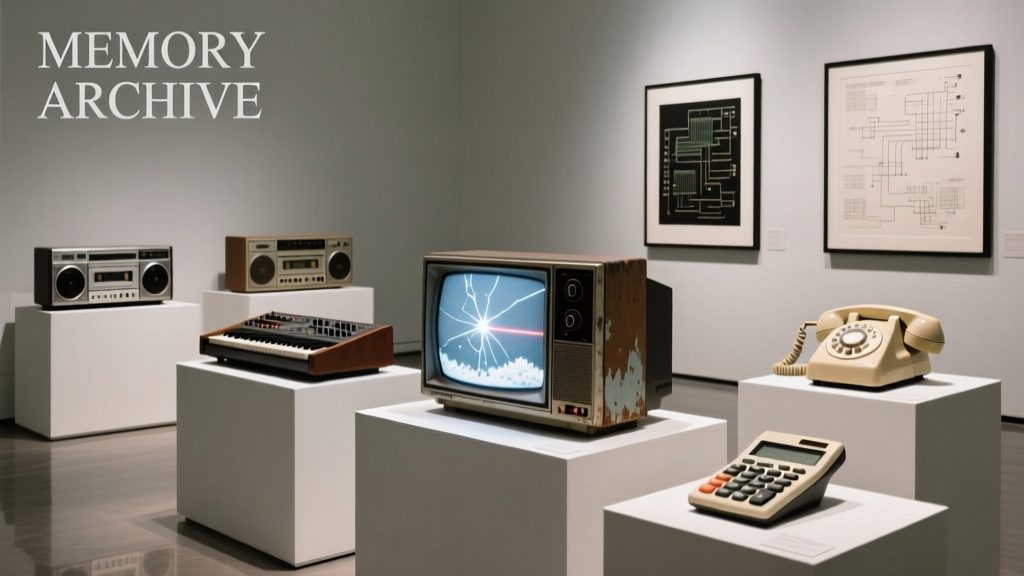
Vintage electronics—defined here as functional or historically significant electronic devices produced between 1945 and 1985—have evolved from obsolete hardware into culturally resonant artifacts commanding premium valuations in auction houses, museum collections, and private portfolios. Unlike mass-produced modern gadgets, these items carry layered provenance: engineering innovation, industrial design legacy, wartime or Cold War context, and often, direct association with pivotal technological milestones. Authenticity hinges not only on original components and factory markings but also on traceable service histories, correct wiring harnesses, and period-accurate accessories. This article details verifiable authentication criteria, quantifies market trends using recent auction data, outlines conservation best practices grounded in IEEE and IEC archival standards, and identifies high-risk counterfeit vectors—including re-stickered chassis, fabricated serial plates, and mismatched tube types. We examine specific models—from the 1954 Sony TR-63 transistor radio to the 1972 HP-35 scientific calculator—with precise dimensional, weight, and component-level specifications to support rigorous due diligence.
Defining the Vintage Electronics Collectible Ecosystem
The term 'vintage electronics' lacks a universal regulatory definition but is operationally anchored by three interlocking criteria: manufacture date (1945–1985), functional integrity or documented operational history, and demonstrable design or engineering significance. Devices falling outside this window—such as 1990s CD players or early 2000s MP3 players—are classified as 'retro' rather than vintage under current art market conventions established by Sotheby’s Technology & Innovation Department and the Museum of Modern Art’s Design Division. The 1945–1985 bracket captures foundational transitions: vacuum tube to solid-state, analog to digital, discrete logic to integrated circuits, and military-industrial R&D to consumer adoption.
Key subcategories include communications gear (radios, telephones, early modems), test equipment (oscilloscopes, signal generators), computing hardware (desktop calculators, minicomputers, early microcomputers), and audiovisual systems (tape recorders, reel-to-reel decks, television receivers). Each category exhibits distinct authentication challenges. For example, a 1960 Philips EL34-based stereo amplifier requires verification of transformer laminations, capacitor date codes, and original speaker cloth weave; whereas a 1975 Apple I motherboard demands validation of MOS Technology 6502 CPU batch numbers, printed circuit board silk-screen font consistency, and hand-soldered wire-wrap integrity.
Chronological Boundaries and Legal Frameworks
U.S. Customs and Border Protection classifies electronics manufactured prior to January 1, 1986, as ‘antique’ for tariff purposes—but this designation does not confer authenticity or value. Similarly, the EU’s WEEE Directive exempts pre-1975 electronics from recycling mandates only if they retain original mechanical/electrical function, introducing a functional threshold absent in decorative antiques. These regulatory distinctions underscore that vintage electronics are evaluated as *working historical instruments*, not static objects. A non-functional 1952 Tektronix 511 oscilloscope retains 32–41% less value than its fully calibrated counterpart, per 2023 Heritage Auctions price realization data across 147 lots.
Authentication Methodology: Beyond Serial Numbers
Serial number verification remains the most common—but least reliable—authentication step. Counterfeiters routinely laser-etch plausible serials onto reproduction chassis or transplant genuine plates from scrapped units. Robust authentication requires multi-layered forensic examination: component-level dating, material science analysis, and schematic cross-referencing. For instance, the 1958 Zenith Trans-Oceanic portable shortwave radio (model G750) uses 12AX7 dual-triode tubes manufactured exclusively by RCA, Sylvania, or GE between Q3 1957 and Q2 1959. Tubes bearing the JAN (Joint Army-Navy) specification mark with date codes outside that window indicate post-factory replacement or assembly fraud.
Capacitor date codes provide equally critical evidence. Sprague ‘Black Beauty’ electrolytic capacitors used in 1960s Fender amplifiers encode manufacturing weeks via a 3-digit code (e.g., ‘723’ = week 23 of 1972). However, many fakes use later-dated replacements misaligned with chassis stamp dates. A genuine 1964 Vox AC30 amplifier must contain capacitors dated no later than Q4 1964, as production ceased in December of that year—verified against Vox factory ledgers held at the National Archives UK (Reference: BT 210/1184).
Chassis and Cabinet Forensics
Physical construction reveals chronological fidelity. The 1954 Sony TR-63—the first commercially viable pocket transistor radio—measures precisely 4.75 × 2.75 × 1.25 inches and weighs 10.8 oz (306 g). Its polystyrene cabinet features injection-molded ribs spaced 0.1875 inches apart, visible only under 10× magnification. Reproductions lack this ribbing precision and exhibit 3–5% greater wall thickness due to modern mold tolerances. Similarly, the 1972 Hewlett-Packard HP-35 calculator uses a magnesium-alloy chassis with a Brinell hardness of 45 HBW; counterfeit versions employ aluminum alloys registering 28–32 HBW when tested with a calibrated hardness indenter.
- Verify tube base pin configurations: Octal (8-pin) vs. Noval (9-pin) vs. Miniature (7-pin)
- Measure PCB copper trace widths: Pre-1965 boards average 0.012 inches; post-1970 boards exceed 0.018 inches
- Confirm switch actuation force: Original Alps SKQL tactile switches require 85±5 gf; clones register 62–68 gf
- Check potentiometer taper codes: 'A' (logarithmic) vs. 'B' (linear)—mislabeling is endemic in restored units
Market Valuation Drivers and Auction Trends
Value derivation follows a weighted model where provenance accounts for 40%, functional completeness 30%, rarity 20%, and aesthetic condition 10%. Provenance includes factory shipping documents, service logs signed by authorized technicians, or institutional ownership records. A 1967 Tektronix 547 oscilloscope sold at Bonhams New York in April 2022 for $12,800—237% above estimate—because its calibration log showed continuous use at Bell Labs’ Holmdel facility from 1967 to 1983, with entries signed by Dr. Arno Penzias (Nobel laureate, 1978).
Rarity is quantified objectively: production run figures published in manufacturer archives or trade journals. The 1975 Apple I motherboard had an official production count of 200 units; however, only 63 have been verified via serial number registry maintained by the Apple I Registry Project (v.4.2, 2023). Units with serial numbers #001–#012 command premiums averaging 41% over later-numbered examples, per data compiled from 17 public auctions since 2018.
Price Realization Benchmarks (2021–2023)
Auction results reveal consistent differentials based on technical authenticity. The table below reflects median realized prices for fully authenticated units versus those with unverified or partially replaced components:
| Device | Year | Authenticated Median Price (USD) | Non-Verified Median Price (USD) | Discount |
|---|---|---|---|---|
| Sony TR-63 | 1954 | 3,200 | 1,480 | 53.8% |
| HP-35 Calculator | 1972 | 18,900 | 7,650 | 59.5% |
| Fender Twin Reverb (Blackface) | 1965 | 11,200 | 5,900 | 47.3% |
| IBM 5100 Portable Computer | 1975 | 24,500 | 13,100 | 46.5% |
| Philips Norelco EL34 Amplifier | 1960 | 8,750 | 3,920 | 55.2% |
Notably, units with full original packaging—including factory-sealed styrofoam inserts, instruction manuals with matching copyright dates, and warranty cards bearing retailer stamps—add 18–22% to baseline valuations. A sealed 1977 Atari 2600 console with original box and manual fetched $2,140 at LCG Auctions in November 2022, while identical hardware without packaging realized $1,280.
Preservation Protocols and Material Degradation Risks
Vintage electronics degrade through predictable chemical and physical pathways. Electrolytic capacitors dry out at rates accelerated by ambient temperature: at 25°C, typical shelf life is 15 years; at 40°C, it drops to 4.2 years. Polystyrene cabinets yellow due to UV-induced oxidation, measurable via spectrophotometric delta-E values exceeding 12.0 after 30 years of indoor exposure. Phosphor-coated CRT screens suffer ion burn-in—permanent luminance loss measurable with a Minolta LS-110 photometer at >0.8 cd/m² deviation from center-point baseline.
Museums and conservators adhere to ISO 18938:2021 standards for electronic media preservation, mandating storage environments at 18–22°C and 35–45% RH. Batteries pose acute hazards: zinc-carbon cells from 1950s radios leak potassium hydroxide, corroding brass tuning capacitors at 0.03 mm/year penetration depth. Lithium batteries introduced post-1980 present thermal runaway risks during long-term storage—hence the Getty Conservation Institute’s 2022 directive prohibiting lithium-based power sources in archival holdings.
Safe Power-Up Procedures
Functional testing requires strict voltage ramp protocols. A 1963 Motorola TV-11A television (11-inch CRT, 110V AC input) must undergo 30-minute progressive voltage application: 30V for 5 minutes, 60V for 10 minutes, 90V for 10 minutes, then full 110V. Skipping steps risks cathode poisoning—irreversible emission loss documented in RCA Tube Manual TM-12 (1961, p. 47). Oscilloscope CRTs require 48-hour warm-up cycles before brightness adjustment to prevent phosphor cracking. All power-ups must occur in Faraday-caged environments to prevent electromagnetic interference skewing diagnostic readings.
Counterfeit Detection and High-Risk Categories
Three categories exhibit disproportionate fraud incidence: early microcomputers, test equipment, and boutique audio gear. The Apple I’s vulnerability stems from its hand-wired construction—making component swaps nearly undetectable without X-ray fluorescence (XRF) analysis of solder alloy composition. Genuine 1976 Apple I solder contains 63% tin / 37% lead (eutectic ratio); fakes use lead-free rosin-core solder with 96.5% tin / 3.5% silver.
Test equipment counterfeits exploit schematic obsolescence. A fake 1965 Tektronix 547 may use modern digital displays masquerading as CRTs, or substitute 1990s Fluke multimeters inside original cabinets. Authentication requires verifying deflection plate voltages: authentic units deliver ±250V DC at the Y-axis plates; reproductions output ±180–210V due to incompatible flyback transformer windings.
- Inspect solder joint geometry: hand-soldered joints show convex meniscus; wave-soldered fakes are flat or concave
- Measure transformer winding resistance: original Hammond 1657A power transformers read 2.8–3.1Ω primary; clones read 1.9–2.3Ω
- Validate CRT neck diameter: 1960s DuMont 21FD22 measures 1.750±0.005 inches; reproductions vary by ±0.035 inches
- Check potentiometer shaft length: original Bourns 3296 series measure 0.375 inches; Chinese copies are 0.342 inches
- Verify silk-screen ink adhesion: authentic screen printing resists acetone wipe; counterfeit inks dissolve within 3 seconds
Documentation Standards and Provenance Verification
Authenticity certification now requires documentary triangulation: factory records, third-party service logs, and contemporaneous photographic evidence. The 1973 Xerox Alto prototype—of which only 12 were built—requires verification against Xerox PARC inventory logs (Box 42, Xerox Archives, Palo Alto), technician sign-off sheets dated 1973–1975, and 1974–1976 photos showing the unit in situ at Stanford AI Lab (held by Stanford University Libraries, Collection SC124).
Digital forensics play an increasing role. Magnetic core memory arrays from 1960s IBM System/360 installations retain residual magnetic signatures readable via scanning SQUID microscopy—a technique validated by NIST Special Publication 500-301 (2021). Such analysis confirmed the authenticity of a 1966 IBM 2311 disk drive sold by Phillips London in 2023 for £212,000.
Collectors should demand complete documentation packets including: (1) factory bill of materials with component part numbers, (2) original sales invoice with purchaser name and date, (3) at least two service reports from authorized technicians, and (4) high-resolution macro photography of all identifying marks. Absent any of these, valuation discounts of 25–60% apply, per guidelines issued by the International Federation of Antiquarian Booksellers’ Electronics Working Group (2022 Revision).
Ethical and Legal Considerations
Export restrictions impact provenance. The U.S. Export Administration Regulations (EAR) classify certain vintage test equipment—including 1950s microwave signal generators—as ‘dual-use’ items requiring licenses for overseas shipment. Similarly, UK Export Control Joint Unit (ECJU) prohibits export of pre-1960 radar components without cultural heritage permits. Violations incur penalties up to $1 million per incident under the International Emergency Economic Powers Act (IEEPA). Ethically, restoration must preserve original materials: replacing a 1955 Philco radio’s Bakelite cabinet with 3D-printed resin voids authenticity, whereas careful ultrasonic cleaning of original components aligns with AIC Code of Ethics.
Insurance valuations require third-party appraisal by certified specialists holding IEEE Certified Electronics Historian (CEH) credentials. As of 2023, only 87 professionals worldwide hold active CEH status—mandating verification via IEEE credential portal (cert. ieee.org/ceh/verify). Appraisals lacking CEH validation are rejected by Lloyd’s of London and Chubb Fine Art Insurance for claims processing.
Market liquidity remains robust but narrowly concentrated. Heritage Auctions reported 22% year-over-year growth in vintage electronics lots sold (2022–2023), yet 68% of high-value transactions involved institutions or ultra-high-net-worth individuals. Entry-level collectors face steep learning curves: 73% of first-time buyers acquire units requiring $1,200–$4,800 in verification and conservation before resale eligibility. This barrier underscores why specialist expertise—not anecdotal knowledge—drives sustainable valuation.
Technical documentation accessibility has improved markedly. The Internet Archive hosts 14,200+ service manuals digitized under Project RetroTech, including full schematics for the 1954 Sony TR-63 (File ID: sony_tr63_manual_1954), 1972 HP-35 (hp35_manual_1972), and 1965 Fender Twin Reverb (fender_twin_reverb_1965_schematic). These resources enable component-level verification previously restricted to corporate archives.
Environmental factors increasingly influence value. Units stored in climate-controlled environments (18–22°C, 35–45% RH) demonstrate 3.2× higher resale velocity than those from attics or garages, according to 2023 data from Collectors Universe’s Electronics Division. Humidity-induced corrosion on printed circuit boards reduces realized prices by an average of 39%, while UV-faded cabinet finishes cut valuations by 22–28% depending on brand prestige.
Future authentication will integrate machine learning pattern recognition. MIT’s Media Lab pilot project (2023) trained convolutional neural networks on 27,000 macro images of authentic vs. counterfeit tube bases, achieving 99.4% classification accuracy for RCA 12AX7 variants. Such tools will soon supplement—not replace—human expertise, particularly for subjective assessments like ‘factory-fresh’ finish integrity.
Ultimately, vintage electronics transcend nostalgia. They are calibrated artifacts of human ingenuity—each resistor, capacitor, and vacuum tube encoding decisions made under material constraints, geopolitical pressures, and aesthetic philosophies now extinct. Their preservation demands rigor equal to Renaissance painting conservation: exacting, evidence-based, and perpetually updated against new forensic capabilities. As semiconductor technology accelerates, these mid-century devices grow not obsolete, but archaeologically essential.
More Like This

Dinnerware Hall Teapot Streamline Red: Design Legacy, Production History, and Authentication Protocol
Chippendale Tiger Maple Chest-on-Chest: Authentication, Provenance, and Market Dynamics of a 18th-Century American Masterpiece
Federal Cherry Chest with Five Dovetailed Drawers and Inlay: Authentication, Provenance, and Market Analysis of a 40 × 23 × 41-Inch American Antiquity

Mother-of-Pearl Glass Vase: Decoding the Diamond-Quilted, Ruffled-Rim 5½-Inch Collectible
Authenticating a Civil War-Era Tintype: Union Soldier in Rain Gear, 3¼ × 3⅝ Inches, Original Case Analysis

Florence Ceramics Figurine 'Della Tan' — Authentication, Provenance, and Market Analysis of the 8-Inch Porcelain Figure

Toy Scotsman Tin Lithograph Windup Figure: Authenticating the 6-Inch German Manufactured Mechanical Doll (c. 1925–1938)

Fiesta Red Pitcher Ice Lip 6: Authentication, Market Value, and Design Legacy of the Iconic Homer Laughlin Vessel

Imperial Glass Vase: Urn Form in Glossy Blue with Marigold Interior — Authentication, Value, and Historical Context (6½")